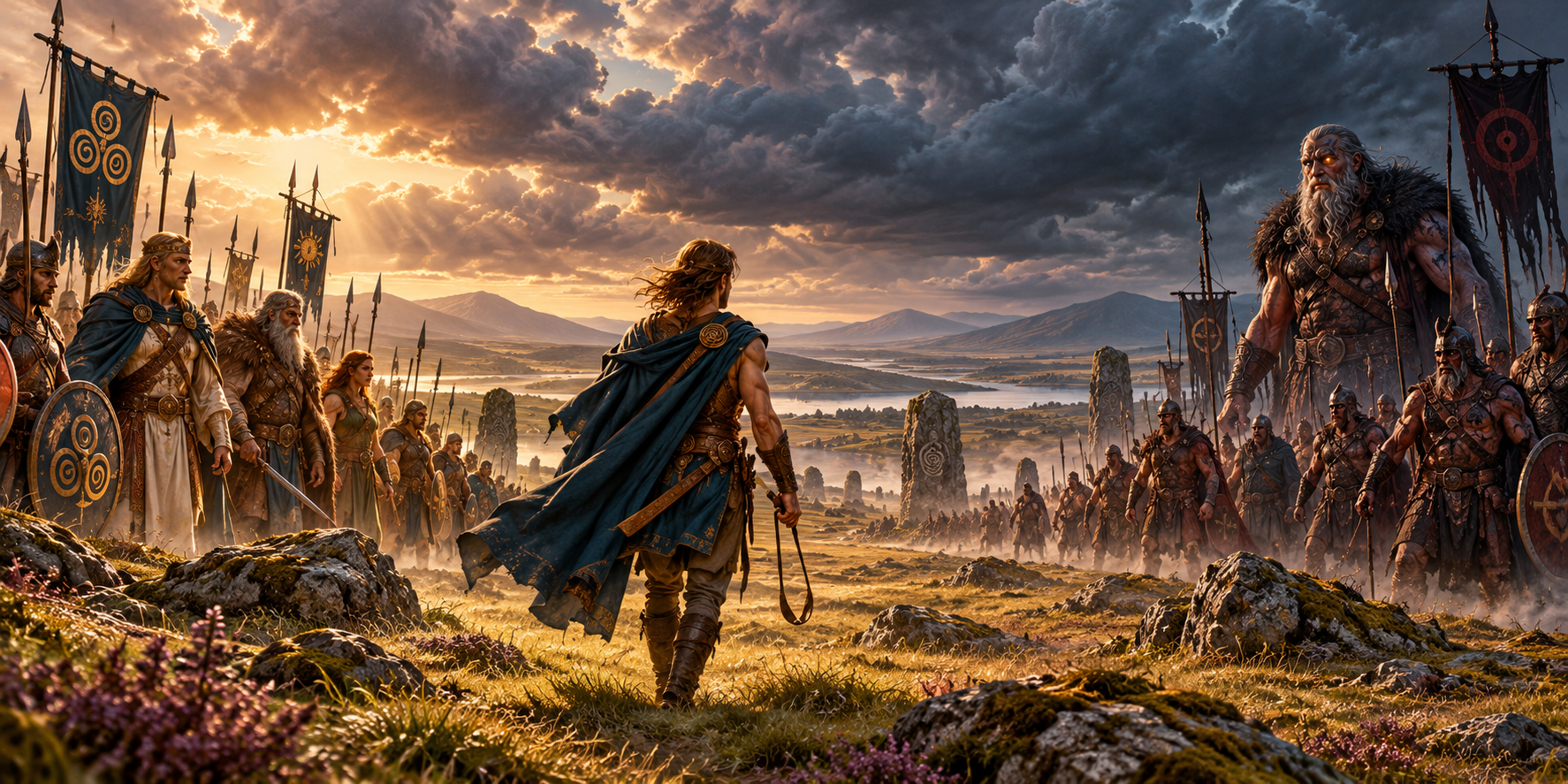
After defeating the Fir Bolg in the First Battle of Mag Tuired, the Tuatha Dé Danann became, according to tradition, the new rulers of Ireland.
However, peace did not last long.
Nuada's reign was interrupted when he lost an arm during the First Battle, leading the Tuatha Dé Danann to choose Bres as their king, the son of the Tuatha Dé Danann woman Ériu and the Fomorian Elatha.
His rule would trigger a new crisis and, eventually, a war that would become one of the most important stories in all of Irish mythology: the Second Battle of Mag Tuired..
The story is preserved in Cath Maige Tuired, a medieval narrative.
The Reign of Bres
Bres had ancestry from both peoples. His father was the Fomorian Elatha, while his mother, according to the story, belonged to the Tuatha Dé Danann.
His election as king was intended to strengthen the relationship between the two groups. But the opposite happened.
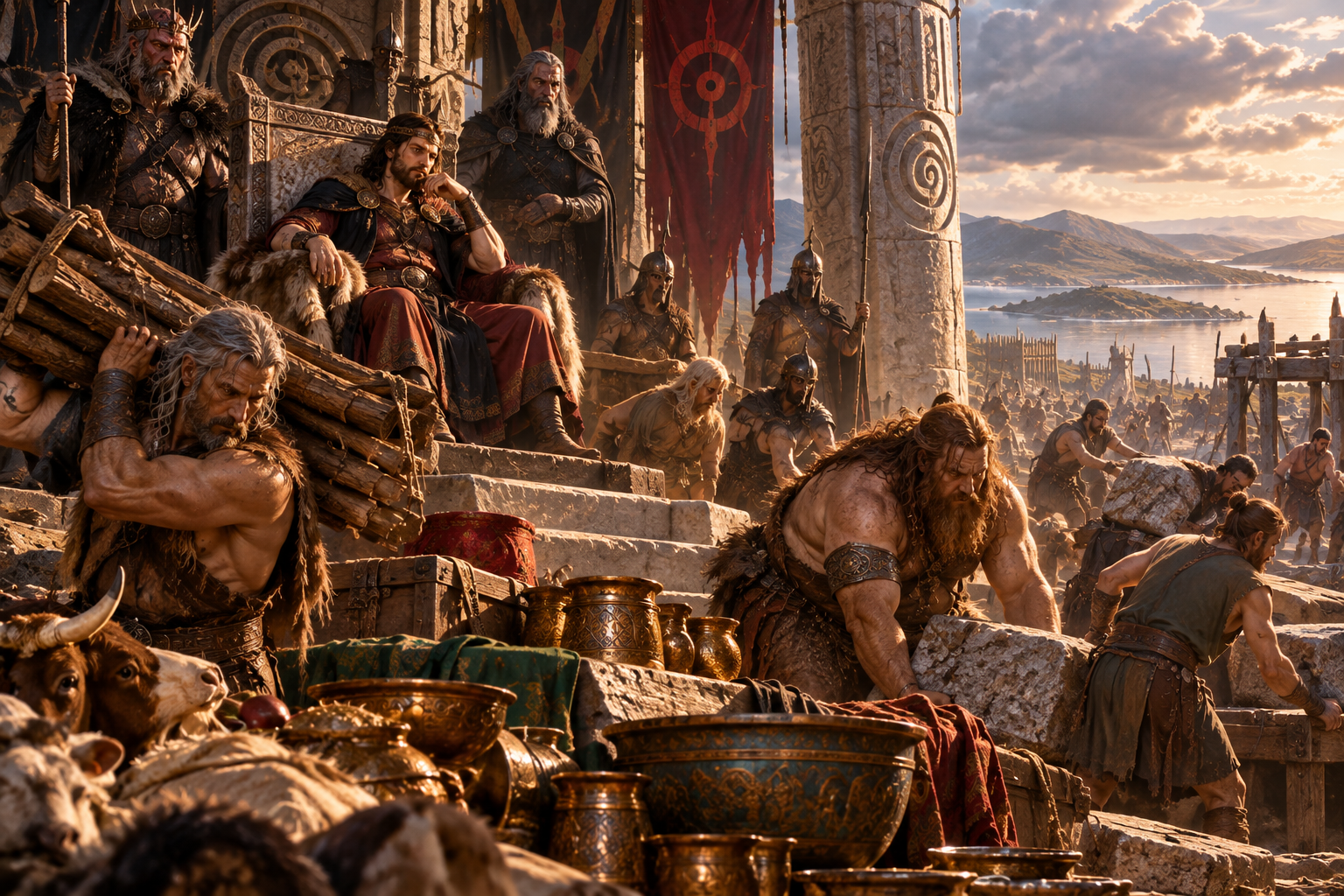
After he came to the throne, three Fomorian kings — Indech mac Dé Domnann, Elatha, and Tethra — imposed tributes on Ireland. The Tuatha Dé Danann themselves were reduced to performing labor for Bres.
Ogma was forced to carry firewood, while the Dagda was ordered to build the earthwork surrounding the king's fortress. Discontent continued to grow.
When the poet Coirpre received miserable hospitality at Bres's house, he composed a satire against him. According to the story, the satire brought misfortune upon the king and contributed to the Tuatha Dé Danann demanding the restoration of the throne.
Bres initially agreed to return it, but asked to remain for another seven years. During that time, he sought the help of the Fomorians in order to regain power by force.
The Return of Nuada
Meanwhile, Nuada had recovered the arm he had lost during the First Battle of Mag Tuired.
Dian Cécht had attached a silver hand capable of movement, and his son Miach later managed to restore it through his medical knowledge, reconnecting joints and tissues until the arm became flesh once again.
With the recovery of his arm, Nuada returned to the throne of the Tuatha Dé Danann. But the Fomorian threat was already growing.
Bres had turned to his father and eventually to Balor and Indech to gather an army capable of restoring Fomorian rule over Ireland.
The Arrival of Lugh
It was then that one of the most important figures in this story appeared: Lugh.
An unknown young man arrived at Tara and asked to be admitted. The gatekeeper asked him what craft he practiced, because no one could enter the fortress without possessing a skill. Lugh replied that he was a:
- warrior,
- smith,
- carpenter,
- harpist,
- physician,
- poet,
- and practitioner of magical arts.
Each time the gatekeeper told him that they already had someone who performed that particular craft, Lugh presented another skill.
Finally, he asked:
“Do you have anyone who can do all of those things?”
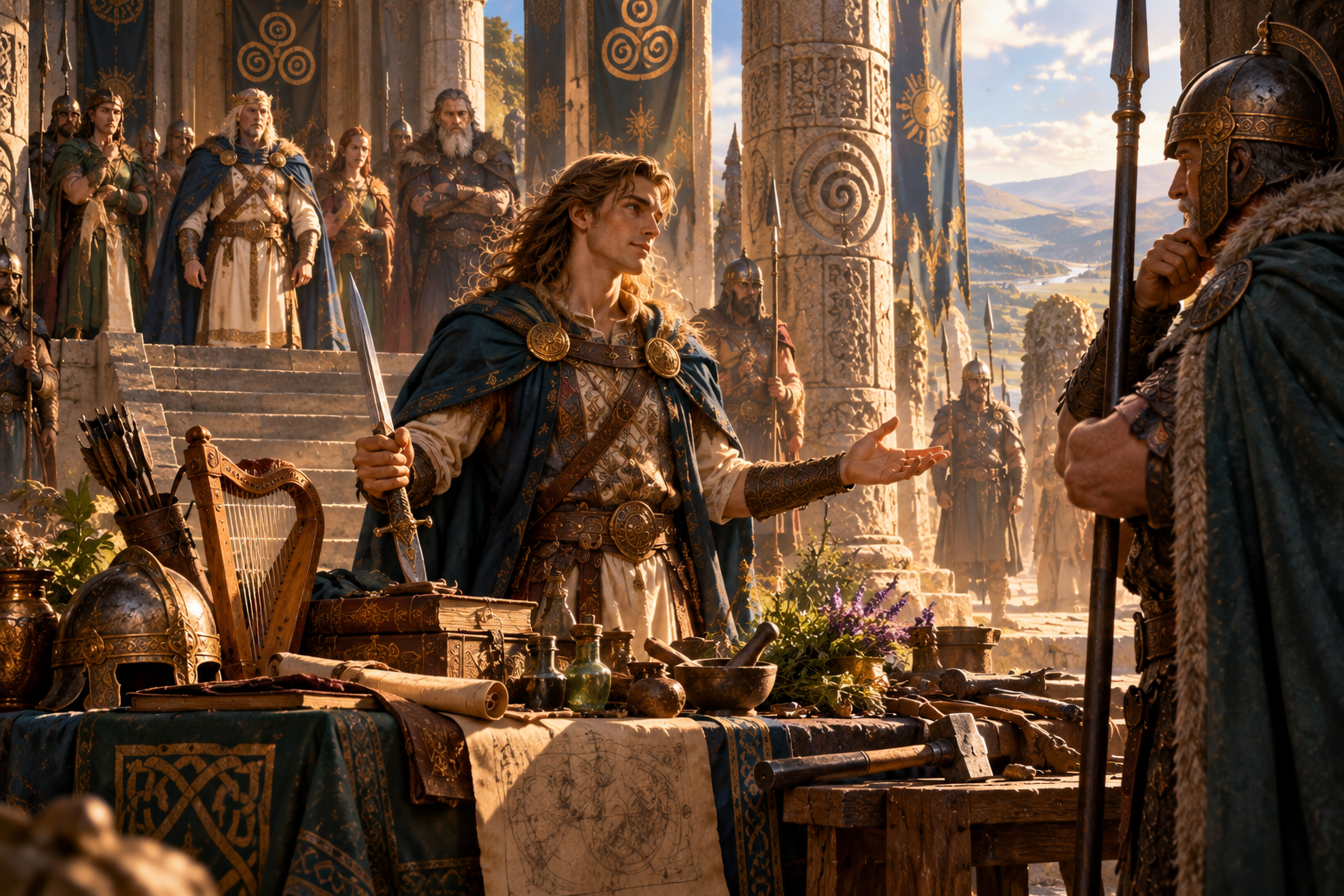
They did not. And so he was admitted.
The story presents him as Samildánach, , “the many-skilled one” or “he who possesses many skills.” Nuada understood that this young man might be precisely the leader they needed against the Fomorians.
Preparations for War
The Tuatha Dé Danann began preparing for the confrontation.
Lugh gathered their principal specialists and asked each of them what they could contribute to the war.
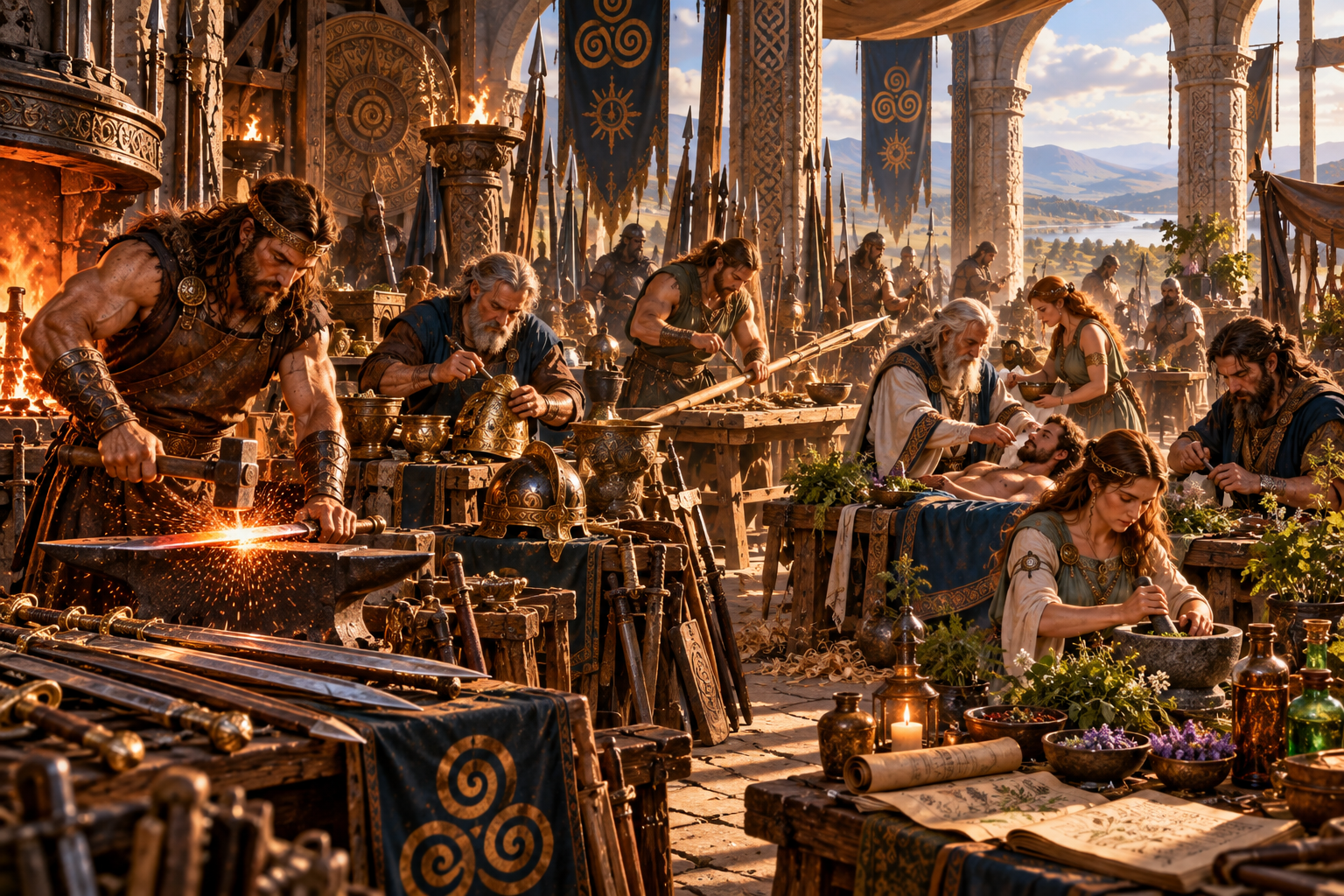
Goibniu, the smith, could continually forge new weapons.
Credne, the bronzeworker, would provide rivets, handles, and metal components.
Luchta, the carpenter, made shafts and handles.
Dian Cécht, together with Miach and Airmed, would tend to the wounded.
Ogma, the champion, would fight the enemy.
The druids, sorcerers, and other specialists would contribute their own magical knowledge.
Goibniu and the Weapons of the Tuatha Dé Danann
Goibniu was much more than an ordinary smith. According to the story, he could maintain the supply of weapons even if the battle lasted for years. For every spear that broke or sword that became unusable, he would forge another.
Meanwhile, Luchta rapidly produced spear shafts, while Credne made the necessary metal components.
The difference became obvious during the first clashes: the Fomorian weapons deteriorated, while those of the Tuatha Dé Danann could quickly be replaced.
Goibniu also possessed another ability: he prepared a brew known as Goibniu's Ale. Whoever drank it would never grow old.
The Mórrígan and the Dagda
Before the battle came one of the strangest episodes in the story.
The Dagda encountered a woman washing herself in the River Unshin, in Corann. The woman was the Mórrígan.
The text describes her as having nine loose locks of hair, with one of her feet on each side of the river.
The Dagda spoke with her, and the two united. The place was then given the name “The Bed of the Couple.”
But the encounter was not merely amorous. The Mórrígan informed the Dagda of the Fomorians' movements and announced that she would use her magic against Indech mac Dé Domnann, one of their kings. She later fulfilled her promise and acted against him and his forces.
The Battle
Finally, the two armies met. The sources describe one of the greatest battles in the whole of Irish tradition.
The Fomorians advanced with a formidable army. Facing them, the Tuatha Dé Danann used all their skills.
Goibniu forged new weapons.
The carpenters and craftsmen maintained the weaponry.
The physicians returned wounded warriors to the fight.
The druids and sorcerers used their knowledge against the enemy.
And Lugh, who had initially been protected to keep him away from the battle, eventually entered the fighting.
Unlike the First Battle of Mag Tuired, the sources do not clearly indicate how long the confrontation lasted.
Dian Cécht's Healing Well
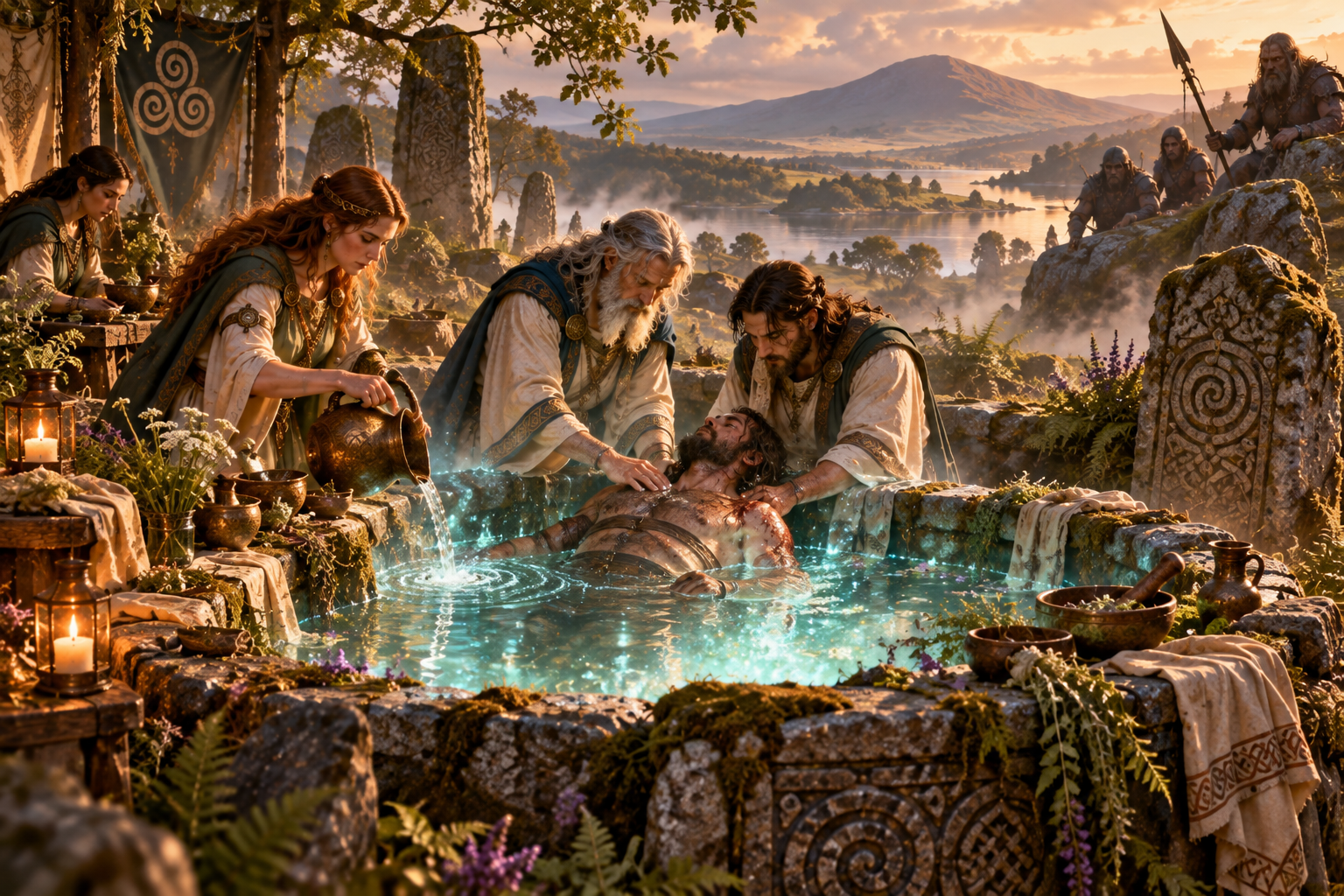
One of the most extraordinary resources of the Tuatha Dé Danann was the Well of Sláine.
Dian Cécht, Miach, and Airmed used their knowledge to heal wounded warriors through enchantments and herbs.
The fallen warriors were placed in the well and could return to battle.
The Fomorians discovered this secret through Rúadán, the son of Bres and Bríg, who was sent to observe how the weapons and arts of the Tuatha Dé Danann worked.
Rúadán attempted to kill Goibniu, but failed. Goibniu was wounded, but entered the well and was restored to health.
The Fomorians then attempted to neutralize the healing well. Ochtríallach, the son of Indech, ordered his men to throw stones into the well to fill it.
The story thus explains the mythical origin of a cairn associated with Ochtríallach and places the well to the east of Lough Arrow.
Lugh Against Balor
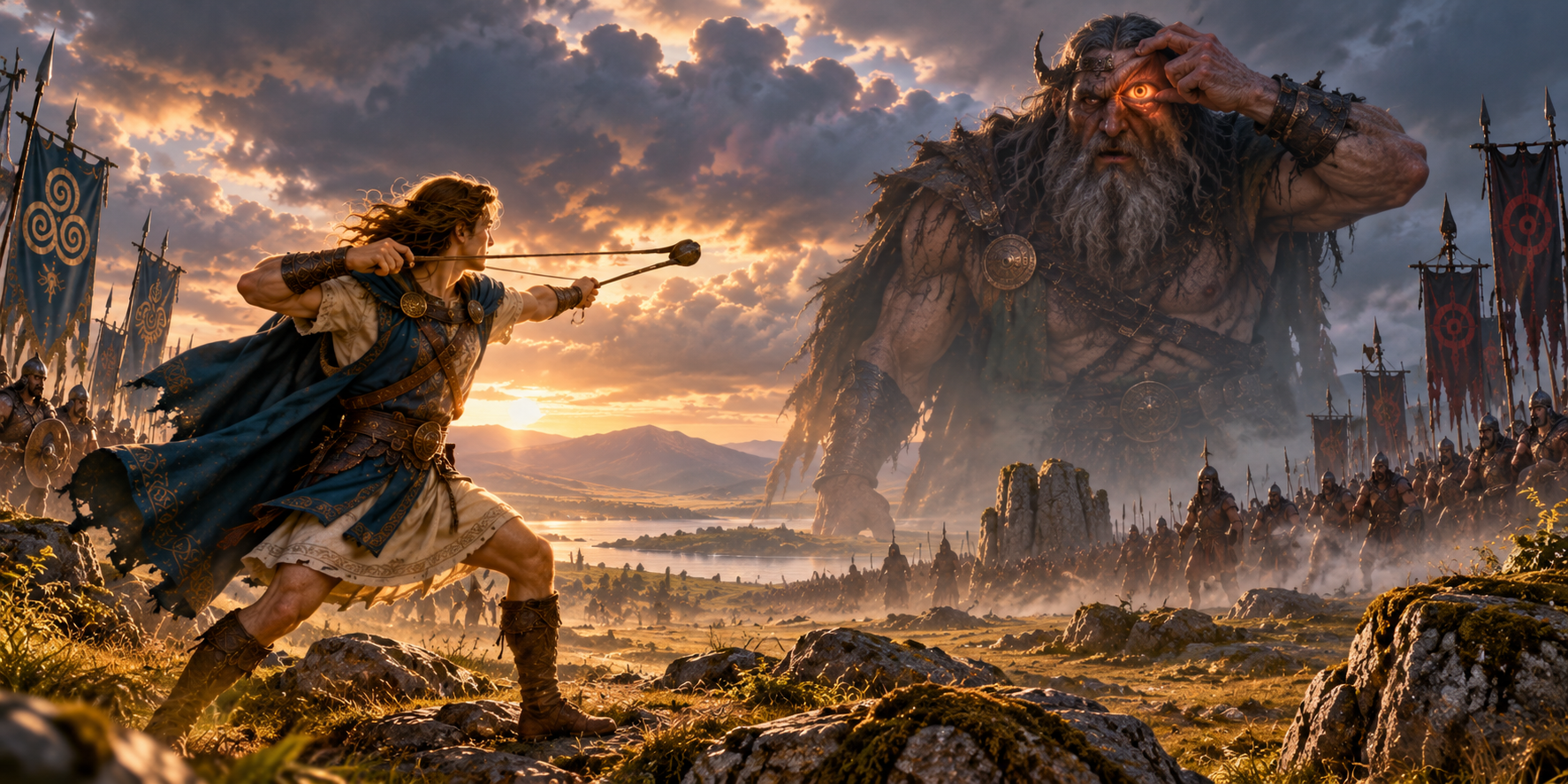
During the battle, Nuada and Macha fell at the hands of Balor. The climax comes when Lugh confronts his grandfather, Balor.
Balor possessed an enormous destructive eye that normally remained closed. According to the story, four men were required to lift its eyelid.
When the eye finally opened before Lugh, the young warrior hurled a stone from his sling. The projectile pierced the eye and forced it through to the back of Balor's head.
But its power did not disappear. The eye was now facing the Fomorian army itself, killing numerous Fomorians.
Lugh had defeated his grandfather, thus fulfilling the prophecy surrounding Balor. After the death of King Nuada, Lugh became the new High King.
The Defeat of Bres
After the defeat of the Fomorians, Bres was found alive. The Tuatha Dé Danann captured him and condemned him to death. But Bres attempted to save himself by offering different forms of essential knowledge concerning agriculture, the seasons, and the prosperity of the land in exchange for his life.
First, he promised to ensure that the cattle of Ireland would always have milk. Then he offered to provide crops throughout the entire year. But it was not enough.
Finally, he was asked how the land should be ploughed, sown, and harvested. Bres replied that all three tasks should be performed on Tuesday: ploughing, sowing, and harvesting on Tuesday.
Thanks to this answer, he was allowed to live.
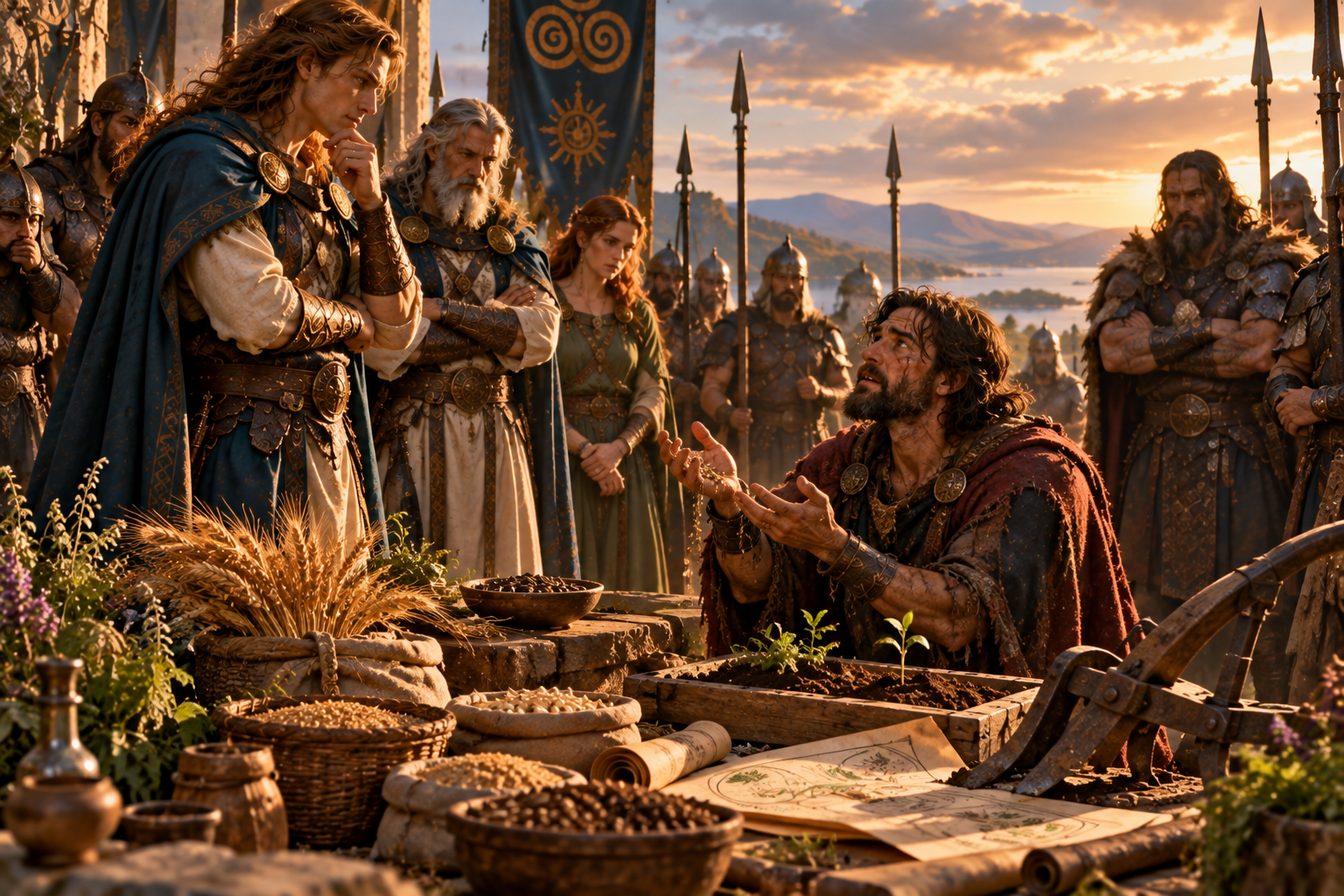
This episode turns Bres into the keeper of a form of mythical agricultural knowledge connected with the cycles of the earth and the work of the fields.
The sources offer different versions of Bres's later fate.
The Victory
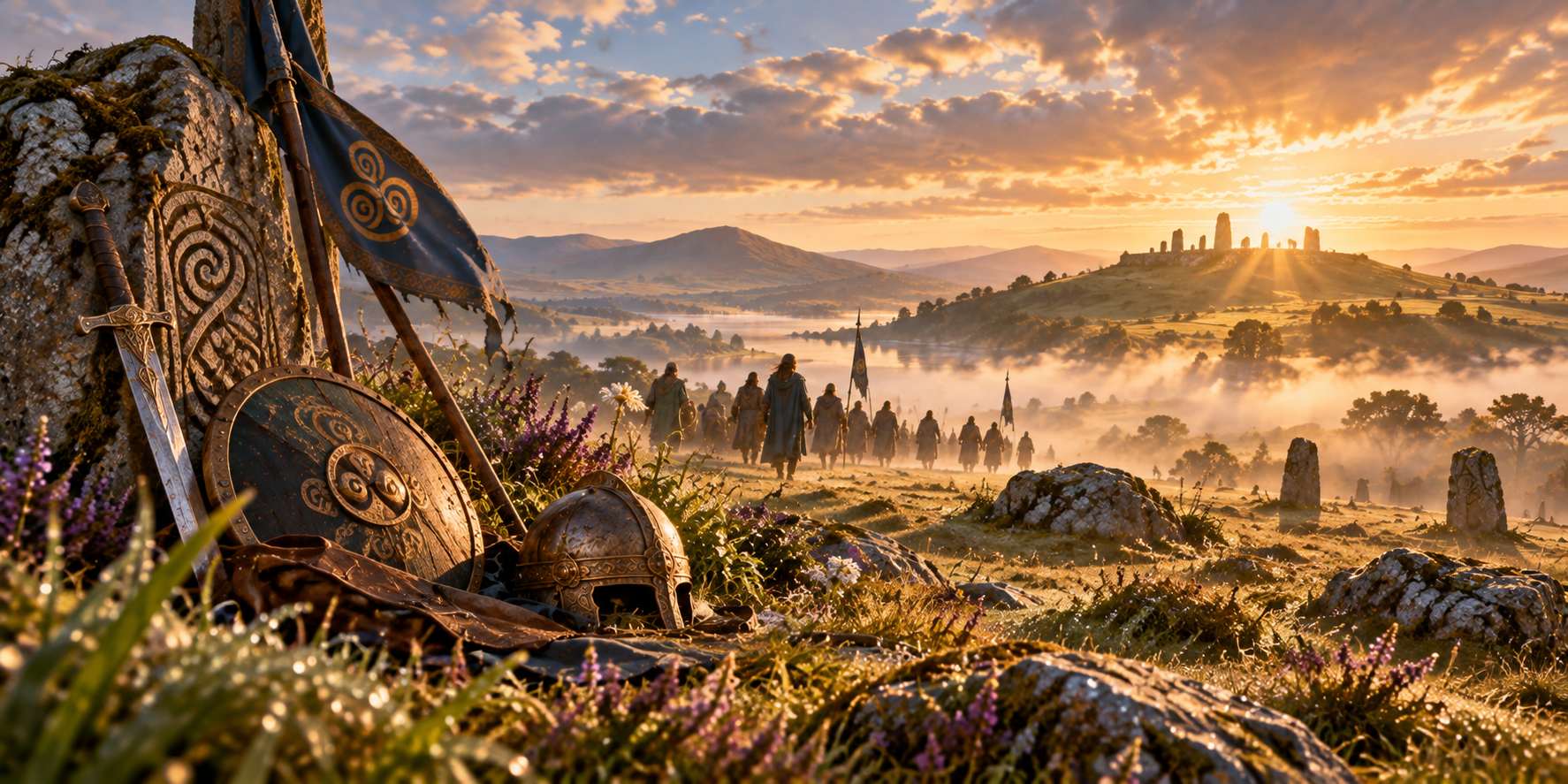
The Tuatha Dé Danann had won. The Fomorians were expelled and their dominion over Ireland was destroyed. Their victory symbolizes the triumph of order over chaos.
The Mórrígan then announced the victory to Ireland's sacred places, waters, and territories.
Later tradition presents the Tuatha Dé Danann as ruling Ireland until the arrival of the Milesians, the sons of Míl Espáine.
According to the Lebor Gabála Érenn, the Milesians would eventually conquer the island, and the Tuatha Dé Danann would withdraw into the sídhe, the supernatural mounds or dwellings. Thus ended their era, and according to Irish tradition, they became associated with the world of the Aos Sí themselves, the “People of the Mounds.”
A Story Full of Heroes
The Second Battle of Mag Tuired does not revolve around a single character.
Every god plays a fundamental role. Even Bres and Balor are essential to understanding the development of the story.
For this reason, many scholars regard this narrative as the great epic of Irish mythology.
A Legacy That Shaped Celtic Mythology
The Second Battle of Mag Tuired represents far more than a war.
Nuada, Lugh, Balor, Bres, the Mórrígan, the Dagda, Goibniu, Dian Cécht, Miach, and many others all play different roles in the story.
It is a confrontation between two different ways of understanding the world. The Tuatha Dé Danann symbolize knowledge, order, the arts, and prosperity. The Fomorians represent wild forces, chaos, and the dangers that threaten that balance.
The victory of the Tuatha marks the height of mythical Ireland's splendor before the arrival of the Milesians.
Curiosities
The Mórrígan and the Washer at the Ford
The image of the Mórrígan washing beside a river before a battle gave rise, in later traditions, to a much more unsettling figure.
In Irish and Scottish folklore, we find the figure of a supernatural woman who washes bloodstained clothing belonging to those destined to die.
Her appearance thus becomes an omen of death.
In Scotland, this figure is known as the Bean Nighe, “the washer at the ford,” a supernatural creature associated with rivers and places where water is crossed.
Follow the Footprints
Visit It Today...
Hill of Tara — County Meath
Tara Tara is connected with numerous stories from Irish tradition and also appears in Cath Maige Tuired as the place where the Lia Fáil, one of the four great treasures of the Tuatha Dé Danann, is found.
Today, the archaeological complex can be visited and preserves monuments such as the Forradh, Ráth na Ríogh. Teach Chormaic and the Mound of the Hostages.
Moytura — County Sligo
The Second Battle is traditionally located at Mag Tuired in the north, in County Sligo, in the area east of Lough Arrow.
The landscape preserves numerous prehistoric monuments, cairns, and standing stones, and local tradition has associated some of them with characters and episodes from the battle.
The River Unshin
The River Unshin, in County Sligo, is where the story places the encounter between the Dagda and the Mórrígan before the battle.
According to the medieval text, she was washing in the river when the Dagda encountered her.
The Well and Cairns of Mag Tuired
The Well of Sláinewas used by the physicians of the Tuatha Dé Danann to heal fallen warriors.
A Fomorian warrior named Ochtríallach ordered his men to bring stones from the Drowes River and throw them into the well, burying it forever. The accumulation of rocks buried the spring and connects it with the cairn known today as Ochtríallach’s Cairn , placing the well to the east of Lough Arrow.
Cairns and Stones
Throughout the region, cairns, standing stones, and other prehistoric monuments can be found that have become connected through local tradition with the protagonists of Mag Tuired.
Several cairns and stones have been associated in popular tradition with the heroes of the battle.