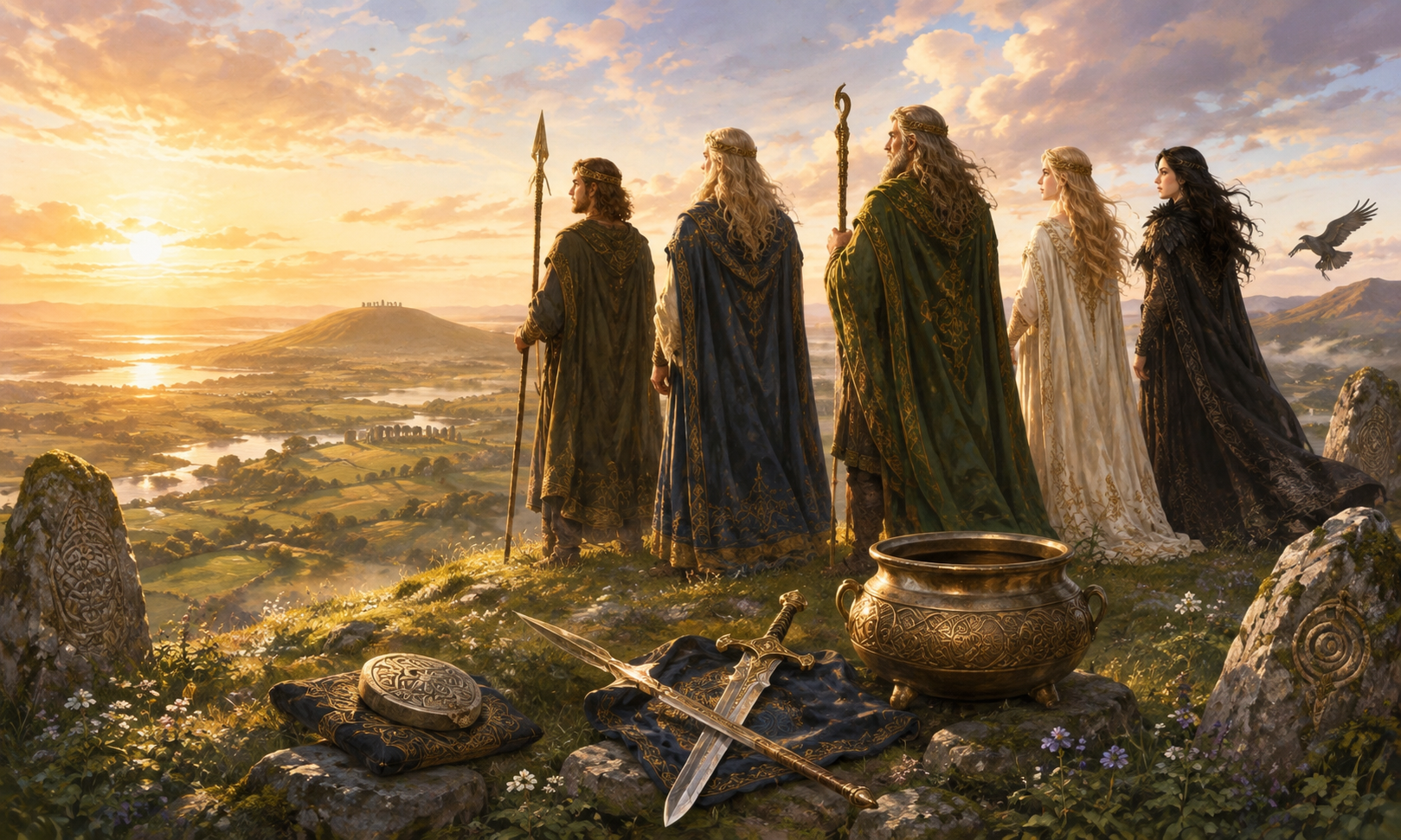
Among the mythical peoples who, according to tradition, inhabited Ireland, one holds a very special place. The legends tell of an extraordinary people: the Tuatha Dé Danann, beings endowed with wisdom, magic, and supernatural abilities who, according to tradition, ruled Ireland before the arrival of the Milesians.
The Meaning of Tuatha Dé Danann
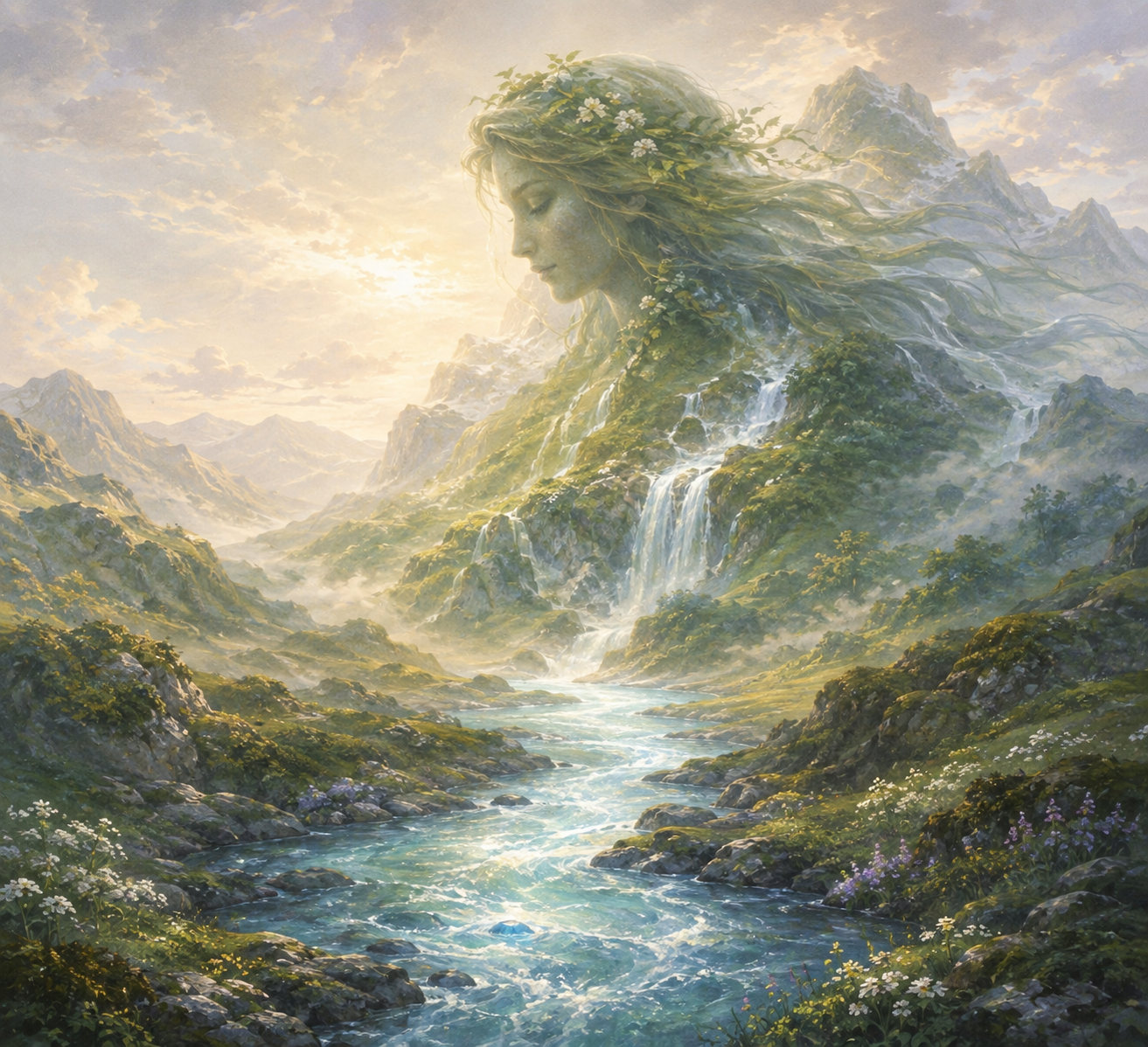
According to the Lebor Gabála Érenn (The Book of the Taking of Ireland), the people known throughout Ireland's mythical invasions as the Tuatha Dé Danann are generally translated as "the people of the goddess Danu.".
- Tuatha = people, tribe
- Dé = of
- Danann = Danu
Although the exact meaning of Danu remains a matter of scholarly debate, she is commonly associated with:
- rivers
- fertility
- the earth
- origins
- abundance
- motherhood
Although they are often regarded today as gods, the Tuatha Dé Danann did not form a structured pantheon like those found in many other mythologies.
Rather than a collection of independent deities, the medieval texts portray them as an extraordinary people made up of kings, warriors, sages, craftsmen, and figures associated with magic, warfare, healing, and fertility.
They possessed a hierarchical—though not rigid—social structure, in which each individual fulfilled a distinct role within their society.
Over time, Irish tradition came to regard them as the ancient gods of Ireland. However, the medieval sources primarily describe them as an extraordinary people endowed with supernatural powers.
Danu: The Mysterious Goddess
Most scholars believe that Danu was an ancient ancestral goddess of Ireland and the figure from whom the Tuatha Dé Danann derived their name. However, the medieval manuscripts preserve almost no stories about her, meaning that much of what is known today about her nature comes from linguistic and historical reconstruction.
The principal Irish medieval manuscripts were written by Christian monks between the eleventh and twelfth centuries, preserving oral traditions that had survived for generations.
Among the most important manuscripts are:
- Lebor Gabála Érenn (The Book of the Taking of Ireland), the principal source on the Tuatha Dé Danann.
- Cath Maige Tuired, which recounts the two Battles of Mag Tuired.
- Lebor na hUidre (The Book of the Dun Cow)
- Book of Leinster
- Other Irish medieval manuscripts preserving portions of these traditions.
The Four Cities, the Four Masters, and the Four Treasures
According to the Lebor Gabála Érenn, before arriving in Ireland, the Tuatha journeyed north, where they mastered the arts of magic and wisdom in four legendary cities. Each city was ruled by a great master and guarded one of the Four Treasures that the Tuatha would later bring with them to Ireland.
The four mythical cities were:
- Falias, ruled by the sage Morfesa, from which came the Stone of Fal (Lia Fáil)..
- Gorias, governed by Esras, where they obtained Lugh's Spear.
- Fidias, under the guidance of Uiscias, where they received Nuada's Sword.
- Murias, ruled by Semias, from which came the Dagda's Cauldron.
The Four Treasures of the Tuatha Dé Danann
According to tradition, the Tuatha Dé Danann brought with them four magical treasures, each originating from one of the four cities. These were not merely weapons or sacred relics but symbols of sovereignty, power, abundance, and order.
- The Stone of Fal (Lia Fáil): cried out whenever the rightful High King of Ireland touched it.
- Lugh's Spear: was invincible in battle and never missed its target.
- Nuada's Sword: once drawn, it never failed and allowed no enemy to escape.
- The Dagda's Cauldron: was inexhaustible and always provided food for those in need.
These four treasures would become some of the most enduring symbols in all of Irish mythology.
The Arrival in Ireland: A People Wrapped in Mist
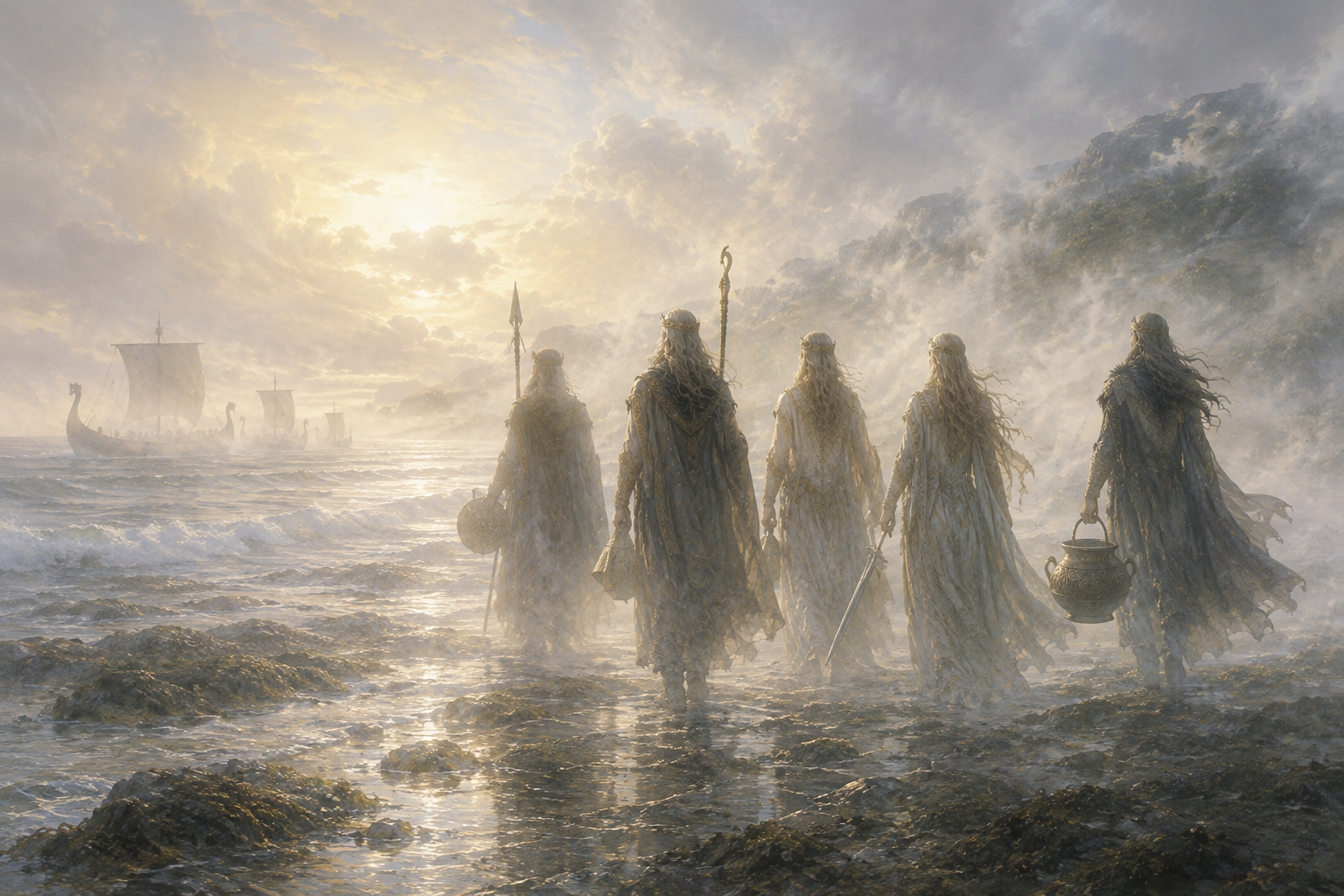
According to the Lebor Gabála Érenn, the Tuatha Dé Danann arrived in Ireland concealed within a thick magical mist. They were not simply warriors or settlers, but a people closely associated with magic, hidden knowledge, and many of the most important figures in Irish mythology.
Some traditions claim that after landing, they burned their own ships as a sign that there would be no return.
According to the texts, their king was Nuada Airgetlám ("Nuada of the Silver Hand"), who established his royal seat at Tara, the former stronghold of the Fir Bolg. There he placed the Lia Fáil (Stone of Fal), and when he was proclaimed king, the stone cried out in recognition of Ireland's rightful sovereign.
Masters of Magic and Wisdom
The Tuatha Dé Danann did not rule Ireland through military strength alone.
Their true power lay in magic, hidden knowledge, and a profound connection with nature and the Otherworld.
Tradition attributes extraordinary abilities to them, including the power to change shape, alter reality, influence fate, and command the forces of nature.
It was precisely this wisdom that distinguished them from all the peoples who, according to tradition, had inhabited Ireland before them.
The Principal Figures of the Tuatha Dé Danann
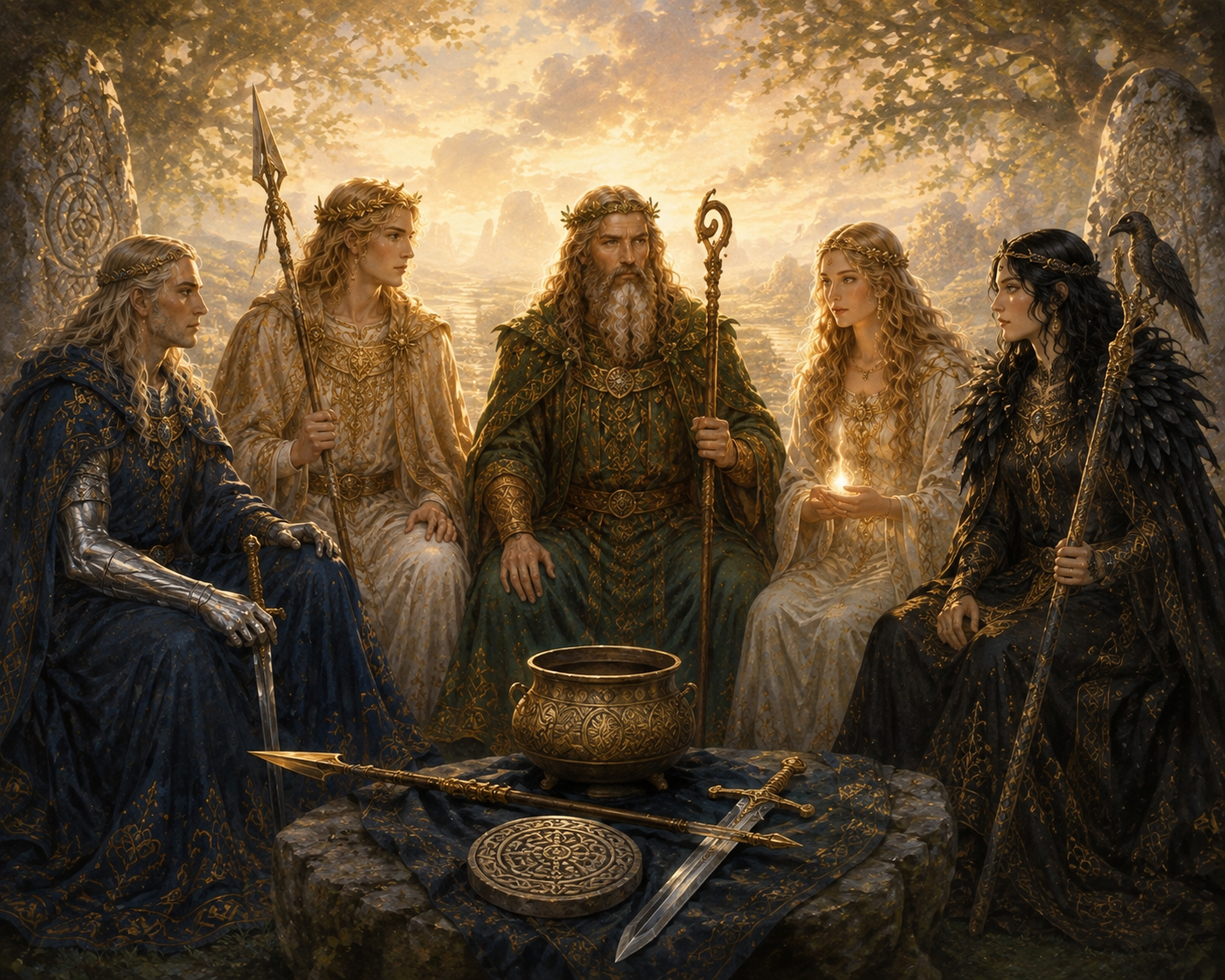
Among the most important members of this extraordinary people are:
- Nuada, the first king.
- Lugh, the hero of the Second Battle of Mag Tuired.
- the Dagda, lord of abundance and one of the most powerful deities in Irish tradition.
- Brigid, goddess of inspiration, poetry, and healing.
- Morrigan, associated with fate, sovereignty, and war.
Each of them plays a central role in some of the most celebrated stories of Irish mythology.
Éiru, Fódla, and Banba: The Three Sisters of Ireland
Among the female figures associated with the Tuatha Dé Danann are Éiru, Fóldla y Banba, three sisters closely linked to the land and sovereignty of Ireland.
Genealogical tradition places them within the lineage of the Tuatha Dé Danann and connects them to Ernmas, a figure belonging to this supernatural people. Furthermore, their names are linked to the island itself: Éiru, Fódla y Banba served as poetic or traditional names for Ireland.
The three sisters are also associated with the three kings of the Tuatha Dé Danann who ruled the island before the arrival of the Milesians:
- Banba, wife of Mac Cuill.
- Fódla, wife of Mac Cecht.
- Éiru, wife of Mac Gréine.
Their significance extends beyond genealogy. In tradition, the three represent a symbolic connection between the Tuatha Dé Danann, the territory, and the identity of Ireland.
Much later, when the Milesians arrived on the island, each sister encountered the invaders and asserted, in her own way, her bond with the land.
Ultimately, it was Éiruwho gave her name to Ireland; Éirethe Irish name for the island, is derived from hers.
The Battles of Mag Tuired
The Tuatha Dé Danann secured their rule over Ireland through two great conflicts known as the Battles of Mag Tuired.
The first was fought against the Fir Bolg. La segunda los llevó a combatir contra los Fomorians, in a conflict that, beyond warfare itself, symbolized the struggle between order and chaos.
First Battle of Mag Tuired
The arrival of the Tuatha Dé Danann in Ireland was not without conflict.
The first battle was fought against the Fir Bolg, the island's previous inhabitants.
According to tradition, the Tuatha proposed dividing the land between the two peoples, but when the Fir Bolg refused, war became inevitable.
During the First Battle of Mag Tuired, Nuada lost his arm in combat. Later, Dian Cécht, the god of healing, assisted by the craftsman Credne, forged him a silver prosthetic arm. From that moment onward, he became known as Airgetlám, literally meaning "the Silver Hand."
The loss of his arm had serious consequences. According to Irish tradition, a king had to be physically whole in order to rule. Since Nuada had been maimed, he was forced to relinquish the throne, which passed to Bres.
Some time later, Miach, the son of Dian Cécht, accomplished an even greater miracle by restoring Nuada's arm as living flesh. Thanks to this, Nuada regained his physical perfection and was able to reclaim the throne, deposing Bres.
Bres's downfall would ultimately set in motion the events leading to the Second Battle of Mag Tuired.
The Death of Miach
Miach's story is one of the most tragic episodes in all of Irish mythology.
After Nuada lost his arm, Dian Cécht crafted him a silver prosthetic. Miach, however, achieved something even more extraordinary by restoring Nuada's arm as living flesh.
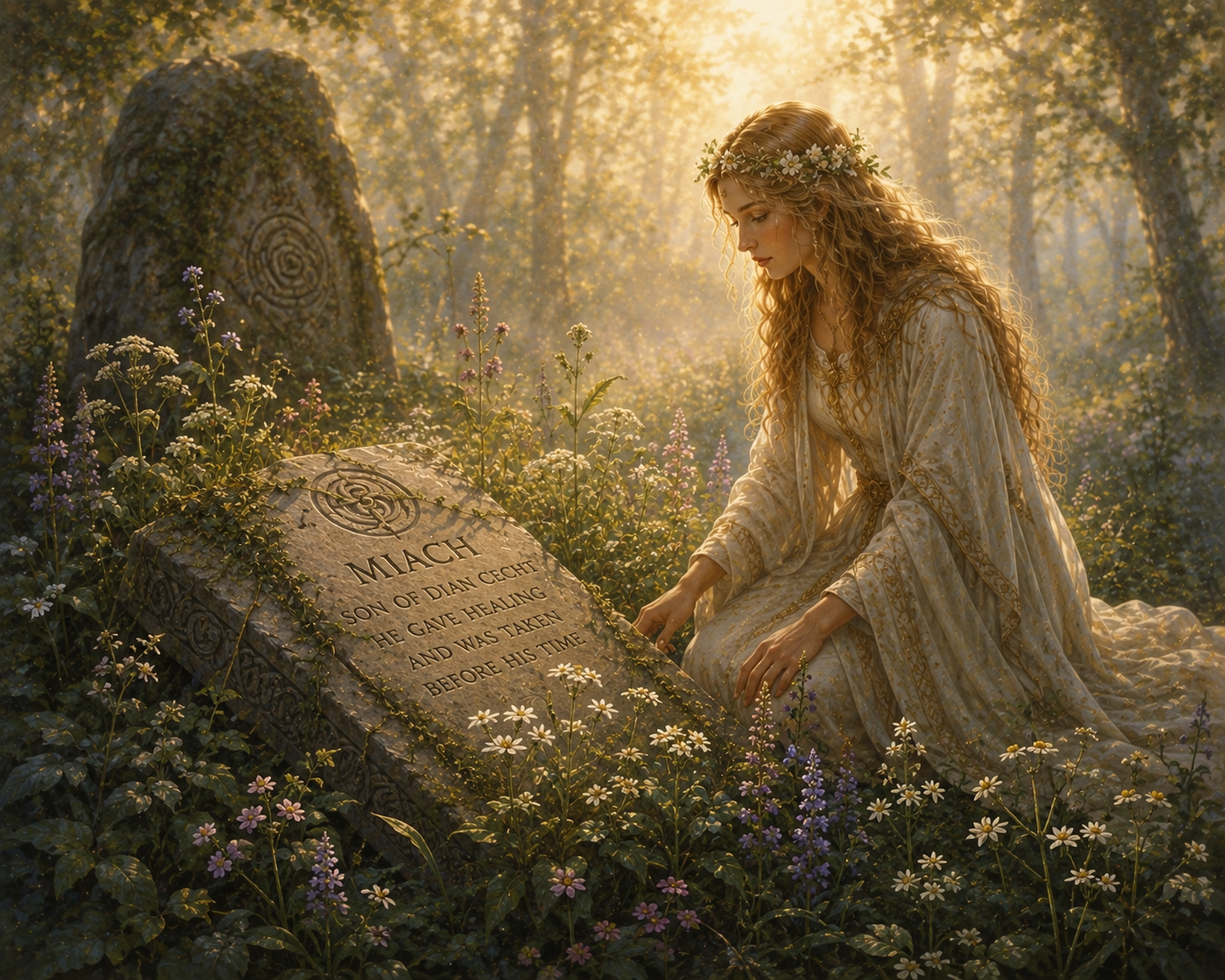
Rather than celebrating his son's achievement, Dian Cécht became consumed by jealousy. Unable to accept that Miach had surpassed his knowledge, he killed him.
From Miach's grave sprang 365 healing herbs, one for every joint and part of his body. His sister Airmed began carefully arranging and identifying the plants in order to preserve their healing properties.
But, driven once again by envy, Dian Cécht mixed all the herbs together before they could be catalogued. According to tradition, this is how perfect medical knowledge was lost forever.
Bres
Bres, born of a Tuatha Dé Danann mother and a Fomorian father, became king after Nuada was forced to surrender the throne.
His reign proved deeply unpopular. He favored the Fomorians, imposed heavy burdens upon the Tuatha Dé Danann, and ruled in the interests of his father's lineage rather than those of his own people.
When Nuada regained his arm thanks to Miach, Bres was deposed and fled to join the Fomorians.
His return would trigger the next great conflict.
The Second Battle of Mag Tuired
The Second Battle of Mag Tuired opposed the Tuatha Dé Danann to the Fomorians, whom tradition often associates with chaos and the primordial forces of nature.
This time, Lugh played the decisive role, leading the Tuatha to victory.
During the battle, Nuada was slain by Balor, the mighty Fomorian king. Lugh avenged his king by hurling his legendary spear at Balor, killing him.
Following their victory, the Tuatha captured Bres.
By then, the Dagda had assumed leadership after Nuada's death and chose to judge the former king.
Although the Tuatha Dé Danann emerged victorious, the Fomorians did not disappear entirely from Irish tradition and continued to appear in many later legends.
The Final Invasion: The Milesians
The final invasion of Ireland came with the arrival of the Milesians, descendants of Míl Espáine, who, according to tradition, sailed from the Iberian Peninsula.
As their fleet approached the island, the druids of the Tuatha Dé Danann unleashed a tremendous magical storm to prevent the landing.
However, Amergin, the Milesians' poet and druid, answered with his own incantations and succeeded in calming the storm, allowing the expedition to reach the Irish coast.
The final battle was then fought between the two peoples.
Although both sides suffered heavy losses, the Milesians ultimately emerged victorious.
After the battle, Amergin established a new order: the descendants of Míl would rule visible Ireland, while the Tuatha Dé Danann would leave the world of humankind and withdraw into the Otherworld.
The Sídhe: From the Visible World to the Invisible One
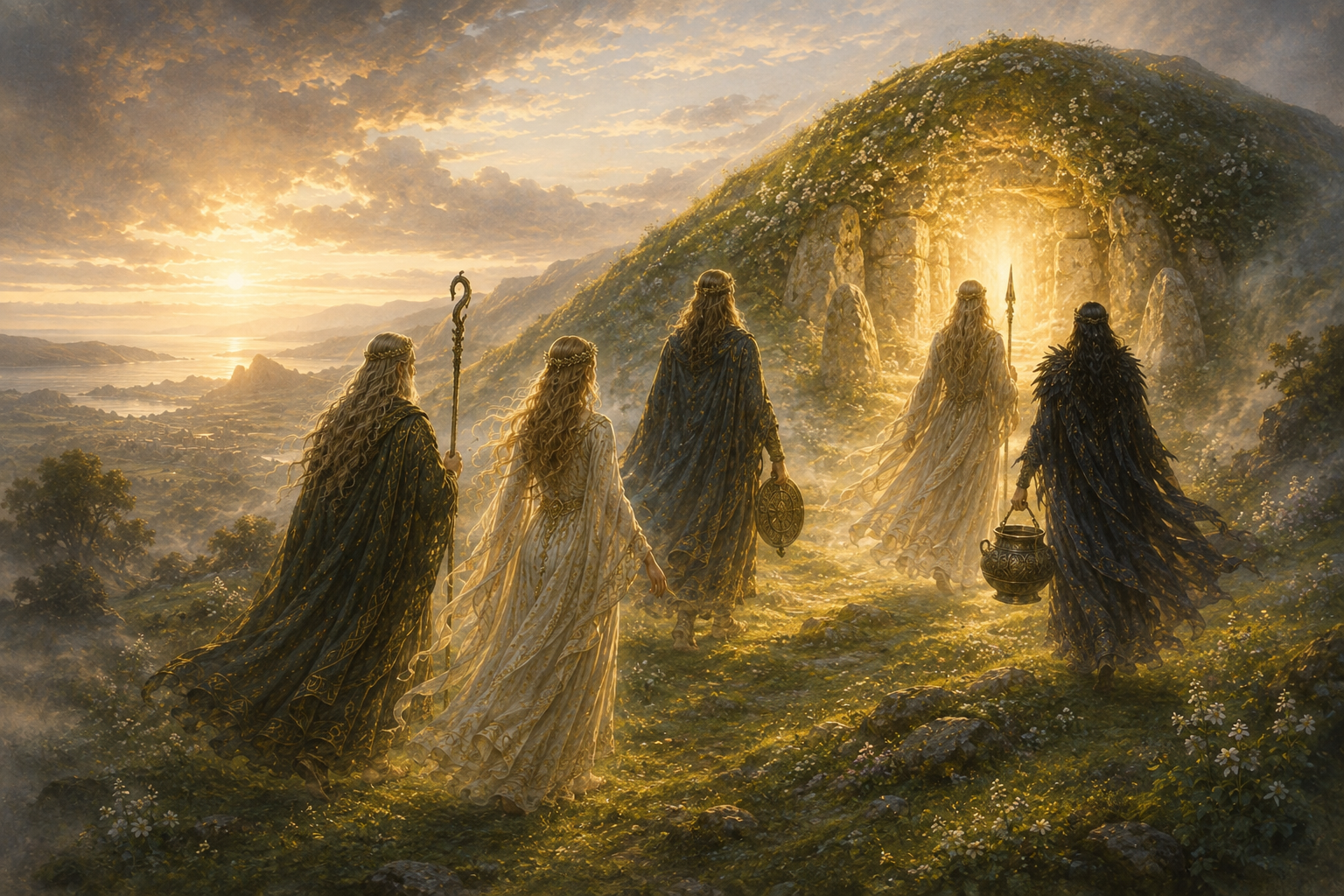
After the Milesian victory, the the Dagda distributed the various sídhe—the sacred hills and burial mounds—from which the principal members of the Tuatha Dé Danann would continue to dwell in the Otherworld.
Many of these places are still identified today with hills and prehistoric monuments scattered throughout Ireland.
Among the best known are:
- the Dagda → Brú na Bóinne (Newgrange, Knowth y Dowth).
- Oengus, son of the Dagda → Brú na Bóinne
- Manannán mac Lir → associated with Tír fo Thuinn and Emain Ablach.
- Morrígan → linked to various rivers and ancient battlefields
- Bod Derg → the Sídhe of Munster
- Midir → Brí Léith.
According to the Lebor Gabála Érenn, after withdrawing into the sídhe, the Tuatha Dé Danann became known as the Aos Sí themselves, the people of the Otherworld.
In Irish:
- Aos = people.
- Sí = the sídhe, or sacred burial mounds.
Over the centuries, the Aos Sí gradually evolved into the fairies, spirits, and supernatural beings of Irish folklore.
Curiosities
Places Older Than the Legends Themselves
Although many places in Ireland became associated with the Tuatha Dé Danann and other Celtic legends, the truth is that several of them are thousands of years older than both the Celts and the mythical peoples described in the Lebor Gabála Érenn.
Over time, these ancient prehistoric monuments were woven into Irish tradition and became the setting for some of its most important mythological stories.
Among the best known are:
- Newgrange, built around 3200 BC, more than a thousand years before the pyramids of Egypt. Every winter solstice, a beam of sunlight passes through a small roof-box and illuminates the burial chamber. In later Irish tradition, this monument became identified with Brú na Bóinne, the residence of the the Dagda and his son Aengus.
- The Hill of Tara (Teamhair na Rí, "Hill of the Kings"), in present-day County Meath, was one of Ireland's most important ceremonial centers. Archaeological remains show that the site has been occupied for approximately 5,000 years, long before the mythological traditions that would later describe it as the seat of Ireland's High Kings.
Danu: The Indian Goddess of the Primordial Waters
The name Danu also appears in the Rigveda, one of the oldest sacred texts of India, where it refers to an ancient deity associated with the primordial waters.
This coincidence has led some scholars to suggest that both figures may preserve the memory of a very ancient common deity belonging to the Indo-European tradition, connected with water, origins, or fertility.
However, there is no evidence that these two goddesses were the same deity or that there is any direct continuity between the two traditions.
Most specialists believe that this similarity may instead reflect an ancient shared cultural and linguistic heritage inherited by the Indo-European peoples and later developed independently in each region.
Follow the Footprints
Visit It Today...
Hill of Tara (County Meath)
An ancient ceremonial center and one of the greatest symbols of Irish sovereignty. Among its most important landmarks are:
- Lia Fáil (Stone of Destiny), one of the Four Treasures of the Tuatha Dé Danann.
- Ráth na Ríogh(Fort of the Kings).
- Teach Chormaic (Cormac's House).
- Forradh, the ancient ceremonial mound where the Stone of Destiny stands.
Brú na Bóinne (Newgrange, Knowth y Dowth)
This UNESCO World Heritage archaeological complex was identified by tradition as the home of the the Dagda and his son Aengus, making it one of the most sacred places in Irish mythology.
Loughcrew
A complex of megalithic passage tombs in County Meath, associated in some traditions with the Tuatha Dé Danann and ancient rituals connected to the Otherworld.
Hill of Uisneach
Regarded as one of Ireland's sacred centers and, according to many traditions, the place where the island's ancient provinces met. It is closely associated with the Tuatha Dé Danann and numerous Celtic legends.
Cong
A small village associated with the Cross of Cong, one of the masterpieces of medieval Irish art. Later traditions symbolically linked it to Lugh's Spear and the Four Treasures of the Tuatha Dé Danann. Today, the Cross of Cong is preserved in the National Museum of Ireland.
Lough Corrib and the Plain of Moytura
Tradition places the First Battle of Mag Tuiredbetween the Tuatha Dé Danann and the Fir Bolg in this region. The nearby Plain of Moytura is identified by many scholars as the legendary battlefield.
National Museum of Ireland
The museum houses one of the country's finest collections devoted to Irish archaeology, history, and mythology, providing invaluable context for understanding the world in which the legends of the Tuatha Dé Danann emerged.
Over the centuries, the Tuatha Dé Danann ceased to rule Ireland and became the mysterious inhabitants of the Otherworld. Among prehistoric monuments, ancient hills, and enduring legends, their memory remains an essential part of Ireland's landscape and cultural identity. More than simply a mythical people, they represent a bridge between history, tradition, and the imagination of an entire island.