After the disappearance of Nemed's people, the traditions tell us that the survivors scattered across different regions of the world.
One of those groups eventually reached Greece, where they were enslaved for generations.
According to the Lebor Gabála Érenn(The Book of the Taking of Ireland), their descendants would become known as the Fir Bolg, the next mythical people to return and claim Ireland.
Although they ruled the island for a time, their destiny would change forever with the arrival of the Tuatha Dé Danann.
The Meaning of Fir Bolg
According to the Lebor Gabála Érenn, the traditional explanation of the name is "the Men of the Bags,"since during their slavery in Greece they were supposedly forced to carry soil in large leather sacks.
The traditional translation is:
- Fir = men
- Bolg = bags or sacks
However, most scholars believe that Bolg may instead refer to the name of an ancient people. Other theories associate them with the Belgae, a group of tribes that inhabited much of Gaul and southern Britain.
To date, none of these theories has been definitively confirmed.
Their Origins in Greece
According to the Lebor Gabála Érenn, the Fir Bolg were descendants of Nemed's people.
Tras enfrentarse a los fomorianos, Nemed y su pueblo fueron derrotados. Los supervivientes abandonaron Irlanda y se dispersaron en varias direcciones. Uno de aquellos grupos llegó a Grecia, donde fue esclavizado durante generaciones.
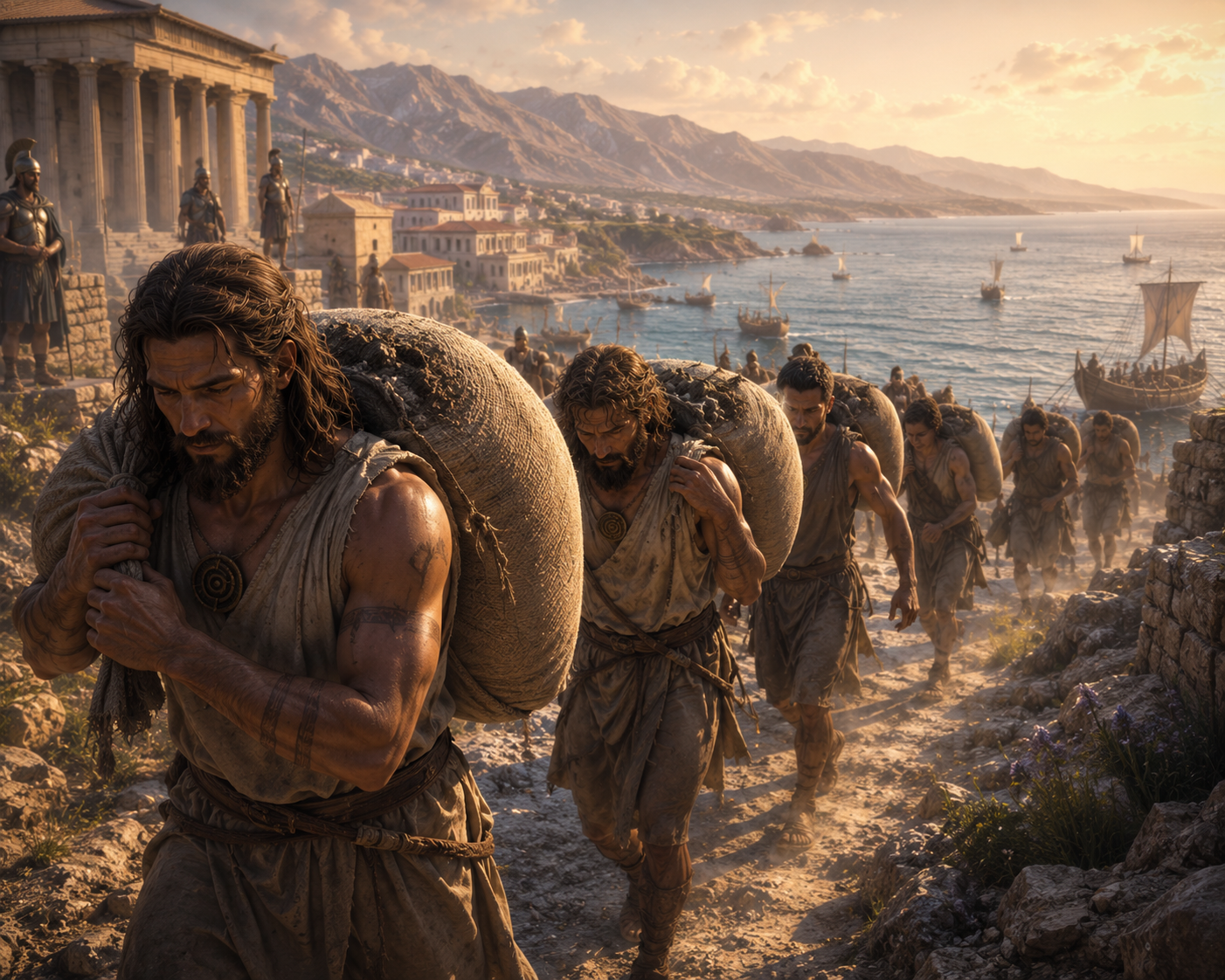
Over time, their descendants became known as the Fir Bolg.
The Return to Ireland
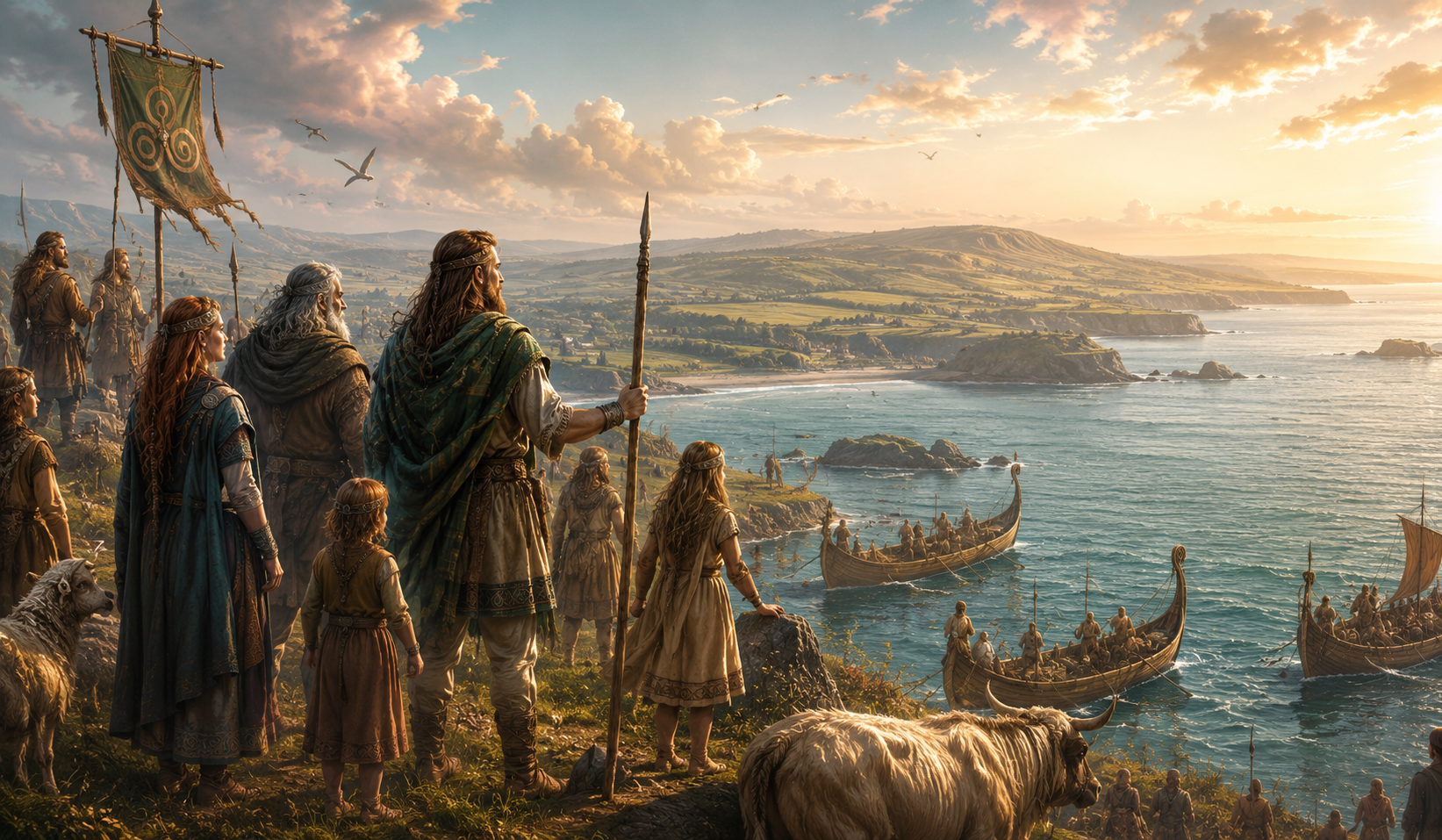
After escaping from Greece, they returned to Ireland.
For the first time, they found the island deserted. They did not have to conquer it.
They simply settled there.
The Five Provinces
According to the Lebor Gabála Érenn, the Fir Bolg were the first to divide Ireland into five great provinces, a territorial organization that, although modified over time, remained part of Irish tradition for centuries.
According to the Lebor Gabála Érenn, Dela as one of the most important ancestors of the Fir Bolg after their arrival from Greece.
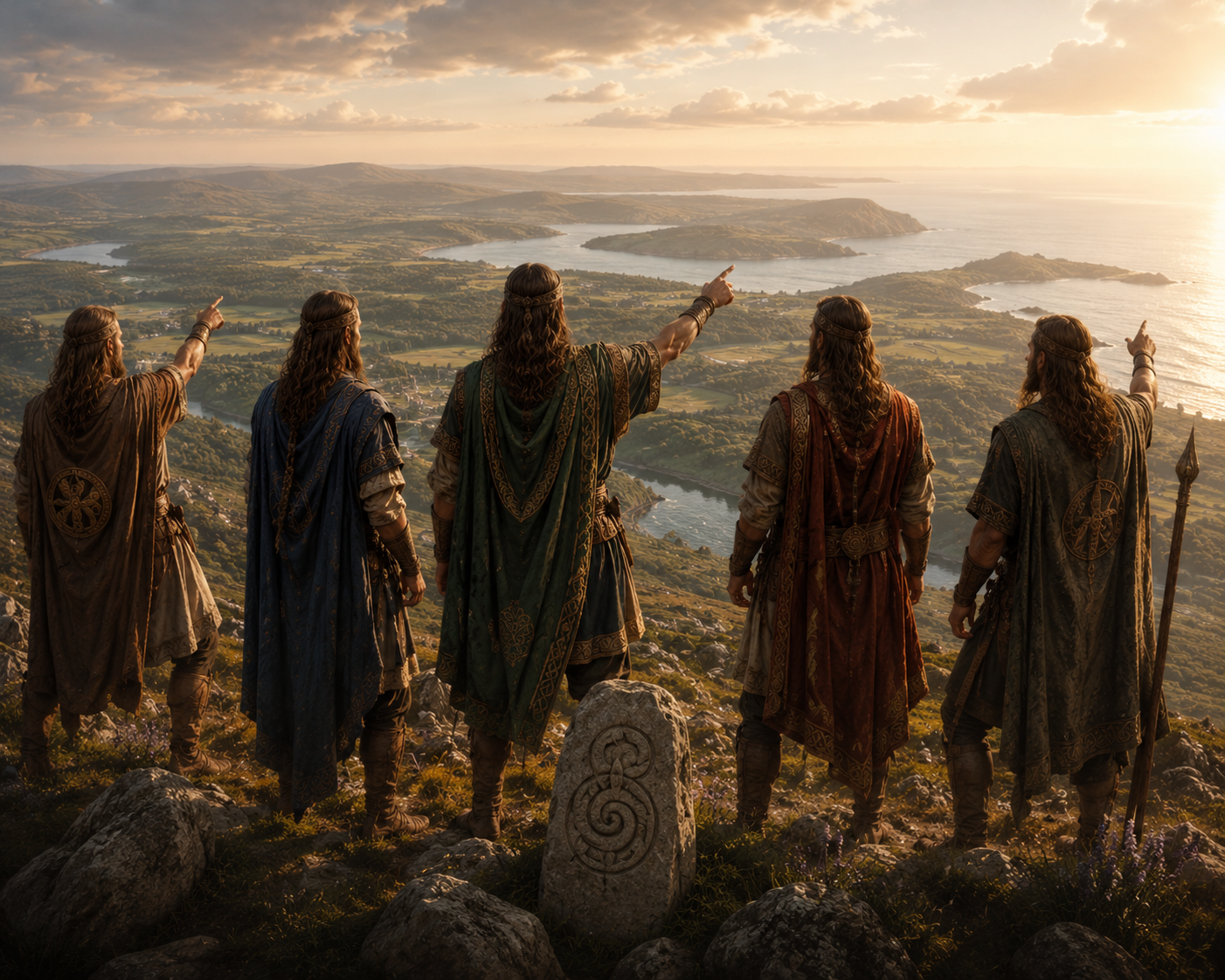
Tradition states that he divided the island among his five sons:
- Ulster (north) → Rudraige
- Leinster (east) → Sengann
- Munster (south) → Genann
- Connacht (west) → Gann
- Meath (center) → Sláine
Tradition regards them as the first rulers of Ireland's five provinces.
Meaning of the Five Traditional Provinces
- Ulsterderives from the ancient kingdom of the Ulaid.
- Leinstertakes its name from the Laigin people.
- Munstertakes its name from the Mumu people.
- Connachtis named after the Connachta, the legendary descendants of Conn Cétchathach.
- Meathcomes from the Old Irish word Mide, meaning "the middle,"since it occupied the center of the island.
Their symbolic center of power was established at Tara (Teamhair), an ancient ceremonial hill that had already been regarded as a sacred place long before their arrival. Over the centuries, the Tuatha Dé Danann, the Milesians and the historical High Kings of Ireland also adopted Tara as the symbol of sovereignty, making it one of the most sacred and iconic places in Irish tradition.
Several medieval texts mention different rulers associated with the five provinces, although Eochaid mac Eirc is the king who receives the greatest prominence.
Tradition credits the Fir Bolg with organizing the island and establishing the first great organized kingdom of Irish mythology.
Notable Figures
The First Five Provincial Rulers
- Gann– ruler associated with Connacht.
- Genann– appears as High King in some genealogies.
- Sengann– succeeds Genann as High King in certain traditions.
- Rudraige– associated with the Ulster Cycle and considered by some traditions to be the legendary ancestor of later dynasties.
- Sláine– described in some versions as the first High King of the Fir Bolg after Ireland was divided.
The Last King of the Fir Bolg
Eochaid mac Eirc was the last independent High King of the Fir Bolg.
During the First Battle of Mag Tuired , he fought against Nuada AirgetlámNuada eventually killed Eochaid, but before dying, the Fir Bolg king struck off Nuada's arm with a single blow of his axe.
With Eochaid's death, the independent rule of the Fir Bolg came to an end.
Sreng
Among their warriors, Srengstood out as one of the Fir Bolg's greatest champions.
Tradition describes him as a warrior of immense strength. The best-known version credits him with delivering the blow that severed Nuada's arm during the First Battle of Mag Tuired.
He was said to wield a massive spear, although it was not a magical weapon.
He became so respected for his honor that even the Tuatha Dé Danann admired him.
The Legend of Galvia
A later medieval tradition identifies Galvia (Gaillimh) as either the daughter or an important member of the Fir Bolg. In some versions, Breasal is named as her father.
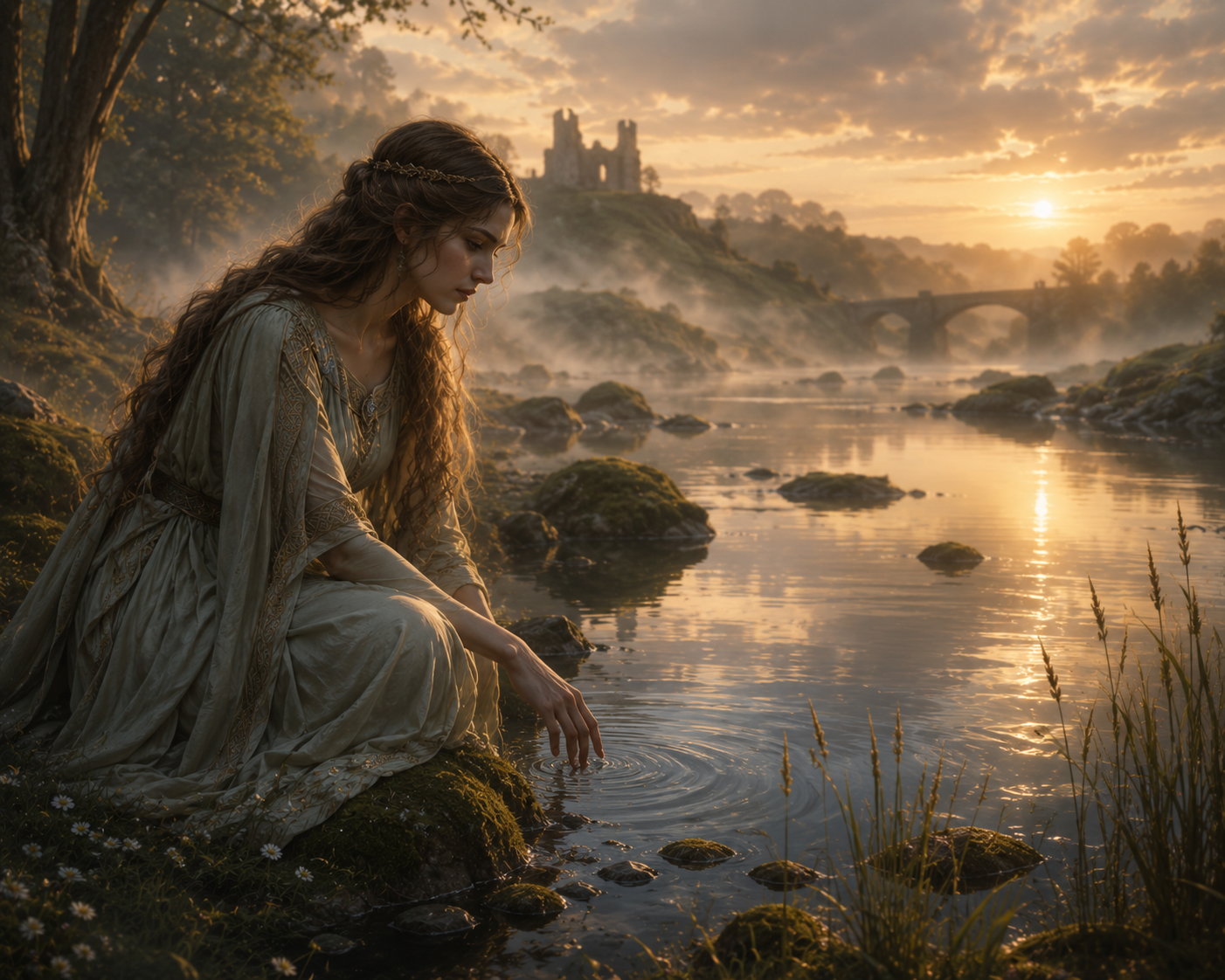
According to the legend, she drowned, to the river, the bay, and eventually the city of Galway giving her name.
The First Battle of Mag Tuired
According to the Lebor Gabála Érenn, the Fir Bolg ruled Ireland for thirty-seven years before the arrival of the Tuatha Dé Danann.
When the Tuatha Dé Danann reached Ireland, they proposed sharing the island with the Fir Bolg.
The offer was rejected, and the First Battle of Mag Tuiredbegan. The Tuatha Dé Danann emerged victorious, although their king Nuada Airgetlámsalen, lost an arm during the battle.
Despite their defeat, tradition says the Fir Bolg retained part of Ireland. Some versions relate that Nuada offered Sreng the rule of a portion of the island as a gesture of reconciliation. The medieval texts state that the Fir Bolg remained mainly in Connacht, and for centuries many families in western Ireland claimed descent from them.
Nuada was proclaimed High King of Ireland, and although the Fir Bolg continued to exist, they no longer ruled the island.
The arrival of the Milesians
Some time later, the Milesians arrived.
Following the war between the two peoples, the Tuatha Dé Danann and the Milesians reached an agreement: the Tuatha would dwell within the sídhe and the Otherworld, while the Milesians would inherit the visible world.
According to medieval tradition, the Fir Bolg lived peacefully alongside the Milesians after these events.
Curiosities
Kings Crowned at Tara
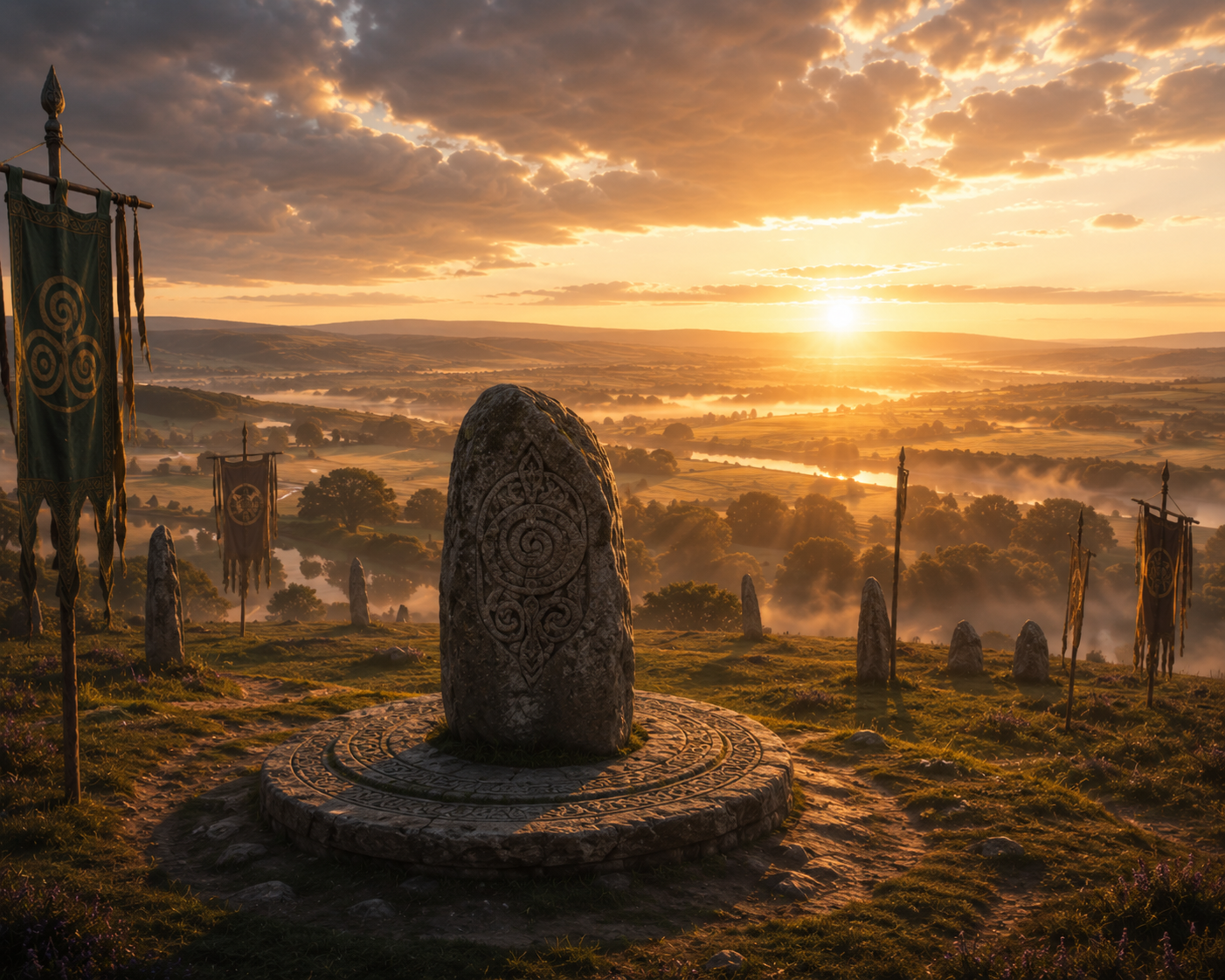
Centuries later, the High Kings of Ireland continued to be crowned at Tara, preserving the symbolic prestige that the site had enjoyed since ancient times.
Place Names
Many Irish rivers, mountains, hills, bays, and even islands preserve legends connected with Fir Bolg figures.
One example is:
- Galway, whose name tradition links to Galvia (Gaillimh).
Places Older Than the Myths
Many of the places associated today with the Fir Bolg are actually far older than the medieval legends themselves.
Archaeologists believe several of these sites were built thousands of years before the stories recorded in the Lebor Gabála Érenn.
Among the most notable are:
- Dún Aonghasa (Inis Mór): archaeological evidence indicates that this spectacular stone fort is over 3,000 years old , centuries older than the medieval manuscripts.
- Hill of Tara (Teamhair na Rí – "Hill of the Kings"): located in County Meath, where archaeological remains dating back around 5,000 years have been discovered.
A Kingdom Between Legend and History
The Fir Bolg represent human order. They are neither forces of chaos like the Fomorians nor divine beings like the Tuatha Dé Danann.
Tradition presents them as the people who organized the land, established a stable kingdom, and laid the foundations of Ireland's first great political order.
They represent the first organized kingdom described in Irish mythological tradition, leaving a legacy that remained woven into Ireland's landscape and collective memory for centuries.
Follow the Footprints
Visit It Today...
There are still many places in Ireland closely connected with Celtic mythology and the traditions surrounding the Fir Bolg.
Cong (Condado de Mayo)
Traditionally associated with the First Battle of Mag Tuired.
Here stands Ballymagibbon Cairn, a stone cairn that tradition attributes to the Fir Bolg. According to legend, after the first day of battle against the Tuatha Dé Danann, each warrior carried a stone and the head of a fallen enemy to build the monument.
Lough Corrib
Located near the traditional site of the battle.
The Plain of Moytura is identified in the medieval texts as the setting for the four-day conflict between the Fir Bolg and the Tuatha Dé Danann.
The River Corrib is also closely linked to the legend of Gaillimh, daughter of Breasal, a mythical Fir Bolg ruler who is said to have drowned in its waters.
Hill of Tara (County Meath)
Ireland's ancient ceremonial center and enduring symbol of sovereignty.
Its principal monuments include:
- Lia Fáil (Stone of Destiny), one of the Four Treasures of the Tuatha Dé Danann.
- Ráth na Ríogh (Fort of the Kings).
- Teach Chormaic (Cormac's House).
- Forradh, where the Lia Fáil stands.
Connacht
Tradition identifies this province as the territory the Fir Bolg retained after their defeat by the Tuatha Dé Danann.
Galway Bay (County Galway)
Located on Ireland's western coast, between County Galway and the Burren region of County Clare.
According to the Lebor Gabála Érenn, this territory was ruled by Gann, son of Dela.
It is also associated with the legend of Princess Galvia (Gaillimh), one of the Fir Bolg.
Aran Islands
The Aran Islands The Aran Islands preserve some of Ireland's most spectacular prehistoric stone forts.
Medieval tradition associated several of them with the Fir Bolg, especially Dún Aonghasa, Dún Dúchathair, and Dún Conor, although archaeology shows they were built thousands of years before the medieval legends.
- Dún Aonghasa (Inis Mór): perched dramatically on the edge of towering Atlantic cliffs, this prehistoric fort features massive concentric dry-stone walls and a defensive field of stone spikes (chevaux-de-frise). Tradition attributes its construction to the legendary king Aonghus mac Úmhór, associated with the Fir Bolg, who is said to have built the fortress after his defeat by the Tuatha Dé Danann.
- Dún Dúchathair (The Black Fort: also on Inis Mór, standing on a rocky headland surrounded by the Atlantic Ocean. Tradition links it to the descendants of the Fir Bolg.
- Dún Eoghnachta and Dún Onacht: fortificaciones circulares (ringforts) located inland on Inis Mór.
- Dún Conor (Dún Chonchúir): : situated at the highest point of Inis Meáin, with walls reaching up to seven meters in height and magnificent views across the islands.
National Museum of Ireland
Home to one of the country's most important collections dedicated to Irish history, archaeology, and mythology.