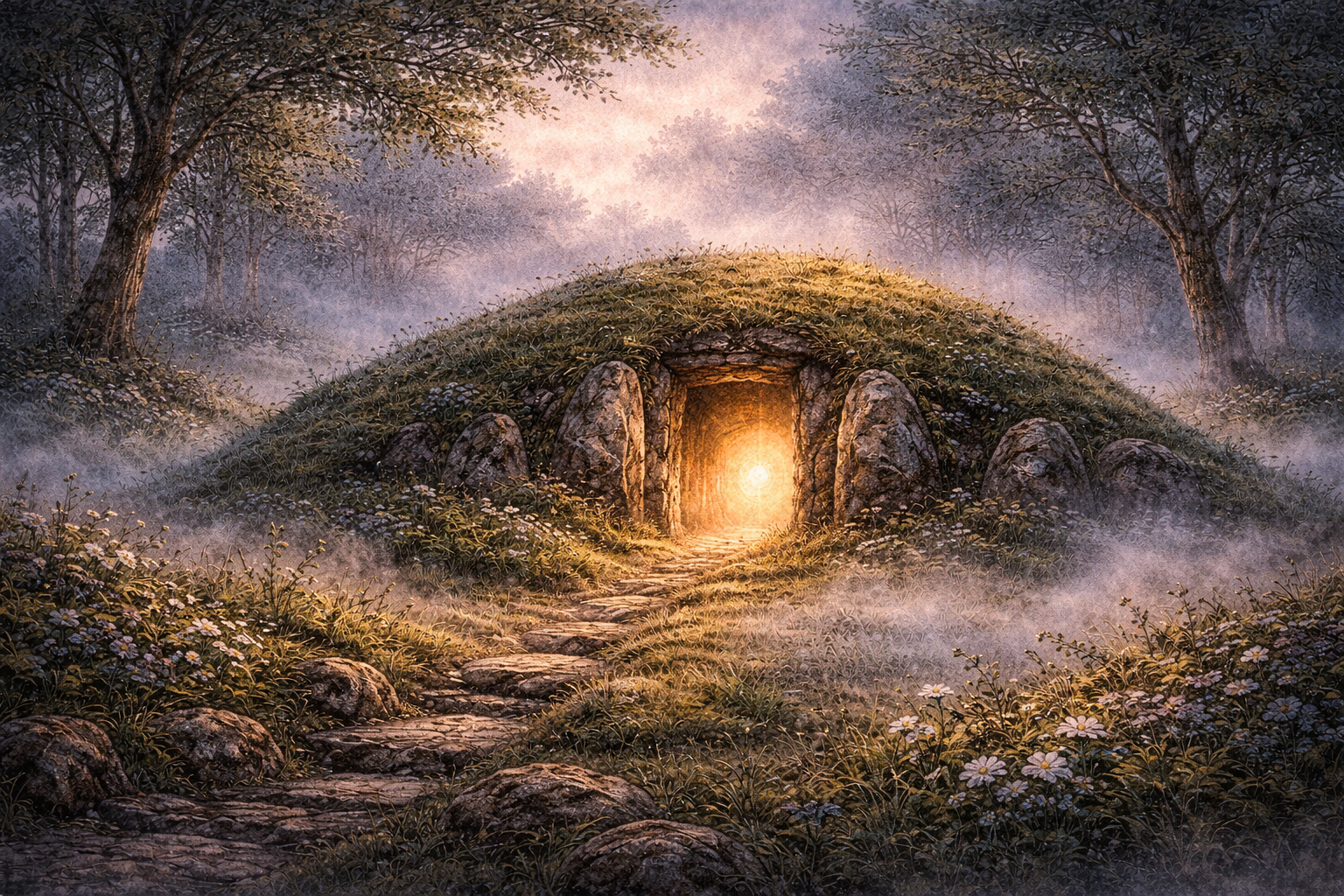
In Celtic mythology, the Sídhe were considered gateways to Otherworld, places where visible and invisible reality met.
Unlike other mythologies, in Celtic tradition the access to the Otherworld was not reserved to a single place or a single moment.
There was no fixed door. No defined path. The passage between the visible and the invisible could occur in many places… and, at times, anywhere.
For the ancient Celts, the world was not completely separated from the Otherworld.
It was simply… veiled.
And in certain places, that veil became thinner.
The Sídhe: where reality becomes permeable
One of the most important gateways to the Otherworld were the Sídhe.
The term, in Old Irish, refers to hills or burial mounds.
But in Celtic tradition, these places were much more than landscape formations. They did not refer to a specific site, but to a type of place. Spaces the Celts understood as entrances to the Otherworld.
After the arrival of humans, the Tuatha Dé Danann withdrew to these places, coming to exist on an invisible yet nearby plane. Over time, they became known as the Aos Sí,
From that moment on, the Sídhe were no longer just hills… they were doors.
Places where the invisible could manifest.
Real places connected to the Otherworld
Although many of these beliefs belong to the realm of myth, some of the places associated with the Otherworld still exist today and are part of the Irish landscape.
For the ancient Celts, these were not simple geographical features. They were points of connection.
Places where reality could open into something more.
Sacred mounds and hills
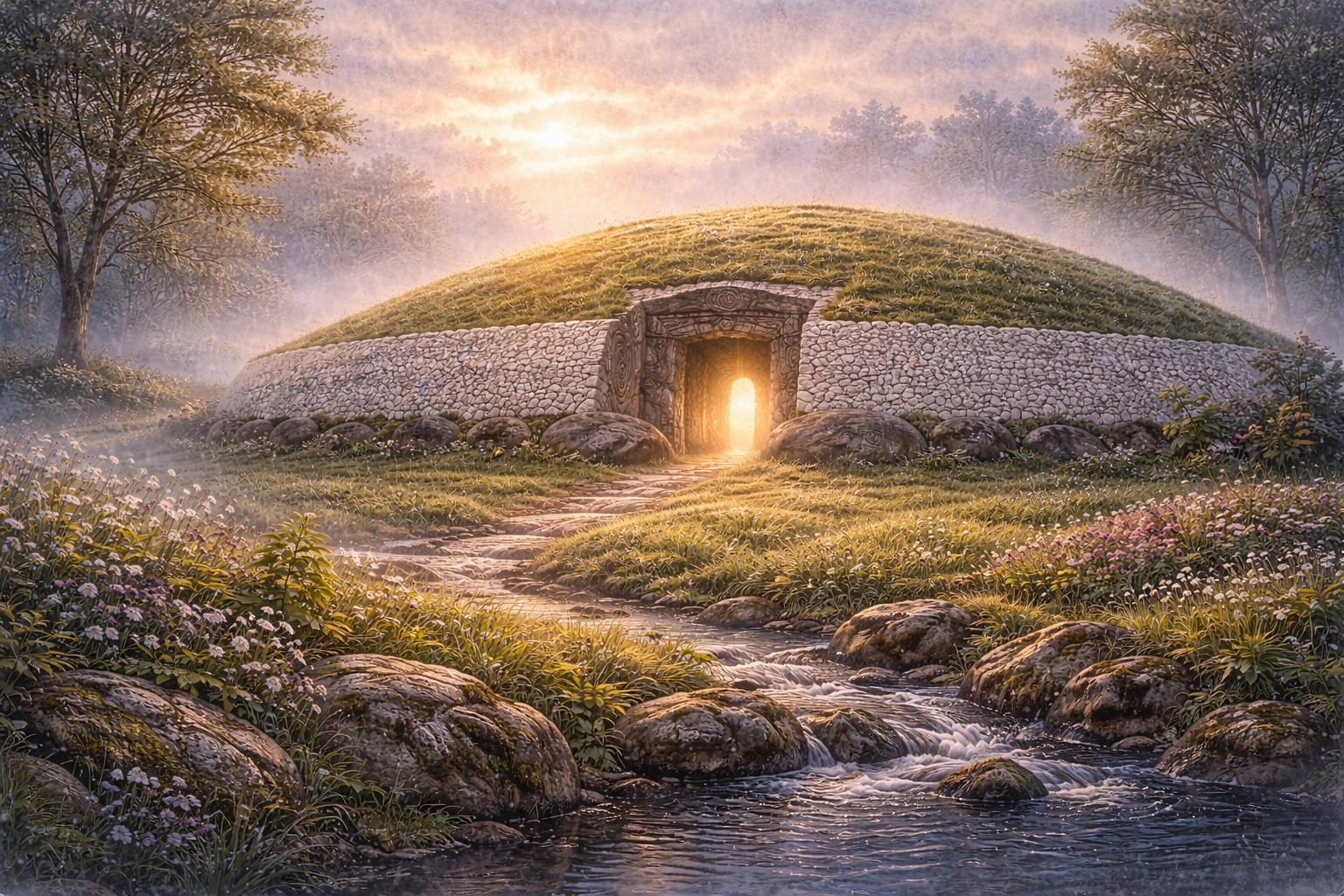
- Brú na Bóinne (a complex including Newgrange, Knowth and Dowth)
- Newgrange
- Knowth
- Dowth
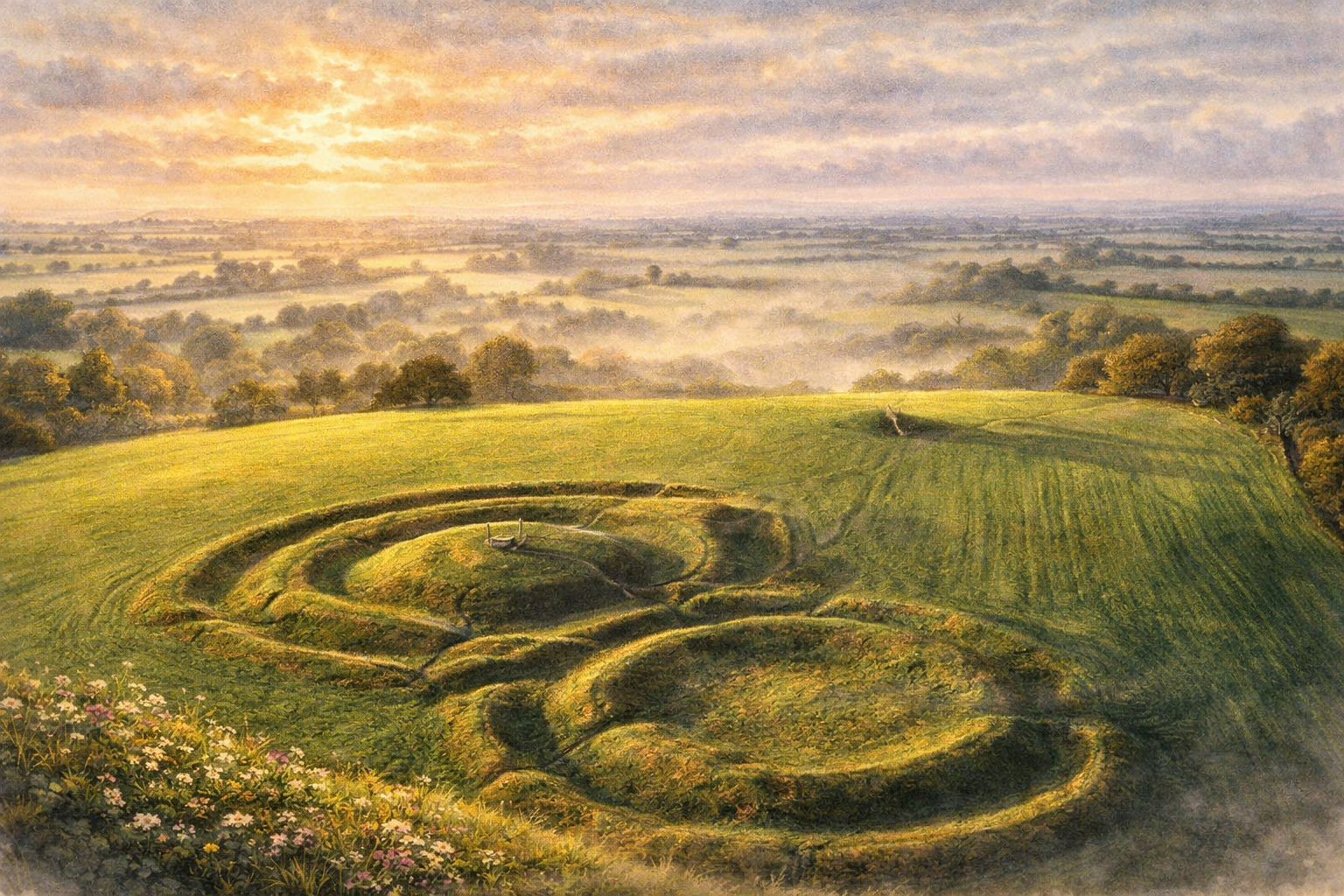
- Hill of Tara (Teamhair na Rí), ancient political and symbolic center of Ireland
- Knockma (Cnoc Meadha)
Some of these places are thousands of years old. For centuries, they were considered spaces linked to the Aos Sí.
Caves and underground entrances
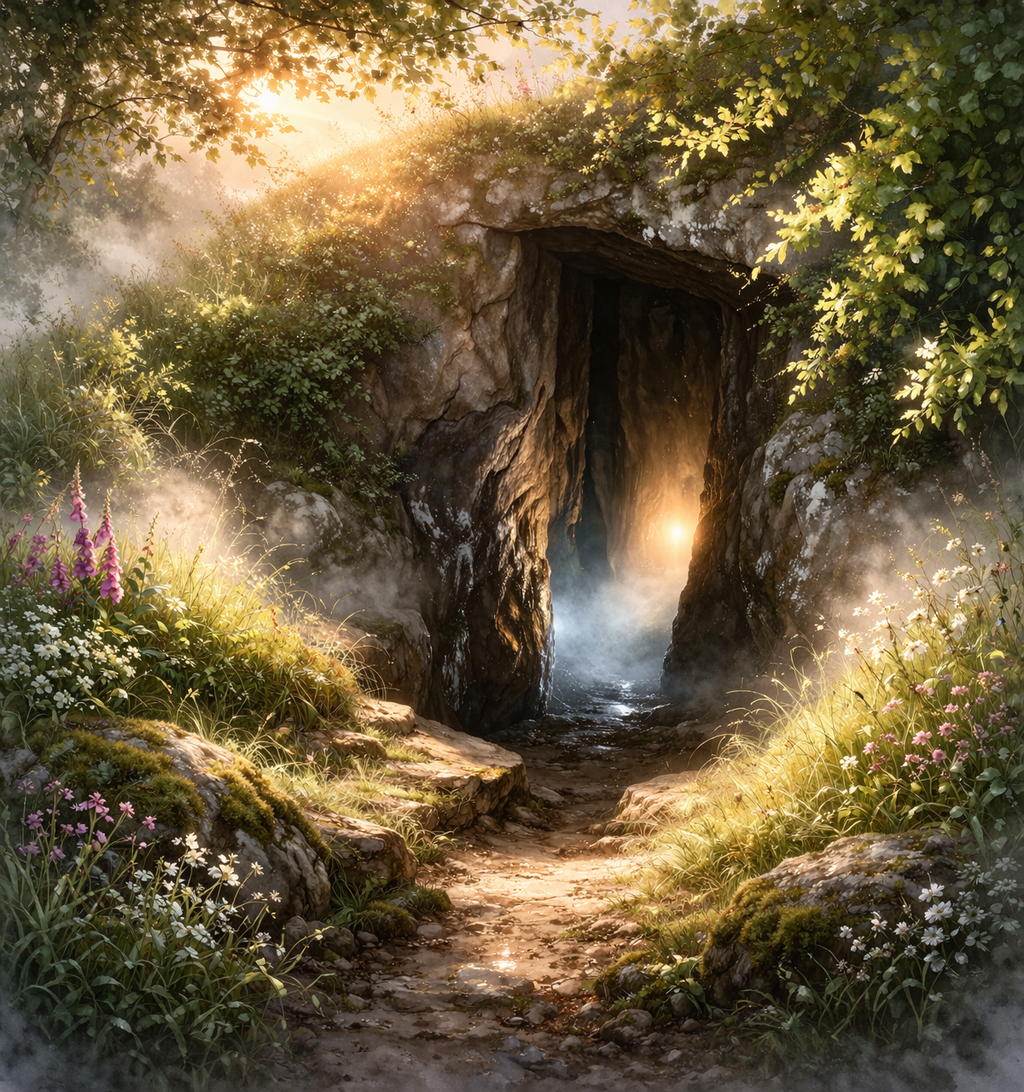
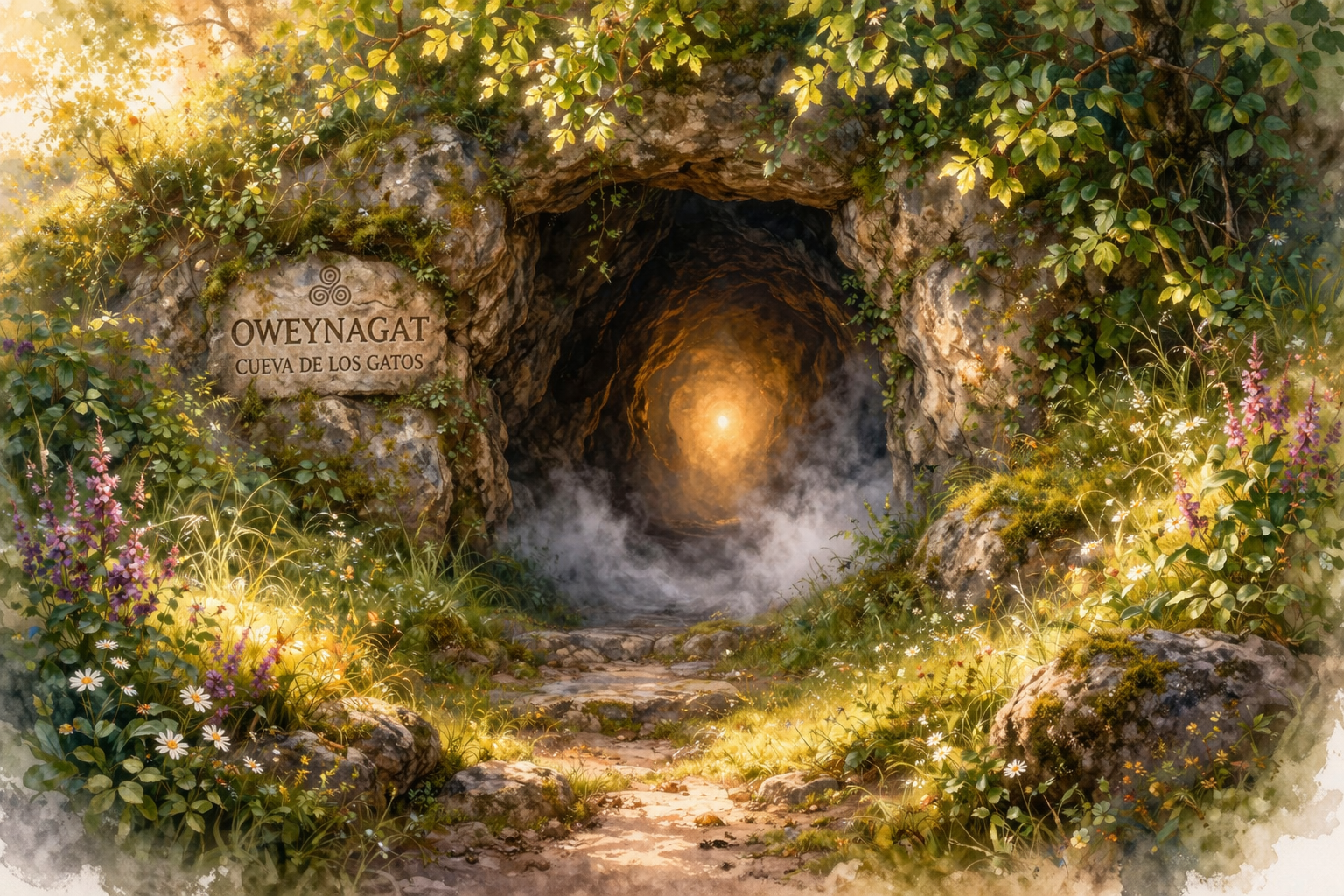
Caves were seen as direct access points to the invisible world.
- Oweynagat, known as the “Cave of the Cats”, located in the Rathcroghan (Cruachan)
- complexRathcroghan complex, an ancient ritual center associated with the Otherworld
According to tradition, from these places creatures and unseen forces could emerge, especially during festivals such as Samhain.
Rivers and sacred waters
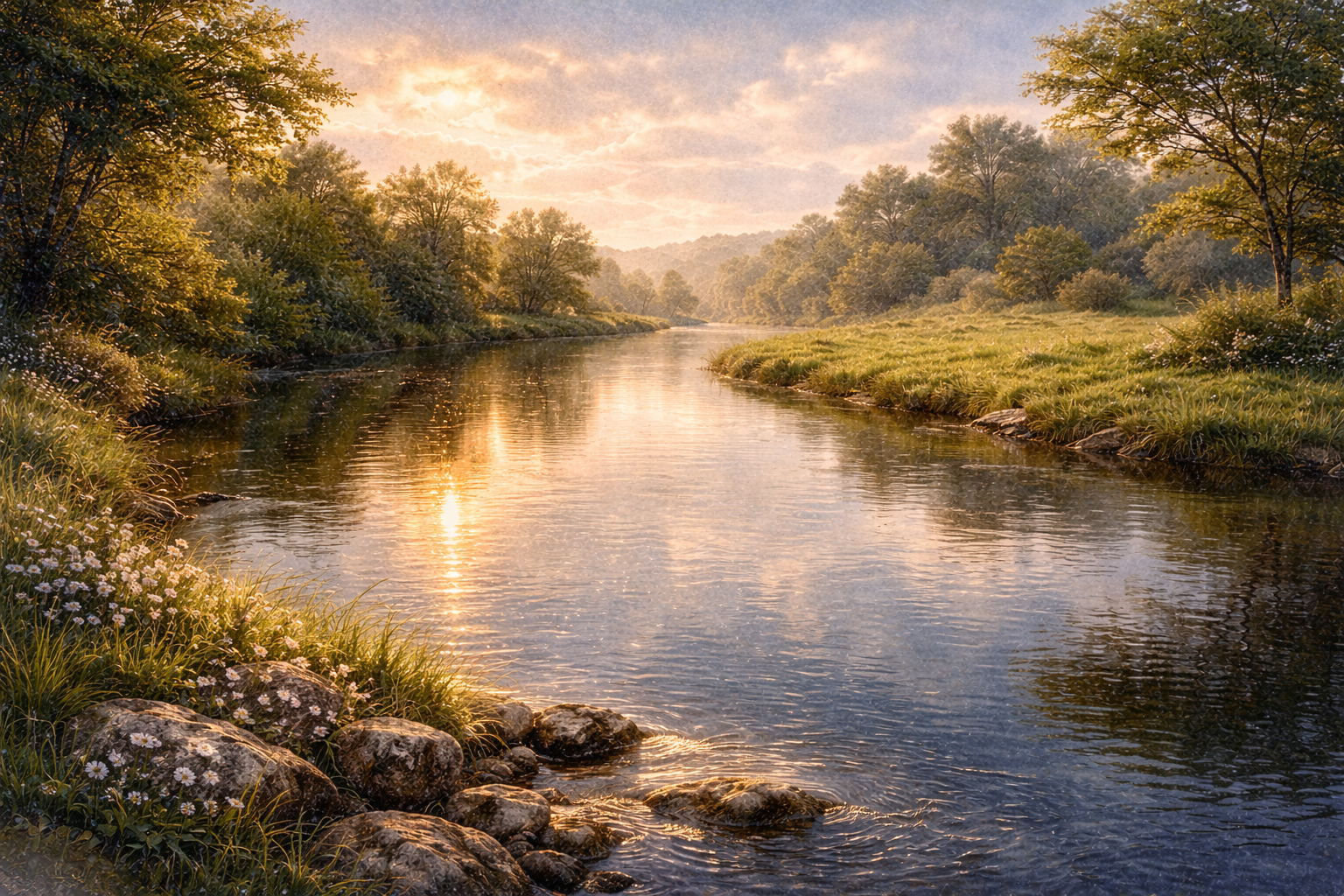
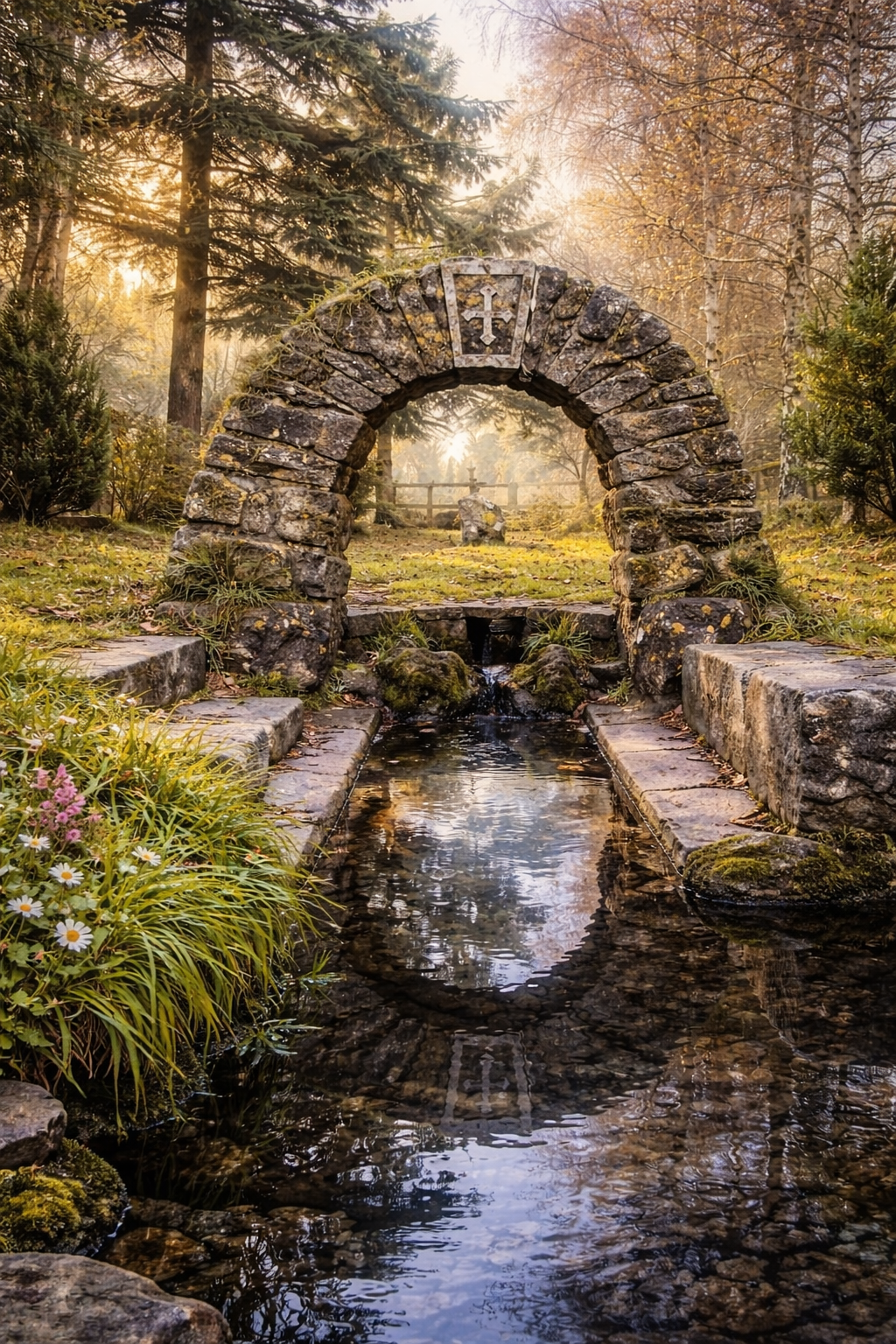
Water was understood as a boundary between worlds.
- River Boyne
- River Shannon
- Sacred wells scattered across Ireland
It was not just a natural element. It was a space of transition between worlds.
Symbolic centers and sacred territories
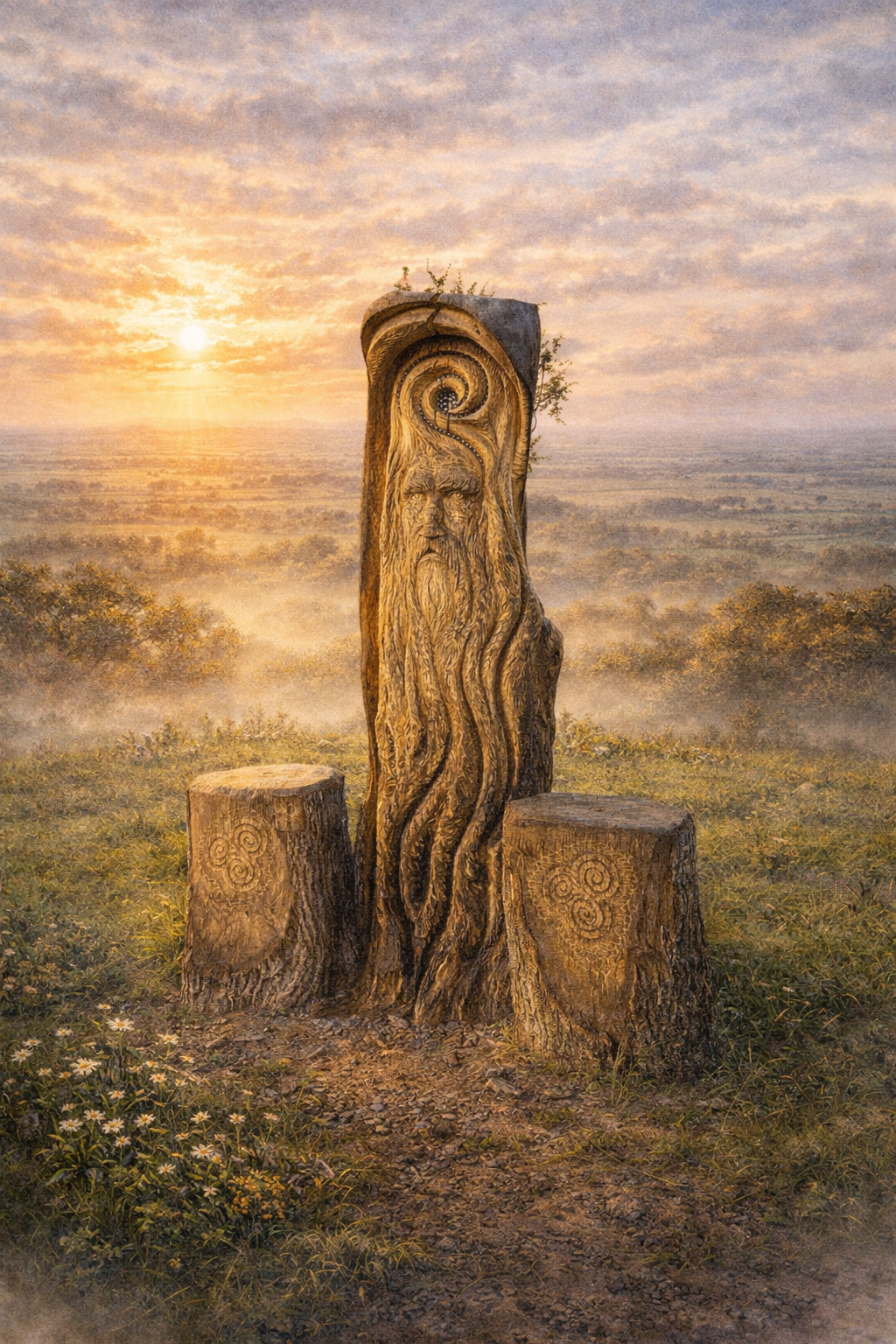
- Hill of Uisneach, considered the symbolic center of Ireland
- Cruachan (Rathcroghan), associated with the underworld
- Various Sídhe hills across the island
These places were seen as points where the sacred and the everyday met.
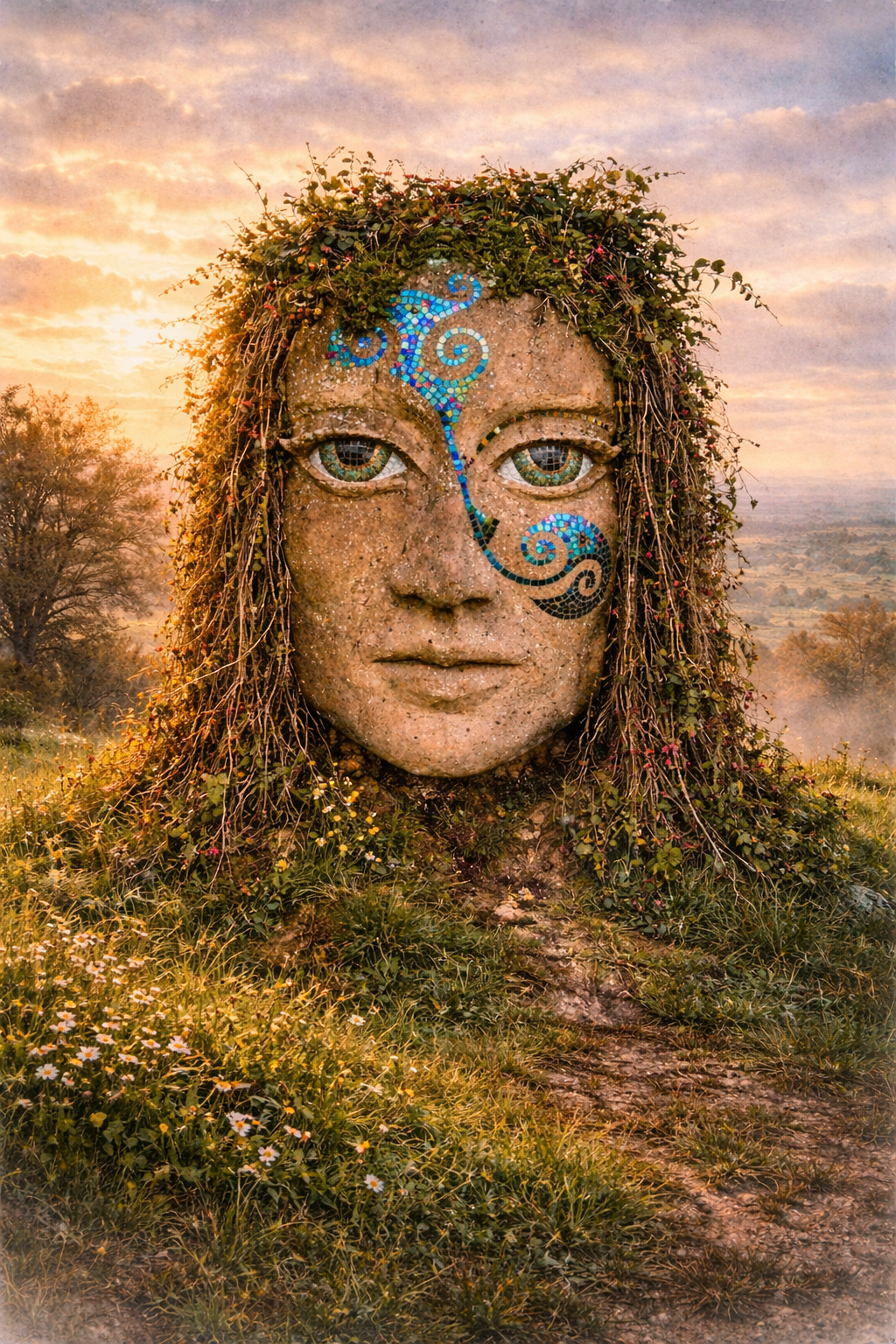
Islands and liminal landscapes
Some places were not fixed or permanent. They could appear and disappear.
- Skelling Michael
- Hy-Brasil, the mythical island of the Atlantic imaginary
Certain landscapes also held this nature:
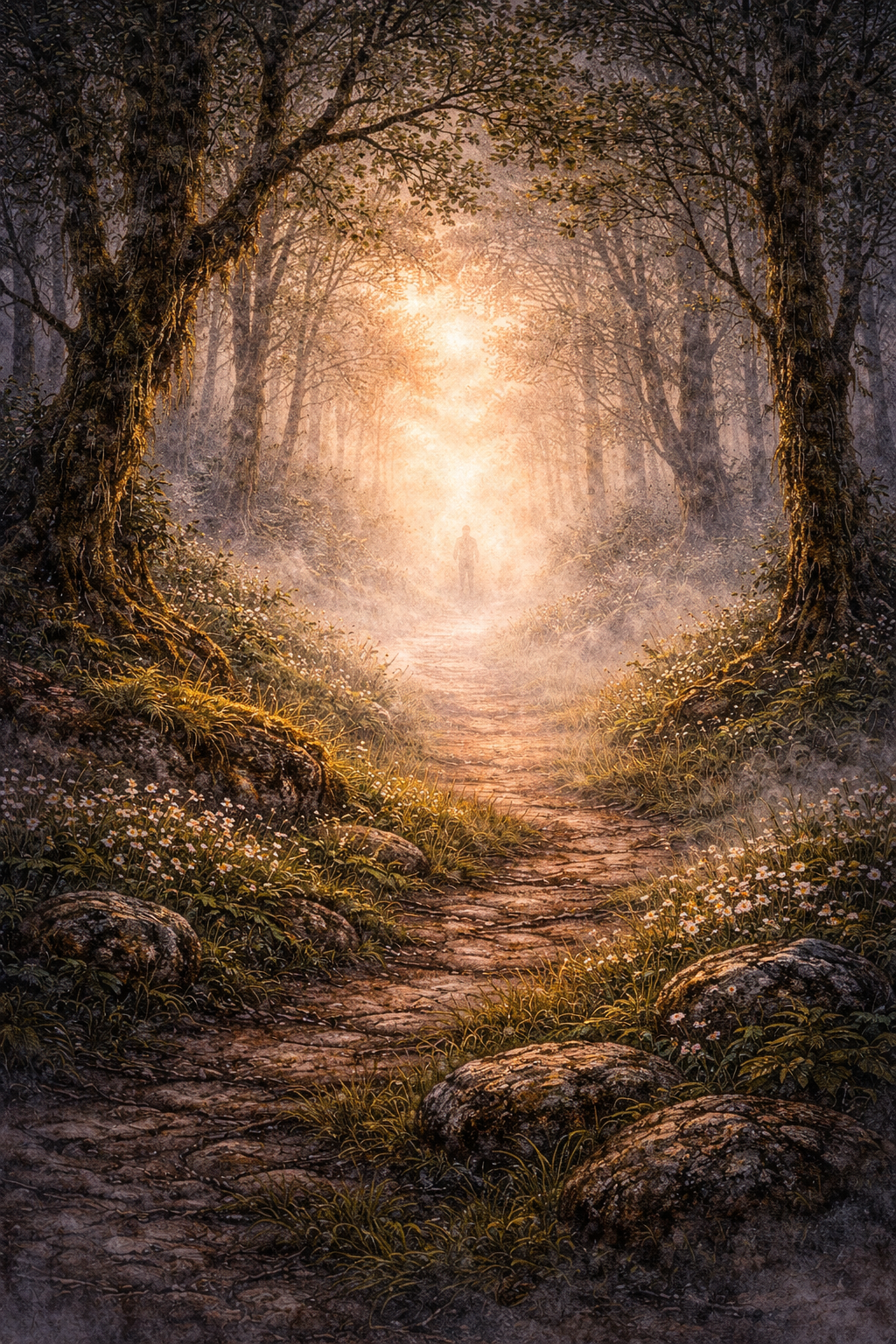
- mist-covered forests
- shifting paths
- blurred horizons
Not all doors have a name
Not all entrances to the Otherworld were marked. Some had no defined form. For the Celts, certain landscapes could become liminal at specific moments.
In those spaces:In those spaces:
A path could change.
An island could appear.
A landscape might not be what it seemed.
And the invisible… could draw closer.
Crossings between worlds
Access to the Otherworld did not depend only on place. It also depended on time.
During certain festivals, such as Samhain or Beltane, the veil between worlds became especially thin. In those moments, the doors did not merely exist…
they opened.
From Celtic sacred spaces to Christian Ireland
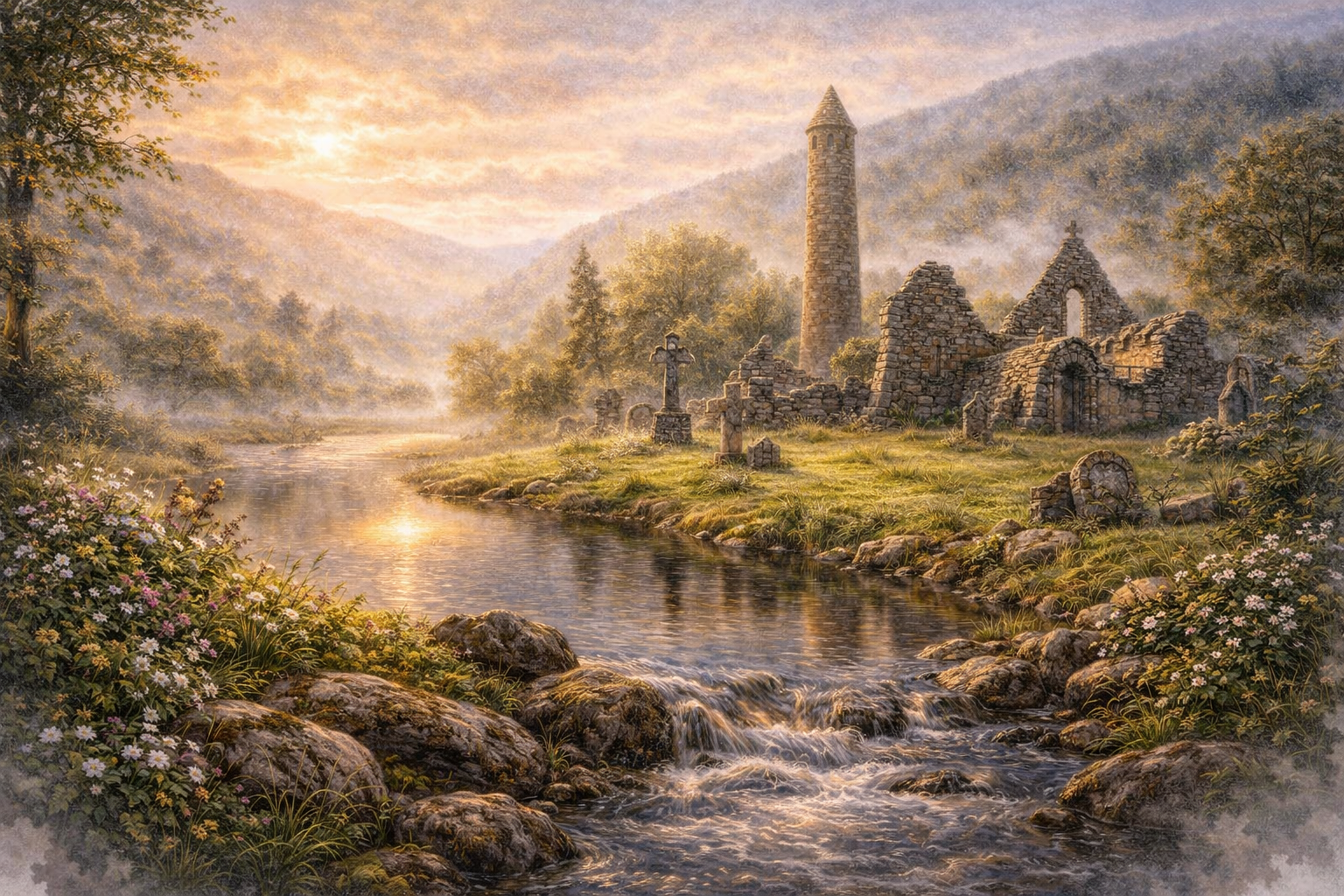
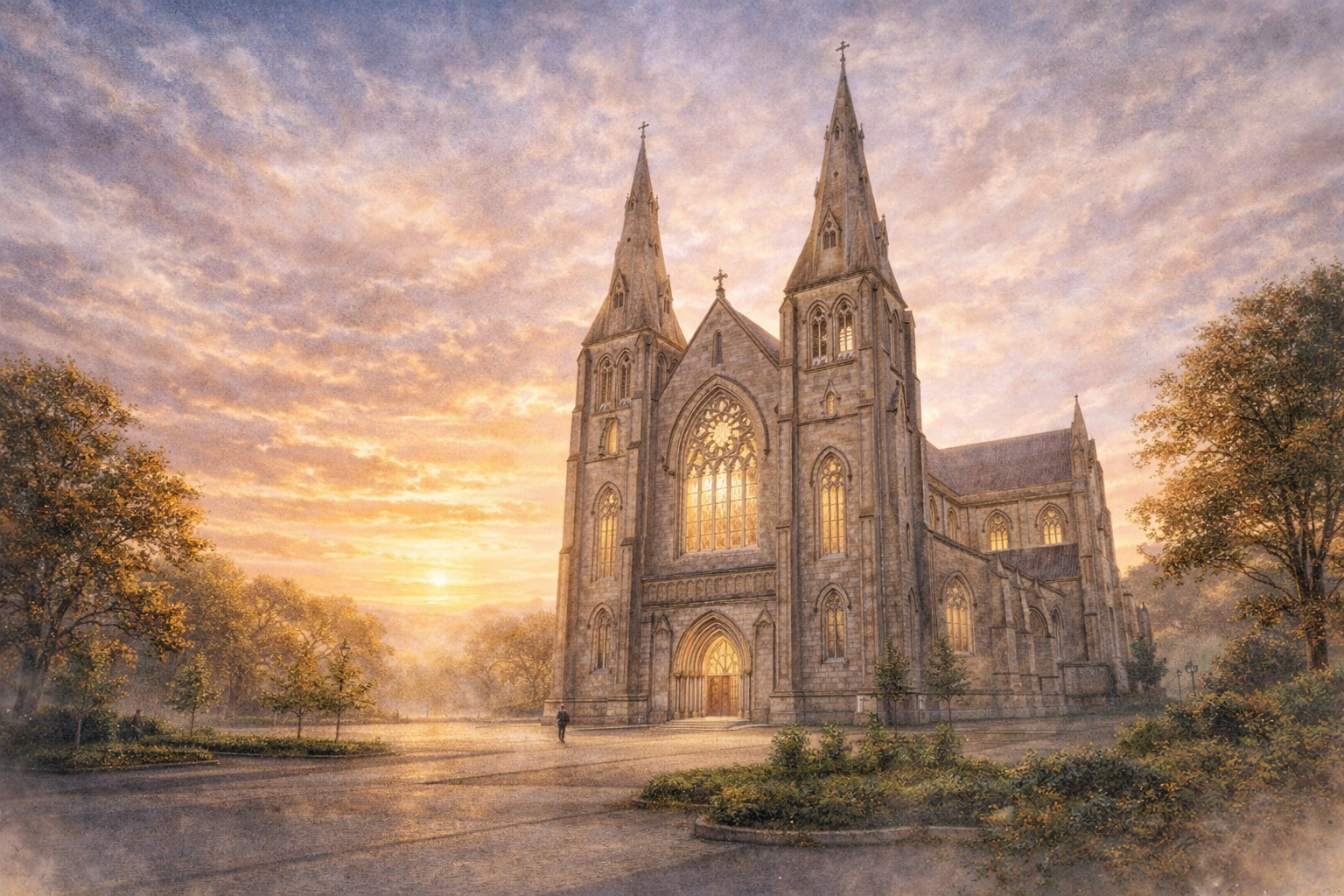
Between the 5th and 7th centuries, with the arrival of Christianity in Ireland, many of these sacred places did not disappear. They were transformed. Many sites linked to the Otherworld became part of the new Christian religious landscape.
A key figure in this process was Saint Patrick, who founded religious communities in ancient sacred locations.
Where people once spoke of the Otherworld, monasteries, churches and places of worship began to rise.
Some of the best-known examples include:
- Glendalough
- Clonmacnoise
- Armagh
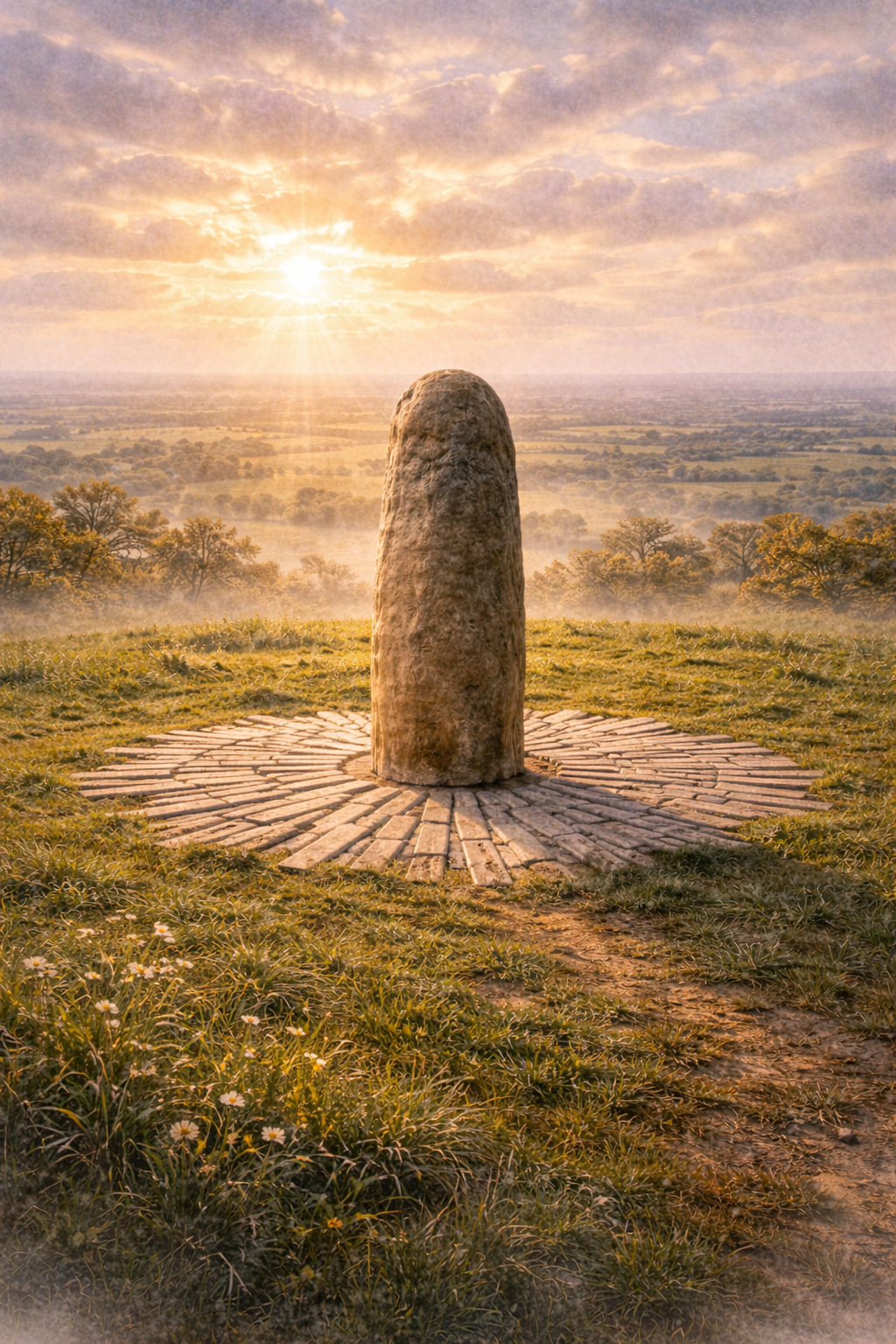
The Hill of Tara, an ancient Celtic political center, retained its symbolic importance even within the new tradition.
It was not a complete rupture. It was an adaptation.
A different way of understanding the sacred… upon the same places.
A world that was never closed
For the ancient Celts, the Otherworld was not a distant place reached after death. It was a nearby reality.
Present.
Sometimes hidden… but never absent.
The hills, the rivers, the caves or the mist were not just part of the landscape. They were reminders.
That the visible world was not all there was.
And that, at any moment…
the invisible could cross to the other side.
Follow the Footprints
Visit it today...
Although the gateways to the Otherworld belong to Celtic imagination and tradition, some places connected to these stories still exist and can be visited today.
Among ceremonial hills, ancient ritual complexes and landscapes associated with the world of the Sídhe, it is still possible to walk through places that centuries later remain part of Ireland's memory and landscape.