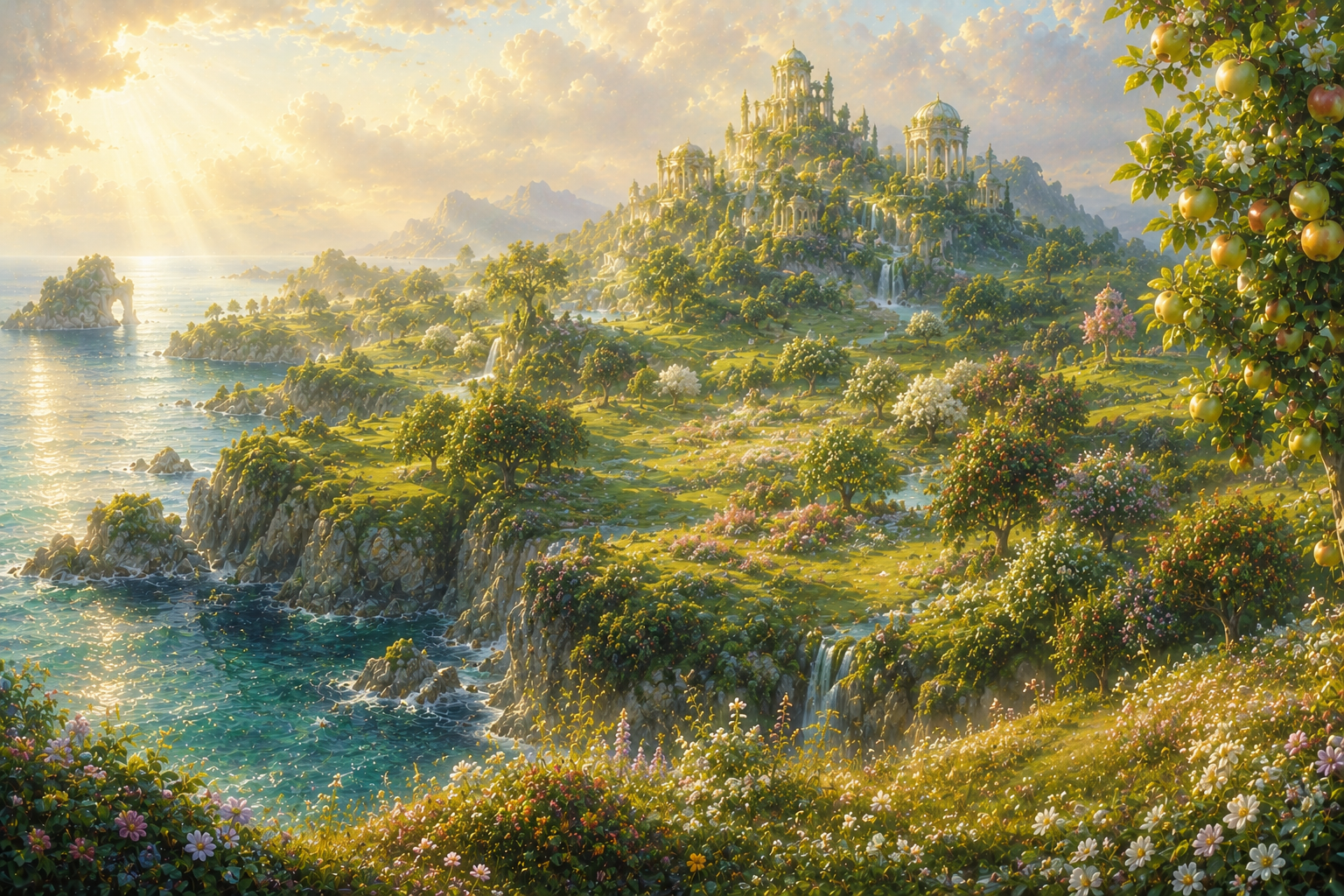
In the ancient Irish traditions there are places that belong neither entirely to the world of humans nor to that of the gods.
Islands hidden behind the mist. Realms lying beyond the horizon. Lands where time flows differently.
Among them stands Tír Tairngire, the so-called Land of Promise, one of the most evocative names associated with the Celtic Otherworld.
A place where abundance never ends and suffering seems not to exist.
The Meaning of Tír Tairngire
The name comes from Old Irish:
- Tír = land
- Tairngire = promise
Its most common translation is: "The Land of Promise."
In some texts it appears connected to other names of the Irish Otherworld, forming part of a network of interconnected supernatural realms.
It is not always described as a single, clearly defined place.
Sometimes it appears as an island. At other times, as an invisible kingdom. And in some traditions, it is simply another way of referring to the supernatural world of the gods and the Aos Sí.
A Realm Beyond the Horizon
Medieval Irish sources describe numerous journeys to wondrous lands lying beyond the sea.
These voyages are known as immrama, tales of navigation in which heroes and travelers venture into unknown regions.
Tír Tairngire is often associated with this tradition.
It cannot be found on any map. It cannot be reached by ordinary routes. One may arrive there only when supernatural powers allow it.
Access is often granted through:
- a mysterious mist
- a magical vessel
- the guidance of a supernatural figure
- an invitation from the Otherworld
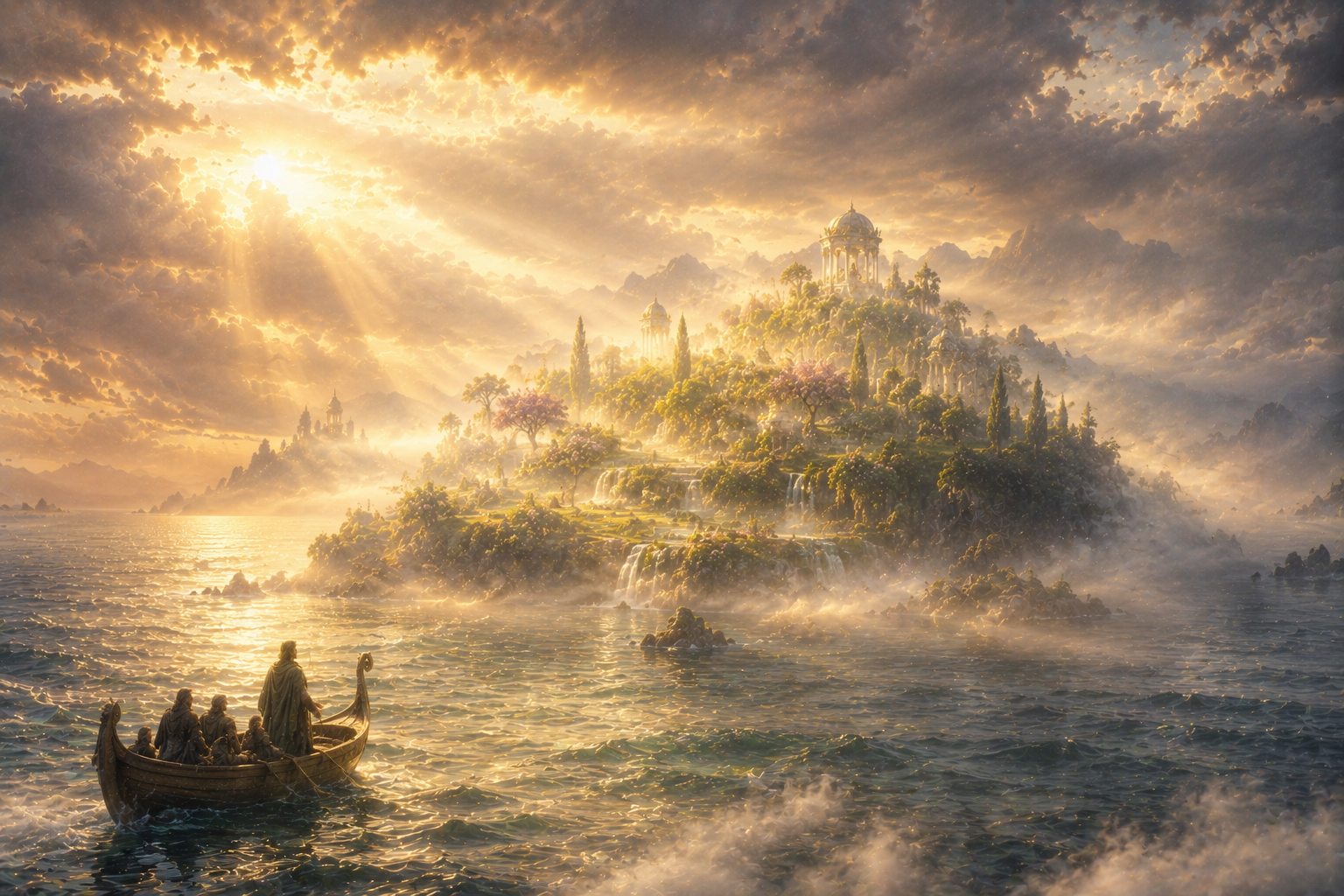
The journey is both physical and spiritual. Those who reach these lands return transformed.
A Place of Eternal Abundance
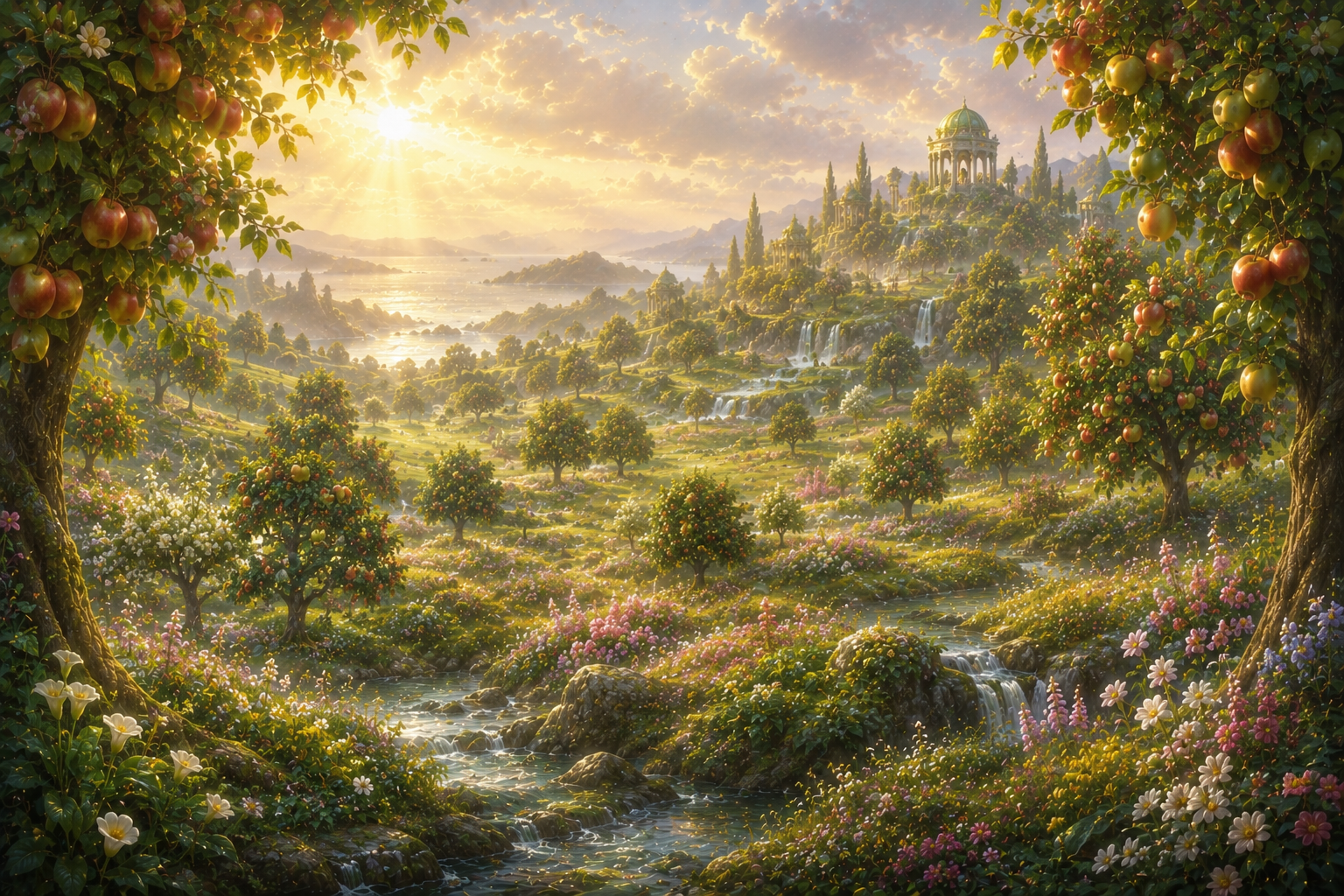
Descriptions of Tír Tairngire present an idealized world.
There is no:
- sickness
- old age
- hunger
- war
Nature remains forever fertile. Trees bear fruit endlessly. Meadows never fade. Music and celebration are part of everyday life.
This image reflects a recurring theme in Celtic mythology: the existence of a perfect realm beyond ordinary reality.
The Tuatha Dé Danann and the Otherworld
After the mythical invasions of Ireland, the Tuatha Dé Danann abandoned the visible world and came to inhabit the sídhe, the hills and supernatural regions associated with the Otherworld.
Some traditions connect Tír Tairngire with these domains.
Rather than being merely a distant island, it may represent a manifestation of the realm inhabited by Ireland's ancient gods.
Medieval Irish texts use different names to describe supernatural regions of the Otherworld. As a result, the boundaries between Tír Tairngire, Tír na nÓg, Mag Mell and other supernatural territories are not always clearly defined.
All belong to the same mythical geography.
A Different Kind of Paradise
Although it is sometimes compared with later concepts of paradise, Tír Tairngire was not exclusively a place for the dead. Heroes and travelers could visit it.
In Celtic tradition, the Otherworld existed alongside the human world. It could be entered. It could be left. And sometimes its inhabitants crossed into the world of men.
It was both near and distant at the same time. Invisible to most, yet always present.
Tír Tairngire and the Promised Land of the Saints
The story, known as the Navigatio Sancti Brendani Abbatis (The Voyage of Saint Brendan the Abbot), describes an extraordinary journey through unknown seas, mysterious islands and places where the ordinary laws of the world no longer seem to apply.
The Voyage of Saint Brendan is a medieval Christian text.
According to tradition, Saint Brendan the Navigator, an Irish monk, undertook a long voyage across the Atlantic in search of the Terra Repromissionis Sanctorum, the Promised Land of the Saints.
Many scholars have noted its similarities to the traditions of the Immrama and the Echtrai, Irish tales in which heroes and voyagers reach supernatural lands beyond the western ocean.
The Beginning of the Voyage
According to the story, Saint Barinthus, an abbot and traveler, visits Brendan and tells him of a marvelous island lying beyond the ocean.
A land where everything is fertile and peace reigns.
Inspired by the tale, Brendan decides to seek it.
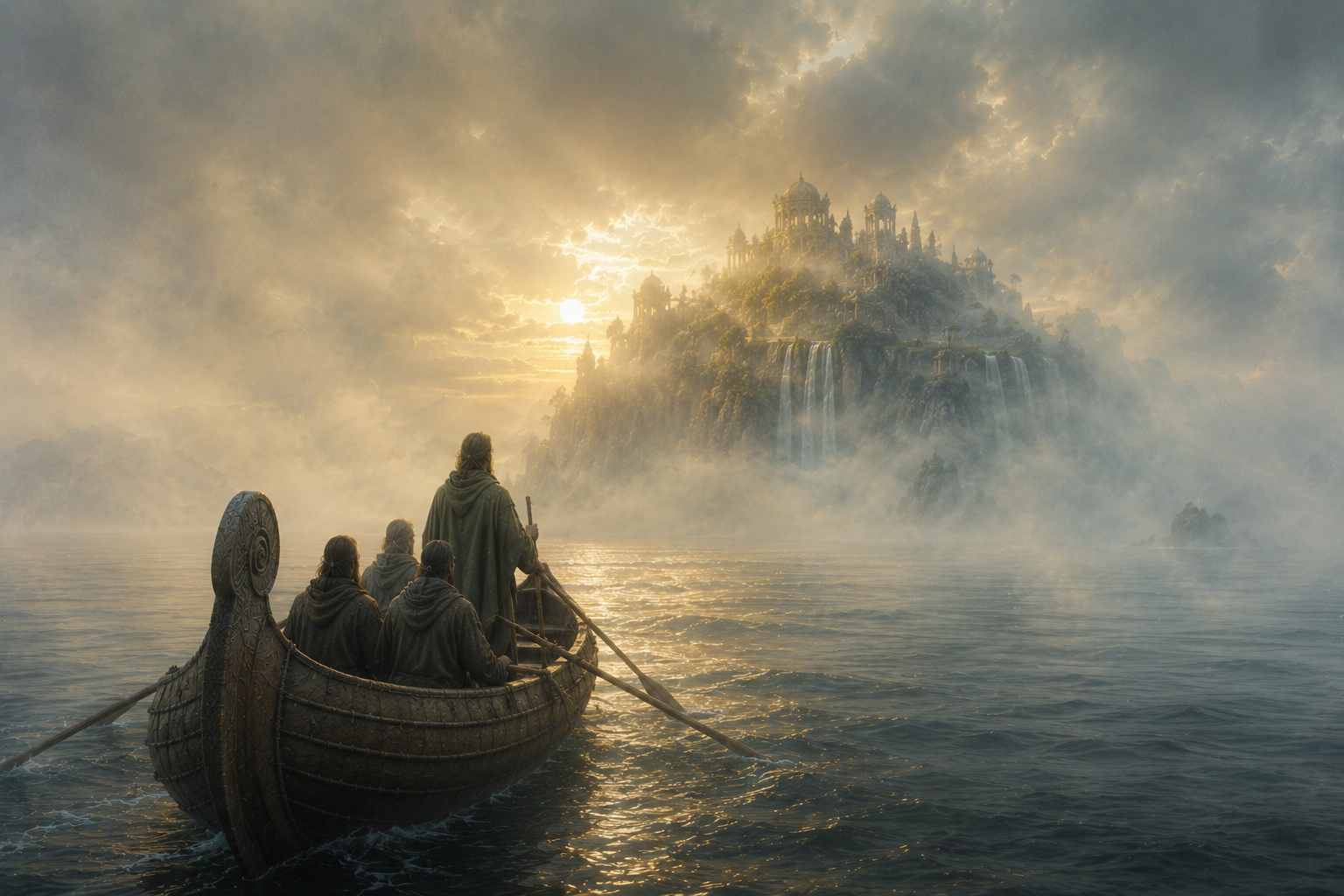
He gathers several companions — some versions speak of fourteen monks — builds a curragh, a traditional Irish boat made from a wooden frame covered with animal hide, and sets sail into the Atlantic.
The Islands Along the Way
During the voyage they encounter many extraordinary islands..
Among the most famous are:
- The Island of Sheep, inhabited by enormous sheep of unusual size.
- The Whale Island, where the monks land, light a fire and celebrate Mass before discovering that the supposed island is actually Jasconius, a gigantic sea creature usually interpreted as a whale.
- The Island of Birds, home to thousands of white birds. One speaks to the travelers and explains that they are angels who remained there after Lucifer's rebellion.
- The Island of Smiths, where metallic hammering echoes through the air and strange beings work among flames before hurling a blazing mass into the sea, terrifying the voyagers.
- The encounter with a great sea monster that threatens the vessel until Jasconius reappears and drives it away.
- The Paradise of Birds, a radiant island where peace reigns and suffering seems unknown.
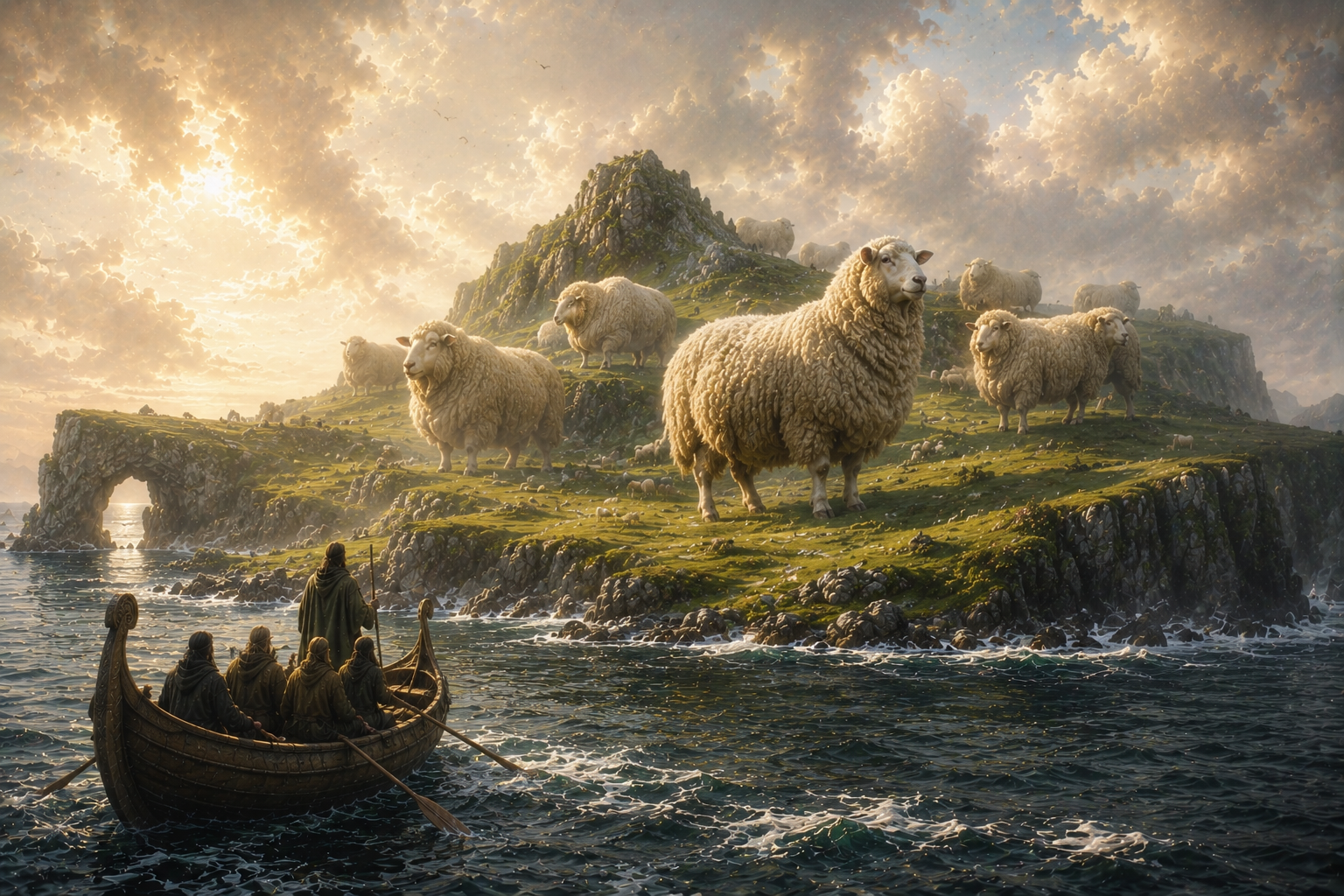
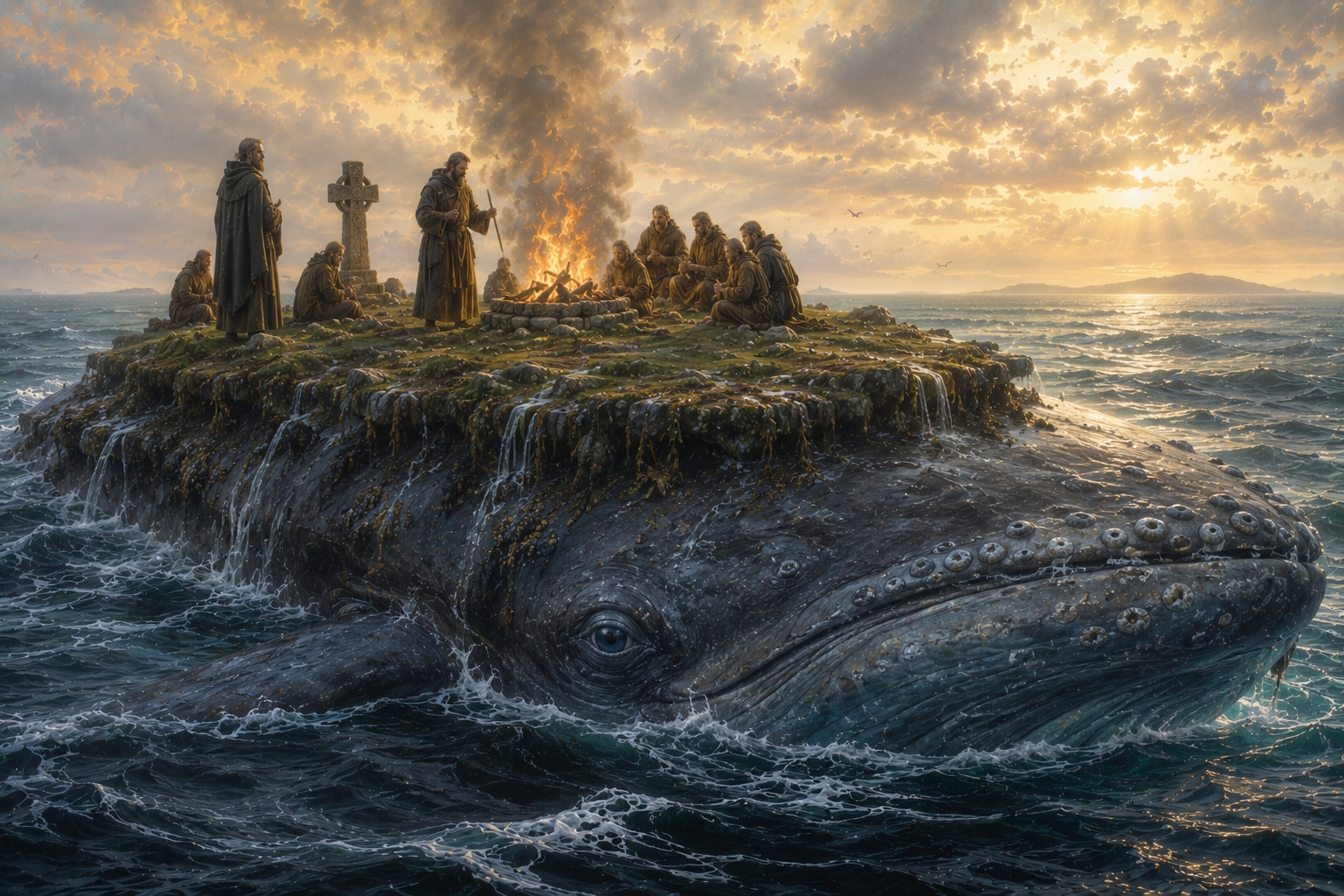
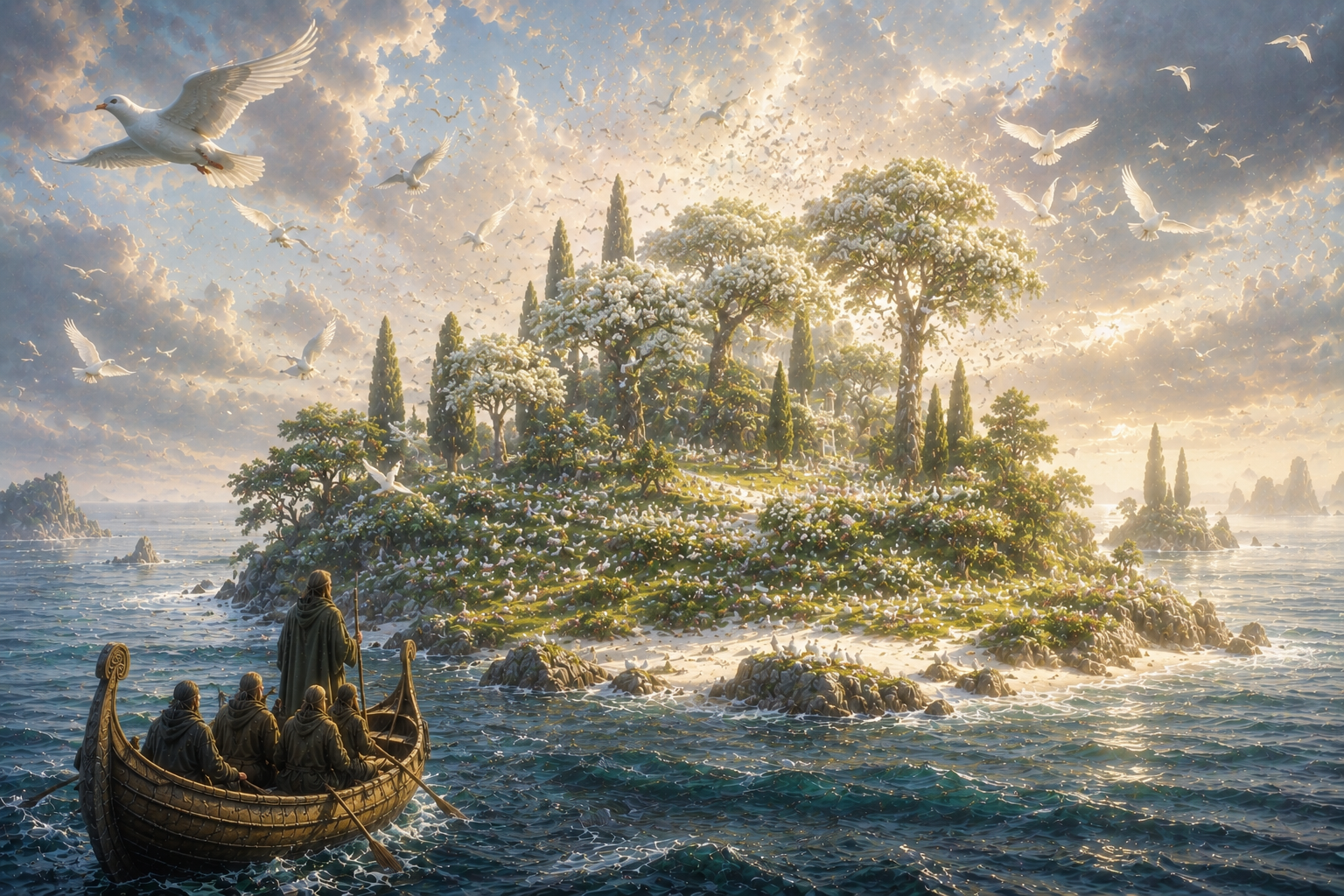
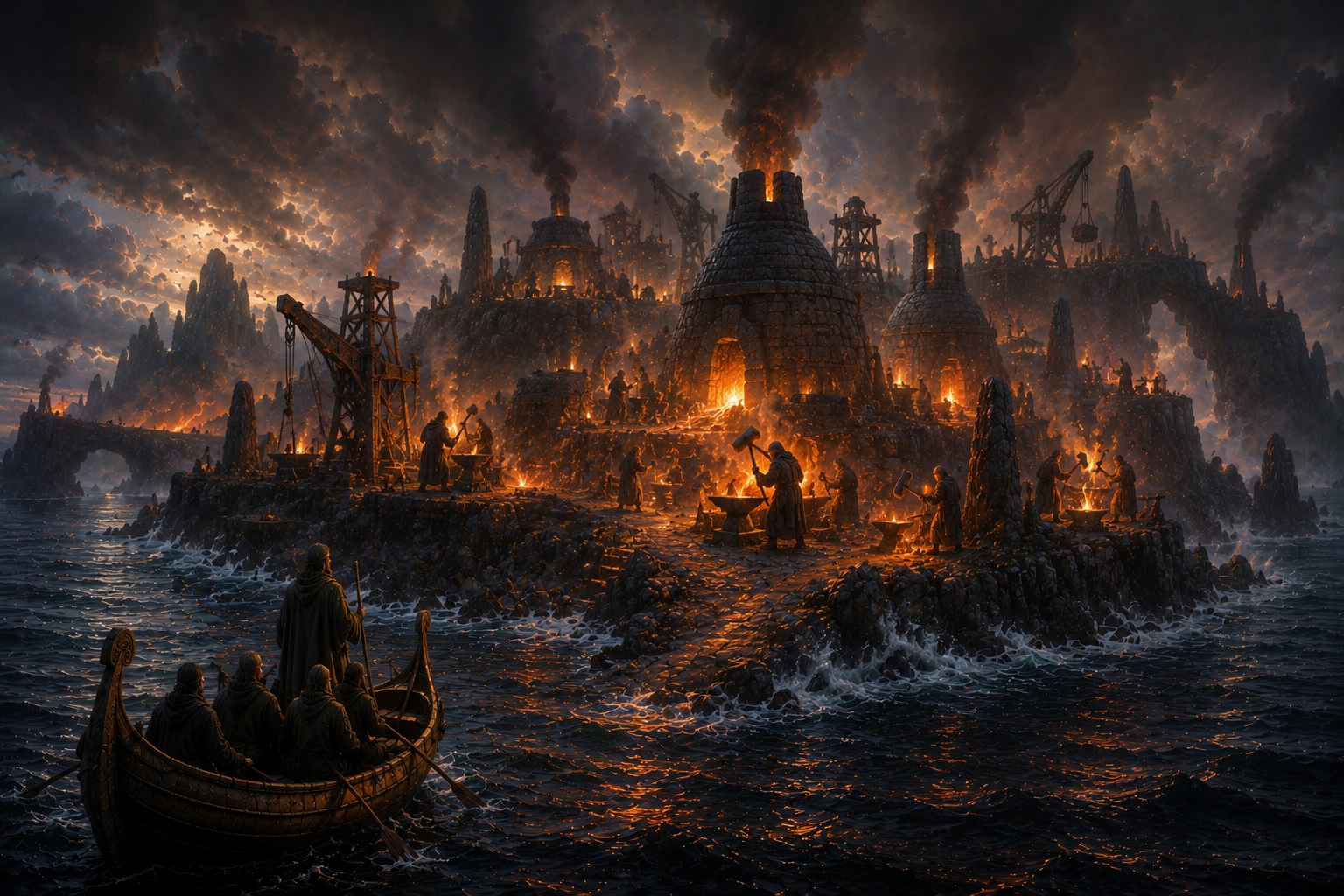
In addition to these places, the travelers visit many smaller islands.
Some are inhabited by holy monastic communities. Others by hermits who have lived in isolation for decades. And some remain completely deserted.
One hermit even knows Brendan's identity before ever seeing him.
The Promised Land
After years of sailing, Brendan and his companions finally reach the Promised Land of the Saints.
A land that is:
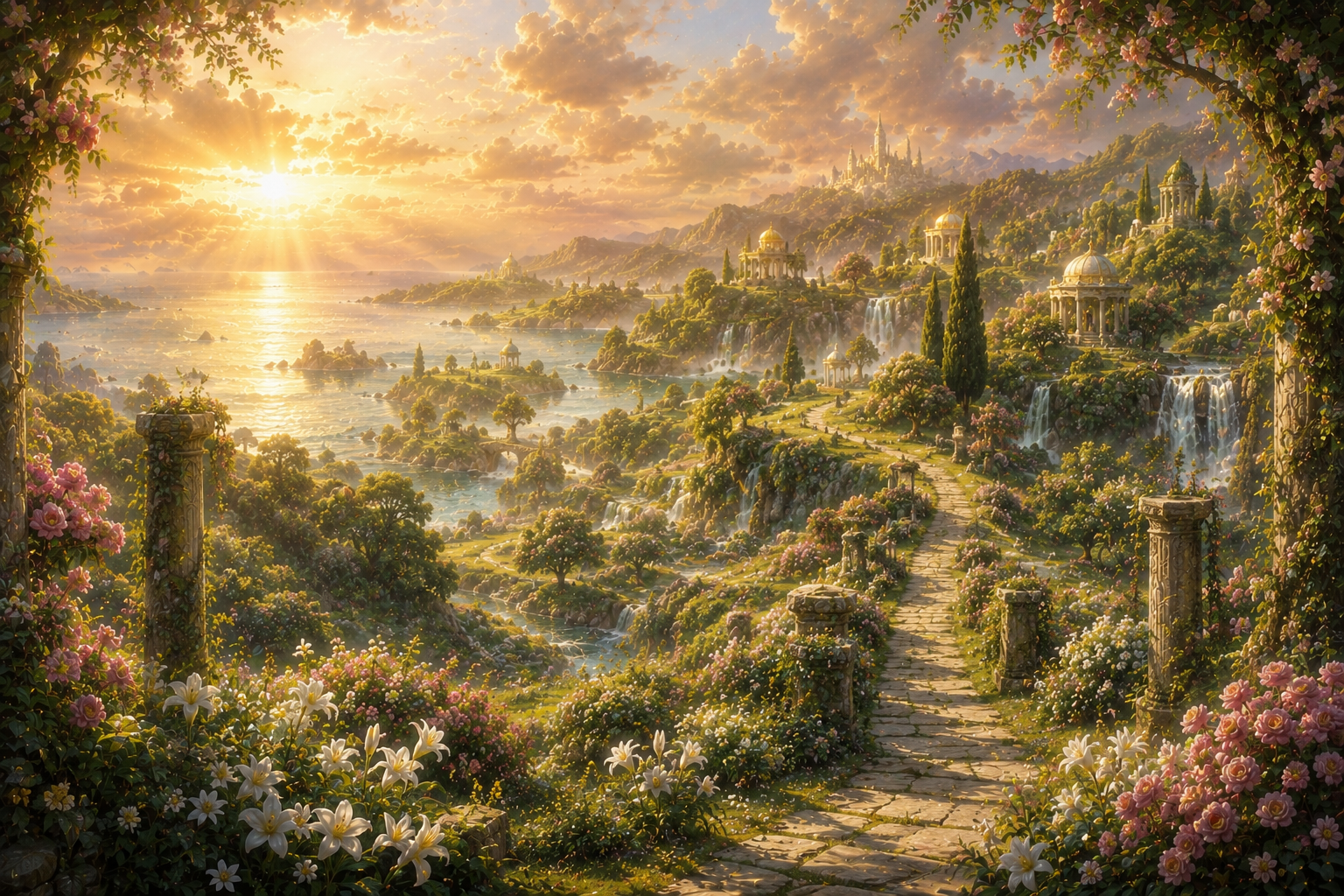
- abundant and fertile
- free from suffering
- separated from the known world
- accessible only after an extraordinary journey
As they explore, they discover that there are no castles, armies or treasures.
Instead, they find abundance, light, harmony and perfection. A place where creation remains untouched.
Later, a supernatural figure appears, described in different versions as:
- a radiant man
- a heavenly messenger.
- a divine being
The figure explains where they are, reveals the nature of the land and finally commands them to return.
Afterward, they sail back to Ireland and recount their story
The Trials of the Voyage
During the journey, some monks disobey, lose faith or fall into temptation.
One of the best-known episodes occurs when a monk steals a valuable object during a visit to a holy community.
When they return to the vessel, the sin is revealed through the appearance of a demon. The monk confesses his wrongdoing and dies shortly afterward.
Different manuscripts offer varying accounts of the exact number of travelers who completed the voyage, but the sources agree that not all returned to Ireland.
A Possible Connection?
Although Tír Tairngire is not associated with a single major legend, some researchers have observed similarities between it and the Promised Land of the Saints described in Saint Brendan's voyage.
Both are presented as perfect lands lying beyond the western ocean, accessible only after an extraordinary journey and characterized by eternal abundance and harmony.
However, it is important to note that no medieval source directly identifies Saint Brendan's Promised Land with Tír Tairngire.
Nor is there evidence proving that the two places were considered the same realm.
Although they belong to different contexts — one mythological and the other Christian — they share elements that have led some scholars to suggest that both traditions may preserve common roots within the Irish imagination.
A Land Reached Only by Supernatural Choice
In many Irish stories, heroes do not find the Otherworld by accident.
They are invited. Guided. Called by forces belonging to another reality.
Reaching Tír Tairngire depends less on the traveler's skill than on the will of those who dwell there.
Curiosities
Saint Brendan
Bréanainn, later known as Brendan or Brandán, lived approximately between the late fifth and mid-sixth centuries (c. 484–577 AD).
Born in what is now County Kerry, in southwestern Ireland, he was a monk, abbot and founder of monasteries. He also became famous for his voyages.
At the time there existed a practice known as Peregrinatio pro Christo ("pilgrimage for Christ"), which involved leaving one's homeland and setting sail while entrusting one's fate entirely to God.
The Navigatio Sancti Brendani Abbatis was written between the eighth and tenth centuries, several centuries after the saint's death.
The work became widely popular throughout Europe and was translated into many languages.
Some scholars consider it one of the finest examples of how elements of ancient Celtic imagination were reinterpreted within medieval Christian tradition.
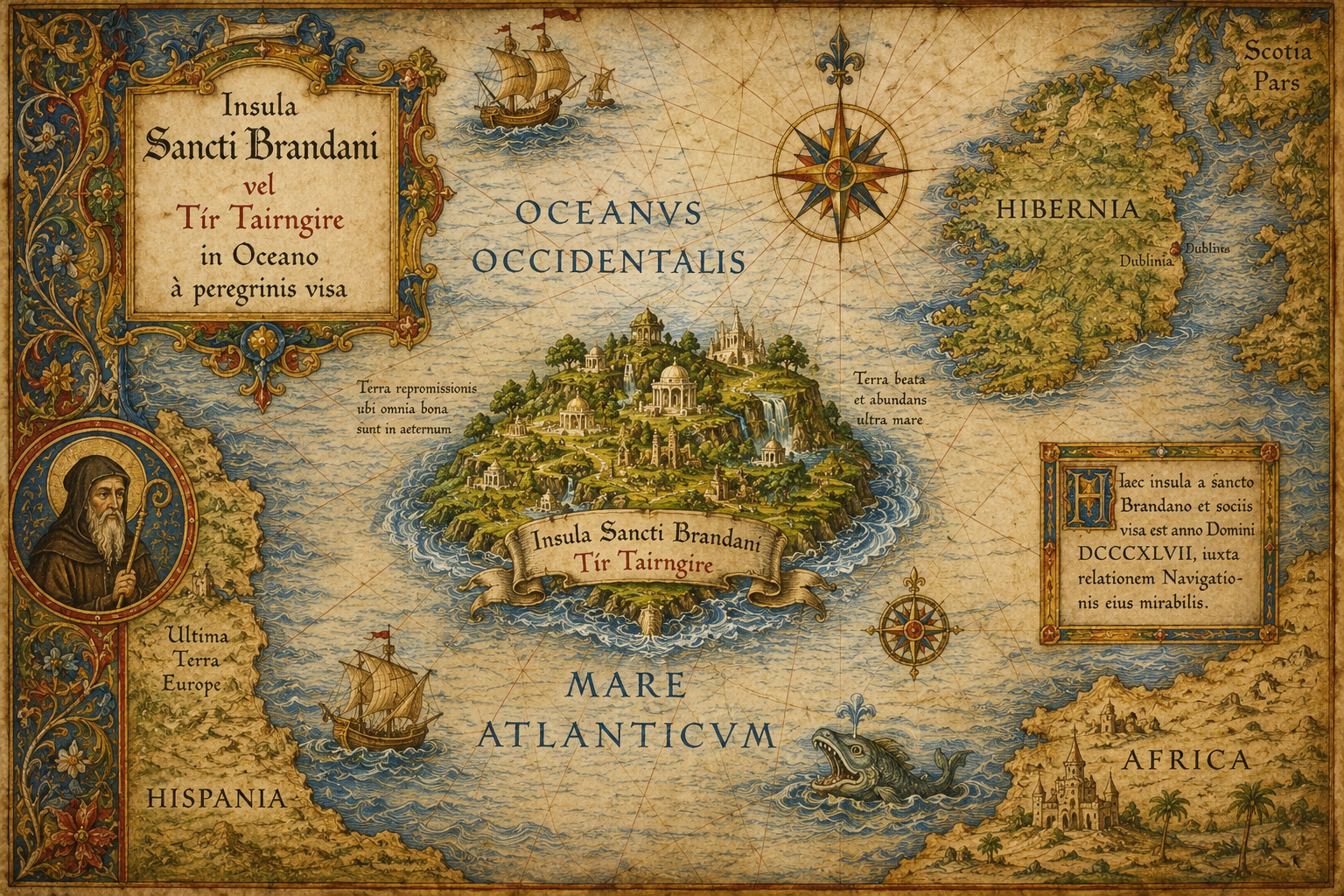
Saint Brendan's Island on Medieval Maps
The enormous popularity of the Navigatio Sancti Brendani Abbatisled many people to believe for centuries that Brendan's island was a real place.
The so-called Insula Sancti Brendani appeared on numerous medieval and Renaissance maps of the Atlantic.
The earliest clear cartographic references generally date from around the thirteenth century. The island continued to appear on maps for roughly three or four centuries.
Its location varied constantly, appearing sometimes west of Ireland and at other times near Atlantic archipelagos such as the Azores, Madeira or the Canary Islands.
Another legendary Atlantic island that eventually appeared on maps was the mysterious Hy-Brasil.
Curiously, Brendan became one of the most famous holy voyagers of the entire Middle Ages.
A Realm Between Mist and Memory
Tír Tairngire represents one of the most characteristic images of Celtic mythology.
The idea that beyond the visible horizon there exists a land where abundance never ends and where time loses its power.
A place that belongs neither entirely to the world of men nor to that of the gods.
A promise hidden beyond the sea, the mist and the imagination.
And perhaps that is why it continues to fascinate more than a thousand years later.