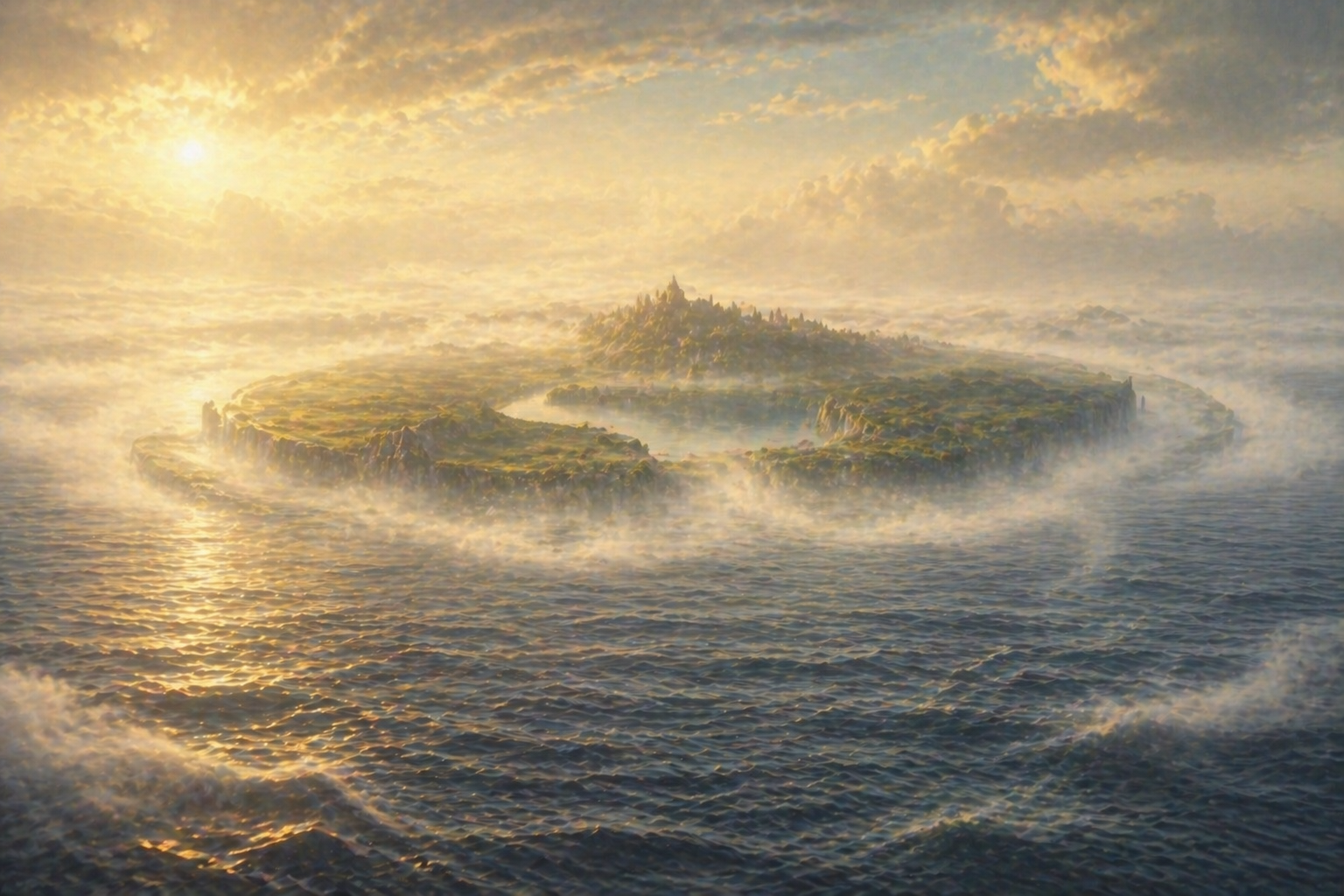
For centuries, sailors, cartographers, and explorers claimed the existence of an island located west of Ireland, in the middle of the Atlantic Ocean.
His name was Hy-Brasil (also written as Brasil, Breasal, or O’Brasil). And it was no ordinary island.
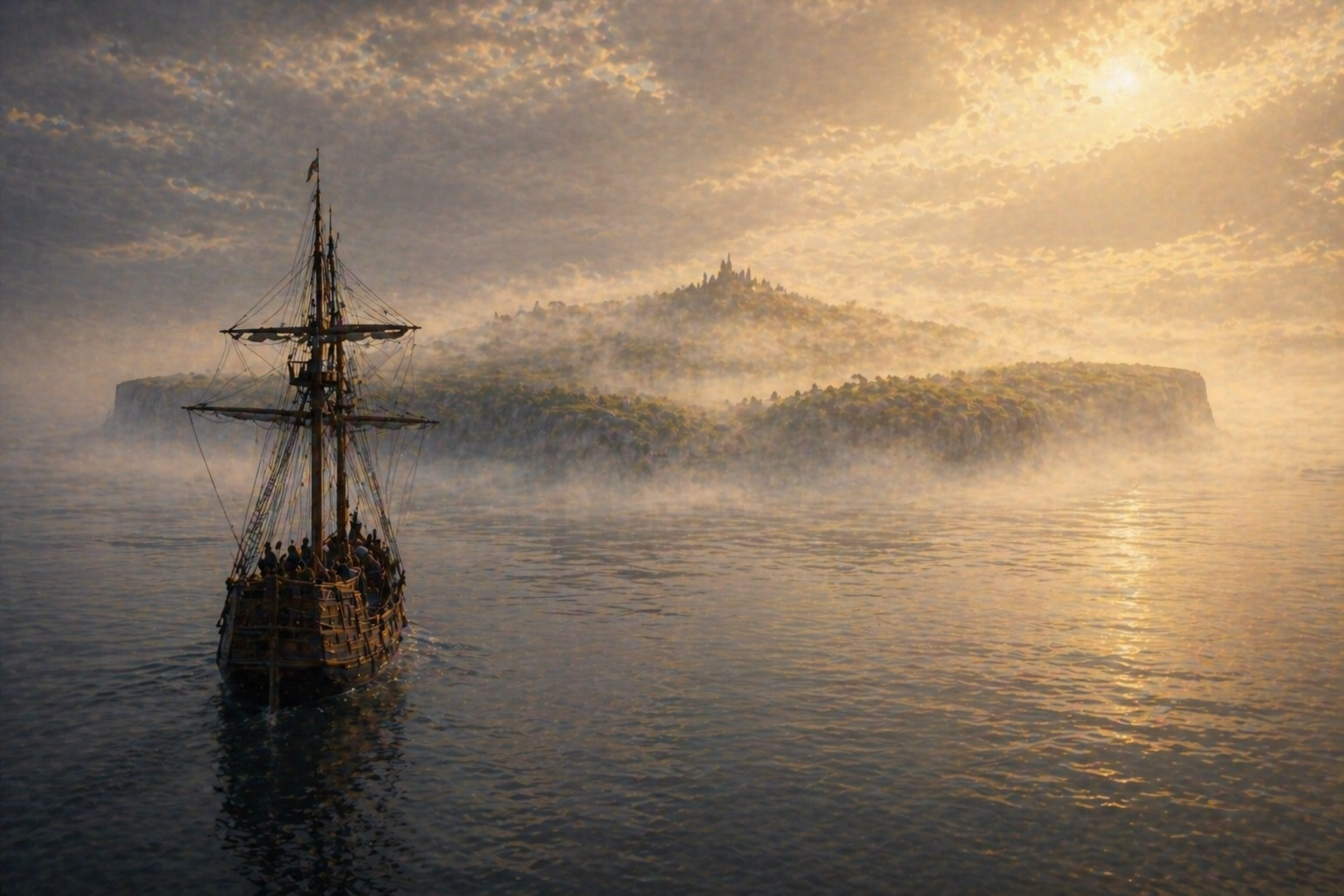
According to tradition, it could only be seen once every seven years… and even then, it often remained hidden in mist, unreachable.
Characteristics and Inhabitants
In Celtic tradition, Hy-Brasil was not simply a physical place.
It was described as:
- circular
- fertile
- luminous
- peaceful
It was said to be surrounded by constant mist and to appear only at certain moments.
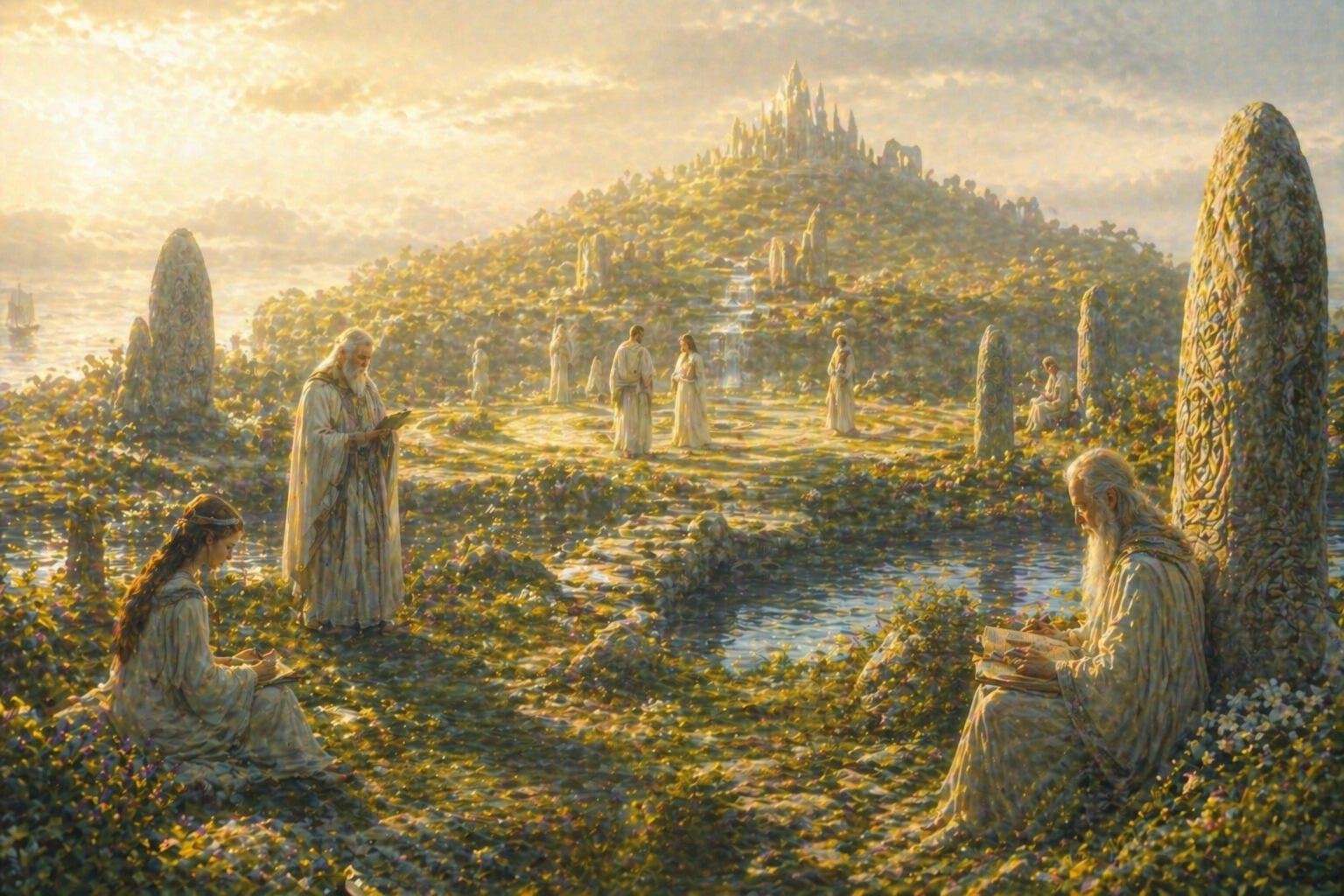
More than an ordinary territory, it was considered a place associated with:
- knowledge
- wisdom
- even immortality
According to the legends, it was inhabited by:
- wise men
- druids
- advanced or mysterious beings, sometimes almost divine
In some versions, its inhabitants possessed knowledge inaccessible to the human world.
In others, Hy-Brasil is directly connected to the Celtic Otherworld, that realm where time time and reality function differently.
The Island on Maps: Between Myth and Cartography
What makes Hy-Brasil especially fascinating is that it does not belong only to legend.
It appeared on real maps from the 14th century onward under the name: “Insula de montonis sive de brazile”
One of the earliest known references appears on the map of Angelino Dulcert (1325).
For centuries, different cartographers represented it as:
- a circular island
- often divided by a river or central channel
And this was not an isolated case.
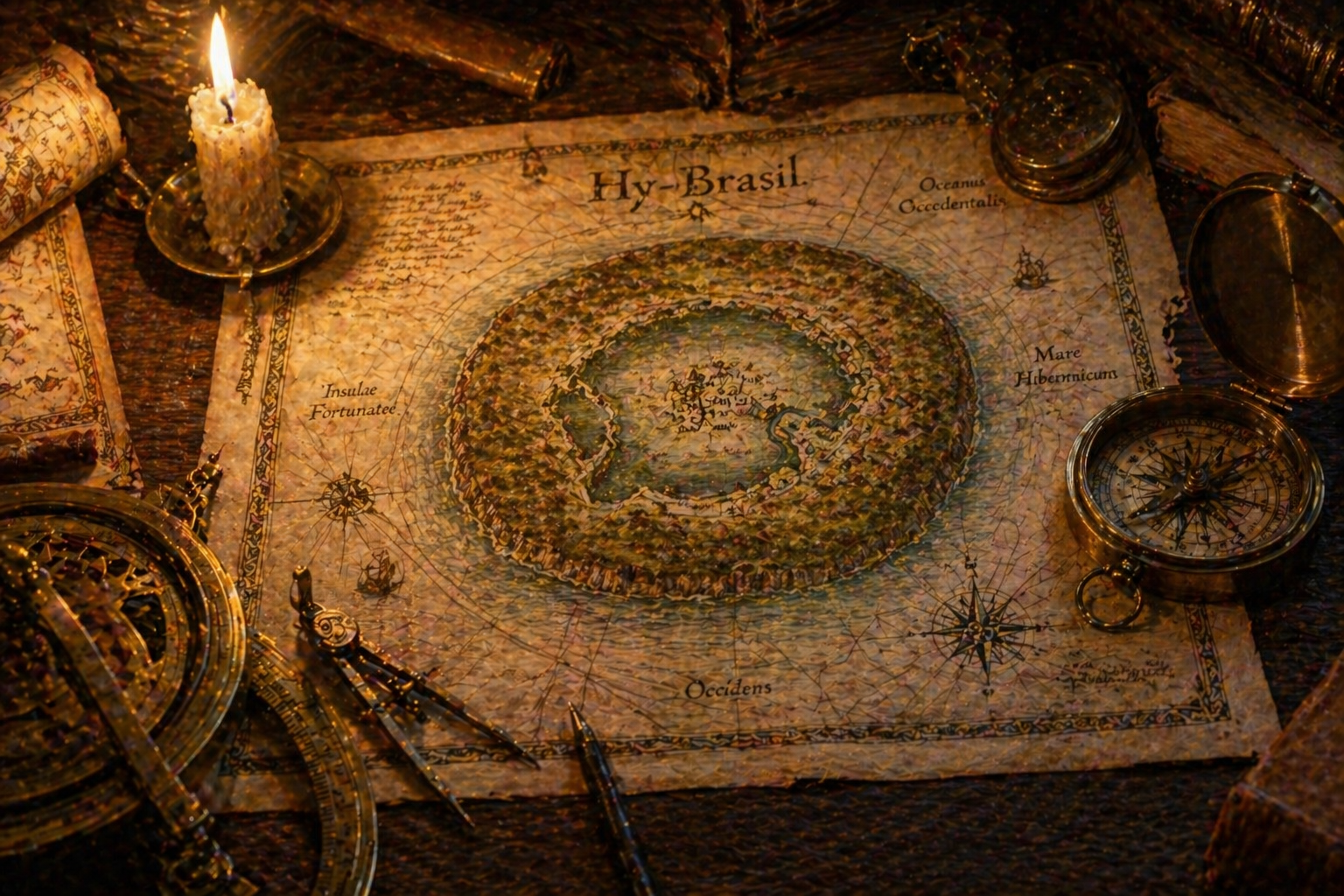
Hy-Brasil appeared on nautical maps for more than 300 years.
Attempts to Find It
Throughout the centuries, several explorers attempted to reach it.
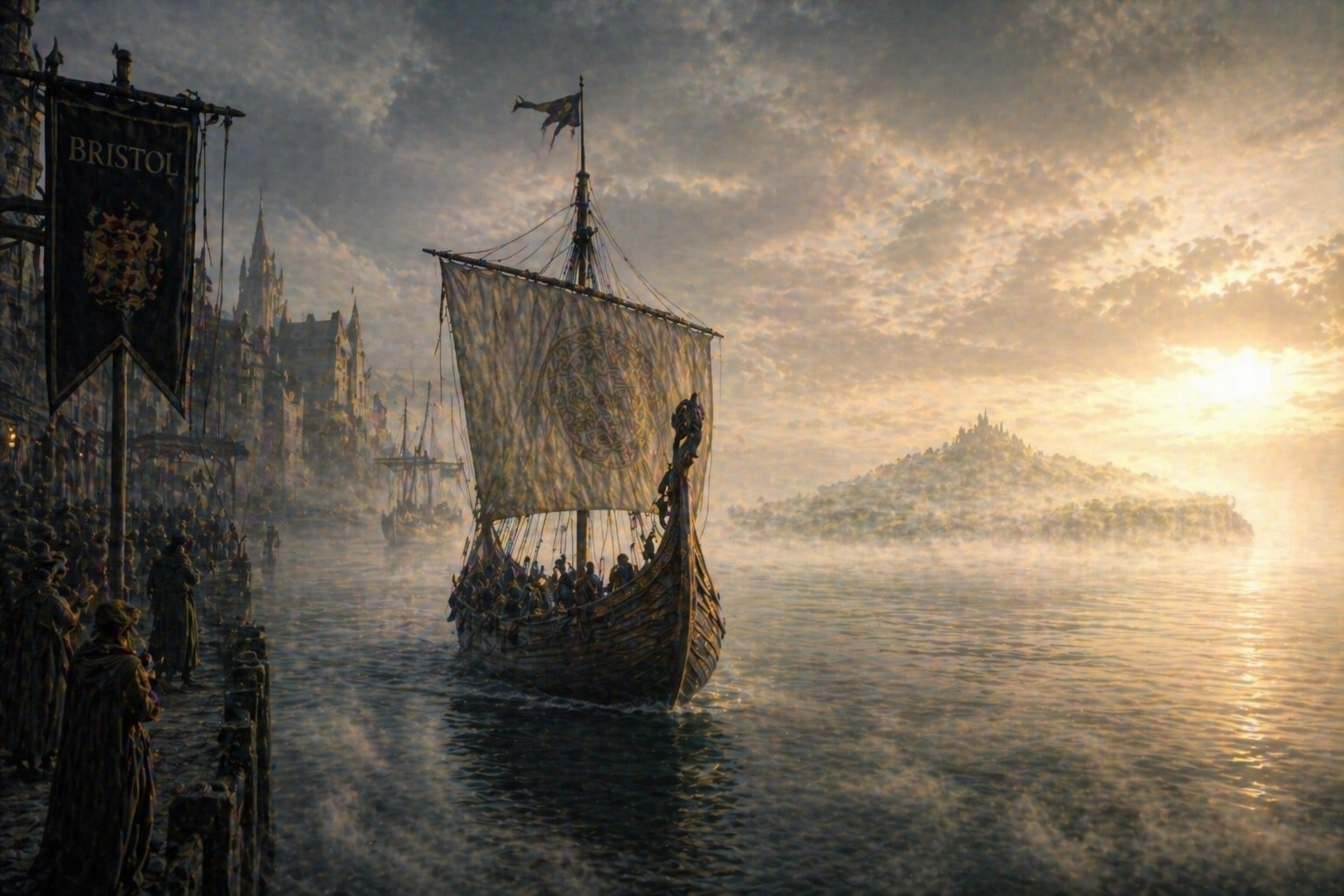
In the 15th century, expeditions departed from Bristol in search of the island.
Some accounts claimed to have seen it… but not reached it. Others stated they had briefly landed there before it vanished again.
No expedition ever managed to prove its existence definitively.
Beyond the Myth
Over time, Hy-Brasil disappeared from maps (17th–18th centuries).
Modern explanations attempt to place it within the known world:
- cartographic errors
- confusion with fog banks or marine formations
- optical phenomena such as the Fata Morgana, capable of projecting nonexistent lands onto the horizon
And yet… its persistence over centuries raises a difficult question to ignore:
Why did so many different maps, from different periods, depict the same island?
Hy-Brasil and the Celtic Imagination
Beyond its possible physical existence, Hy-Brasil fits perfectly within the Celtic worldview:
- a universe where hidden places exist
- accessible only at certain moments
- where reality dissolves and the invisible becomes tangible
It may not have been a lost island… but rather a place beyond the veil.
An Echo Between History and Myth
Today, Hy-Brasil remains one of the Atlantic’s so-called “phantom islands.”
A place that was drawn, searched for, and described… yet never fully belonged to our world.
And perhaps that is its true nature:
- not as a territory that can be found on a map
- but as one that appears… only when it is meant to be seen
Curiosities
Documented Expeditions
In 1480, the ship Trinity departed from Bristol with the goal of finding the island of Brasil.
Between 1481 and 1482, it returned without success.
John Cabot (1497)
Although he did not officially sail in search of Hy-Brasil, he navigated through the region influenced by maps where the island appeared.
His voyage would eventually lead him to North America.
Fata Morgana
Fata Morgana is an optical phenomenon in which light bends within the atmosphere, creating illusory images. It can make appear:
- “islands”
- floating ships
- even entire cities
The name Fata Morgana is associated with Morgan le Fay, a figure from Arthurian tradition, symbolically connecting this phenomenon with Celtic mythology and the idea of illusion.