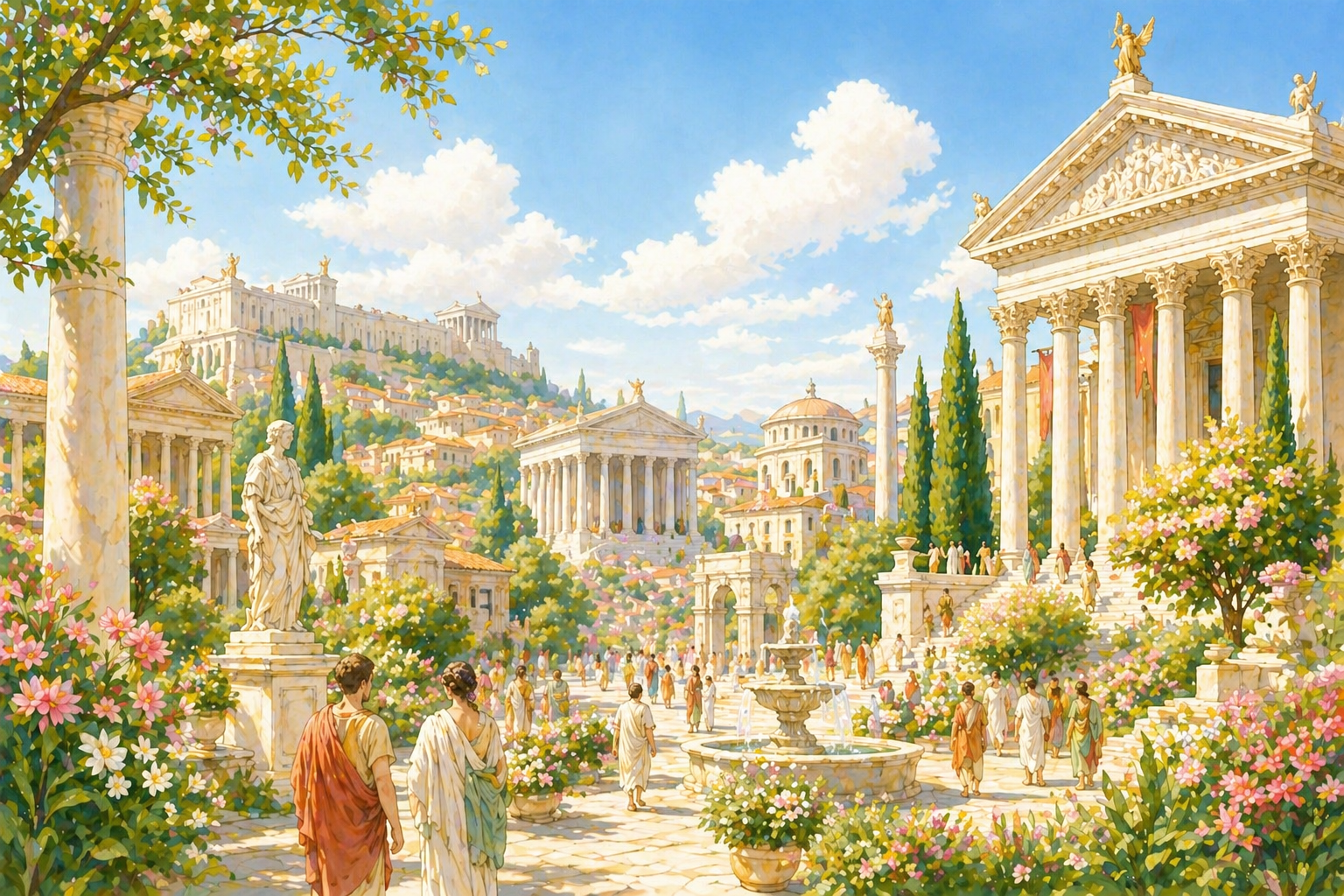
July in Ancient Rome was a month shaped by heat, urban life, and public celebrations.
Originally called Quintilis —the fifth month of the early Roman calendar— it was later renamed Iulius in honor of Julius CaesarJulius Caesar, a figure who transformed not only Rome, but time itself.
Under the intense summer sun, the city filled with games, rituals, and constant activity that reflected both everyday life and the power of the State.
From Quintilis to Iulius: The Origin of July in Rome
In 44 BC, after the death of Julius Caesar, the Senate decided to rename the month of Quintilis as Iulius in his honor, also recognizing his reform of the calendar (the Julian calendar).
It was not a random choice: Julius Caesar had been born in this month and had reshaped the very structure of time. It was both a political and symbolic decision.
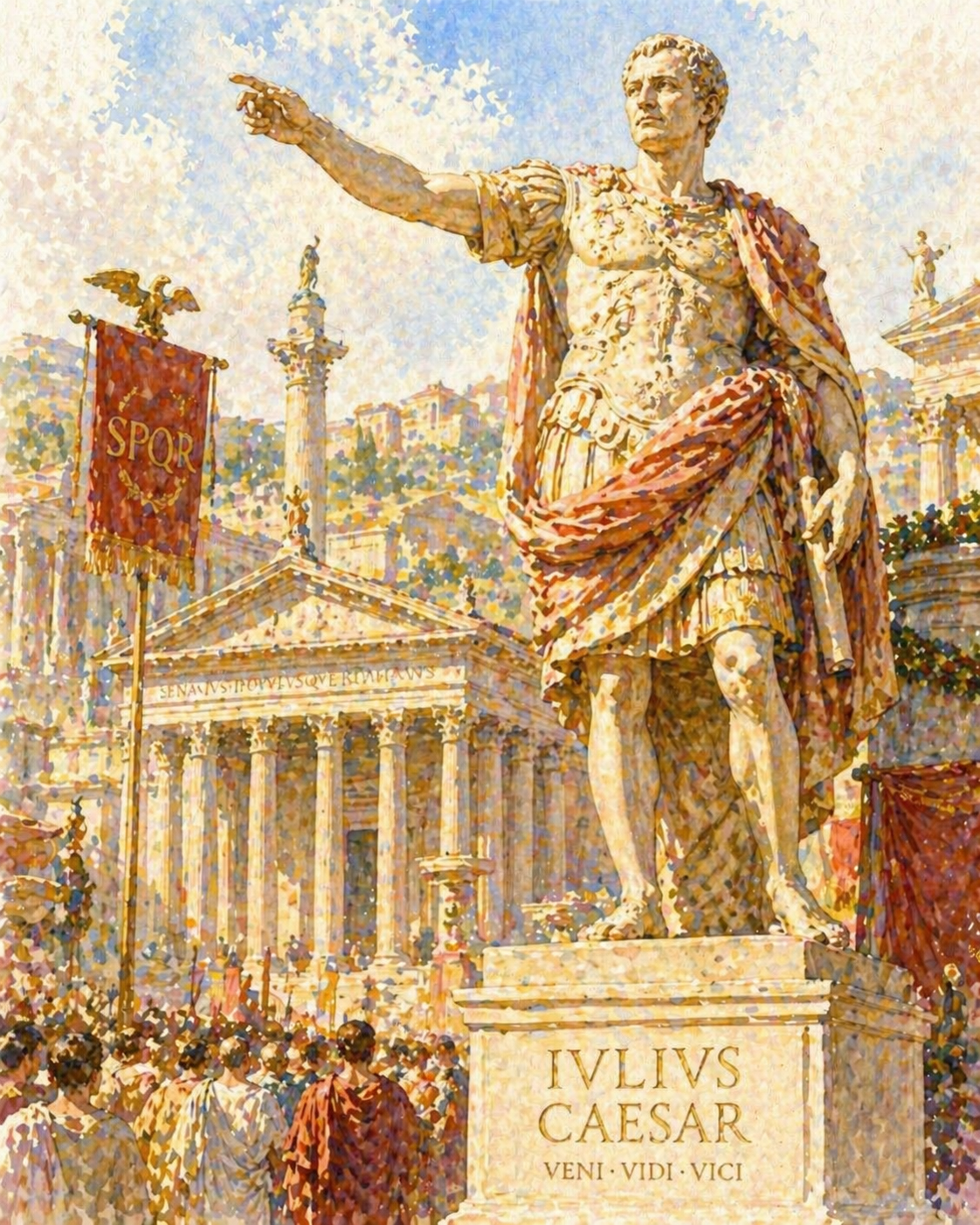
Thus, the calendar itself came to reflect his legacy.
Summer in Ancient Rome
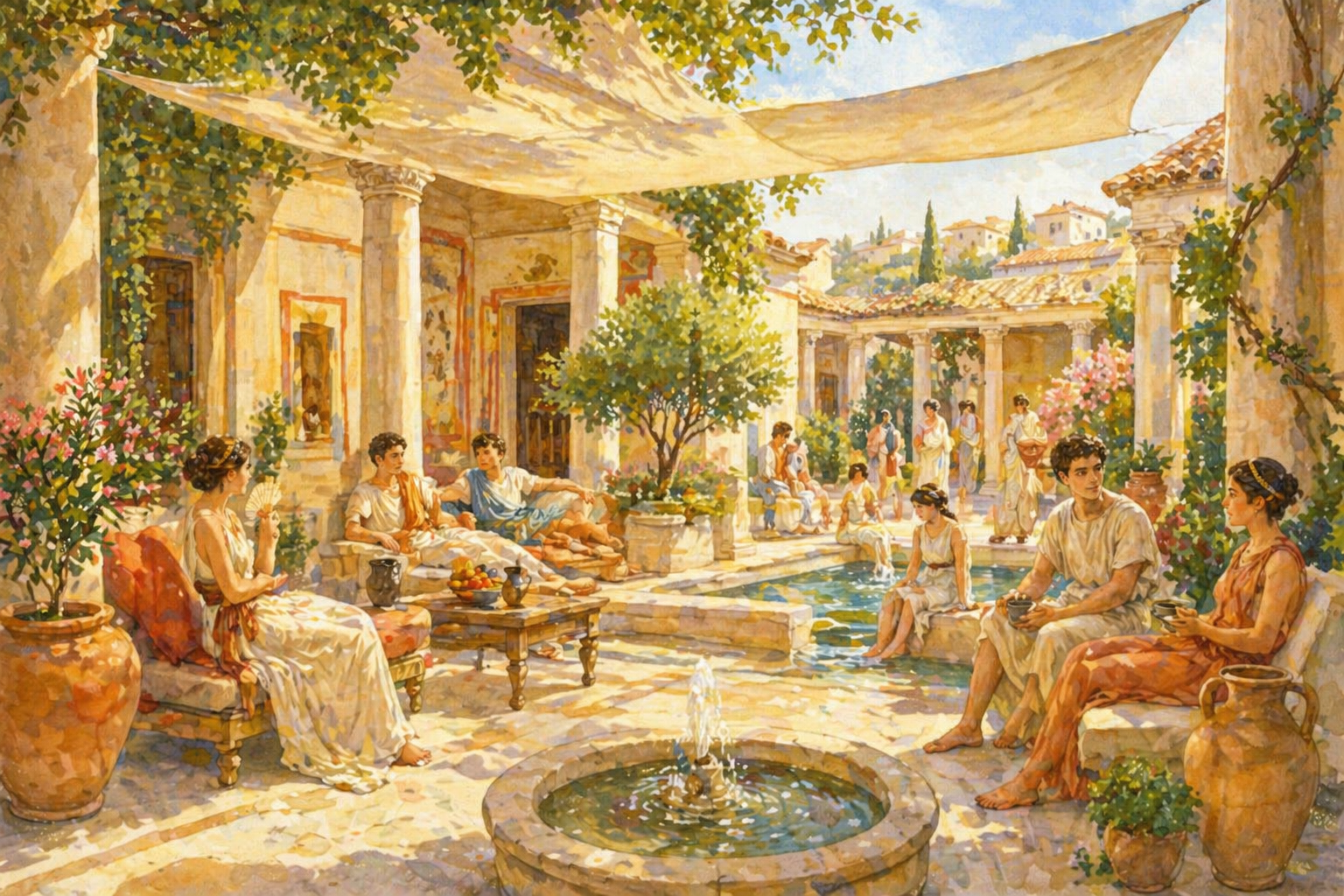
July was one of the hottest months of the year, and the heat directly influenced daily life:
- activities slowed during the central hours of the day
- people sought shade in courtyards and fountains
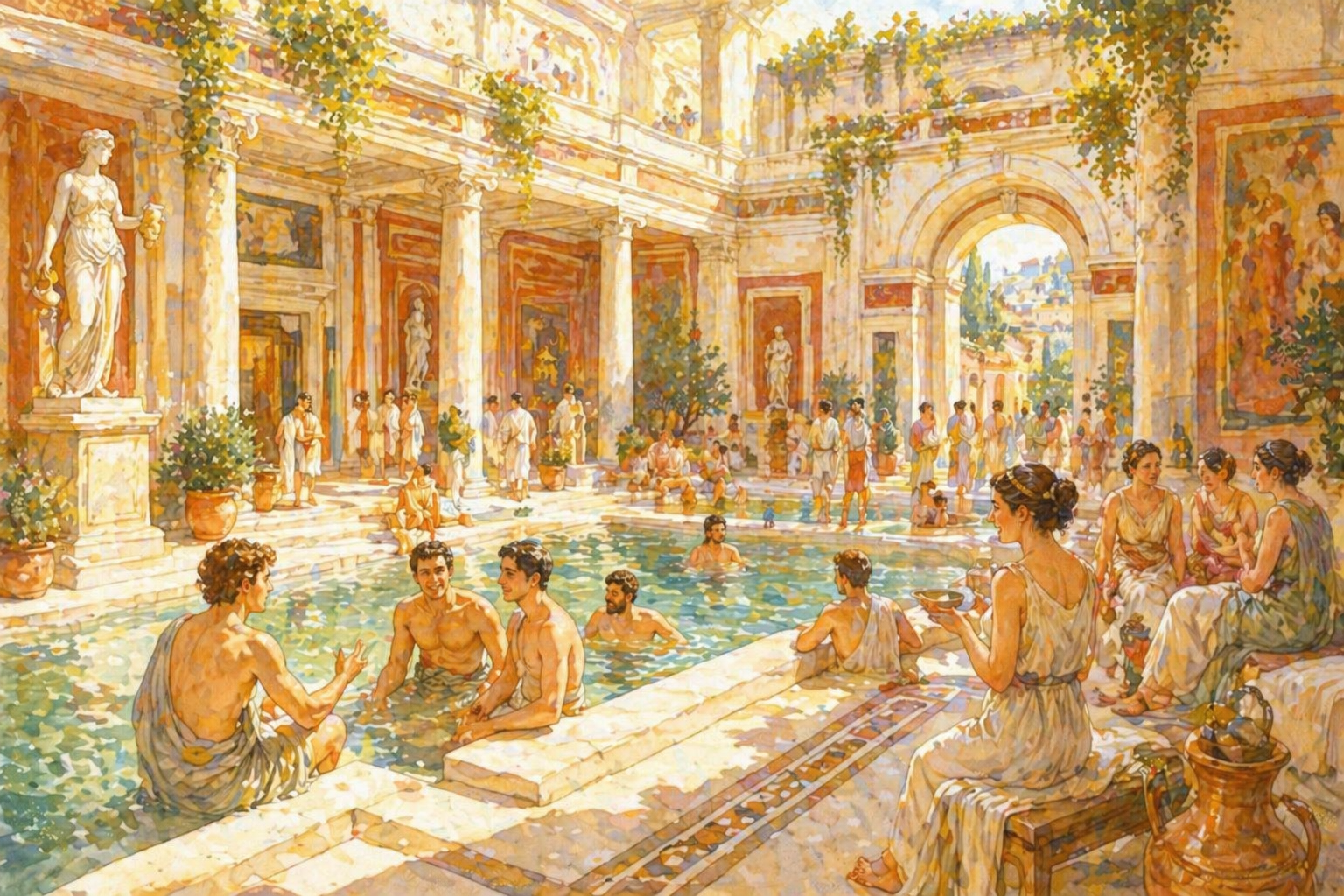
- public baths (thermae) became a refuge
For the upper classes, it was common to retreat to villas in the countryside or along the coast.
Public Baths
The baths were, especially in summer, the center of social life. A space where both rich and poor could meet.
During these months, entry was often free or very affordable.
There, people would:
- bathe (cold, warm, and hot)
- socialize
- rest
- conduct business
Festivities of Iulius
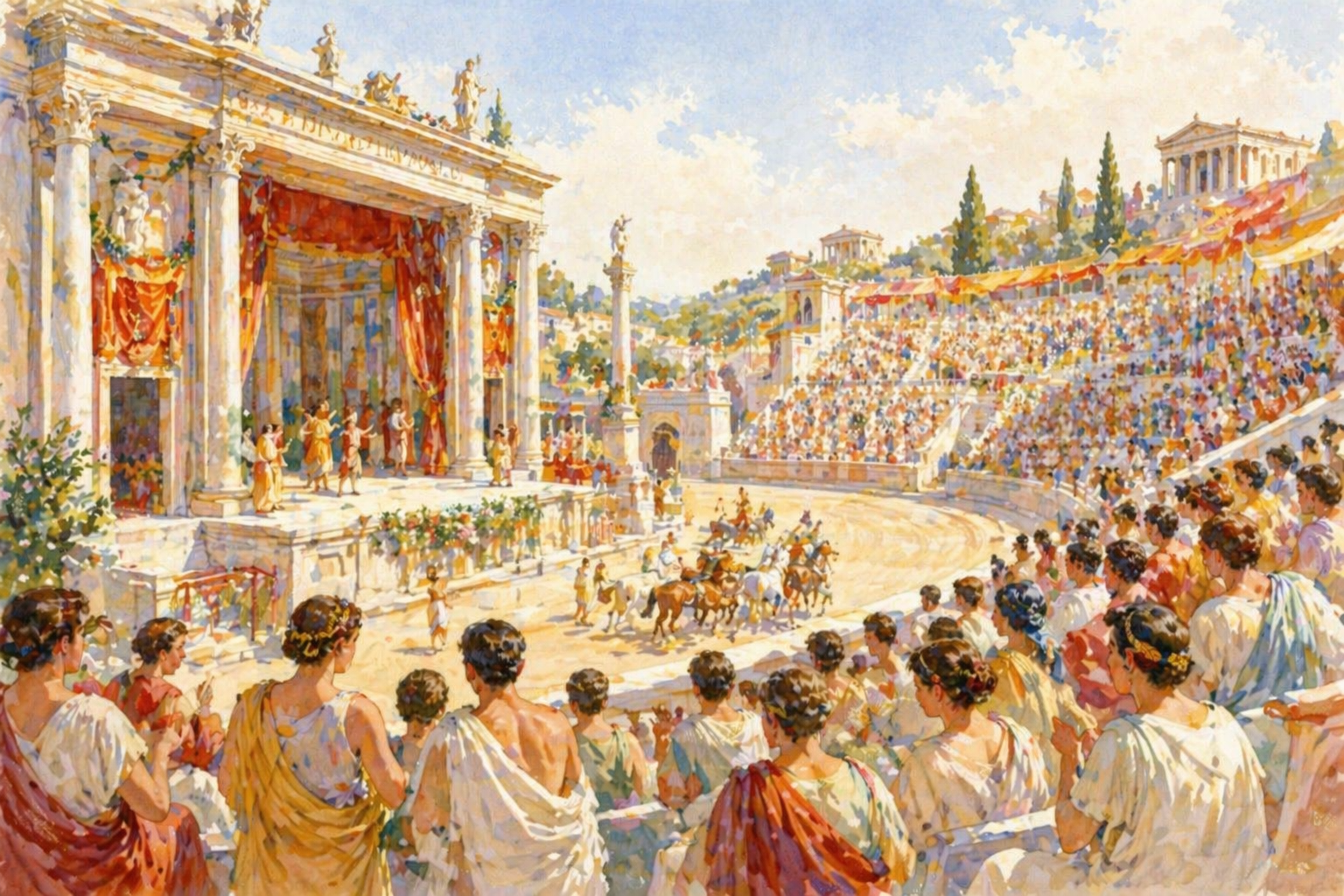
In July, Rome was defined more by its public life than by large-scale rituals: games, spectacles, and a city that, even under the heat, never stopped.
The main spaces where these activities took place were:
- Circus Maximus → chariot races
- theatres → stage performances
- Temple of Apollo Palatinus → rituals
Ludi Apollinares (July 6–13)
Held in honor of Apollo, these games were established during the Second Punic War.
They combined religious and entertainment elements:
- theatrical performances
- races
- public competitions
Apollo, associated with light, music, and healing, held particular importance during this time of year.
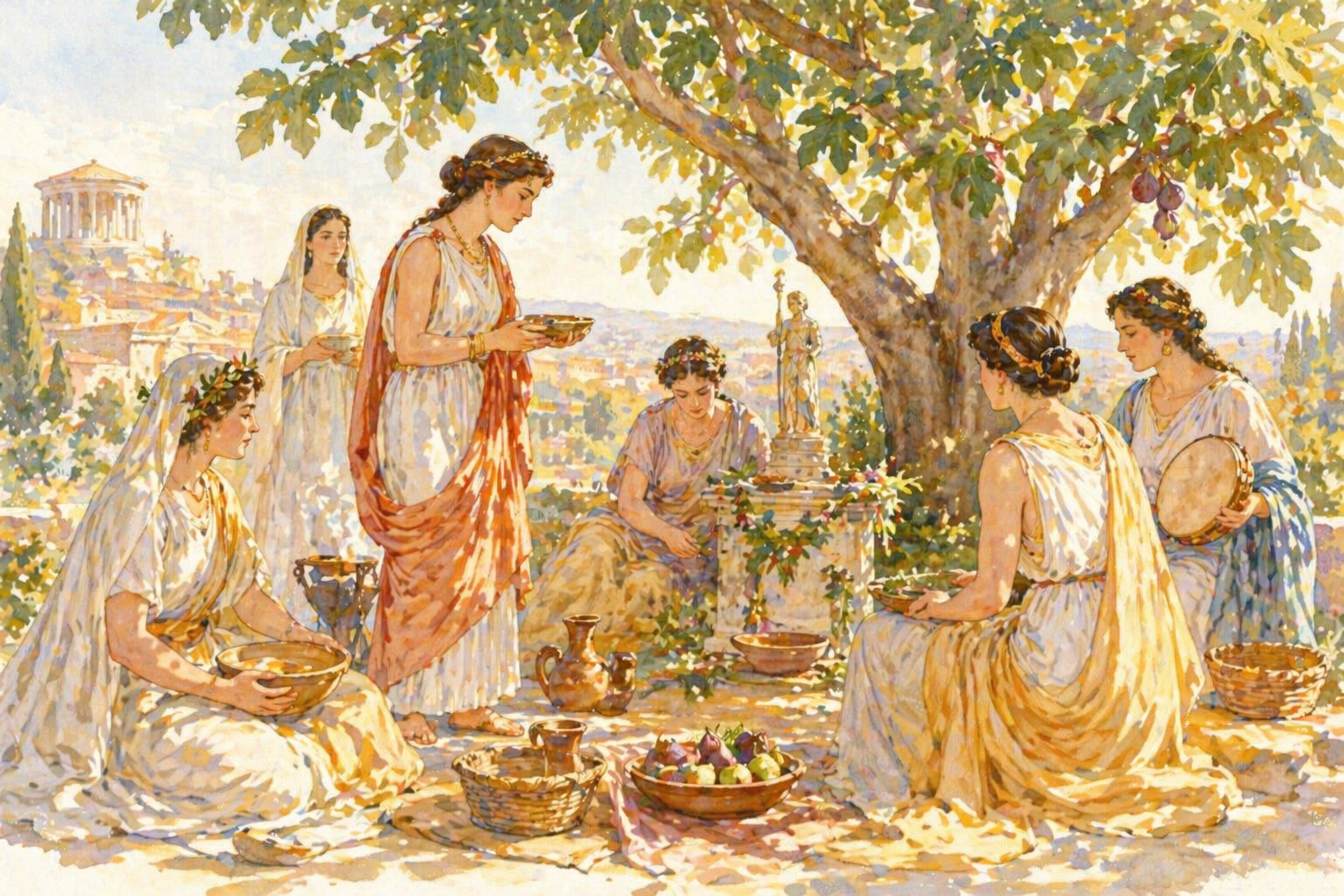
Nonae Caprotinae (July 7)
A celebration in honor of Juno Caprotina, linked to fertility and ancient female rituals.
It was a unique festival in which women—especially including enslaved women—took part in rituals performed beneath a wild fig tree.
It reflects a more archaic and popular dimension of Roman religion.
Lucaria (July 19, 21, 23)
Celebrations held in sacred groves (lucus), with very ancient origins.
They were associated with refuge, danger, and a connection to nature, preserving a deeply archaic character.
Neptunalia (July 23)
Dedicated to Neptune, god of water, at one of the hottest points of the summer.
Romans built temporary shaded structures and celebrated outdoors, seeking protection from the heat and ensuring access to water.
Furrinalia (July 25)
A festival in honor of Furrina, an ancient deity associated with springs and underground waters.
By the classical period, her cult was already obscure, making it a remnant of older traditions.
Urban Life and Entertainment
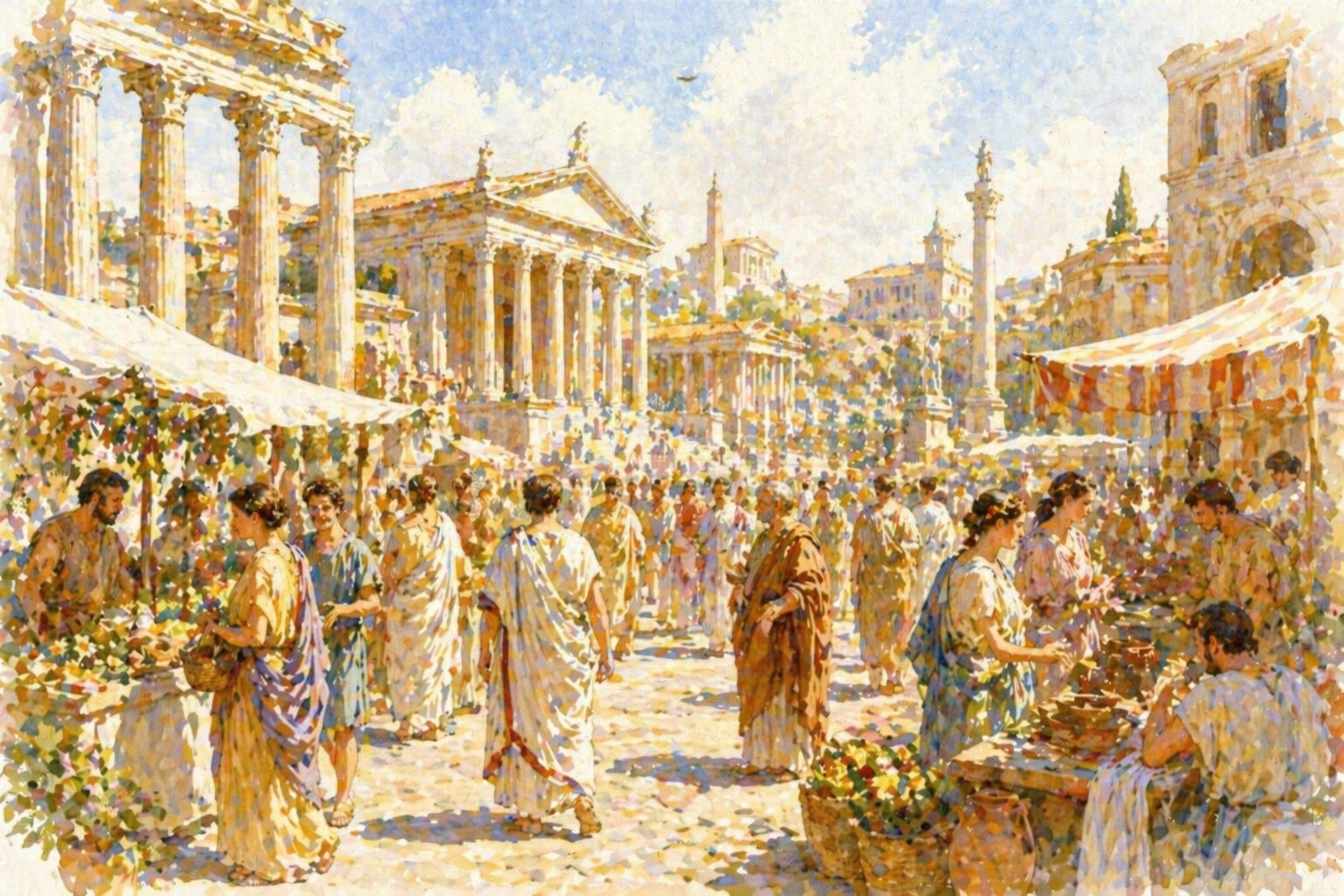
Despite the heat, Rome did not stop. Public spaces remained the center of life:
- the Forum
- markets
- public spectacles
Entertainment played a key role in maintaining social balance.
Games, organized by the State and financed by magistrates, served several purposes:
- entertainment
- social control
- political prestige
Among the most popular spectacles:
- chariot races (often involving betting)
- theatre (tragedies and comedies)
- music and poetry
Panem et circenses (bread and games) was not just an expression… it was reality.
Rhythms of Summer
July marked a transitional moment within the year.
Harvests began, the heat reached its peak, and the rhythm of the city adapted to the season.
It was a time when life slowed during certain parts of the day… yet intensified in others.
July in Rome was:
- a political month (Julius Caesar)
- a month of spectacle (games)
- a month of heat (adapted urban life)
July in Rome: Between Heat and Power
In July, Rome moved between the intensity of summer heat and the constant presence of power.
More than grand celebrations, these festivities reveal a city deeply connected to its environment, where heat, land, and water shaped the rhythm of life.
Time, games, and daily life intertwined in a month that no longer represented only a season… but also the memory of a man who changed history.
Because in Rome, even the calendar could become a legacy.