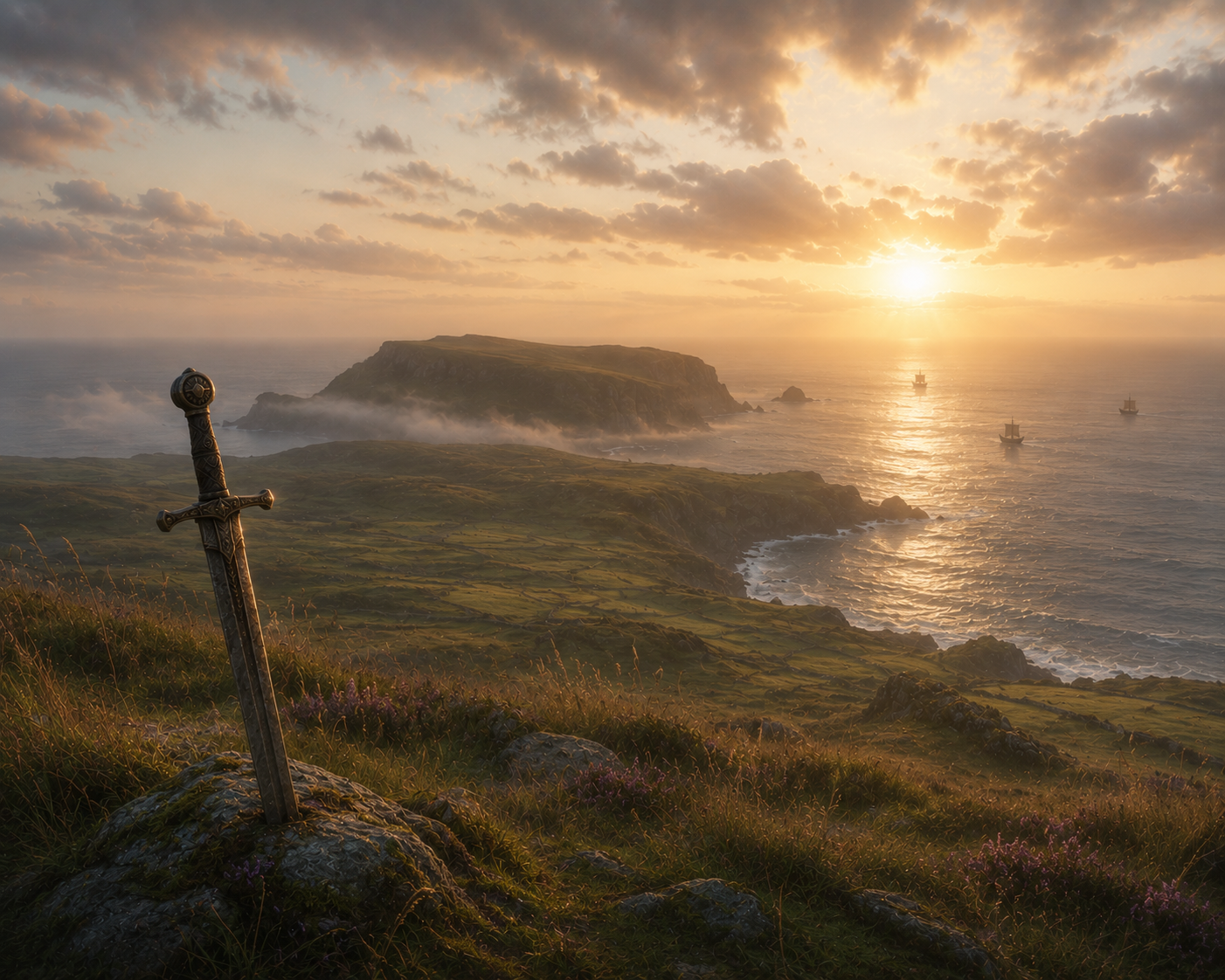
After the disappearance of Partholón, the legends tell that Ireland once again remained uninhabited for a time.
Then a new leader arrived. His name was Nemed's people.
According to the Lebor Gabála Érenn (The Book of the Taking of Ireland), Nemed led his people to Ireland, inaugurating a new chapter in the cycle of the mythical invasions.
Although his story began with hope, it would become one of the most tragic in all of Irish tradition.
Who Was Nemed?
The medieval sources present Nemed as a noble leader descended from the ancient survivors of the Great Flood.
Like the other peoples described in the Lebor Gabála Érenn, Nemed's genealogy was connected by medieval monks to the lineage of Noah, incorporating ancient Irish traditions into biblical history.
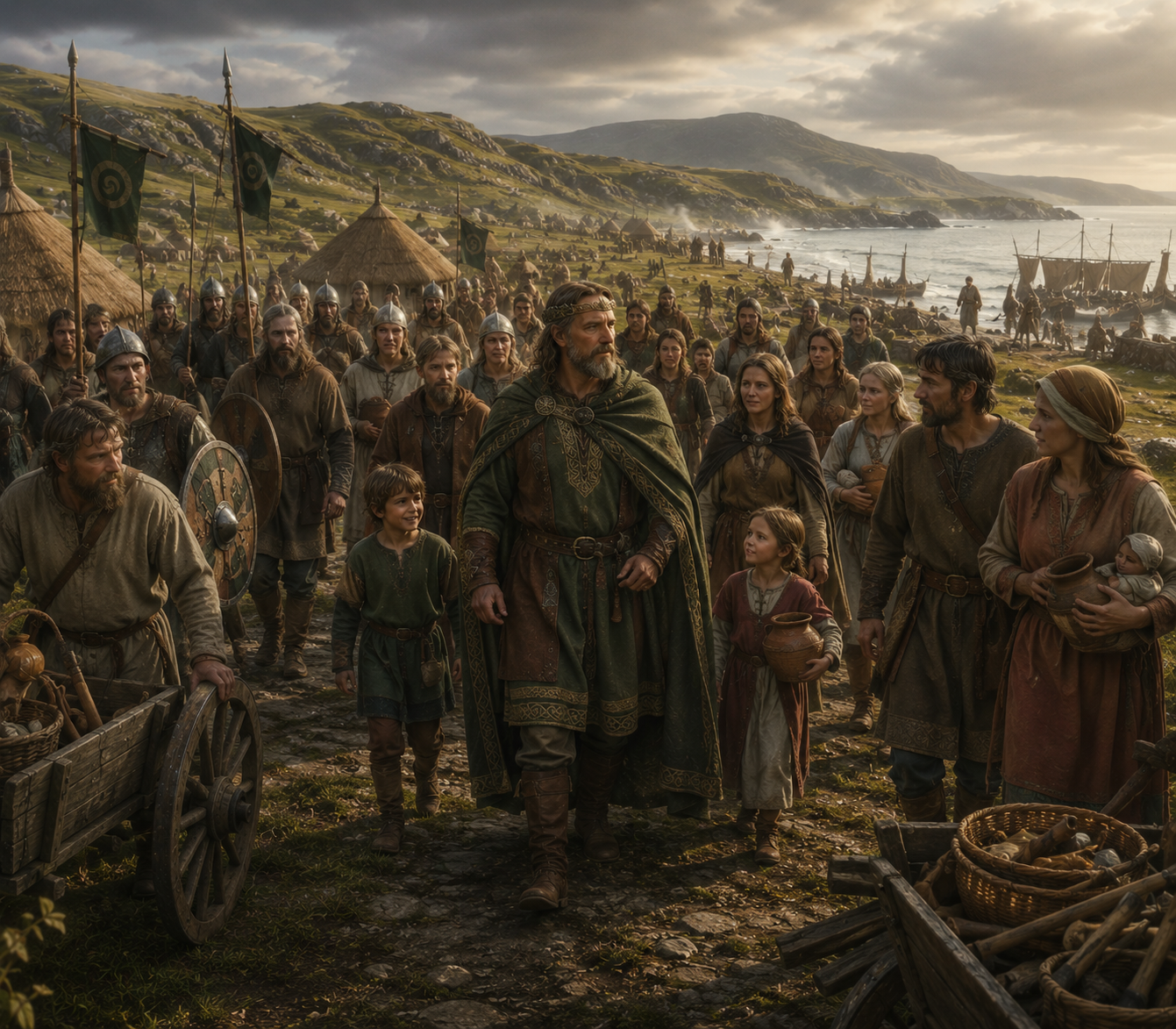
Like Partholón, he arrived accompanied by his family and numerous followers with the intention of settling permanently in Ireland.
During his rule, the transformation of the island continued. Tradition credits his people with clearing new plains, creating farmland, and establishing several settlements.
However, they would soon have to confront the same threat that had already plagued earlier peoples: los Fomorianos.
The War Against the Fomorians
When Nemed arrived in Ireland, the Fomorians remained a powerful force on the island.
At first, the Nemedians achieved several victories. The legends tell that they defeated various Fomorian leaders and managed to maintain a period of relative stability.
That stability, however, would not last forever.
After Nemed died from illness, the Fomorians regained control.
Fomorian Rule
With Nemed gone, the Fomorians imposed harsh rule upon his people.
The medieval sources describe a time of great suffering.
Every year, during the festival of Samhain, the Nemedians were forced to pay a heavy tribute to the Fomorians.
Some versions claim that it consisted of:
- two-thirds of their children;
- two-thirds of their cattle;
- two-thirds of their harvests.
Although the details vary among different traditions, they all present this tribute as the symbol of Fomorian oppression.
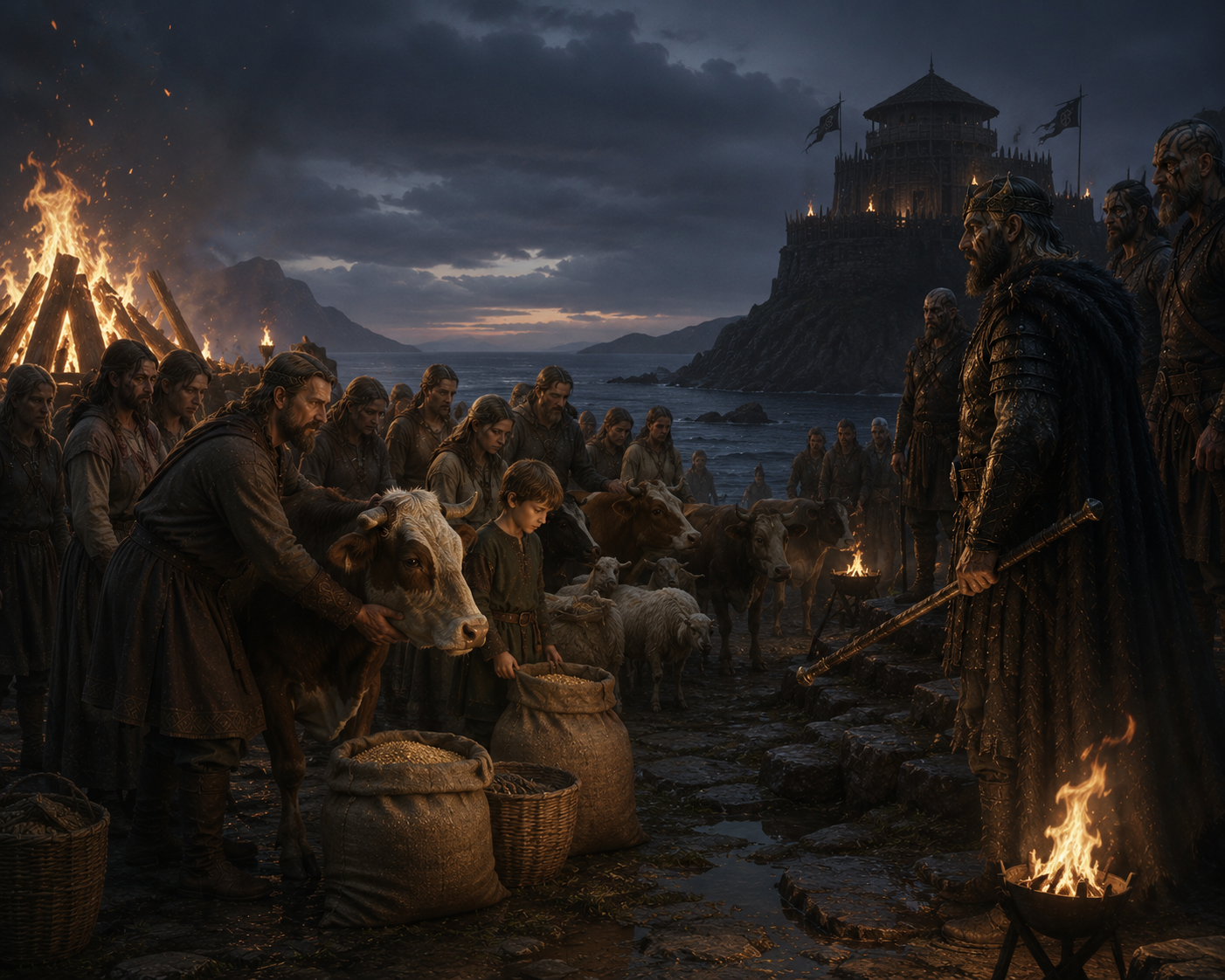
The choice of Samhain also seems significant, as the festival marked one of the most important moments of the Celtic calendar, symbolizing the beginning of winter and the turning of the yearly cycle.
Conand's Tower
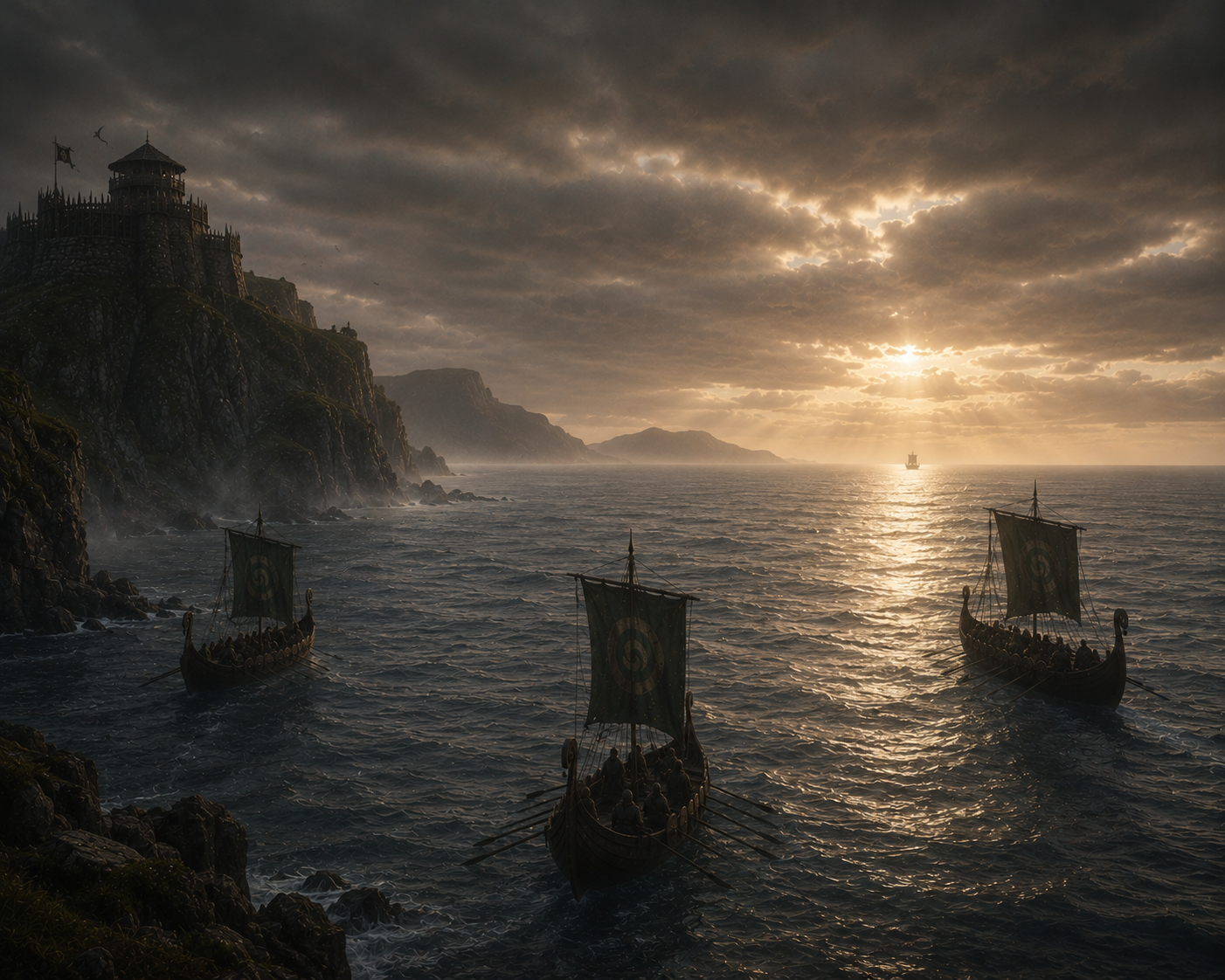
The center of Fomorian power was a fortress known as Conand's Tower.
According to the legends, it belonged to the Fomorian leader Conand and stood on an island traditionally identified with present-day Tory Island, off the coast of County Donegal.
From there, the Fomorians ruled and collected the tribute imposed upon the Nemedians.
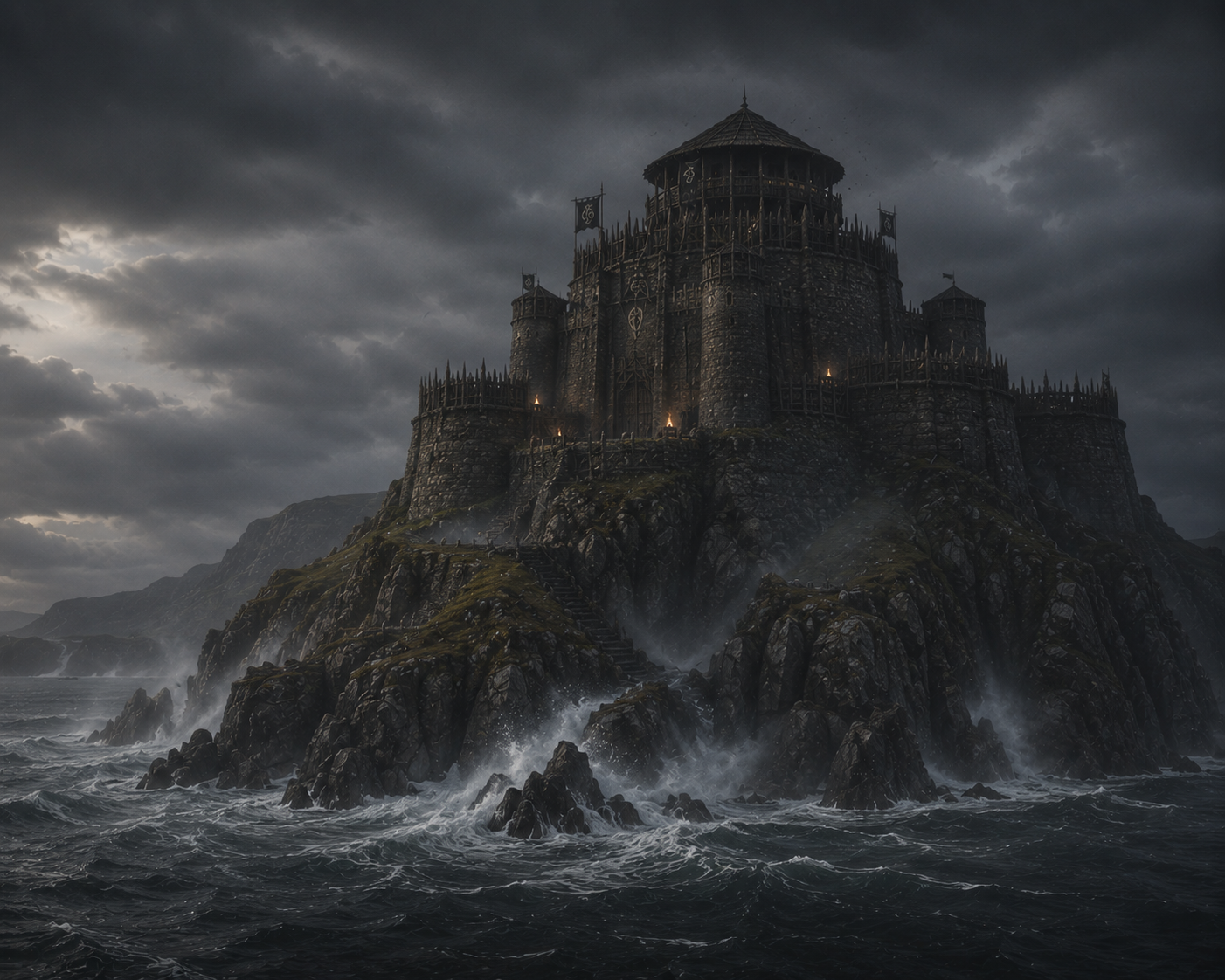
The tower would become one of the most important settings in the entire narrative of the mythical invasions.
The Great Rebellion
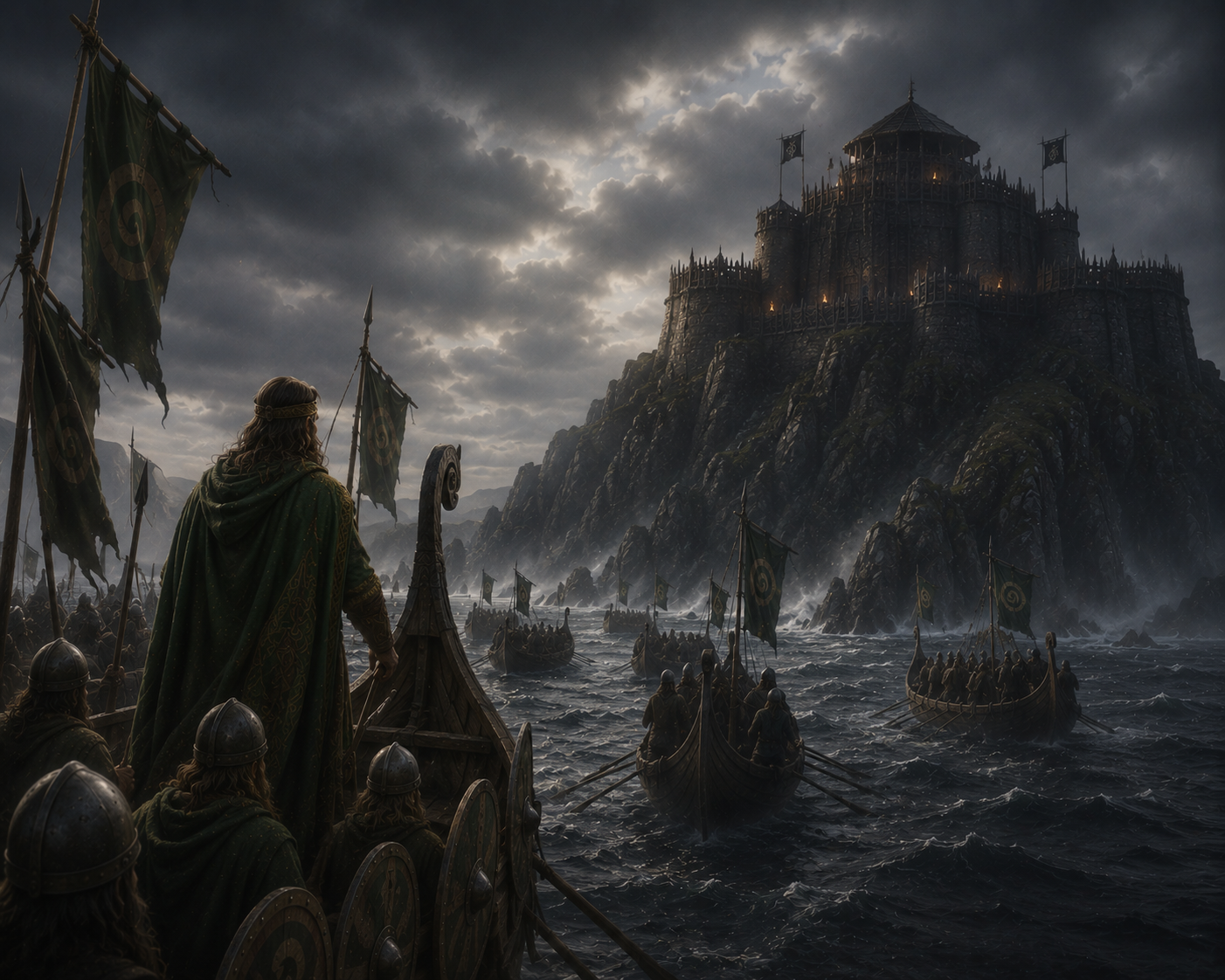
Unable to endure their situation any longer, the Nemedians decided to rebel. They assembled a great army and sailed to Conand's Tower.
The legends tell that they captured the fortress, killed Conand, and destroyed the tower.
At last, it seemed they had regained their freedom. But the victory was short-lived.
Soon afterward, an immense Fomorian fleet led by Morc (also known as Morc mac Dela) arrived.
A devastating battle followed. The sources describe a conflict so violent that many accounts claim the sea became covered with the wreckage of ships and the bodies of warriors.
Virtually both armies were destroyed.
The Fate of the Survivors
Very few Nemedians survived. Tradition tells that the survivors abandoned Ireland and scattered in different directions.
Over time, these groups gave rise to new peoples who would later return to the island.
According to medieval tradition:
- some traveled north and, after acquiring great knowledge, their descendants eventually became the Tuatha Dé Danann;
- others were enslaved in Greece and centuries later returned as the Fir Bolg;
- a third group left Ireland and dispersed throughout different regions of the world, although the sources disagree about their final destination.
Thus, although the people of Nemed disappeared, their legacy continued through the later mythical invasions.
The Legacy of Nemed
Nemed's story marks an important turning point within the Irish Mythological Cycle.
With him, the Fomorians cease to be merely an occasional threat and become the true rulers of Ireland.
This cycle introduces for the first time several of the most important elements of Irish tradition: Samhain, the Conand's Tower, the great rebellion against the Fomorians, and the legendary origins of the peoples who would lead the subsequent invasions.
For this reason, although Nemed never succeeded in defeating the Fomorians permanently, his story paved the way for the great events that would follow.
Follow the Footprints
Visit It Today...
The Tory Island (Toraighin Irish) lies off the coast of County Donegal, Ireland.
Today, it is home to a small permanent community and remains one of the places most closely associated with the ancient legends of the Fomorians.
At the island's highest point stands Dún Bhaloir (Balor's Fort, an ancient fortified enclosure that tradition associates with the legendary Fomorian king Balor.
According to medieval legends, this site is also believed to have been the location of the mythical Conand's Tower, the setting of the struggle against Fomorian domination.