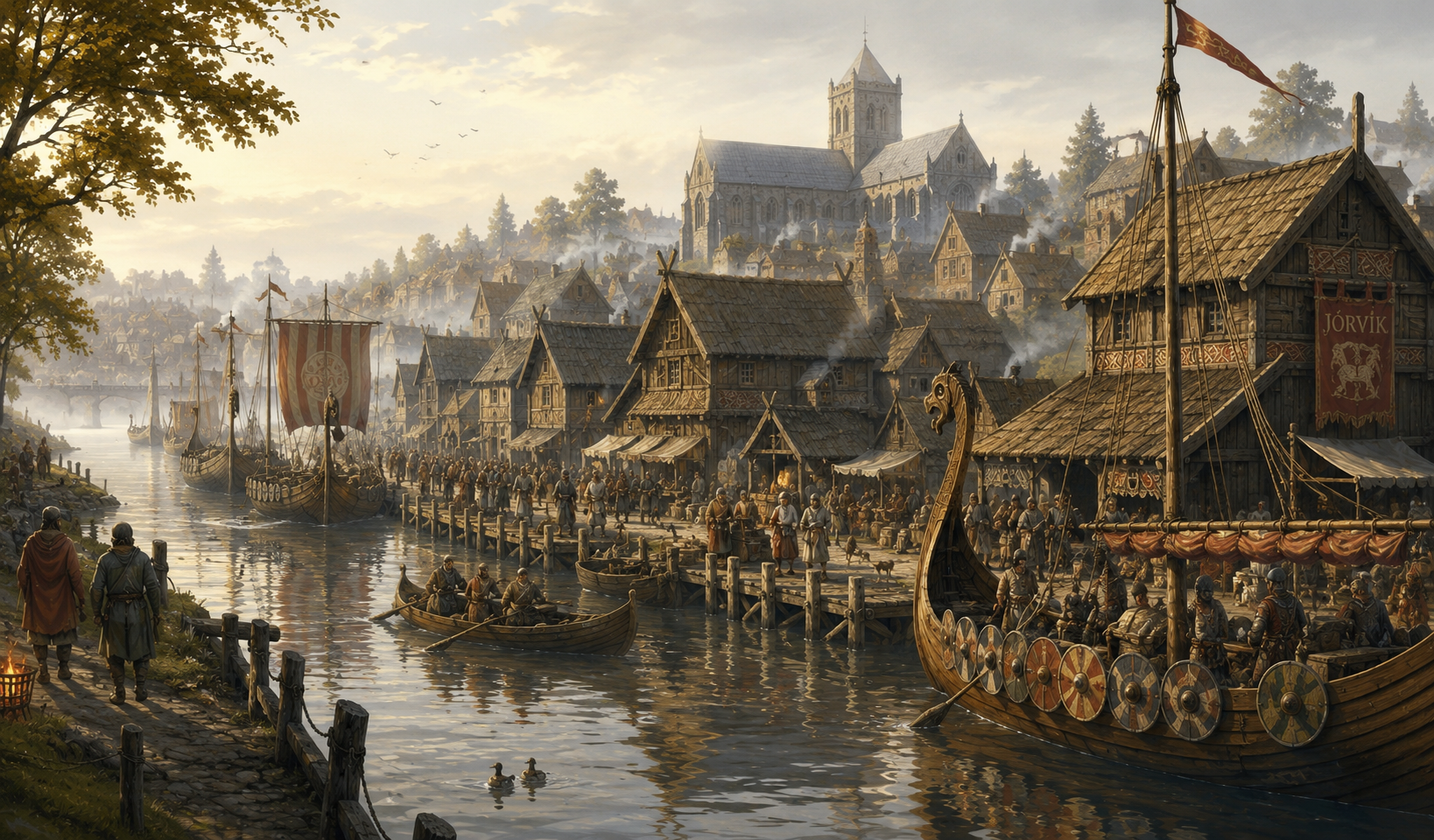
There was a time when the Vikings did not come to England merely to raid... but to stay. Not as a single expedition. Not as an isolated attack. But as an organized invasion.
That moment had a name: the Great Heathen Army.
And its story is closely linked to one of the most legendary figures of the Norse world: Ragnar Lodbrok.
Ragnar: Between History and Legend
Ragnar is not an easy figure to define.
To some, he was a real Viking king of Sweden and Denmark. To others, he was a legendary character created from the deeds of several historical rulers. Yet the story preserved by the Norse sagas is clear.
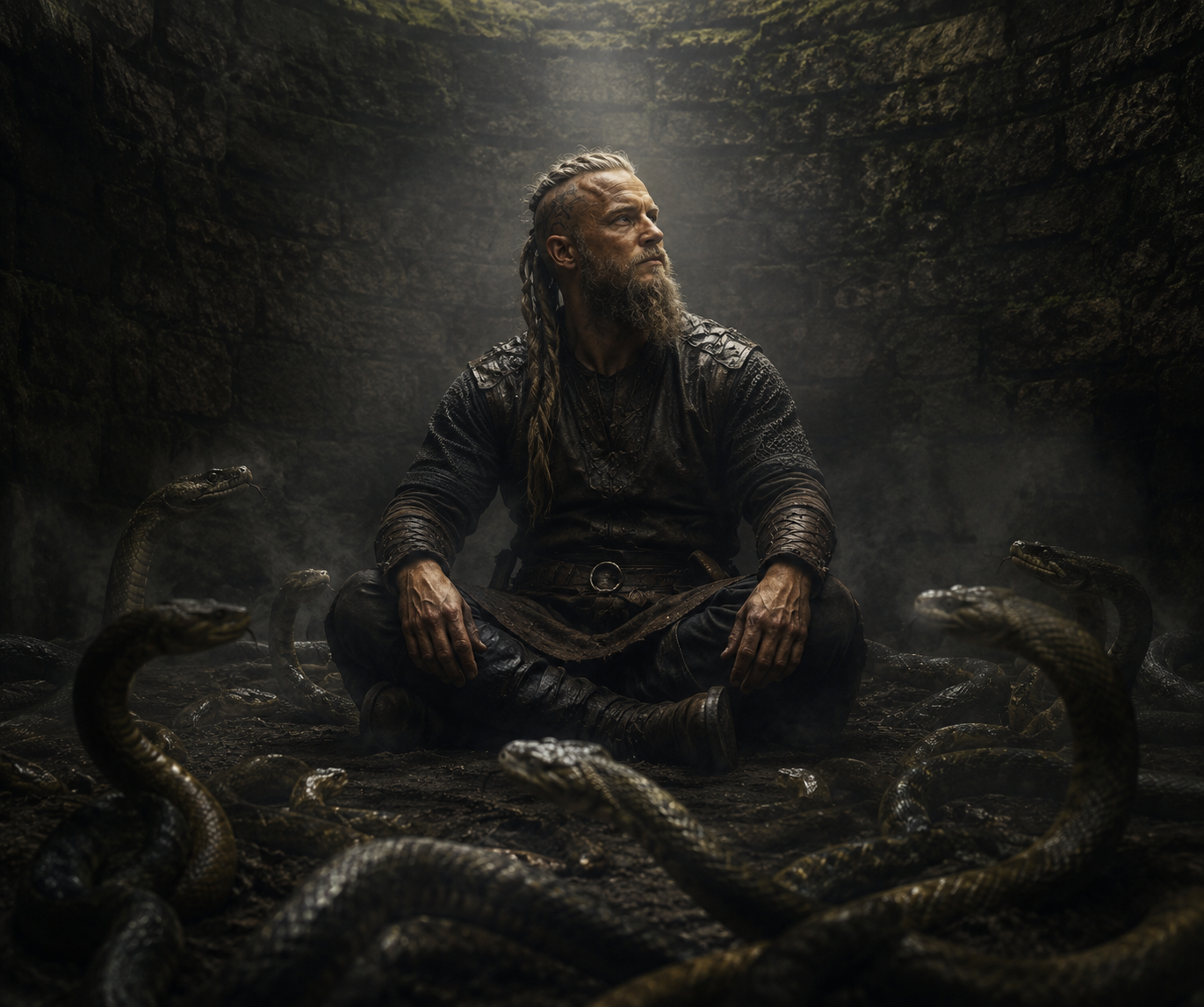
According to tradition, Ragnar was captured by King Ælla of Northumbria and executed in a pit filled with venomous snakes.
The sagas attribute to him one final message for his sons:
"How the little piglets would grunt if they knew how the old boar suffers!"
The Saga of Ragnar Lodbrok
The sagas identify among his sons figures such as:
- Björn Ironside
- Ívarr the Boneless
- Halfdan Ragnarsson
- Sigurd Snake-in-the-Eye
- Ubba
According to tradition, they answered that call for vengeance.
The Kingdoms of England
At that time, England did not yet exist as a unified kingdom.
The land was divided among several Anglo-Saxon kingdoms:
- Northumbria
- Mercia
- East Anglia
- Wessex
- Kent
- Essex
- Sussex
The arrival of the Great Heathen Army would forever change the balance of power between them.
The Great Heathen Army
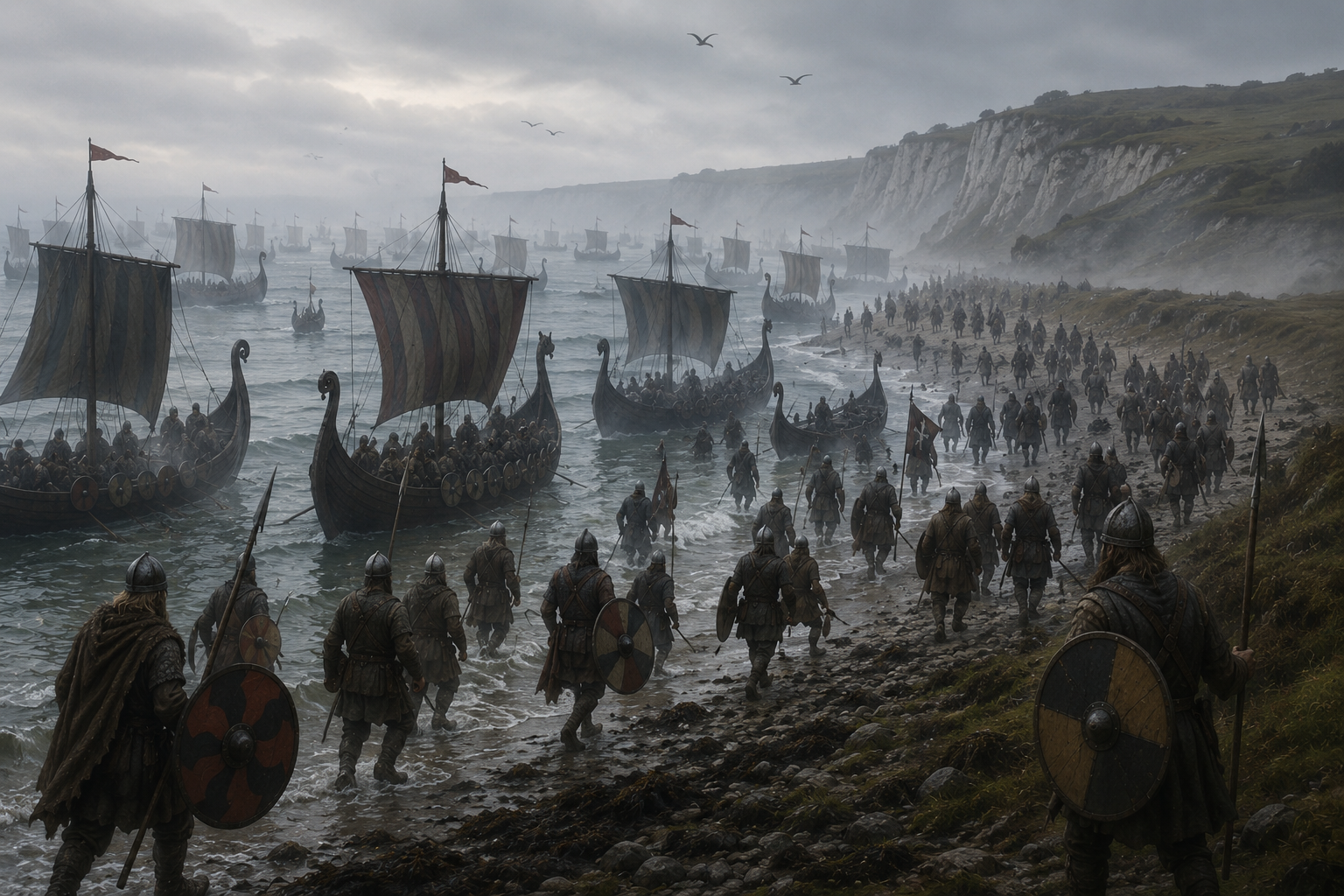
In AD 866, an unprecedented Viking army landed in England.
It was not a band of raiders. It was an organized military force.
According to tradition, it was led by several of Ragnar's sons:
- Ívarr the Boneless
- Halfdan Ragnarsson
- Ubba
Some traditions also include:
- Björn Ironside
Their goal went far beyond plunder. They intended to conquer territory and settle permanently.
The Conquest and Advance of the Great Heathen Army
In 867, the Vikings conquered the Kingdom of Northumbria and captured York.
Taking advantage of the internal conflict between Kings Osberht and Ælla, they seized the city.
They then continued their advance:
- 870: defeat of King Edmund of East Anglia
- 874: conquest of Mercia
- control of vast areas across northern and eastern England
Over the following years, the Vikings controlled much of Anglo-Saxon England, although power shifted repeatedly because of wars, alliances, and internal conflicts.
Only Wessex, under the leadership of Alfred the Great, successfully resisted.
The Legacy of the Great Heathen Army
The conquest did more than replace rulers. It reshaped the political map of England.
Among the territories and centers of Scandinavian power were:
- The Danelaw
- the Five Boroughs:
- Derby
- Leicester
- Lincoln
- Nottingham
- Stamford
- Jórvík
Norse influence remained in England for decades.
York: From Eboracum to Jórvík
The city conquered by the Vikings already had a long history.
It had been:
- Eboracum, under the Romans;
- Eoforwic, during the Anglo-Saxon period.
After the Scandinavian conquest, it became known as Jórvik.
And with its new name came a new destiny.
From 866 until the expulsion of the last Viking king in AD 954, the city became one of the most important centers of the Norse world.
The Meaning of Jórvík
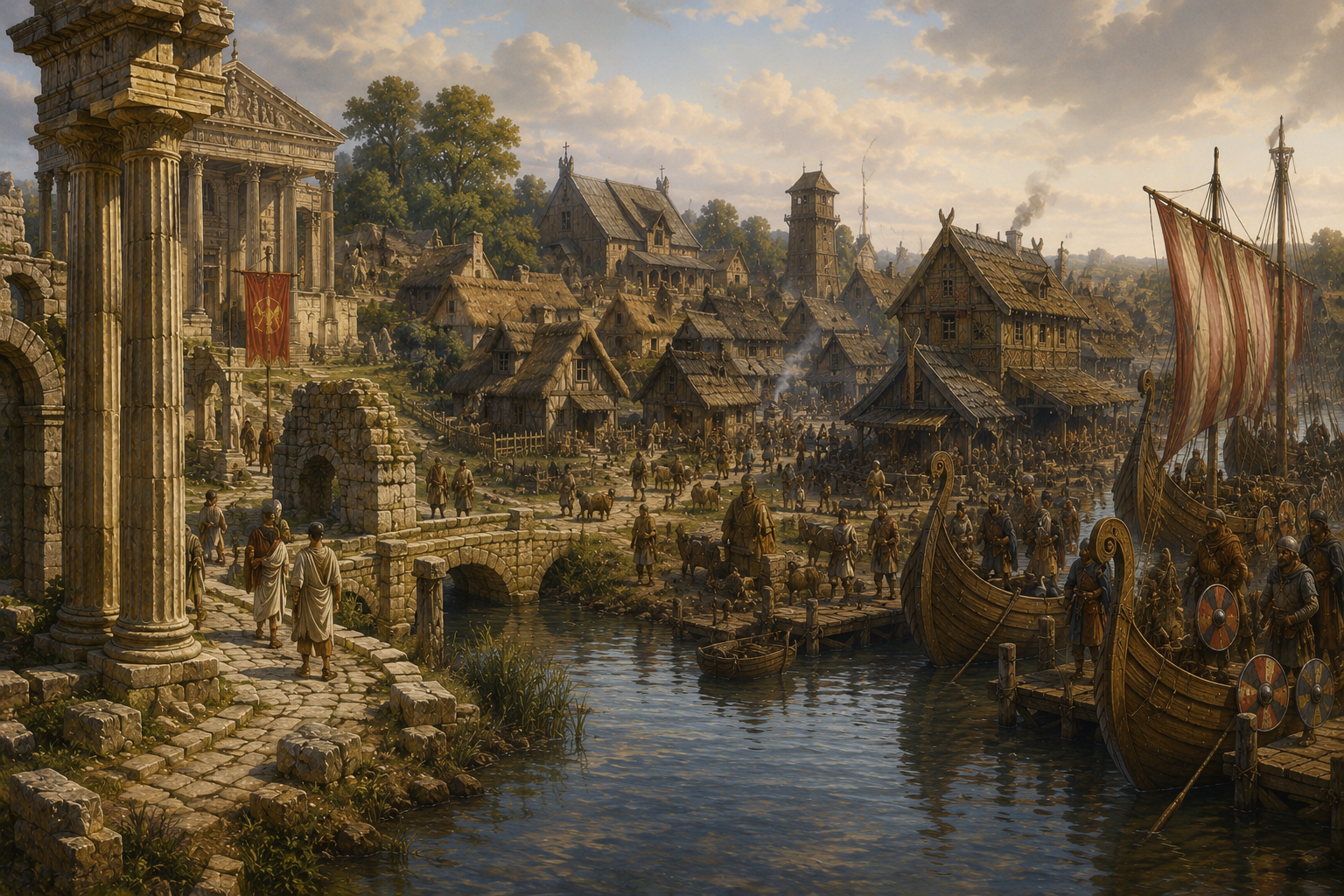
The name Jórvík is the Norse adaptation of the Anglo-Saxon name Eoforwic, itself derived from the Roman Eboracum.
Over the centuries, the city's name evolved as follows:
- Eboracum (Roman)
- Eoforwic (Anglo-Saxon)
- Jórvík (Viking)
- York (modern)
Its changing name reflects the succession of cultures that shaped the city.
Jórvík: More Than a Settlement
Jórvík was not a temporary military base. It was a kingdom. A major urban center in northern England.
There, the Vikings:
- established political institutions;
- developed an active international trade network;
- integrated the local population;
- fostered a thriving economy.
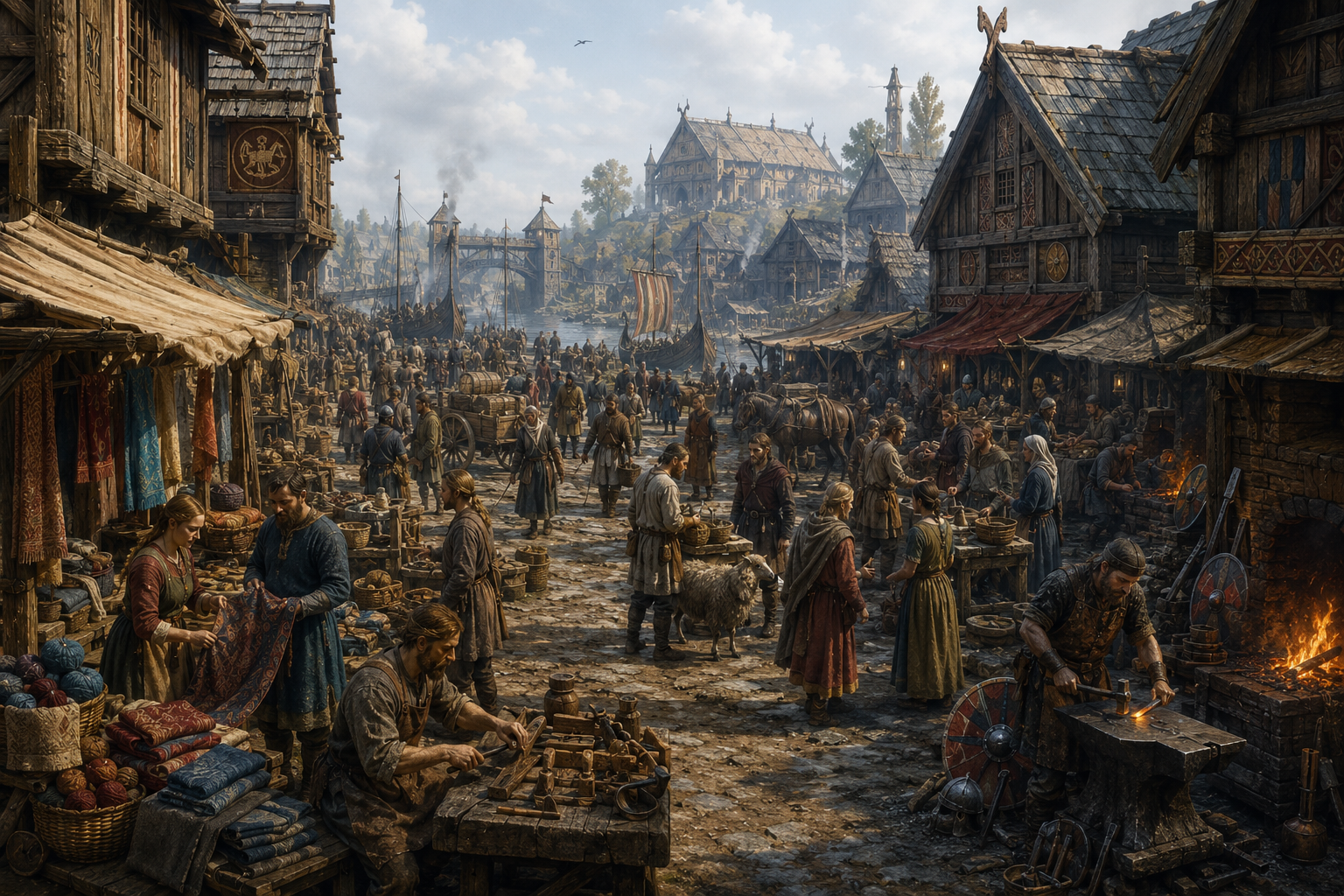
The city became one of the most important Viking centers outside Scandinavia.
The Danelaw
Over time, the Scandinavian-controlled territories became known as the The Danelaw, meaning "the land under Danish law."
It was a vast region where Norse laws and customs coexisted with Anglo-Saxon traditions.
Among its principal centers were the Five Boroughs:
- Derby
- Leicester
- Lincoln
- Nottingham
- Stamford
During the tenth century, English kings gradually reconquered these territories, although Scandinavian influence endured for generations.
Ívarr the Boneless: Strategy and Legend
Ívarr is one of the most enigmatic figures of the Viking Age.
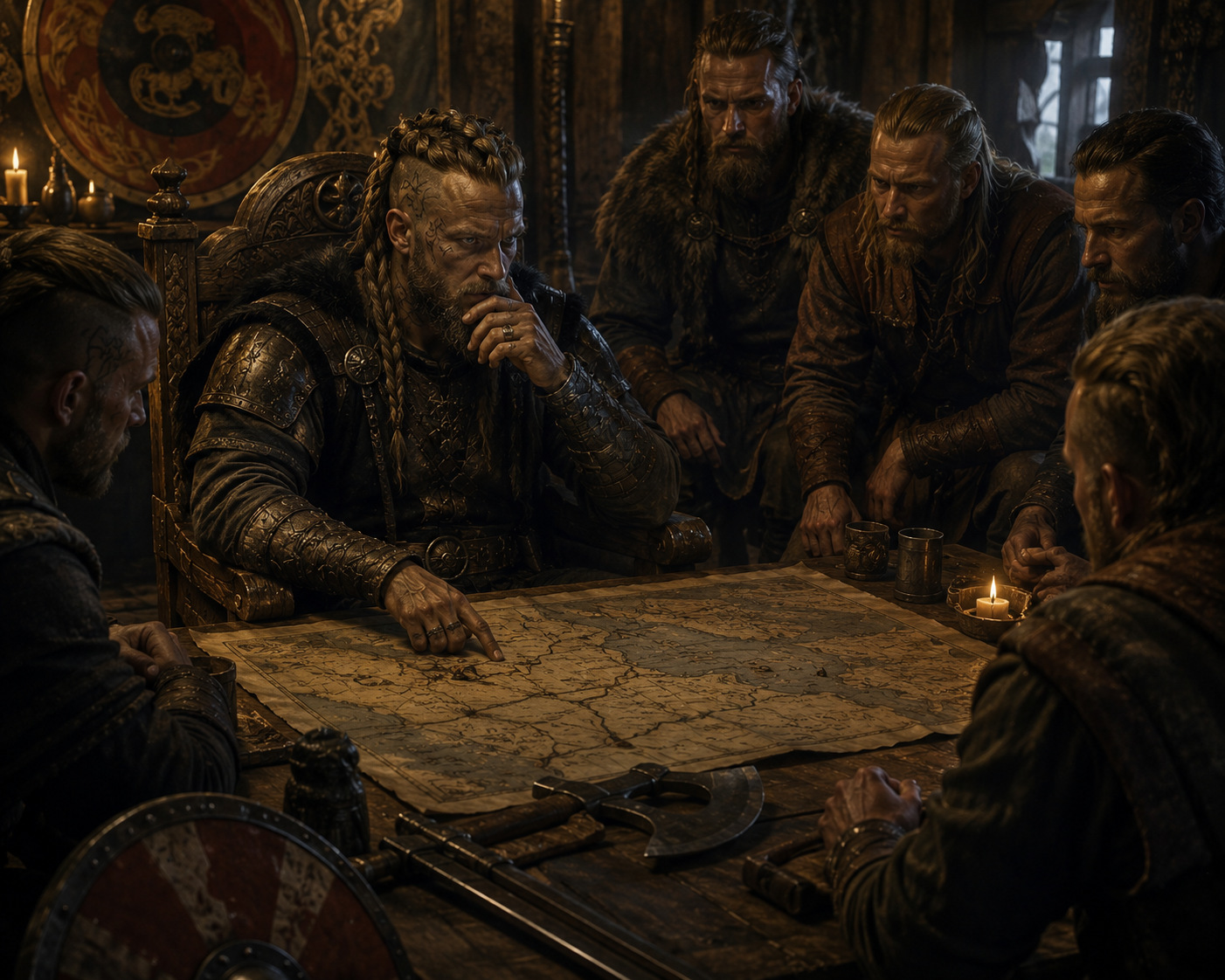
His nickname—"the Boneless"—has inspired many interpretations:
- a possible illness;
- a metaphor for flexibility or intelligence;
- a symbol of something beyond physical limitations.
According to several sources, he probably died around AD 873.
The village of Repton, in England, has yielded some of the most important archaeological discoveries connected with the Great Heathen Army.
Excavations have uncovered:
- a large Viking encampment;
- Scandinavian burials;
- possible graves associated with the army's leaders.
Tradition claims that Ívarr was buried there and that his grave protected the surrounding land.
His brothers also met notable fates:
- Halfdan Ragnarsson died in Ireland (878);
- Ubba was killed in battle in Devon (878)
The Kings of Jórvík
York was ruled by several Viking leaders and kings.
Among the earliest were:
- Ívarr the Boneless
- Halfdan Ragnarsson
Later rulers more closely associated with the Kingdom of Jórvík included:
- Sihtric Cáech
- Ragnall
- Erik Bloodaxe
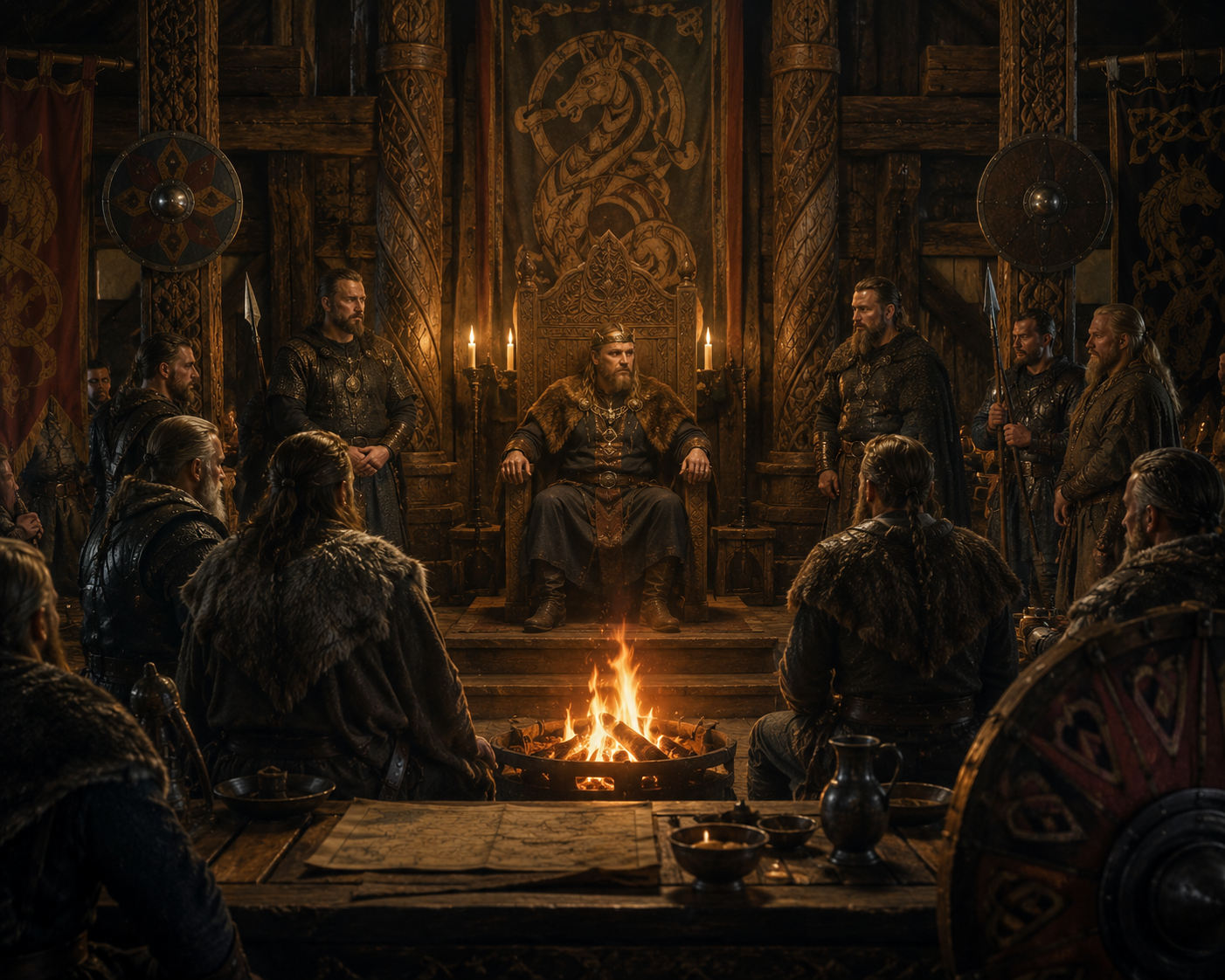
In AD 954, following the expulsion of Erik Bloodaxe, the Kingdom of Jórvík was permanently incorporated into the English kingdom of Eadred.
Revenge or Expansion?
Although the story of avenging Ragnar is compelling, history suggests a more complex reality. The Great Heathen Army did not simply seek to punish Ælla.
It sought:
- territory;
- power
- wealth
- stability
Revenge may have been the initial spark.
But the ultimate objective appears far more ambitious: to create a Viking world in England.
A New Order in England
The Scandinavian presence transformed England profoundly. Not only politically, but culturally as well.
It brought:
- an exchange of customs;
- the blending of languages;
- urban development;
- commercial expansion.
Northern and eastern England became part of the Danelaw, where Viking and Anglo-Saxon traditions lived side by side.
Between Odin and History
The sagas portray Ragnar's sons as descendants of OdinA symbolic connection that elevates them beyond ordinary men.
Yet even if we set myth aside, their impact was real. They reshaped England. They created lasting institutions.
And they left a legacy that still endures.
The Echo of Jórvík
Jórvík was more than a city. It was a meeting place.
Between:
- Rome
- the Anglo-Saxon world
- the Viking world
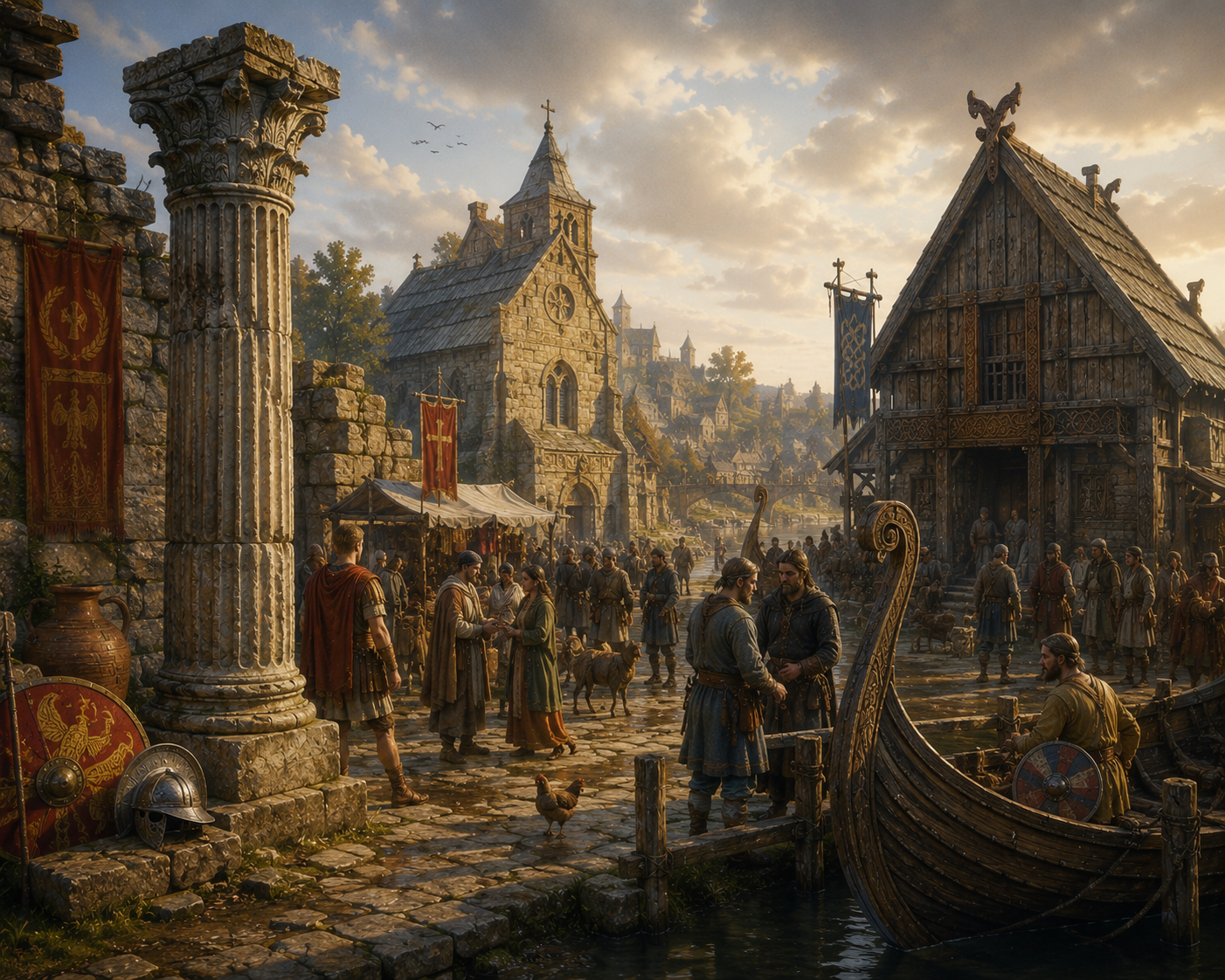
A place where three civilizations crossed paths. And none of them remained unchanged.
From Invaders to Rulers
The Vikings did more than arrive in England. They transformed it.
And in Jórvík, they ceased to be invaders and became part of its history.
Because sometimes revenge begins a journey. But it is ambition that turns it into an empire.
Curiosities
Much of that Viking past is still visible throughout the city.
Especially in its street names. Many of them end in "-gate."
Although the modern English word gate means "gate" or "door," in these cases it comes from the Old Norse word gata, meaning "street."
Some examples that still survive in York include:
- Coppergate
- Micklegate
- Stonegate
More than a thousand years later, the language itself still remembers the Viking presence.
Follow the Footprints
Its Legacy Lives On...
More than a thousand years later, the echo of Jórvík has never disappeared. It still lives on in the city of York.
Every February, York hosts the Jorvik Viking Festival, one of the largest Viking festivals in Europe.
For several days, the city brings its Viking past back to life through:
- historical reenactments;
- combat demonstrations;
- markets;
- parades.
Many streets in York's historic center still bear names of Norse origin, reminding visitors that for nearly a century York was one of the most important cities in the Viking world.
York does not merely remember its history. It lives it.
Visit It Today...
The Jorvik Viking Centre houses some of the most important archaeological discoveries related to the Viking city.
Located in the Coppergate area, it allows visitors to explore the genuine remains of the Scandinavian settlement and discover what daily life was like in one of the Viking world's greatest cities.