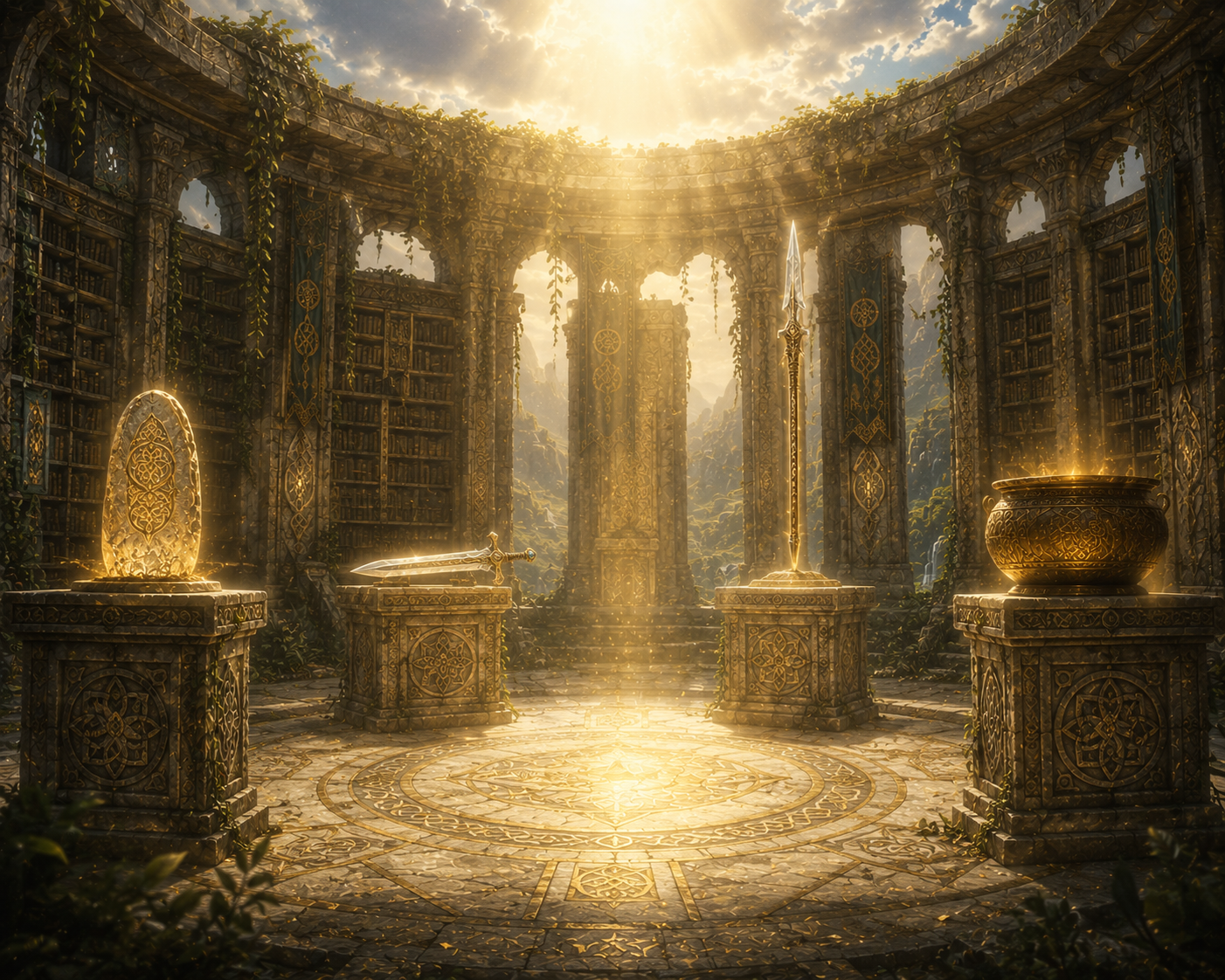
Before the Tuatha Dé Danann arrived in Ireland and featured in some of the most famous tales of Celtic mythology, ancient traditions claimed that they had lived in a distant and mysterious land.
They did not originate in Ireland.
According to the Lebor Gabála Érenn (The Book of the Taking of Ireland), the Tuatha Dé Danann dwelt for generations in four cities located in the northern regions of the world. There, under the guidance of four great sages—one in each city—they acquired extraordinary knowledge of magic, wisdom, poetry, medicine, and the sacred arts.
It was also in those cities that they received the four treasures they would later take with them to Ireland, and which would eventually become some of the most famous objects in the entire Celtic tradition.
Although it is impossible to identify these cities with any real location, they represent one of the most important symbols of initiatory knowledge in Irish mythology.
A Place Beyond the Known World
The medieval sources provide very little information about where these cities were located.
They simply place them in the mysterious northern regions of the world.
In many ancient traditions, the north was not merely a point on the compass. It represented the place where hidden knowledge, magic, and wisdom reserved for a select few originated.
For this reason, many scholars believe these cities should not be understood as geographical locations but rather as symbolic places where the future gods of Ireland completed their education before setting out on their journey.
The Four Sages
Each city was ruled by a great master:
- Morfesa
- Esras
- Uiscias
- Semias
They passed on to the Tuatha Dé Danann the knowledge that would make them unlike any of the peoples who had come before.
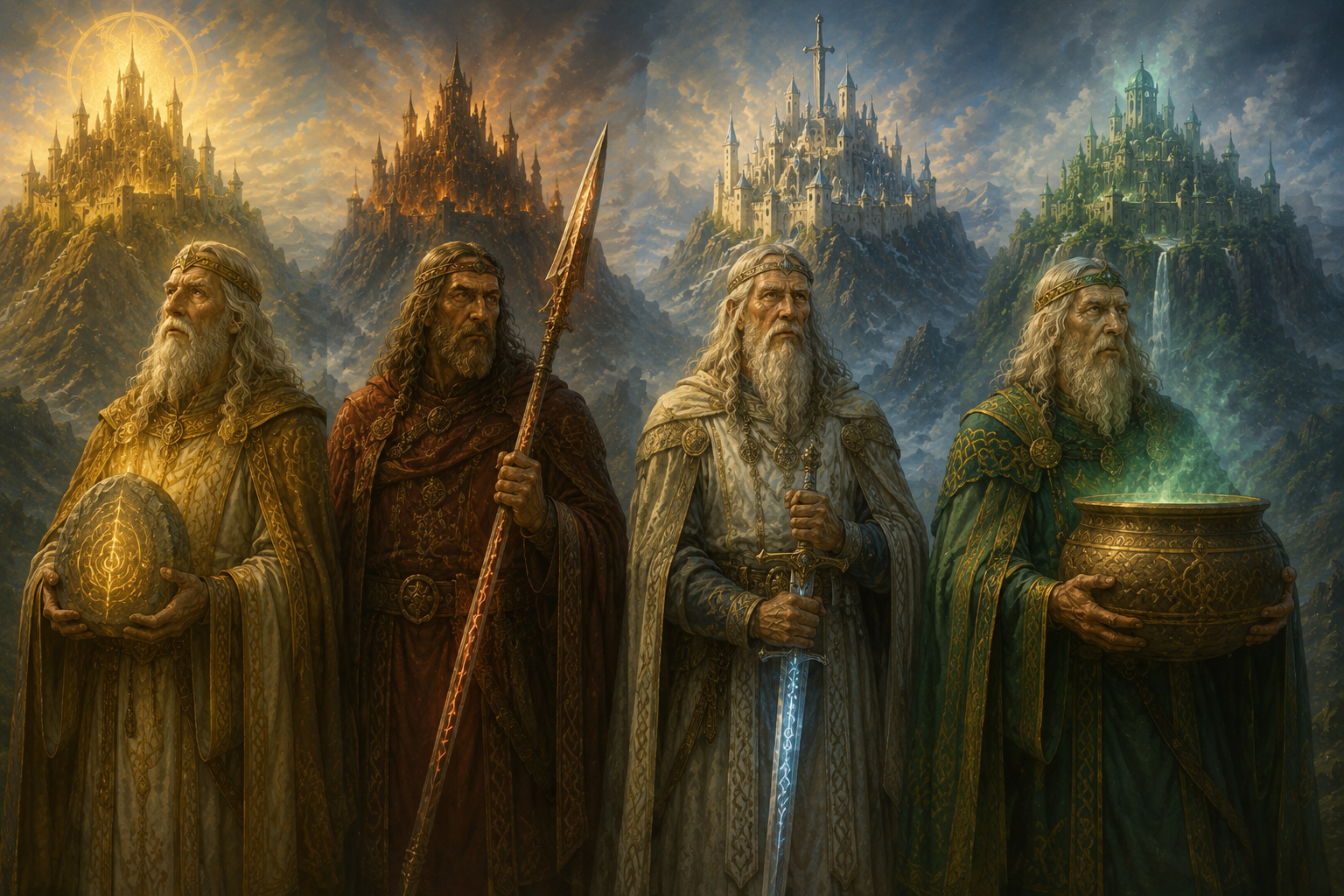
Tradition portrays them as guardians of an ancient wisdom that combined magic, science, poetry, medicine, kingship, and the sacred arts.
More than simple teachers, they represent the very source of the knowledge that would accompany the Tuatha Dé Danann throughout their entire history.
The Four Sacred Cities
Tradition preserves the names of four legendary cities.
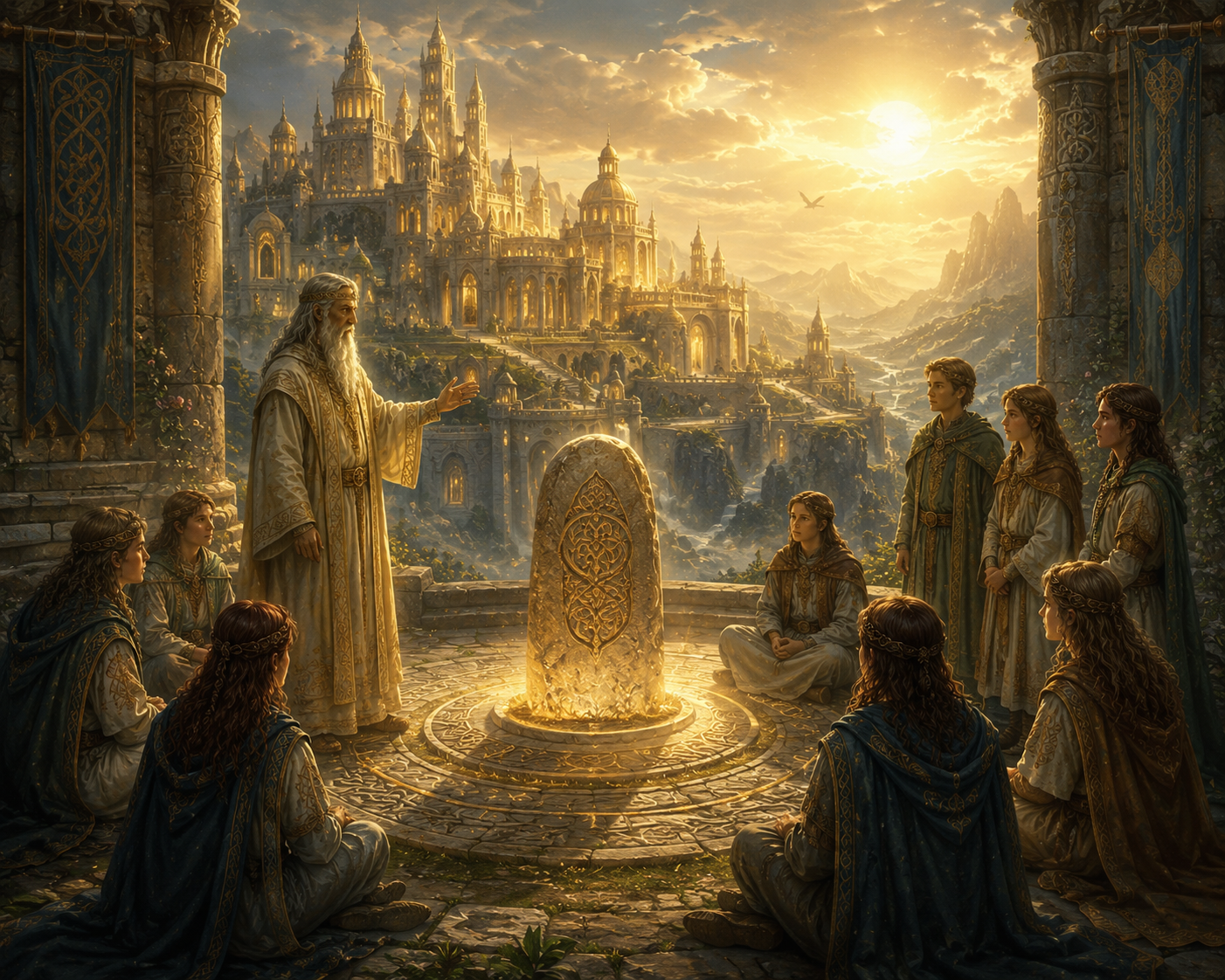
Falias
Falias was regarded as a city of profound wisdom.
Its master was Morfesa, one of the four great sages who instructed the Tuatha Dé Danann.
From Falias came the famous Lia Fáil, the Stone of Destiny, which, according to tradition, would roar whenever the rightful High King of Ireland placed his feet upon it.
Gorias
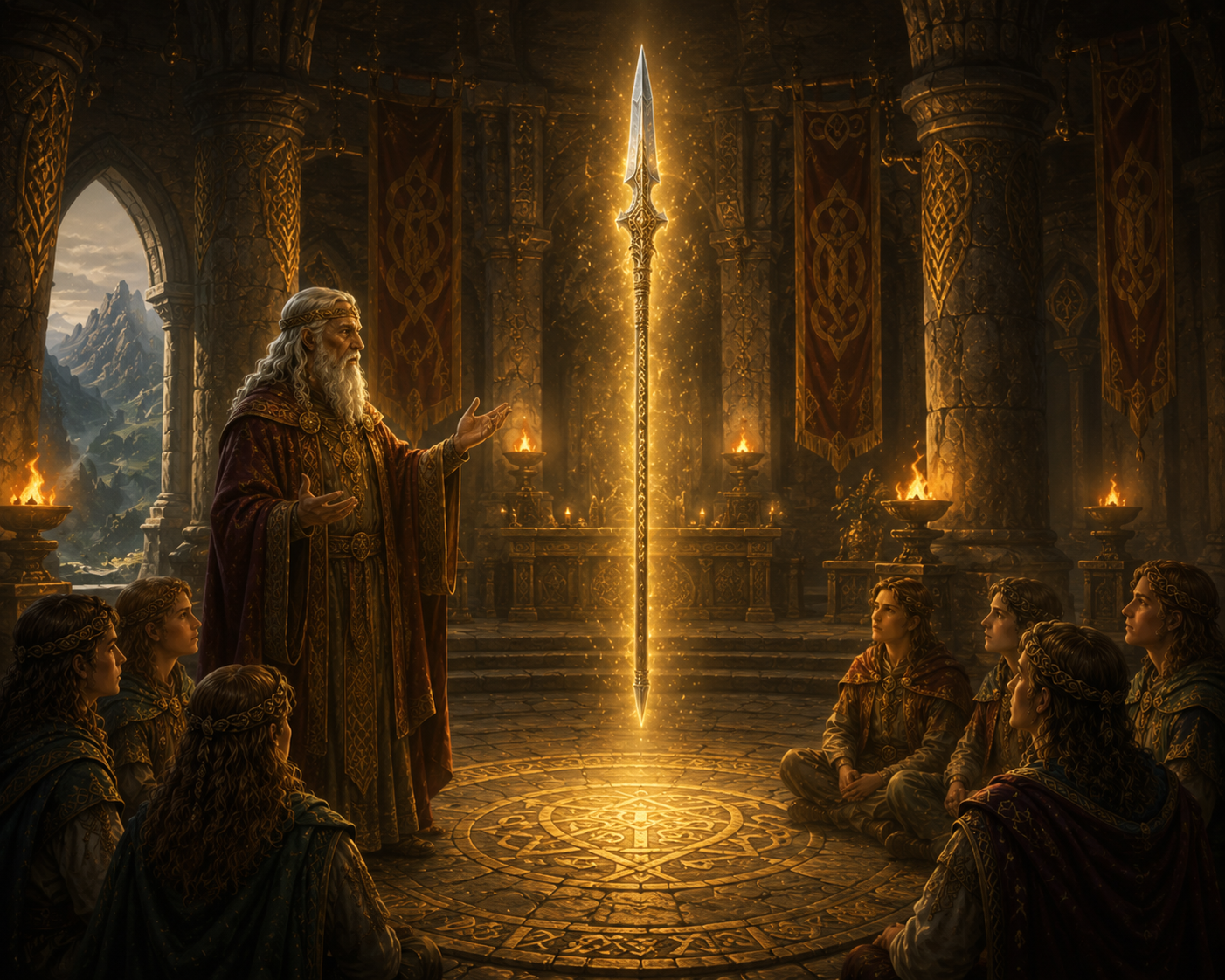
Gorias was under the guidance of the sage Esras.
It was a city associated with military knowledge and the mastery of magical arts applied to warfare.
From Gorias came Lugh's Spear, a legendary weapon that never missed its target and whose power was impossible to resist.
Findias
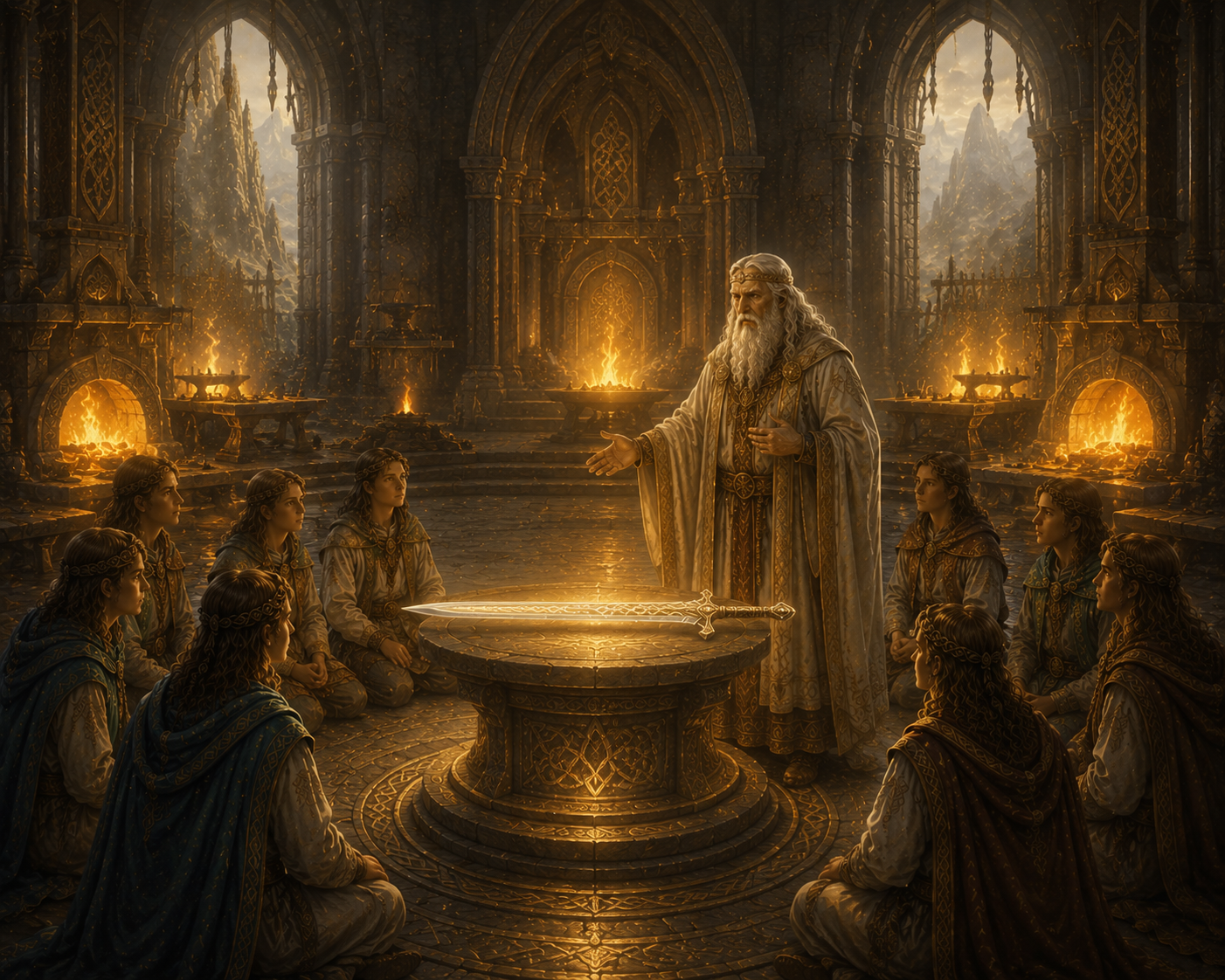
Findias was the city of the sage Uiscias.
There, Nuada's Sword.
The legends tell that once it was drawn from its sheath, no one could withstand its power, and no battle could be lost while it remained in the hands of its rightful bearer.
Murias
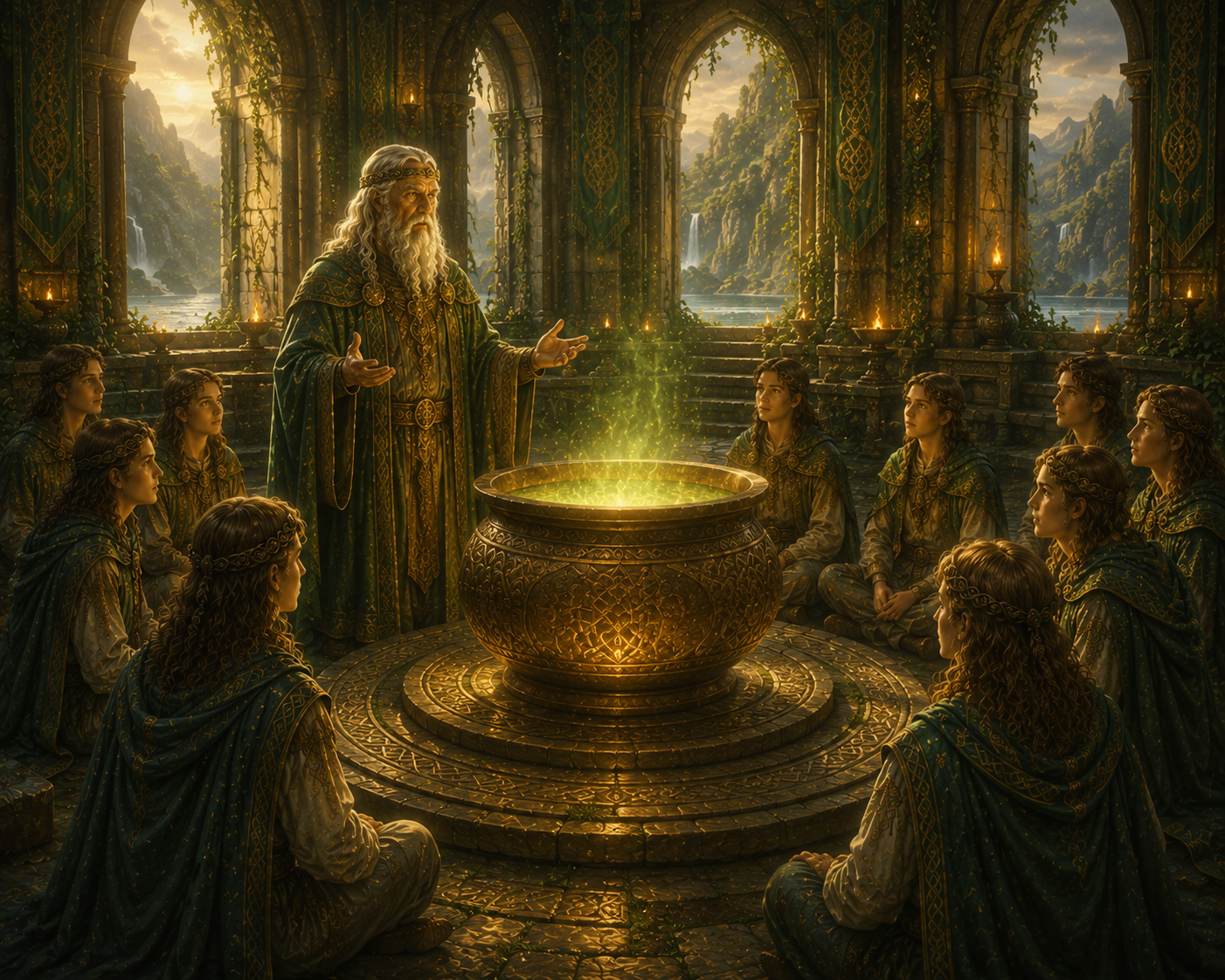
Murias was under the guidance of the sage Semias.
It was perhaps the city most closely associated with abundance and renewal.
From Murias came the Dagda's Cauldron, a magical vessel from which no one ever left a feast without being completely satisfied.
Over the centuries, many scholars have pointed to possible parallels between this cauldron and other European legends concerning sacred vessels capable of granting nourishment, life, or spiritual renewal.
The Journey to Ireland
Once their education was complete, the Tuatha Dé Danann left the Four Cities, carrying with them the treasures entrusted to them by their masters.
The legends tell that they sailed to Ireland, concealed within a dense magical mist that hid their arrival.
There they found an island ruled by the Fir Bolg , marking the beginning of a new chapter in the legendary history of Ireland.
A Legacy Born of Knowledge
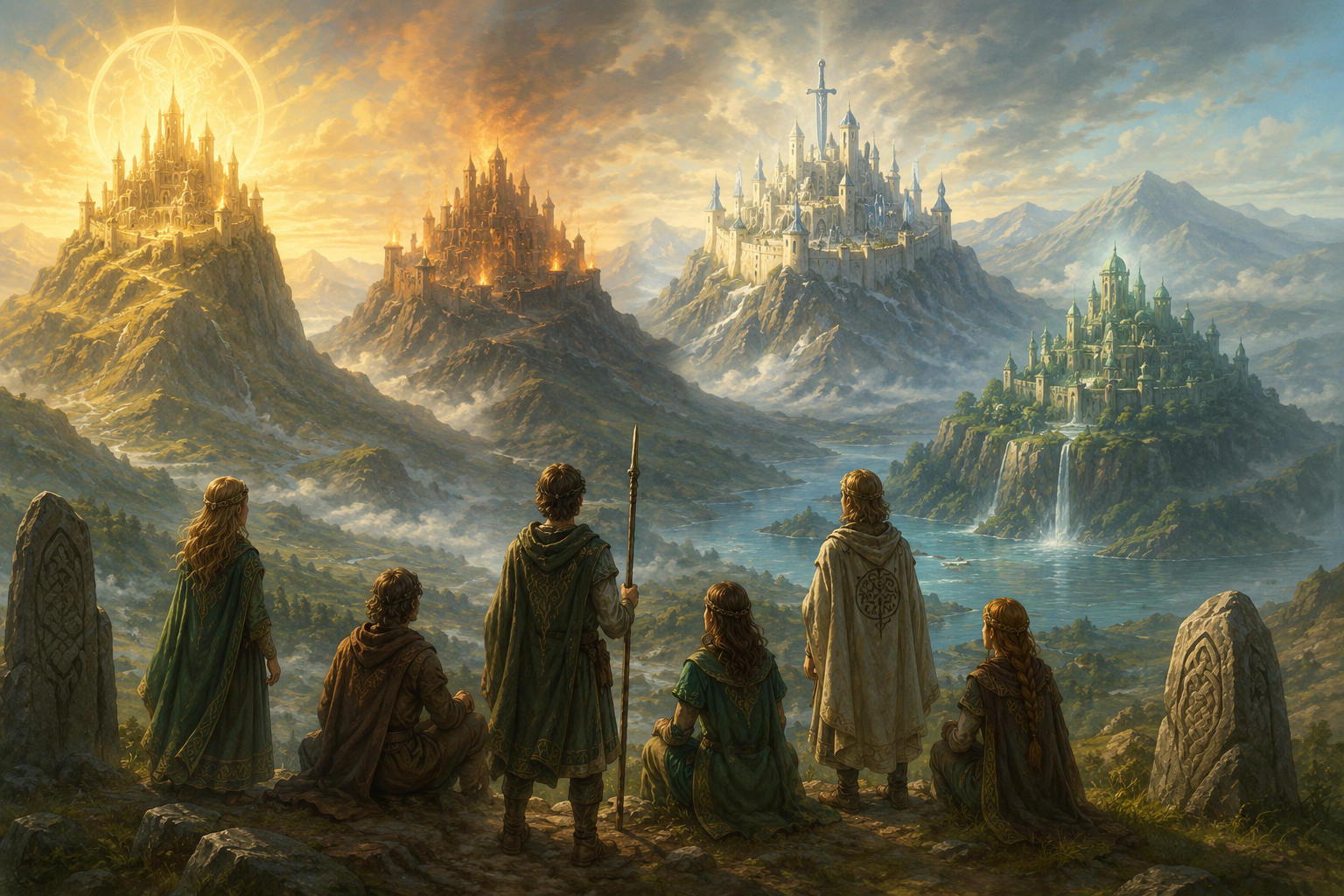
Although the Four Cities belong to the realm of mythology and cannot be located on any map, their memory survived for centuries through the Lebor Gabála Érenn and other medieval Irish manuscripts.
Beyond any historical reality, they symbolise the place where the knowledge, arts, and sacred objects that would accompany the Tuatha Dé Danann throughout their history first came into being.
It was within these Four Cities that the education of the Tuatha Dé Danann began. The next chapter of their story would start when they carried the Four Sacred Treasures to Ireland—objects destined to play a fundamental role in Celtic mythology.