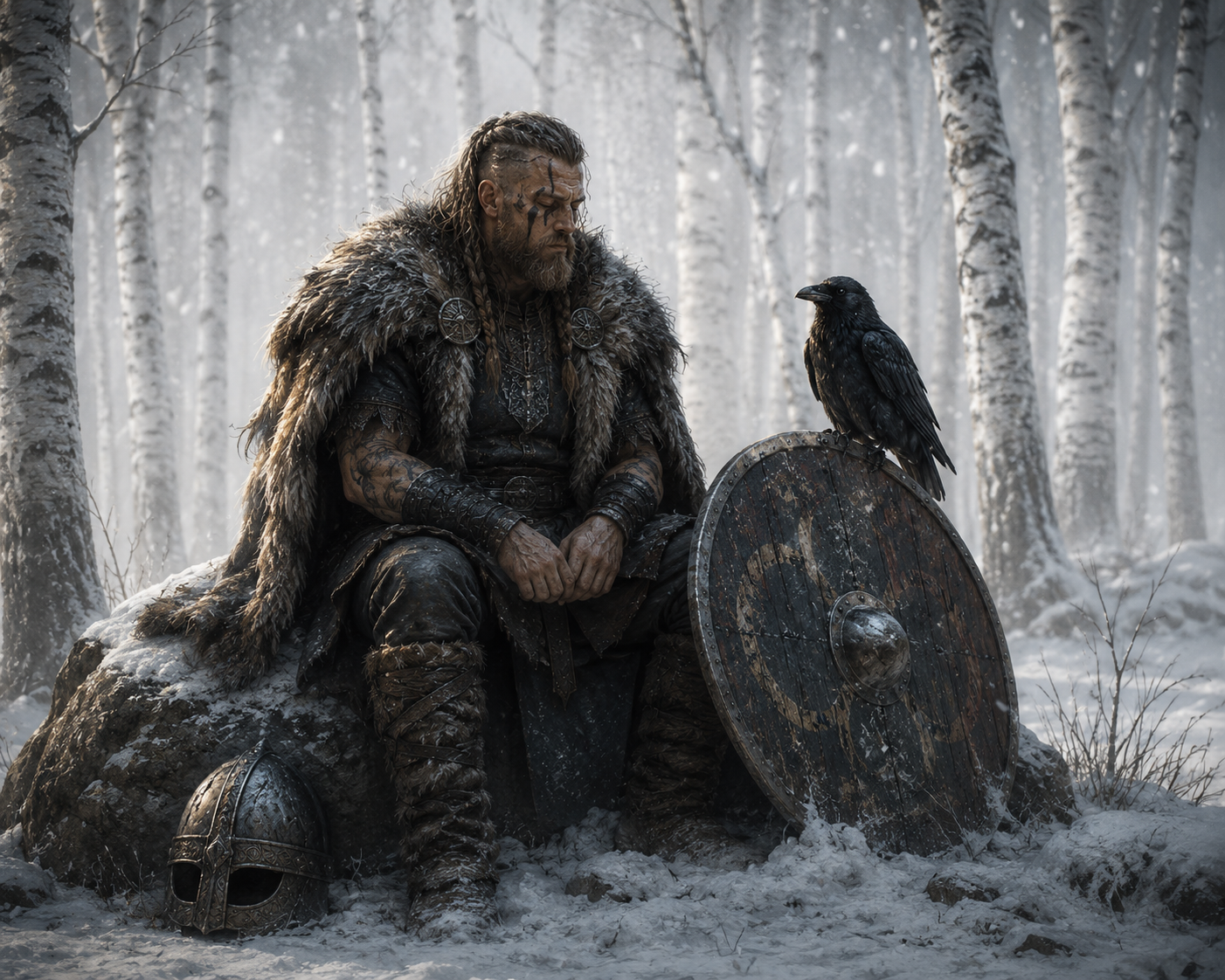
. The berserkers were neither gods nor monsters. They were extraordinary warriors, closely associated with war, uncontrollable fury, and battle.
In the Norse sources, they are described as men capable of fighting in a state of extraordinary frenzy. They roared, bit the edges of their shields, and seemed to fear neither iron nor fire. Their strength and ferocity made them some of the most feared warriors of the Norse world.
This fury is portrayed as something far greater than simple courage: a physical and mental transformation that, according to the sources, allowed them to fight with extraordinary strength and an apparent resistance to pain.
"I wish to ask about the fury of the berserkers... How did those brave warriors fight who carved their way through battle?"
— Hrafnsmál (The Song of the Raven), attributed to Þorbjörn Hornklofi, 9th century. Hrafnsmál (“El canto del cuervo”), atribuido a Þorbjörn Hornklofi, siglo IX.
The Meaning of Berserkr
The berserkers were legendary warriors of the Norse world who, according to the sources, could enter a state of battle fury known as berserkergangr—"the berserker frenzy."
In Old Norse:
berserkr → singular
berserkir → plural
The exact origin of the word remains the subject of scholarly debate.
The Berserkers in the Norse Sources
The berserkers appear throughout skaldic poetry and Icelandic sagas, written or preserved over several centuries. Their image, however, did not remain unchanged.
Among the principal sources in which they appear are:
Hrafnsmál or Haraldskvæði (9th century): a skaldic poem attributed to Þorbjörn Hornklofi and one of the earliest sources referring to these warriors. It describes both berserkers and úlfhéðnar as members of the army of King Harald Fairhair.
Ynglinga saga (13th century): Snorri Sturluson provides one of the most famous descriptions of Odin's warriors, stating that they fought without armour, were as fierce as dogs or wolves, bit their shields, and possessed extraordinary strength.
Hervarar saga: introduces several legendary berserkers, including Arngrímr and his sons, known collectively as the Twelve Sons of Arngrímr.
Vatnsdæla saga: presents a different image of the berserker, portraying him as a violent and dangerous figure who threatens the community.
Grettis saga: also preserves accounts involving berserkers and reflects the later portrayal of these warriors in the Icelandic sagas.
Grágás: Iceland's medieval law code shows how certain practices associated with berserkergangr eventually became outlawed and punishable following the Christianisation of Iceland.
Over time, medieval Norse literature gradually transformed the image of the berserker. The elite warriors associated with Odin and royal war bands in the earliest sources increasingly became violent outlaws or antagonists who threatened the social order in later sagas.
Warriors of the Bear and the Wolf
The medieval sources do not describe any specific ritual by which a man became a berserker.
Some scholars have connected these warriors with ancient military initiation traditions and with the symbolic identification of the warrior with certain animals.
Others have proposed a religious dimension linked to Odin and altered states of consciousness. However, we do not know how the berserkergangrwas actually achieved, and theories involving chants, dances, rituals, or intoxicating substances should be regarded as modern hypotheses rather than facts supported by the surviving sources.
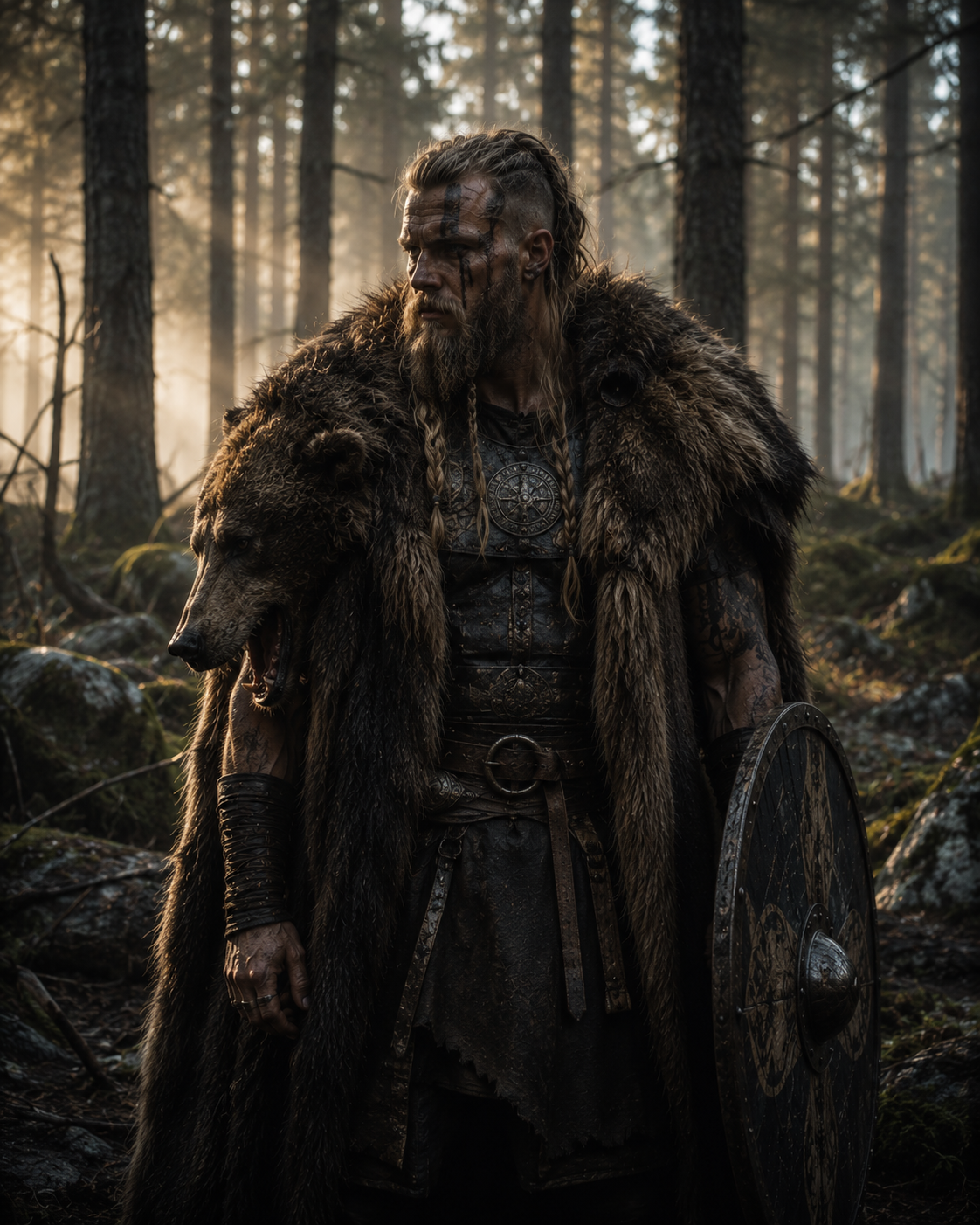
Berserkir: The "Bear-Shirt" Warriors
There are two principal interpretations of the origin of the word berserkr.
One associates it with the bear, suggesting a meaning similar to "bear-shirt", implying a symbolic relationship between these warriors and the animal.
The other, more traditional interpretation derives the first element from berr("bare") and translates the word roughly as "bare-shirt,"referring to warriors who fought without armour or protective equipment.
The etymology remains debated, and although the image of the berserker wearing a bear skin has become enormously popular, the ancient sources do not allow us to conclude that all berserkers fought dressed in animal hides.
Úlfhéðnar: The "Wolf-Skin" Warriors
Closely associated with the berserkers were the ulfhéðnar, whose name can be translated approximately as "wolf-skin warriors."
The sources portray them as warriors symbolically linked to the wolf and, in some of the earliest accounts, they appear alongside the berserkers as members of the royal warrior elite.
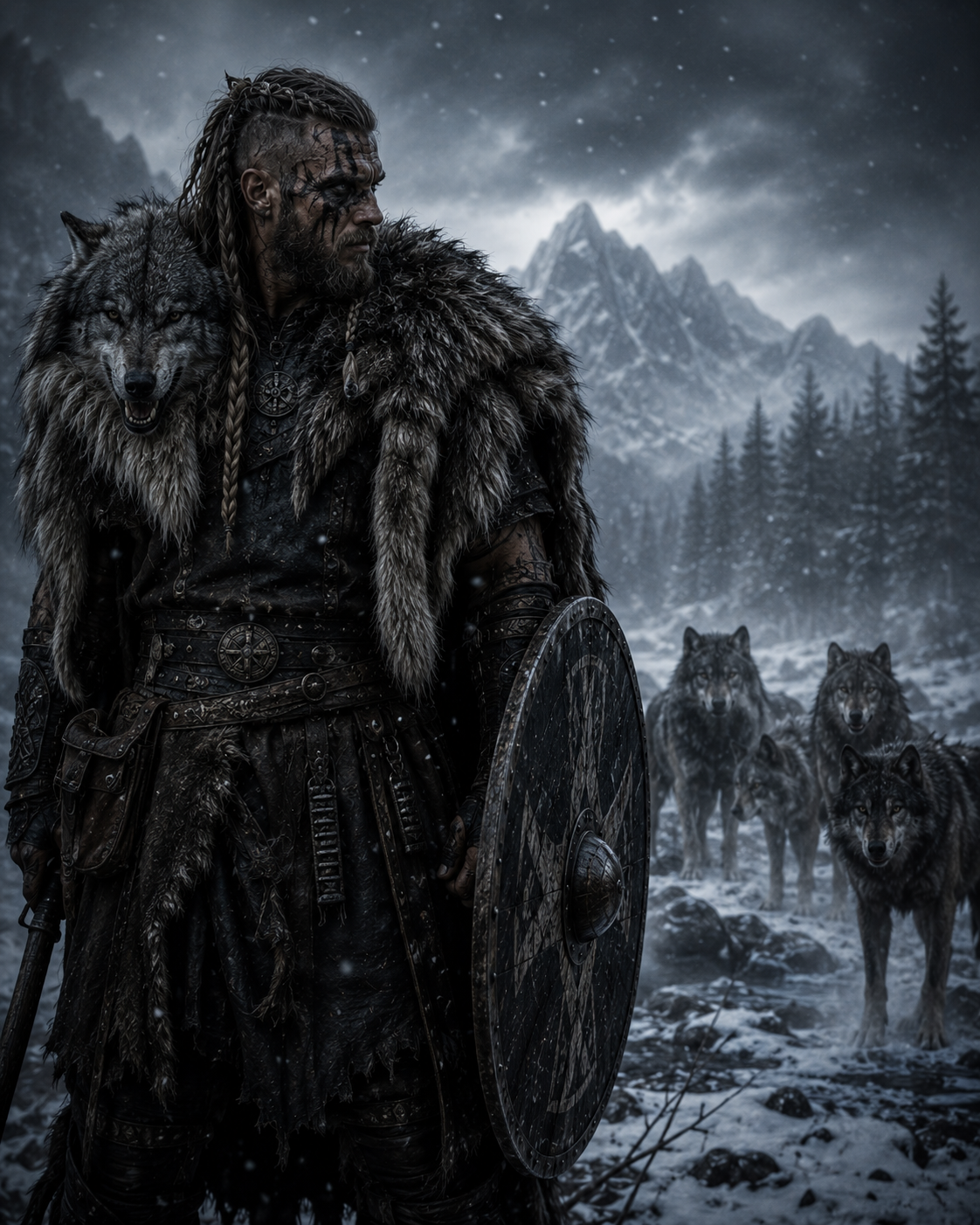
"The berserkers roared as the battle began; the úlfhéðnar howled and shook their spears."
— Hrafnsmál (The Song of the Raven), attributed to Þorbjörn Hornklofi, 9th century. Hrafnsmál (“El canto del cuervo”), atribuido a Þorbjörn Hornklofi, siglo IX.
The Berserker Trance
The ancient sources describe the berserkers entering an extraordinary state of fury known as berserkergangr—"the berserker frenzy."
According to the accounts, when a warrior entered this state, he:
- gained extraordinary strength
- appeared insensitive to pain
- fought with extreme ferocity
- roared or howled like an animal
- bit the edge of his shield
One of the best-known descriptions appears in — Ynglinga saga , where Odin's warriors are said to fight without armour, to be as fierce as dogs or wolves, and to possess the strength of bears or bulls.
Some sagas also describe a period of extreme weakness following these episodes of fury. However, it is impossible to know to what extent these descriptions reflect real warrior practices or form part of the legendary and literary construction of the berserker tradition.
We do not know with certainty what caused the berserkergangr. Numerous explanations have been proposed, including extreme psychological states, warrior rituals, self-suggestion, religious practices, and even the use of certain intoxicating substances. None of these theories has been conclusively proven.
The berserkers they did not fight. They became the battle itself.
The Norwegian King and His Berserkers
One of the earliest references to these warriors is associated with the Norwegian king Harald Fairhair.
According to the Hervarar saga , wolf-skin warriors fought in his service.
The poem Haraldskvæði, also known as Hrafnsmál (The Song of the Raven), attributed to the poet Þorbjörn Hornklofi and probably composed between the late ninth and early tenth centuries, describes both berserkers and úlfhéðnar as members of relacionados con el séquito guerrero de Harald Fairhair's warrior retinuewarrior retinue. It represents one of the earliest surviving references to the berserkers.
"The wise prince places his trust in them—in those brave men who strike the enemy's shields."
— Hrafnsmál (The Song of the Raven), attributed to Þorbjörn Hornklofi, 9th century. Hrafnsmál (“El canto del cuervo”), atribuido a Þorbjörn Hornklofi, siglo IX.
Berserkers: Odin's Warriors
The berserkers are closely associated with Odin in the medieval sources,
In — Ynglinga saga, Snorri Sturluson describes them as Odin's own warriors. They fought with extraordinary fury, bit their shields, and seemed to possess superhuman strength.
Odin was the god of war, fallen warriors, magic, and ecstatic states. For this reason, some scholars have interpreted the berserkergangr as a form of battle frenzy symbolically connected with the god.
The image of the berserker can therefore be understood as that of a warrior who, in the heat of battle, temporarily abandons his human identity to symbolically assume the ferocity of the beast and the fury of war.
However, the surviving sources do not allow us to reconstruct with certainty an organised cult of berserkers devoted to Odin, nor to affirm that there was a specific ritual through which they entered this state.
Their association with Odin has also contributed to their later connection with Valhalla, although the sources do not state that being a berserker alone guaranteed a place among the einherjar.
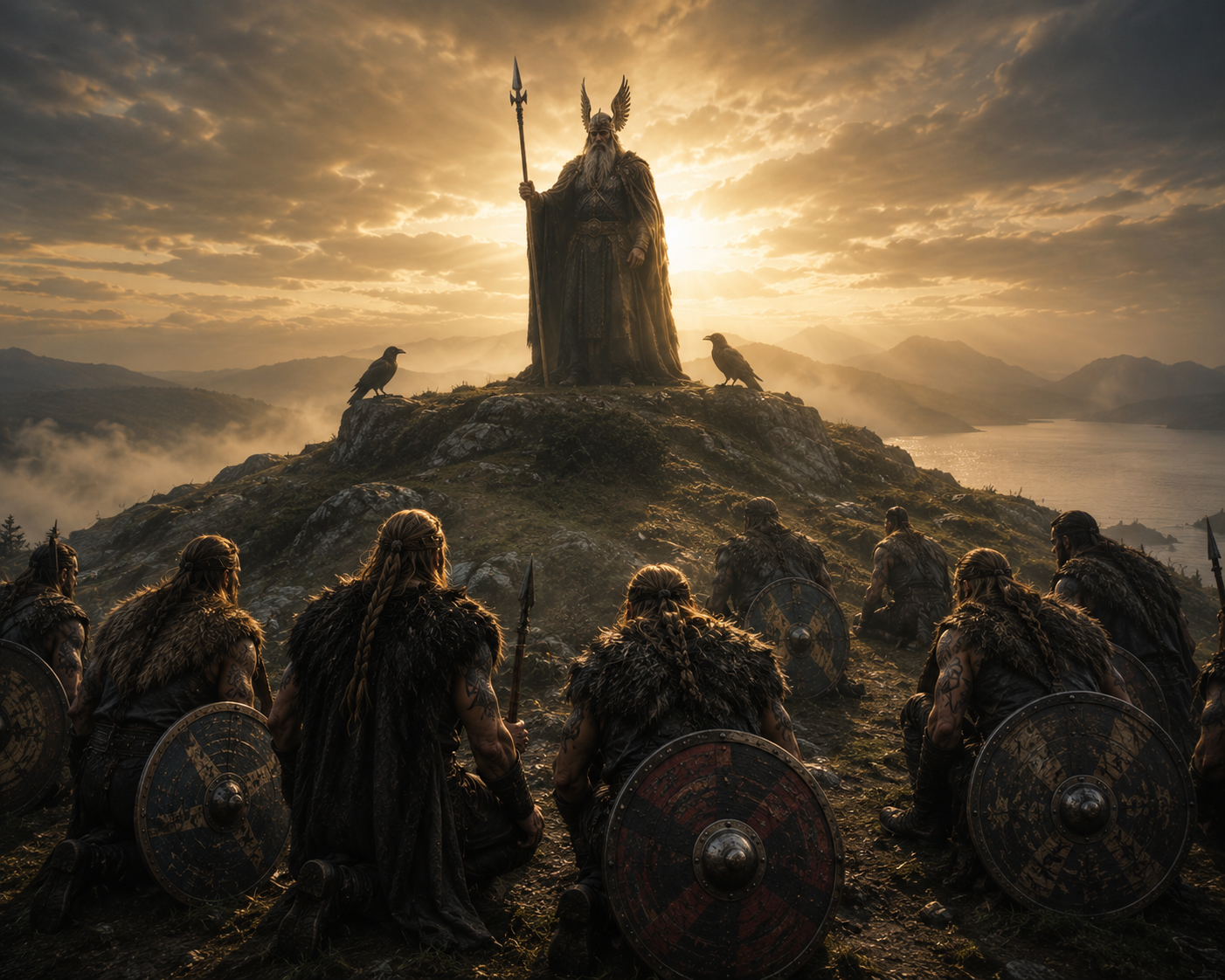
"Odin's men advanced without armour. They were as fierce as dogs or wolves; they bit their shields and were as strong as bears and bulls."
— Ynglinga saga, Chapter 6, Snorri Sturluson, 13th century.
Legendary Berserkers
The sagas do not always portray the berserkers as great heroes.
Particularly in the later medieval narratives, they frequently appear as fearsome warriors who challenge other men, demand duels, or seek to impose their will through force.
Among the figures associated with the berserker tradition are:
Arngrímr: : a famous legendary warrior mentioned in the Hervarar saga ok Heiðreks and the father of twelve sons who also became renowned as berserkers.
Ögrmundr: : a character associated with the berserkers in the Vatnsdæla saga , where he confronts Jökull Ingimundarson.
Bödvar Bjarki: : one of the great legendary warriors connected with King Hrólfr Kraki. In one tradition associated with him, while he appears to remain motionless, a gigantic bear fights on the battlefield in his place. Although he is not consistently described as a berserker in every source, his story represents one of the most fascinating examples of the symbolic relationship between the warrior and the bear in Norse literature.
These figures illustrate how the concept of the berserker extended beyond the purely military sphere and eventually became part of the legendary world of the Norse sagas.
Arngrímr: The Legendary Berserker and His Legacy
Arngrímr is one of the best-known legendary warriors associated with the berserker tradition.
His story appears primarily in the Hervarar saga ok Heidreks, although both he and his descendants are mentioned in other medieval traditions.
According to the sagas, Arngrímr had twelve sons, collectively known as the Sons of Arngrímr, who achieved extraordinary fame as warriors and berserkers.
Among them, Angantýrbecame especially renowned. His story would eventually become linked to one of the most famous objects in the Norse sagas: the cursed sword Tyrfing.
The Sons of Arngrímr are portrayed as proud and formidable warriors, frequently involved in duels and confrontations in which they constantly tested their strength and courage.
Although it is impossible to confirm the historical existence of Arngrímr or his twelve sons, their stories reflect the literary evolution of the berserker figure—from an elite warrior associated with a king's retinue to a legendary fighter feared for his strength and transformed into the protagonist of duels, vendettas, and family tragedies.
Meaning and Symbolism
The berserkers represent one of the most enigmatic figures in Norse warrior culture.
Their image has been associated with:
- combat pushed to its limits
- battle trance and warrior fury
- the symbolic connection between humans and animals
- extreme bravery
- the temporary loss of individual identity during combat
- a possible association with Odin, the god of war, ecstasy, and fallen warriors
For many years, it has been suggested that berserkers may have used substances such as Amanita muscaria or plants like henbane to induce altered states of consciousness.
However, there is no direct evidence that berserkers consumed these substances.
Other explanations have also been proposed, including warrior rituals, psychological preparation, self-suggestion, dissociative states, or an intense state of excitement before battle. To date, none of these theories has conclusively explained the phenomenon described in the medieval sources.
For this reason, scholars continue to debate who the berserkers truly were: an elite military force, groups of warriors attached to the retinues of particular rulers, members of ancient initiation traditions, fighters connected with the cult of Odin, or a figure in which historical reality ultimately became intertwined with legend.
The End of the Berserkers
From the 10th and 11th centuries onward, with the consolidation of the Scandinavian kingdoms and the spread of Christianity, the figure of the berserker gradually disappeared.
The new political and religious order became increasingly incompatible with the existence of independent groups of warriors whose behaviour could threaten royal authority and the stability of local communities.
In Iceland, the medieval laws preserved in the Grágás llegaron a castigar el berserkergangreven made berserkergangr punishable. Those who deliberately entered this state could be sentenced, as could anyone who participated in or assisted with such practices.
Over time, the berserkers ceased to exist as a reality of the Scandinavian warrior world and survived primarily in the sagas and later literature.
The warrior who had once stood beside the retinues of kings in the earliest poems was gradually transformed into a legendary figure belonging to the mythical past of the North.
Curiosities
The Old Norse word berserkr eventually gave rise to the modern English word berserkr terminó dando origen al inglés moderno berserk.
Today, the English expression to go berserk means to lose control or enter a state of extreme fury.
The term has also entered other languages, including Spanish, where it retains the same meaning of uncontrolled rage.
Almost a thousand years after their disappearance, the berserkers still live on in modern language.
Becoming the Storm
The berserker does not fight merely to survive.
When he enters battle, he has already left behind fear, pain, and, at times, even his own identity.
The berserkers disappeared nearly a thousand years ago, but their legend endured.
Men no longer fought as they did, yet the world never forgot the name of those warriors who, according to the sagas, fought with the strength of bears and bulls and the ferocity of wolves.
Warriors who roared. Who bit their shields. Who advanced against the enemy as though nothing could stop them.
Because if they were destined to die…they would do so having become the storm.
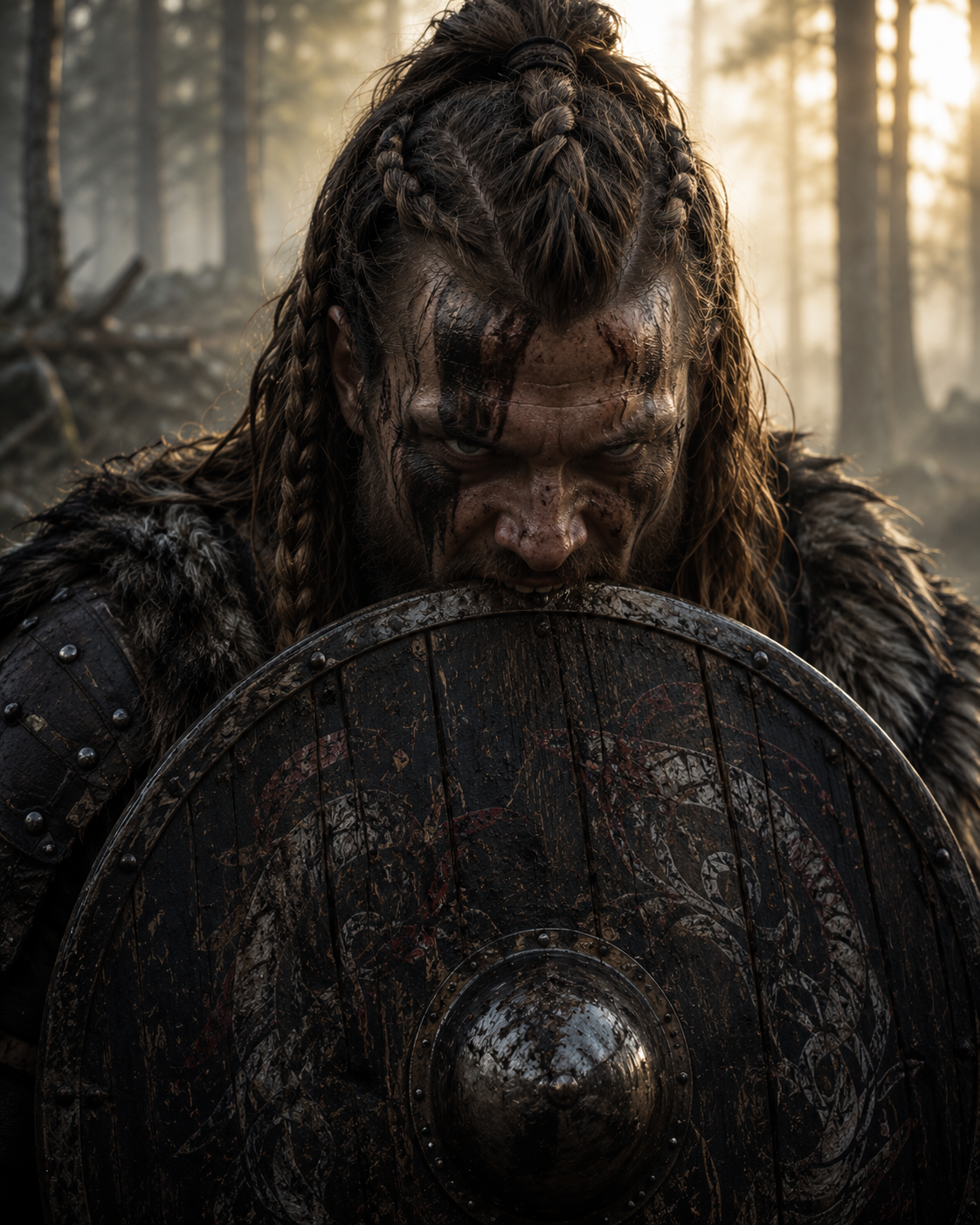
"They are called úlfhéðnar; in battle they carry blood-stained shields. Their spears redden as they march into combat."
— Hrafnsmál (The Song of the Raven), attributed to Þorbjörn Hornklofi, 9th century. Hrafnsmál (“El canto del cuervo”), atribuido a Þorbjörn Hornklofi, siglo IX.
Follow the Footprints
Visit It Today...
The Torslunda Plates
The Torslunda Plates were discovered at Torslunda, on the Swedish island of Öland, and are generally dated to the 6th and 7th centuries.
They are bronze dies that were most likely used to stamp decorative metal foils.
One of the most famous scenes depicts an armed warrior standing beside a figure with either animal-like features or wearing a wolf-head covering.
Some scholars have connected this image with ancient wolf-warrior traditions and the úlfhéðnar, although its interpretation remains a matter of debate.
The original plates are housed in the collections of the Swedish History Museum (Historiska Museet) in Stockholm.
The Lewis Chessmen
Discovered on the Scottish island of Lewis, the famous Lewis Chessmen were most likely carved in Norway during the 12th or early 13th century.
Most of the surviving pieces are now housed in the British Museum in London, while others belong to the collection of the National Museum of Scotland in Edinburgh.
Among the most remarkable figures are several pieces corresponding to the modern rooks, depicted as armed warriors biting the edges of their shields.
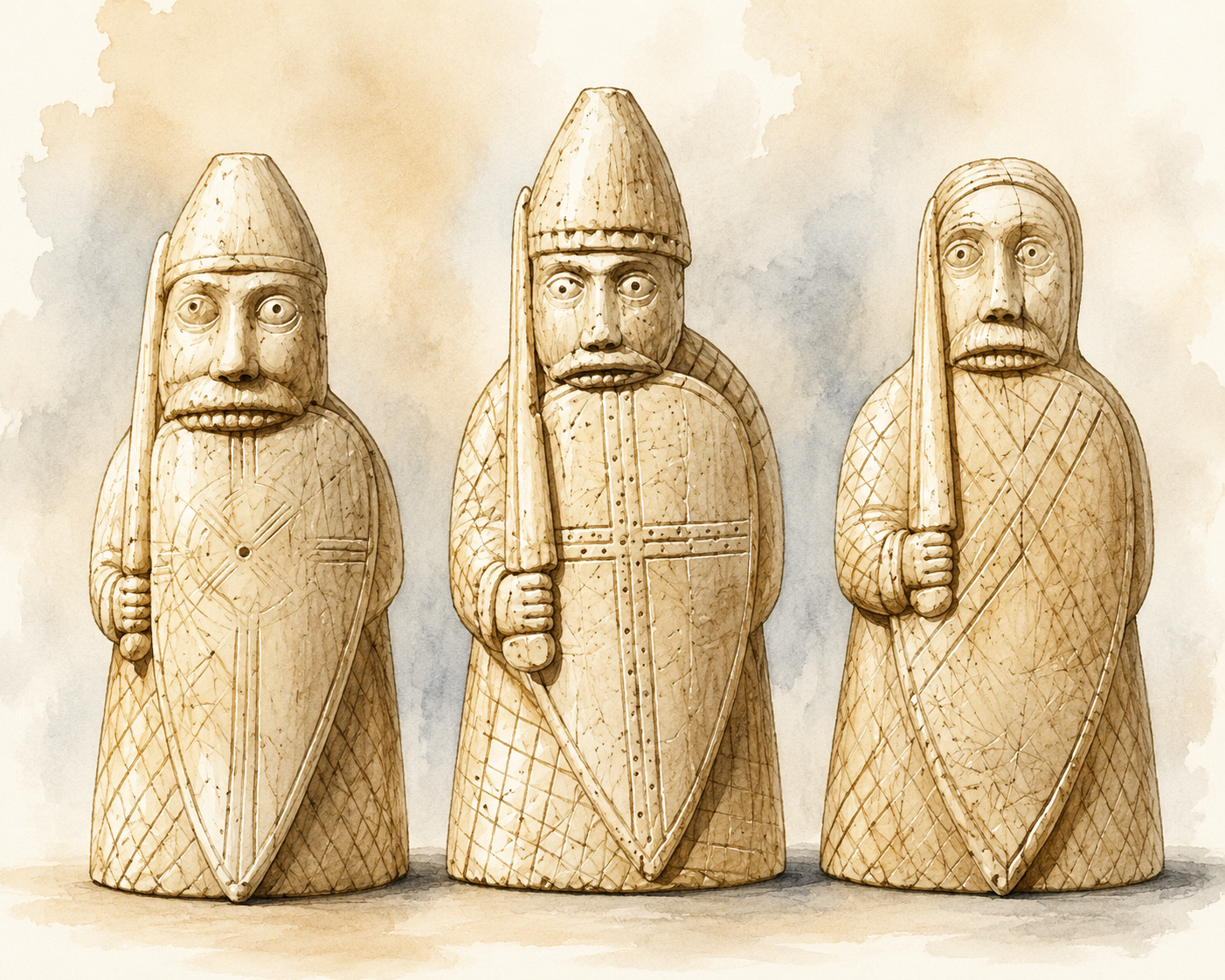
This striking gesture directly recalls Snorri Sturluson's description of Odin's warriors in the — Ynglinga saga and has led many scholars to interpret these figures as representations of berserkers.
"They slew men, and neither fire nor iron could harm them."
— Ynglinga saga, Chapter 6, Snorri Sturluson, 13th century.