Long before the legendary kings, the Celtic heroes, and the Tuatha Dé Danann, medieval Irish traditions spoke of ancient peoples who arrived in Ireland in times long past.
Among them stands Partholón, the leader of one of the first great legendary settlements of the island.
His story is preserved mainly in the Lebor Gabála Érenn (The Book of the Taking of Ireland), a medieval work that sought to gather the ancient traditions surrounding the mythical origins of the Irish people.
Although the accounts blend history, legend, and symbolism, Partholón occupies a fundamental place in Ireland's mythical memory.
An Empty Ireland
According to tradition, after the arrival of Cessair and the great flood that transformed the world, Ireland remained uninhabited for many years.
Fue entonces cuando apareció Partholón.
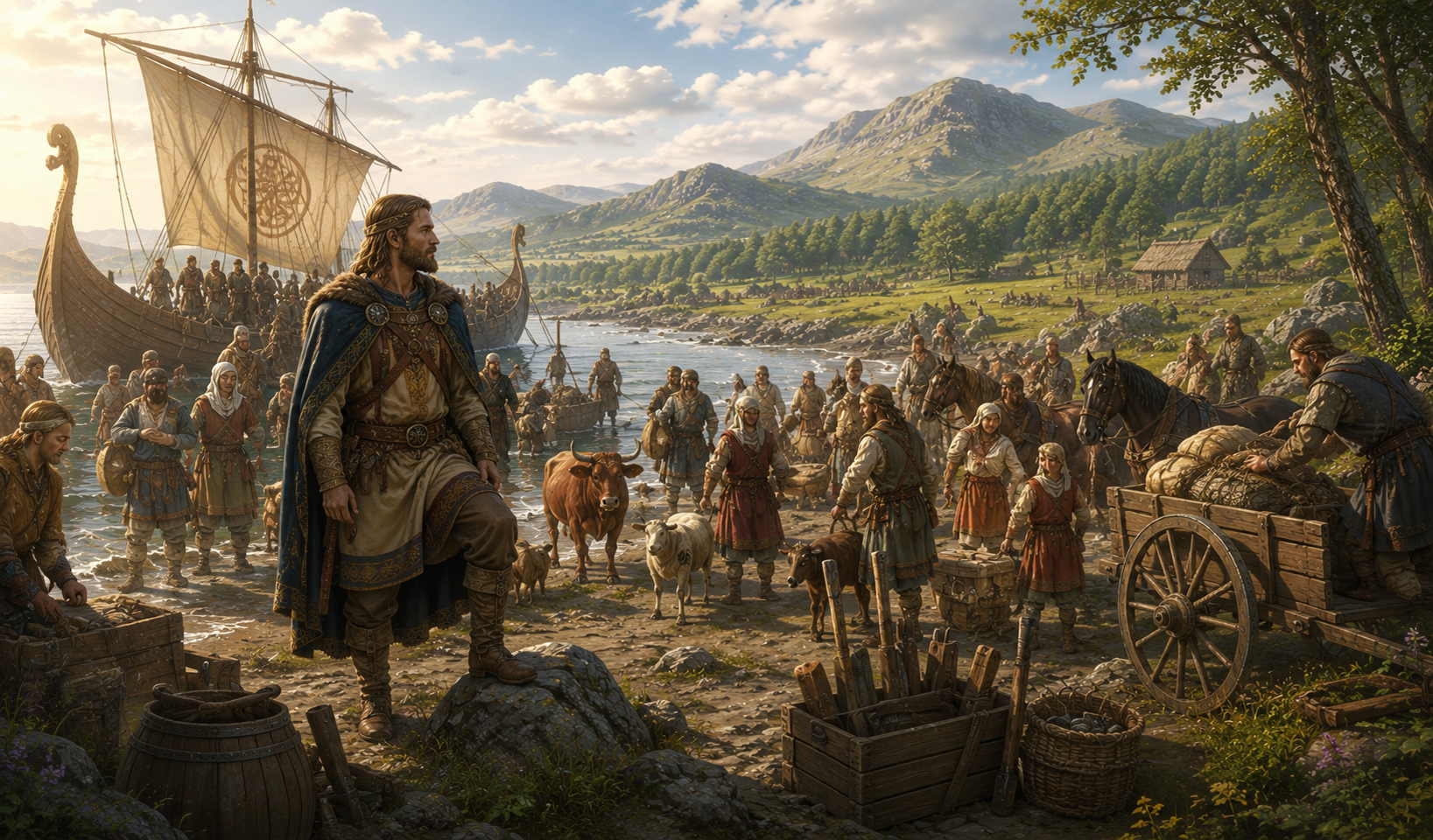
Then Partholón appeared. The medieval sources tell that he arrived accompanied by his family, warriors, craftsmen, and a large group of followers. As would happen with other peoples in the mythical invasions, the journey took place by sea, a constant element in Irish legends.
According to the tradition recorded in the Lebor Gabála Érenn, Partholón began his voyage to Ireland from Sicily, although some medieval versions place the origin of his lineage—or part of his journey—in other regions of the Mediterranean, such as Greece.
With his arrival, a new chapter in the legendary history of Ireland began.
The Arrival of Partholón
Inber Scéne is traditionally regarded as the place where Partholón and his people first landed in Ireland.
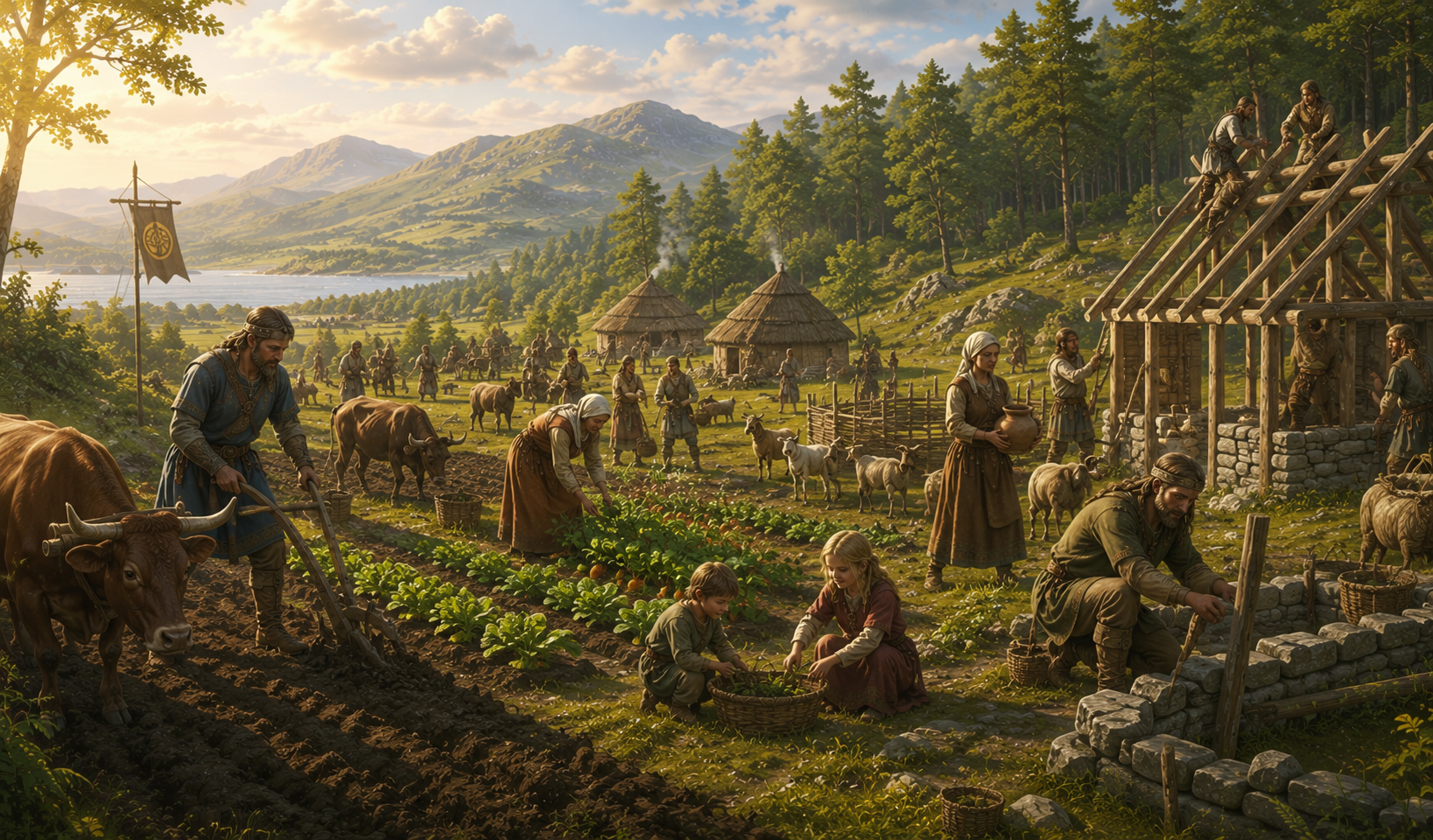
The traditions portray Partholón as a leader capable of organizing and transforming the land. His people are credited with numerous innovations. The stories claim that they cleared plains, developed agriculture, introduced new forms of livestock farming, and helped transform wild regions into habitable lands.
In many versions of the legend, they are associated with the idea of being the first settlers to establish stable communities in Ireland.
Although it is impossible to separate historical reality completely from legendary tradition, these stories reflect the importance that ancient storytellers placed on human efforts to shape the landscape.
Delgnat: The First Infidelity in Ireland
Partholón travelled with his wife Delgnat (also spelled Delgnait or Dealgnat).
According to the stories, Delgnat had an affair with a servant named Topa. Partholón discovered the betrayal, but the episode did not end in a duel, a battle, or an execution.
The tale appears in the Lebor Gabála Érenn , and tradition interprets it as a mythical explanation for the origin of male jealousy.
The First Great Conflict: The Battle of Mag Itha
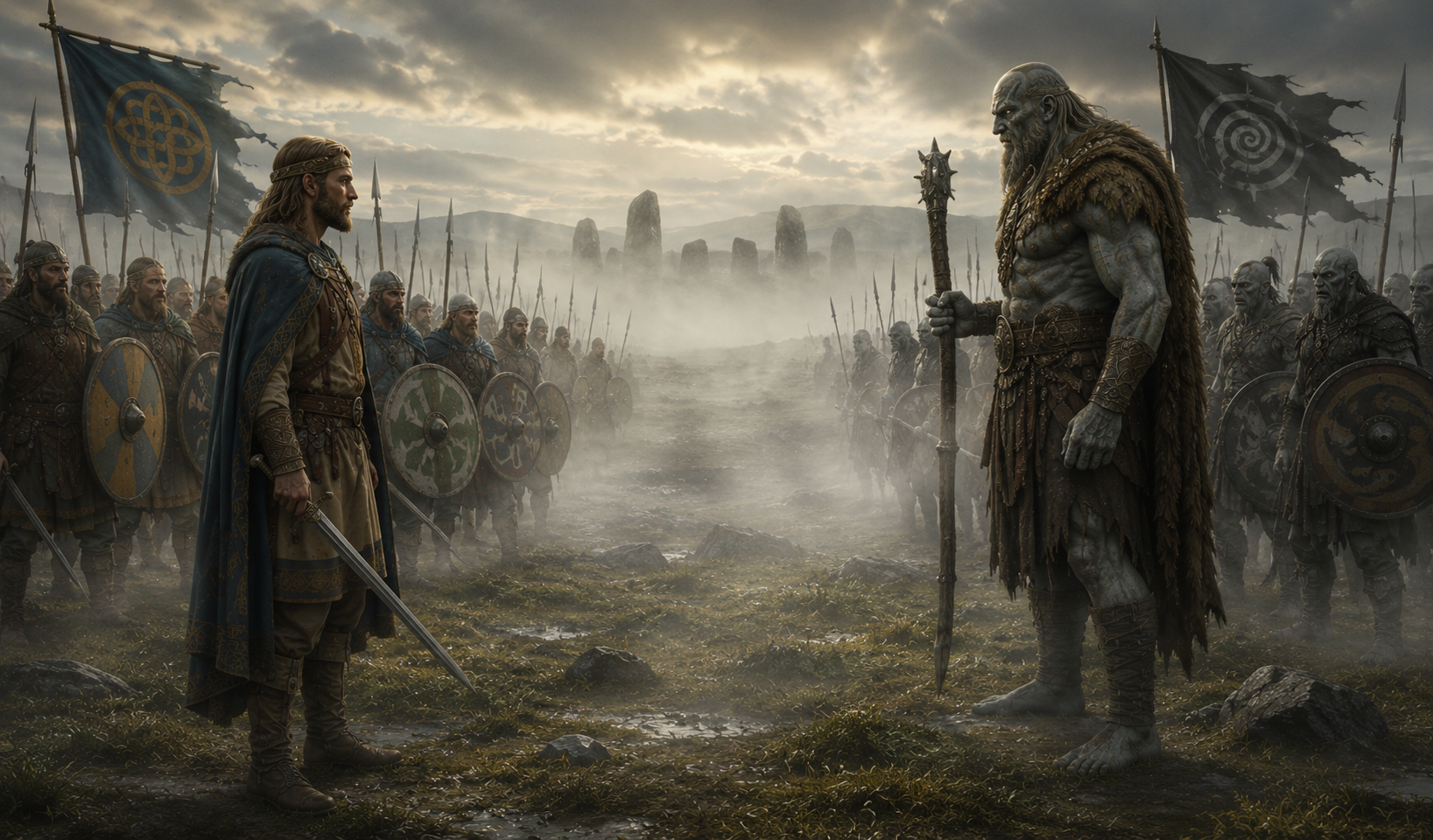
Partholón's stay in Ireland was not without danger. The legends tell that his people had to confront the Fomorians.
The Fomorians are among the oldest and most mysterious figures in Irish mythology. Depending on the source, they appear as giants, supernatural beings, or forces associated with chaos, storms, and the wildest aspects of nature.
According to the medieval traditions, the Fomorians were led by Cichol Gricenchos, considered in some versions to be one of their earliest great chiefs.
The sources describe him as a warrior or giant. Some traditions even attribute to him only one hand and one foot.
The conflict between the two peoples culminated in the Battle of Mag Itha, regarded as one of the first great conflicts of mythical Ireland. Partholón and his followers defeated the Fomorians, temporarily securing control of the land.
The Great Plague
However, the greatest enemy of the Partholónians was not an army but disease.
The medieval sources recount that a devastating plague spread among Partholón's people. Tradition states that thousands died within a very short period.
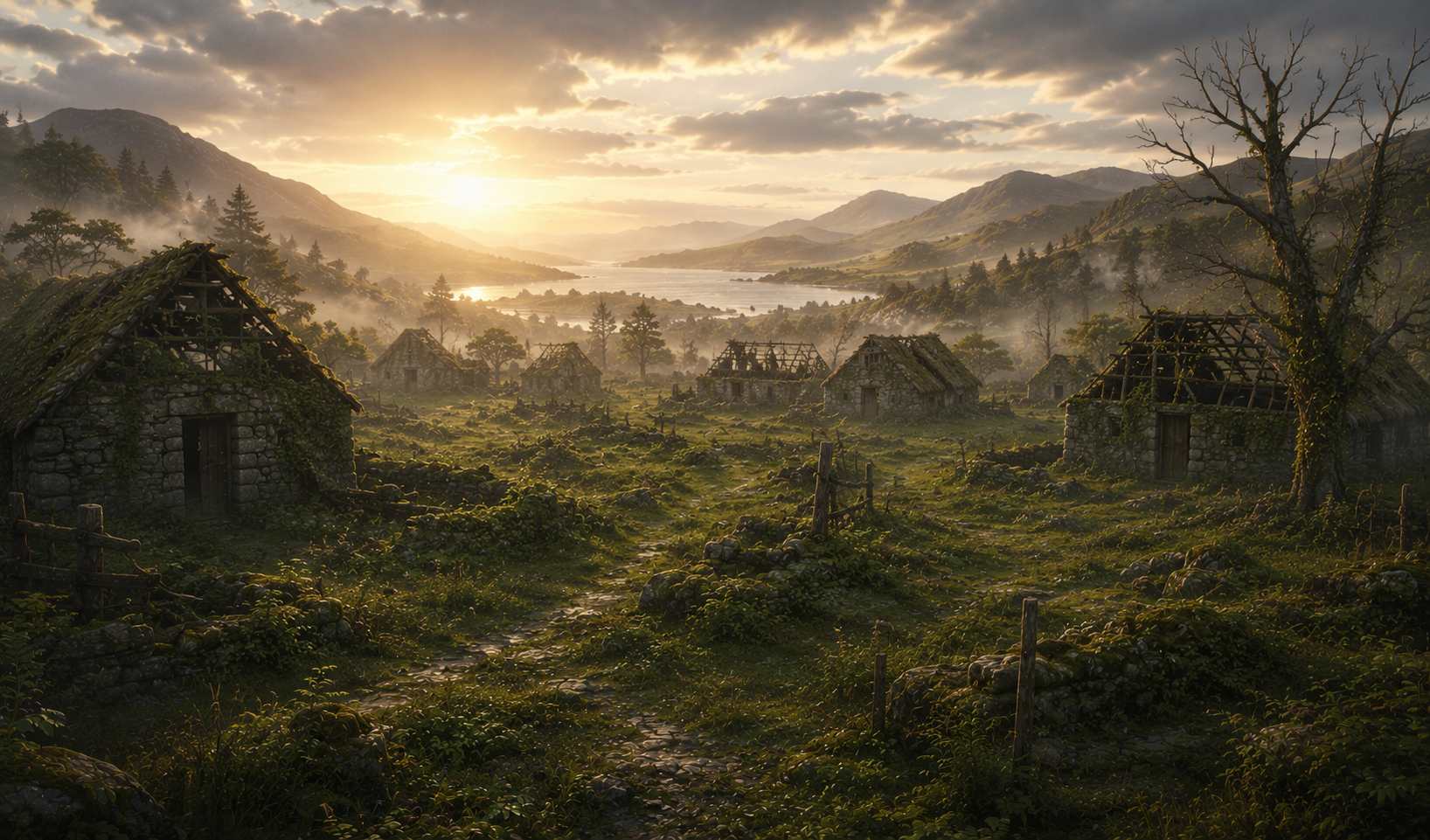
The stories tell that the last survivors gathered to bury the dead before they too succumbed to the epidemic.
According to tradition, only Tuán Mac Cairill survived the plague, beginning an extraordinary cycle of transformations that would make him the witness to the later invasions of Ireland.
According to the Lebor Gabála Érenn, the epidemic wiped out almost the entire population within the course of a single week.
The End of a People
With the disappearance of Partholón and his descendants, Ireland became uninhabited once again. The island remained silent for a time before receiving another group of legendary settlers.
Yet the memory of Partholón endured.
His people were remembered as some of the first to transform legendary Ireland, open new lands for cultivation, and confront the forces that, according to tradition, threatened its inhabitants.
Their story forms the first major chapter in a long series of legendary invasions that would eventually culminate in some of the most famous tales of Irish mythology.
Follow the Footsteps
Although Partholón belongs to the world of legend, his story survives in medieval Irish manuscripts such as the Lebor Gabála Érenn (The Book of the Taking of Ireland) and the Book of Leinster, where monks preserved ancient traditions about the mythical origins of the island.
Through these works, we can discover how medieval storytellers imagined the earliest days of Ireland and the peoples who, according to tradition, prepared the stage for the legendary generations that followed.
Visit It Today...
Although the places associated with Partholón belong mainly to medieval tradition, some are still part of the Irish landscape today.
Among the most famous are:Among the most notable are:
- Inber Scéne, traditionally identified with the Kenmare Estuaryin County Kerry. According to legend, this is where Partholón and his followers first landed.
- Mag Itha, whose exact location remains uncertain, although tradition generally places Partholón's first battle on a plain in eastern Ireland associated with the Plain of Leinster.
- TallaghtTallaght, whose name derives from the ancient term Tamlacht, usually translated as "mass grave" or "burial place of plague victims." According to tradition, this was where the Partholónians who died during the great plague were buried. Today, Tallaght is one of the principal towns within the Greater Dublin Area, located southwest of the Irish capital.
Beyond their exact locations, these places remind us of how deeply Ireland's landscape became intertwined with its legendary stories.