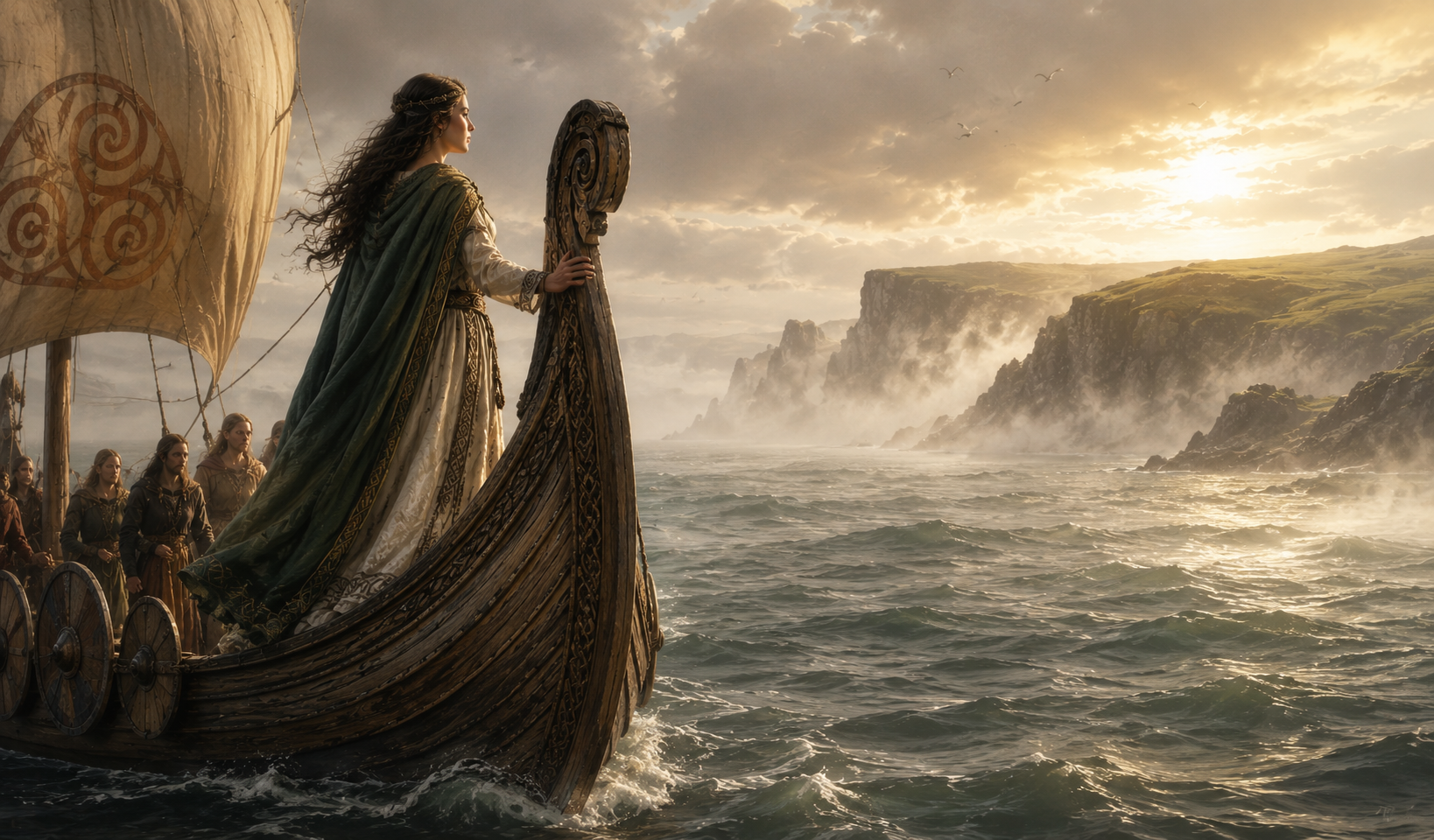
Long before the Tuatha Dé Danann, the Fomorians, or the heroes of Irish legend, there is an even older story. A story set in a distant time, when the world had not yet been transformed by the Great Flood.
According to the Lebor Gabála Érenn (The Book of the Taking of Ireland), the first person to arrive in Ireland was a woman named Cessair.
Her story marks the beginning of Ireland's mythical history and describes a world that existed before the great floodwaters forever changed the fate of humanity.
The World Before the Flood
Medieval Irish traditions attempted to connect ancient Celtic stories with the biblical narratives known to the Christian monks who copied and preserved them.
For this reason, Cessair's arrival is placed shortly before the Great Flood.
According to the Christianised version of the Lebor Gabála Érenn, Cessair was Noah's granddaughter. However, when Noah began building the Ark, she and her followers were excluded from the salvation that would allow its passengers to survive the great flood.
Faced with this fate, they decided to seek refuge in a distant land at the western edge of the known world.
That land was Ireland.
The First Arrival
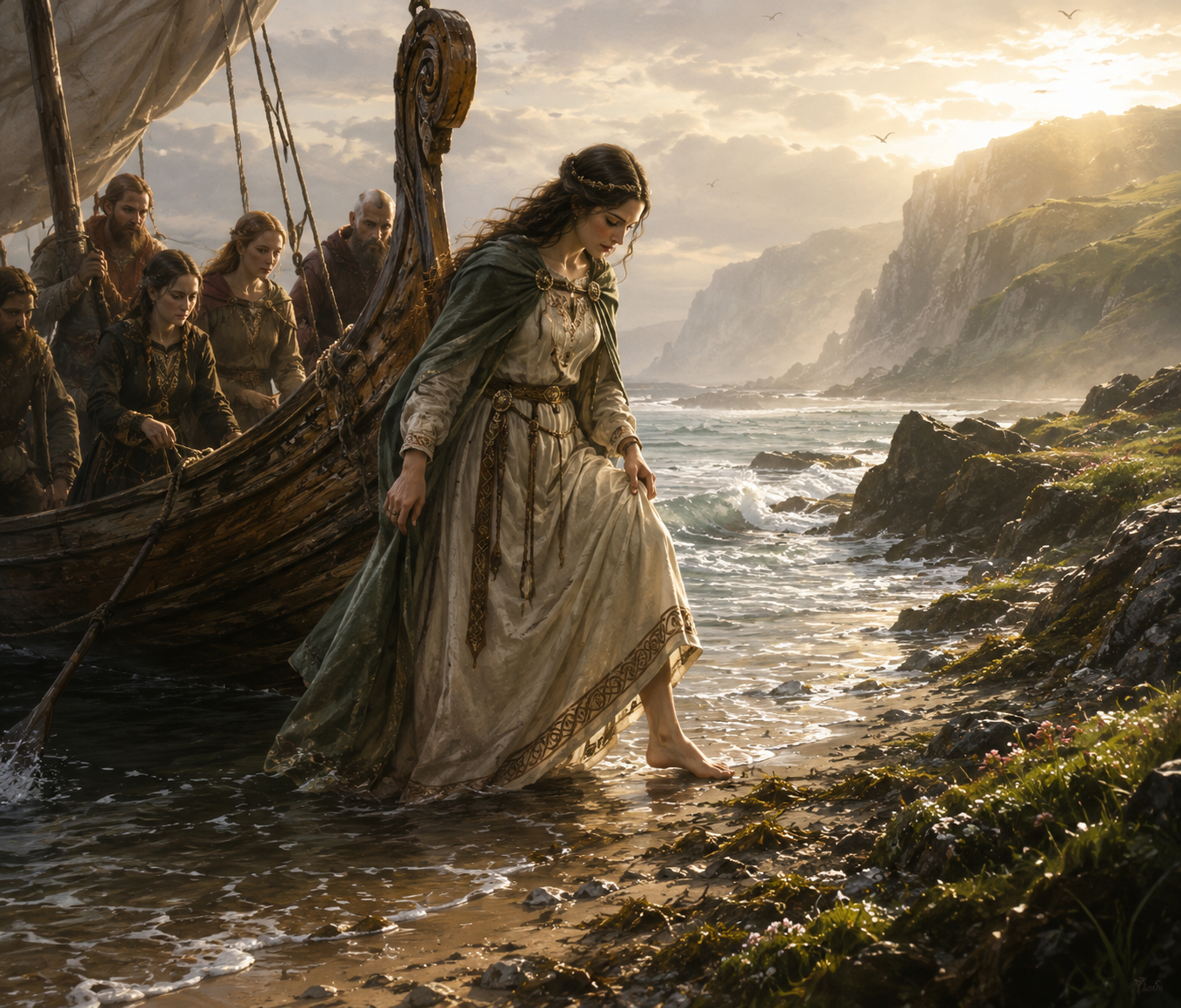
The sources tell us that Cessair gathered a group of followers and embarked on a long voyage across the sea.
The numbers vary depending on the source, although the most widespread tradition speaks of:
- Cessair.
- Three men.
- Around fifty women.
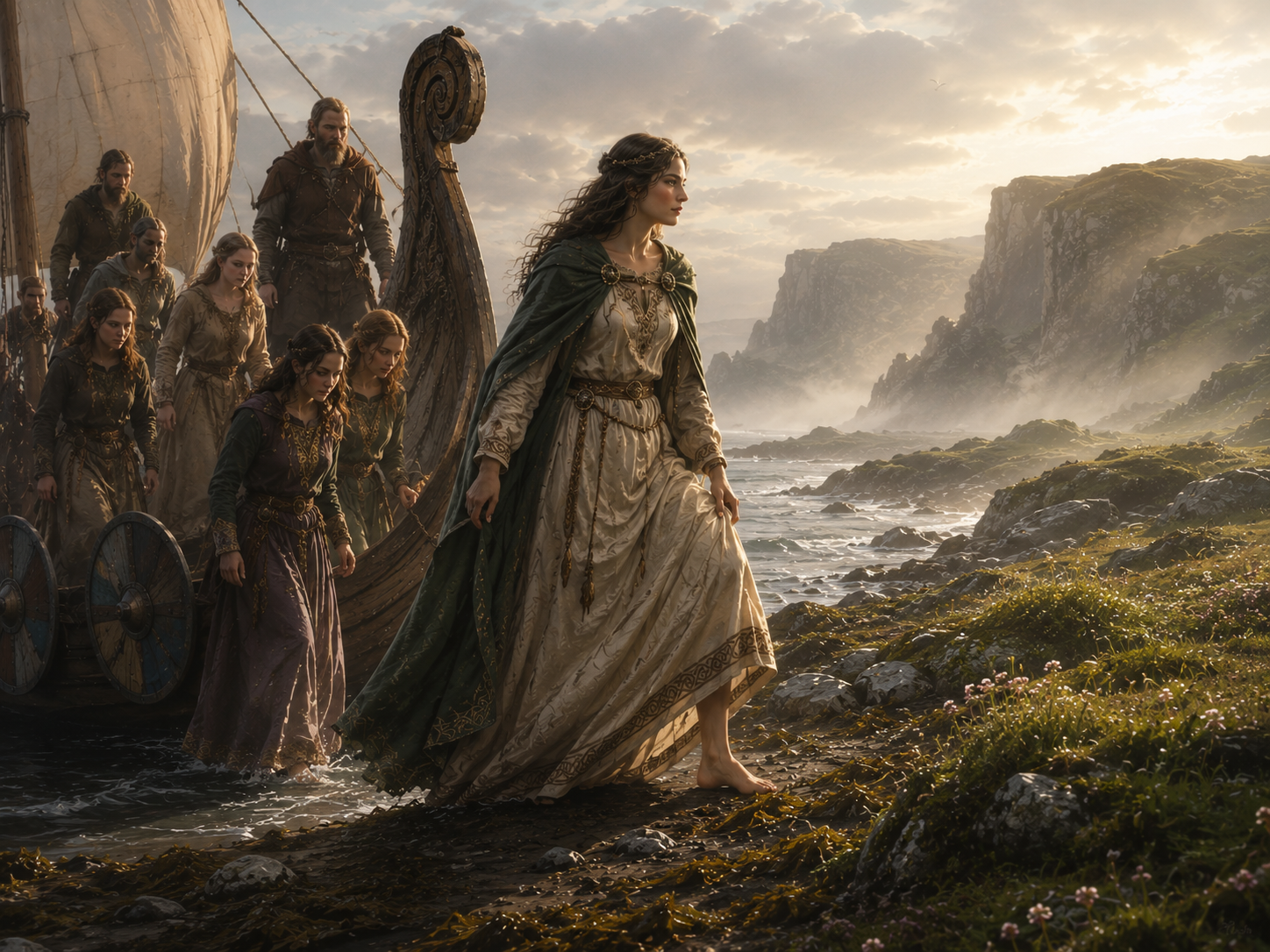
After a difficult voyage, they finally reached Ireland.
According to some versions, they landed on the southwestern coast of the island, at a time when the land was still virtually uninhabited.
Cessair's arrival represents the first mythical settlement of Ireland and the beginning of the succession of peoples who, according to the Lebor Gabála Érenn, would inhabit the island over the centuries.
According to the most widespread tradition, Cessair and her companions arrived in Ireland forty days before the Flood.
Cessair's Companions
Fintan: The Impossible Survivor
Among the men who accompanied Cessair, one figure stands out who would later play a fundamental role in Irish tradition: Fintan mac Bóchra.
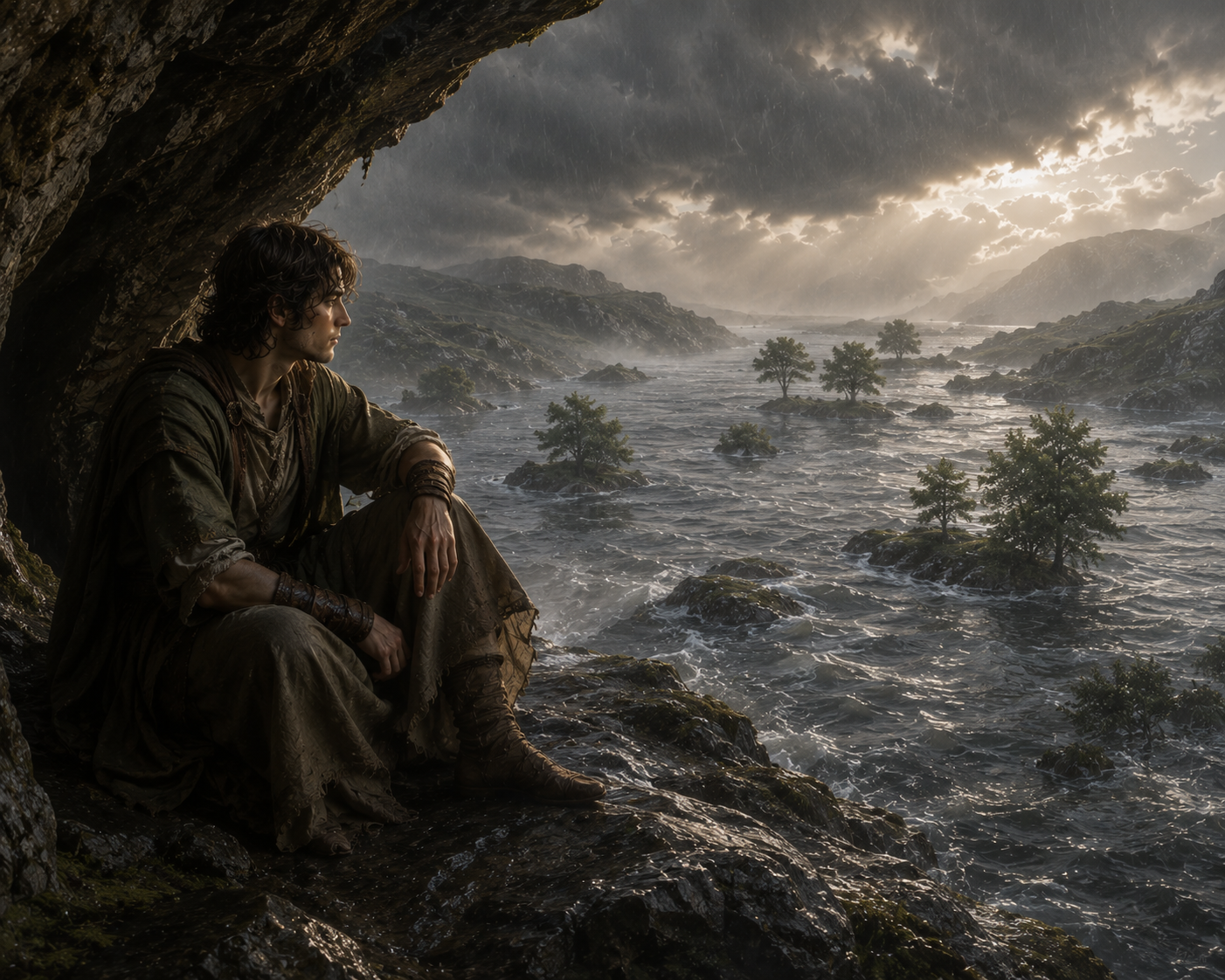
When the waters of the Flood began to cover Ireland, Fintan fled and found refuge in a cave later known as Fintan's Cave. la Cueva de Fintan.
While most of Cessair's companions perished beneath the waters, he survived through a series of magical transformations. The traditions do not always agree, but they generally claim that he successively took the form of:
- a salmon;
- an eagle;
- a hawk.
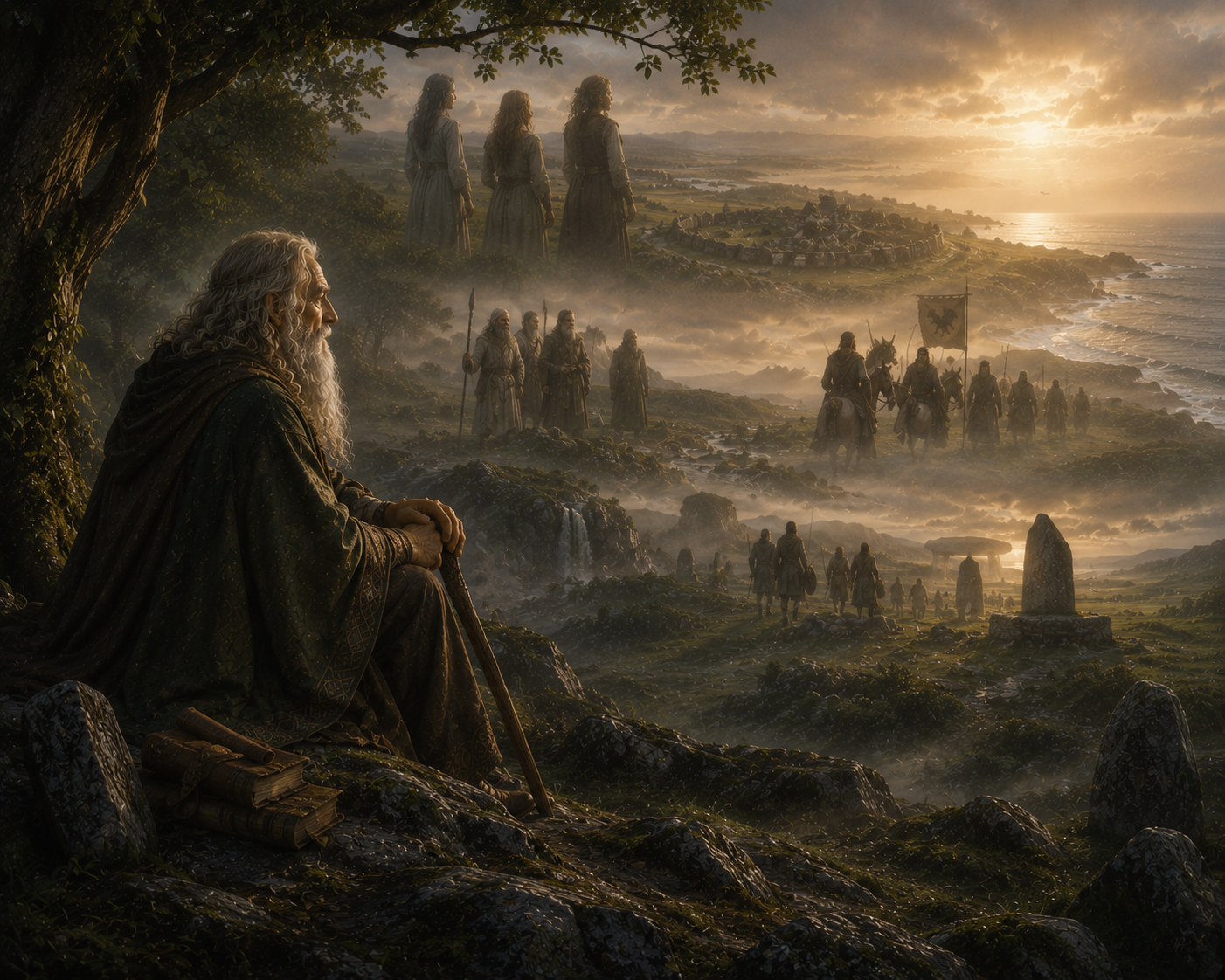
Thanks to his extraordinary longevity, he witnessed the arrival of many of the peoples of Ireland:
- Cessair
- Partholón
- Nemed's people
- the Fir Bolg;
- the Tuatha Dé Danann
- the Milesians.
For this reason, some traditions regard him as the great guardian of Ireland's memory.
Adviser to Kings and Guardian of Memory
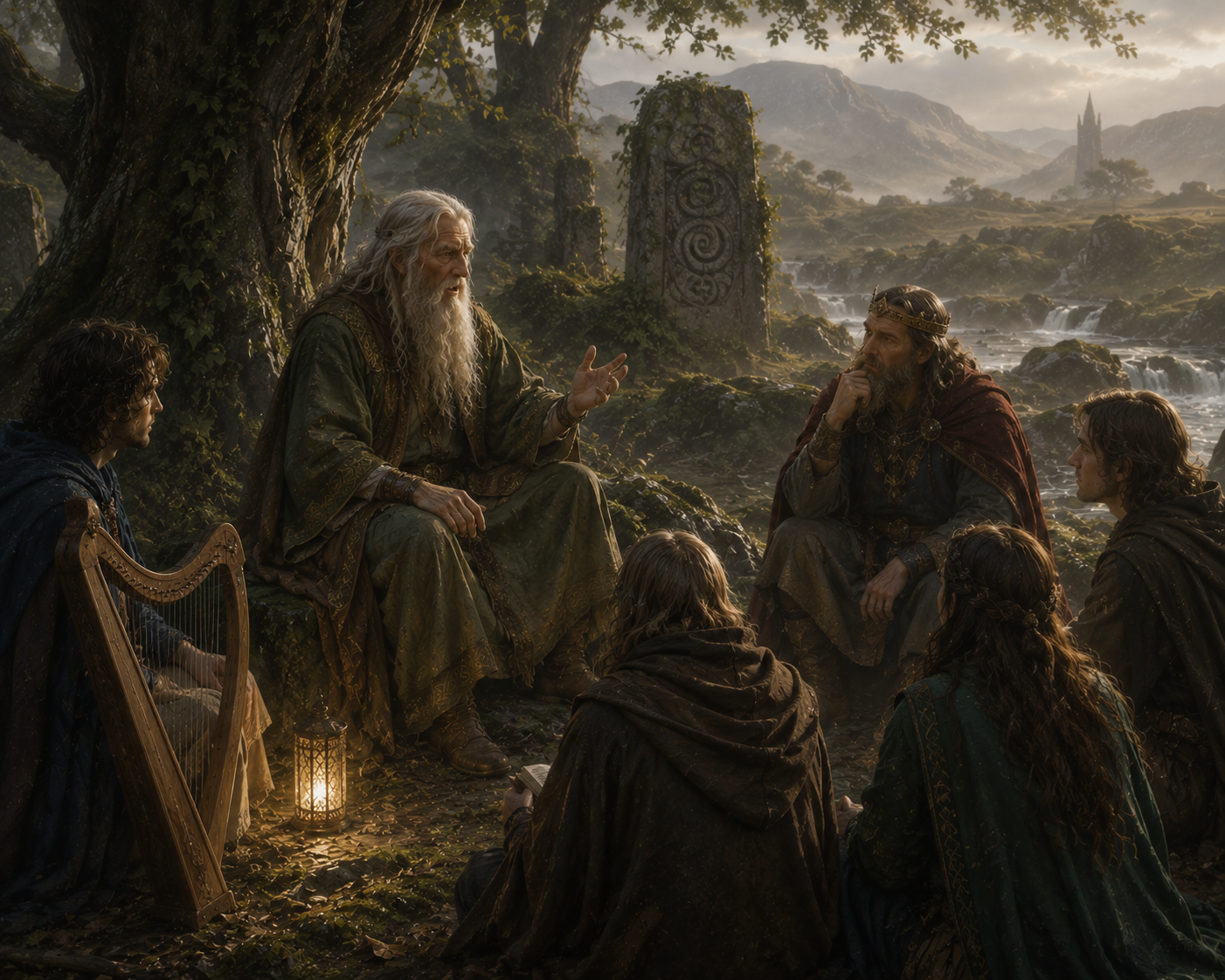
When wise men wished to learn about the most ancient events in the island's history, they turned to Fintan, for he was the only direct witness to the world before the Flood.
Over the centuries, he became an adviser to kings, sages, chroniclers, and poets.
Some traditions even claim that he survived until the arrival of Christianity and Saint Patrick, when the ancient oral traditions began to become integrated into the new Christian Ireland.
Fintan mac Bóchra: The Man Who Remembered the Entire History of Ireland
Some medieval texts tell how various sages came to consult Fintan precisely because he had witnessed the most ancient events in the island's history.
Certain traditions attribute numerous wives to him—as many as sixteen in some accounts—including Cessair. A son is also occasionally mentioned, although both he and the rest of Fintan's family perished during the Flood.
According to the sources, Fintan lived for approximately 5,500 years.
The Flood
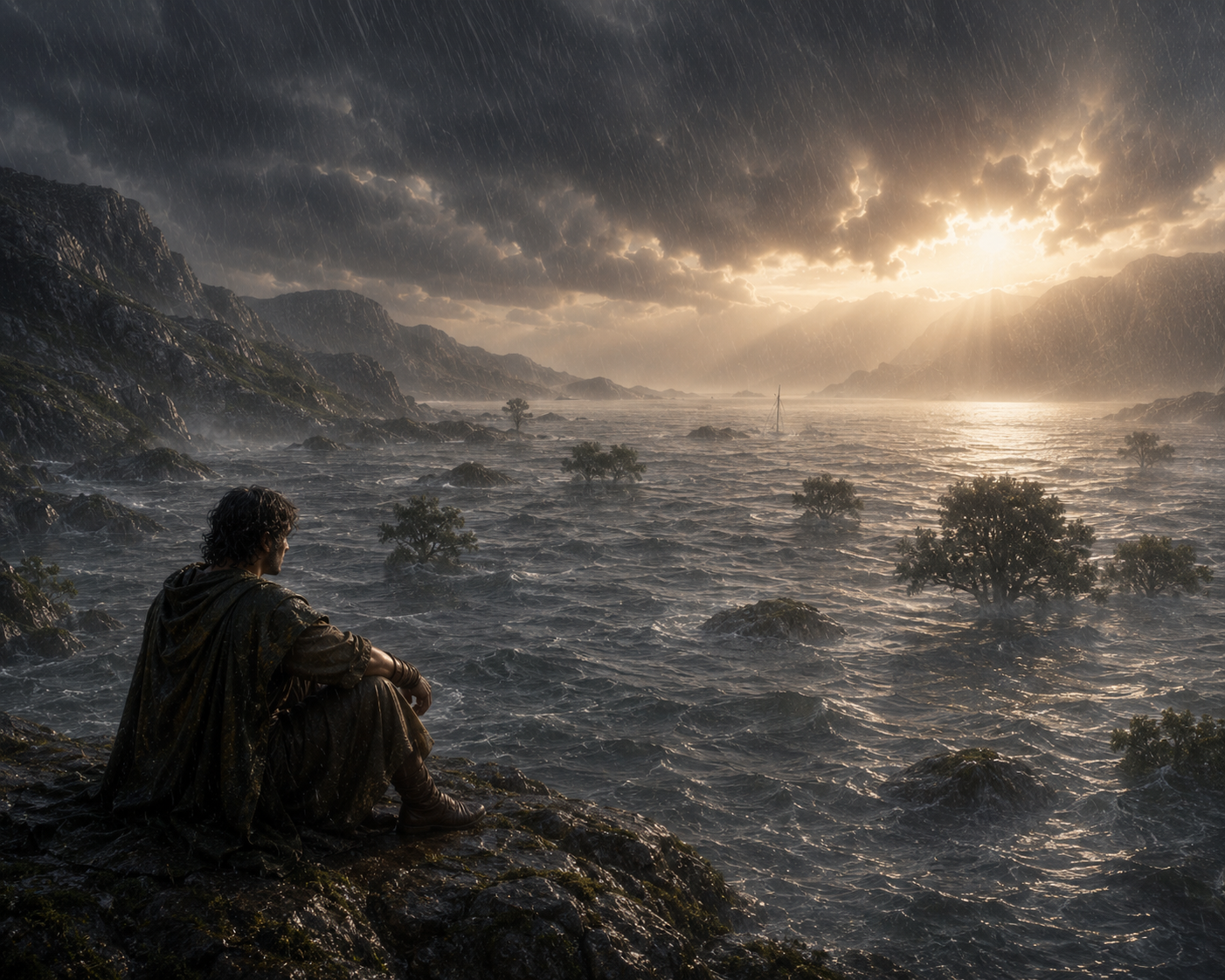
Cessair's time in Ireland was brief. Shortly after her arrival, the waters of the Flood covered the land. Cessair died alongside most of her followers, and that first settlement disappeared almost entirely beneath the waters. Only Fintan survived to preserve the memory of that lost world.
With the Flood, Ireland's first mythical age came to an end.
The island was left uninhabited once again. But not for long.
The Beginning of a Long History
Although Cessair's story occupies only a few pages of the Lebor Gabála Érenn, it carries enormous symbolic significance.
It represents the beginning of Ireland's mythical memory. A time before the great peoples of Celtic tradition. A world suspended between legend and myth.
After the Flood, new settlers would arrive.
- Partholón and his people.
- Nemed and the Nemedians.
- The Fir Bolg.
- the Tuatha Dé Danann.
- And finally, the Milesians.
But before all of them came Cessair.
The woman who, according to tradition, was the first to set foot in Ireland.
Curiosities
Was She Really Noah's Granddaughter?
Medieval sources present Cessair as a descendant of Noah because Christian monks attempted to integrate ancient Irish traditions into a universal biblical chronology.
Many researchers believe that the figure of Cessair may have originated in much older traditions that were later reinterpreted from a Christian perspective.
Follow the Footprints
Visit It Today...
Although Cessair's story belongs to the world of myth, there are still places in Ireland associated with her legend.
One of the best known is Cúil Ceasra, identified by some traditions as Cessair's burial place and located in County Roscommon. As with many places associated with Irish mythology, it is impossible to completely separate history from legend.
Nevertheless, these landscapes continue to evoke one of the oldest surviving narratives about the mythical origins of Ireland.
County Roscommon
Various local traditions place some of the locations associated with Cessair and the earliest stories of the Lebor Gabála Érenn.
Although there is no archaeological evidence confirming the events described in the legend, the landscape preserves the echo of one of the oldest foundation stories in Irish mythology.
Fintan's Cave
Located on Arra Mountain, near Lough Derg, on the hill of Tul Tuinde.
Today, we do not know whether Fintan's Cave ever truly existed. However, for centuries, local tradition identified this place as the refuge where the last survivor of the world before the Flood escaped the rising waters.
Fintan's Grave
Some traditions claim that Fintan eventually died and was buried. Others maintain that he left Ireland transformed into a hawk.
Tradition generally places his grave near Lough Derg, in County Tipperary, close to Arra Mountain.