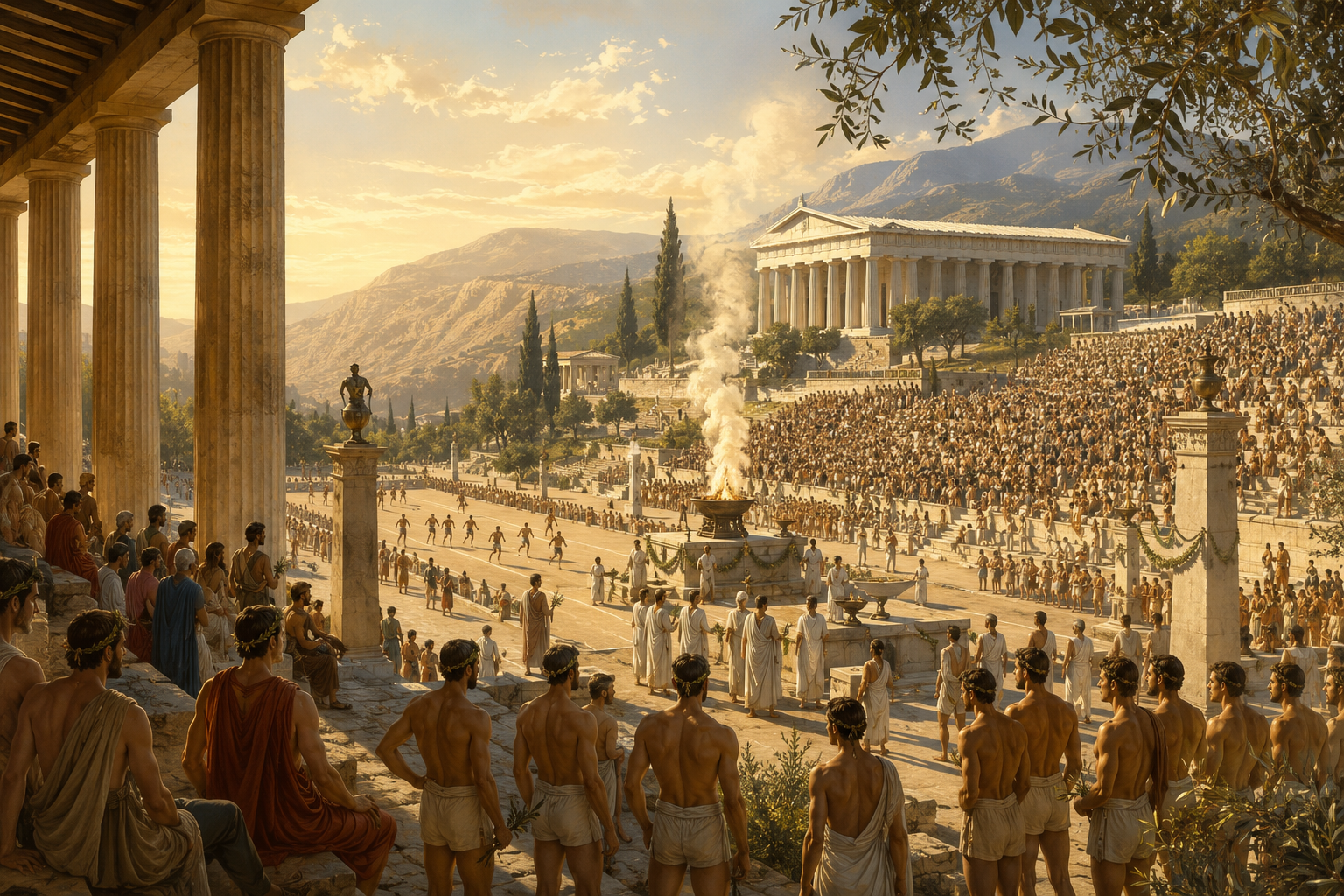
Long before modern stadiums, medals, and world records, there was a very different way of competing.
In 776 BC, at the sanctuary of Olympia, games began that sought more than simply measuring strength or speed. They pursued something deeper: to honor the gods.
. The first Olympic Games were not merely a sporting event. They were religion, identity, and prestige.
Olympia: A Sacred Place
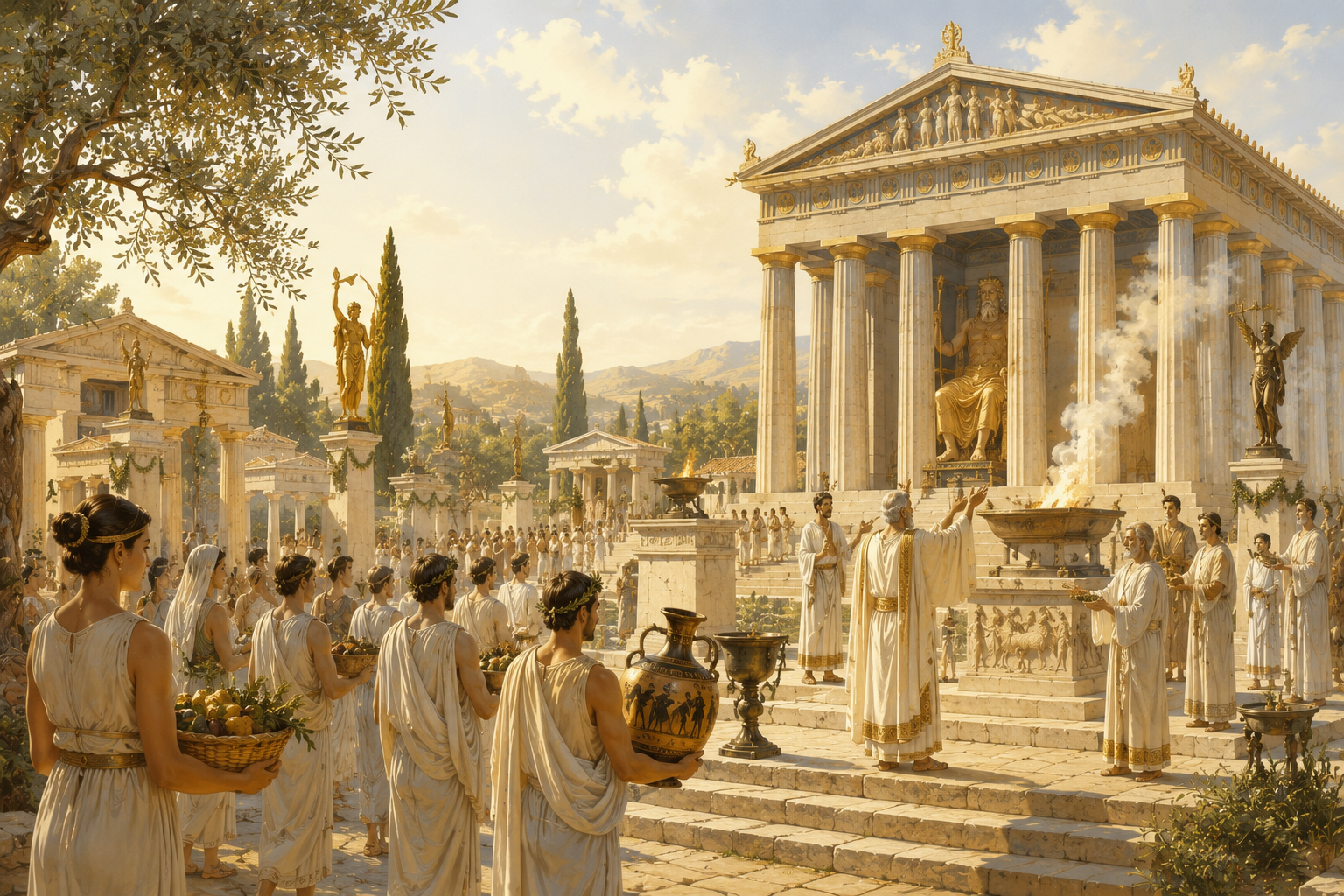
The Games were held at Olympia, in the Peloponnese region. It was no ordinary city. It was a sanctuary dedicated to Zeus, the supreme god of the Greek pantheon.
Temples, altars, and statues stood there, including one of the Seven Wonders of the Ancient World: the Statue of Zeus at Olympia.
The Games formed part of a religious festival dedicated to Olympian Zeus.
It included:
- animal sacrifices
- offerings
- religious rituals
- processions
In Greece, "Olympic" comes from Olympia, the place where the Games were held, while an Olympiad referred to the four-year period between one Games and the next.
- The Games = the event
- The Olympiad = the four-year period
In a sense, competing was itself an offering.
The Beginning: 776 BC
Tradition places the first Olympic Games in 776 BC and identifies Iphitus of Elis, king of Elis—the region where Olympia was located—as a key figure in their reorganization.
According to tradition, he:
- reorganized the Games
- established the Olympic Truce (Ekecheiria)
Originally, the Games were above all a religious celebration honoring Zeus. Over time, athletic competition became increasingly important as a demonstration of physical excellence and honor before the gods.
This date also marks the beginning of the Greek Olympic calendar, which was used for centuries to measure time.
The first edition was remarkably simple:
- one event
- one discipline
- one winner
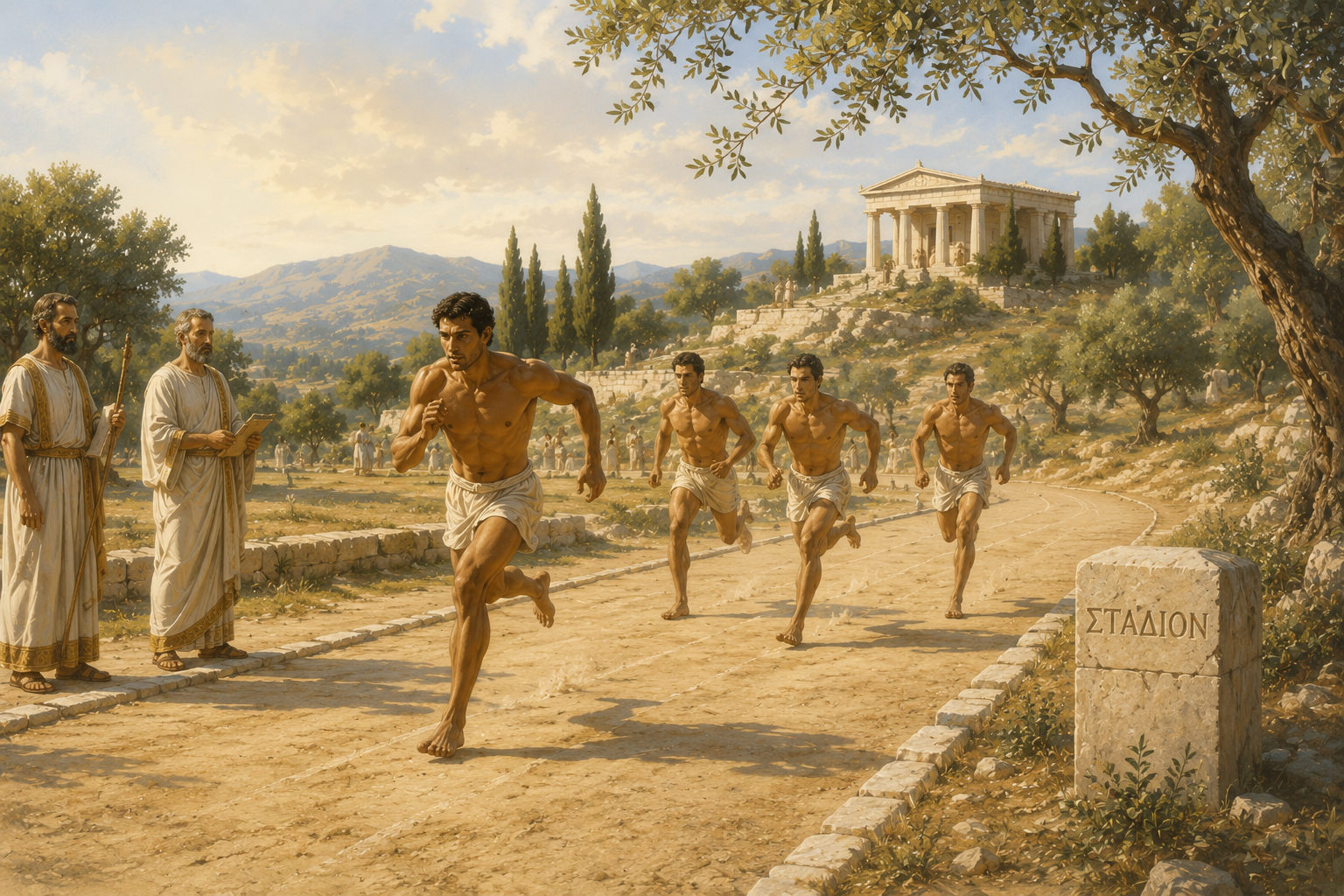
The competition consisted of a single footrace called the stadion, measuring approximately 190–192 meters (625–630 feet).
More Than Sport: Identity and Honor
Taking part in the Games was a privilege reserved for Greek citizens.
Competitors did not receive money or medals. The official prize was a wild olive wreath. However, upon returning to their home cities, many victors received rewards and public honors.
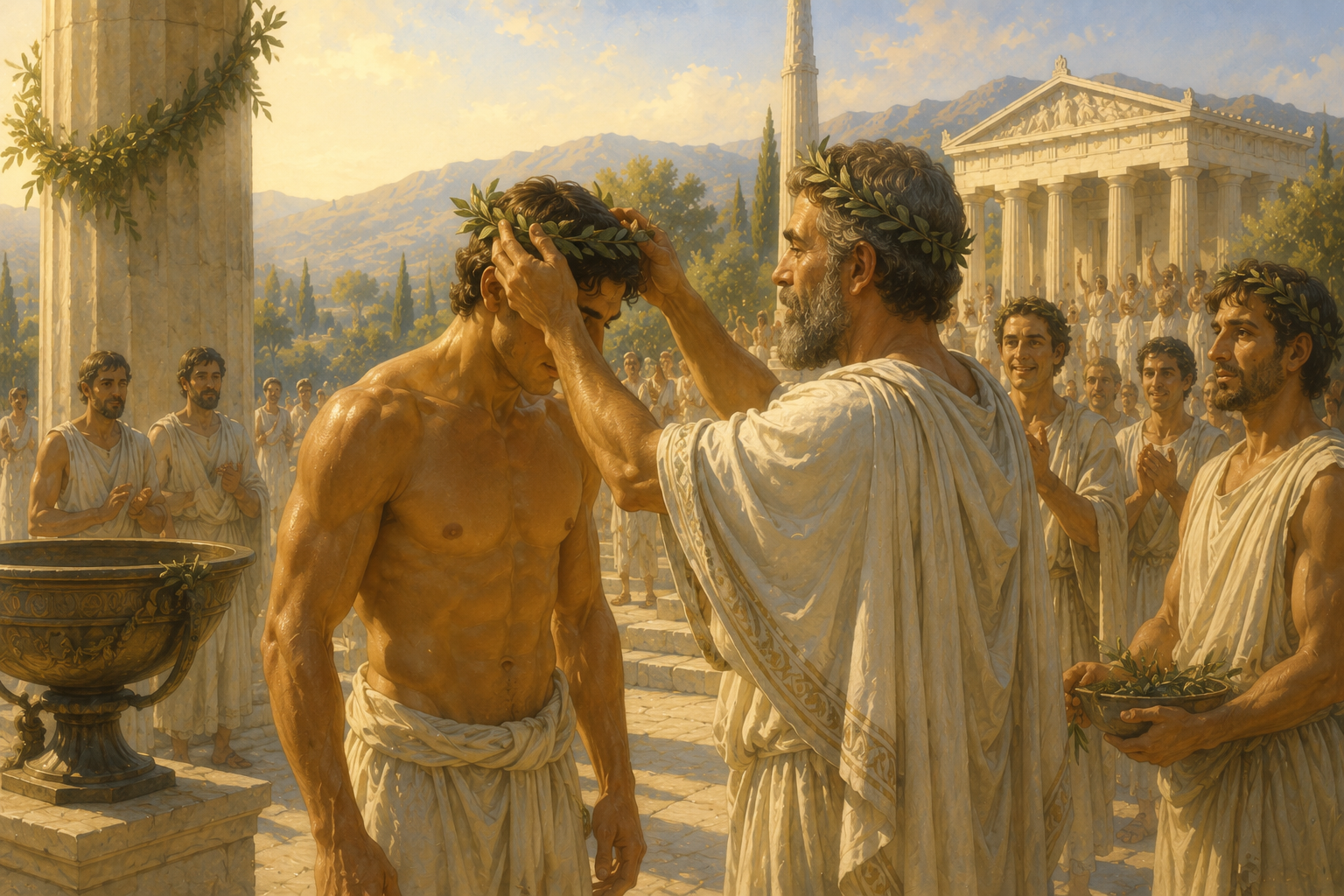
Winners gained:
- prestige
- social recognition
- everlasting glory
In a culture where honor stood at the center of society, victory at Olympia was a path to immortality.
The Heraean Games: Women Competing
The Heraean Games were also held at Olympia, although their exact origin remains uncertain. They probably already existed between the 6th and 5th centuries BC.
They were dedicated to Hera, the wife of Zeus.
Our main source is Pausanias, the second-century AD Greek traveler and historian.
According to his account:
- sixteen women from Elis organized the festival
- they wove a sacred robe (peplos) for Hera
- they supervised the competitions
This is one of the few occasions in which women appear performing public religious and organizational roles at a major Greek festival.
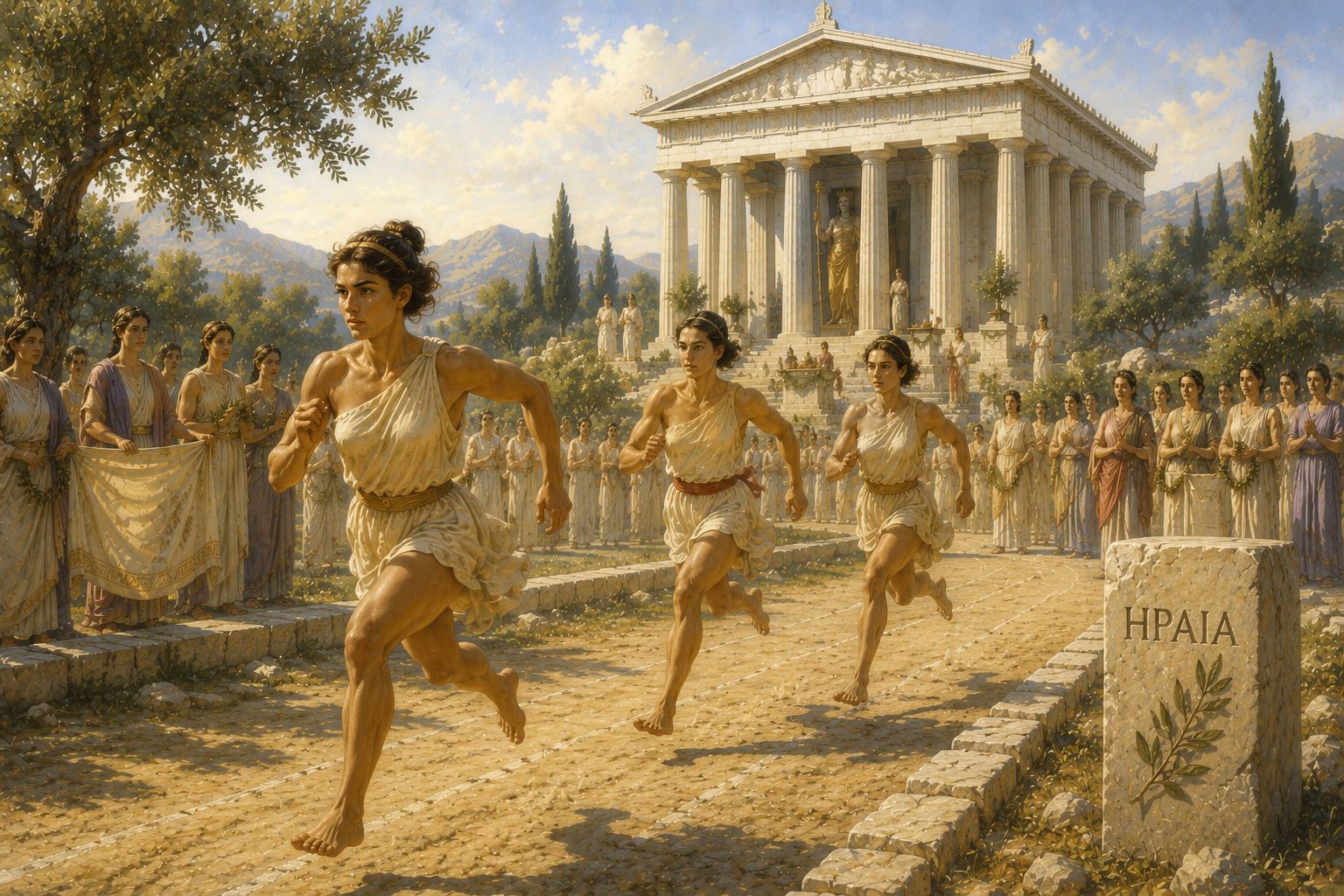
The only event known with certainty was a women's footrace. Its distance was shorter than the men's race. Pausanias states that competitors ran approximately five-sixths of the men's stadion, equivalent to roughly 160 meters (525 feet).
He also describes three age categories:
- girls
- teenagers
- young women
Among the known restrictions, married women were forbidden from attending the men's Olympic Games as spectators.
Tradition claimed that a married woman discovered inside the stadium could face severe punishment. However, priestesses of certain deities were allowed to attend.
Unlike the male athletes, who competed naked, participants in the Heraean Games wore a short tunic featuring:
- the right shoulder uncovered
- the right breast partially exposed
- a skirt ending above the knee
Ancient texts describe this clothing in remarkable detail.
Like the men, the winners received:
- an olive wreath
- a portion of an animal sacrificed to Hera
- the right to dedicate an inscription or statue
They received no money. Their reward was honor, prestige, and religious recognition.
The Sacred Truce
One of the most remarkable aspects of the Games was the Ekecheiria, or Olympic Truce.
During the festival:
- wars ceased
- conflicts were temporarily suspended
- athletes could travel safely
In a world marked by constant warfare between city-states, this agreement was extraordinary.
The Evolution of the Events
Over time, new competitions were added to the original race:
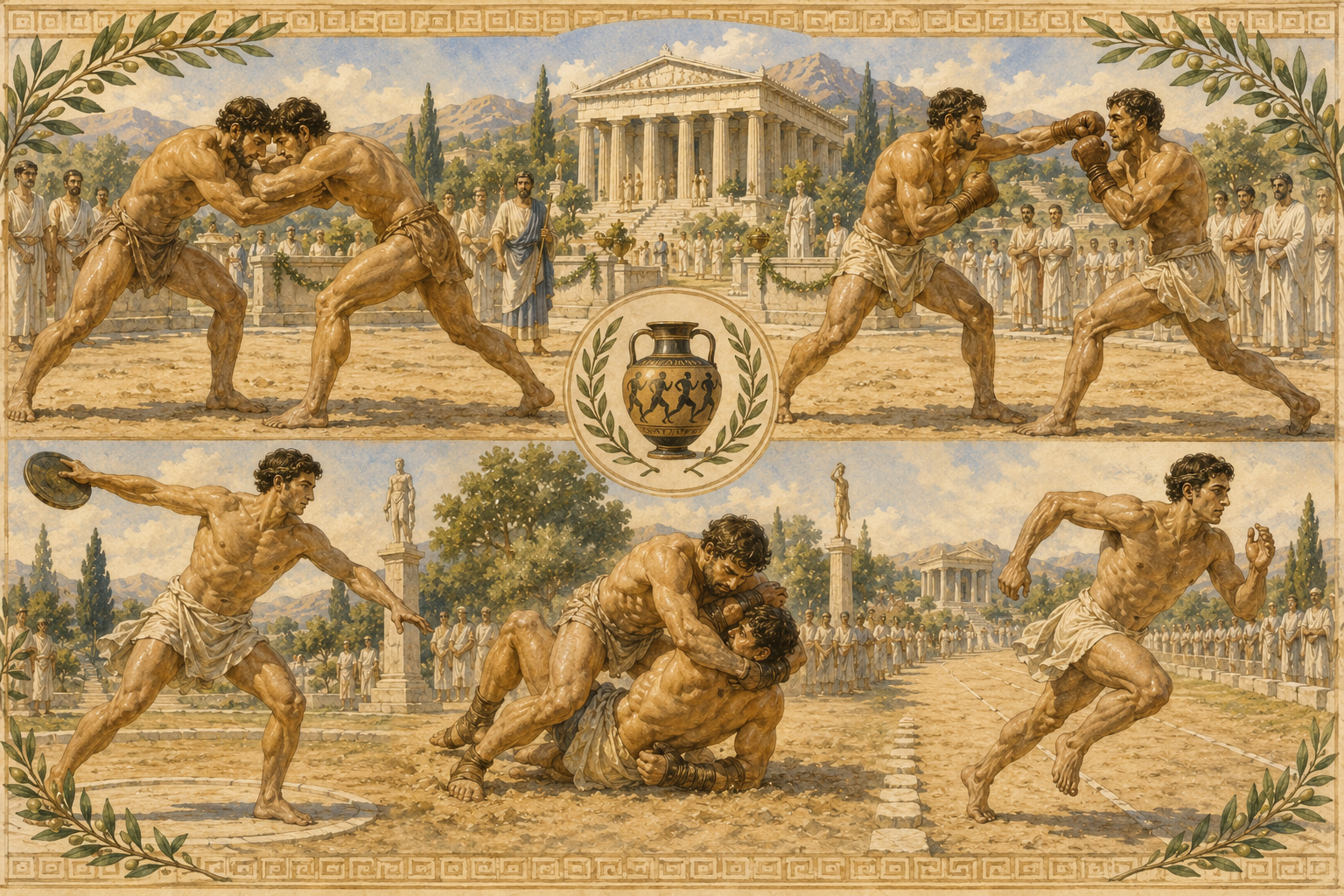
- wrestling
- boxing
- pankration (an extremely demanding combination of wrestling and combat)
- chariot races
- the pentathlon
Athletes competed naked, symbolizing equality, discipline, and the Greek ideal of physical excellence.
Cheating also carried public consequences. Athletes found guilty were required to pay fines used to finance bronze statues of Zeus known as the Zanes.
These statues permanently reminded visitors of the disgrace suffered by those who had attempted to cheat.
The Olympic Atmosphere
During the Games, Olympia was transformed.
Thousands of people arrived from Greek city-states across the Mediterranean:
- athletes
- philosophers
- merchants
- spectators
It was not merely a sporting event. It became a cultural, political, and social gathering.
The End of the Ancient Games
With the spread of Christianity, the Roman Emperor Theodosius I prohibited pagan cults in AD 393. Traditionally, this decree is considered to mark the end of the ancient Olympic Games.
Among the practices affected were:
- pagan worship
- temples
- traditional religious festivals
After more than a thousand years, one of the most important traditions of the ancient world came to an end.
The Revival
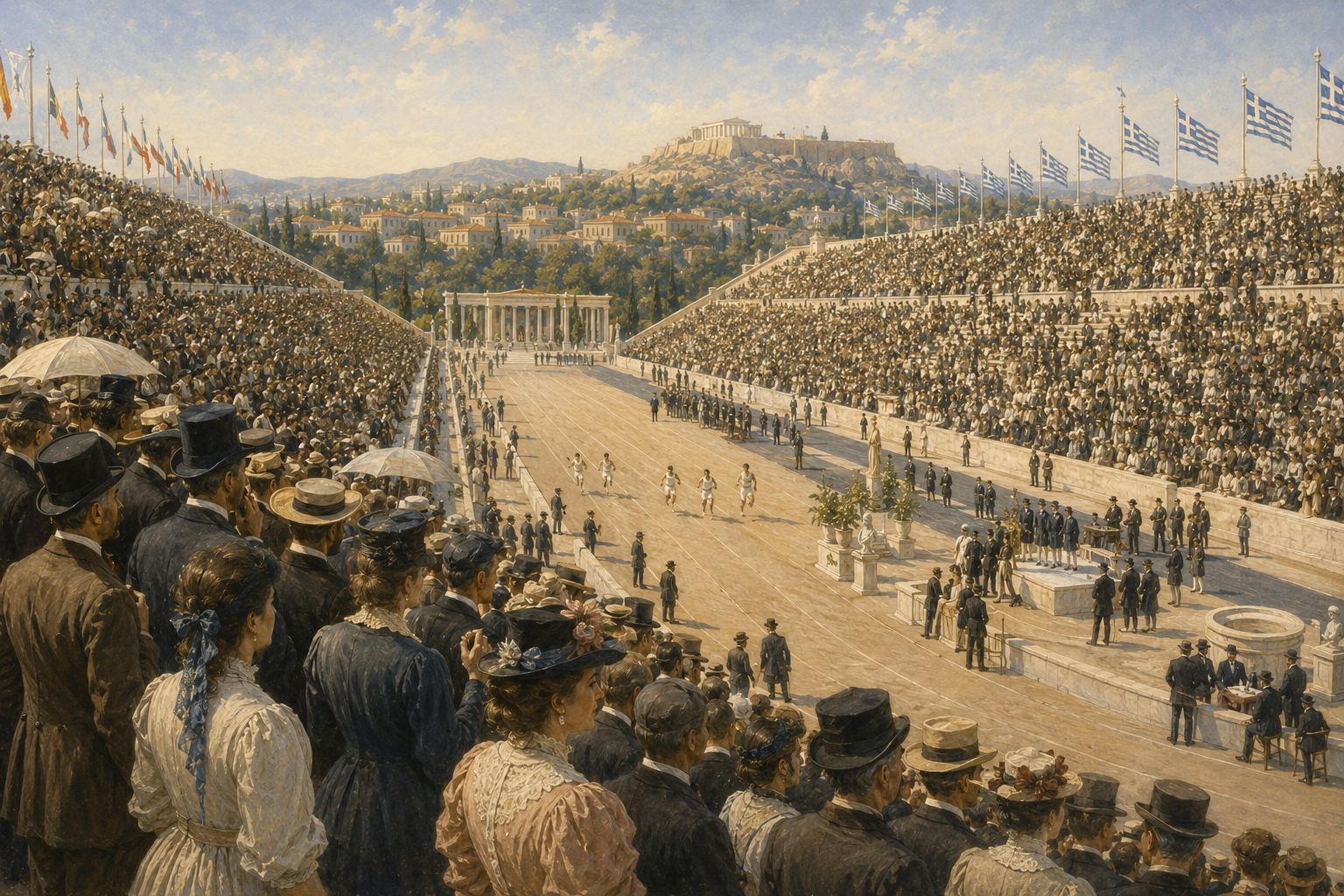
Centuries later, in 1896, the Olympic Games were revived in Athens.
The driving force behind their restoration was the French educator Pierre de Coubertin, a passionate admirer of Ancient Greece and a strong advocate of education through sport.
Although the modern Olympics differ greatly from the ancient Games, they preserve one essential idea: bringing nations together through athletic competition.
The first modern Games took place between 6 and 15 April 1896. Fourteen countries and around 240 athletes, all of them men, participated.
The sports included:
- athletics
- gymnastics
- wrestling
- weightlifting
- cycling
- fencing
- shooting
- tennis
- swimming
The marathon fue creada específicamente para los Juegos Olímpicos modernos. Se inspiró en la famosa leyenda de Filípides (o Feidípides), aunque la historia real es más compleja. La distancia recorrida en 1896 rondaba los 40 kilómetros.
The current distance of 42.195 kilometers (26.2 miles) originated at the 1908 London Olympic Games and was officially standardized in 1921.
The Olympic Flame and the Torch Relay
One of the best-known symbols of today's Olympic Games is the Olympic Flame. Although many people associate it directly with Ancient Greece, the modern tradition has important nuances.
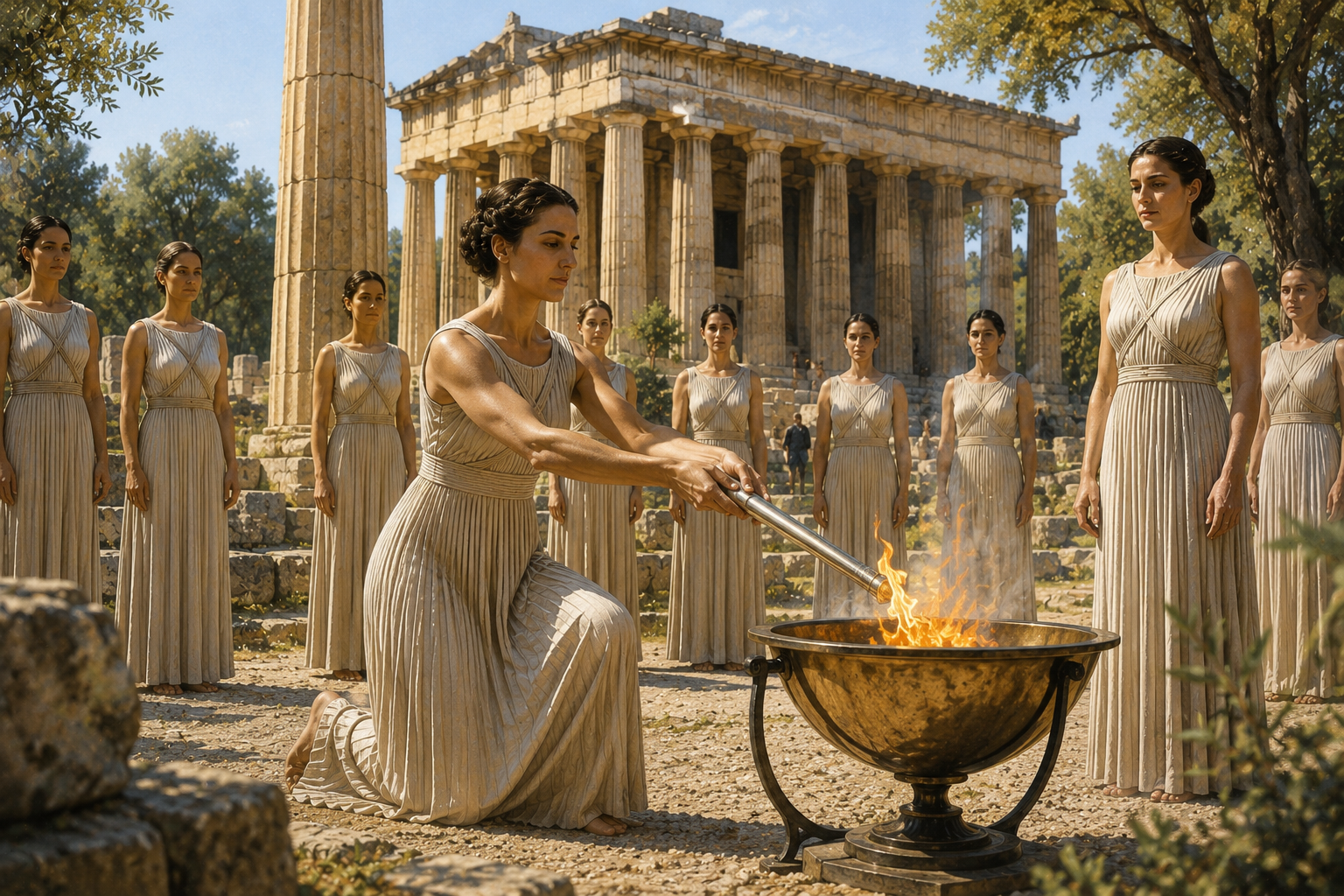
The flame is inspired by the sacred fires that burned in Greek sanctuaries, including Olympia. However, the torch relay, in which runners carry the flame from Greece to the host city, is a modern tradition.
It was introduced during the 1936 Berlin Olympic Games and has since become one of the most iconic moments of every edition.
Today, the Olympic Flame symbolizes the continuity between the ancient and modern Games, as well as the ideals of unity and friendship among nations that inspired their revival.
Other Olympic Symbols
Over time, the modern Olympic Games incorporated new symbols that are now recognized worldwide.
Among them are the Olympic medals, which replaced the ancient olive wreaths awarded to victorious athletes, and the five Olympic rings, designed by Pierre de Coubertin in 1913.
The rings symbolize the unity of the continents through sport and have become one of the most recognizable emblems of the modern Olympic Movement.
Together with the Olympic Flame and the torch relay, these symbols help connect the legacy of Ancient Greece with today's Olympic Games.
Curiosities
The Battle of Marathon (490 BC): The First Marathon
According to later tradition, a messenger named Pheidippides ran from Marathon to Athens to announce the Greek victory over the Persians.
After delivering the message, he is said to have died from exhaustion.
Although the marathon was not part of the ancient Olympic Games, its memory lives on today:
- in the modern Olympic Games
- in races held around the world
- as a universal symbol of endurance
Kallipateira: The Mother in Disguise
A woman named Kallipateira disguised herself as a male trainer to watch her son compete.
She was discovered.
However, she was pardoned because of the extraordinary prestige of her family, which included several Olympic champions.
Cynisca: The First Female Olympic Champion
Although women could not compete in the men's Olympic Games, they could officially become Olympic champions. The reason was that in chariot races, the official winner was not the auriga charioteer but the owner of the horses and team.
Cynisca of Sparta thus became the first known female Olympic champion in history.
She won the men's Olympic chariot races in 396 BC and 392 BC, even though she did not personally drive the chariot.
The Olympic Games
Los primeros Juegos Olímpicos no nacieron como espectáculo. Nacieron como un acto sagrado. Un espacio donde el cuerpo, el honor y la fe se encontraban.
More than 1,500 years passed between the last athlete of ancient Olympia and the first athlete of modern Athens. Yet the idea never completely disappeared.
And although the world has changed, something of that spirit still remains.
Because competing has not always meant defeating others. Sometimes it also meant honoring the gods, achieving glory, and becoming part of something greater than oneself.
Follow the Footprints
Visit it today...
Although the ancient Olympic Games disappeared more than 1,500 years ago, their legacy lives on in Greece.
Sanctuary of Olympia (Peloponnese)
One of Greece's most important archaeological sites. The Ancient Olympic Games were held here for centuries. Visitors can explore the sacred sanctuary and admire the remains of temples, altars, and the spaces where the festival dedicated to Zeus took place.
UNESCO World Heritage Site since 1989.
Ancient Stadium of Olympia
Visitors can still walk along the track where Greek athletes competed more than two thousand years ago. Much of its original layout survives, offering a remarkable glimpse into the competitions that once brought together participants from across the Greek world.
Temple of Hera
Although destroyed by an earthquake in the fourth century AD and never rebuilt, its foundations, several columns, and numerous archaeological remains still survive. Today, it holds a unique symbolic role as the place where the Olympic Flame is lit before every edition of the modern Olympic Games.
Temple of Zeus at Olympia
One of the sanctuary's most important buildings, it once housed the famous Statue of Zeus, one of the Seven Wonders of the Ancient World. Although the statue disappeared centuries ago, visitors can still admire the remains of the temple and the sacred enclosure known as the Altis.
Panathenaic Stadium (Athens)
Also known as Kallimarmaro ("the beautiful marble"), it hosted the first modern Olympic Games in 1896. Rebuilt on the site of an ancient Greek stadium, it remains the world's only major stadium constructed entirely of white marble and stands as one of the greatest symbols of the Olympic revival.
More than two thousand years after the first athletes competed at Olympia, millions of people still gather every four years to celebrate Games inspired by those ancient Greek competitions. The ruins remain silent, but the Olympic Flame continues to remind us of a legacy that never truly went out.