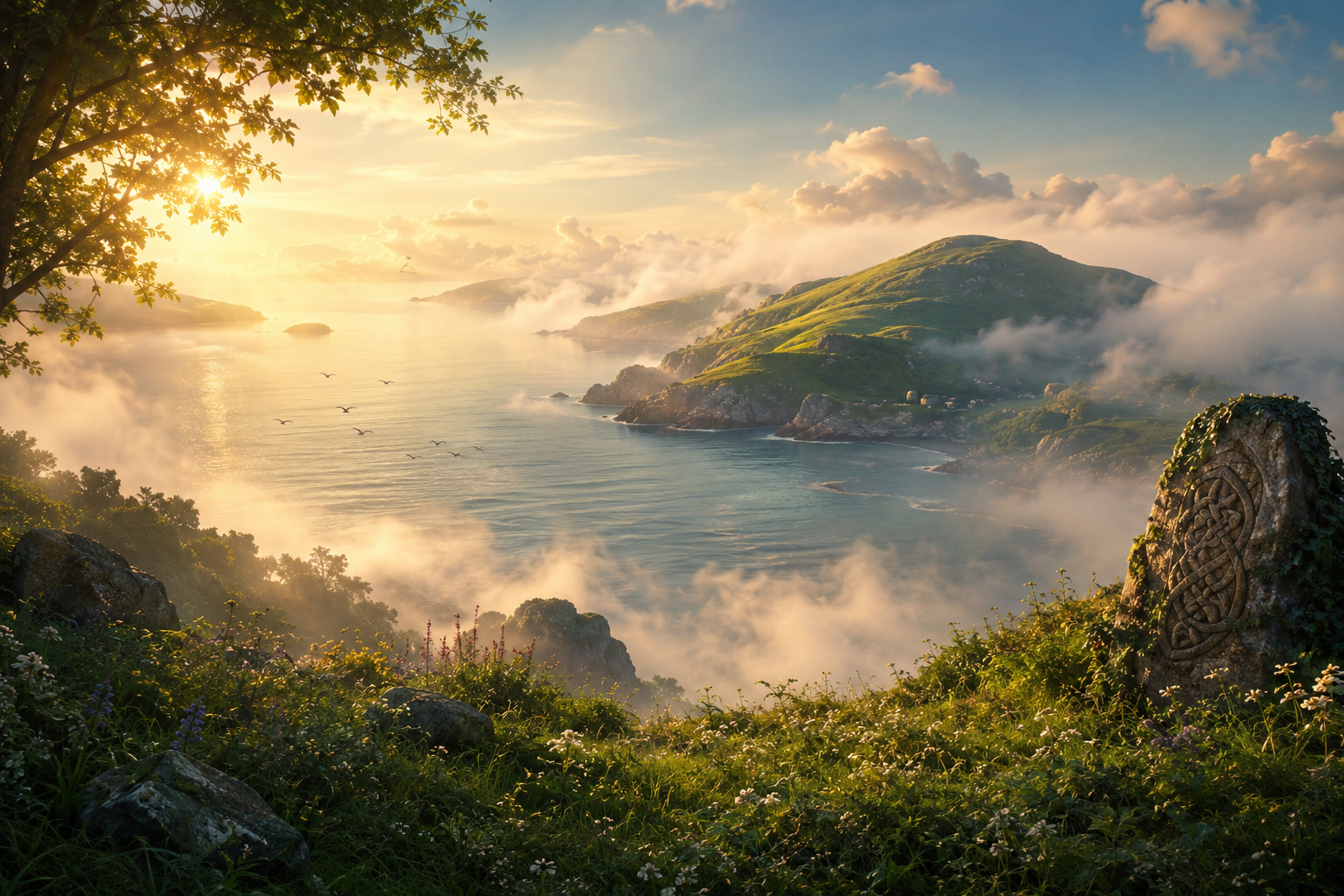
Within the complex supernatural geography of Irish tradition, many names are associated with the Otherworld.
Some describe islands hidden behind the mist. Others speak of realms of eternal youth. And some represent places where life exists in a more perfect form than in the human world.
Among them is Tír na mBeo, the so-called, Land of the Living, one of the most evocative names associated with the Celtic Otherworld.
A place where death holds no power and where existence continues beyond the limits known to mortals.
The Meaning of Tír na mBeo
The name comes from Old Irish:
- Tír = land or country
- na = of the
- Beo = living
Its usual translation is "The Land of the Living."
The name reflects one of the most characteristic ideas of the Irish Otherworld: the existence of a realm where life remains untouched and where human limitations no longer have power.
A Realm Beyond Death
Irish traditions present the Otherworld as a reality existing alongside the human world. It is not exactly a place for the dead in the sense found in many other mythologies.
Instead, it is a land where supernatural beings live, celebrate, love and exist beyond the ordinary passage of time.
Tír na mBeo represents precisely this dimension of eternal life. A place where existence continues without sickness, decay or suffering.
A World Without Aging
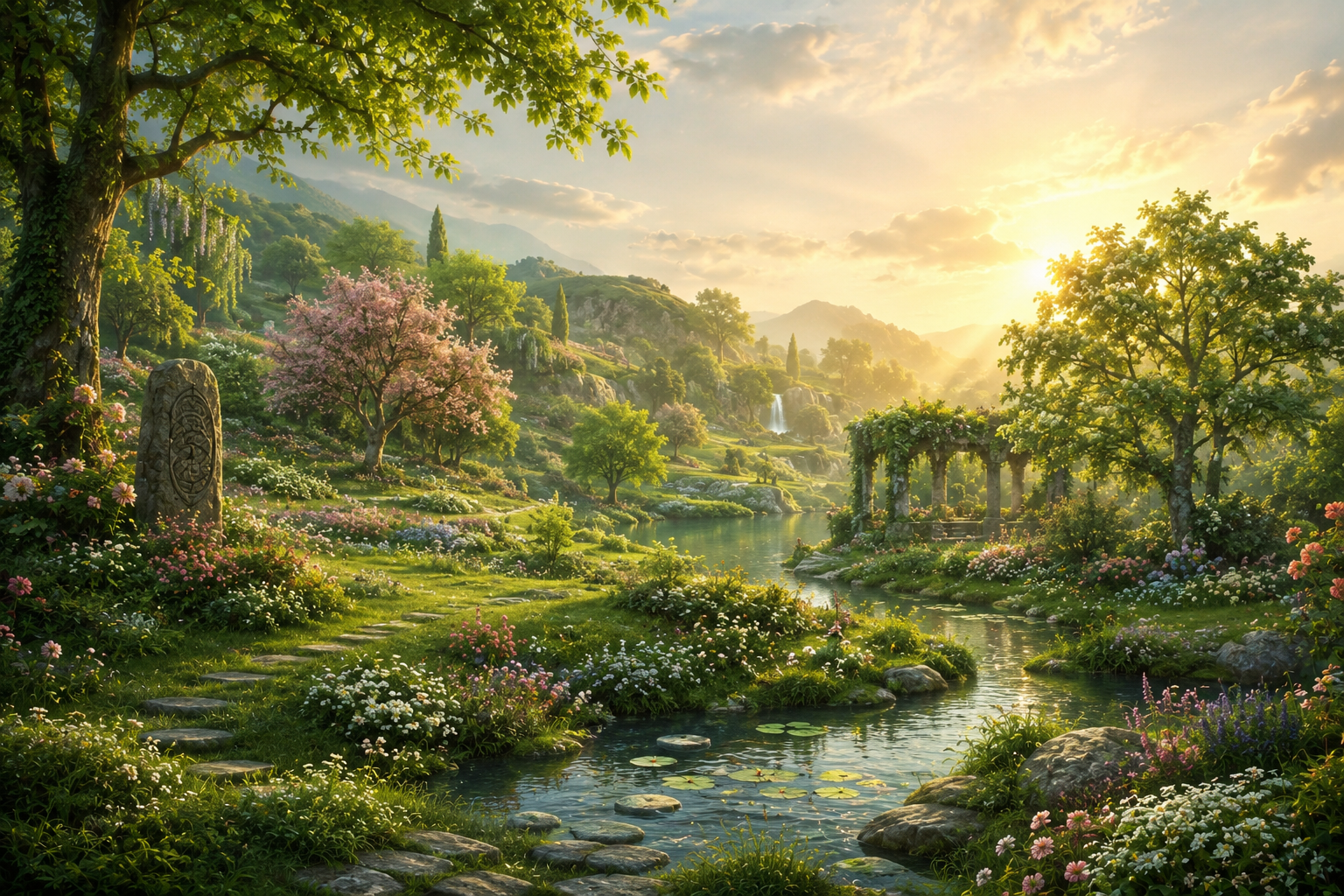
References associated with Tír na mBeo share many of the characteristics found in other realms of the Otherworld:
- youth lasts forever
- illness is absent
- beauty never fades
- abundance is everlasting
- time flows differently
Those who reach these lands discover a reality where years no longer have meaning.
Relationship with Other Otherworld Realms
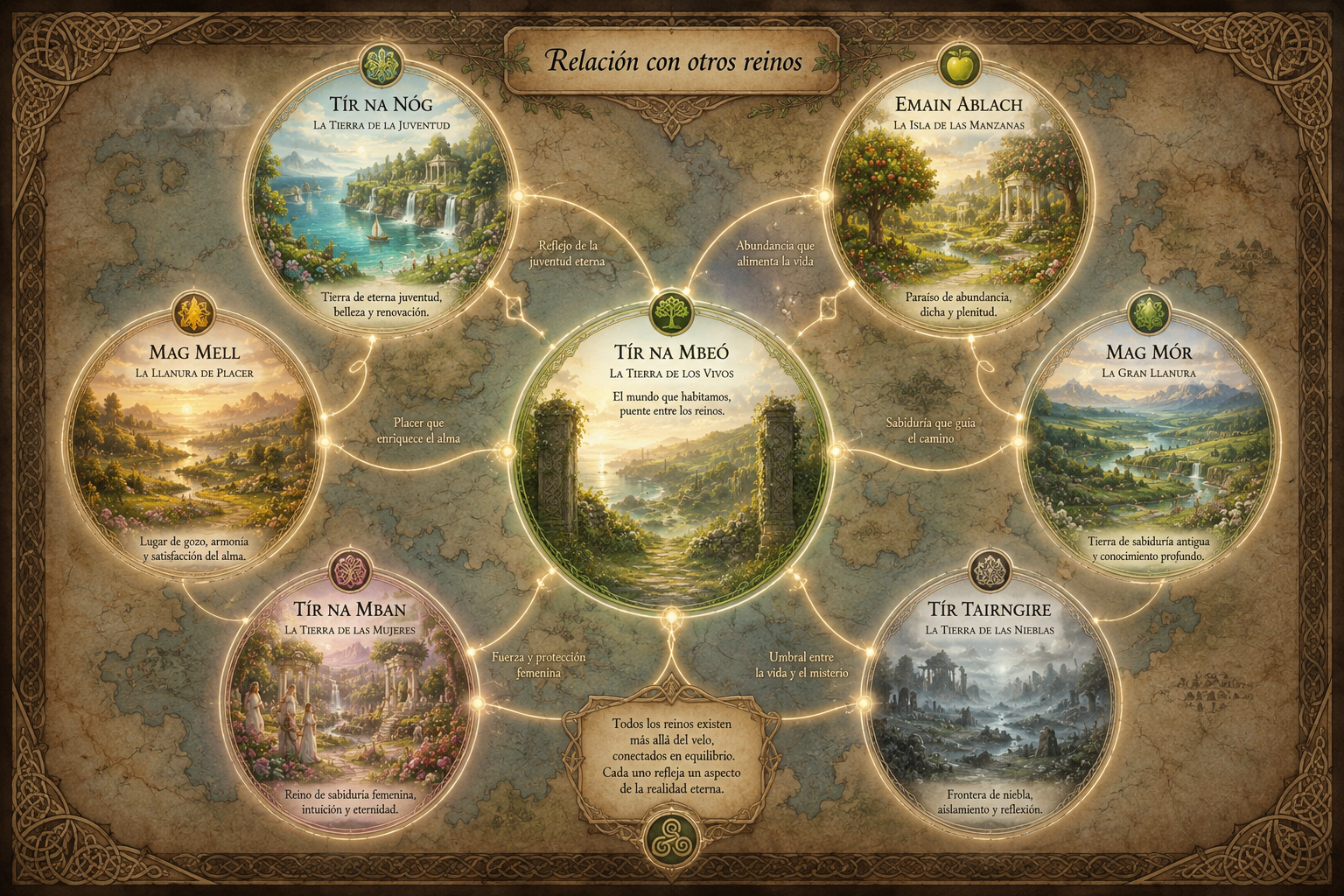
As with many names found in Irish tradition, it is not always easy to determine whether Tír na mBeo was considered an independent realm or simply another way of describing other supernatural territories.
Scholars often compare it with:
In many stories, these places share such similar characteristics that they appear to be different manifestations of the same supernatural reality.
Eternal Life as an Ideal
For the ancient Irish, the idea of a land where life continued without decline carried enormous symbolic power.
Tír na mBeo represents:
- the continuation of existence
- victory over death
- the fullness of life
- perfect harmony
More than a physical place, it symbolizes the human desire to overcome the limits imposed by time.
A Realm Inhabited by Supernatural Beings
Irish traditions associate the Otherworld with the Tuatha Dé Danann and many other supernatural figures.
After withdrawing from the visible world, these beings came to inhabit hidden regions beyond human perception.
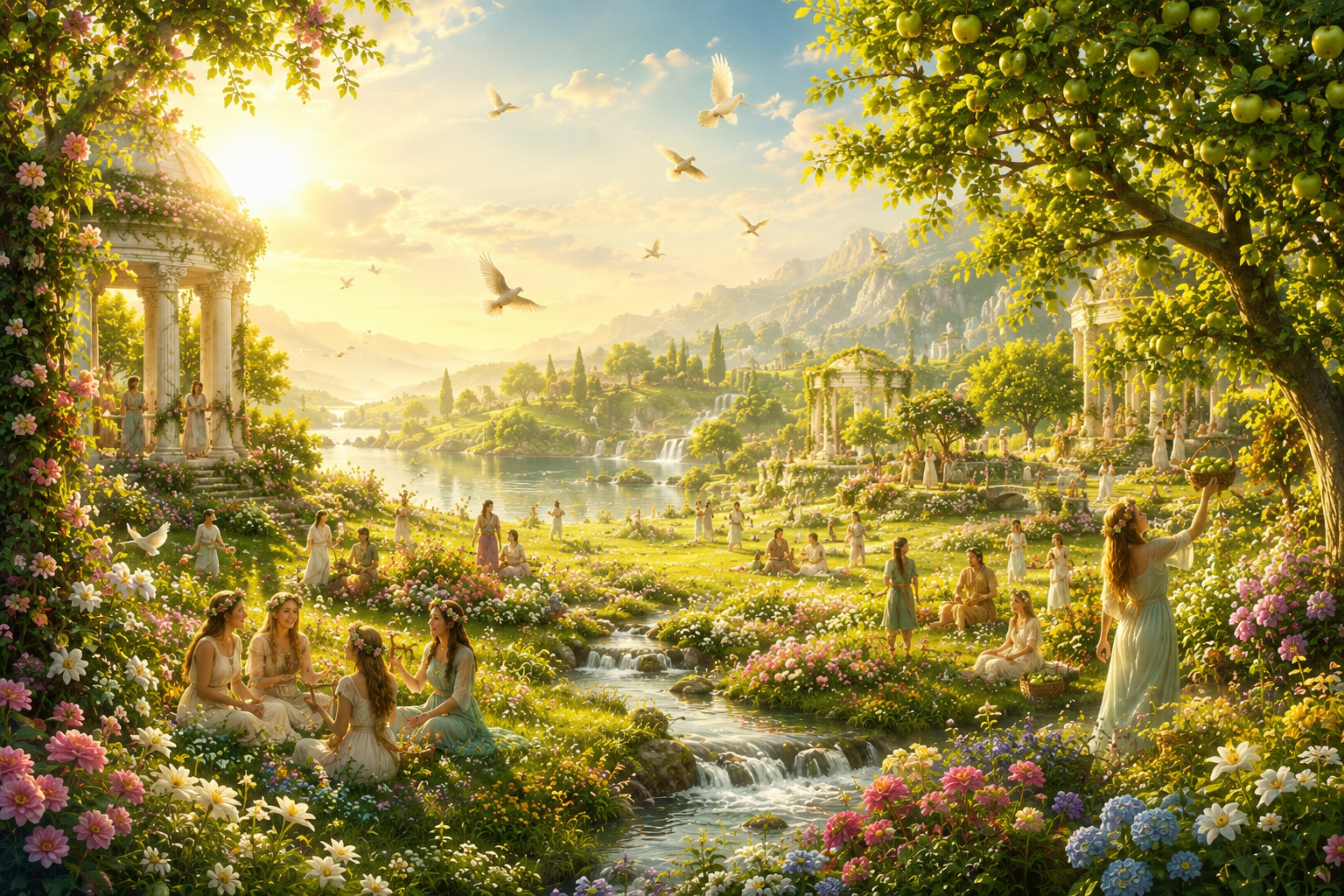
Tír na mBeo forms part of this supernatural landscape where Ireland's ancient divine inhabitants continue to exist beyond the sight of mortals.
A World Hidden Beyond the Limits of Reality
Like other realms of the Otherworld, Tír na mBeo has no fixed geographical location.
It may be found:
- beyond the ocean
- behind a supernatural mist
- on the far side of a sídhe
- by crossing an invisible boundary between worlds
What matters is not the place itself, but the passage from one reality into another.
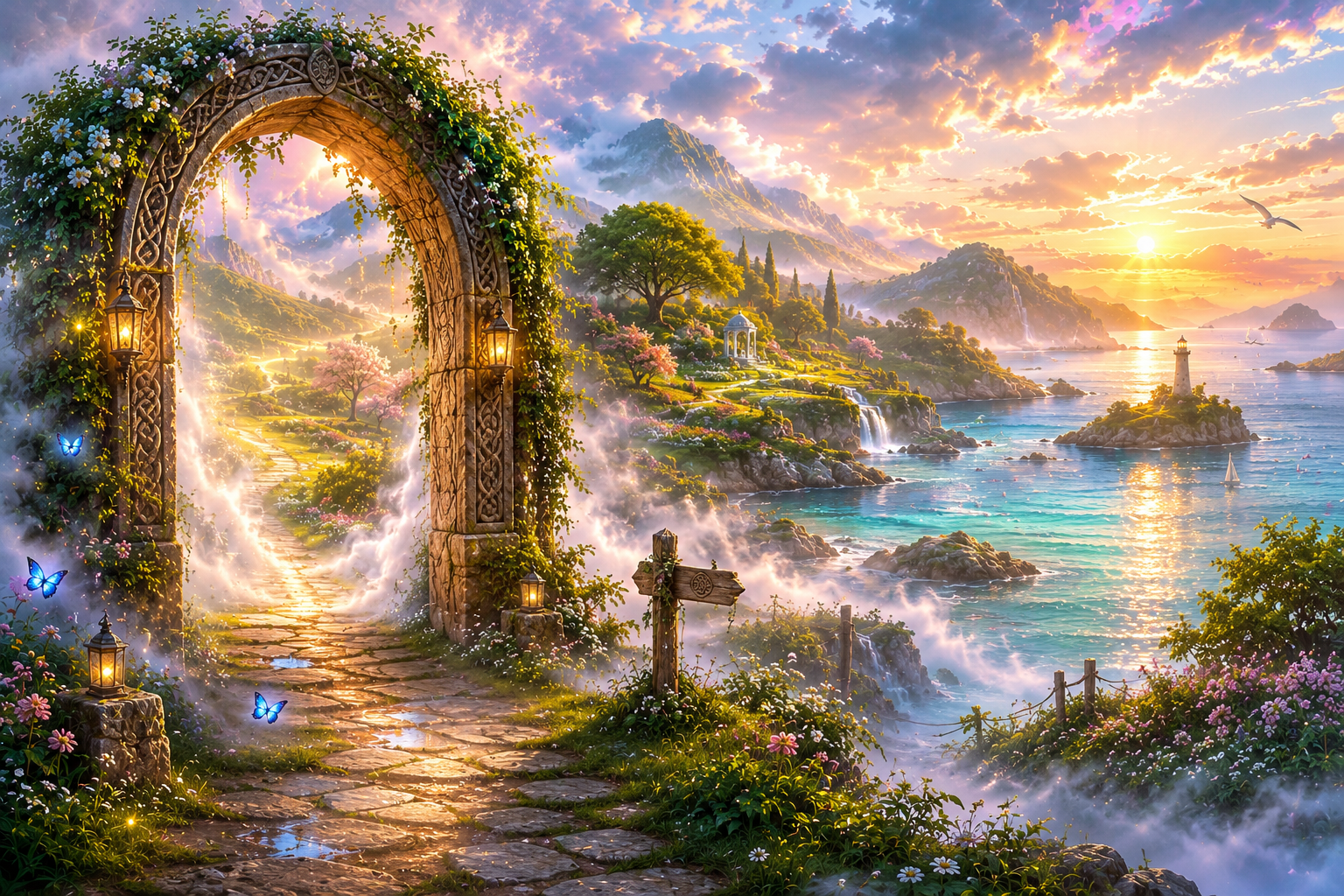
Tír na mBeo in Irish Tradition
Although it is not associated with a single famous legend in the way that Tír na nÓg is, its name forms part of the rich supernatural geography preserved in medieval Irish literature.
It represents one of the clearest expressions of the idea that the Otherworld was not a realm of death, but a realm of transformed life.
A place where existence continued in a more perfect form.
The Land Where Death Does Not Rule
Its very name makes life the central element of the realm, something unusual in many mythological traditions connected with the afterlife.
While many cultures imagined kingdoms of shadows or lands of the dead, Irish traditions frequently described places filled with beauty, music, abundance and eternal youth.
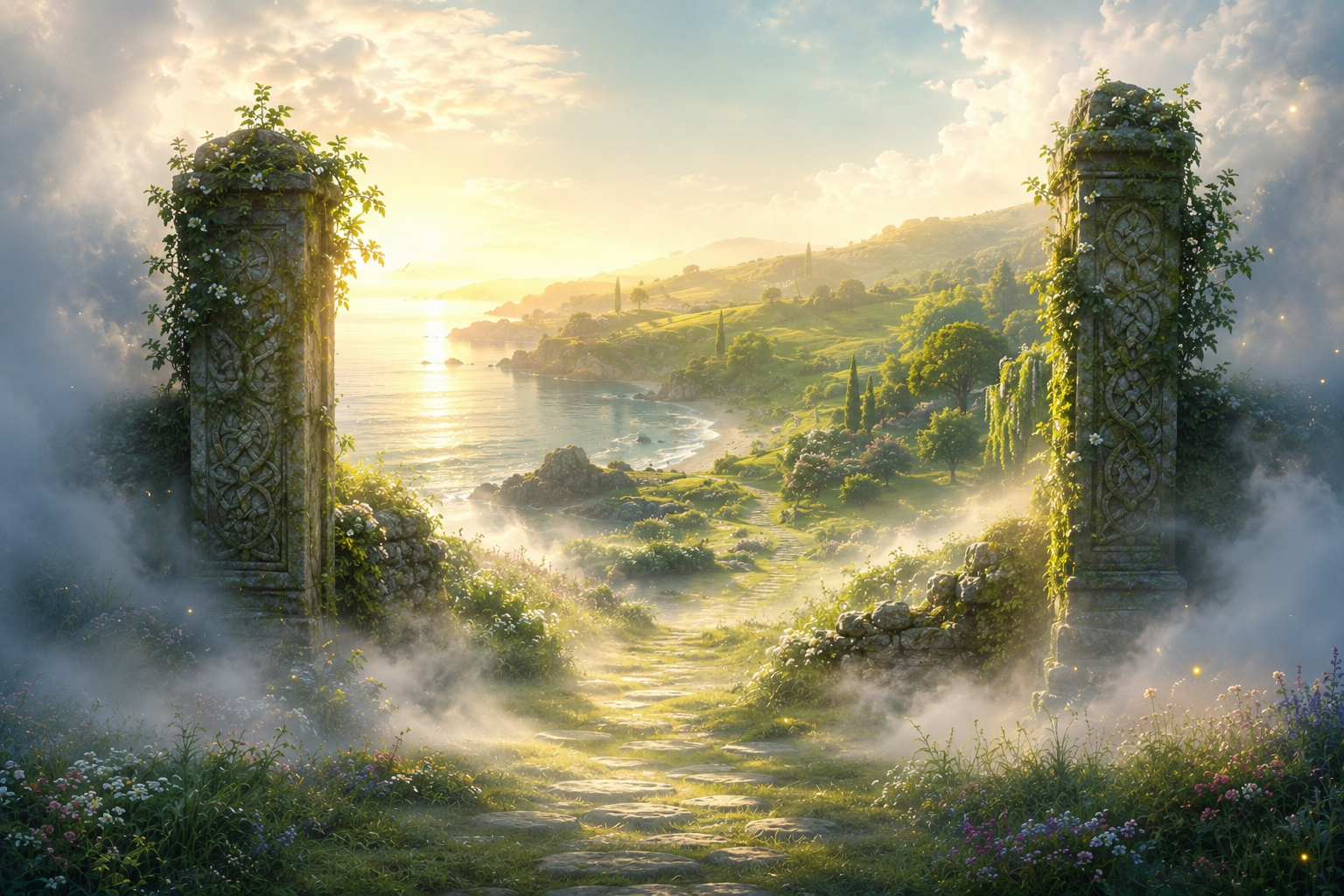
Beyond the Horizon
Tír na mBeo is one of the names that best reflects the Celtic vision of the Otherworld.
Not as an ending. Not as a realm of darkness.
But as a land where life continues beyond the visible limits of the human world.
A place hidden behind the mist, beyond the sea and beyond the reach of time.