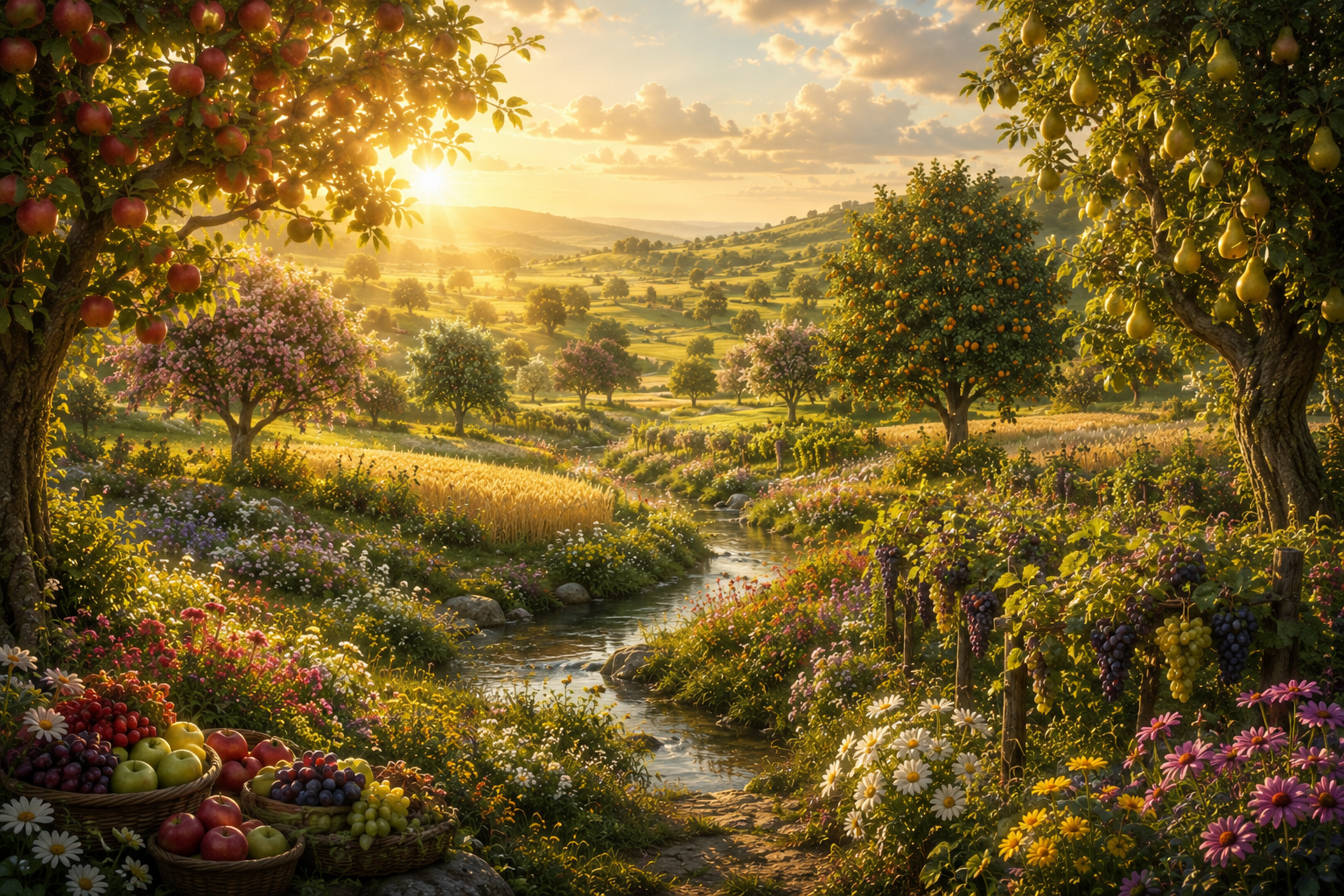
In Irish mythology, many different names are used to describe the realms of the Otherworld.
Some appear as islands lying beyond the ocean. Others are hidden lands concealed behind the mist. Still others are described as vast regions where the laws of the human world no longer apply.
Among them is Mag Mór, the so-called Great Plain, one of the oldest and most mysterious names associated with the Celtic Otherworld.
A place linked to abundance, beauty, and supernatural existence.
The Meaning of Mag Mór
The name comes from Old Irish:
- Mag = plain or field
- Mór = great
Its usual translation is "The Great Plain."
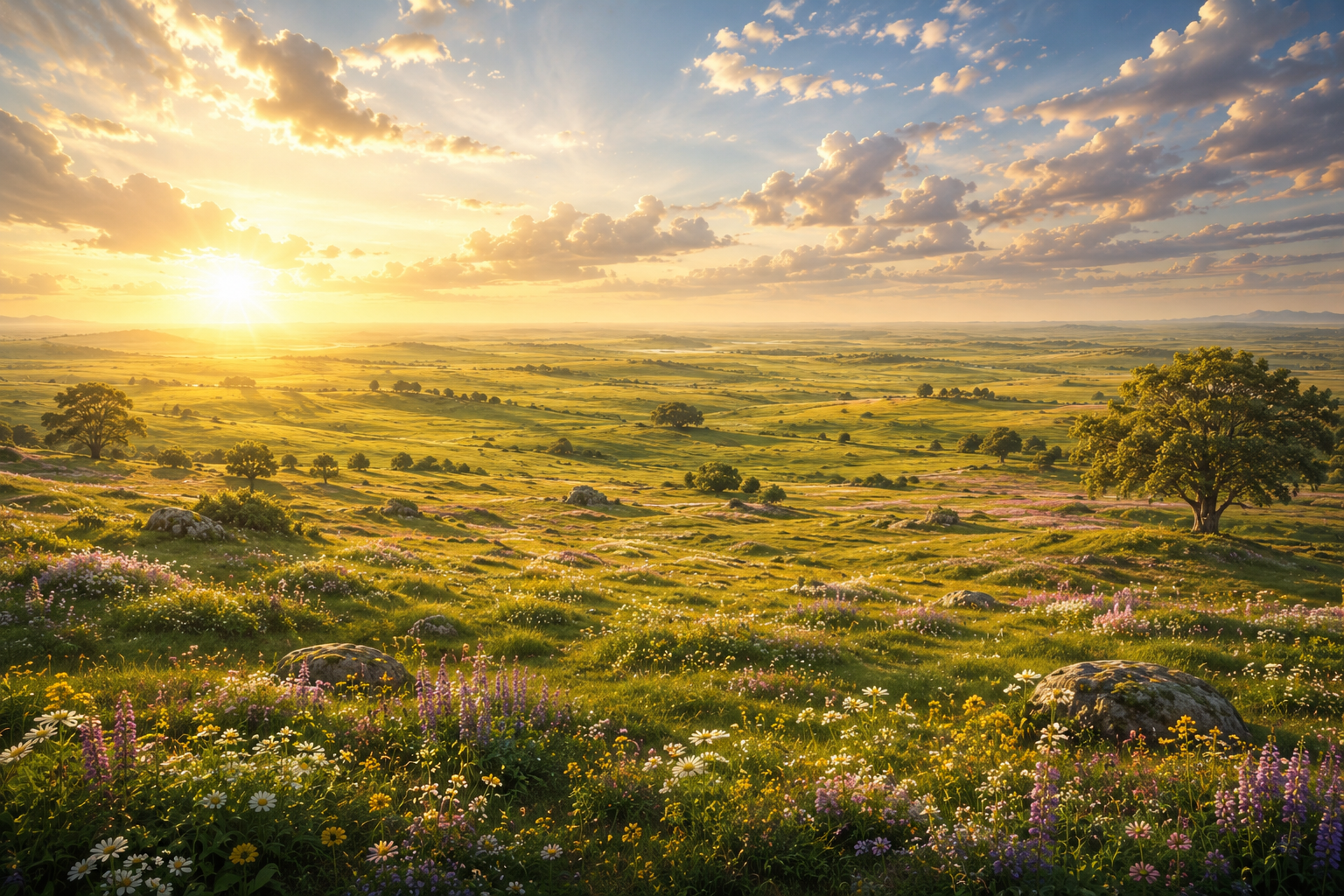
Unlike other realms of the Otherworld whose names evoke youth, women, or promises, Mag Mór stands out through a simple yet powerful image: an immense, fertile, and perfect landscape.
A Realm of the Otherworld
Medieval Irish sources do not always describe Mag Mór in detail.
Sometimes it appears as a supernatural kingdom. At other times, it is presented as a region within the wider geography of the Otherworld.
As with many places in Irish tradition, its location cannot be identified on any map. It lies beyond ordinary reality.
Only those who receive a supernatural invitation or cross certain hidden boundaries are able to reach it.
A Land of Abundance
Descriptions associated with Mag Mór share many characteristics with other realms of the Otherworld.
There:
- the land remains forever fertile
- abundance never fades
- illness is absent
- old age loses its power
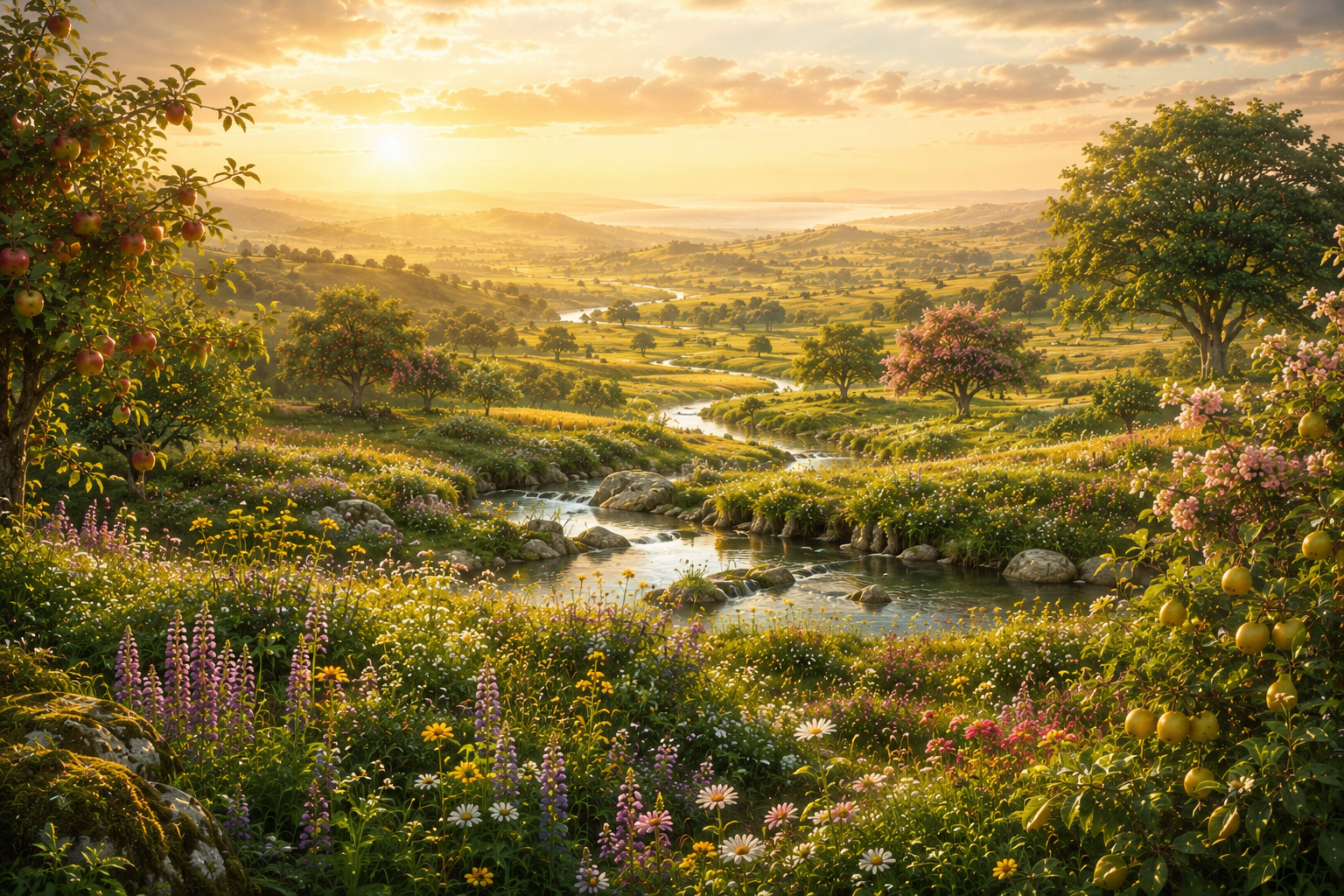
Nature exists in a state of perpetual perfection. The fields never become exhausted. The fruits never fail.
And harmony itself becomes part of the landscape.
Mag Mór and the Tuatha Dé Danann
Some traditions link this realm to the supernatural domains associated with the Tuatha Dé Danann.
After withdrawing from the visible world, the ancient gods of Ireland came to inhabit hidden regions linked to the sídhe and the Otherworld.
Mag Mór forms part of this network of mysterious lands where supernatural beings continue to exist beyond human sight.
A Geography Difficult to Separate
One of the defining characteristics of the Irish Otherworld is that its boundaries are rarely clearly defined.
For this reason, scholars often suggest that names such as:
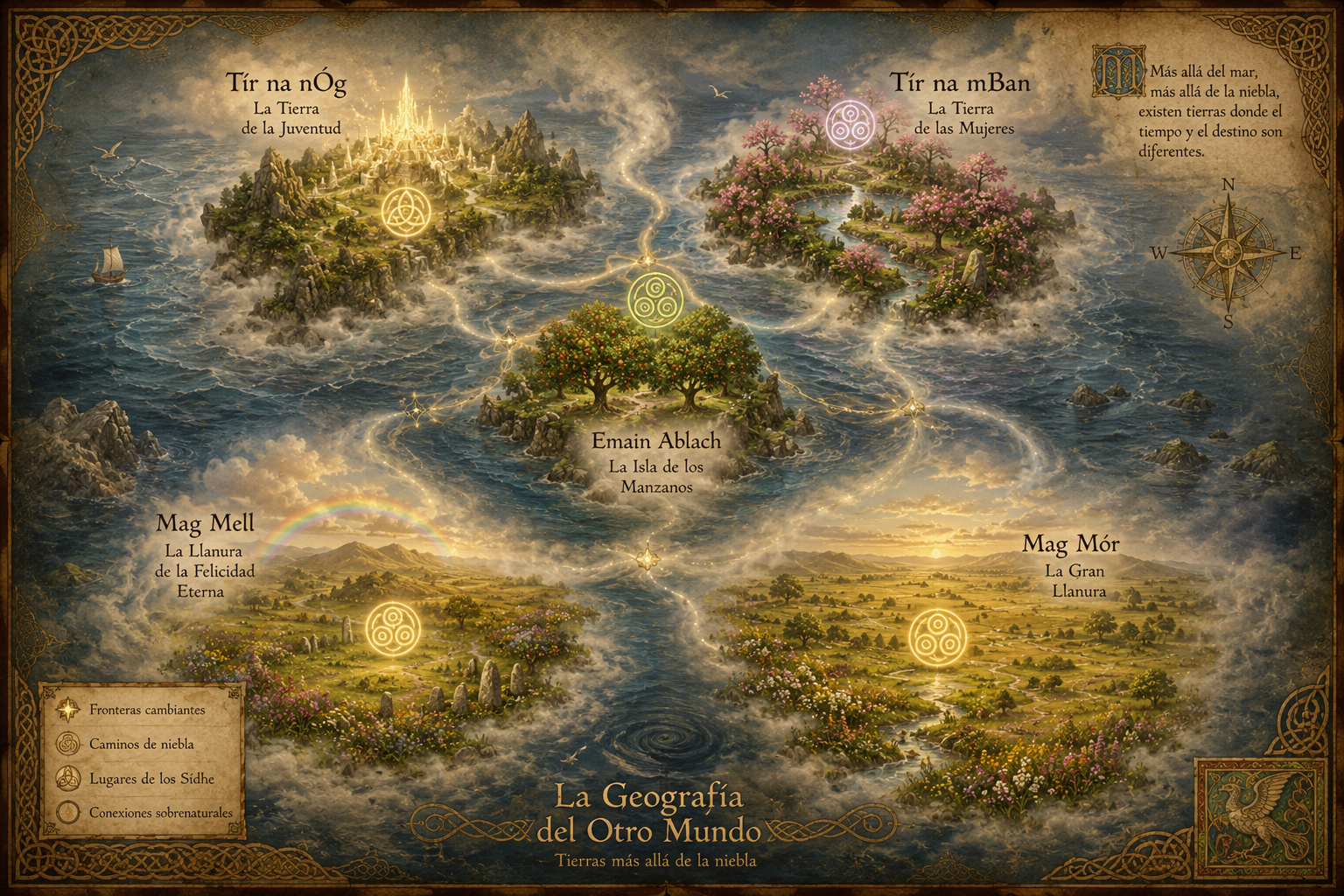
do not always refer to completely separate places.
In many cases, they appear to represent different regions, aspects, or manifestations of the same supernatural reality.
A Symbolic Landscape
The image of a vast and fertile plain carries deep meaning within ancient agricultural societies.
It represents:
- prosperity
- abundance
- stability
- the continuity of life
For this reason, Mag Mór can be understood as an idealized vision of a world where nature reaches its perfect state.
A place where nothing is lacking and harmony remains untouched.
Mag Mór in Irish Tradition
Unlike Tír na nÓg or The Voyage of Bran, Mag Mór is not associated with one widely known legendary tale. Its significance comes primarily from scattered references preserved in medieval Irish literature.
For that very reason, it offers one of the most fascinating examples of how the ancient Irish imagined the Otherworld.
Not always as a distant island. Not always as a kingdom ruled by a supernatural queen.
But also as a perfect landscape existing beyond human reality itself.
Curiosities
A Lesser-Known Name
Although Mag Mór appears less frequently than other realms of the Otherworld, it forms part of the rich supernatural geography preserved in medieval Irish sources.
Its relative obscurity today contrasts with its symbolic importance within Celtic tradition.
The Landscape as the Protagonist
While other realms are remembered for their inhabitants, rulers, or stories, Mag Mór places the emphasis on the landscape itself.
The perfection of the land becomes the true protagonist.
A Vision of Eternal Abundance
The idea of an inexhaustibly fertile plain appears in many ancient cultures.
Within Irish tradition, Mag Mór represents one of the clearest expressions of that ideal of everlasting abundance associated with the Otherworld.
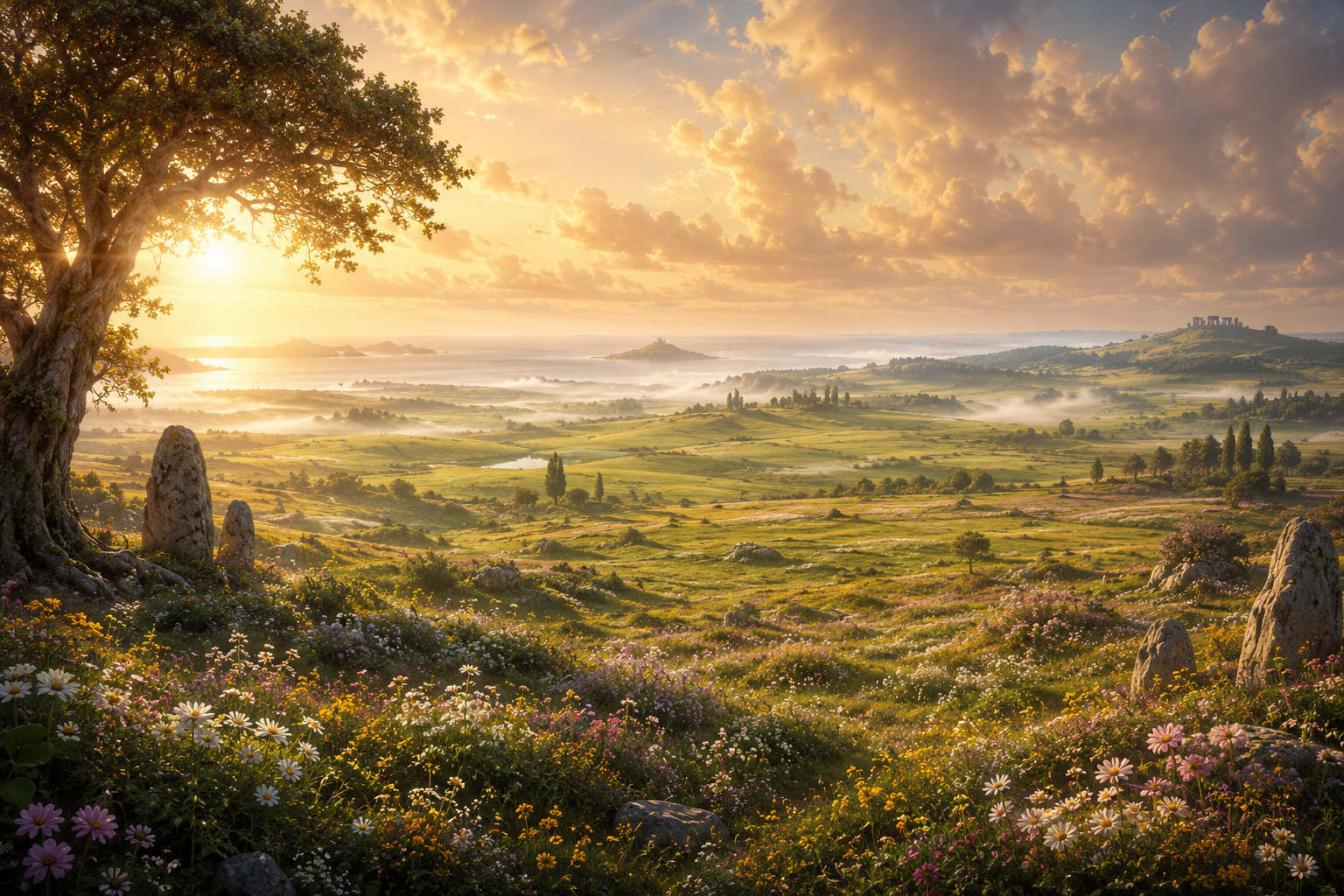
The Great Plain Beyond the Horizon
Mag Mór is one of the lesser-known names of the Celtic Otherworld. Yet it preserves one of its oldest and most universal images.
That of a perfect land. A plain where abundance never ends. A landscape beyond the sea, beyond the mist, and beyond the visible boundaries of the human world.
A place that reminds us that, for the ancient Irish, there was always something waiting beyond the horizon.
Historical Note
Some medieval Irish traditions, particularly those preserved in the Lebor Gabála Érenn (The Book of the Taking of Ireland), mention a figure named Mag Mórassociated in certain accounts with Hispania.
These same traditions connect Mag Mór with Tailtiu, an important figure in Irish mythology who later became associated with the Tuatha Dé Danann and whose name gave rise to the festival of Lughnasadh.
However, the sources are not entirely clear. Scholars continue to debate whether Mag Mór should be understood as a person, a territory, or a legendary kingdom within Irish tradition. For that reason, its precise nature remains open to interpretation.