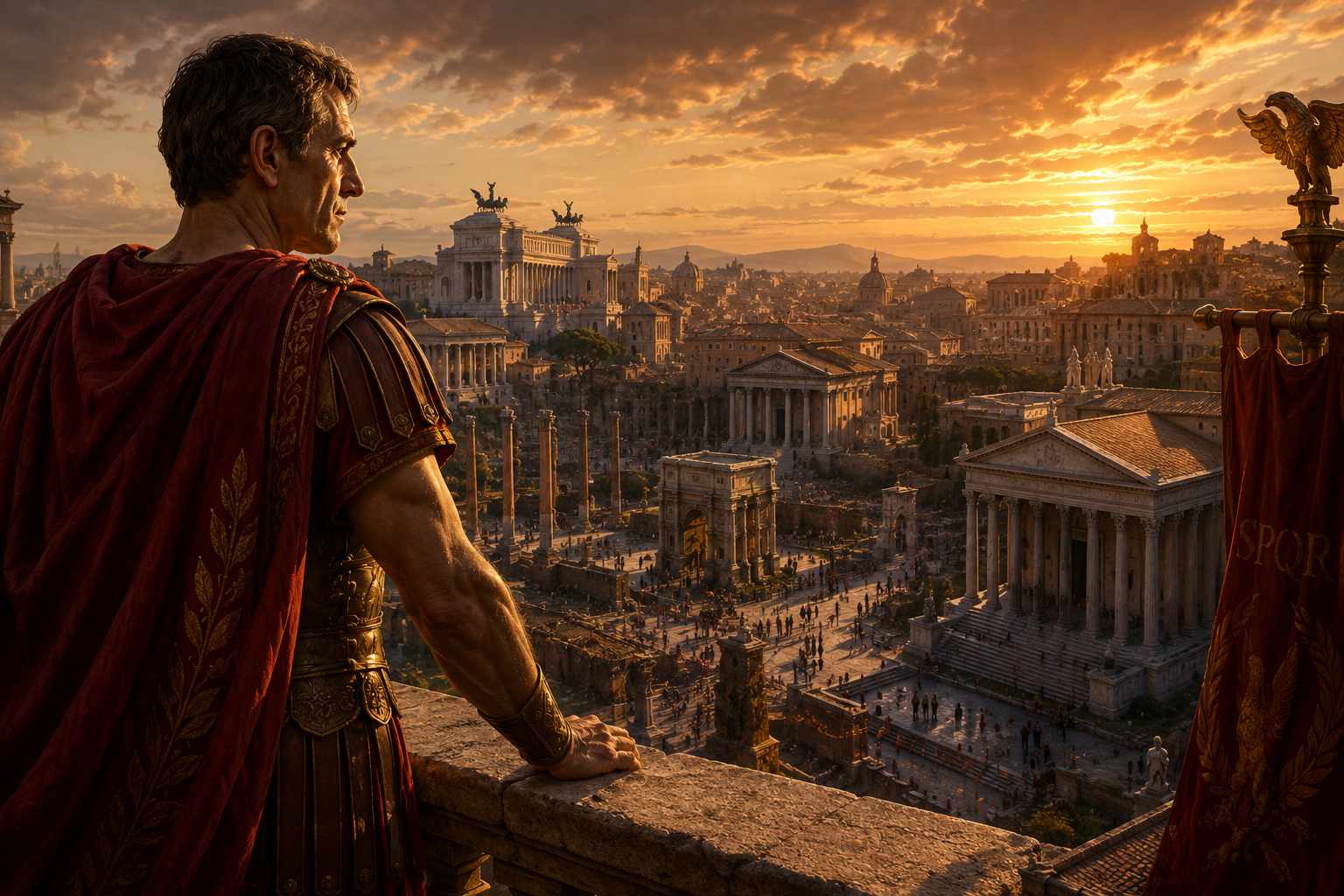
Rome did not fall in a single day, nor did it suddenly cease to be a Republic.
But there was a moment... one man... who made it impossible to turn back.
That man was Julius Caesar.
“Fere libenter homines id quod volunt credunt”
"Almost all men gladly believe what they wish to believe."
Extracted from his work De bello Gallico
Origins and Ambition
Gaius Julius Caesar was born in 100 BC into one of Rome's ancient patrician families: the gens Julia.
His family was not poor, but neither did it belong to the small circle that dominated the political power of the Republic at the time.
The Julii claimed descent from Venus through Aeneas, the legendary hero of the Trojan tradition.
In Rome, family prestige mattered, and Caesar knew how to use that ancestry as part of the image he would carefully cultivate throughout his life.
Rome Before Caesar: A System Beginning to Fracture
Before Caesar, Rome was a Republic. There were no emperors.
Power was shared among:
- the Senate
- magistrates
- military generals
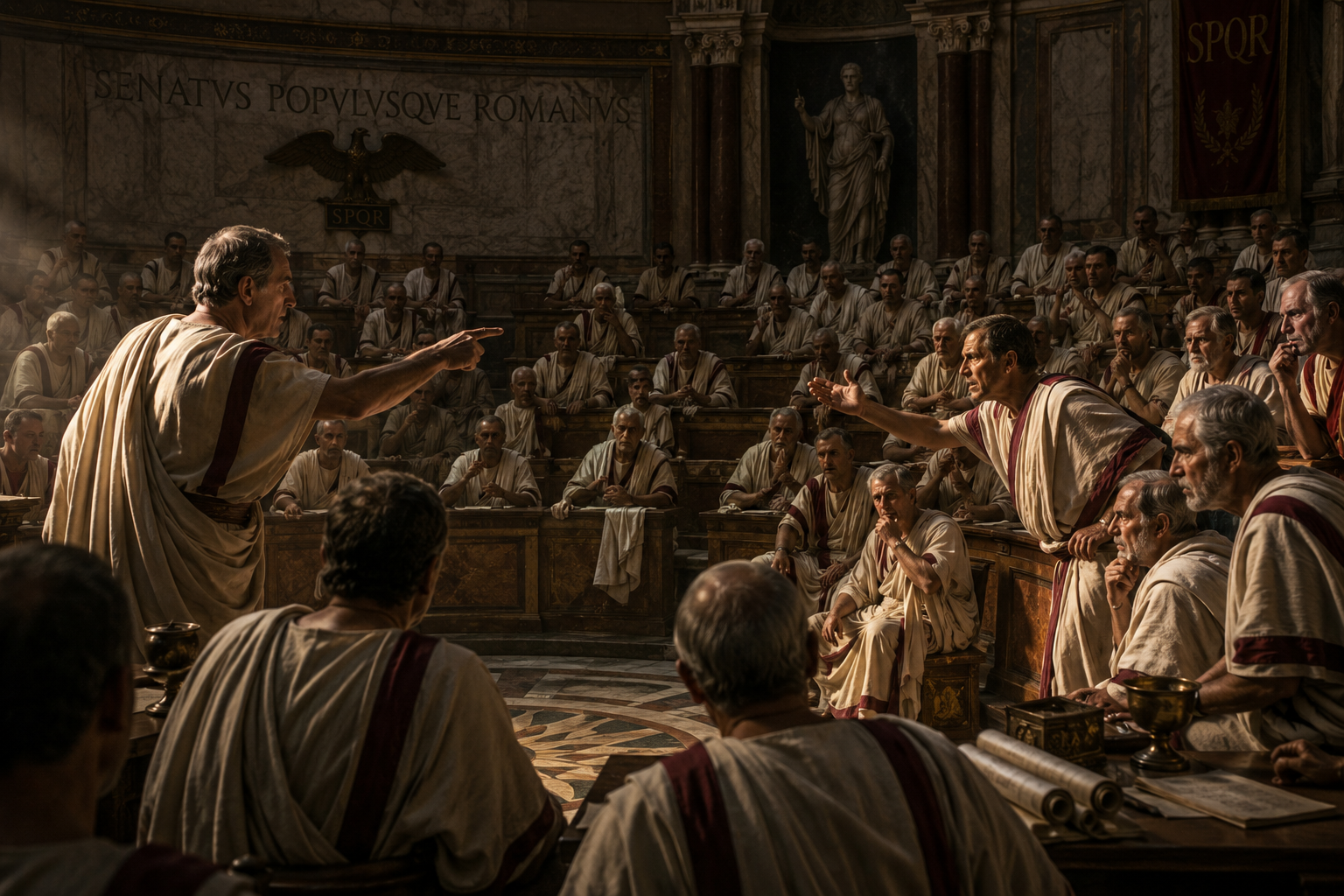
In theory, the system was designed to prevent any single individual from accumulating too much power. In practice, however, reality was quite different.
The aristocratic families competed constantly with one another. Alliances shifted and changed. Military commanders amassed prestige and influence through their victories.
Little by little, Rome's political balance began to depend less on its institutions and more on powerful individuals. The Republic still existed... but its foundations were already beginning to crack.
The Ascent
Rome was a Republic. But it was also a game of power.
Caesar understood its rules, and he learned something even more important: how to move within them... and when to push them to their limits. His political career advanced through public office, strategic alliances, and an extraordinary ability to win support.
Yet his greatest leap was still to come.
The First Triumvirate: The Alliance That Changed Everything
In 60 BC, Caesar formed an informal alliance with two of the most powerful men in Rome:
- Pompey → one of the Republic's most celebrated generals
- Crassus → widely regarded as the wealthiest man in Rome
This agreement was not an official institution but a private pact designed to support one another against the Senate.
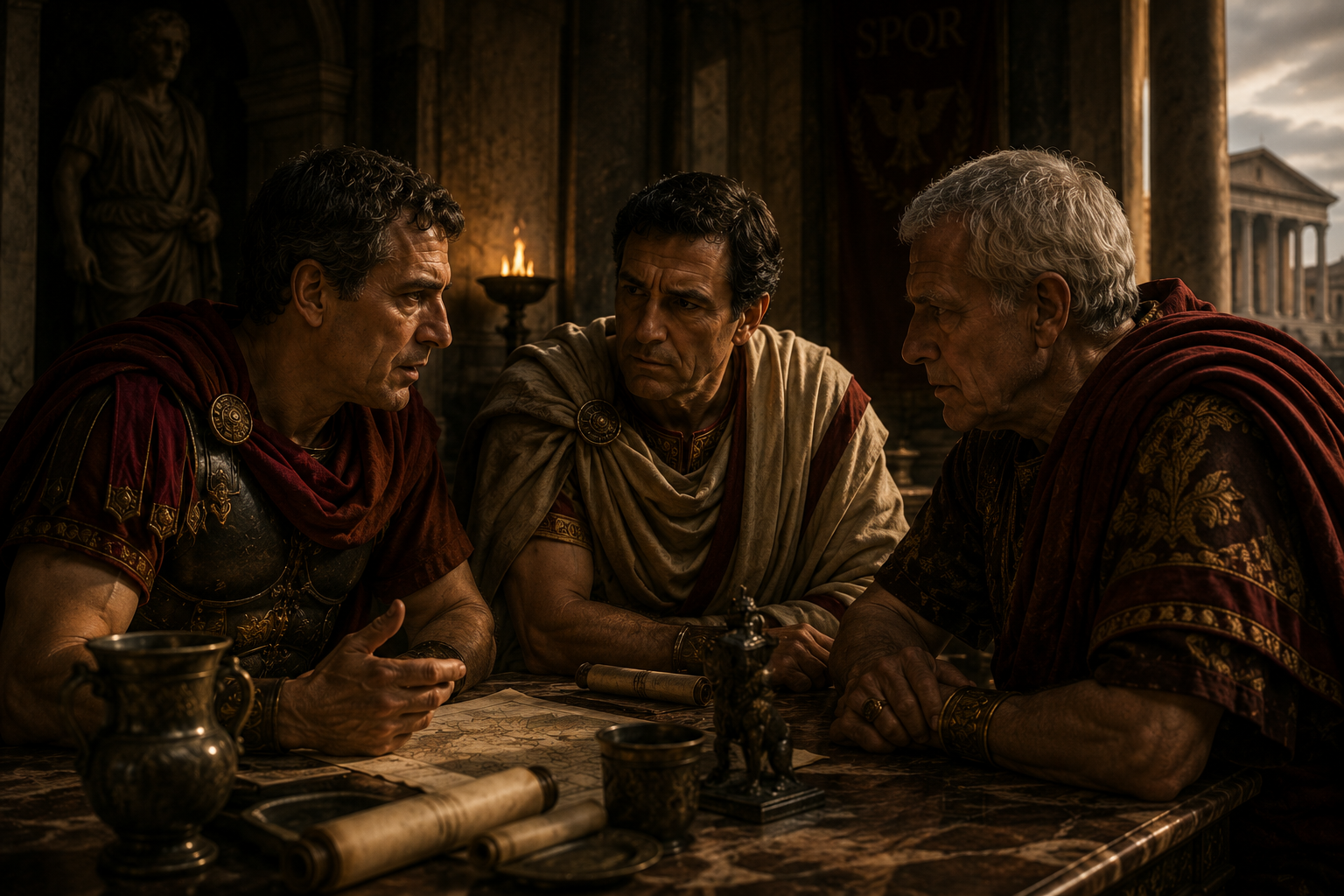
Each gained something from the arrangement:
- Pompey → political backing
- Crassus → greater influence
- Caesar → access to power and a remarkable military opportunity
Thanks to this alliance, Caesar obtained the position of proconsul and the governorship of Gaul.
And with it... the perfect stage on which to build his legend.
Gaul: Where the Legend Was Born
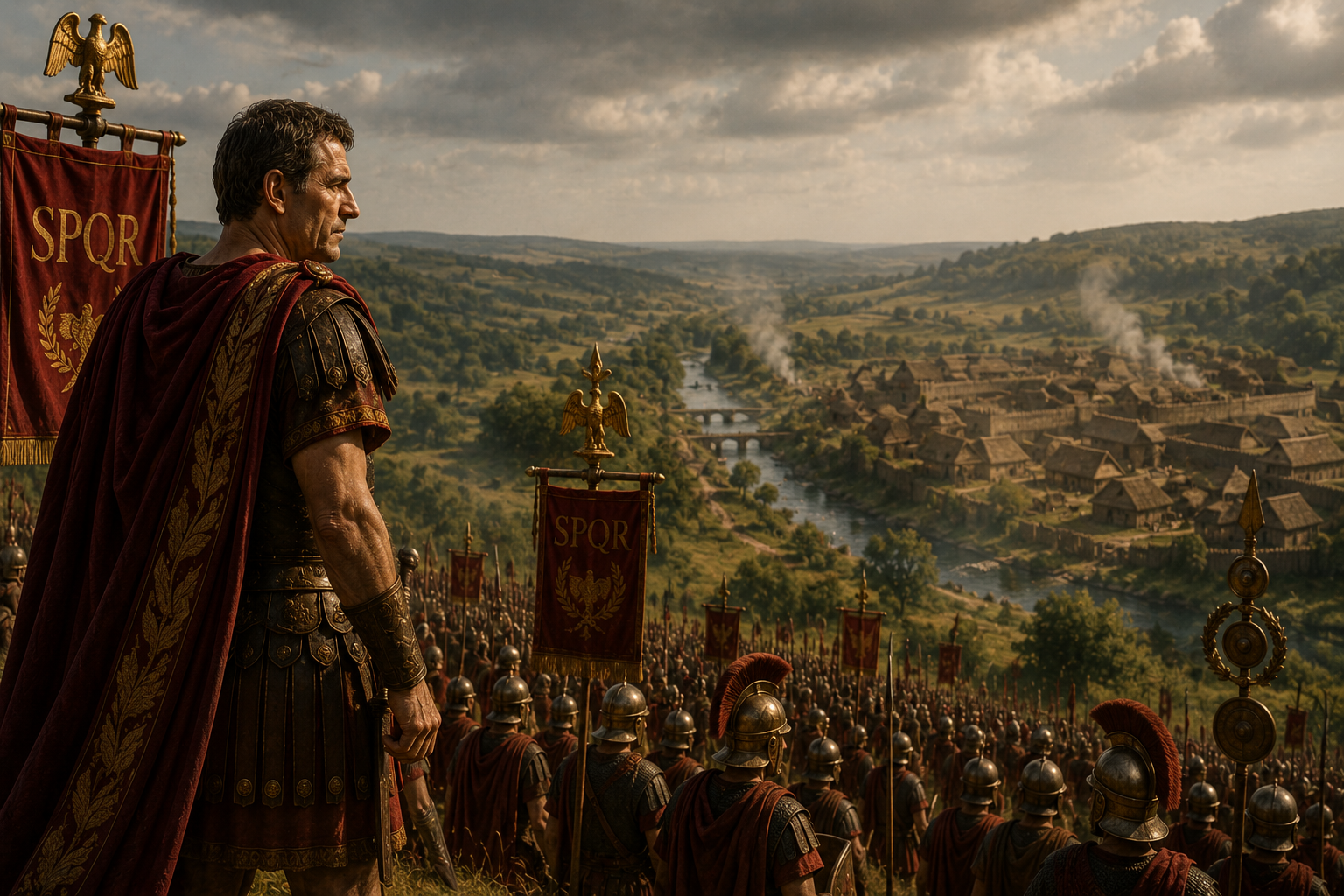
Between 58 and 50 BC, Caesar led a series of military campaigns that brought much of Gaul under Roman control.
But those campaigns did far more than expand Rome's borders. They built an image.
Caesar increasingly came to be seen as:
- an apparently invincible general
- a leader close to his soldiers
- a brilliant strategist
- an ever more popular figure in Rome
He also did something exceptional: he wrote about his own campaigns. His military commentaries did not merely recount victories—they also shaped his reputation.
“Gallia est omnis divisa in partes tres”
"All Gaul is divided into three parts."
Opening line of De Bello Gallico
Alesia: The Impossible Battle
52 BC.
For the first time, different Gallic tribes stopped fighting separately. One leader achieved what had seemed impossible.
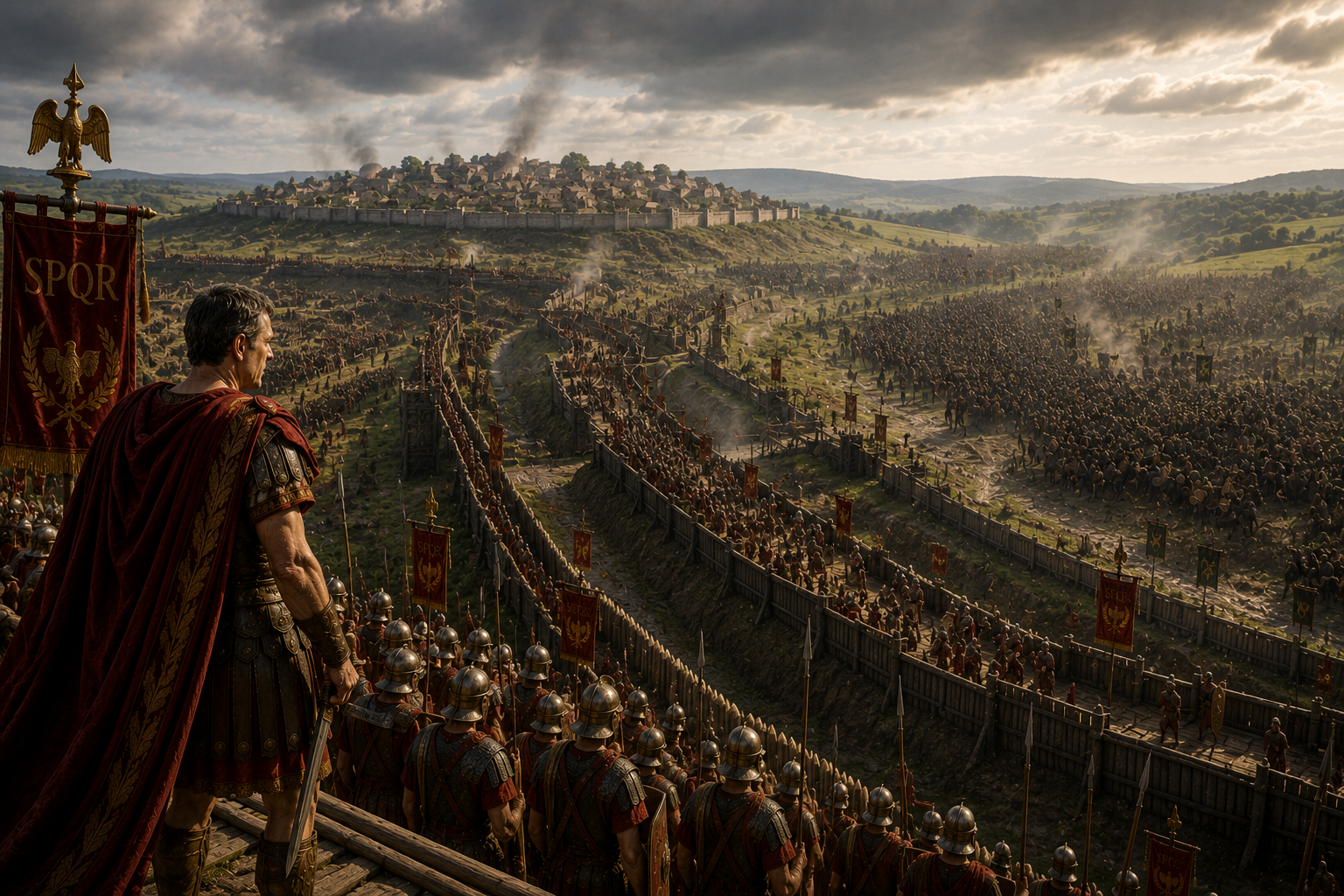
His name was Vercingetorix. His strategy was straightforward: avoid direct confrontation, destroy supplies, burn the land, and weaken the Roman advance.
Eventually, he withdrew to the fortified stronghold of Alesia. His objective was to hold out until reinforcements arrived.
Caesar's response was unexpected. Rather than retreat or launch a frontal assault, he decided to trap his enemy. He ordered the construction of an enormous line of fortifications completely surrounding the city.
But then something else happened.
Gallic reinforcements arrived. Caesar made an extraordinary decision: he ordered the construction of a second defensive line.
One facing inward. The other facing outward.
Rome found itself trapped between two armies.
For days, the Romans endured:
- food shortages
- attacks from outside
- relentless pressure
In the end, Roman discipline and their defensive system held firm. At the decisive moment, Caesar successfully repelled the external assault.
Vercingetorix was left isolated, without supplies and without hope of relief. He eventually surrendered.
According to the Roman sources, he rode out on horseback, laid down his weapons, and presented himself before Caesar.
At Alesia, Caesar did not triumph because everything went according to plan. He triumphed because he knew how to endure when the situation seemed impossible to sustain.
“Veni, vidi, vici”
"I came, I saw, I conquered."
Message sent to the Senate after the Battle of Zela (47 BC)
Gaul: Power, Wealth... and Fear
After the conquest of Gaul, Caesar gained something far more dangerous than territory. He acquired:
- wealth
- military prestige
- an army deeply loyal to him
- enormous popularity among the Roman people
Each campaign increased his fame. Each victory strengthened his image.
Something new began to happen. Caesar no longer seemed to depend on Rome.
Fear grew within the Senate. For Caesar was no longer merely a politician. He had become:
- a general with his own army
- a popular leader
- a figure increasingly independent of the republican system
Fearing his growing power, the Senate ordered him to dismiss his army and return to Rome as a private citizen.
For many, it was simply a political decision. For Caesar, it meant the end of everything he had built.
The Rubicon: The Point of No Return
Año 49 BC.
Caesar arrived at the River Rubicon. Crossing it with his troops meant one very specific thing: illegally entering Italy with an army. It was an act of rebellion.
Caesar had two choices:
- obey and lose his political influence
- advance... and challenge the system
He chose to advance.
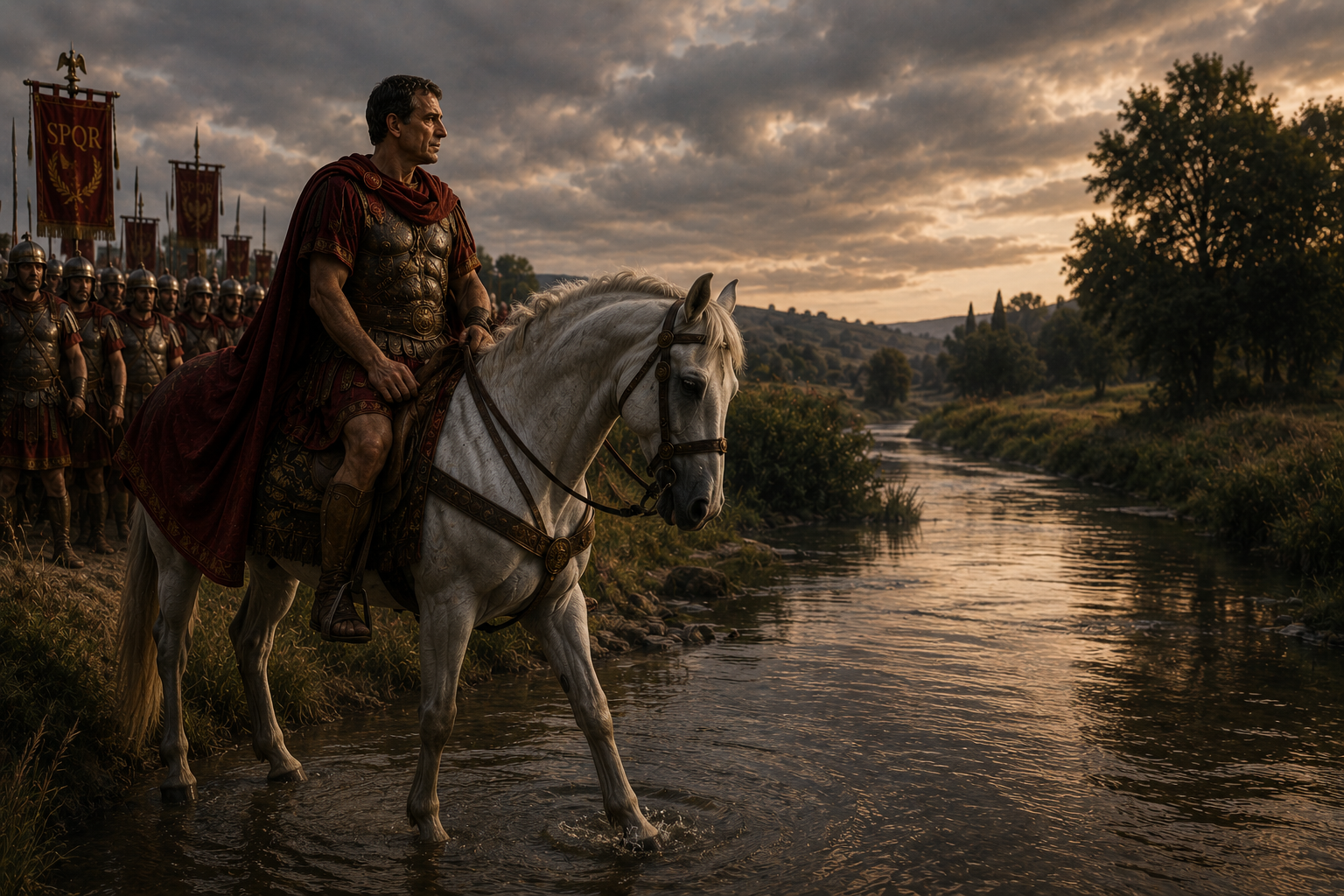
According to tradition, he declared:
“Alea iacta est”
"The die is cast."
(probably the Latin adaptation of an earlier Greek expression)
At that moment, Rome ceased to confront external enemies. It began to confront itself.
The Civil War: Caesar Against Pompey
As tensions between Caesar and Pompey continued to rise, one key figure disappeared from the balance of power.
Crassus, the third member of the Triumvirate, died in 53 BCduring the Battle of Carrhae against the Parthian Empire. Ancient sources recount—probably as a legend—that molten gold was poured over his body as a symbolic punishment for his greed.
With Crassus gone, only two men remained: Pompey. And Caesar.
In 48 BC, they met at the Battle of Pharsalusin Greece.
Against all expectations, Caesar defeated Pompey's forces.
Pompey fled to Egypt, and Caesar followed. But when he arrived, Pompey had already been assassinated on the orders of advisers to the young Pharaoh Ptolemy XIII, who hoped to gain the favour of the victor.
According to the ancient sources, Caesar was deeply shocked and displeased by the murder of the man who had once been both his ally and his rival.
“Quae tanta insolentia in victoria gloriari”
Such insolence in boasting of their victory.
Extracted from his work De Bello Gallico
Egypt and Cleopatra
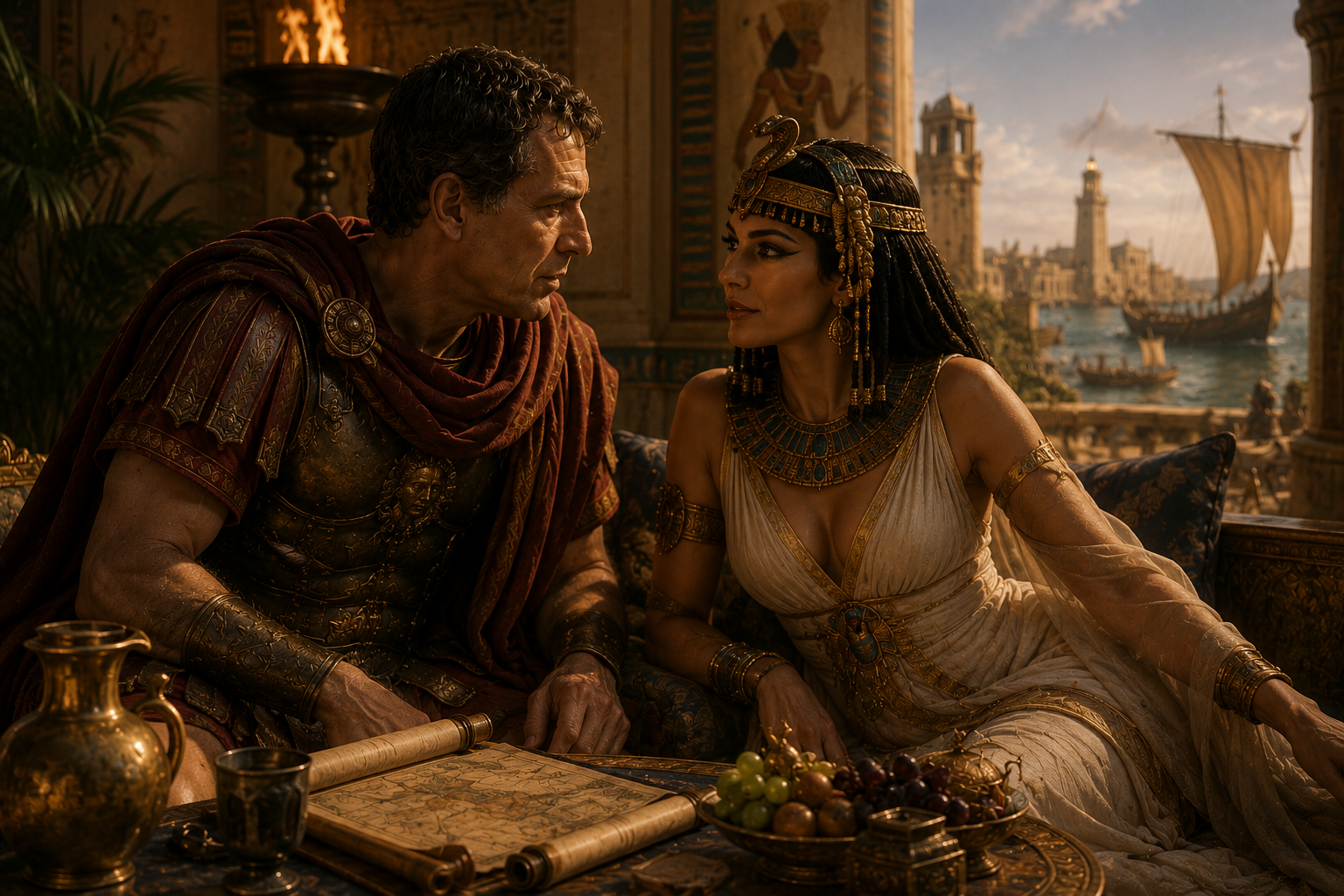
During his stay in Egypt, Caesar became involved in the dynastic conflict between Cleopatra VII and her brother and husband, Ptolemy XIII.
He ultimately chose to support Cleopatra.
A political and personal relationship developed between them, and later Ptolemy XV, known as Caesarion—was born.
Although Cleopatra presented him as Caesar's son, there was never any official political recognition in Rome comparable to that later granted to Octavian.
Dictator of Rome
After returning victorious from the civil war, Caesar gradually concentrated power in his own hands.
He was appointed dictator on several occasions before eventually receiving the title of Dictator Perpetuo —Dictator for Life.
He introduced numerous reforms:
- administrative reorganisation
- expansion of the Senate
- colonisation and land redistribution
- promotion of public works
- integration of newly conquered territories
He also implemented one of his most enduring reforms. In 46 BCE , he introduced the Julian calendar..
It would influence the Western world for more than 1,500 years.
Caesar also promoted the construction of the Forum of Caesar (Forum Iulium).
Rome still called itself a Republic. But it was beginning to function in a very different way.
The End
15 March, 44 BC.
. The Ides of March.
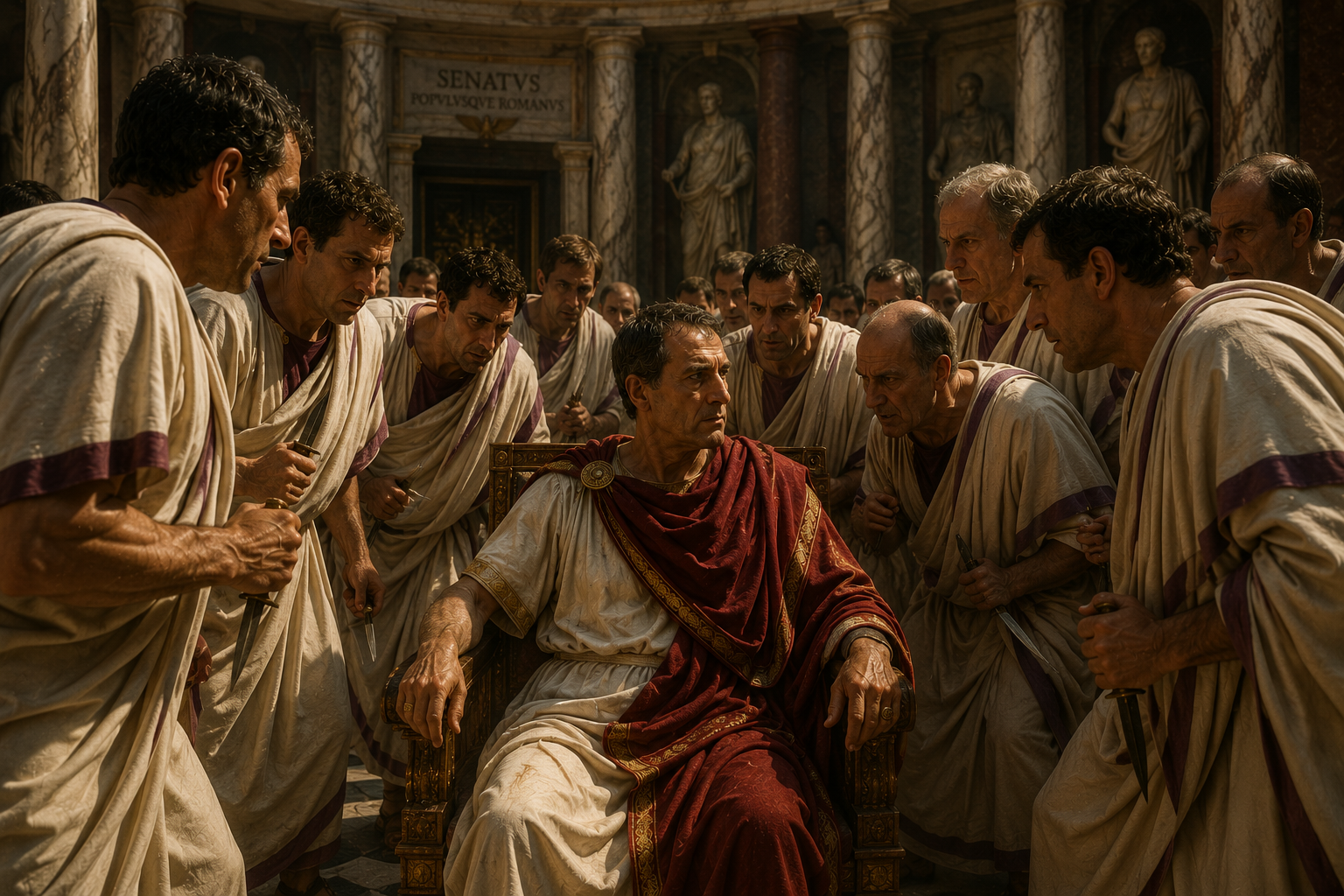
A group of senators conspired against Caesar, fearing that he would eventually make himself king. Among them was Marcus Junius Brutus.
When Caesar entered the Curia, he was surrounded and stabbed multiple times. The ancient sources do not agree on the exact number of wounds.
Roma cree que eliminando a César salvará la República. Pero ocurre justo lo contrario. Su muerte no detiene el cambio.
It accelerated it.
“Forte, an deorum immortalium consilio”
Whether by chance, or by the will of the immortal gods
Excerpt from De Bello Gallico
The Birth of the Empire
Caesar died. But what he had set in motion did not.
Following his assassination:
- Rome descended into new civil wars
- the figure of Octavian emerged
- the republican balance finally collapsed
The Republic did not disappear overnight. But it would never be the same again.
Octavian—Caesar's adopted son and political heir—joined forces with Mark Antony to defeat Caesar's assassins, Brutus and Cassius, at the Battle of Philippi in 42 BC.
Years later, Octavian gradually eliminated his rivals and consolidated power. In 27 BC , he received the title Augustus.
Traditionally, this moment marks the beginning of the Roman Empire and establishes Octavian as its first emperor.
His Name in the Calendar
In 44 BC, after his death, the month of Quintilis was renamed Iulius (July) ein his honour.
Turning a month into a permanent memorial was another form of immortality.
Even today, we still speak his name every year.
Caesars: The New Emperors
Over time, the name Caesar ceased to be merely a family name. It became a title.
Later emperors adopted it as a symbol of legitimacy.
Caesar ceased to represent only a man...and came to represent an idea of power.
His influence even survives in language itself:
- Kaiser (German)
- Tsar / Czar (Russian)
The name outlived the man.
Beyond the Man
Julius Caesar was not merely a general. Nor merely a politician. He was a turning point. The moment when power ceased to be broadly distributed...and began to concentrate in the hands of one individual.
He did not destroy Rome. But he made it impossible for Rome to remain the same.
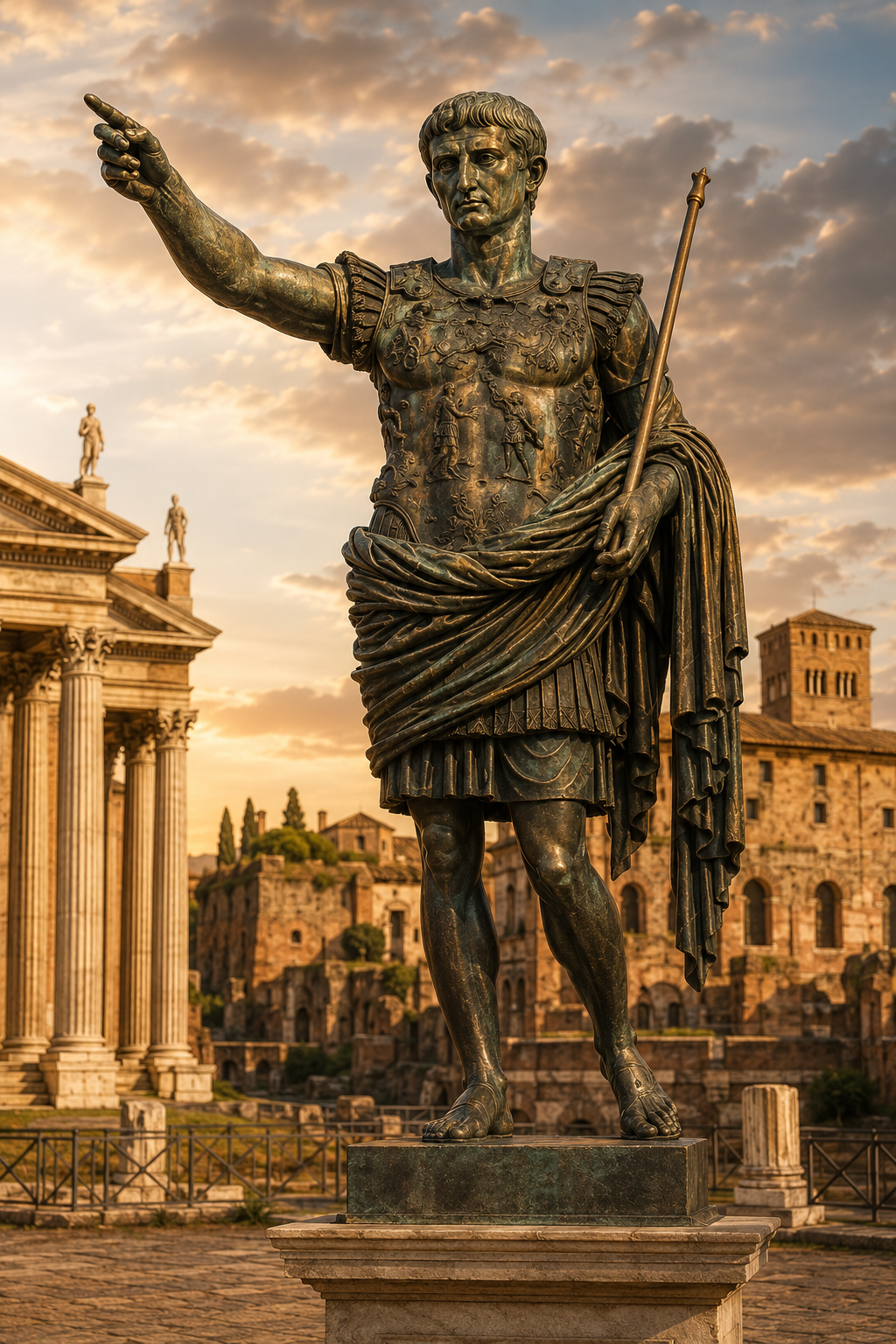
“Solen enim di inmortales, quos diutius punire constituunt, iis maiorem interdum prosperitatem largiri”
For the immortal gods, when they wish to punish men for their wrongdoing, often grant them greater prosperity and a longer period of impunity.
Excerpt from his work De Bello Gallico
Curiosities
Asterix and Obelix
The famous comic series created by René Goscinny and Albert Uderzo draws its inspiration from Caesar's campaigns in Gaul.
Although presented with a humorous tone, many of its references are rooted in the real historical context of the Roman conquest.
The Day Rome Gave Power a Face
In 44 BC, after becoming Dictator for Life, Caesar broke with a long-standing republican tradition.
For the first time, a living Roman was exceptionally portrayed on official coinage.
The coins displayed:
- a laurel wreath
- his name
- the title Dict(ator) Perpetuo
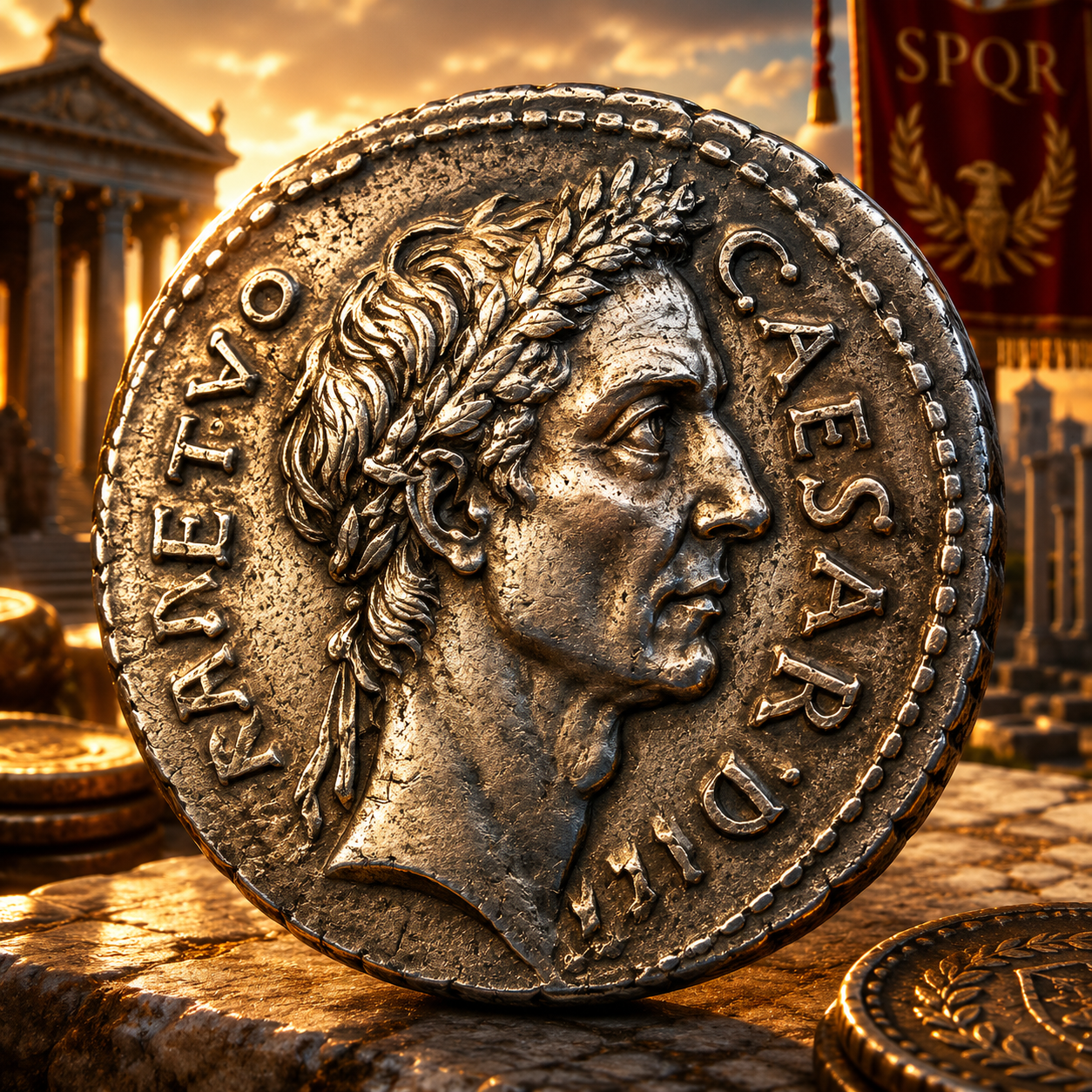
These issues were authorised under Caesar's own authority. Until then, Roman tradition had favoured images of:
- gods
- legendary figures
- illustrious ancestors
Many senators regarded this as a dangerous signal.
It no longer resembled a republican magistracy. It looked increasingly like a monarchy. This perception helped fuel the fears that ultimately led to his assassination.
When Caesar's face began to circulate in silver... power itself began to have a face.
After his death, later emperors would continue the practice.
When Caesar Became a God
Julius Caesar was not deified immediately after his death.
During the funeral games held in his honour, a comet remained visible in the sky for seven days.
The Romans interpreted it as a sign: Caesar's soul ascending to the heavens.
The phenomenon became known as the Sidus Iulium —the Star of Caesar.
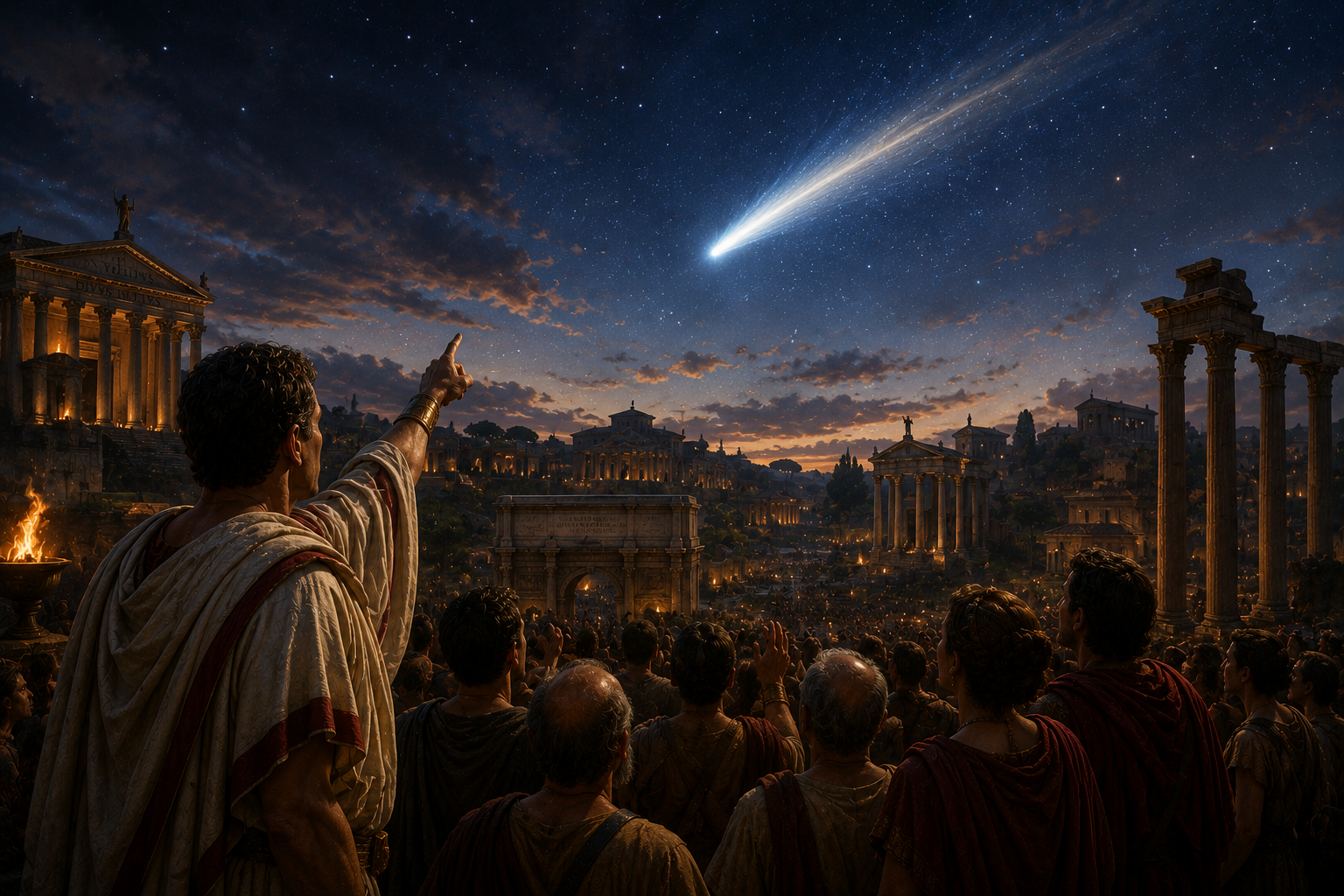
In the 42 BC, the Senate officially proclaimed him Divus Julius (the Divine Julius).
Behind that decision also lay a clear political strategy. Octavian, Caesar's adopted heir, actively promoted his deification to strengthen his own legitimacy. If Caesar was a god, then Octavian became more than a simple heir. He became Divi Filius —the Son of the Divine.
Later, the Temple of Divus Julius was erected in the Roman Forum.
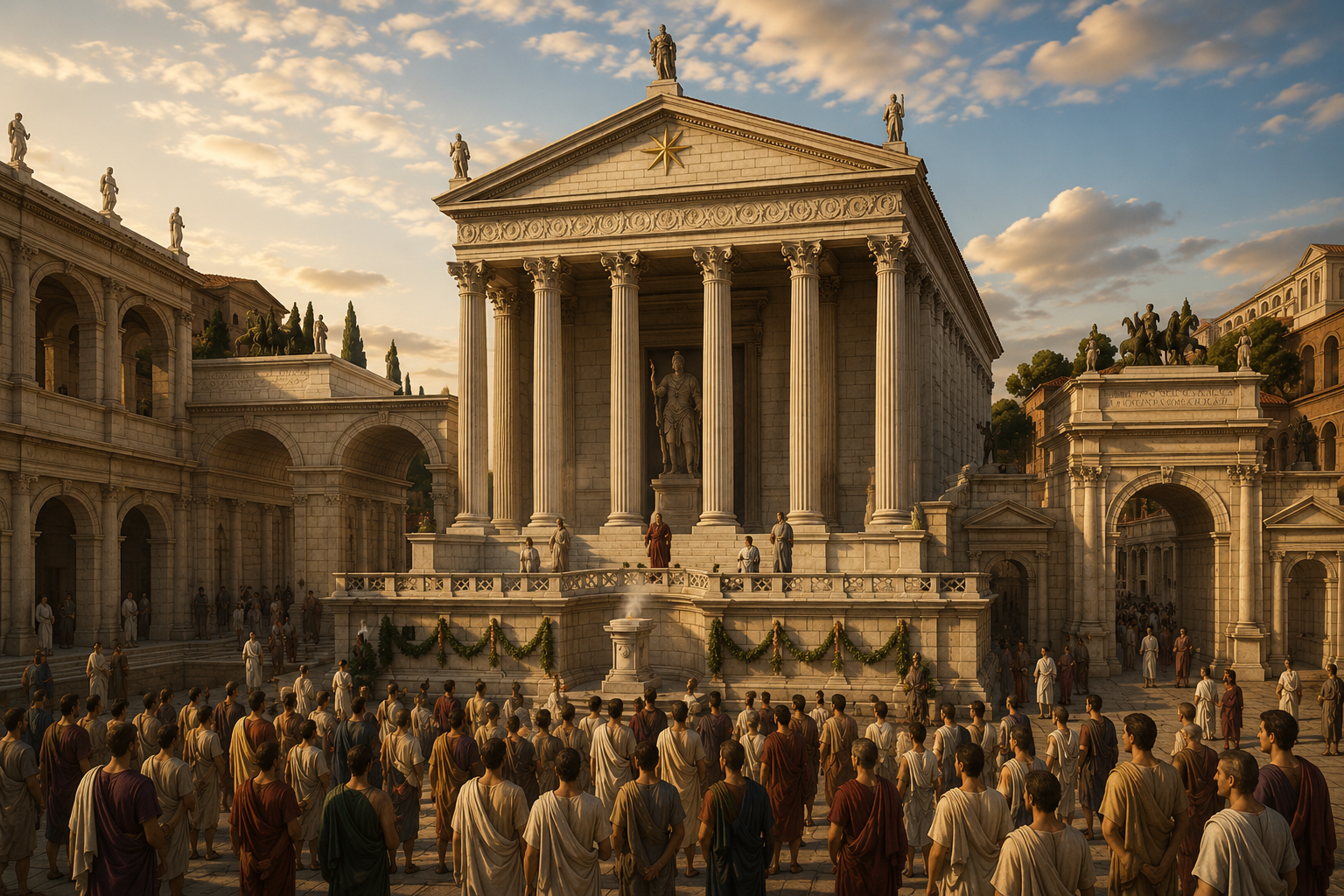
For years, ceremonies and games known as the Ludi Victoriae Caesaris were celebrated in his honour.
Caesar became the first Roman to be officially deified after his death.
Even today, the remains of his temple can still be seen.
Pirates and Julius Caesar
Around 75 BC, a young Caesar was captured by Cilician pirates while traveling across the Mediterranean.
The pirates demanded a ransom of twenty talents of silver.
According to the ancient sources... Caesar laughed. Then he replied:
"Ask for fifty. I'm worth far more than that."
During his captivity, he:
- lived among them
- ordered them to remain quiet whenever he wished to sleep
- recited his writings to them
- treated them as though they were his subordinates
He also made them a promise. He would return and take revenge.
Once released, he gathered ships, came back, captured the pirates...and kept his word.
They were executed.
Julius Caesar and His Legacy
Julius Caesar did not destroy Rome. He transformed it.
And in doing so... he changed more than a city. He changed the very nature of political power.
Caesar did not merely reshape Rome during his lifetime. He changed what it meant to rule after death.
From his time onward, governing Rome was no longer simply about leading men. It became something greater than oneself.
For sometimes...history does not change little by little.
Sometimes it changes because someone chooses to cross a line.
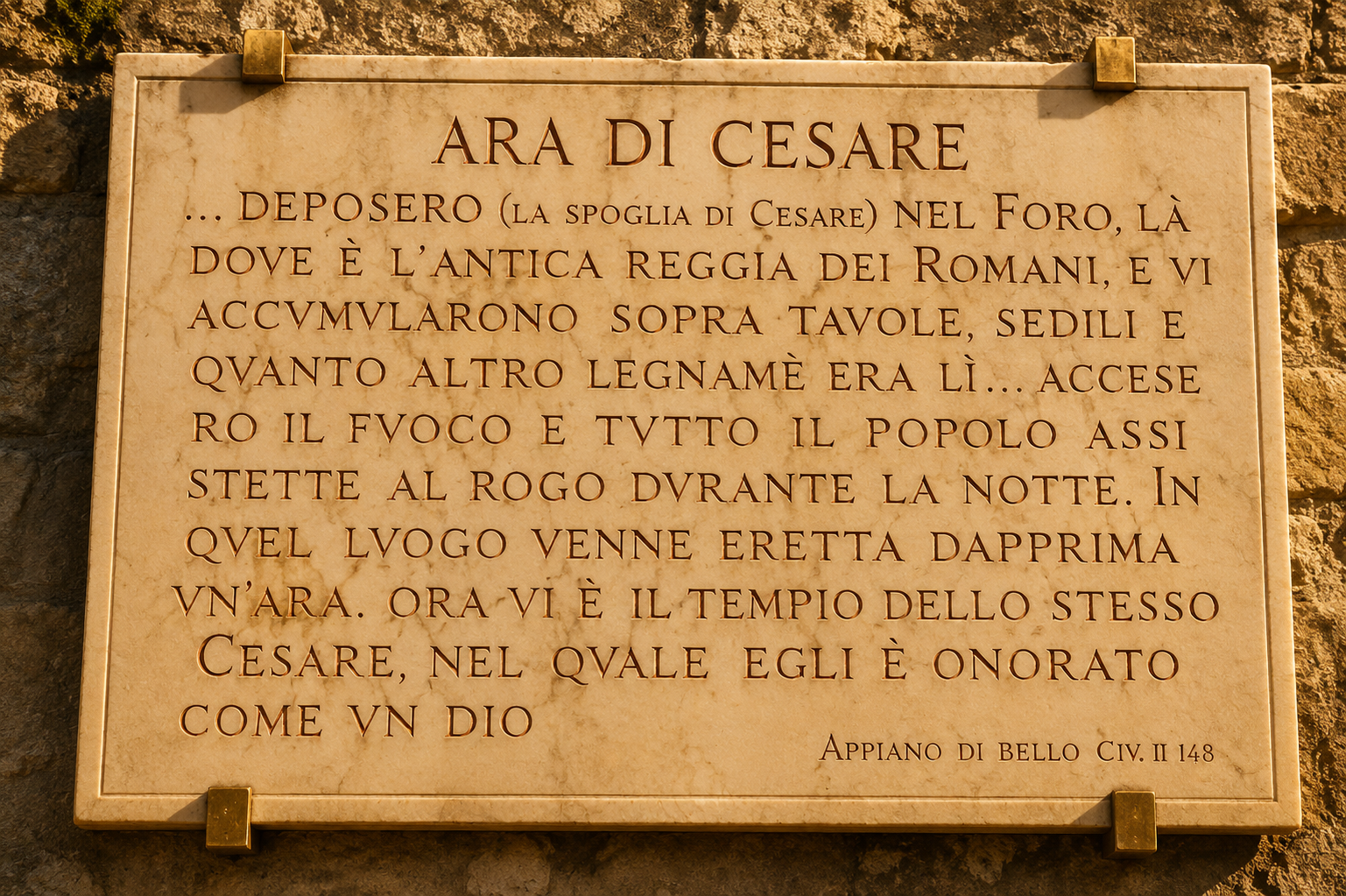
Caesar’s Altar
“...They placed Caesar’s remains in the Forum, where the ancient Regia of the Romans had stood, and piled upon them tables, benches, and all the wood they could find in the area.
They lit the funeral pyre, and the entire people remained by the fire throughout the night.
On that spot an altar was first erected; today the temple of Caesar himself stands there, where he is honoured as a god.”
--Appian, Civil Wars, II, 148
Follow the Footprints
Alesia Today: When a Battle Becomes a Real Place
Fascinated by Julius Caesar, Napoleon III promoted archaeological excavations during the nineteenth century, commissioned the great statue of Vercingetorix in 1865, and defended the identification of Alise-Sainte-Reine as the historical site of Alesia.
Although the exact location of Alesia was debated for many years, the traditionally accepted site today lies at Alise-Sainte-Reine, France.
There stands the MuséoParc Alésia, a museum and interpretation centre dedicated to explaining the context of the battle between Caesar and Vercingetorix.
The complex includes:
- partial reconstructions of Roman fortifications
- exhibition spaces devoted to the siege
- Gallo-Roman archaeological remains
- historical reconstructions and educational activities
More than two thousand years later, the modern interpretation centre opened its doors in 2012. Today, visitors can still walk near the very ground where one of antiquity's most decisive battles took place.
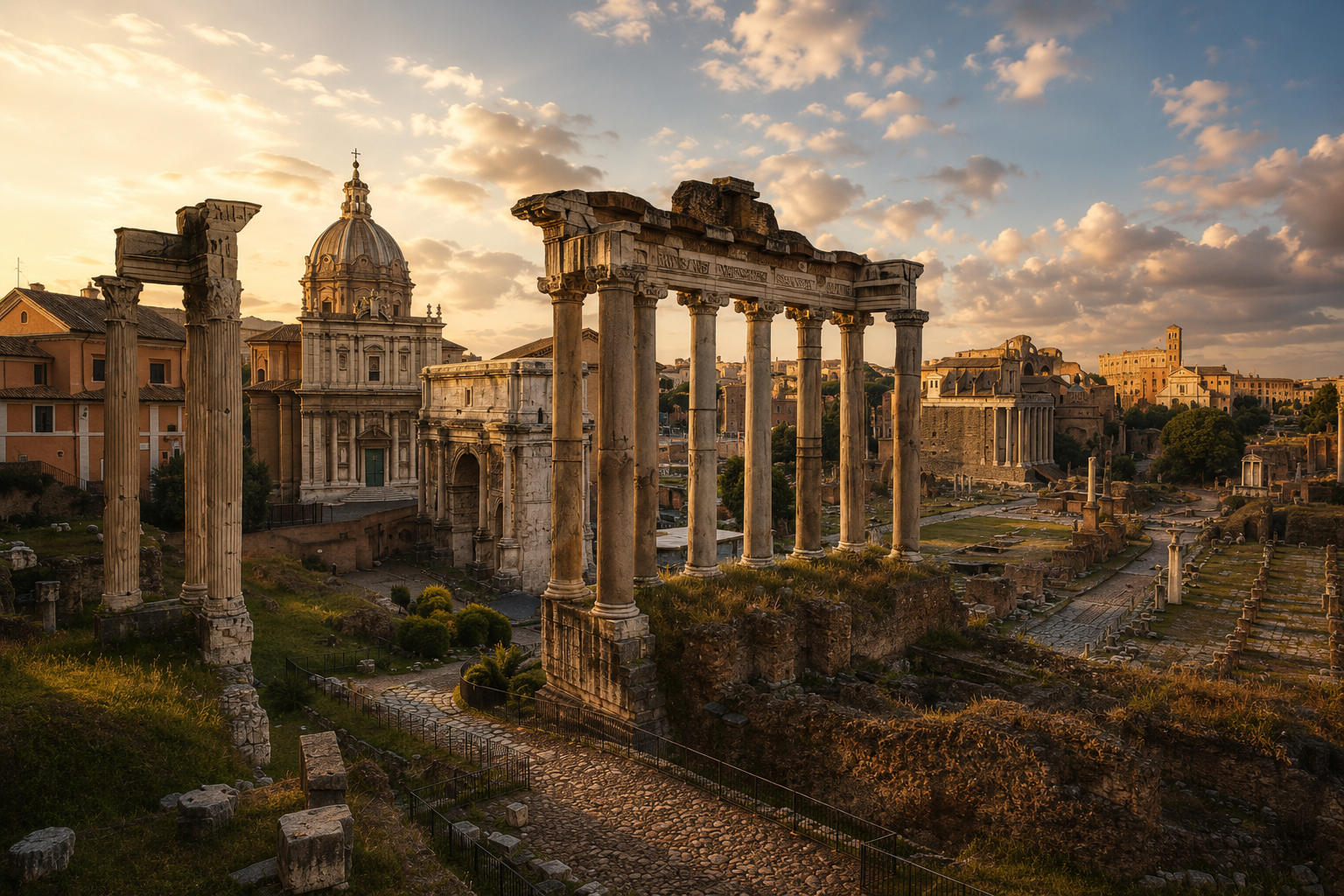
Visit the Temple of Divus Julius (Rome, Italy)
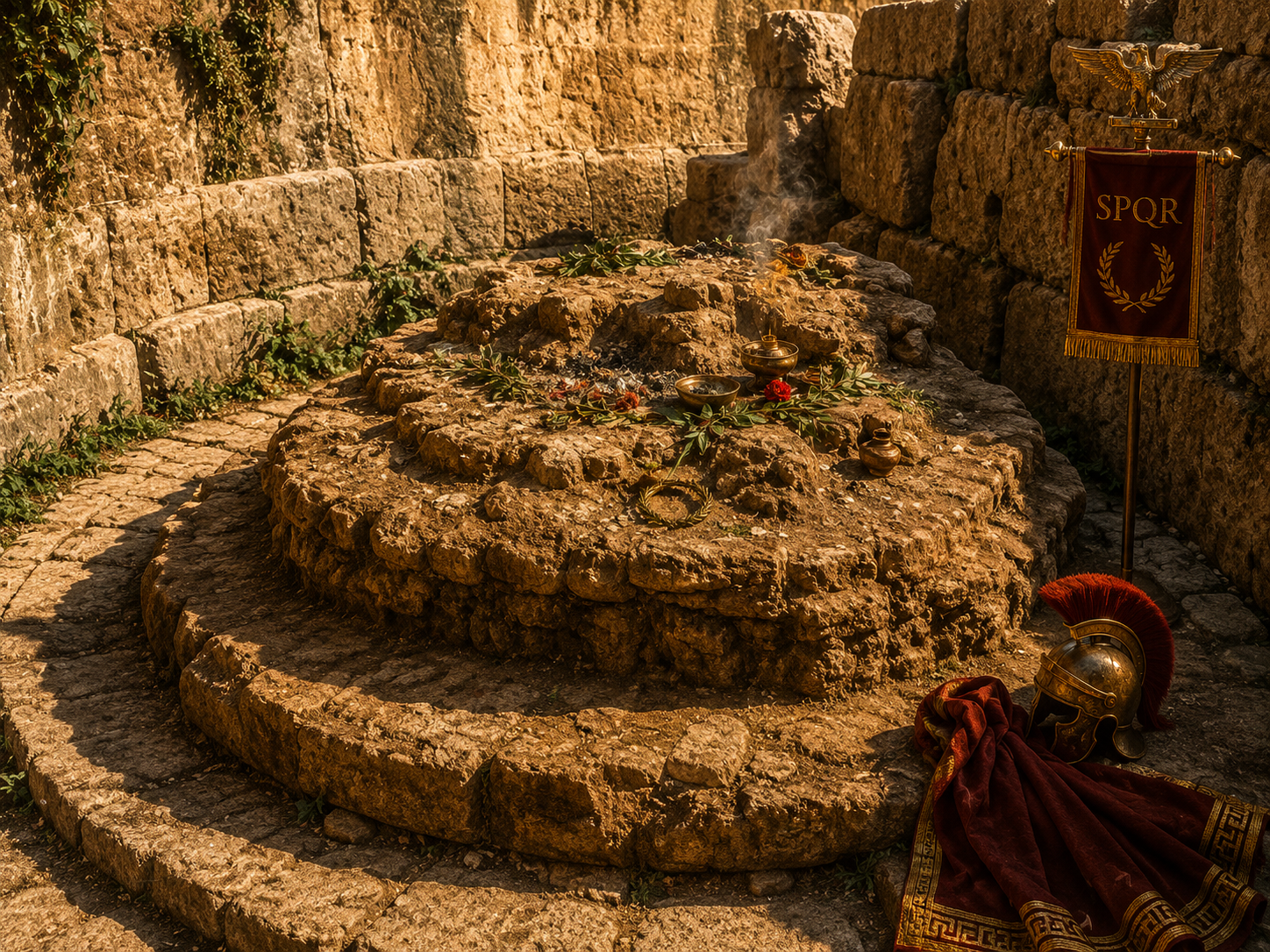
Although the original temple no longer survives intact, its legacy remains visible among the ruins of the Roman Forum. Built by his successor Octavian on the site of Caesar's cremation, the temple became one of the symbolic monuments of the new age that followed his death. Even today, its altar can still be seen.
«Caesar est qui sua auctoritate atque exercitus terrore, aut recenti victoria, aut nomine populi Romani, deterrere potest…»
Cesar is the one who, by his authority and the terror of his army, or by his recent victory, or in the name of the Roman people, can intimidate…
Extracted from his work De Bello Gallico