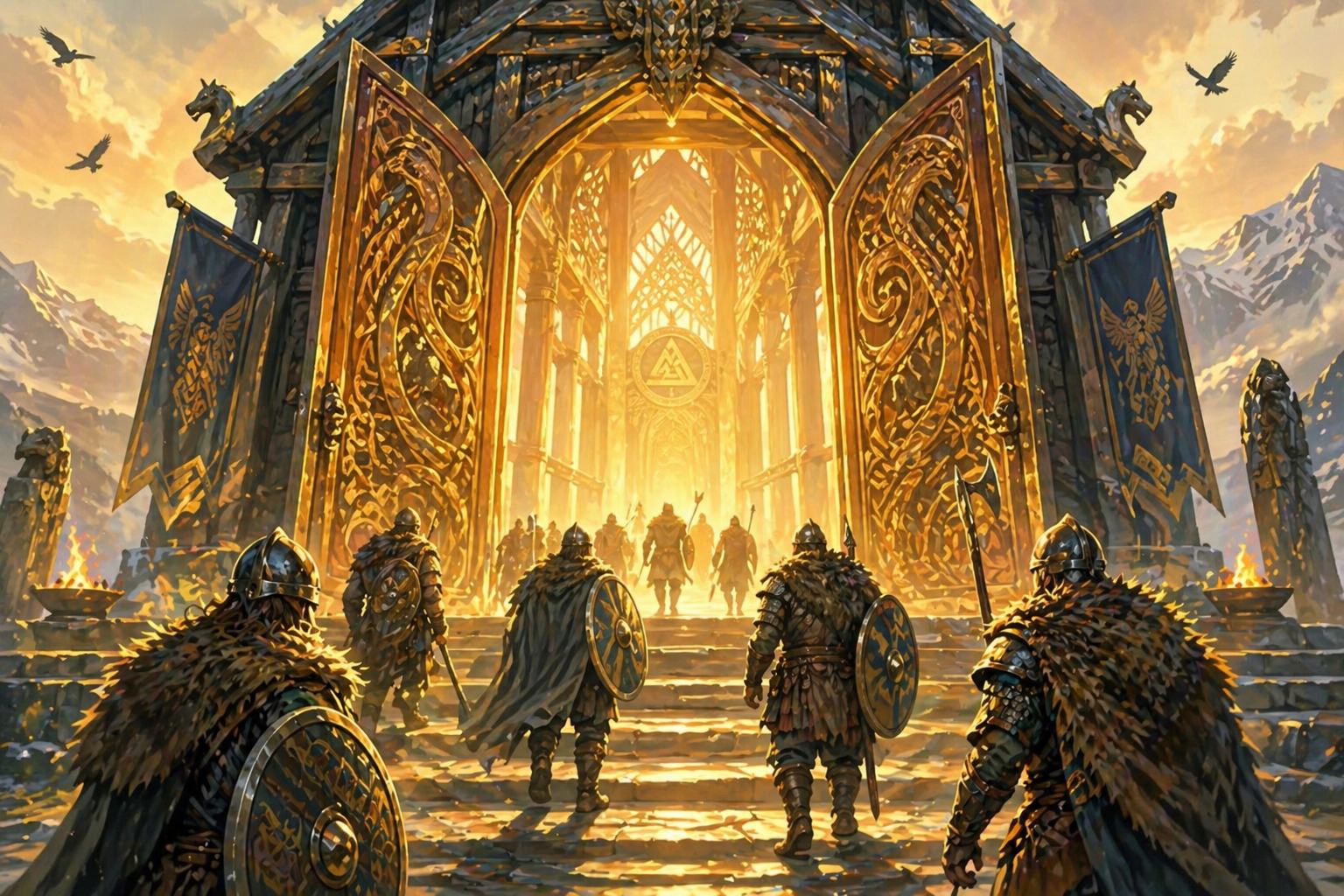
In Norse mythologyIn Norse mythology, death is not always an end. For some chosen souls, it is only the beginning of a different existence. That place has a name: Valhalla.
It is not a paradise of rest nor a realm of peace. Valhalla is a warrior hall, a sacred barracks, and a place of preparation for the final destiny of the gods: Ragnarök.
Not all of the dead arrive here. Only those whose lives were marked by battle and honor.
What Is Valhalla
Valhalla (Valhöll, “Hall of the Slain”) is the great hall of Odin Odin located in Glaðsheimr, within Asgard.
It belongs to the Allfather, Odin, and serves several purposes:
- refuge for warriors who died in battle
- eternal training ground
- place of ritual feasts
- prelude to Ragnarök
It is not a moral reward. It is a warrior’s selection. selección guerrera.
The Chosen of Valhalla
The inhabitants of Valhalla are the einherjar: men and women who fell in combat.
They are chosen by the Valkyries, divine maidens sent by Odin to the battlefield.
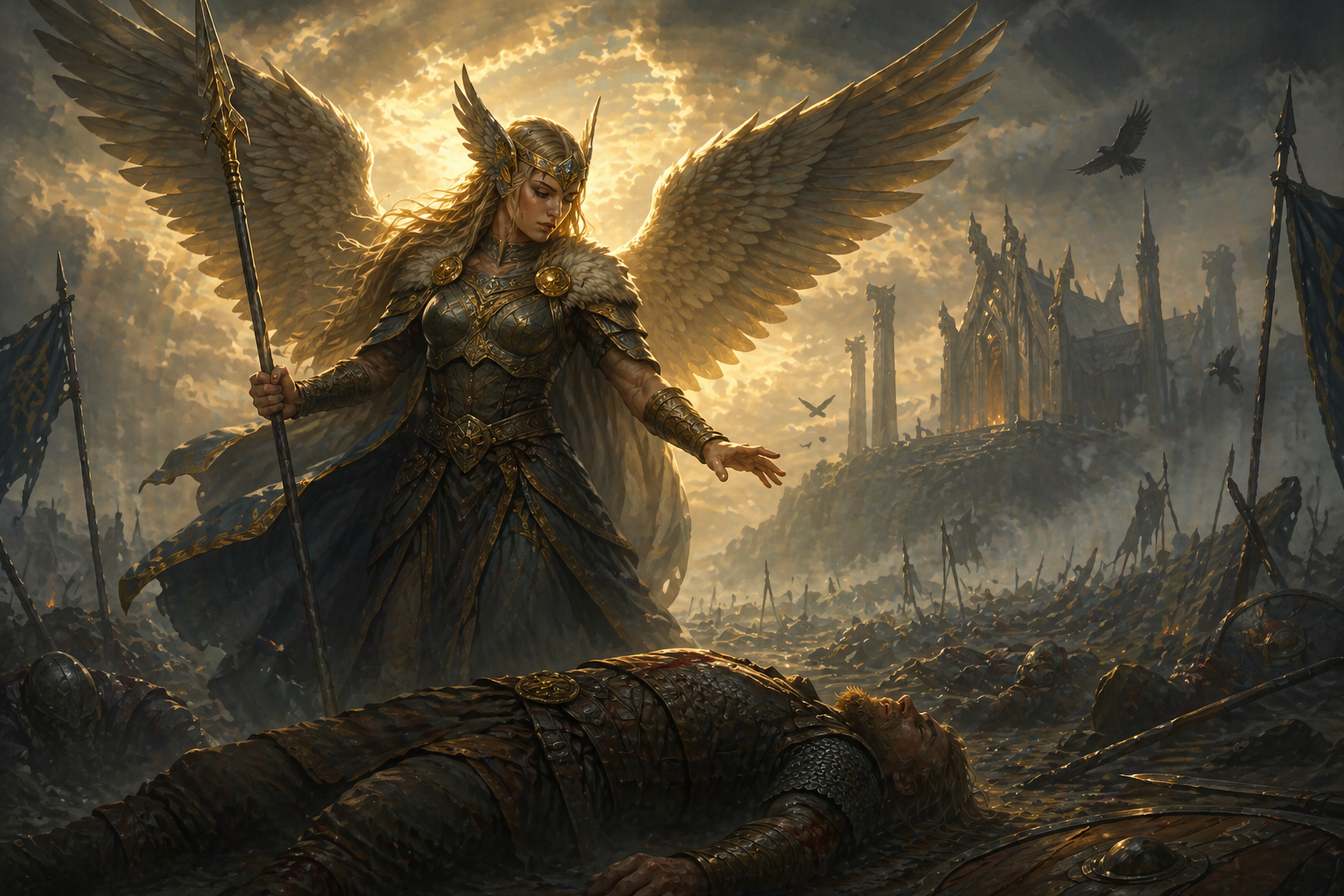
But not all the fallen go there: only half. The other half are welcomed by Freyja in Fólkvangr, her own domain.
. The einherjar are not rewarded: they are recruited.
The Hall of the Slain
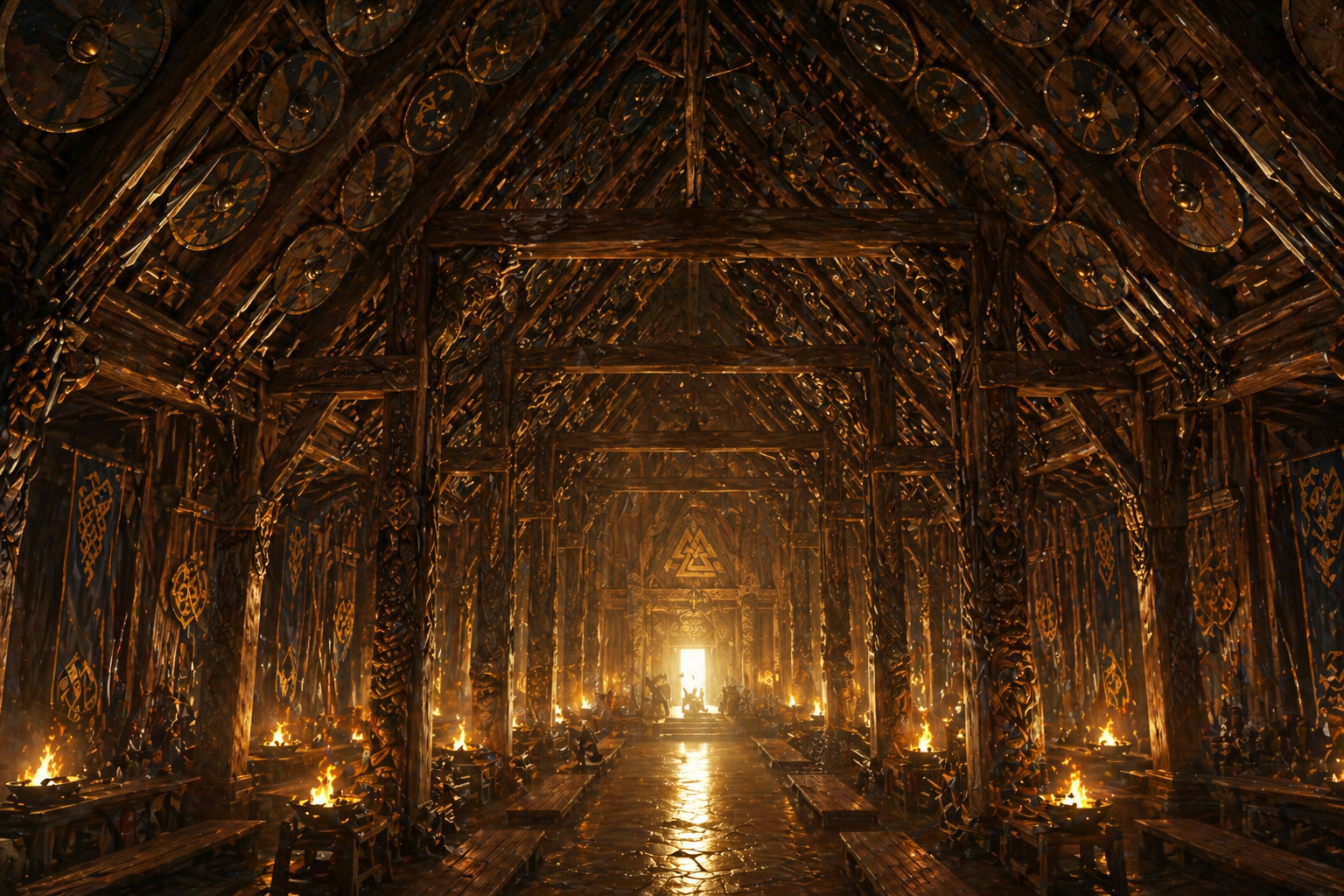
Valhalla is described as a colossal building:
- a roof covered with shields
- beams made of spears
- enormous doors through which warriors enter
- enough space for thousands of fighters
The sources speak of 540 doors, and say that through each one, 800 warriors will march side by side when Ragnarök arrives.
It is a place built upon a harsh truth: courage does not change the ending, but it determines the path.
Life in Valhalla
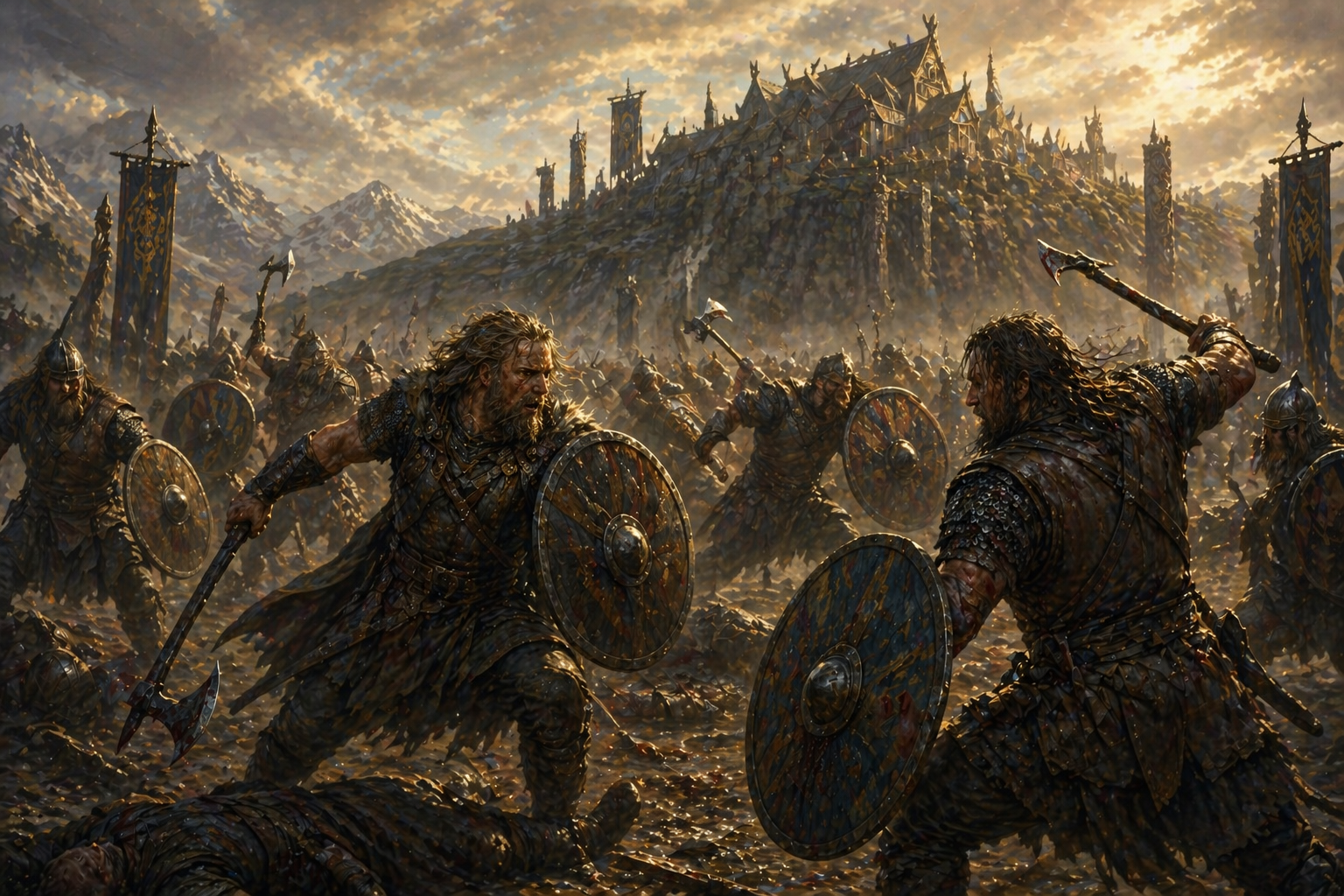
Existence in Valhalla follows an eternal cycle: daily combat.
Each morning, the einherjar go out to the battlefield and fight one another until death.
By evening, all return alive to the hall. At night they gather in the great hall for the feast, where they:
- eat the flesh of the magical boar Sæhrímnir, which is reborn each day
- drink endless mead
- celebrate eternal banquets
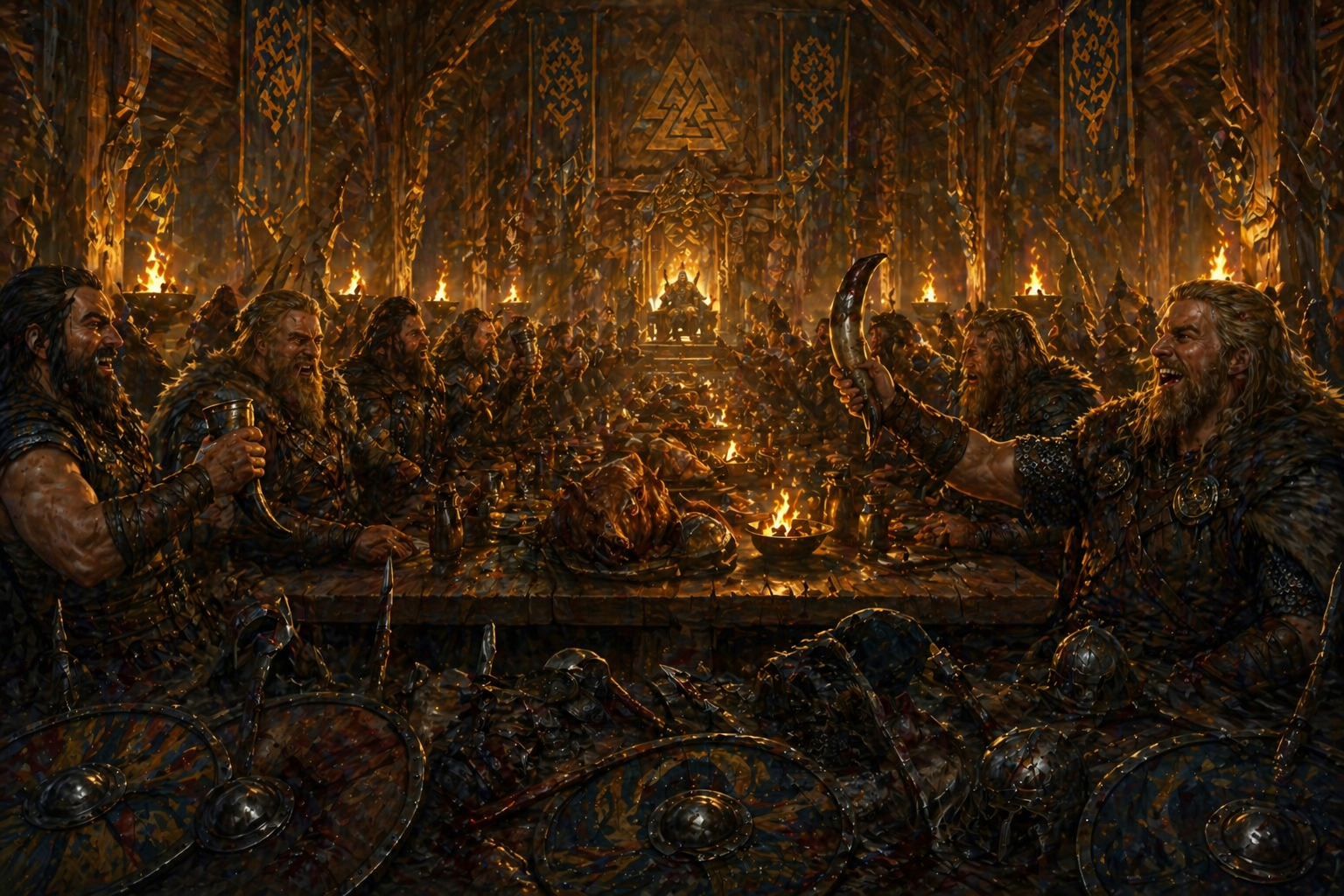
This cycle is neither punishment nor reward. It is preparation.
Odin in Valhalla
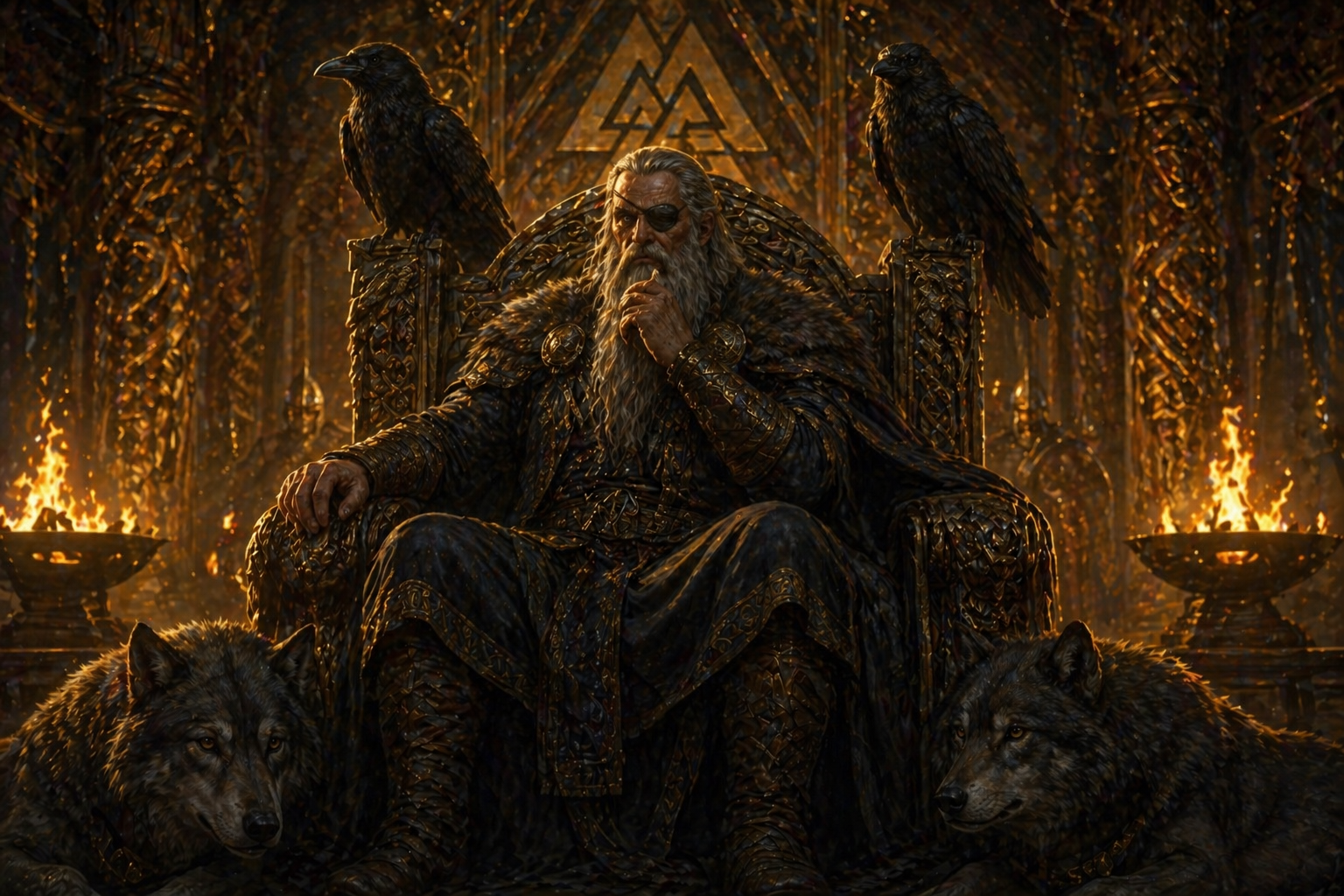
Odin presides over the hall, accompanied by:
- his ravens Huginn (Thought) and Muninn (Memory)
- his wolves Geri and Freki
Curiously, Odin does not partake in the feast like the other warriors. It is said that he gives his food to the wolves and nourishes himself only with wine.
While the warriors celebrate, Odin watches.
Valhalla and Ragnarök
All of Valhalla exists for a single reason: Ragnarök.
When the end of the world comes:
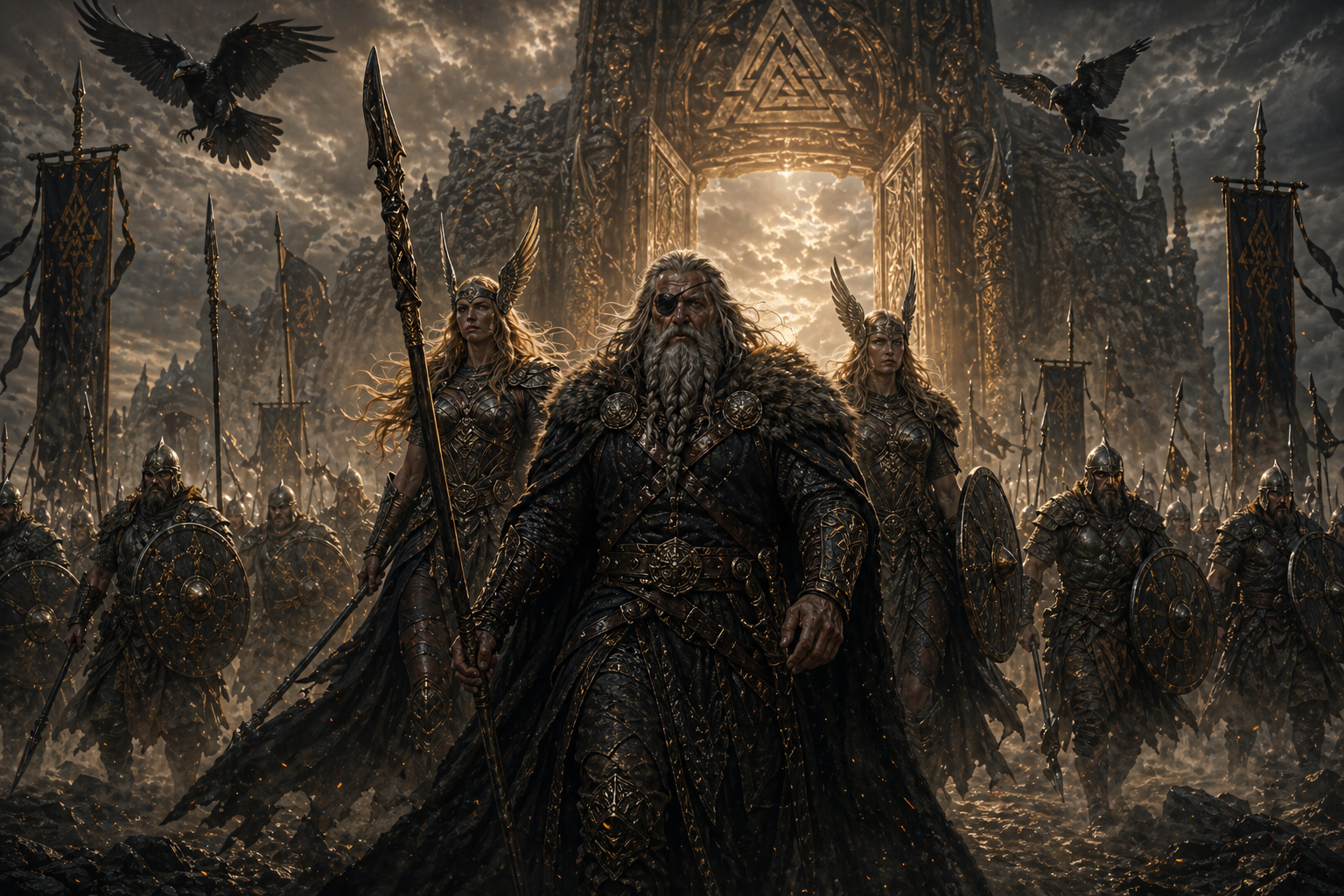
- the einherjar will march beside Odin
- they will fight against giants and monsters
- many will die permanently
Valhalla does not prevent destiny. It only gathers strength to face it.
A Hall Without Promises
Valhalla represents:
- warrior glory
- acceptance of fate
- preparation for the inevitable
- the idea that even the gods need armies
Valhalla does not promise salvation. It does not promise eternal happiness.
It promises battle.
It is the hall of those who accept that the world will end… and still choose to take up arms.
Because in Norse mythology, honor does not lie in victory.
It lies in fighting while knowing the outcome.