
The sea has always been a territory of mystery. Vast, unpredictable, and for centuries, largely unknown.
In that boundary between the visible and the hidden, sirens were born.
Not as simple fantasy creatures… but as one of the most complex and ever-changing figures in the history of myth.
Because sirens were not always as we imagine them today.
The First Sirens in the Middle East: Atargatis and Derceto
Long before Greece, there were already stories of water-related divinities:
- fish-tailed goddesses
- beings associated with the aquatic world
Atargatis: Syrian goddess of water, fertility, and protection.
Derceto: Greek version derived from the same myth.
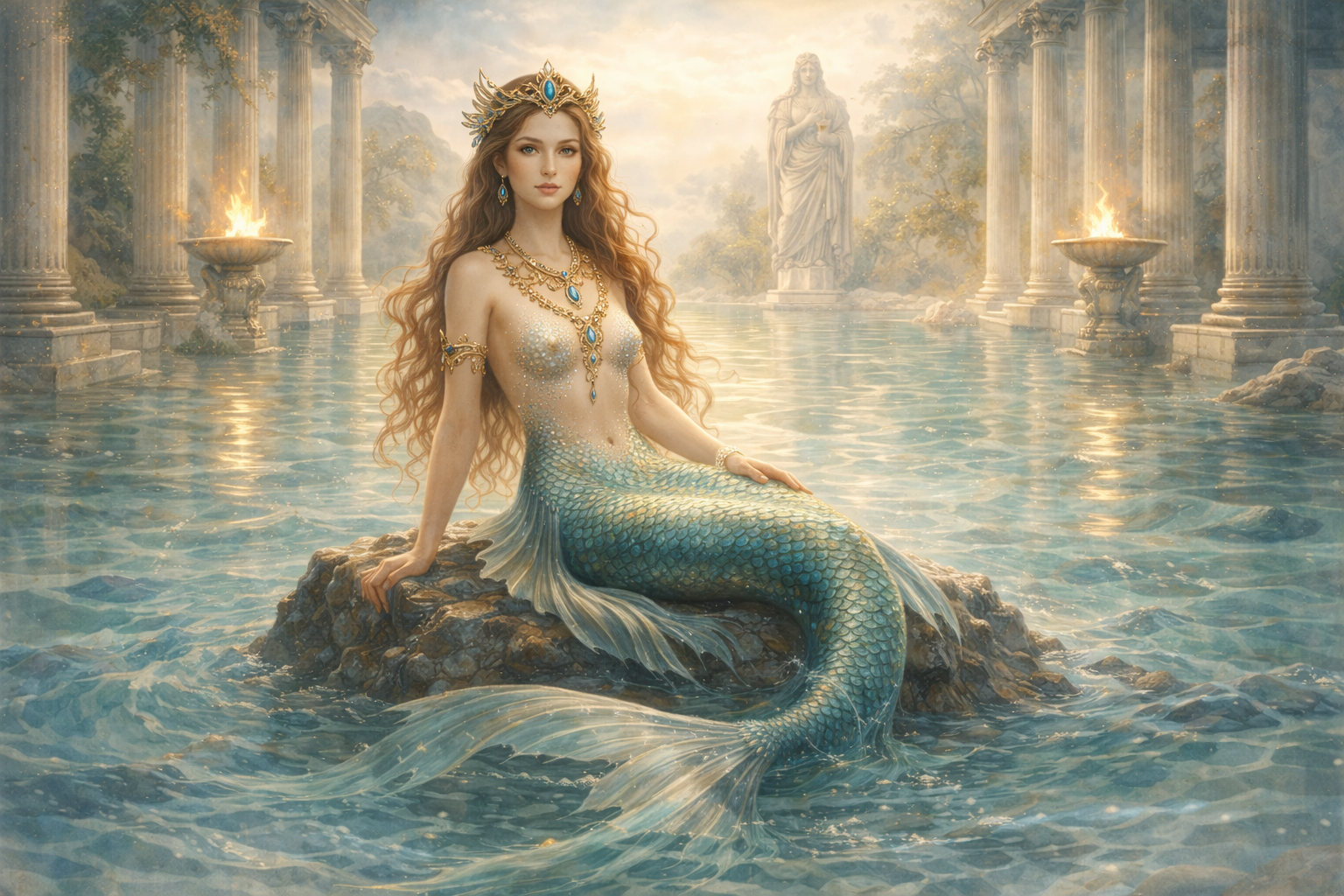
These figures may be considered some of the oldest predecessors of sirens.
The Greek Sirens: Creatures of the Air, Not the Sea
In Ancient Greece, sirens did not have fish tails. They were hybrid beings: half woman, half bird.
According to tradition, they were daughters of the river Achelous and a Muse, often identified as Melpomene or Terpsichore.
Although the number of sirens varies depending on the source, some well-known names include:
- Parthenope
- Leucosia
- Ligeia
More than the sea, they were associated with music and knowledge.

They inhabited rocky and dangerous areas of the Mediterranean known as the Sirenum scopuli, traditionally located in:
- southern Italy
- the region of Naples, Sorrento, and Capri
- areas near Scylla and Charybdis
There were even traditions placing their tombs in real locations, such as Naples.
Their power did not lie in their appearance… but in their voice.
The Song of the Sirens: Knowledge and Destruction
Their song was not merely beautiful: it was irresistible. It promised knowledge, revelation, truth.
But whoever listened to it… never returned.
The most famous episode appears in The Odyssey, Odysseus, warned of the danger, decides to hear their song without surrendering to it.
He has himself tied to the mast of his ship while his men sail with their ears covered.
He does not want to avoid the song. He wants to understand it.
This moment reveals something essential: sirens do not attract through beauty… they attract through what they promise.
They symbolize the desire to know, even when that knowledge may destroy us.
From Sacred Creatures to Symbols of Danger
Over time, the image of sirens changed.
The myth evolved alongside the human perspective:
- from sacred to dangerous
- from mysterious to forbidden
Their song ceased to be a promise… and became a trap.
The Middle Ages: The Birth of the Modern Mermaid
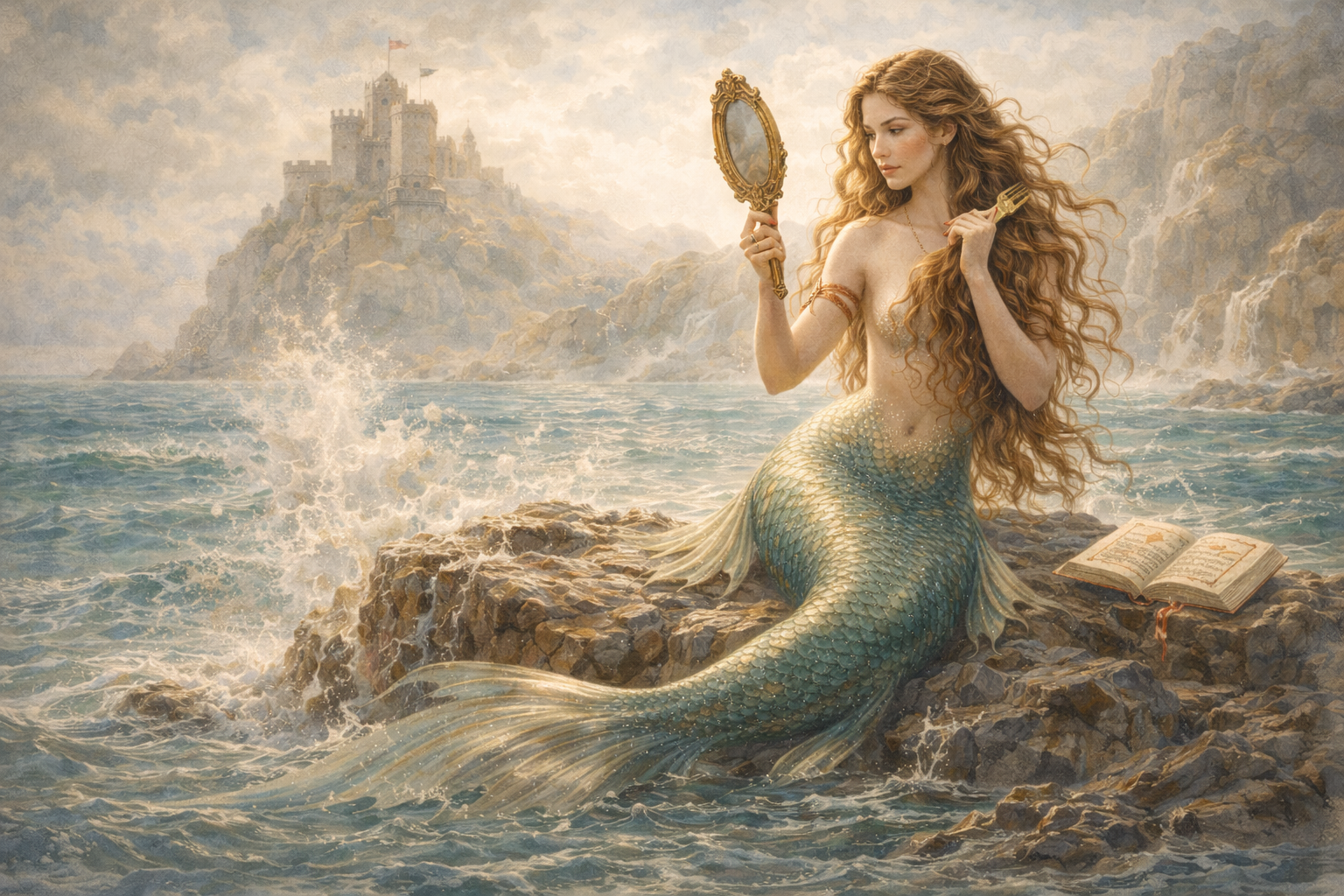
Between the 8th and 13th centuries, sirens adopted the form we know today: a woman with a fish tail.
This change was not only aesthetic, but symbolic. It was influenced by Christianity and by the fusion with northern European myths.
They came to represent:
- temptation
- sin
- desire
They appeared in manuscripts, bestiaries, and stories as moral warnings.
They no longer offered knowledge… they offered ruin.
Sirens Around the World: A Universal Myth
Although we usually associate them with Greece, sirens appear in cultures all around the world:
- Rusalki (Slavic tradition): water spirits linked to death and liminal spaces.
- Selkies (Scotland and Norse tradition): beings who transform from seals into humans, associated with longing and loss.
- Havfrue (Denmark): mysterious marine figure.
- Ningyo (Japan): sea creatures associated with both fortune and misfortune.
- Jiaoren (China): aquatic beings more magical than dangerous, whose tears turn into pearls.
- Mami Wata (Africa): water spirit associated with beauty and power.
- Merrows (Ireland): sea beings capable of living among humans, but always returning to the ocean.
- Sirenuca (Cantabria): protective figure.
- Sea Lamias (Basque tradition): female water beings, sometimes with bird or duck feet.
- Sumpall / Chilota (Chile): entities connected to other worlds.
In some regions, such as Galicia or Asturias, there is no single named figure, but rather an oral tradition of female beings connected to the sea.
Despite their cultural differences, they all share recurring elements:
- water as a boundary
- mystery as their essence
The Sea and Fear: Sailors’ Sirens
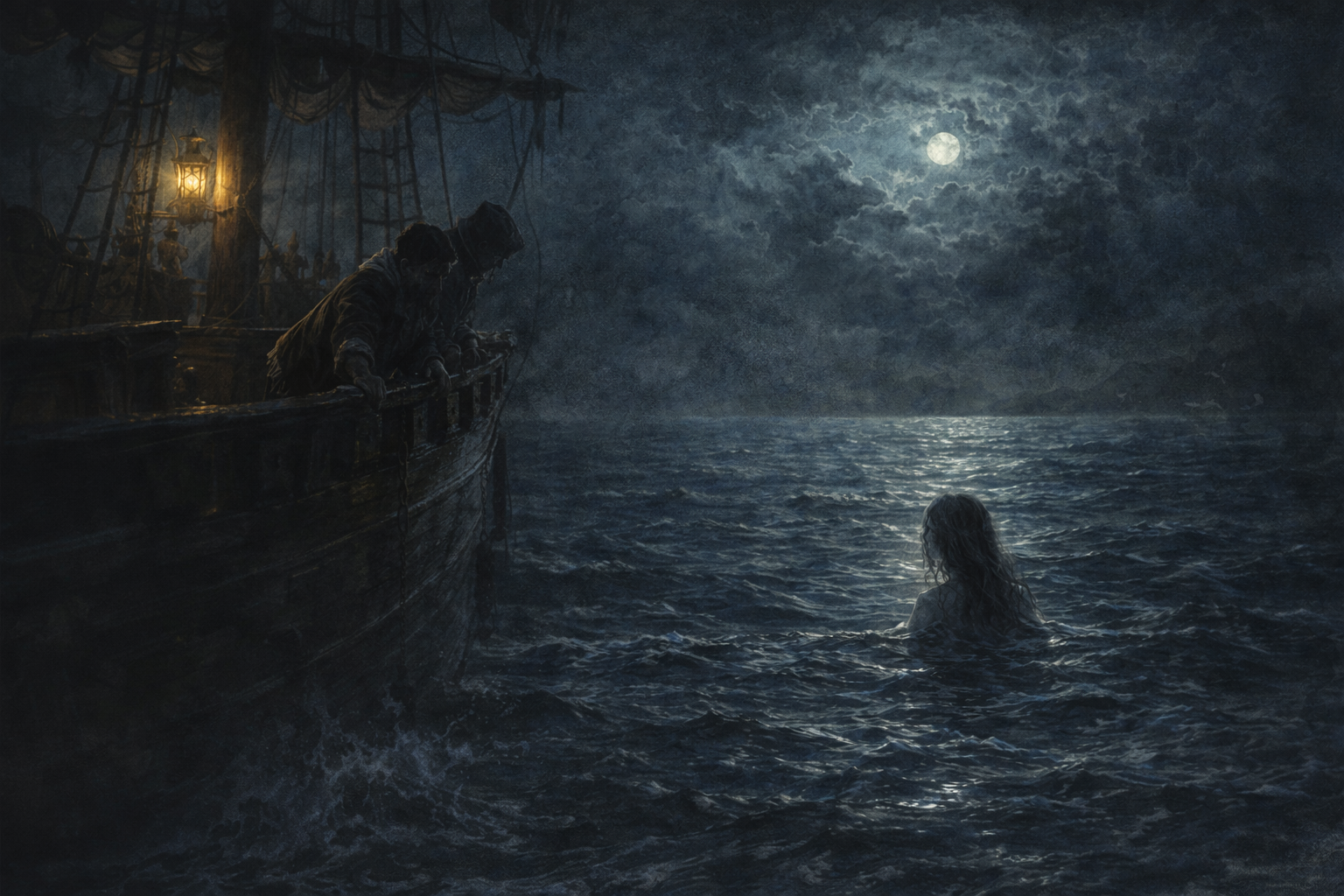
For centuries, the sea was a place of constant danger: storms, shipwrecks, disappearances. In that context, sirens emerged as a way of explaining the unexplainable.
During the age of piracy, sailors spoke of:
- songs in the night
- figures in the water
- presences guiding ships toward their destiny… or their end
They were not merely stories. They were a mixture of:
- real fear
- isolation
- imagination
From Monster to Romantic Myth
Over time, the figure transformed once again.
The siren ceased to be a threat… and became fantasy.
From The Little Mermaid by Hans Christian Andersen to modern cinema, her image softened:
- more human
- more emotional
- more relatable
But her origin never disappeared. It still exists beneath the surface.
From Norse Legends to Hans Christian Andersen
In 1837, Hans Christian Andersen wrote The Little Mermaid, inspired by Nordic folklore.
However, the original tale is far from the happy ending we know today.
She does not obtain love.
She transforms into sea foam and later becomes a “daughter of the air.”
Before becoming a romantic story, sirens were tales about what does not belong to our world.
Sirens in the Real World: Sculptures That Keep the Myth Alive
Sirens have not only inspired stories, fairy tales, and legends throughout history; they have also left their mark on the real world through art.
There are numerous siren and mermaid sculptures in cities around the world, especially in coastal areas.
Some of the most famous include:
- The Little Mermaid of Copenhagen (Denmark): inspired by Andersen’s tale, it is one of the world’s most iconic sculptures.
- Syrenka of Warsaw (Poland): symbol of the city, representing a warrior mermaid protecting Warsaw.
- Sculptures along British coasts: various representations connected to local folklore and maritime legends.

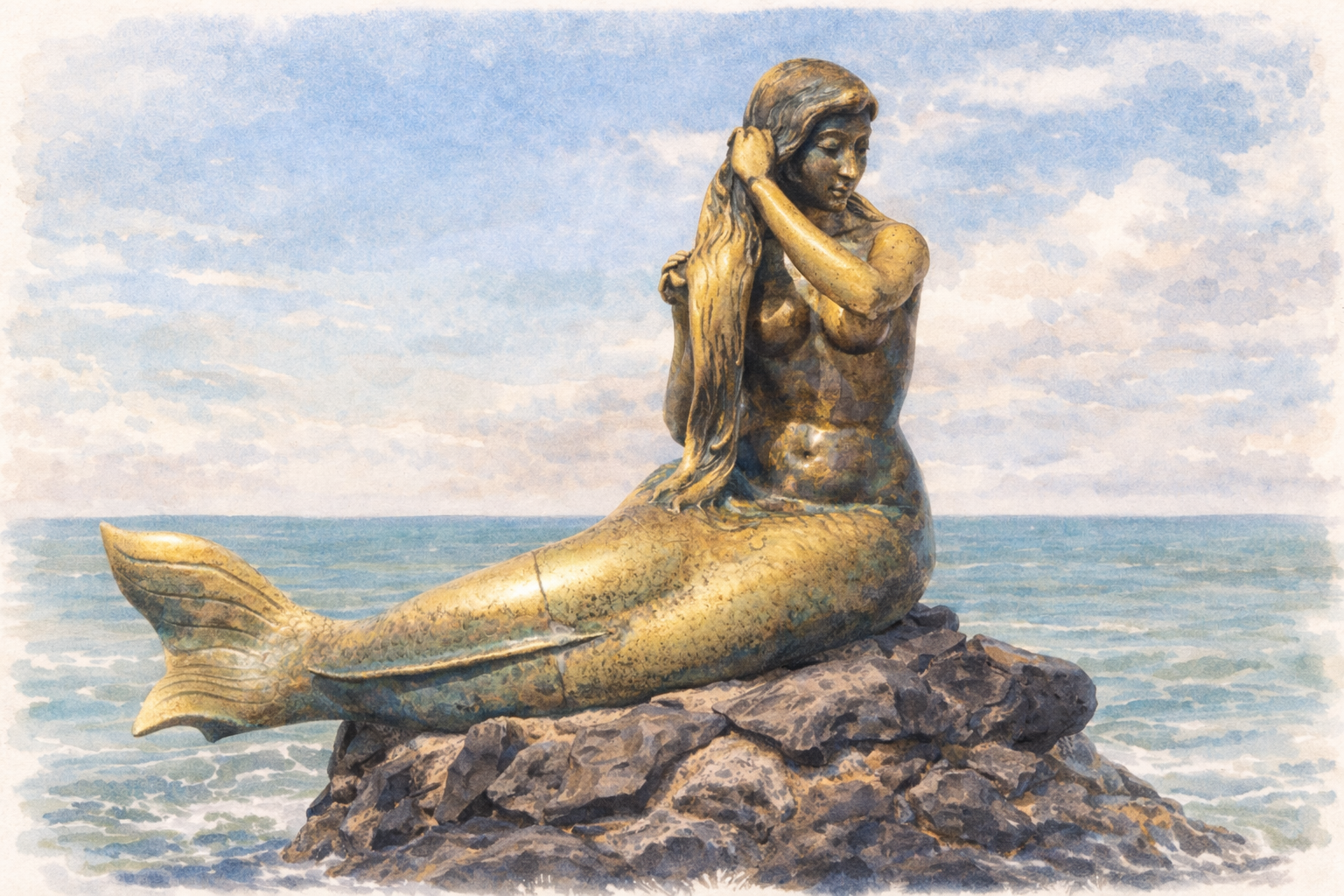
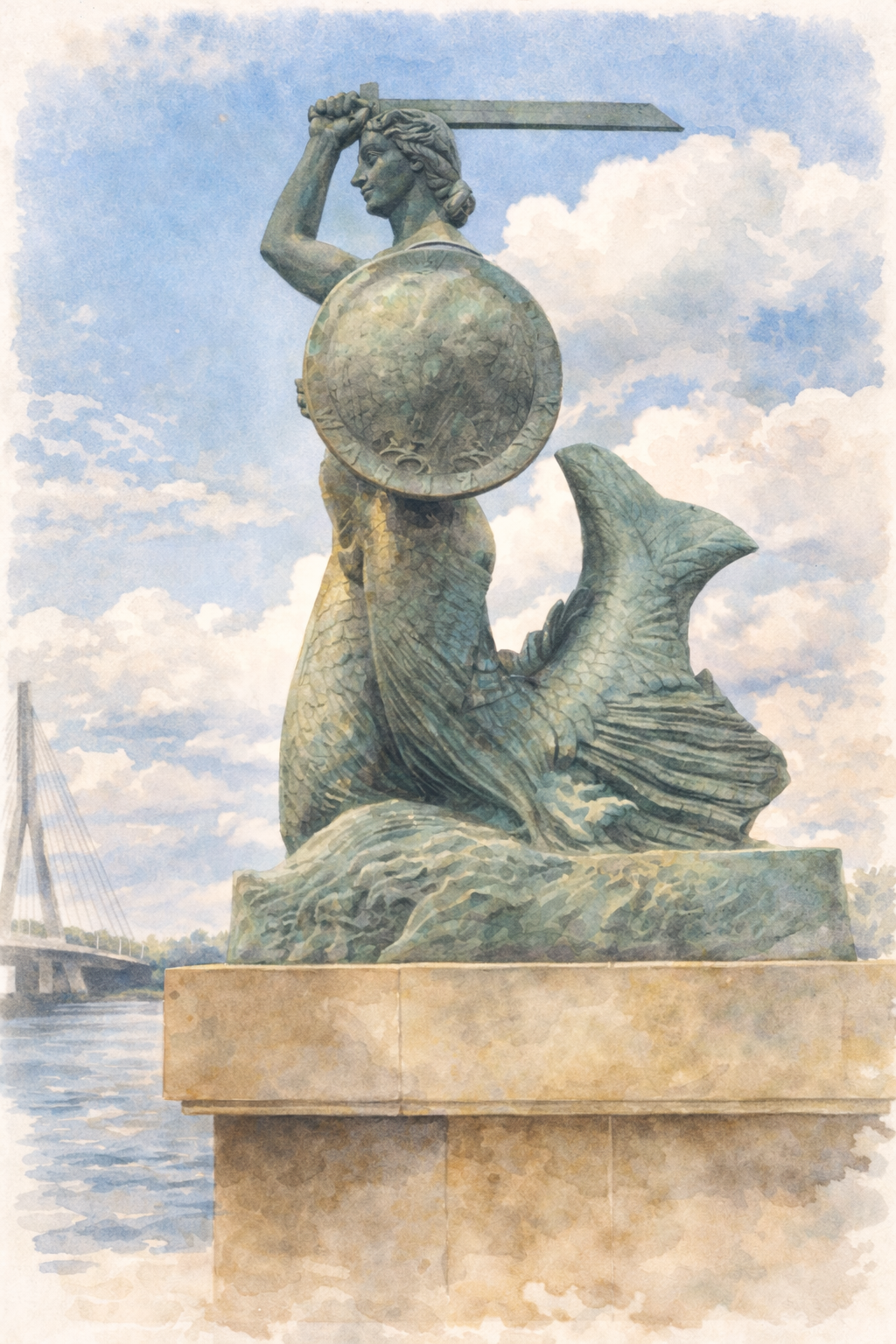
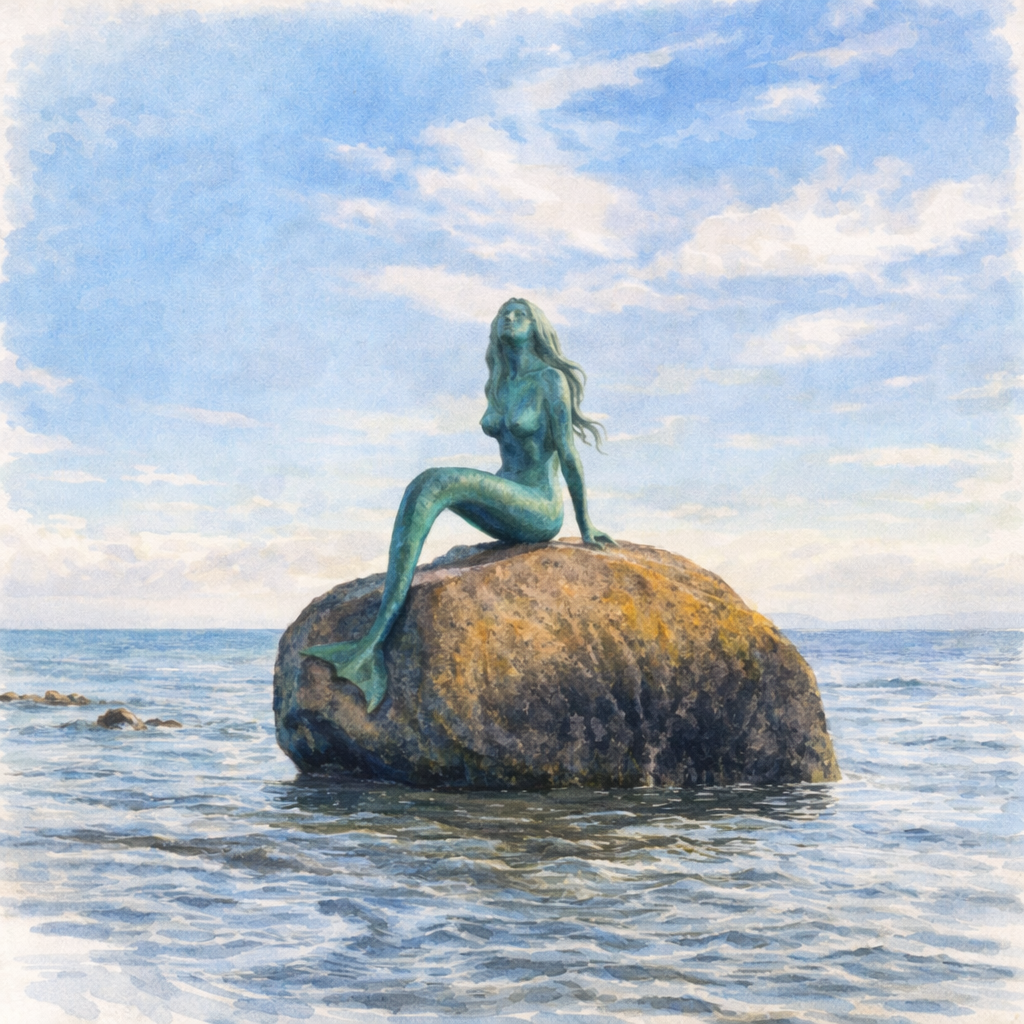
These figures show how sirens inhabit not only stories… but also cultural memory and landscapes.
What Sirens Truly Symbolize
Sirens are not merely sea creatures. They are symbols representing:
- the desire for the unknown
- attraction to what we cannot control
- the boundary between reason and emotion
- the risk of losing ourselves
They are the call of something beyond.
Something we want to hear… even when we know we should not.
A Myth That Never Disappears
From Antiquity to the present day, sirens have changed in form, meaning, and intention.
But they have never disappeared. They remain present in art, literature, and collective imagination.
Because they speak of something that is still real:
- attraction to the unknown
- the desire to cross boundaries
- the need to listen to what calls us
Curiosities
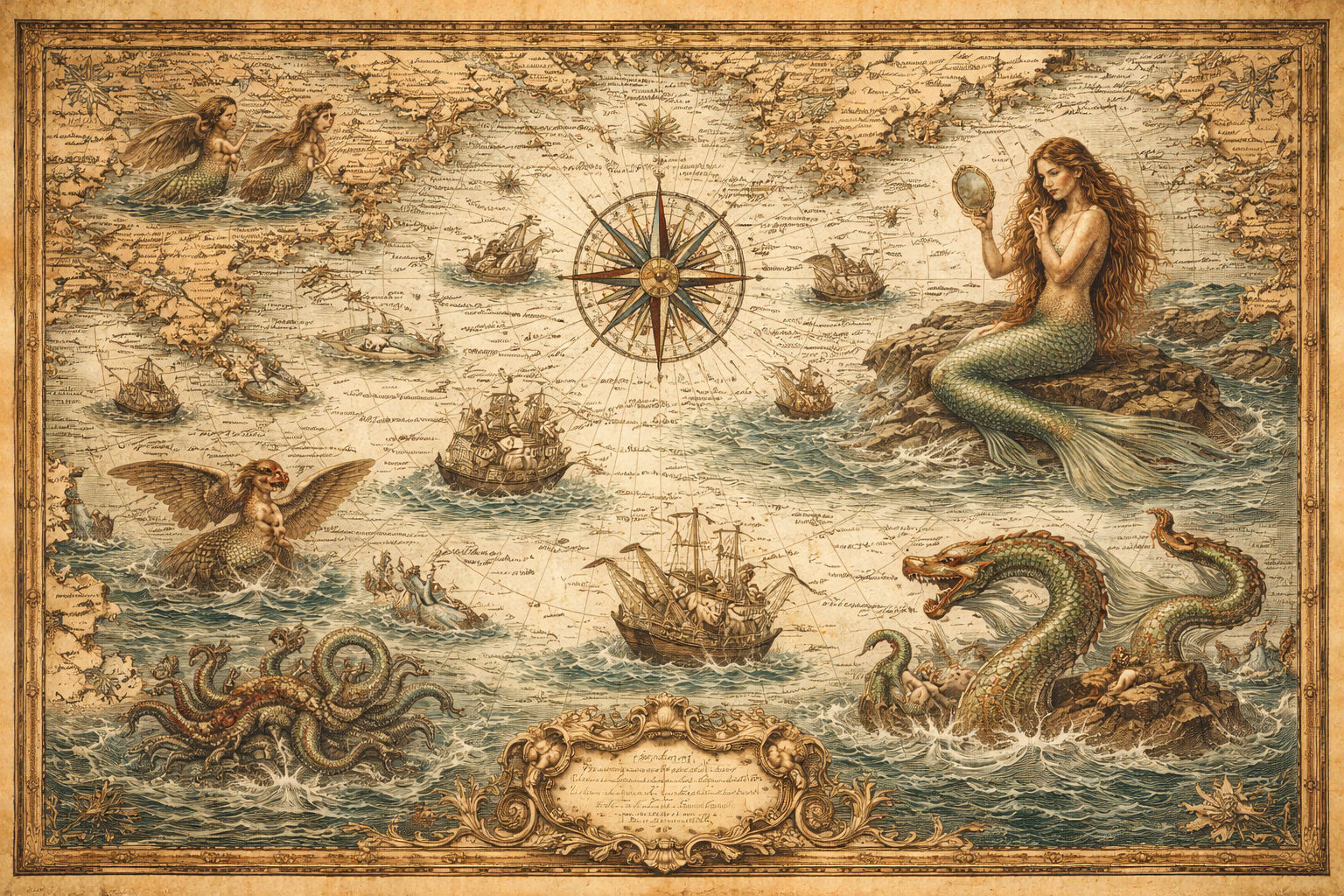
Sirens on Maps
Before the ocean was understood, it was inhabited by stories.
On medieval and Renaissance maps (12th–17th centuries), there appeared:
- Sirens
- monsters
- sea serpents
Expressions such as “Here be monsters” “Here be monsters” marked the limits of the unknown. Sirens were used to:
- warn
- impress
- explain the unknown
From the 17th century onward, with the advancement of science and cartography, these figures gradually disappeared from maps.
Documented Sightings
- Christopher Columbus (1493) described seeing “three sirens,” though he noted they were not as beautiful as expected (likely manatees).
- Henry Hudson (1608) and his crew claimed to have seen a female figure in the water, half human, half fish.
Sirens: A Universal Myth
Sirens were not merely songs in the sea.
They were warnings.
Not about the ocean… but about ourselves.
Because in the end, the true danger is not in their voice.
It lies in wanting to hear it.
Follow the Footprints
Real-Life Mermaids: Performances in Florida
In Florida (United States), there is a place where the myth of sirens became reality.
Since 1947, underwater “mermaid” performances have taken place at Weeki Wachee Springs State Parkin a natural underwater theater.
What began as a tourist attraction eventually became a unique cultural phenomenon.