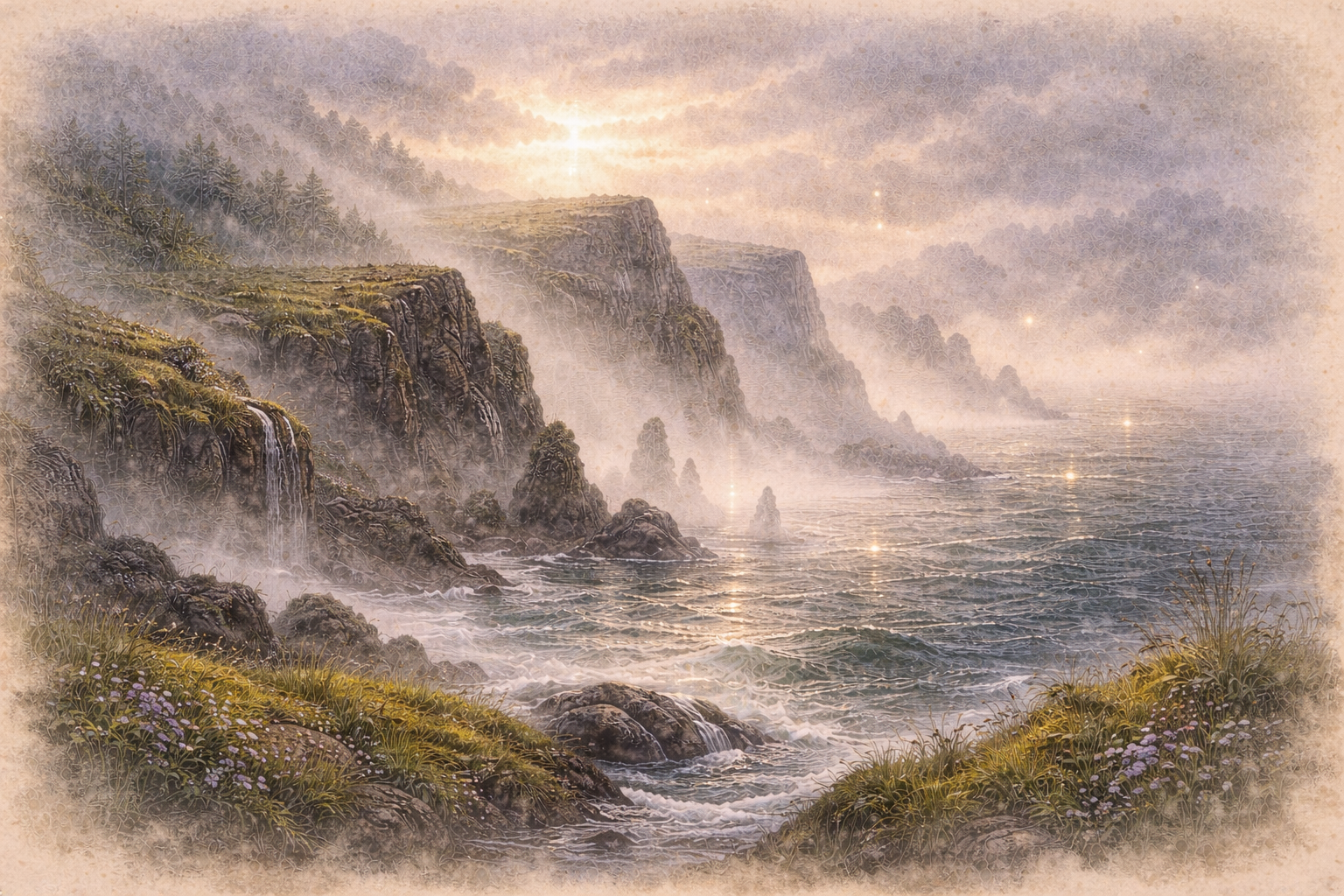
The mythical invasions of Ireland do not describe a single origin, but rather a succession of arrivals that shaped the Celtic world.
Unlike other traditions, Celtic mythology does not present a single moment of origin, but a process in which different peoples inhabit the island, disappear...and give way to those who follow.
This cycle of mythical occupations was preserved in one of the most important sources of Irish tradition: the Lebor Gabála Érenn, known as the “Book of the Invasions of Ireland.”
It was compiled by medieval Christian scribes, probably between the 11th and 12th centuries, although it preserves much older material from oral tradition.
More than a literal history, this text offers a symbolic vision of the world: a land that evolves through different orders, from the primordial to the human.
Ireland before humans
In the earliest accounts, Ireland appears as a wild and undefined land. A place where the natural and the supernatural were intertwined, where the boundaries between worlds were especially fragile.
Before the arrival of humans, the island was inhabited by beings that did not fully belong to the known world.
Some were closer to the forces of nature than to humankind.
The first inhabitants: primordial beings
The first figures in Irish tradition are almost legendary. Rather than an organized people, they represent an early stage of the world:
- mythical peoples
- legendary ancestors
- foundational figures
Among them are figures such as:
- Cessair, one of the first to arrive in Ireland according to tradition.
In some accounts, her arrival even precedes the Flood.
She is an ancestral, almost proto-mythical figure, associated with the first symbolic settlement of the island.
- Partholón and his people, linked to the first organized settlements. He is credited with introducing agriculture and a certain structuring of the land.
However, his people eventually disappear, usually as a result of a plague.
These early inhabitants do not endure. They vanish, as if they belonged to a world not yet ready to sustain itself.
The Fomorians: forces of chaos
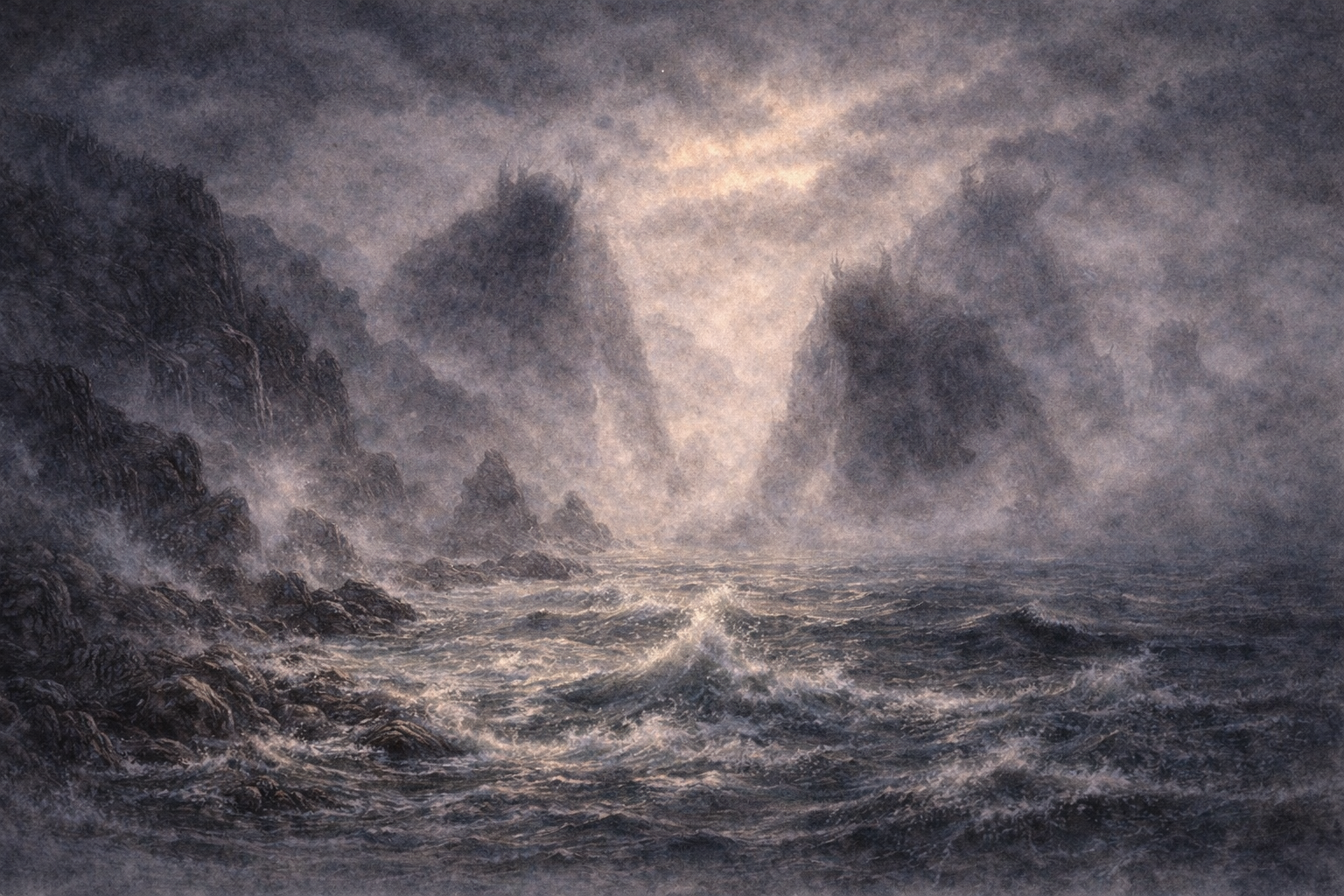
After these early stages, the Fomorians.
They are not a people in the traditional sense. They are something older. Darker.
In many interpretations, they represent primordial forces:
- chaos
- darkness
- the wild
- the uncontrollable
Often described as monstrous or deformed beings, they embody what threatens the balance of the world.
But they are not simply enemies. They are an essential part of the natural order.
Without them, there would be no conflict to shape reality.
The Fir Bolg: the first human order
After the Fomorians come the Fir Bolg.
Unlike the previous groups, they display clearly human traits.
They rule Ireland, divide the land, and establish structure:
- they organize the territory
- they create kingdoms
- they establish a first social order
For a time, Ireland appears to stabilize. But this balance is not permanent.
The Tuatha Dé Danann: the arrival of the gods
Then they arrive: . The Tuatha Dé Danann. A people neither fully human nor fully divine.
Their arrival marks a fundamental shift.
According to tradition, they come shrouded in mist, as if they do not fully belong to this world.
They bring with them knowledge and abilities unknown before:
- wisdom
- magic
- mastery over nature
- hidden knowledge
Their presence transforms Ireland. But it also introduces a new conflict.
The Battle of Mag Tuired: balance between forces
One of the central episodes of Irish mythology is the battles of Mag Tuired.
Mag Tuired (or Moytura) means “the plain of Tuired.”
According to tradition, two great battles took place there.
First battle: Tuatha Dé Danann vs Fir Bolg
When the Tuatha Dé Danann arrive, the land is already occupied by the Fir Bolg.
Conflict is inevitable.
The Tuatha Dé Danann prevail, imposing a new order upon the island.
Second battle: Tuatha Dé Danann vs Fomorians
The second battle carries a much deeper symbolic meaning.
It is not merely a war.
It represents the clash between two fundamental forces:
- order
- chaos
The Tuatha Dé Danann emerge victorious. But the Fomorians do not disappear. They lose dominance, yet continue to exist.
Because chaos cannot be eliminated. It can only be balanced.
The Milesians: the arrival of humans
After the Tuatha Dé Danann come the Milesians.
They represent humankind.
They are the ones who finally inhabit Ireland in a lasting way. But their arrival does not mean the disappearance of the previous inhabitants.
The passage to the Otherworld
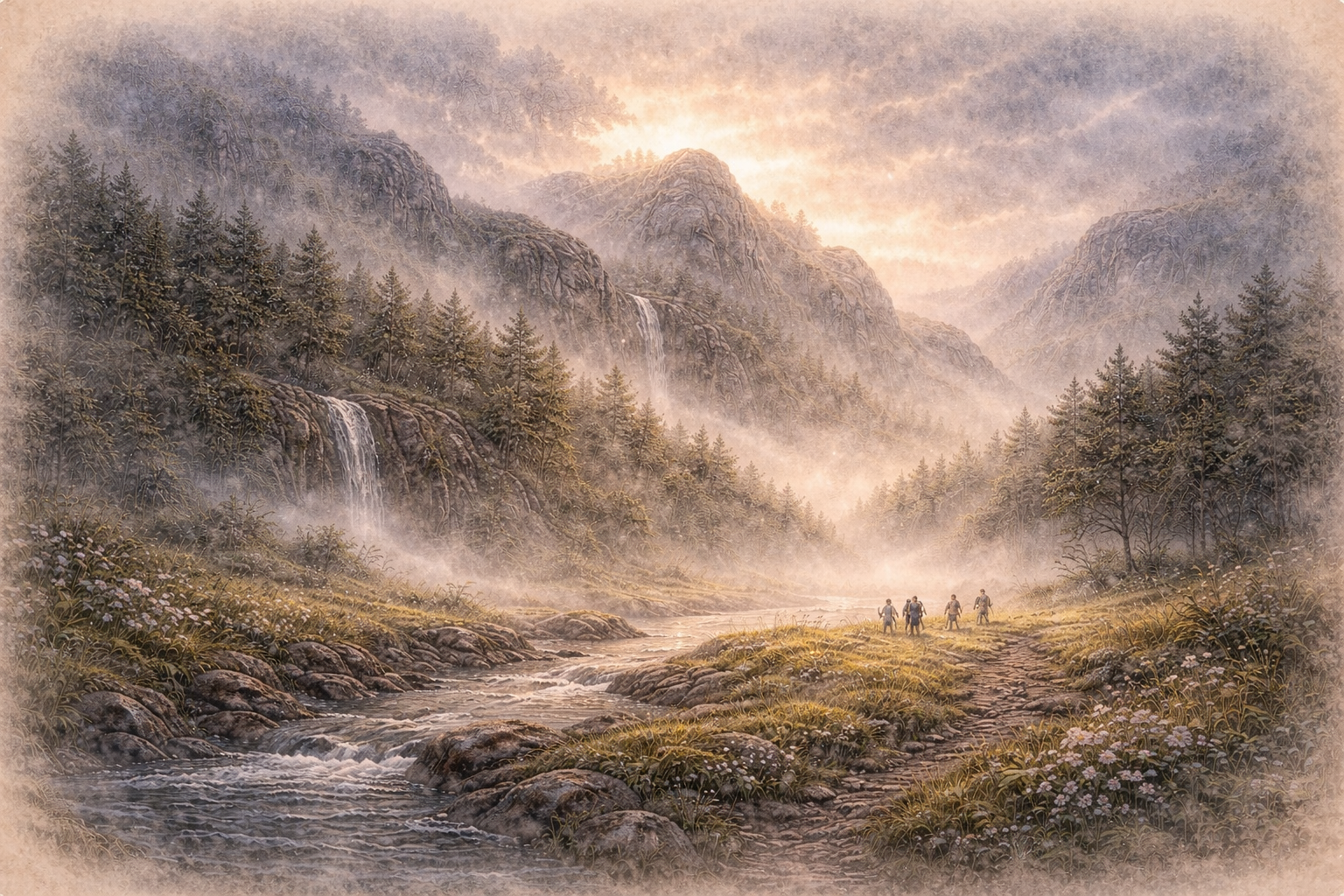
After the arrival of the Milesians, the Tuatha Dé Danann do not vanish. They withdraw. Their destination is the Otherworld.
This retreat is especially associated with the Sídhe: : hills, mounds, and invisible or enchanted places.
From that moment on:
- they dwell beneath the earth
- they exist on an invisible plane
- they remain connected to the human world
Over time, they come to be known as the Aos Sí.
Not as visible rulers…but as hidden presences.
A layered world
The mythical invasions are not just a succession of peoples. They are a way of understanding reality.
Each arrival represents a new order. Each disappearance, a transformation.
The Celtic world is not built all at once. It is built in layers. Layers that never fully vanish, but remain beneath the surface.
Because in Celtic tradition, what is ancient is never completely lost.
It simply changes form.
A different kind of origin
Unlike other cultures, where the world begins with a single act of creation, Celtic mythology presents a progressive origin.
A world that evolves. That transforms. That reorders itself.
A world where the gods do not create reality…but inhabit it.
And where the ancient beings do not disappear…
but remain present — even if they can no longer be seen.