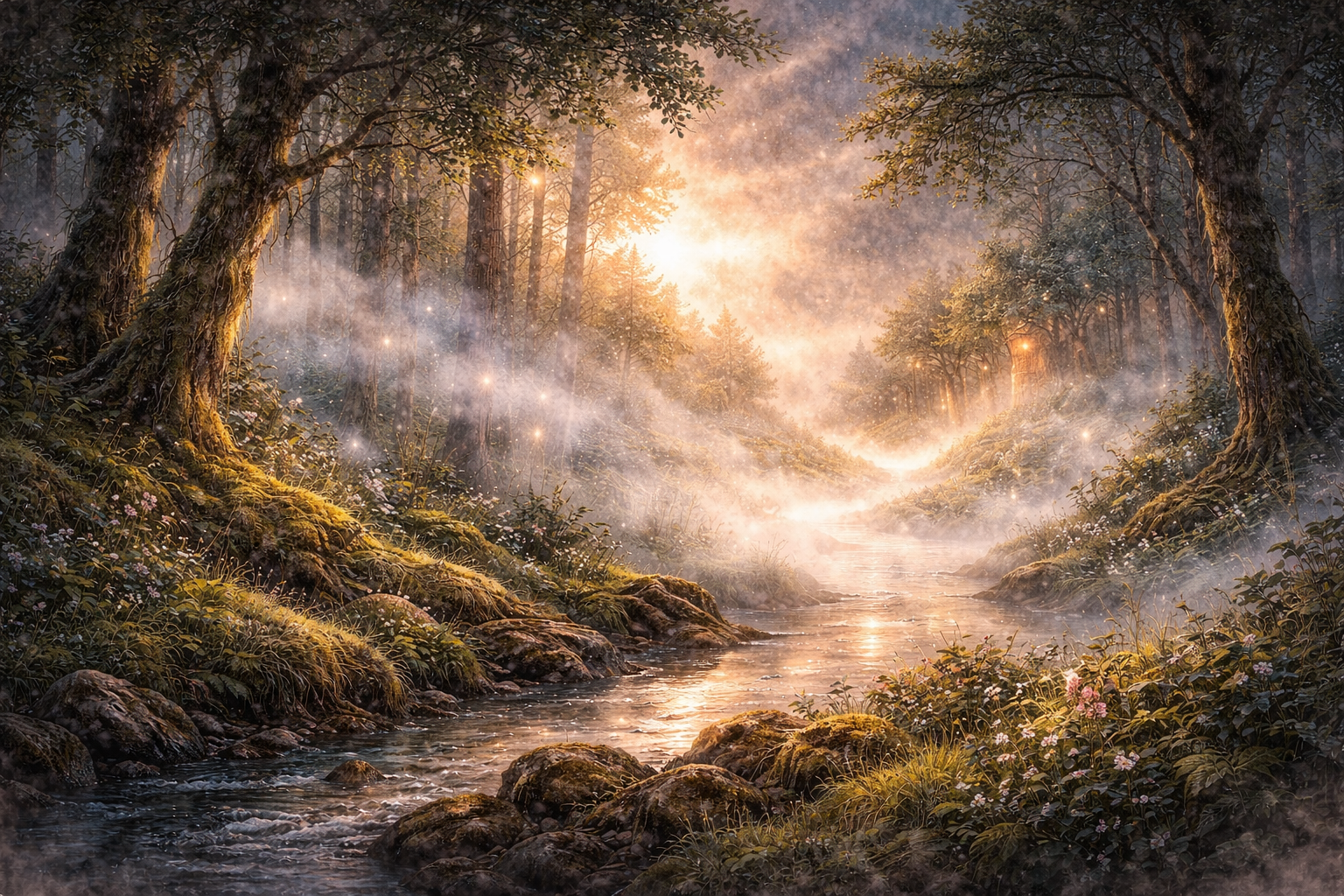
Unlike other ancient traditions, Celtic mythology does not describe a creation of the universe, but a reality divided between the visible world and the Otherworld, connected to each other.
There is no initial moment in which a god shapes the universe, nor a narrative explaining how the sky, the earth, or human beings came into existence.
Instead, the ancient Celts imagined something very different.
A visible world — the one we inhabit — and another invisible one, hidden behind a subtle veil, where gods, spirits, and forces constantly influenced reality.
For the Celts, understanding the origin of the world did not mean explaining its creation, but understanding how it works.
A divided, yet connected reality
In the Celtic worldview, reality was not separated into isolated planes, but into dimensions that coexisted.
On one side, the human world: forests, rivers, mountains, settlements.
On the other, an invisible world known as the Otherworld. Otherworld.
But there was no rigid boundary between them.
They were not two independent universes, but two aspects of the same reality.
Sometimes separated.
Sometimes overlapping.
Sometimes… indistinguishable.
The visible world: the realm of humans
The Celts did not have a single universal name for the human world.
It was simply the everyday world — the world of the living.
In Old Irish, the term an saol seoappears, meaning “this world.”
However, it was not a central or theological concept.
In Celtic thought, there was no need to define the visible world. What truly mattered was understanding the Otherworld.
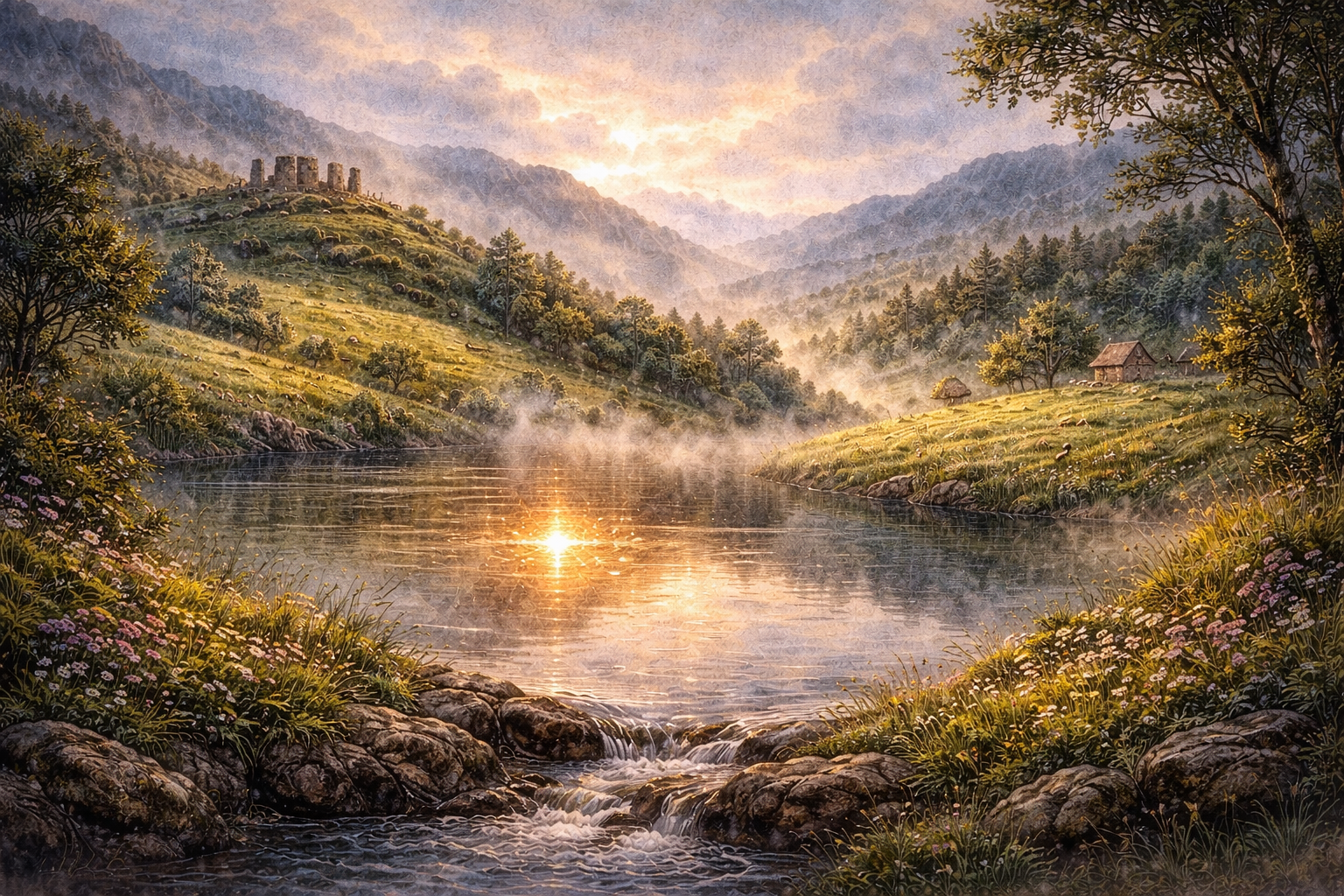
The Otherworld: a parallel reality
The Otherworld is one of the fundamental concepts of Celtic mythology.
It was not a place of punishment or a final destination after death.
It was something different.
A realm where time does not flow in the same way, where illness does not exist, and where beauty, youth, and abundance seem eternal.
A sacred parallel reality inhabited by:
- gods
- spirits
- ancestors
- forces of nature
For the Celtic peoples, the Otherworld explained:
- the fertility of the land
- natural cycles
- inspiration (poetry, wisdom)
- the unexplainable
The Celtic Otherworld was not a single realm, but a collection of places sharing the same essence.
Some were radiant and eternal, like Tír na nÓg; others more mysterious, like Annwn.
Yet all belonged to the same invisible reality coexisting with the human world.
Realms, spaces, and manifestations of the Otherworld
The Otherworld was not a single place, but a set of realms and landscapes sharing the same nature.
Irish and Welsh sources do not describe a single “afterlife,” but multiple names that seem to refer to the same reality — a world that changes depending on who enters it or tells its story.
Among the best known are:Among the best known are:
- Tír na nÓg – la tierra de la juventud
- Annwn – el Otro Mundo galés
- Mag Mell – la llanura del placer
- Avalon — the mythical island of the Arthurian cycle
More than separate worlds, they were different ways of perceiving the invisible.
Gateways to the Otherworld
The Sídhe: sacred mounds
In Celtic tradition, access to the Otherworld did not depend on a single place.
There were points of connection — spaces where the veil between the visible and the invisible. became thinner.
Among the most famous are:Among the most notable are:
- hills and burial mounds (sídhe)
- lakes and rivers
- ancient forests
- mist-covered landscapes
. The Sídhe — hills and mounds — were especially important.
They were not simple landscape formations, but places believed to be inhabited by the Aos Sí themselves, descendants of the Tuatha Dé Danann.
- fairy beings: fairies, elves…
- ancient gods
They were not just hills. They were gateways.
The edges of the world: where everything blends
For the Celts, the visible and invisible worlds were always connected.
They were simply… not always perceptible.
In certain places, the veil became thinner.
In those spaces:In those spaces:
A path might not lead to the same place.
An encounter might not fully belong to reality.
And the ordinary… could cease to be ordinary.
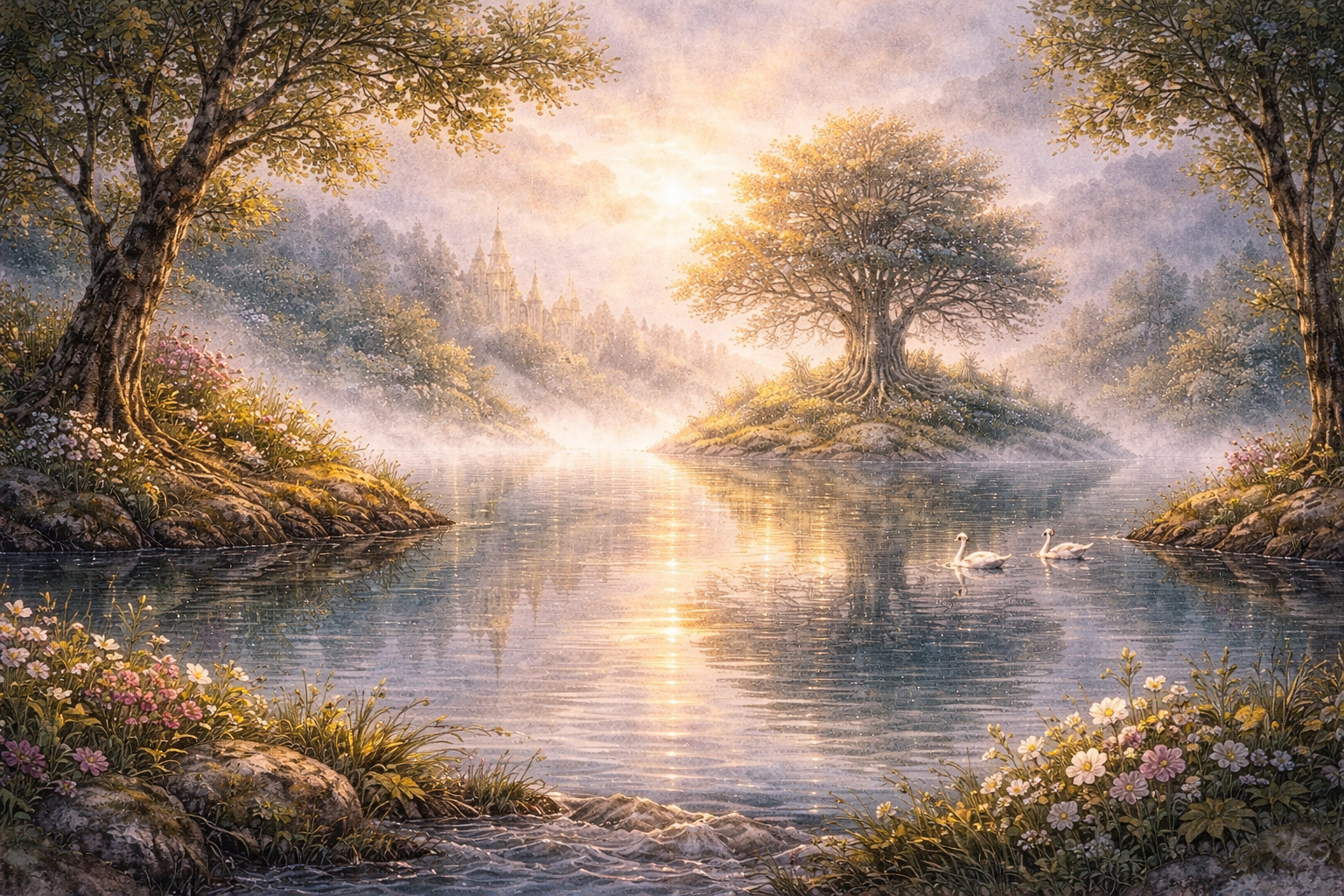
A time that does not move in a straight line
Another key aspect of the Celtic worldview is its understanding of time.
For them, time was not linear. It did not move from a beginning toward a definitive end.
It was cyclical.
Life, death, and rebirth were part of the same process.
The seasons reflected this rhythm:
- nature blossoms
- reaches its fullness
- fades
- and is reborn again
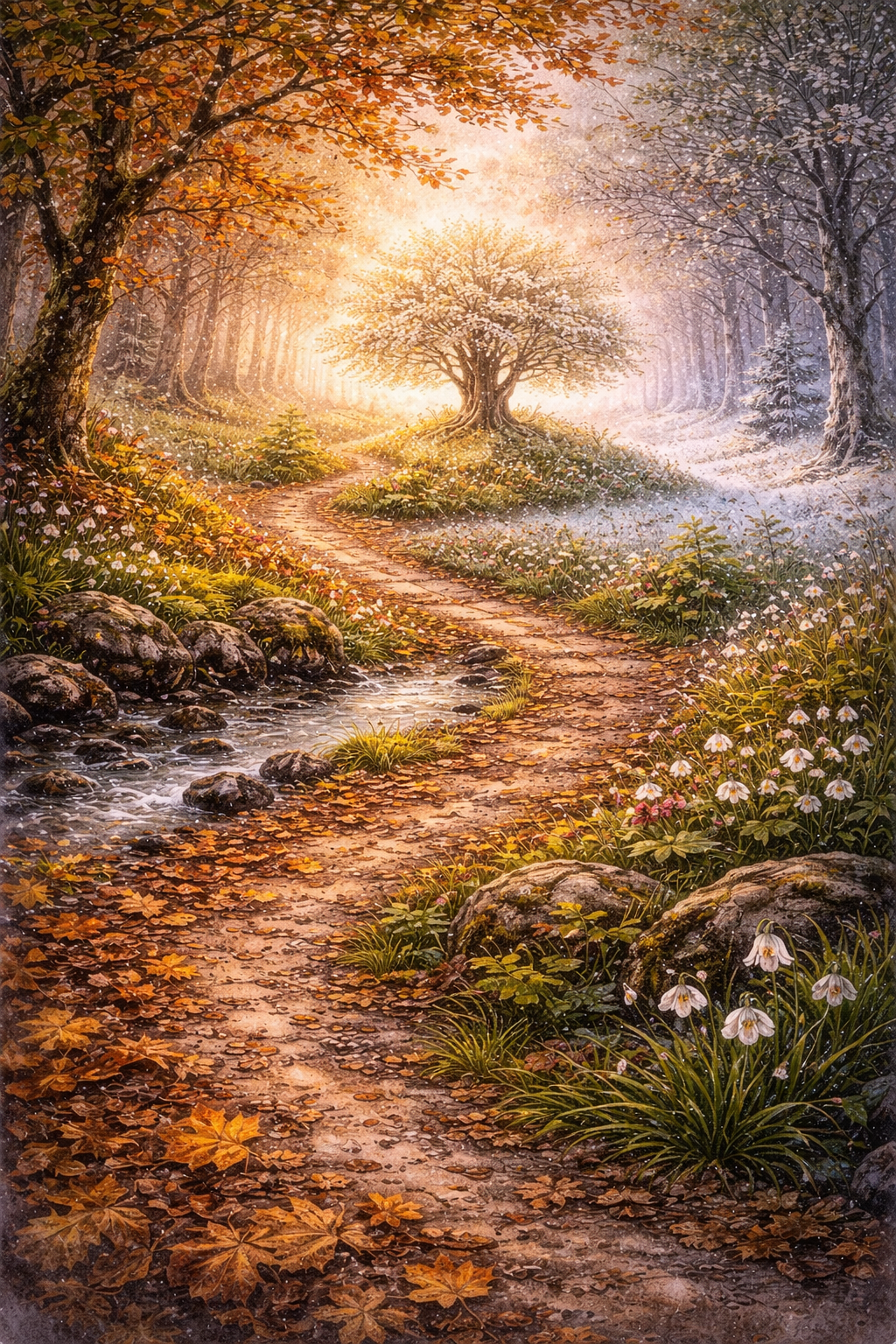
Death did not mean disappearance, but transformation.
This way of understanding time was also reflected in their symbols, such as spirals and triskele patterns, where movement never truly ends.
Liminal moments: when the veil grows thinner
If places could act as points of connection, so could certain moments of the year.
The Celts believed there were times when the boundary between worlds weakened.
These were known as liminal moments.
The Celtic calendar
The Celtic year was divided into two main halves:
- a dark half (winter)
- a light half (summer)
The transitions between them marked the most important moments of the year.
It was not based on months, but on natural cycles.
The main festivals were:
- Samhain (November 1st): marked the end of summer and the beginning of winter. Considered the Celtic New Year. The veil between worlds opened.
Over time, it gave rise to Halloween.
- Imbolc (February 1st): the end of winter, associated with the goddess Brigid.
- Beltane (May 1st): the beginning of summer, linked to fire, fertility, and life.
- Lughnasadh (August 1st): the harvest festival, associated with the god Lugh.
During these dates, the passage between worlds became more accessible.
It was believed that spirits could cross, the invisible could manifest, and reality itself became less stable.
For a moment, the world ceased to be fully defined.
A different way of understanding origins
Celtic mythology does not attempt to answer how everything began.
It offers something different.
A way of understanding the world based on connection, change, and the coexistence of realities.
For the Celts, nature was not a setting, but a living entity.
The world was not separate from the sacred. The sacred was part of the world.
And the visible… was only a part of what is real.
Because, for them, the universe did not end where sight could reach.
But where the invisible began.