There was a place spoken of in ancient tales. It was not exactly an island… nor entirely a realm.
It was something in between. That place was Avalon.
In Celtic tradition, Avalon does not fully belong to the world of men.
It is part of the Otherworld: that invisible realm where time stands still, wounds heal, and reality takes on different forms.
Not everyone can find it.
And those who do… do not always return the same.
The Meaning of Avalon
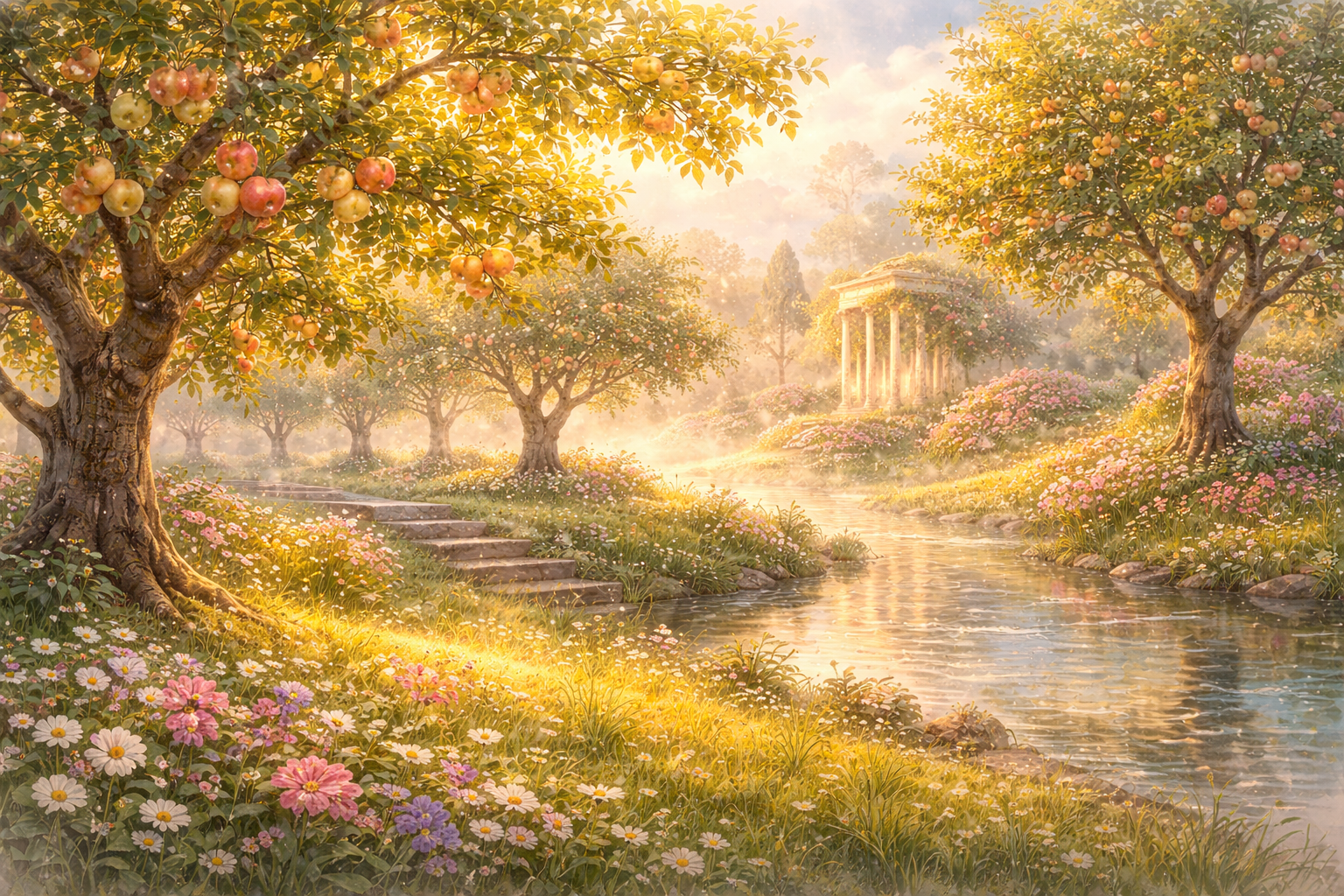
The name Avalon comes from an ancient root related to apples.
It has been interpreted as:
- the island of apples
- the land of abundance
But in Celtic mythology, apples were not merely food.
They were symbols of:
- immortality
- knowledge
- access to the Otherworld
An Island Hidden in the Mist
The stories describe Avalon as an island shrouded in mist.
It does not appear on maps. It cannot be reached by ordinary paths.
Not everyone can access Avalon. It is reached:
- by destiny
- by invitation
- in altered states (wounded, in transition, through magic)
It can only be reached when:
- the world opens
- the veil grows thinner
- or fate allows it
In many Celtic myths, access to the Otherworld occurs through:
- lakes
- islands
- sacred hills (sídhe)
Avalon brings all these elements together. It is a liminal place.
Morgana the Priestess
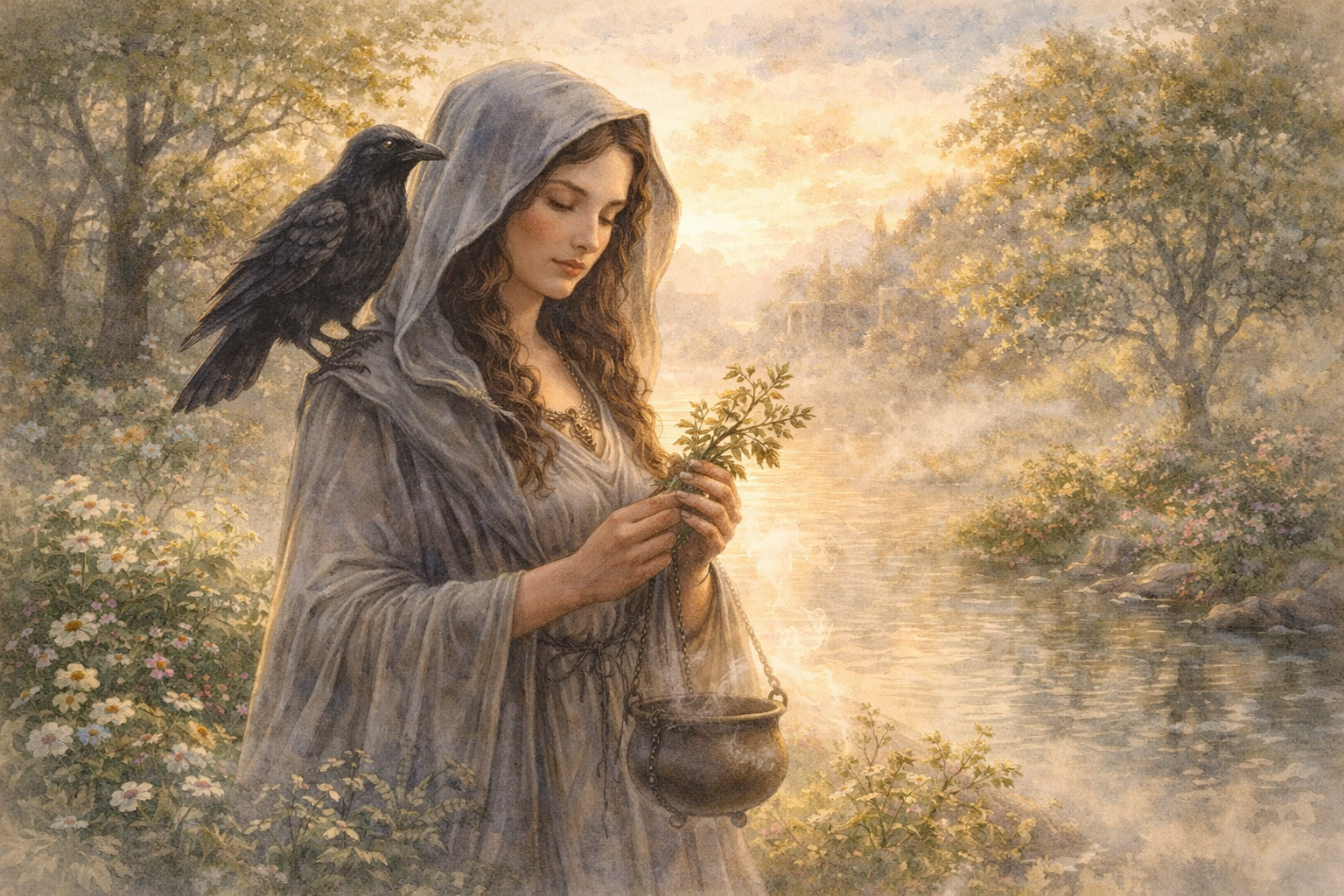
Morgana, or Morgan le Fay, is a complex figure within the tradition.
She is described as a priestess or magical woman, capable of transformation and connected to the mysteries of the Otherworld.
Her name may be linked to the Old Welsh moriguena, interpreted as “born of the sea.”
In different traditions, Morgana appears as:
- a ruler
- a guardian
- a priestess
- a guide to the Otherworld
More than a single figure, she represents an ambiguous force: between magic, healing, and hidden knowledge.
Among her symbols are:
- the apple tree, linked to Avalon
- the raven, associated with prophecy, death, and transformation
- herbs and the cauldron, connected to healing
Inhabitants of Avalon
In many versions of the myth, Avalon is inhabited by female figures.
They are not mere characters. They represent:
- hidden knowledge
- the connection to the unseen
- the passage between worlds
Alongside them appear other beings such as:
- priestesses
- fairies
- fairy beings
- guardians
- entities of the Otherworld
A Different Time
In Avalon, time does not flow as it does in the human world. A moment can be eternal… or centuries may pass without being perceived.
This is one of the most characteristic features of the Celtic Otherworld: the rupture of linear time.
Whoever enters Avalon… leaves behind the rules of the known world.
Between Reality and Legend
Throughout the centuries, Avalon has been interpreted in many ways:
- a real island
- a literary myth
- a spiritual symbol
But within the Celtic context, it is something deeper.
Avalon represents:
- access to the unknown
- contact with another reality
- the mystery beyond the visible
Avalon es uno de los muchos nombres del Otro Mundo en la mitología celta, junto a lugares como Tír na nÓg, Annwn and Mag Mell.
Where the Visible World Fades
Avalon has not disappeared. It remains present in stories, legends, and symbols.
Not as a destination we can find on a map, but as a space where the world shifts… and where those who cross over cease to be who they once were.
Avalon is, perhaps, a memory of something that has always been there.
Waiting.
Avalon and King Arthur
One of the most well-known stories links Avalon to King Arthur.
At the end of the Arthurian cycle, Mordred — Arthur’s son or nephew, depending on the version — attempts to seize power.
They face each other at the Battle of Camlann.
Arthur kills Mordred, but is gravely wounded.
He is then taken by boat to Avalon by mysterious female figures, often identified as the Ladies of the Lake.
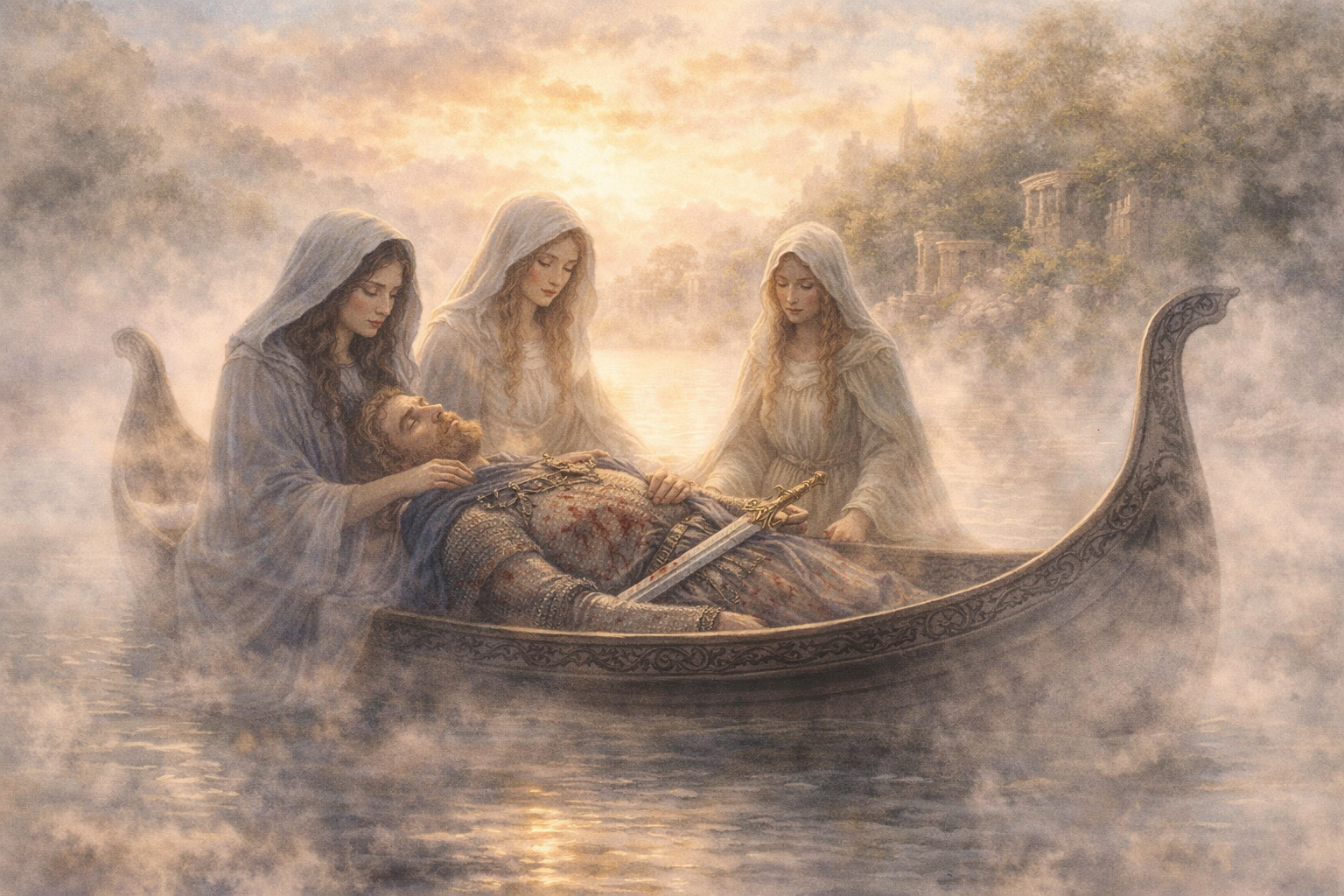
There, according to tradition:
- his wounds are healed
- his body rests
- he awaits the moment of his return
Avalon thus becomes:
- a place of healing
- a refuge
- a promise of return
Arthur does not fully belong to history… nor entirely to fiction.
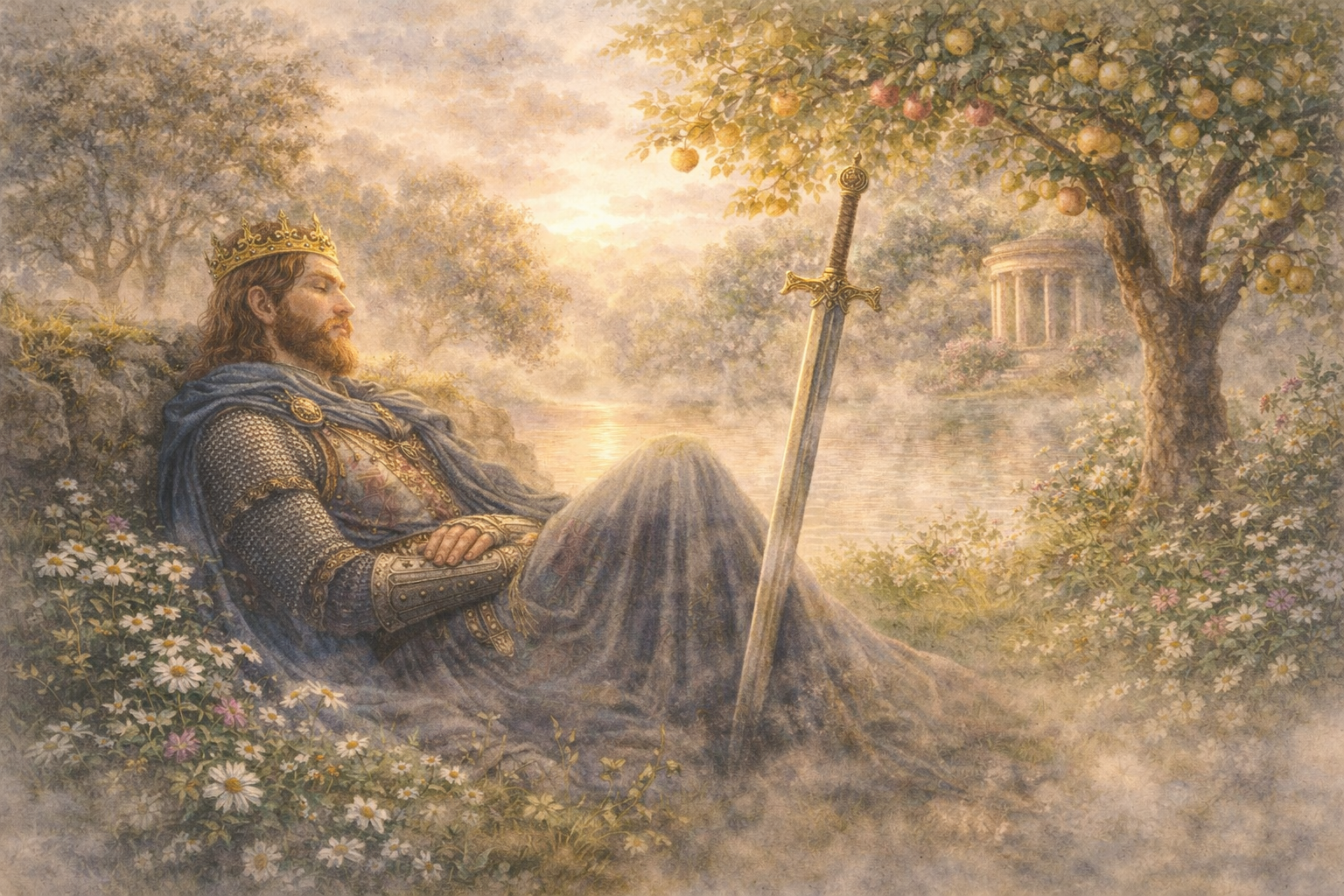
He is a figure born on the boundary between both.
Curiosities
Glastonbury, King Arthur, and Avalon
During the reign of Henry II of England in the 12th century, some monks claimed to have discovered at Glastonbury Abbey:
- an oak coffin
- human remains
- and a cross with a Latin inscription
According to their account, it was the tomb of King Arthur, and the inscription placed him in Avalon:
“Hic iacet sepultus inclitus rex Arthurus in insula Avalonia”
“Here lies the renowned King Arthur in the island of Avalon”
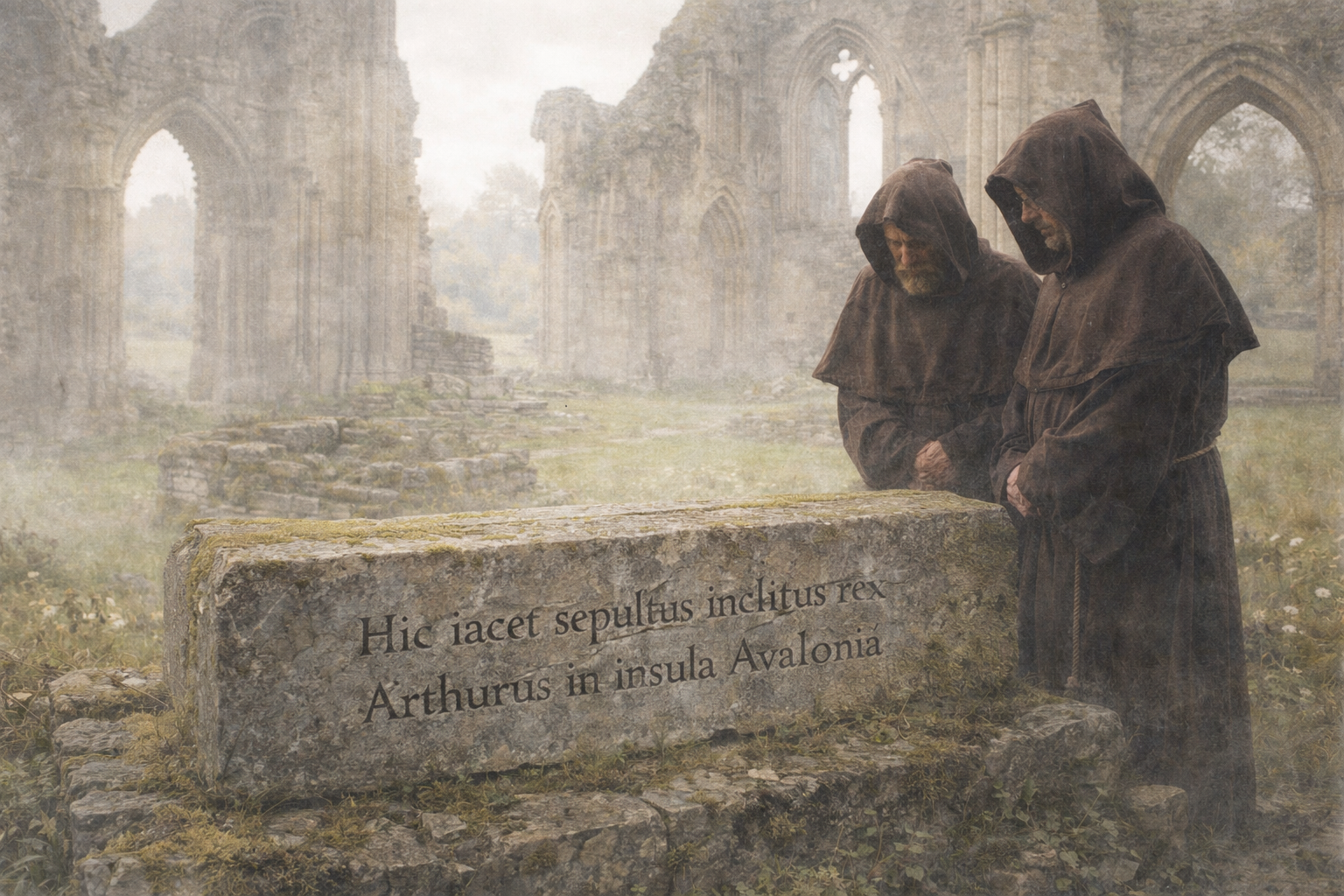
However, none of these remains are preserved today, and many historians believe it may have been an invention.
Later on, even Edward I of England was present at ceremonies related to this discovery.
Since then, Glastonbury has been associated with Avalon, especially places such as:
- Glastonbury Tor
- the Abbey
Follow the Footprints
Visit it today...
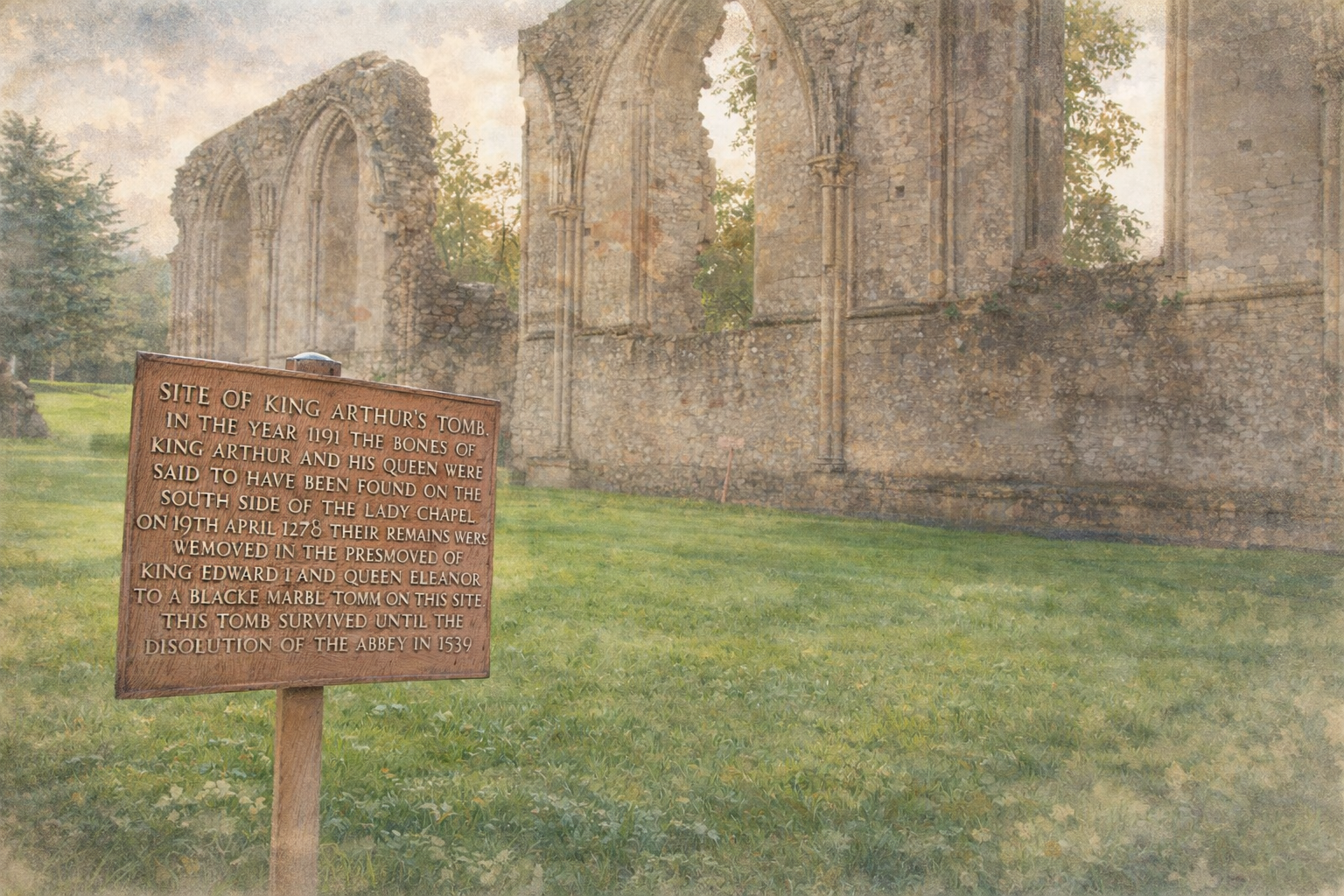
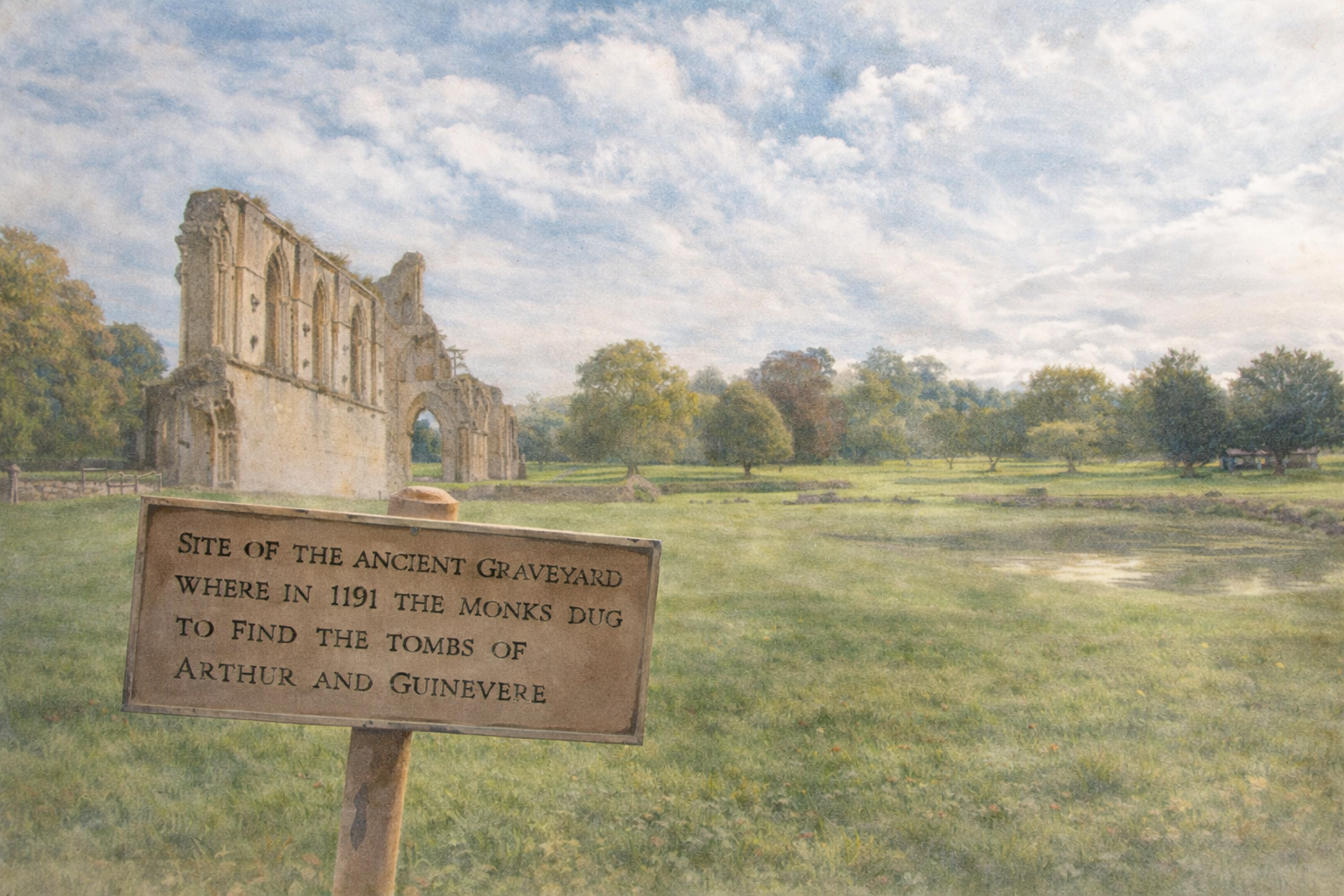
Today, in the ruins of the Glastonbury Abbey, two signs mark the place where, according to tradition, the remains of King Arthur were found.
One indicates that the monks excavated in search of the tombs, while another states that the bodies were said to have been found there, reflecting the uncertainty surrounding this episode.
Sign at the Site Where Arthur’s Remains Were Said to Be Found:
“In the year 1191, it is said that the bodies of King Arthur and his queen were found on the south side of the Lady Chapel. On April 19, 1278, their remains were transferred in the presence of King Edward I and Queen Eleanor to a black marble tomb at this site. This tomb remained until the dissolution of the Abbey in 1539.”
Sign at the Old Cemetery Area:
“Site of the old cemetery, where in 1191 the monks excavated to find the tombs of Arthur and Guinevere.”