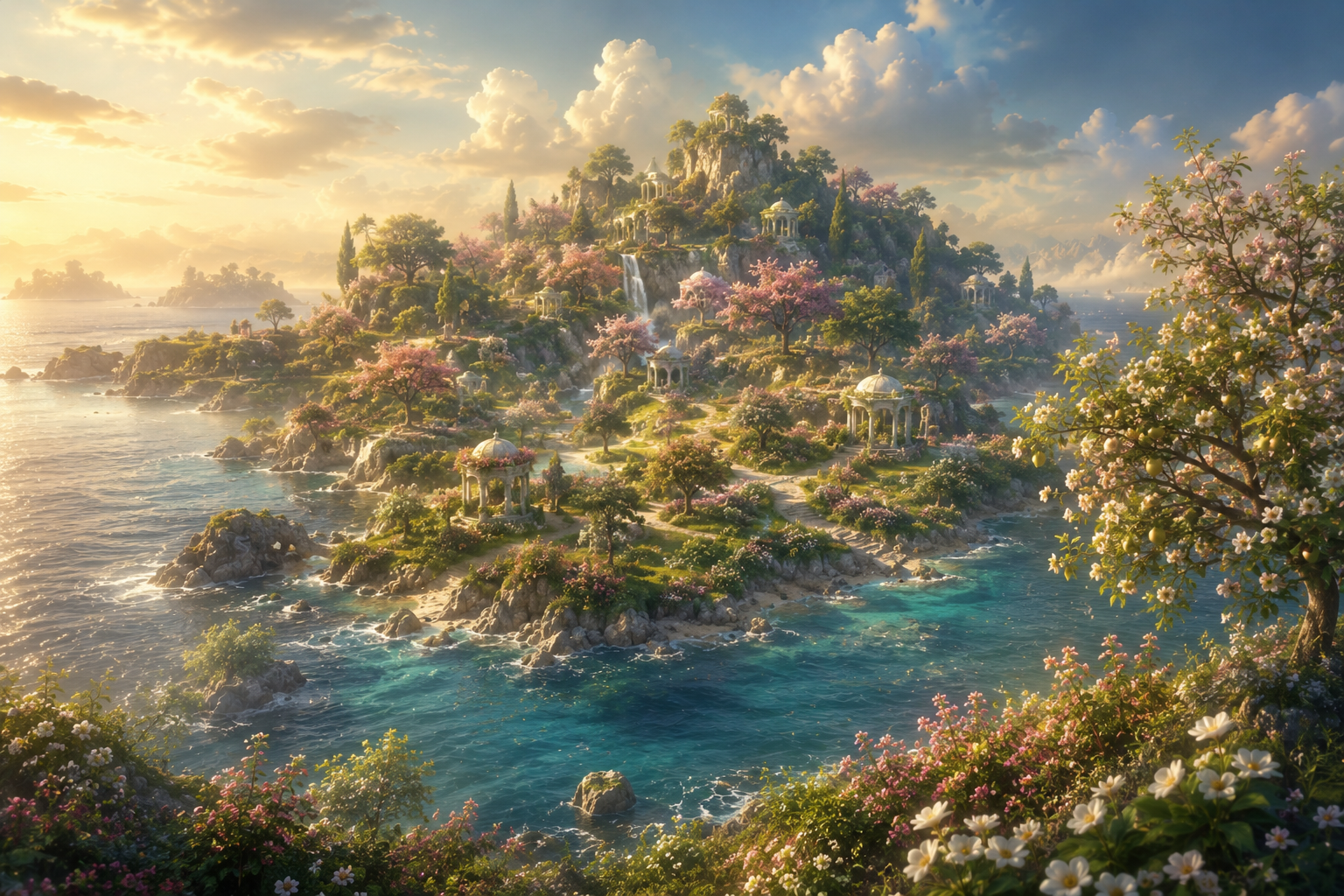
In the ancient Irish traditions, there are places that seem to belong to a different reality.
Hidden islands beyond the horizon. Lands where time flows differently. Realms where sickness, old age and suffering do not exist.
Among them is Tír na mBan, the so-called Land of Women, one of the most enigmatic places associated with the Celtic Otherworld.
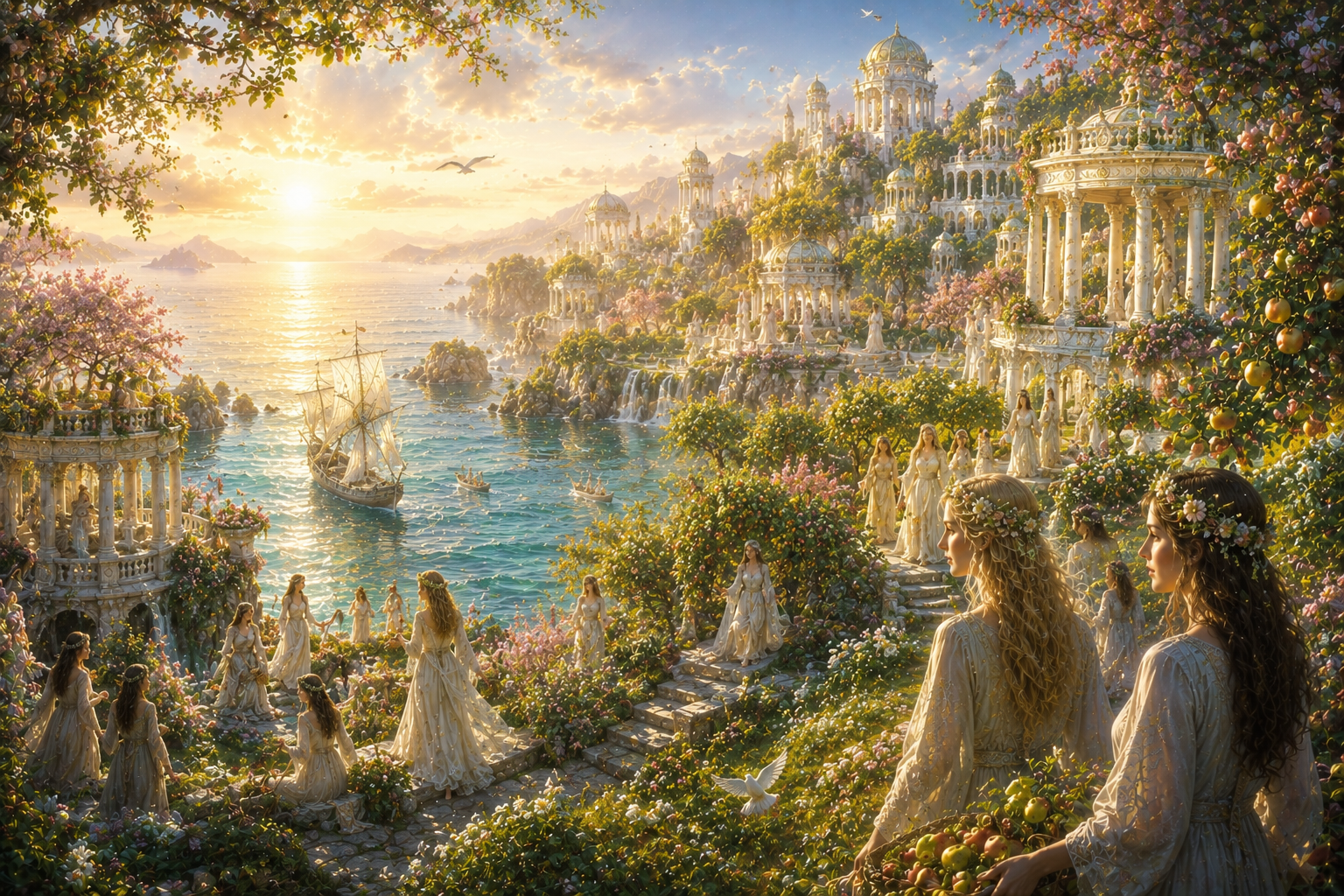
A realm of beauty, abundance and eternal youth situated beyond the known sea.
The Meaning of Tír na mBan
The name comes from Old Irish:
- Tír = land
- na mBan = of the women
Its usual translation is "The Land of Women." In some versions it also appears as Inis na mBan, the Island of Women.
The sources do not always clearly distinguish between these names, and sometimes they seem to refer to the same supernatural place.
A Realm Beyond the Ocean
Like many other territories of the Irish Otherworld, Tír na mBan lies beyond the visible horizon.
It cannot be reached by ordinary routes and appears on no map. It is accessible only to those who receive a supernatural invitation or are guided by powers belonging to the Otherworld.
In Irish tradition, the sea often functions as a boundary between the human world and the supernatural realms.
Crossing that boundary means leaving ordinary reality behind and entering a place where the laws of time and nature no longer behave as expected.
The Queen of Tír na mBan
One of the most distinctive features of this realm is the presence of a sovereign female figure. The sources describe her as a supernatural woman associated with the Otherworld.
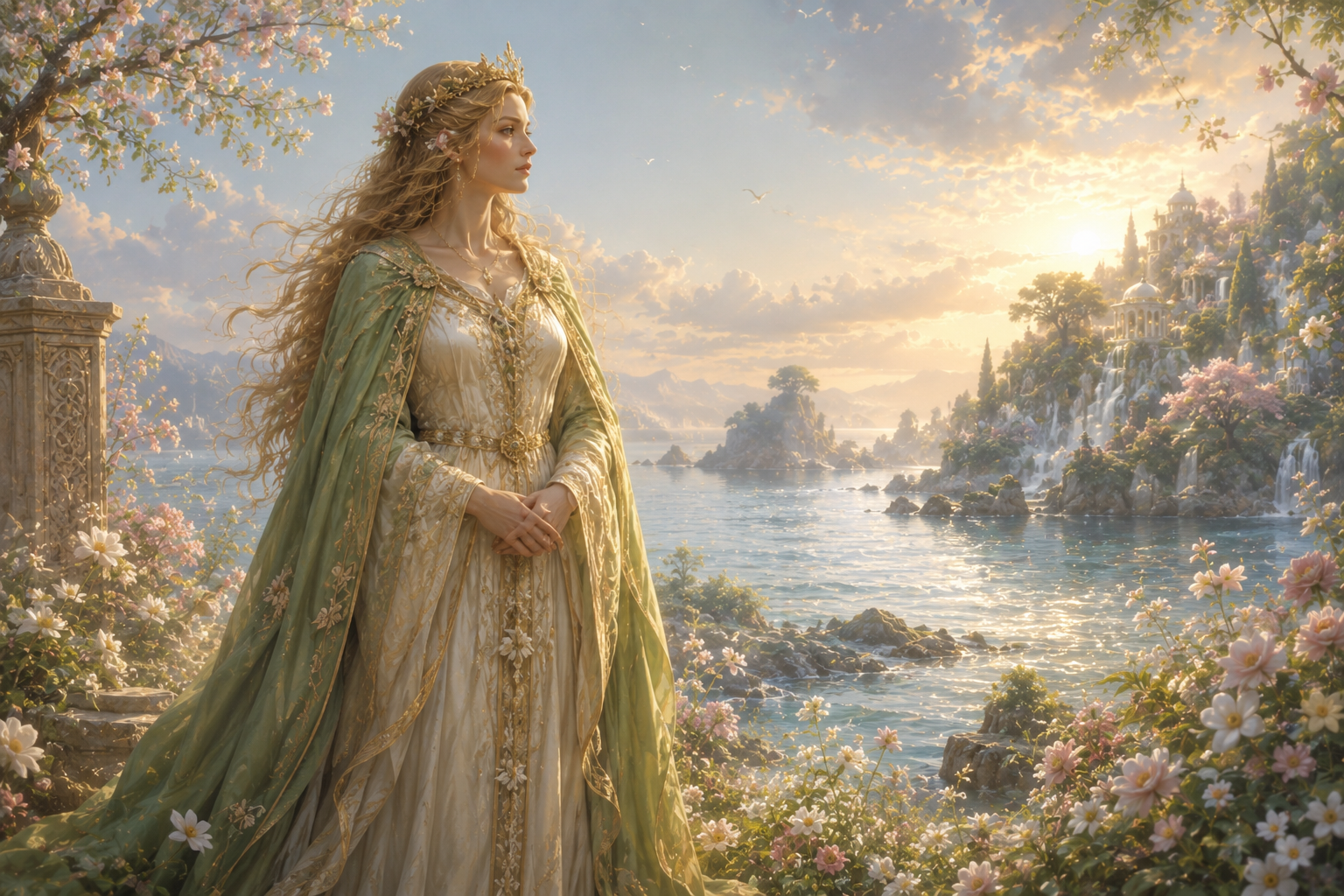
She is not always given a specific name, but she appears as the ruler of the realm and as a guide to those who arrive there.
In many Irish traditions, female figures of the Otherworld are connected with sovereignty, prosperity and the relationship between human beings and supernatural powers.
For this reason, the Queen of Tír na mBan represents far more than a ruler: she embodies the very nature of the realm she inhabits.
A Land Without Sickness or Old Age
Descriptions of Tír na mBan portray an idealized land.
There is no:.
- sickness
- old age
- hunger
- suffering
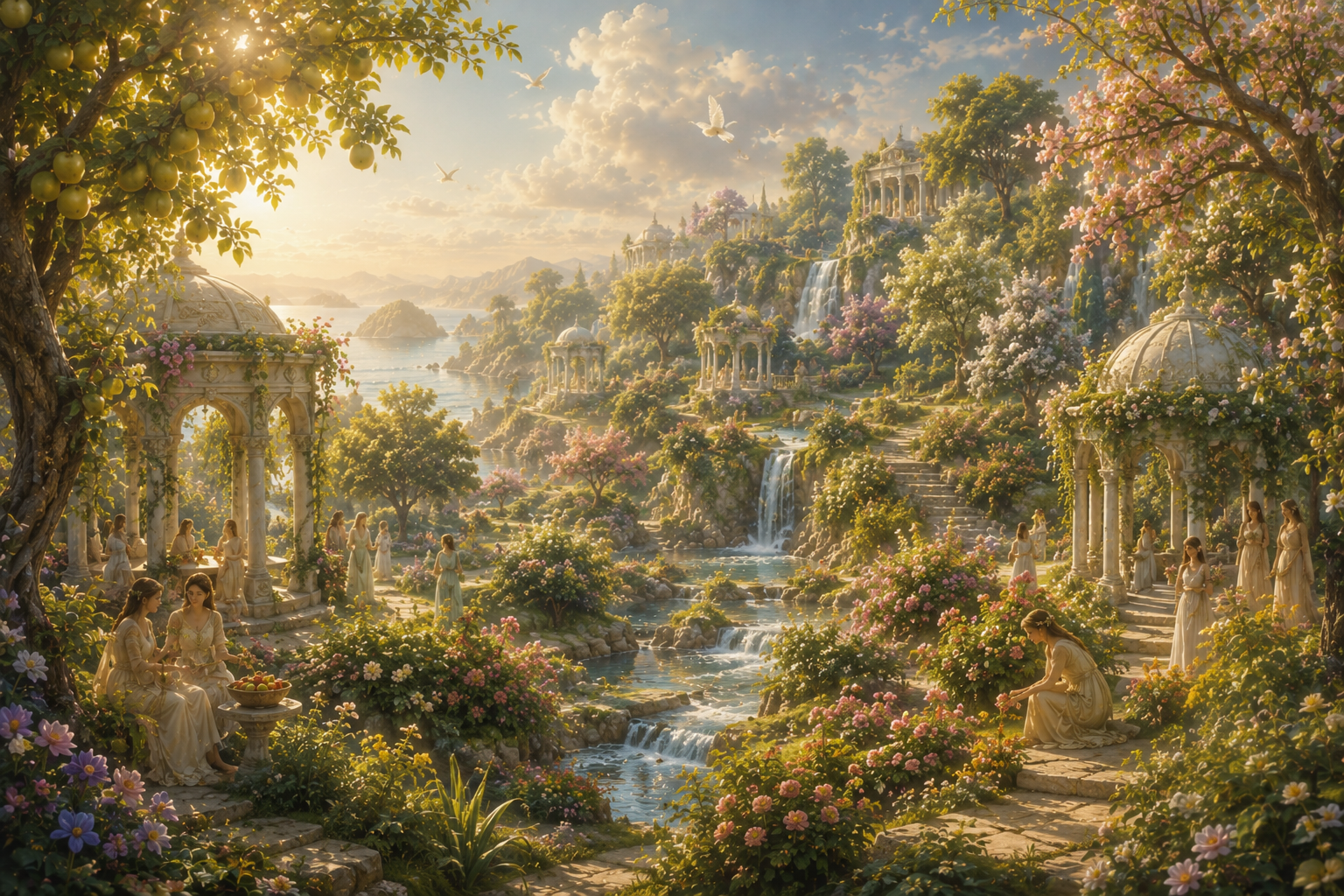
Nature remains eternally fertile and abundant. Its inhabitants enjoy a harmonious existence where the passage of time seems to have stopped.
This image reflects one of the most recurring ideas of the Celtic Otherworld: the existence of a perfect realm beyond the everyday experience of humankind
The Inhabitants of Tír na mBan
The sources provide few specific details about the inhabitants of the realm. However, the supernatural women who welcome visitors appear to belong to the world of fairy beings associated with the Otherworld.
In medieval Irish tradition, such figures are often linked to the ancient supernatural inhabitants of Ireland, later known as the Aos Sí.
As with many regions of the Otherworld, the boundary between gods, spirits and fairy beings is not always clearly defined.
Tír na mBan and Other Realms of the Otherworld
The medieval Irish sources describe numerous supernatural lands.
Among the most famous are:Among the most notable are:
The boundaries between these places are not always clear. In some stories they appear to be separate kingdoms. In others, they seem to be different aspects of the same supernatural reality.
For this reason, many scholars believe that the various names of the Irish Otherworld represent related regions within a broader mythical geography.
A Realm Between Reality and Myth
Unlike the paradises of some later traditions, Tír na mBan is not portrayed exclusively as a place reserved for the dead.
It can be visited by heroes, travellers and sailors.
It is a realm that exists alongside the human world, although it normally remains hidden.
Only a few manage to cross its borders. And those who return are rarely the same.
The Voyage of Bran
The most famous story associated with Tír na mBan is Imran Brain maic Febail (The Voyage of Bran, Son of Febal), an Irish tale preserved in medieval manuscripts and composed sometime between the 8th and 10th centuries.
Its protagonist is Bran mac Febail, an Irish nobleman or prince who receives an invitation from the Otherworld.
The visitor is presented as a supernatural woman, described in various translations as either "the Woman of the Otherworld" or "the Queen of the Land of Women."
The tale is considered one of the most important accounts of Irish journeys to the Otherworld.
The Invitation
One day, Bran hears music of extraordinary beauty. The melody is so enchanting that he falls asleep. When he awakens, he finds beside him a branch of apple blossom covered with silver flowers.
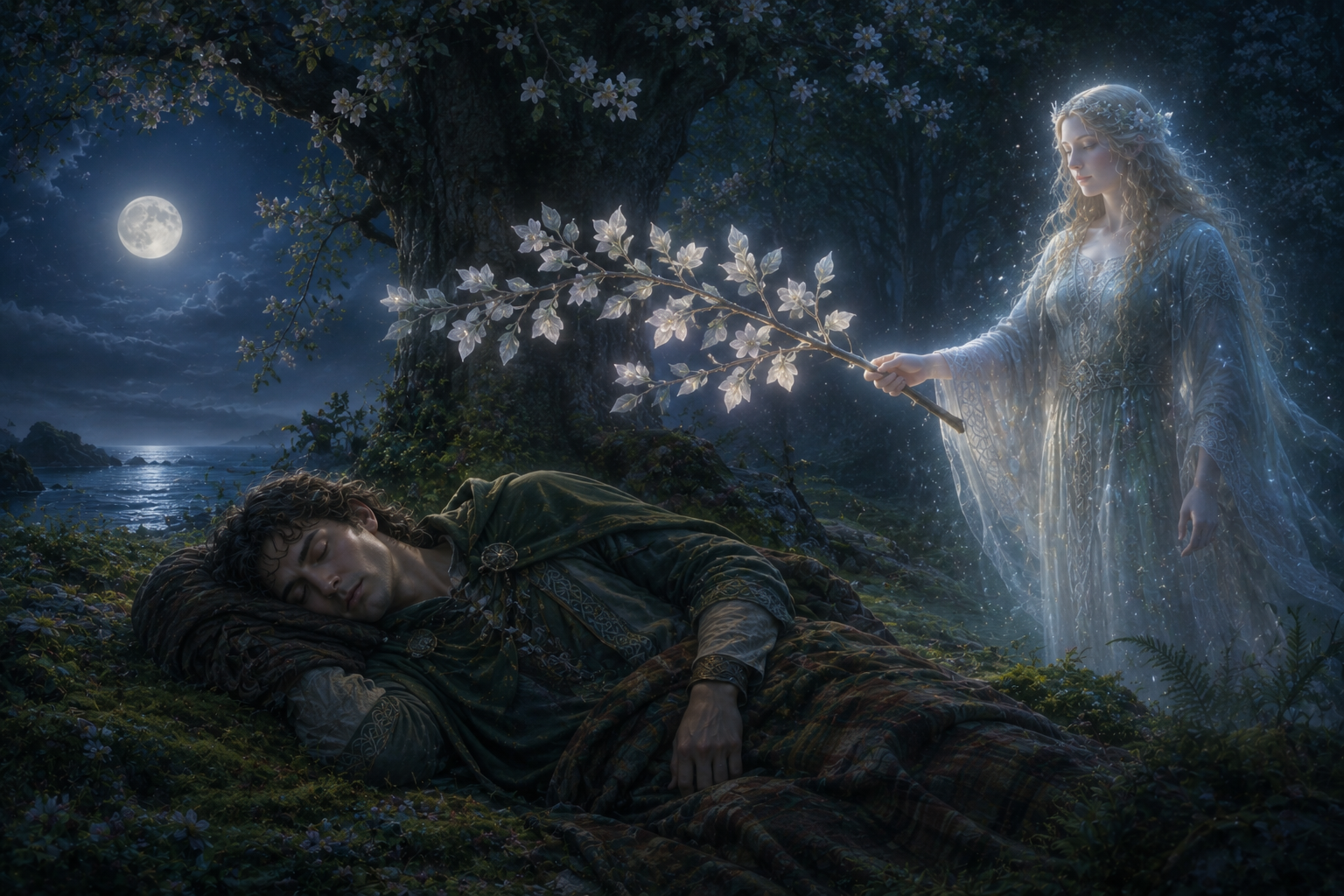
Shortly afterward, a mysterious woman from the Otherworld appears and begins to sing. In her song she describes a marvellous land beyond the ocean where there are:
- magical apple trees
- eternal abundance
- no sickness or death
- endless beauty
- everlasting happiness
The woman invites Bran to undertake the journey.
Inspired by the vision she has shown him, Bran gathers his companions and sails westward in search of the land.
The Encounter with Manannán mac Lir
During the voyage, Bran and his companions encounter Manannán mac Lir, one of the great sea deities of Irish tradition.
One of the most remarkable moments of the tale follows. What Bran sees as an ocean, Manannán perceives as a vast living plain.
They are not looking at the same reality.
- Bran sees water.
- Manannán sees land.
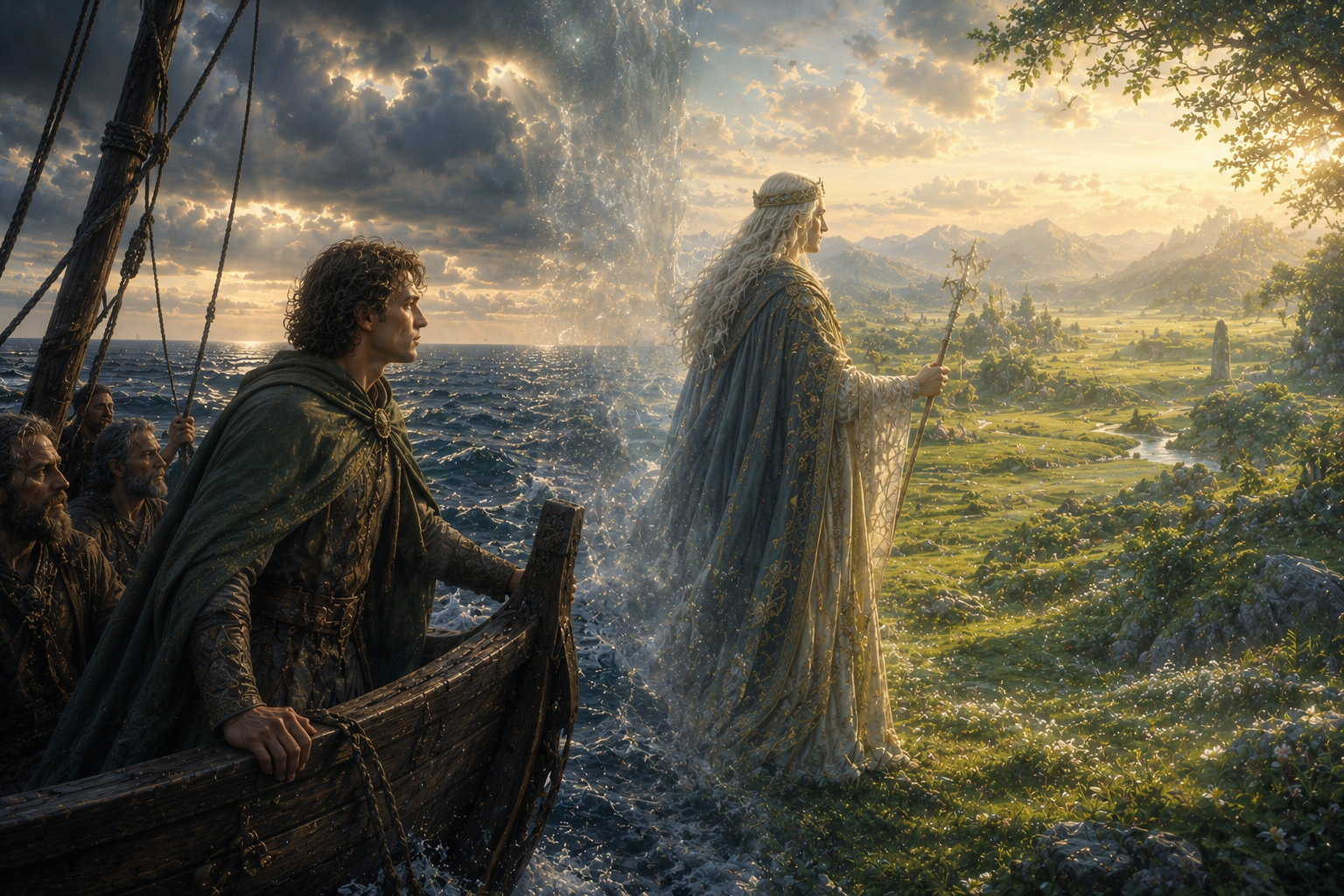
This episode symbolizes one of the central ideas of the Celtic Otherworld: the existence of invisible realities that coexist with the human world.
The Island of Joy
Before reaching Tír na mBan, Bran and his companions arrive at a strange island.
There they see a man laughing endlessly. He appears trapped in a state of eternal happiness.
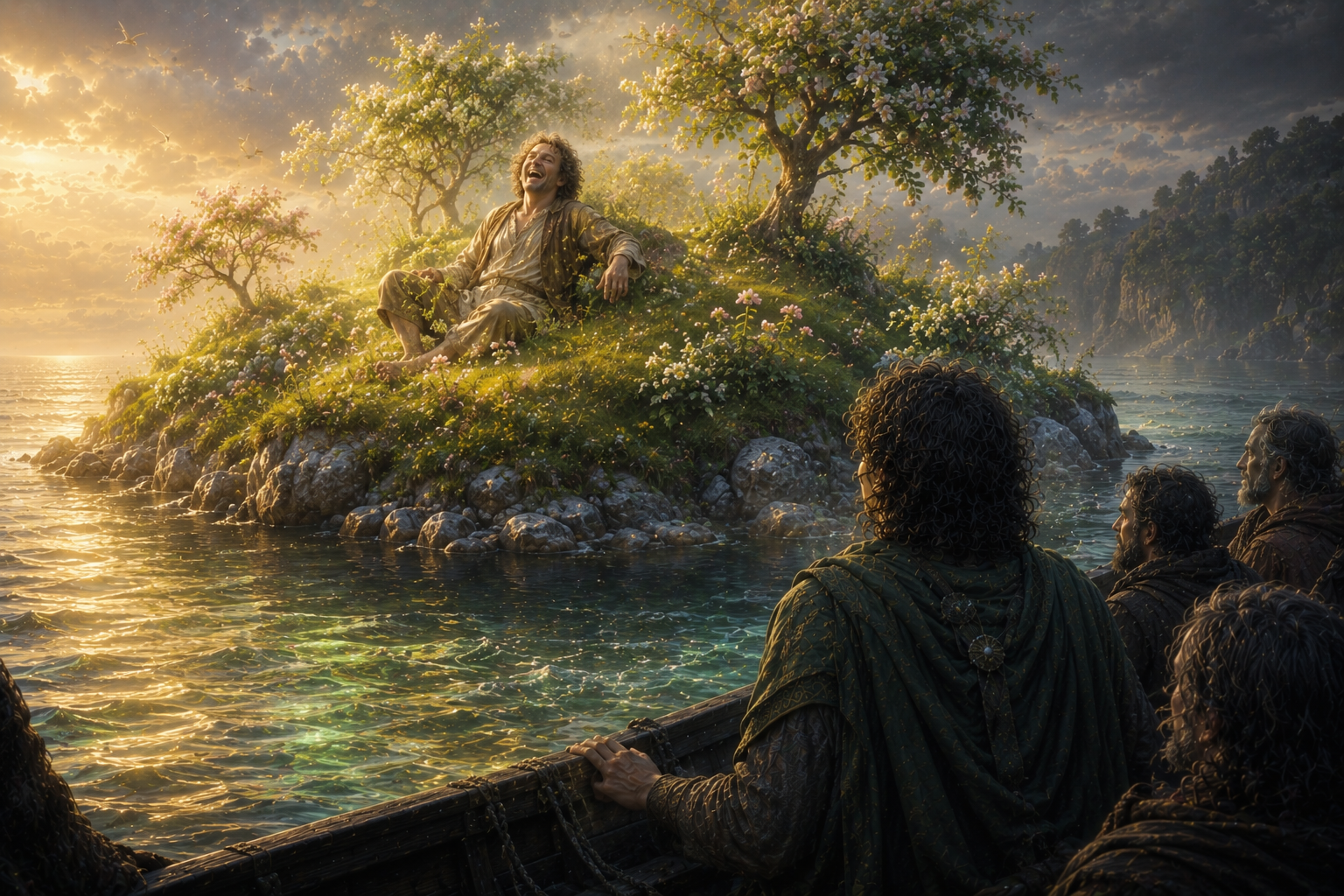
When one of Bran's companions goes ashore to approach him, he immediately falls under the same enchantment. He remains there forever. Unable to rescue him, Bran and the others continue their voyage.
Tír na mBan: The Land of Women
At last they arrive at Tír na mBan.
The queen approaches from the shore and throws a magical thread toward the ship. The thread attaches itself to the vessel, and as she pulls it, the ship glides gently toward the coast.
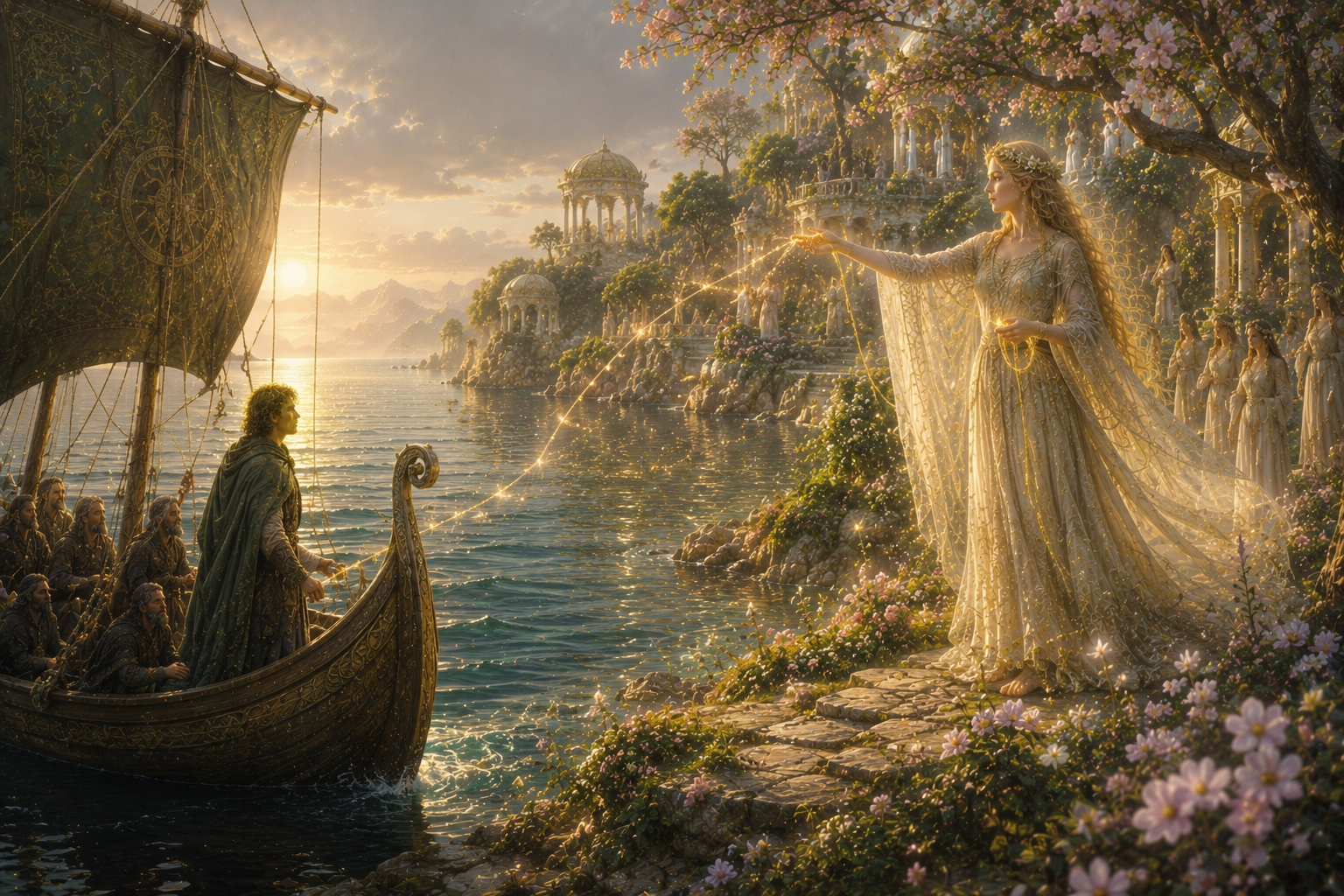
The women of the Otherworld welcome Bran and his companions with hospitality.
The realm appears as a place of:
- beauty
- abundance
- harmony
- eternal youth
There they live happily for what seems to them a short period of time.
The Return to Ireland
As time passes, one of Bran's companions begins to long for Ireland. Eventually he persuades Bran to return.
Before they depart, the queen tries to warn them that the world they left behind is no longer the same. Nevertheless, they begin the journey home.
When they arrive in Ireland, nobody recognizes them. They ask about the ancient rulers and discover that their own names belong to legend.
For them, only a short time has passed. For Ireland, generations have gone by.
Uno de los hombres desciende de la embarcación. En cuanto toca tierra, se convierte instantáneamente en polvo. Bran comprende entonces lo sucedido. Cuenta su historia a quienes lo escuchan y vuelve a hacerse a la mar.
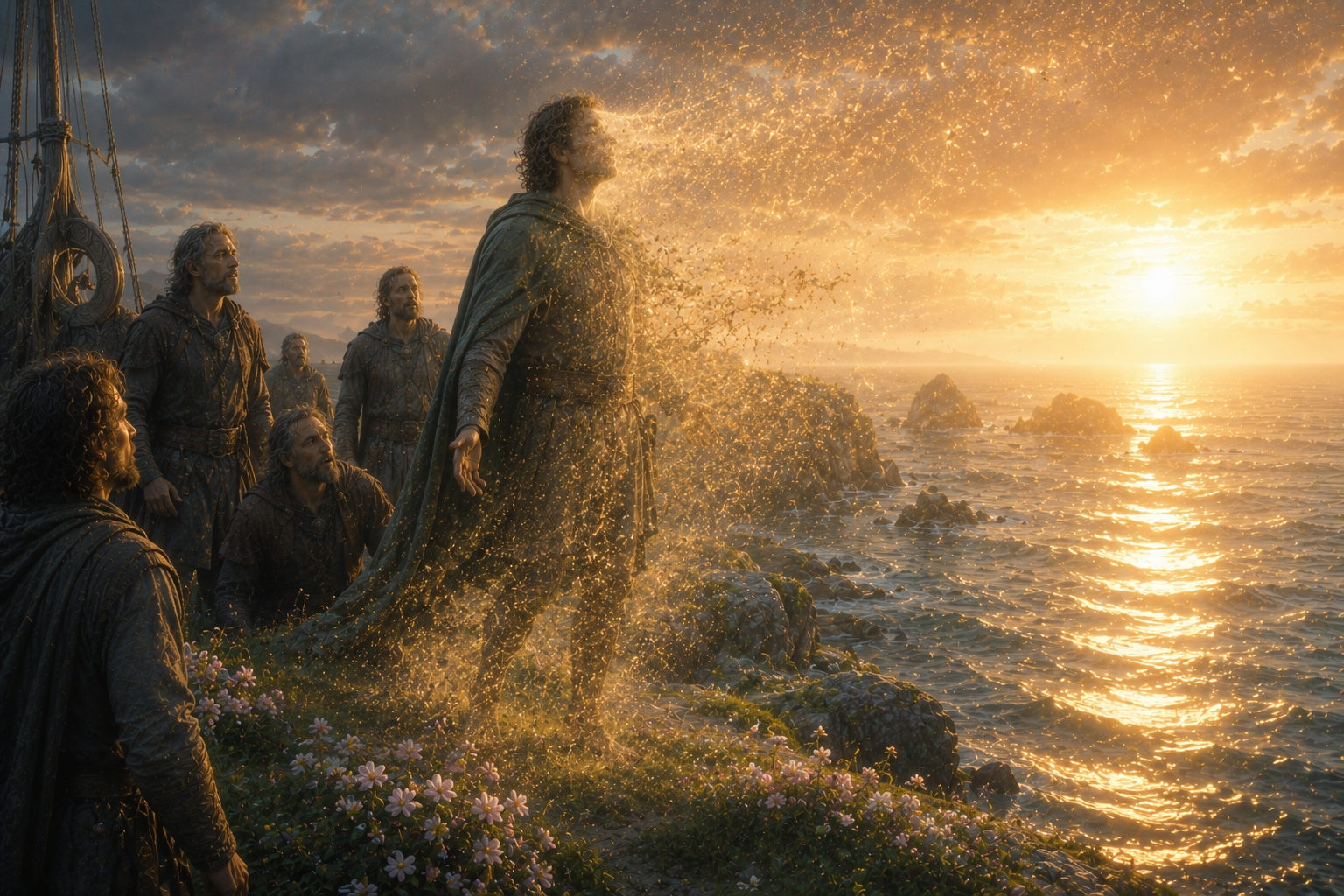
The tale does not reveal his final fate, although it is traditionally interpreted that he returned to the Otherworld.
A Realm Difficult to Define
One of the most fascinating aspects of The Voyage of Bran is that the Otherworld is never described in a completely clear way.
Depending on the interpretation, the places visited may be associated with:
- Tír na mBan
- Mag Mell
- Emain Ablach
- Tír Tairngire
- other regions of the Irish Otherworld
The boundaries between these territories are deliberately blurred.
Throughout the voyage, even reality itself changes. What is sea for some is land for others. For this reason, the tale describes not merely a geographical journey, but also a transformation of perception.
A Realm Associated with Altered Time
As in many stories of the Celtic Otherworld, time appears to behave differently.
Although the sources do not always describe the phenomenon in the same way, many Irish supernatural voyages share the idea that a few days in the Otherworld may equal many years in the world of mortals.
One of the Most Famous Images of Celtic Tradition
The image of an island ruled by a supernatural queen, situated beyond the ocean and free from sickness and old age, became one of the most enduring visions of Irish tradition.
It appears throughout numerous tales of journeys to the Otherworld and helped establish one of the most characteristic images of the medieval Celtic imagination.
Curiosities
Female Sovereignty
The presence of a supernatural queen in Tír na mBan is not an isolated element within Irish mythology. Many stories feature women associated with the sovereignty of the land, the legitimacy of power and access to the Otherworld.
These figures frequently appear guiding, testing or granting favours to heroes and rulers.
A Realm Beyond the Horizon
Tír na mBan represents one of the most fascinating visions of the Celtic Otherworld.
A land where suffering disappears. Where youth is never lost. And where time no longer carries the same meaning as it does in the world of men.
A place beyond the sea, the mist and ordinary reality.
A realm that, centuries later, continues to live on in the imagination and legends of Ireland.