
The places of the Otherworld — where reality changes form
Unlike other mythologies, the Otherworld is not presented as a single defined place. There is no
The places of the Otherworld — where reality changes form Read Post »
Unlike other mythologies, the Otherworld is not presented as a single defined place. There is no
The places of the Otherworld — where reality changes form Read Post »
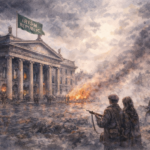
On April 24, 1916, Easter Monday, a small group of Irish revolutionaries launched an insurrection in the....
The mythical invasions of Ireland do not describe a single origin, but rather a succession of arrivals that shaped the Celtic world.
The Mythical Invasions of Ireland: peoples, gods and celtic origin Read Post »
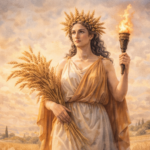
Ceres was the goddess of agriculture, grain, and the fertility of the land. Her cult was deeply connected...
Ceres: Roman goddess of harvest and the people Read Post »
Unlike other ancient traditions, Celtic mythology does not describe a creation of the universe, but a reality divided between
Origins — a world between the visible and the invisible Read Post »
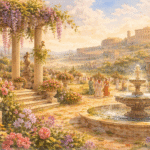
En el calendario romano, abril no era simplemente la continuación de marzo. Era el mes en que la vida estallaba.
April in Ancient Rome: The Month When the Earth Opened Read Post »
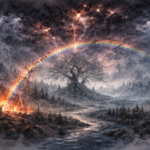
In Norse mythology, even the gods have an end. Yet Ragnarök is not merely the end of the world. It is the collapse of order...
Ragnarök. The Inevitable Fate of the Gods Read Post »

To understand the origin of leprechauns, it is necessary to go beyond the modern festive image. when you think...
Leprechauns: The True Origin of the Irish Fairies and Their Gold Read Post »
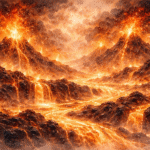
Muspelheim is the world of primordial fire, one of the most ancient realities of the Norse cosmos. It is a
Muspelheim. The Realm of Primordial Fire Read Post »
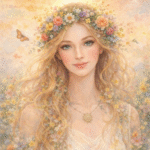
Ēostre, or Ostara, was a divinity of the Germanic world associated with dawn and the renewal of spring. Although she does not belong to...
Ostara: The Germanic Goddess and the Awakening of Spring Read Post »