
Annwnthe Otherworld of Celtic mythology, is one of the most fascinating concepts in the Welsh imagination.
It is mentioned in medieval texts such as the Mabinogion (11th–13th centuries), although these are based on much older oral traditions.
Far from being a place of punishment, Annwn is described as a hidden realm: a space of abundance, or a world where death does not function as it does in the human world.
It is not an “afterlife” in the Christian sense. It is a parallel plane.
An Invisible… Yet Accessible World
Annwn is not located in a single physical place.
It is described as:It is described as:
- a land beneath the earth
- an island beyond the sea
- a superimposed dimension
It is a different plane of existence, where:
- the time no sigue las mismas reglas
- death does not hold the same meaning
- reality is more fluid
Access can occur through:
- sacred hills (sídhe)
- lakes
- rivers
- caves
- liminal moments
Annwn is not far away. It is… hidden
The King of Annwn: ArawnIn
Welsh tradition, Annwn is ruled by Arawn, una figura soberana del Otherworld asociada a:
- balance
- sovereignty
- order between realms
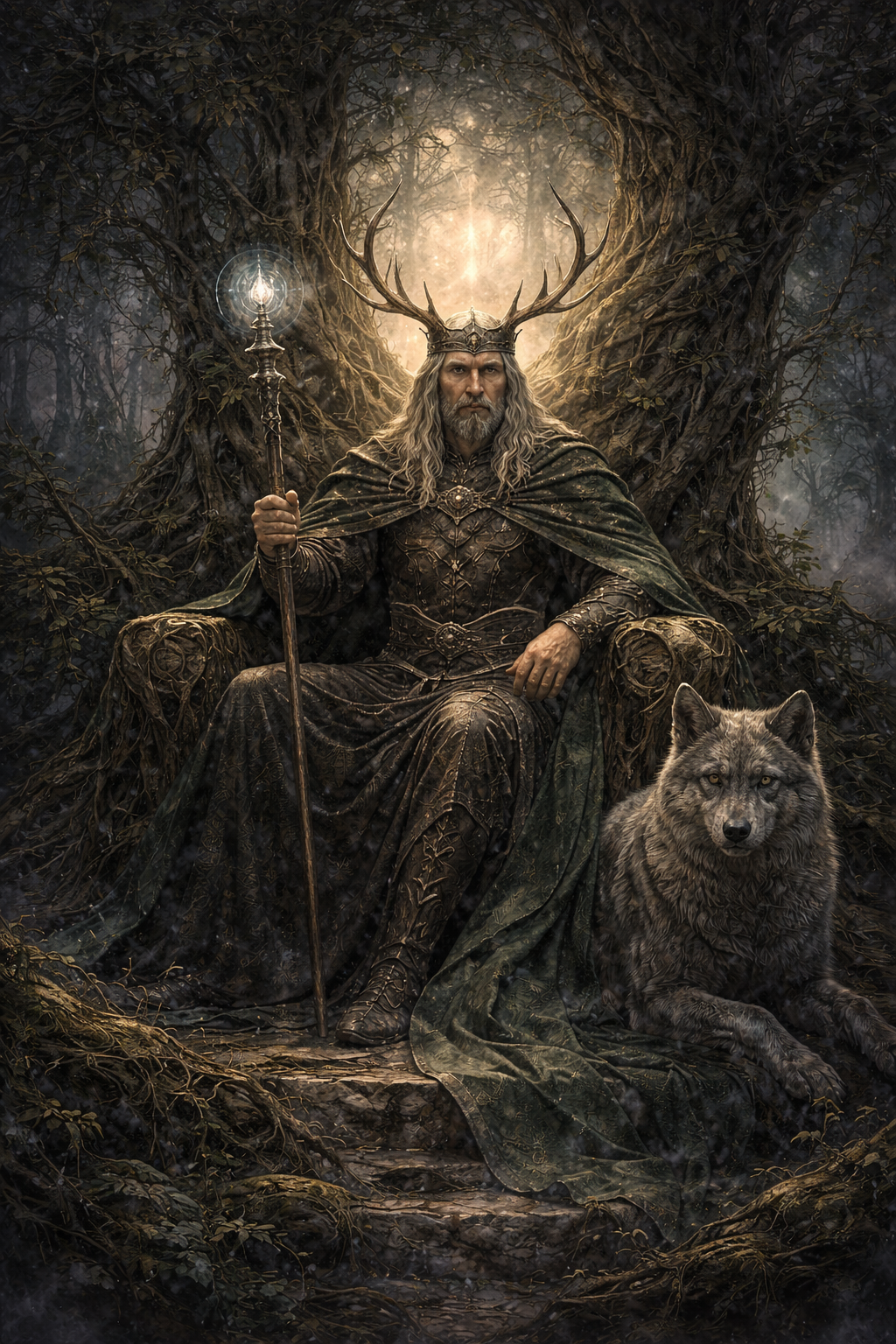
Arawn is not a malevolent figure.
In later traditions, his role is sometimes linked or overlaps with figures such as Gwyn ap Nudd, another ruler associated with the afterlife.
Inhabitants of Annwn
Annwn is inhabited by:
- fairy beings
- spirits
- supernatural entities
- forces connected to fate
They are not necessarily good or evil. They are… different.
They follow other rules, other forms of logic.
A Place of Abundance… and Danger
Annwn is described in some texts as a place of infinite wealth:
- eternal feasts
- magical cauldrons
- impossible treasures
But it also has a dangerous side: those who enter… may not return.
Or may not return the same.
The Tale of Pwyll and Annwn
One of the most important stories related to Annwn appears in the Mabinogion.
It tells how Pwyll, prince of Dyfed, comes into contact with Arawn.
The Encounter
During a hunt, Pwyll enters an unknown territory.
There, he meets Arawn.
The Exchange Between Worlds
Without realizing it, Pwyll has trespassed into Arawn’s domain.
Instead of punishing him, Arawn proposes an agreement:
“Take my place for a year and defeat my enemy.”
Pwyll rules Annwn
, while Arawn takes his place in the human world.
This exchange reveals something essential: the worlds are not entirely separate — they can overlap.
The Enemy: Hafgan
Arawn has a rival: HafganHafgan, another ruler of the Otherworld.
Hafgan represents:
- imbalance
- opposition to order
He is not absolute evil. He is an opposing force.
The Battle
Pwyll, acting as Arawn, confronts Hafgan.
But there is one condition: he may strike only once.
When Hafgan, wounded, asks for a second blow… Pwyll refuses.
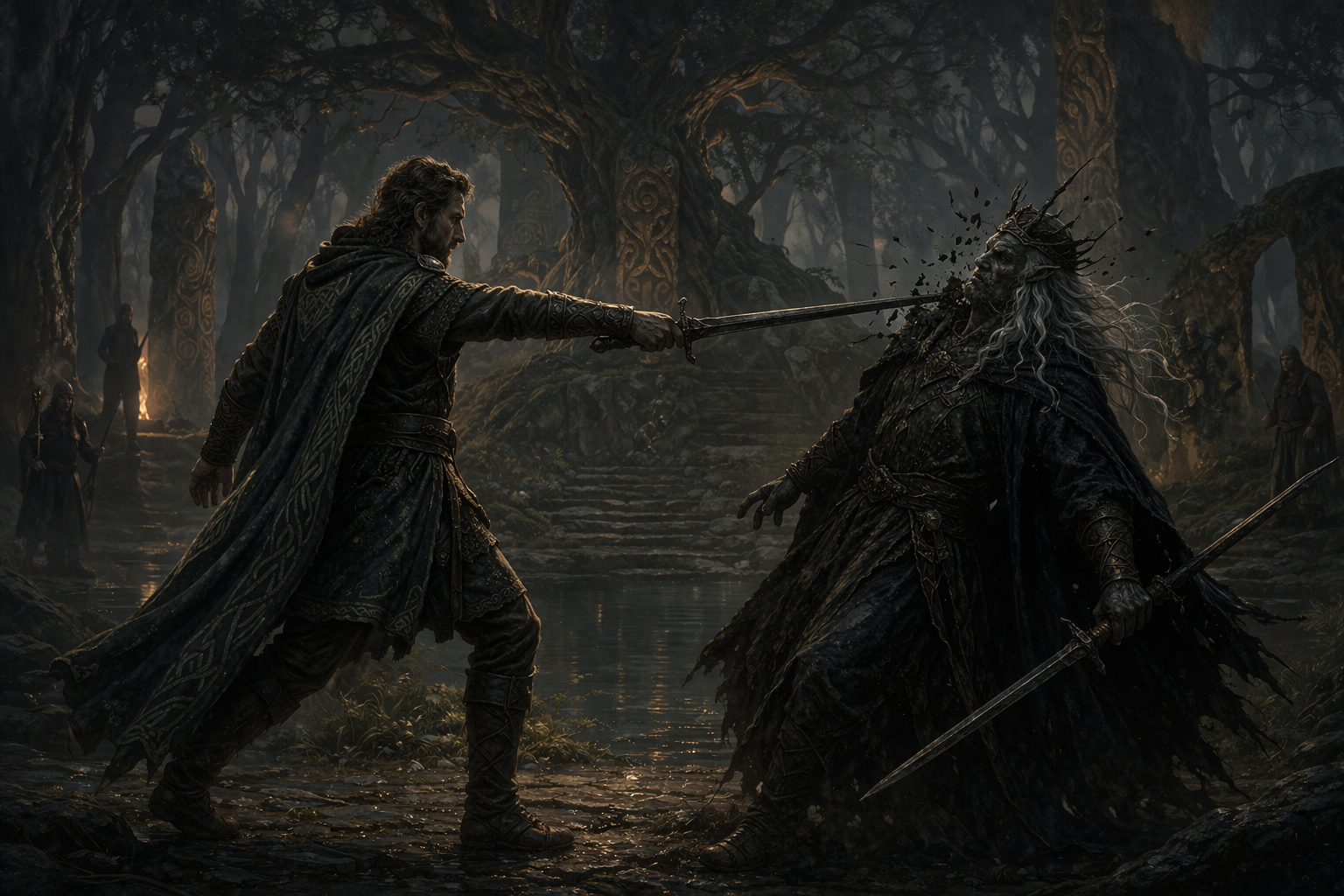
Hafgan is defeated, loses his power, and balance is restored.
Pwyll fulfills his mission with honor, and Arawn rewards him with friendship and respect.
The Cauldron of Annwn
Historical Sources
The cauldron appears in the medieval Welsh poem Preiddeu Annwfn (9th–10th centuries), preserved in the Book of Taliesin..
In this poem, an expedition to the Otherworld is described, seeking a sacred object: a magical cauldron.
This symbol also appears in other Celtic traditions and would strongly influence Arthurian legend.
Characteristics of the Cauldron
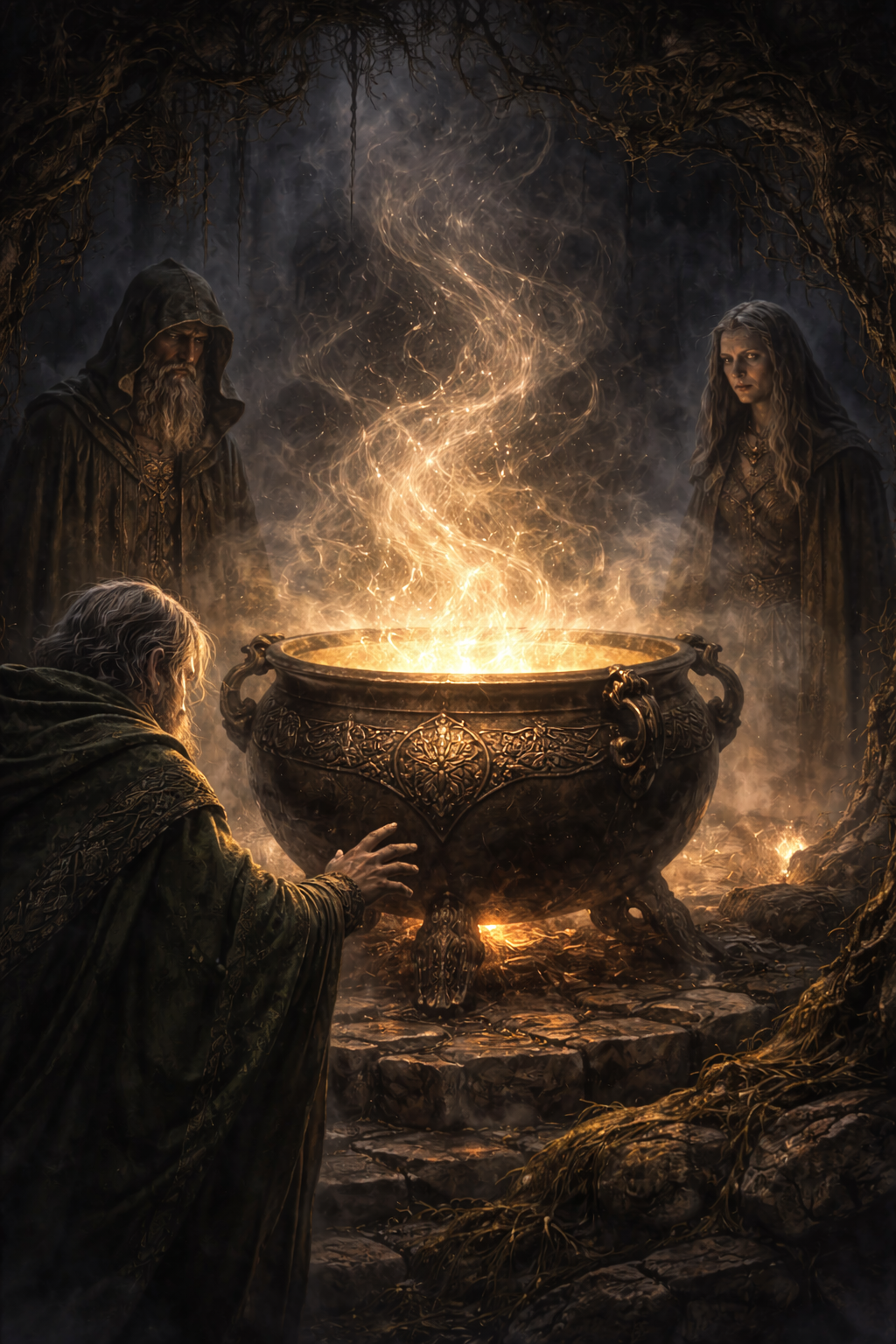
The cauldron of Annwn is no ordinary object. It is described as:
- a magical vessel
- linked to knowledge
- associated with transformation
In the stories, it is located within a fortress in Annwn:
- protected
- inaccessible to most
It does not respond to just anyone.
Only to:
- heroes
- initiates
- spiritual figures
One of the most famous lines states:
“It will not boil the food of a coward.”
What Does the Cauldron Truly Do?
1. Regeneration
In Celtic traditions, cauldrons can:
- restore life
- regenerate bodies
But they do not always return a complete life.
2. Knowledge
The cauldron is associated with:
- wisdom
- inspiration
- revelation
3. Transformation
This is its most important aspect:
- it transforms the individual
- it implies a spiritual change
- it acts as a rite of initiation
- it allows access to another state of existence
Symbolic Meaning
The cauldron represents:
- the cycle of life, death, and rebirth
- hidden knowledge
It is not a practical object. It is a symbol of transformation.
A World Between Life and Death
Annwn is not exactly the world of the dead, although it is connected to it.
Nor is it a paradise. It is an intermediate space:
- entre lo visible and the invisible.
- between the human and the divine
- between life and the beyond
Connection with Other Celtic Worlds
Annwn is part of the broader network of Celtic Otherworld realms, alongside:
Meaning Within Celtic Mythology
Annwn represents:
- the unknown
- the hidden
- that which escapes human logic
But above all, one essential idea: crossing certain boundaries… transforms those who cross them
Curiosities
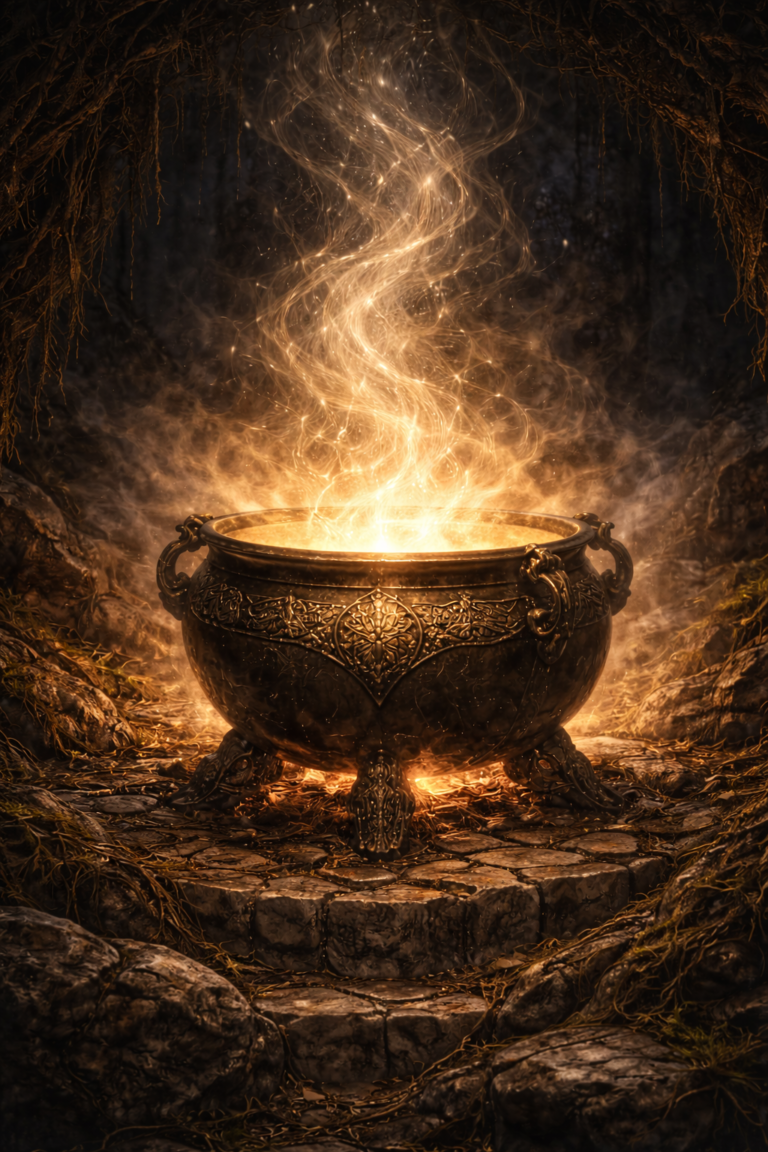
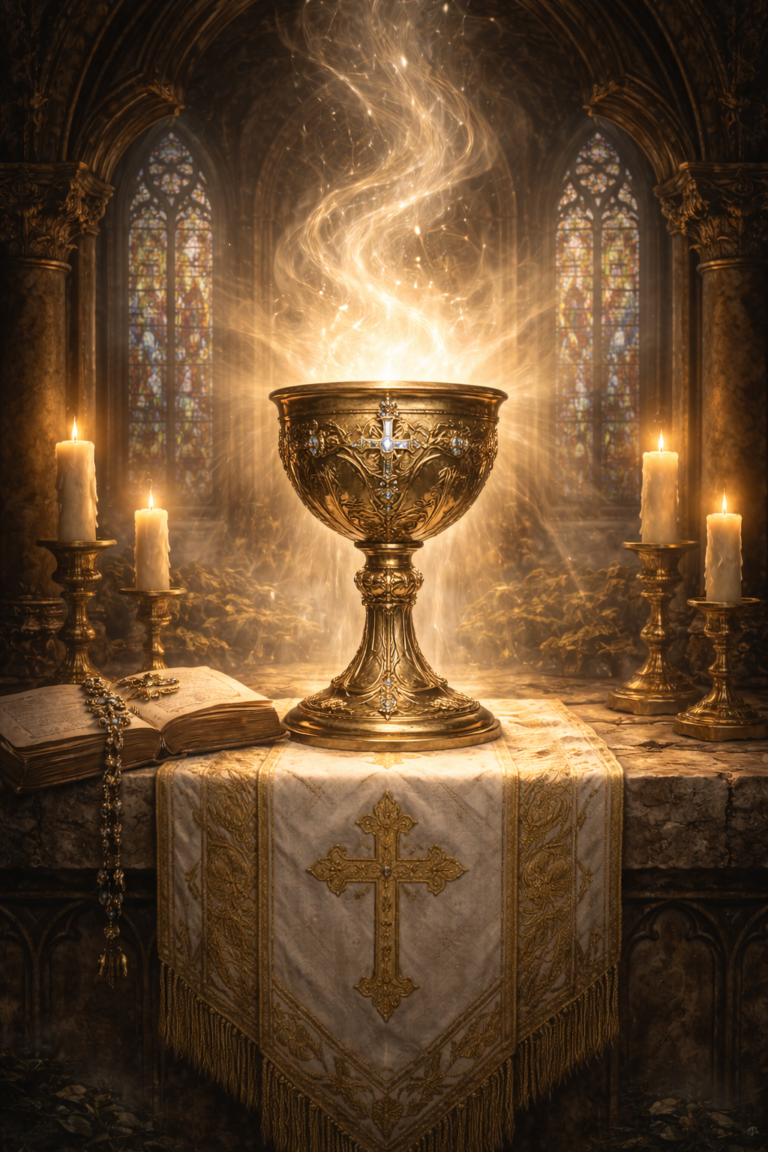
The Cauldron of Annwn and the Origin of the Holy Grail
Many scholars believe that the Celtic cauldron was one of the foundations of the myth of the Holy Grail.
Parallels:
| Cauldron of Annwn | Holy Grail |
|---|---|
| sacred object | sacred object |
| gives life | gives life |
| requires worthiness | requires purity |
| transforms | transforms |
Historical Evolution
- Celtic mythology (Iron Age): oral tradition
- Medieval texts (9th–13th centuries): Christian adaptation
Christian monks reinterpreted these stories.
The result: the cauldron → becomes a chalice.
Arthurian Influence
The Expedition to Annwn
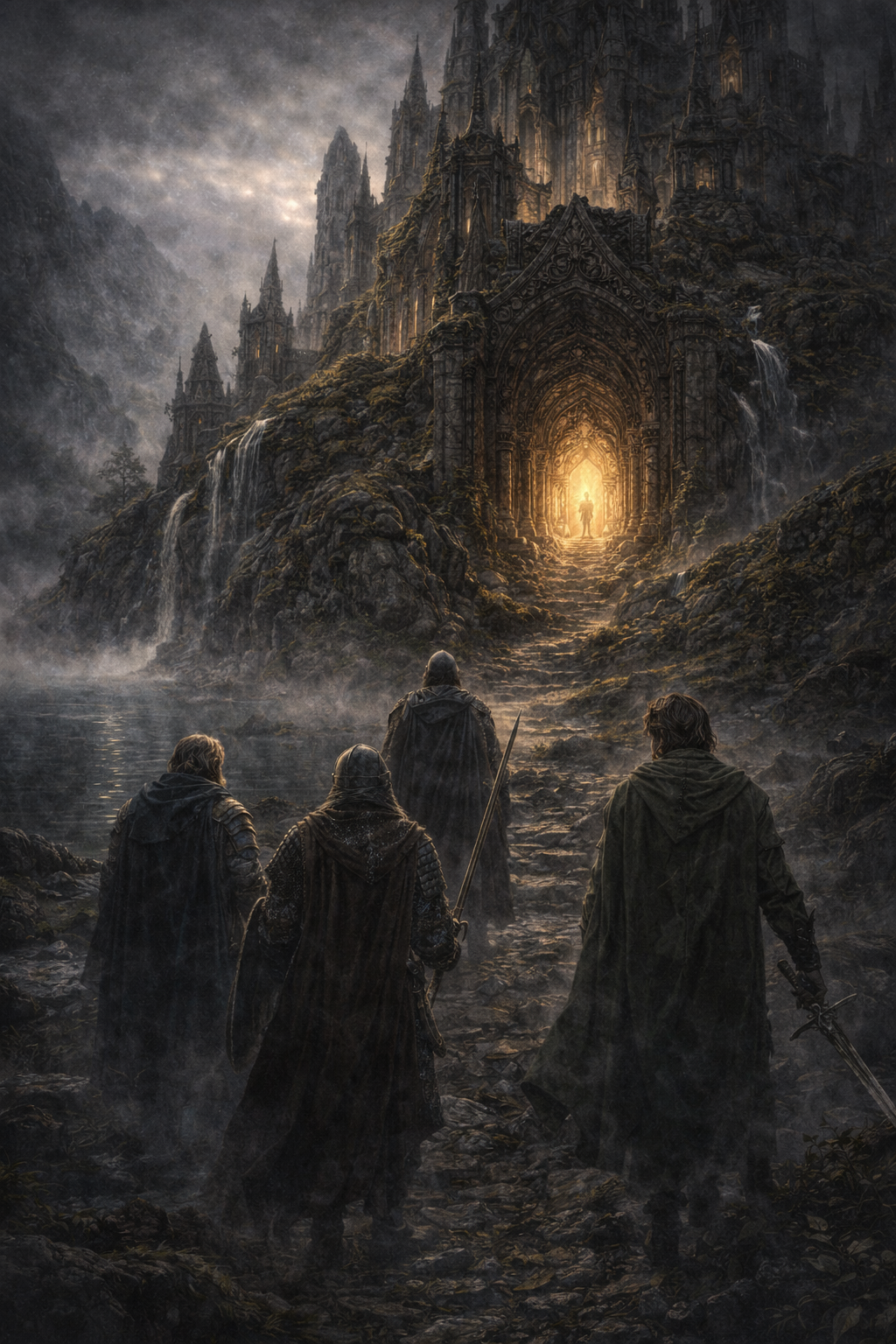
In Preiddeu Annwfn, a group of warriors — associated with Arthur’s court — travel to Annwn to obtain the cauldron.
They cross fortresses, face dangers… and very few return.
This narrative motif would become the foundation of the Grail quest.
Which reveals something essential:
- the cauldron is a trial
- not an easily obtained object