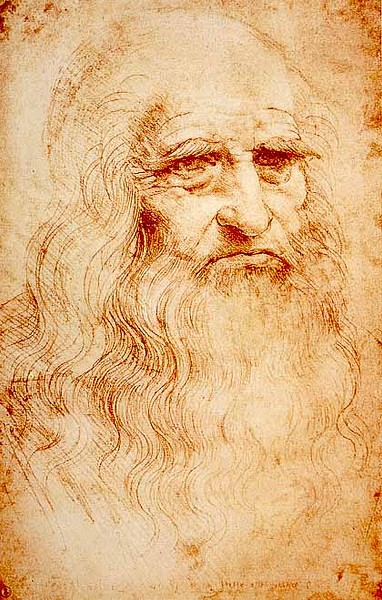
Leonardo da Vinci was one of the most extraordinary figures in history. Painter, inventor, engineer, anatomist, and tireless thinker, his mind seemed centuries ahead of his time.
Born in 1452 in the small Italian town of Vinci, Leonardo would become the perfect symbol of the Renaissance — a time when human beings began to look at the world with a new scientific and artistic curiosity.
Unlike many artists of his time, Leonardo was not satisfied with simply representing reality: he wanted to understand it.
Leonardo had such a curious mind that he often began new projects before finishing previous ones. For this reason, many of his works remained unfinished.
"Learning never exhausts the mind."
Excerpt from his personal notebooks
A Man Who Wanted to Understand Everything
Leonardo observed the world with an almost infinite curiosity. His notebooks are filled with questions about nearly every natural phenomenon:
- how birds fly
- how water moves
- how the muscles of the human body work
- how a storm forms
- how plants grow
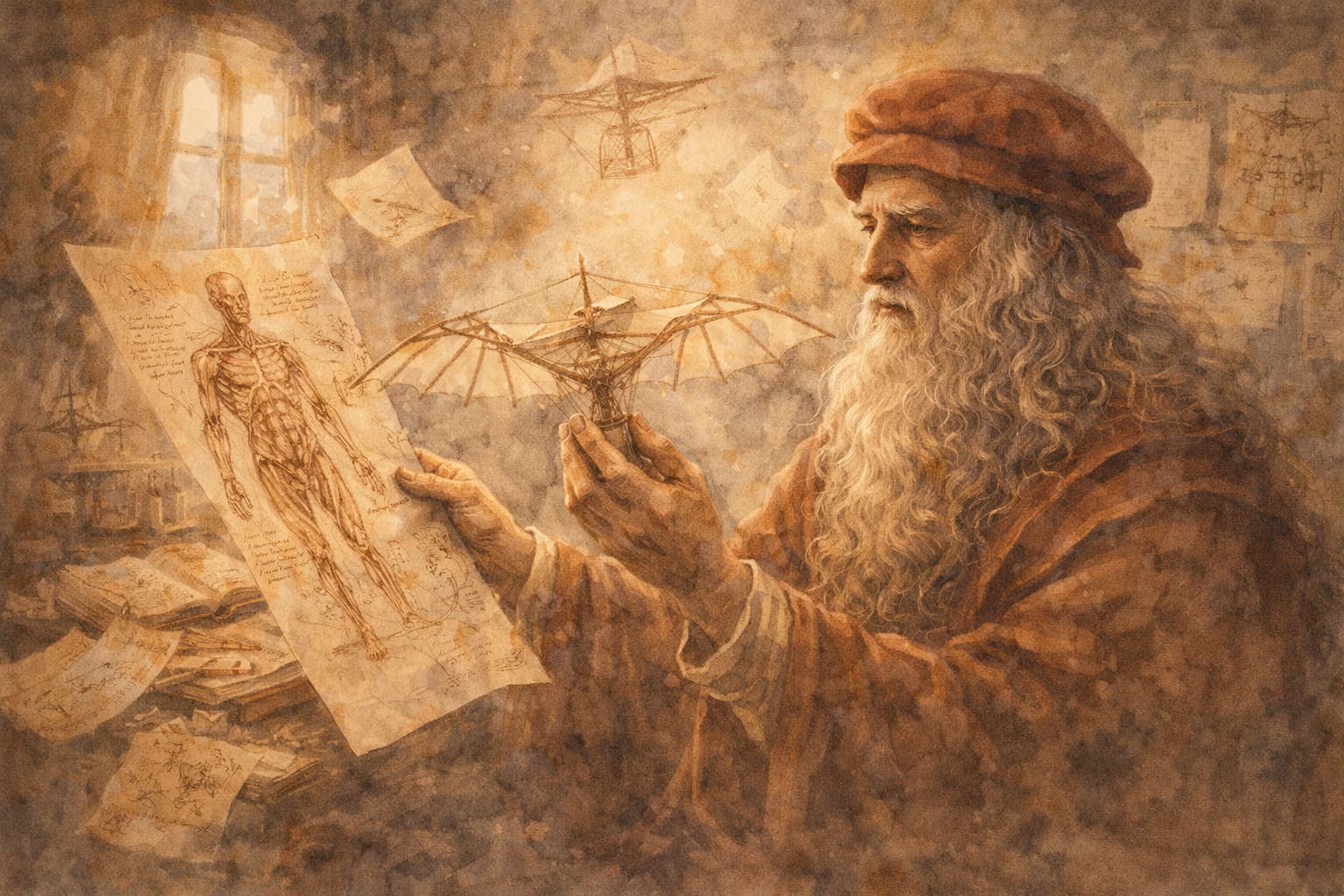
For Leonardo, everything was connected.
The movement of water could explain the flow of blood, and the flight of a bird could inspire a machine capable of flying.
His notebooks reveal something very rare: a mind that never stopped asking questions.
The Scientist Ahead of His Time
Long before the development of modern science, Leonardo was already conducting experimental studies.
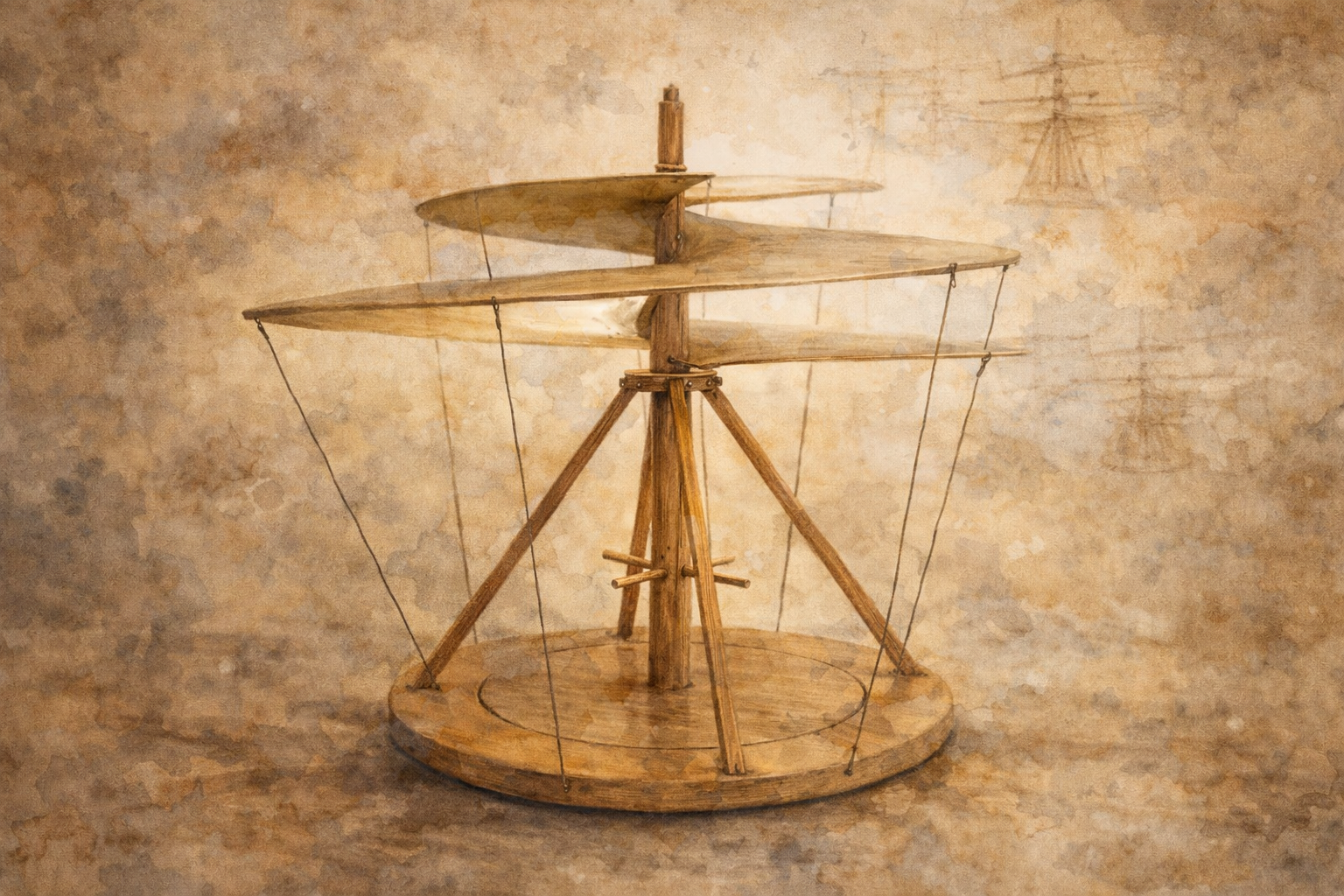
The Aerial Screw: Leonardo’s “Helicopter”
In one of his notebooks appears the design of a flying machine known today as the aerial screw, considered a precursor to the modern helicopter.
It was designed around 1480.
The Artist Who Changed the History of Art
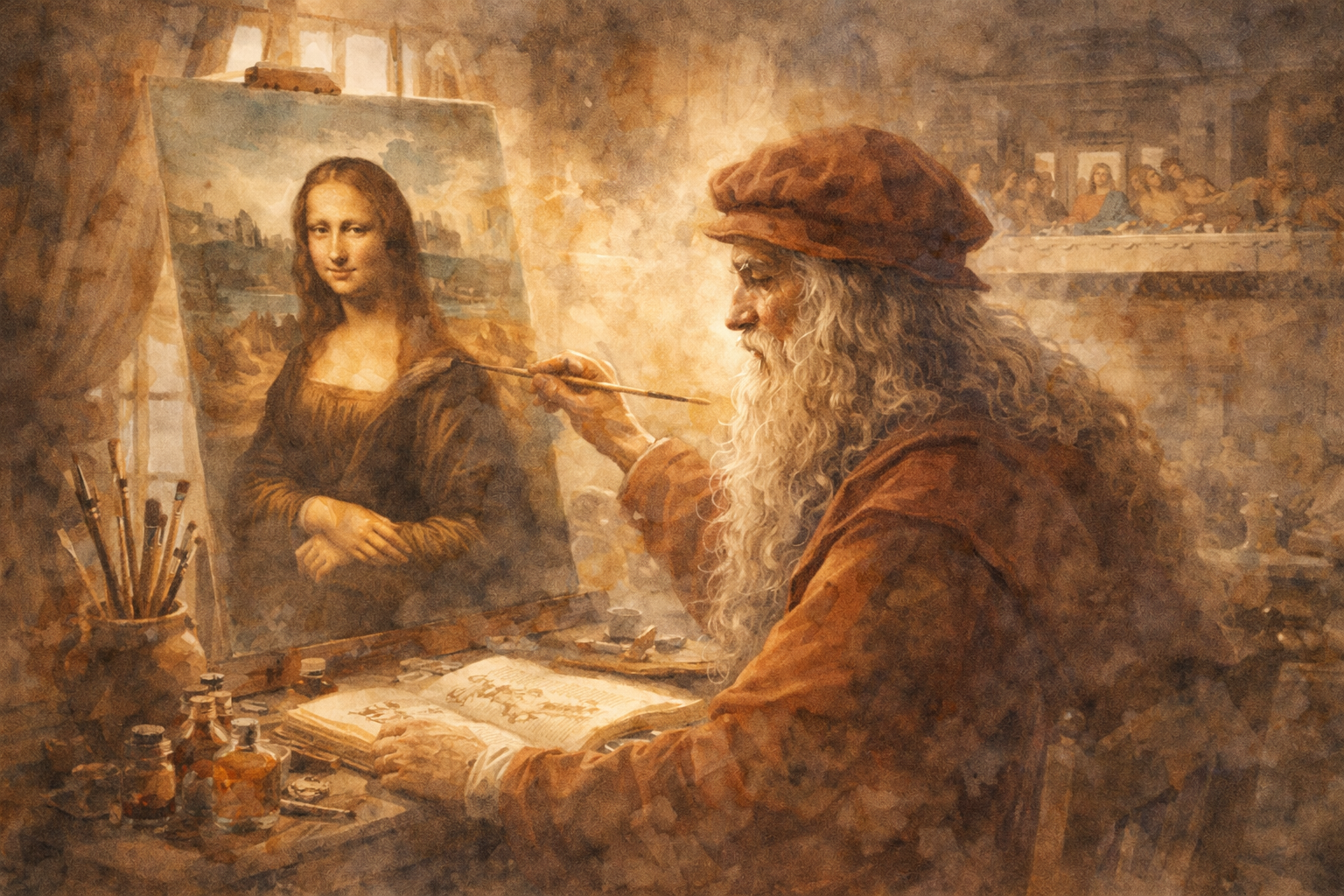
Although he is best known today as a painter, Leonardo produced relatively few paintings, as he devoted most of his time to research and experimentation.
Among his most famous works are:
- Mona Lisa
- The Last Supper
- Vitruvian Man
In them, he applied revolutionary techniques such as sfumato, a method that softens contours to create an almost imperceptible transition between light and shadow.
This effect gives his figures an extraordinarily realistic appearance.
“Painting is poetry that is seen and not heard, and poetry is painting that is heard and not seen.”
— Treatise on Painting (Trattato della pittura)Trattato della pittura)
The Genius of the Renaissance
Leonardo was not only a painter. He was something much rarer: a true polymath.
He lived in the 15th century, yet many of his ideas were centuries ahead of his time.
His fields of study included:
- painting
- anatomy
- engineering
- architecture
- hydraulics
- optics
- botany
- mechanics
- geology
- urban planning
- music
He was also a musician: he played the lyre and improvised with great skill.
Leonardo’s Notebooks: A Forgotten Legacy
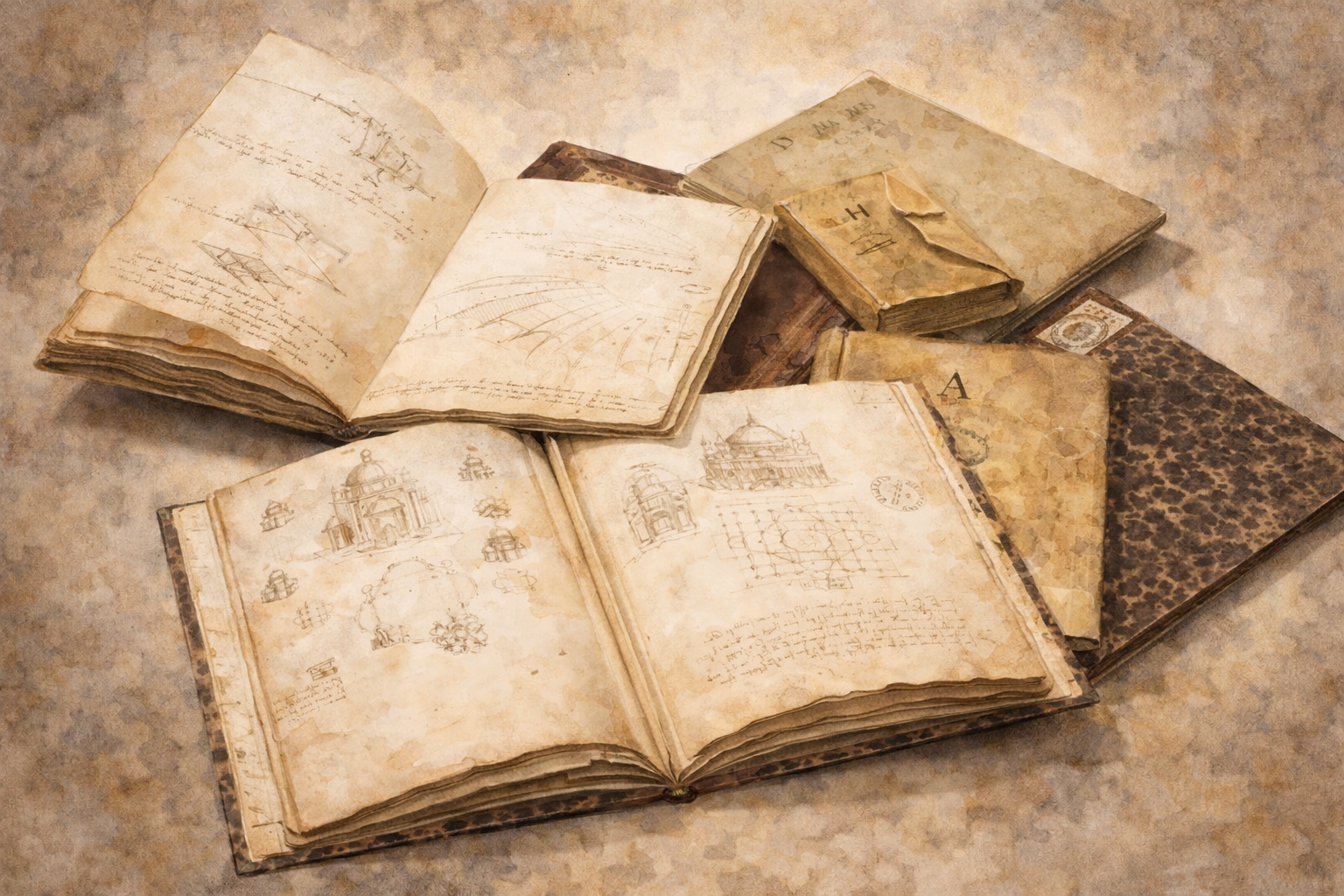
After his death, many of his notebooks were scattered or forgotten. For centuries, his fame rested mainly on his paintings.
It was not until the 19th century that historians began to study them, discovering just how far he had anticipated scientific ideas.
It is estimated that he wrote more than 13,000 pages, of which around 7,000 have survived.
The rest were lost.
The Mind Behind His Notebooks
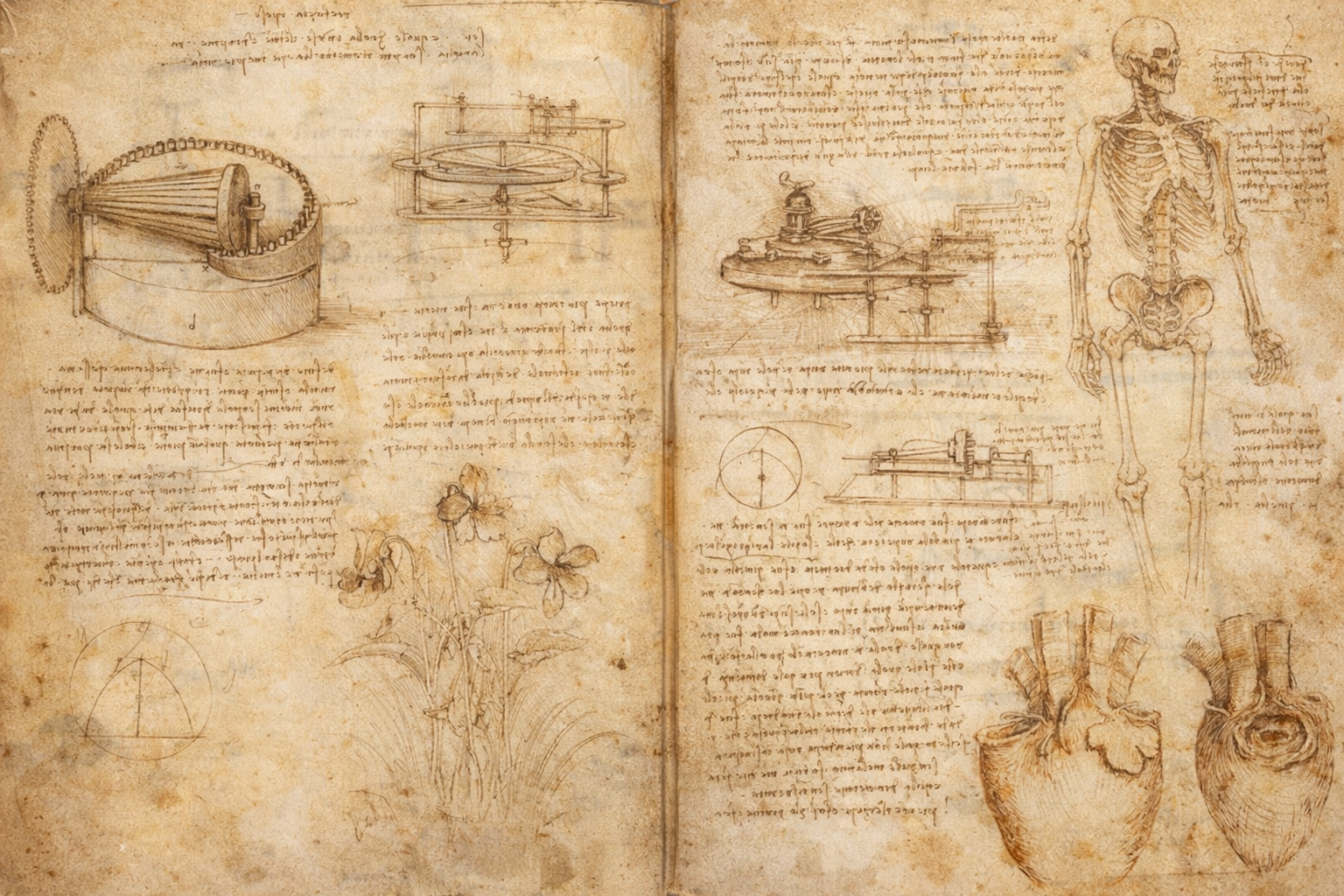
Leonardo did not only observe: he analyzed, drew, and experimented.
In his notebooks, he combined:
- scientific observation
- artistic sketches
- experimentation
- reflection
Among his ideas we find:
- flying and hydraulic machines
- parachutes and submarines
- armored vehicles
- precise anatomical studies
- urban designs
- bridges
Many of these designs could not be built in his time, but they reveal just how far ahead his mind was.
He also drew imaginary creatures created from real animals.
The Mysterious Cave
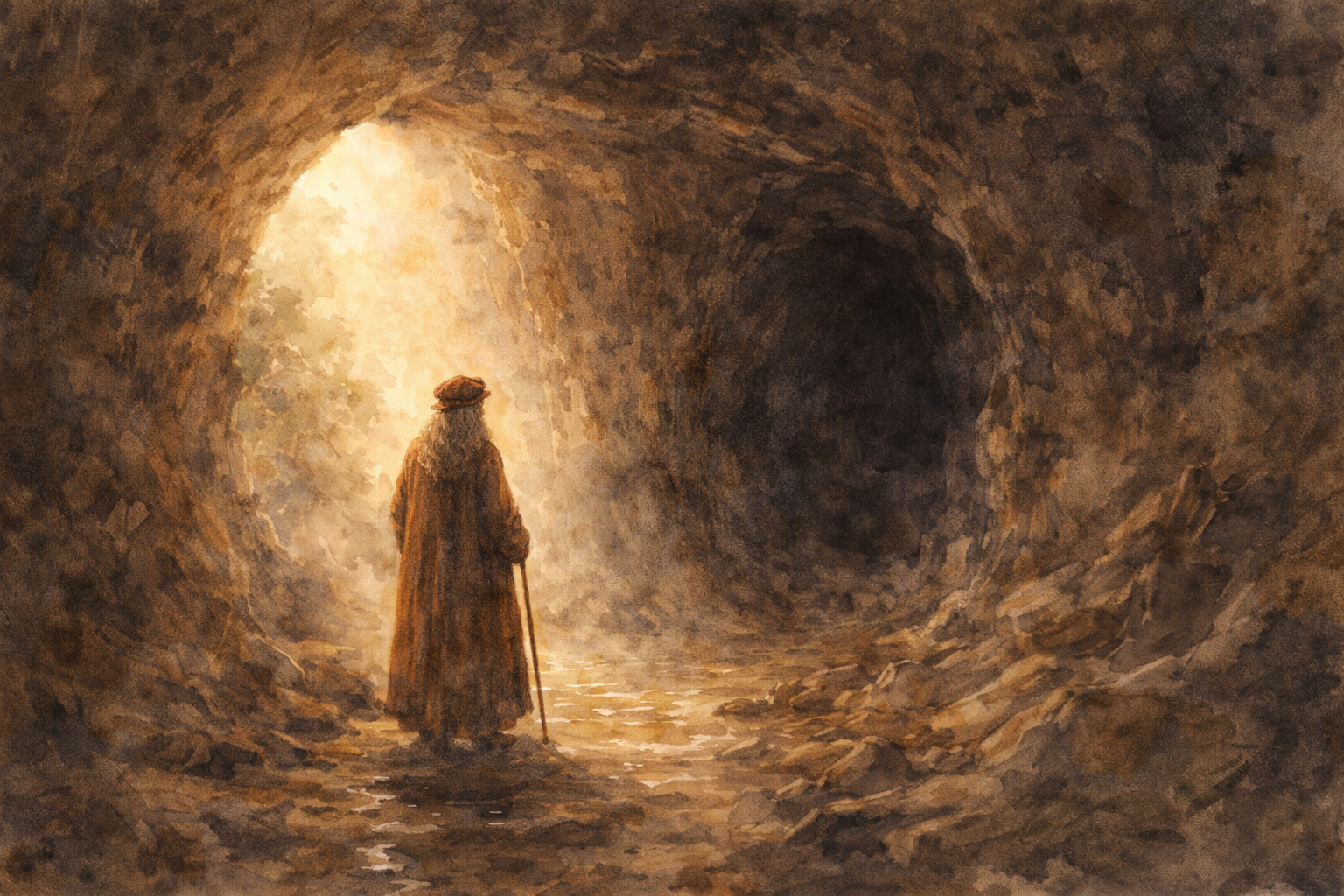
This scene comes directly from his notebooks.
Leonardo describes how, while walking in the countryside, he came upon the entrance of a dark cave. At that moment, he felt two opposing emotions:
- fear, of the unknown
- curiosity, to discover what lay within
Many historians interpret this scene as a metaphor for scientific inquiry.
“Nature is full of infinite causes that have never been discovered.”
Note taken from his manuscripts, Códice Atlanticus
A Highly Symbolic End
Leonardo died on May 2, 1519, in France, at the Château du Clos Lucé, near Amboise.
He had been invited by King Francis I, who deeply admired his talent.
According to tradition, he died in the arms of the king, who held his head as he passed away.
Although some historians believe this scene may have been later idealized.
Curiosities
Mirror Writing
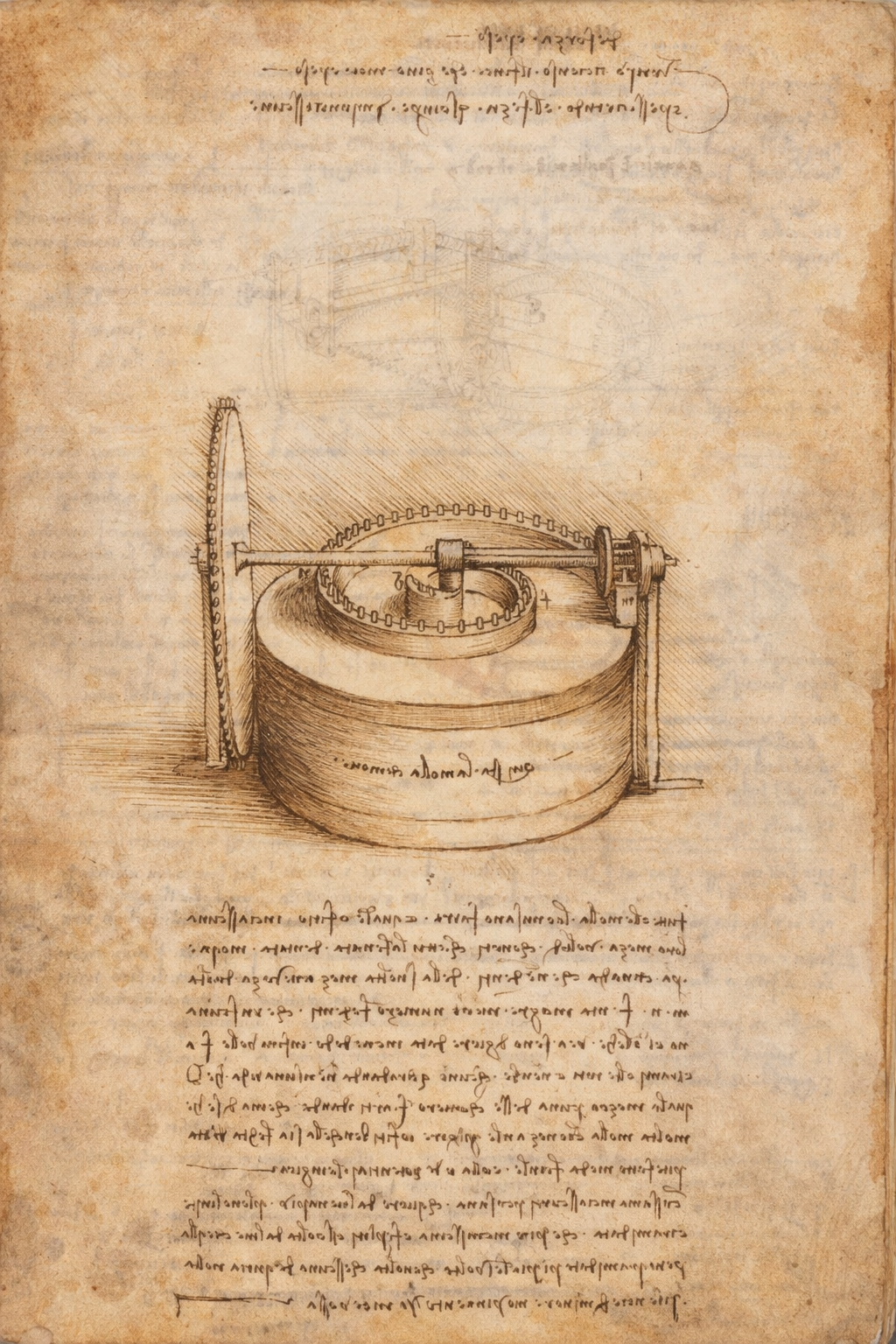
Leonardo wrote backwards, from right to left, in what is known as mirror writing. He likely did this because he was left-handed, although it may also have provided privacy for his notes.
He Performed Human Autopsies
Leonardo dissected human bodies to understand anatomy, producing drawings of extraordinary precision.
The Mystery of How the Heart Works
At a time dominated by the theories of Galen, Leonardo investigated the true functioning of the heart.
He built models in wax and glass and conducted experiments with water to observe internal flow.
He discovered that:
- blood forms vortices within the heart
- these help the valves close properly
This phenomenon is now known as vortex flow, and he had described with remarkable accuracy the function of the aortic valve.
Something that medicine would not fully understand until centuries later.
The “Dragon” of Florence
According to Giorgio Vasari, Leonardo created a shield featuring a monstrous creature by combining:
- lizards
- snakes
- bats
- insects
The result was so realistic that it frightened his own father.
He Released Birds
Several Renaissance sources recount that Leonardo, when passing through markets where caged birds were sold, would buy them only to set them free.
His fascination with flight inspired many of his designs.
Beyond the Renaissance Man
Leonardo did not see the world as something already explained, but as a mystery to be discovered.
He was not only an artist, nor only a scientist: he was both at a time when that division did not yet exist.
He was a man ahead of his time.
A visionary.
A genius.
And perhaps, deep down, Leonardo was not searching for answers… but for understanding the mystery.
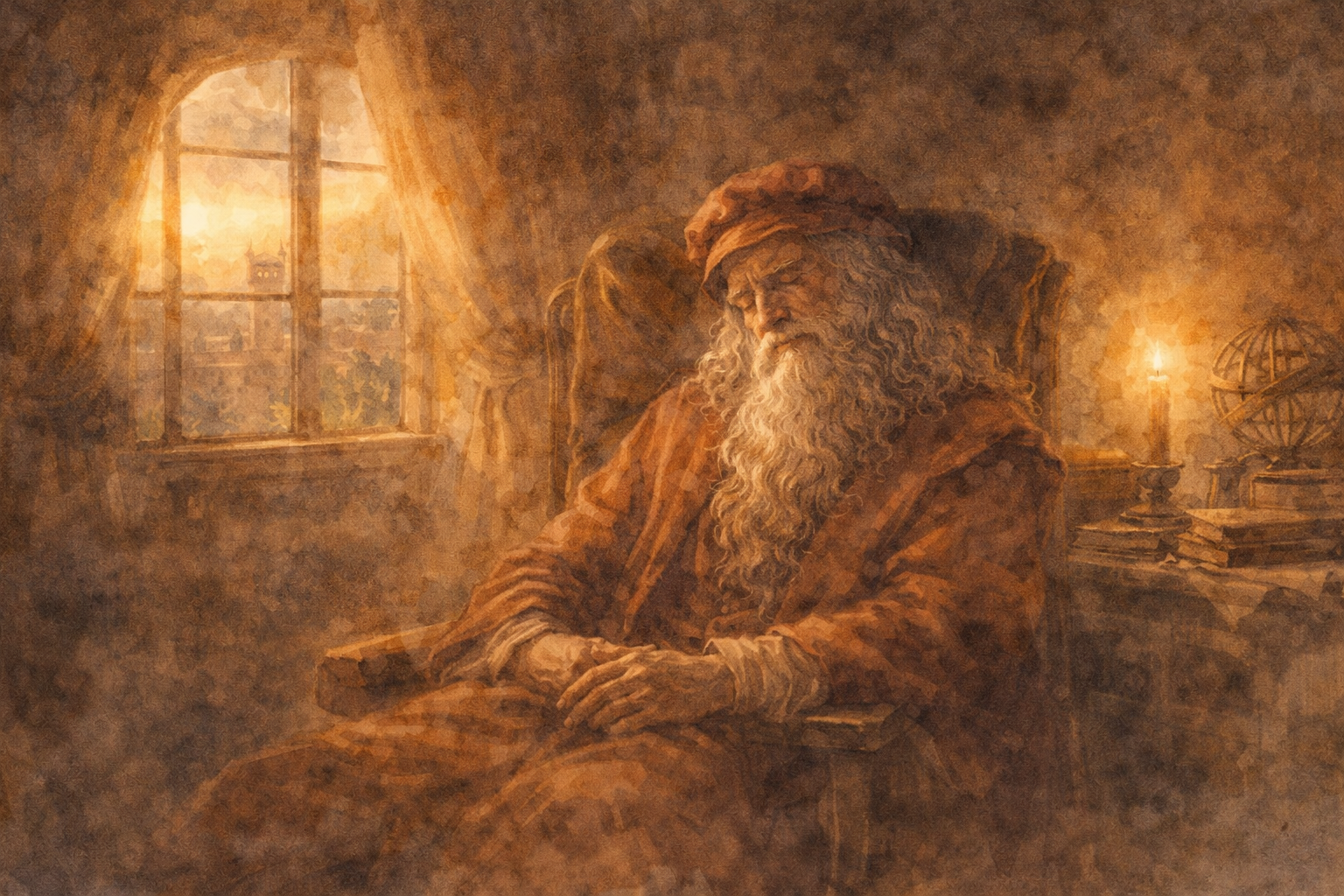
“Just as a well-spent day brings a happy sleep, so a well-spent life brings a happy death.”
— From his notebooks (Codex Atlanticus)