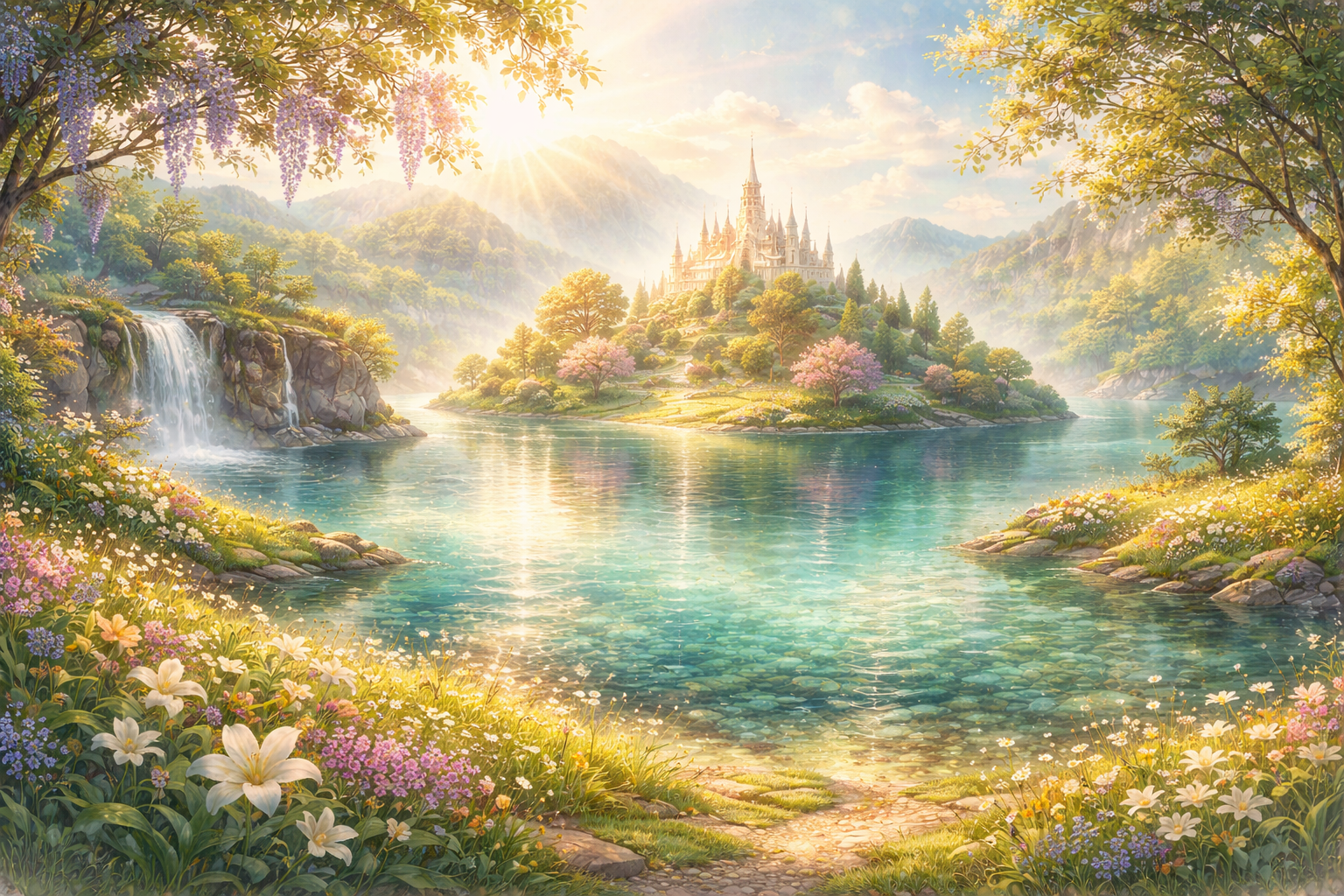
In Irish mythology, Tír na nÓg literally means “the land of the young.”
It is not an ordinary place, nor does it belong to the world of humans.
It is part of the Otherworld — a realm where time, life, and death follow different rules.
There:
- no one grows old
- no one falls ill
- no one dies
It has been associated with the western islands of Ireland.
It is a place of eternal beauty… but also of mystery.
Characteristics
Tír na nÓg is associated with the Tuatha Dé Danann, considered the inhabitants of the Otherworld.
It is described as a realm that can appear in different forms:
- a distant island
- a place beyond the sea
- or an invisible plane overlapping with our own
There is no clearly defined system of rule.
In some traditions, it is said to be governed by:
- fairy beings
- rulers of the Otherworld
Access to Tír na nÓg varies depending on the tale:
- by crossing the sea
- through mist
- by entering sacred hills (sídhe hill)
- during liminal moments
Associated Figures
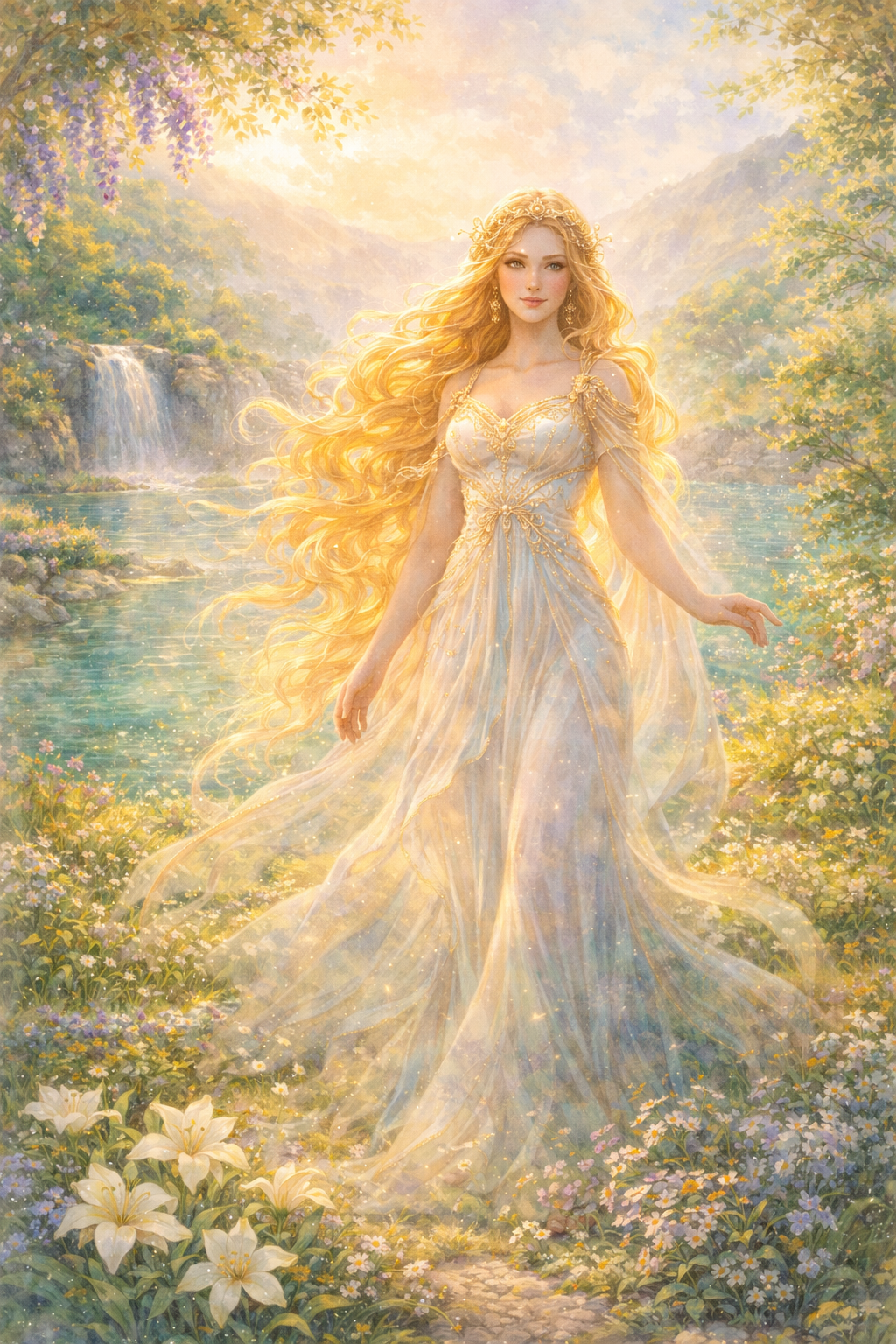
One of the most important figures is Niamh, in many versions the daughter of Manannán mac Lir.
Her name is often interpreted as “of the golden hair.”
It represents:
- the attraction of the Otherworld
- eternal beauty
- the “call” to cross over
Inhabitants
Tír na nÓg is mainly inhabited by the Tuatha Dé Danann, along with:
- fae beings (Aos Sí themselves)
- women of the Otherworld
They are beings who are:
- powerful
- beautiful
- yet unpredictable
Time Is Not What It Seems
One of the most fascinating aspects of Tír na nÓg is its relationship with time.
For those who enter, only days may seem to pass… but in the human world, years — even centuries — have gone by.
This theme appears in one of the most well-known stories of Irish tradition: the tale of Oisín.
Oisín and Niamh: The Journey to Tír na nÓg
The Encounter
On the coast of Ireland, where land meets the sea, Oisín — hero of the Fianna and son of Fionn mac Cumhaill — gazed at the horizon.
Then he saw her.
A woman moved across the waters, riding a white horse that did not sink into the sea. Her hair shone like gold in the light of the setting sun.
It was Niamh.
She did not come from the world of men. She came from Tír na nÓg.
The Invitation
They fell in love.
Niamh asked Oisín to accompany her to the Otherworld, offering him something no human had ever known:
- a place where time does not destroy
- where youth does not fade
- where life does not end
And Oisín accepted.
The Journey
The horse carried them across the waters, crossing the invisible boundary between worlds.
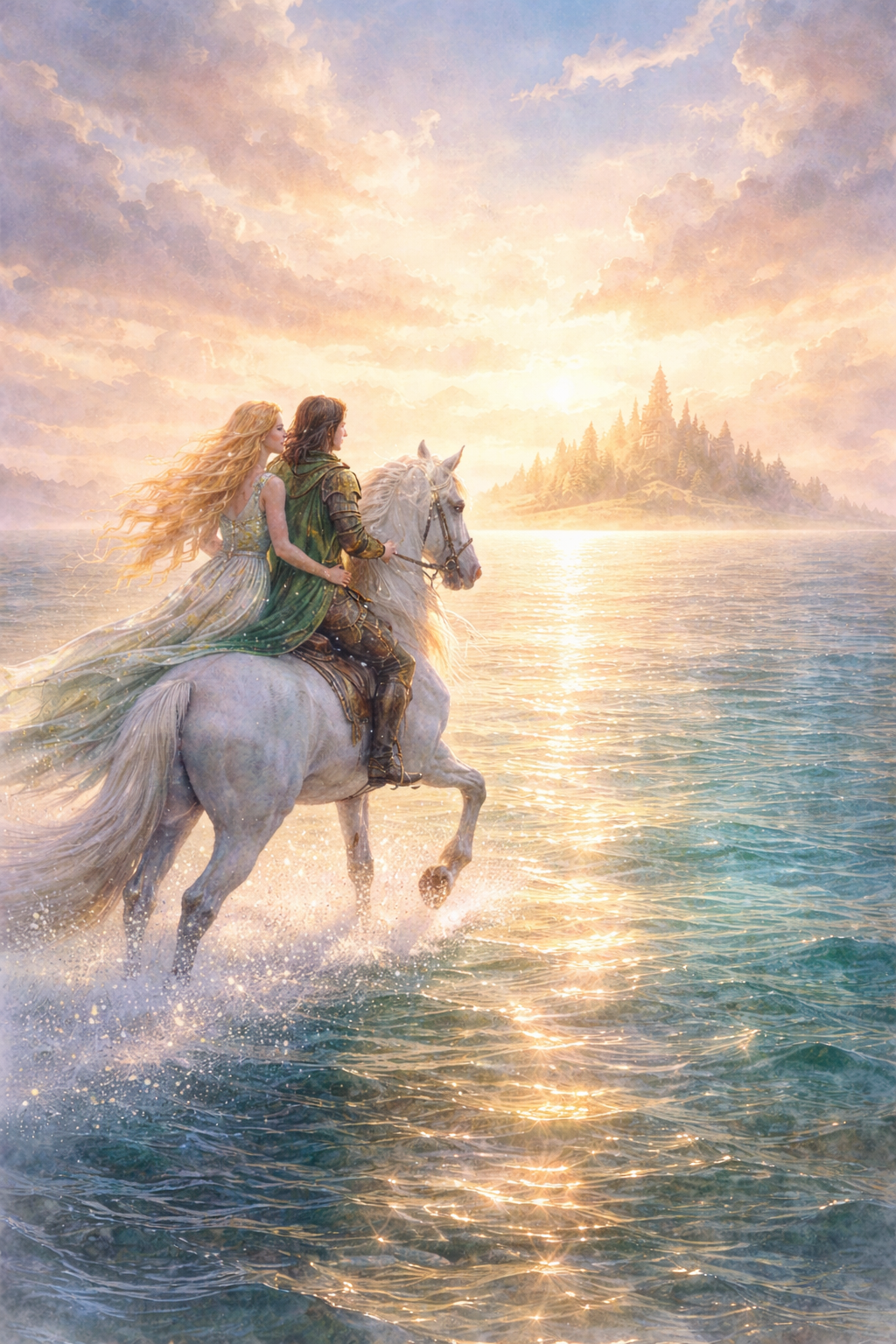
And so, Oisín left behind everything he had ever known.
Tír na nÓg
In Tír na nÓg, time did not pass.
There was no illness.
No death.
No loss.
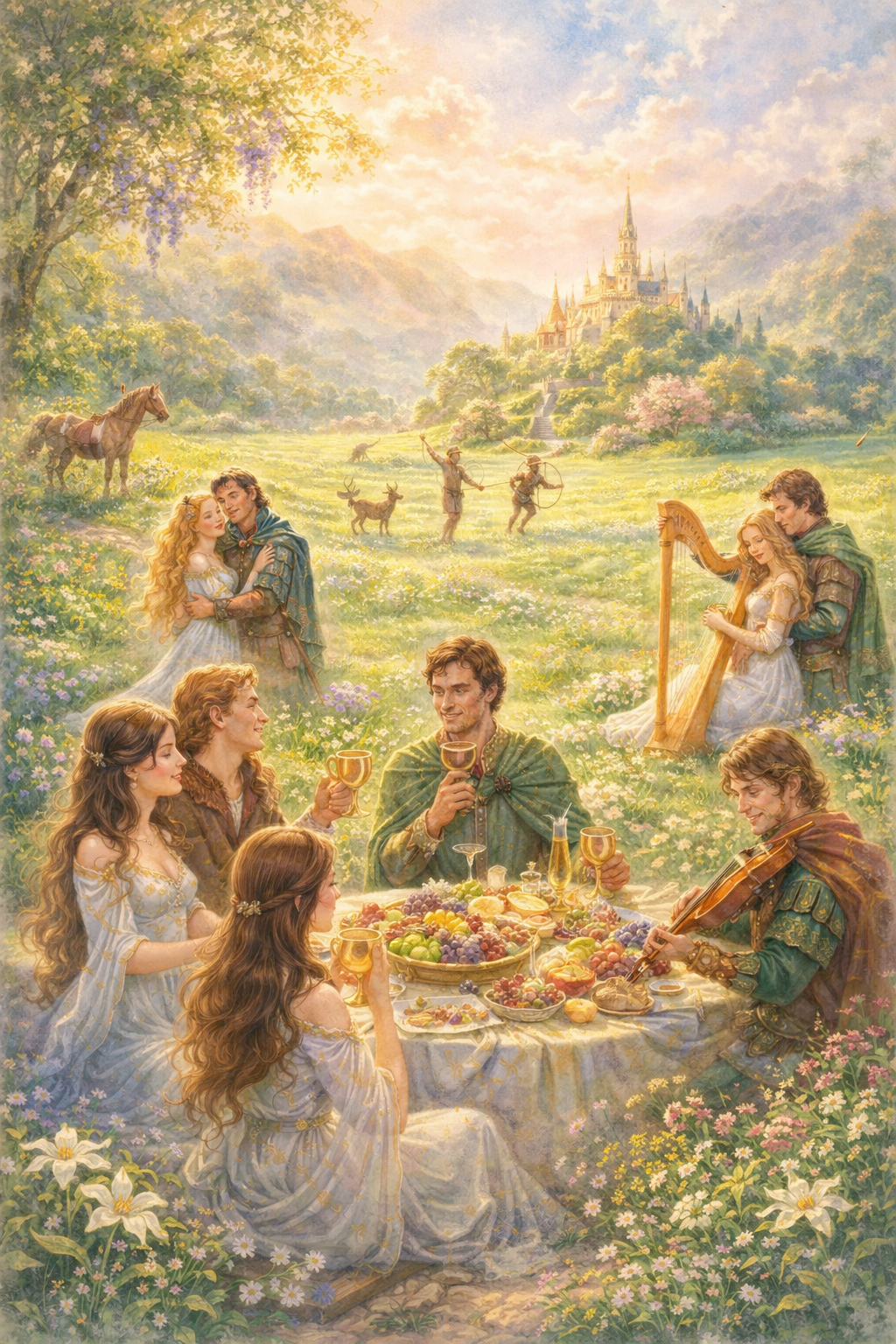
Days unfolded in music, hunting, feasting, and eternal beauty.
And for what seemed like only a few years… Oisín was happy.
The Desire to Return
But even in a perfect world, something remained: memory.
Oisín began to think of Ireland.
And that memory grew… until it became longing.
The Warning
Niamh allowed him to return, but with one condition: he must not touch the ground.
For the time that had not passed in Tír na nÓg… was waiting for him.
The Return
When Oisín returned, Ireland was no longer the same.
The Fianna were gone. His world had ended.
As he tried to help some men, he fell from his horse.
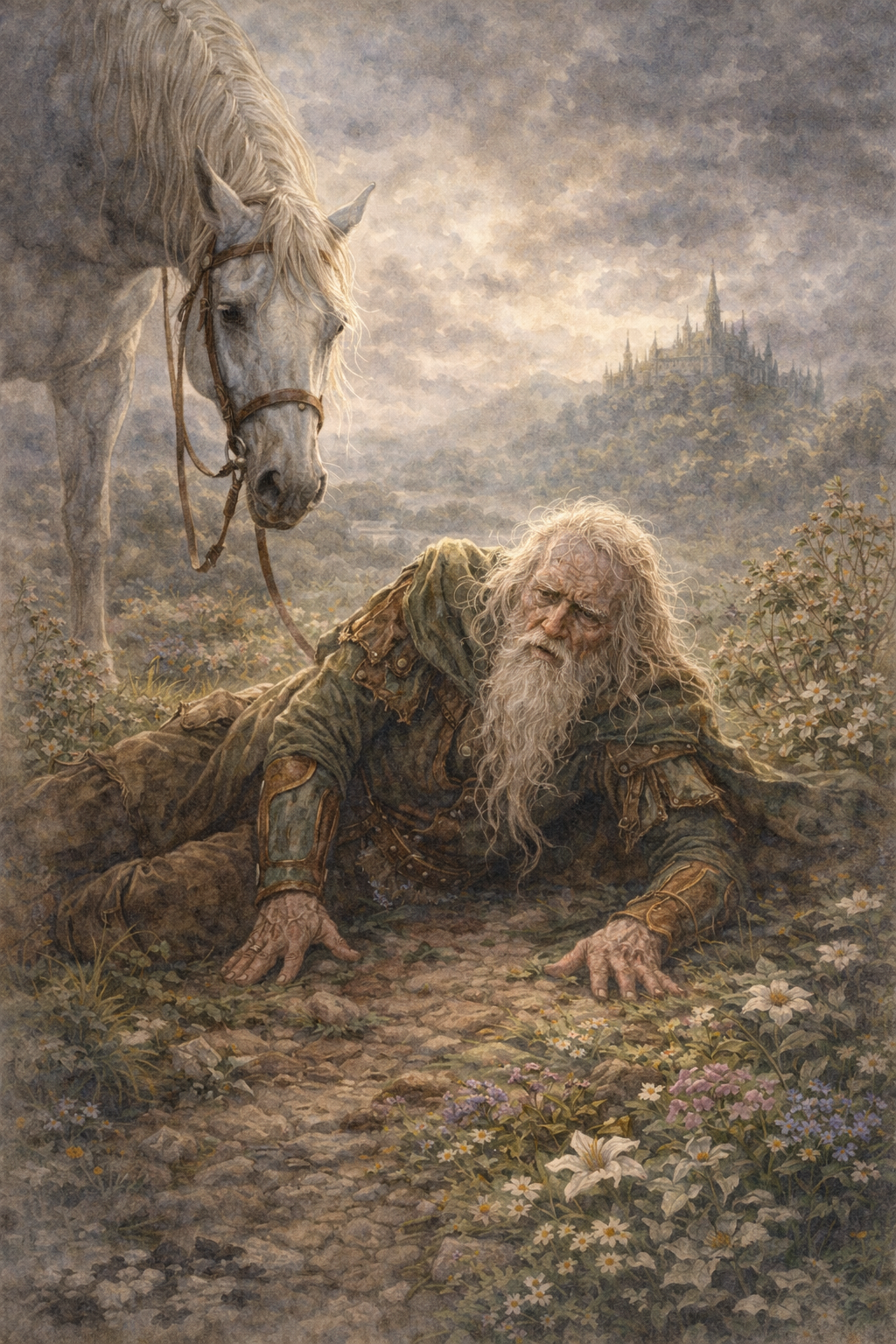
And in that instant… time fell upon him.
He became an old man.
The Encounter
There, old and alone, he met Saint Patrick.
One represented the world that was fading… while the other represented the one that was beginning.
Oisín spoke to him:
- of heroes
- of battles
- of a time that no longer existed
The End
Oisín did not return to Tír na nÓg.
Because there are places that can only be visited once.
And there are worlds to which one cannot return unchanged.
A Place Beyond the World
Tír na nÓg is not simply a paradise. It represents a profound idea in Celtic mythology:
- the eternal does not belong to the human world
- crossing certain boundaries comes at a price
The Otherworld is different. And those who enter it… never return the same.
A World Between Life and Myth
Tír na nÓg is one of the many names of the Celtic Otherworld, alongside:
It is not always a physical island.
Sometimes it is a state, a hidden place… or a parallel reality.
Meaning Within Celtic Mythology
Beyond the story, Tír na nÓg reflects:
- the fascination with eternal youth
- the fear of the passage of time
- the boundary between the human and the divine
- the idea that not everything perfect is attainable
Curiosities
Oisín and Saint Patrick
In medieval Irish texts such as the Acallam na Senórach, recorded by monks, the encounter between Oisín and Saint Patrick:
- Oisín remembers the Fianna
- recounts his adventures
- and contrasts the ancient world with the Christian one
According to tradition, Oisín lived in Tír na nÓg what seemed like only a few years (often said to be three), but upon returning to Ireland, 300 years had passed.
It is unknown how long he lived afterward, but long enough to pass on his story.
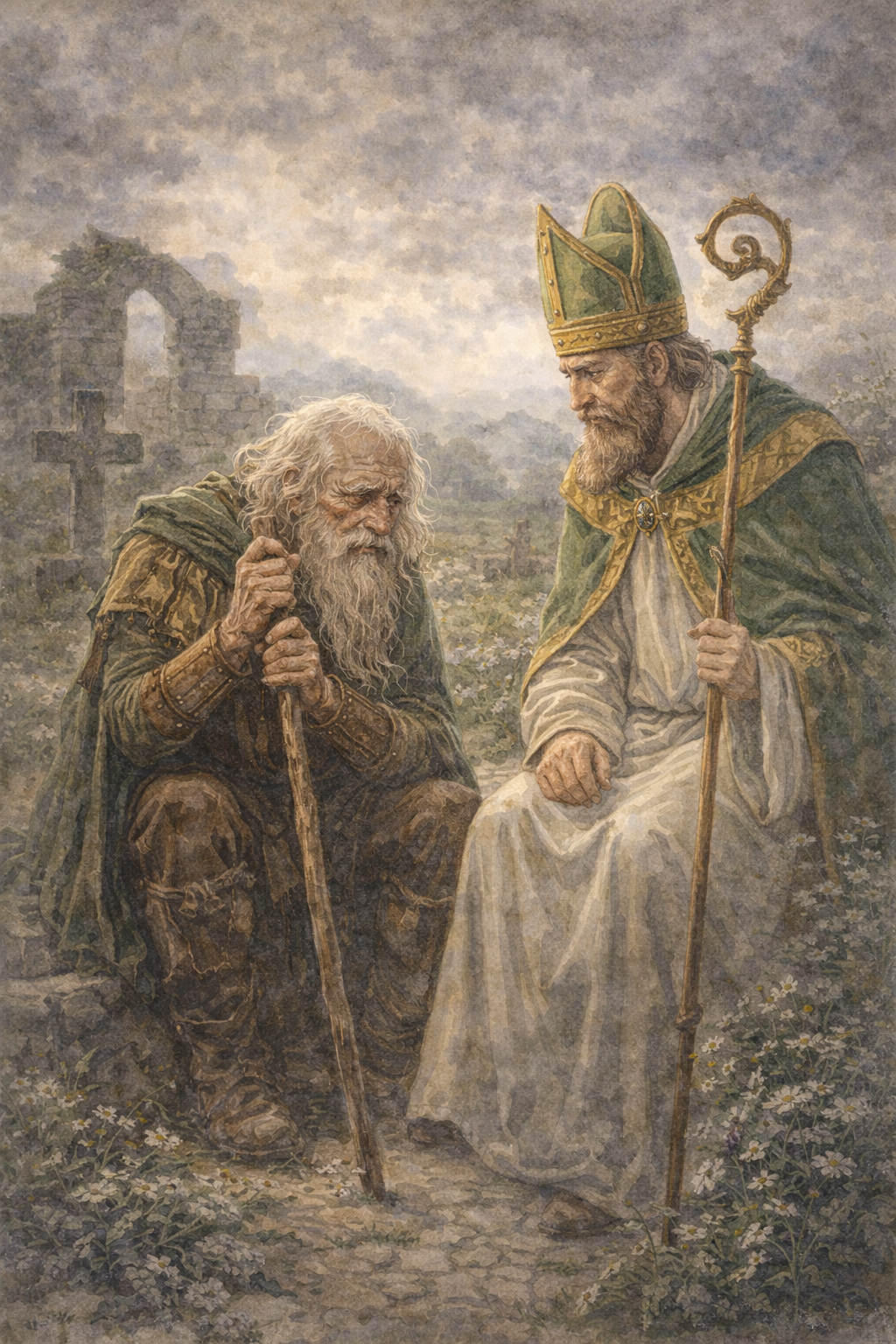
Saint Patrick, active in the 5th century, is considered the main figure responsible for the Christianization of Ireland.
Today, he is the patron saint of the country and one of its most recognizable symbols.