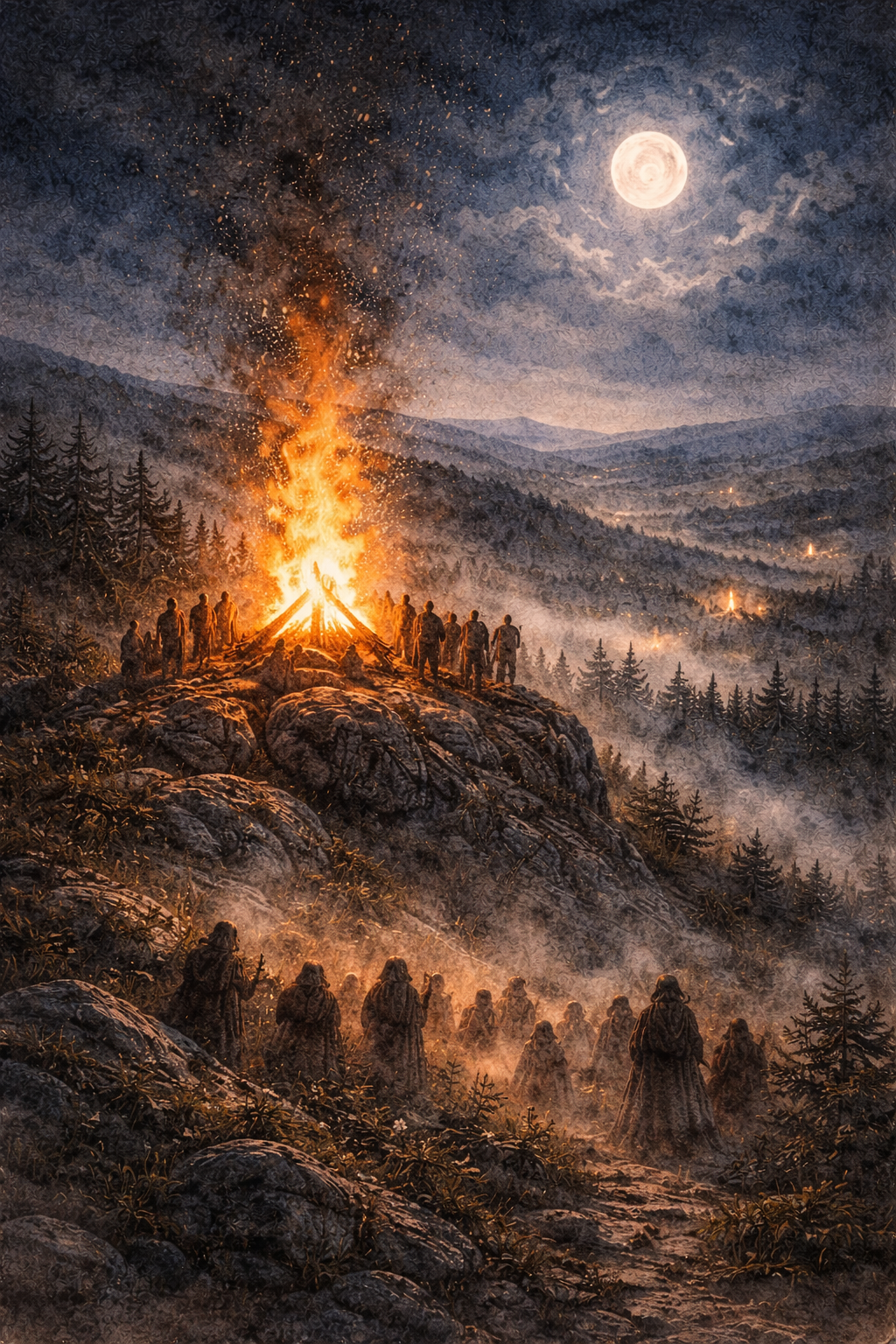
Every year, on the night of April 30, many regions across Europe celebrate an ancient and mysterious festivity known as the Walpurgis Night—a tradition linked to the changing of the seasons and old pagan beliefs.
Amid mountains, bonfires, and ancient traditions, this night has long been associated with witches, spirits, and unseen forces said to roam the world as nature awakens after winter.
Although today it is often seen as a piece of European folklore, its roots run deep in ancient seasonal rituals.
Many European cultures viewed these transitional moments as liminal times—a concept also found in other ancient celebrations such as St. Patrick’s Day in Ireland.
A threshold night, poised between the darkness of winter and the fertility of spring.
Pagan origins of Walpurgis Night
Long before it received its current name, this date marked a moment of transition in the natural calendar for many European peoples.
Winter came to an end, and nature began to flourish once again.
In various Germanic regions, bonfires were lit on hills and mountains to celebrate the arrival of warmer days, protect the fields, and ward off harmful spirits.
Fire played a central role:
- it purified
- it protected
- it marked the beginning of a new cycle
Beltane and its relationship with Walpurgis Night
In the Celtic tradition, there was a parallel festival known as Beltane, one of the four great celebrations of the Gaelic calendar.
Beltane marked the beginning of the pastoral summer, associated with fertility and the protection of livestock.
In Ireland and Scotland, herders would drive their cattle between two fires—a ritual intended to protect the animals from disease and misfortune.
This festival was traditionally celebrated on May 1, coinciding with the same point in the natural calendar as Walpurgis Night.
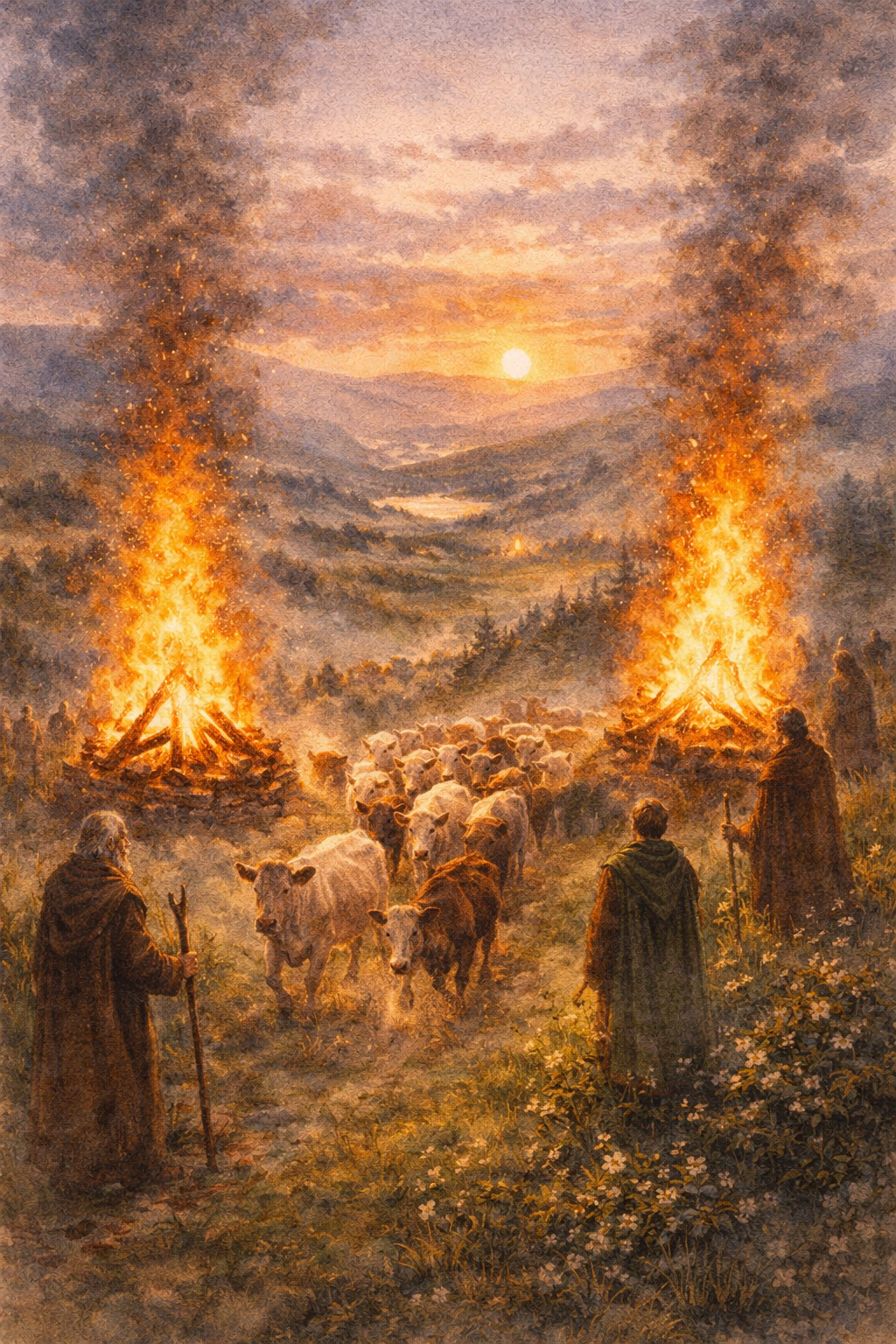
Las hogueras en la noche de Walpurgis
One of the places most closely associated with Walpurgis Night is the Brocken, the highest mountain in Germany’s Harz region.
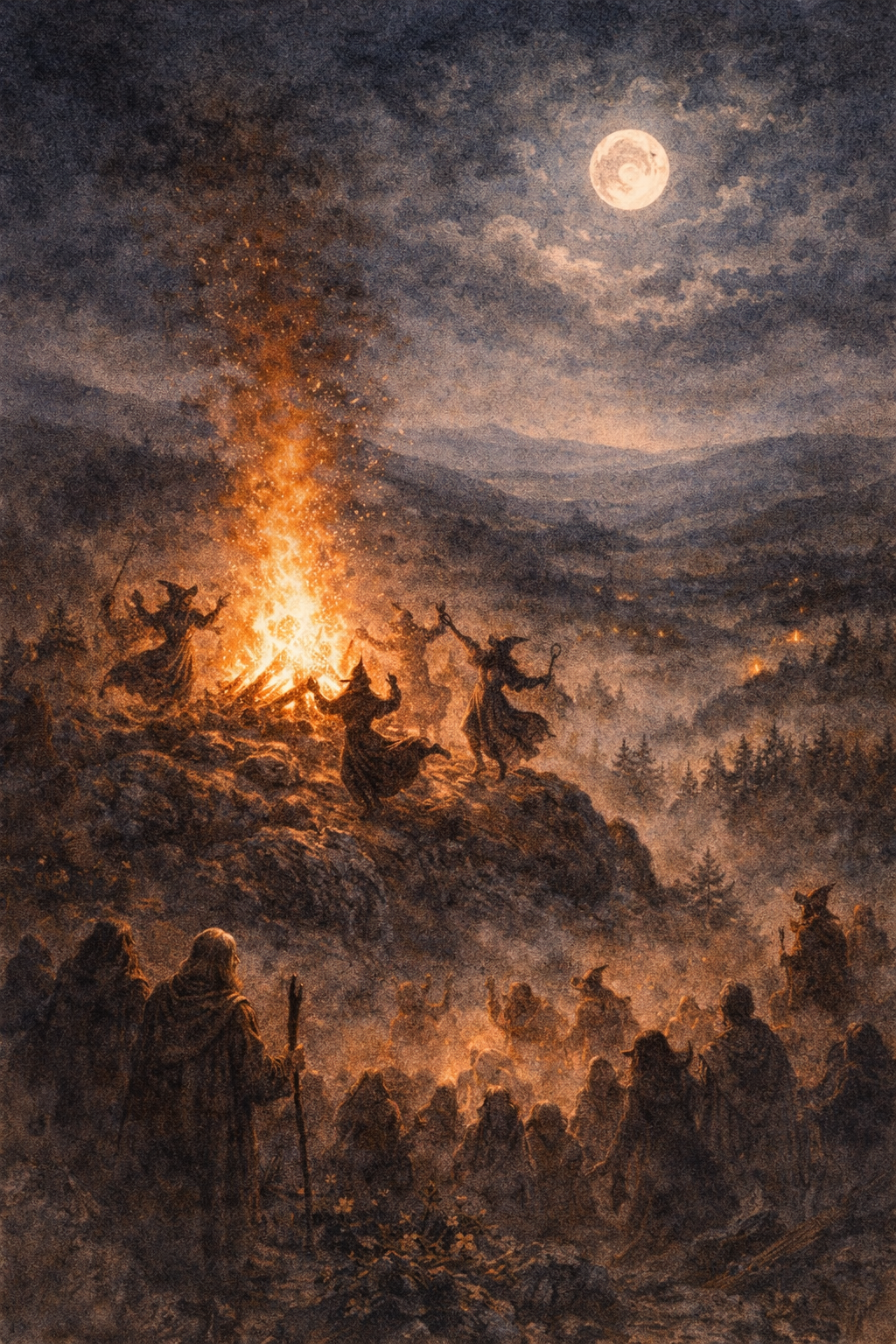
According to Germanic folklore, witches and spirits would gather there during the night to celebrate a great sabbath before the arrival of May.
The bonfires lit on hills and mountains had a dual purpose:
- to protect communities
- to drive away spirits and dark forces
From the heights, the flames could be seen for miles, illuminating the spring night.
The air was filled with sounds, chants, and rituals meant to maintain the balance between the human and invisible worlds.
Witches and popular tradition
Between the 15th and 17th centuries, during the witch hunts in Europe, both the Church and popular culture began to associate Walpurgis Night with demonic gatherings and witchcraft.
According to these beliefs, witches would fly to the mountains that night to gather and perform magical rituals.
This imagery was reinforced by literary works such as Faust, by the German writer Johann Wolfgang von Goethe, where a grand Walpurgis Night is depicted, filled with witches celebrating their sabbath on Mount Brocken.
The Christianization of the festival
The name Walpurgis comes from Saint Walburga, an 8th-century English missionary who evangelized Germanic regions.
She was canonized around 870 AD, and her feast day was set on May 1.
Over time, the night before became known as Walpurgis Nightmeaning “the night of Walburga”.
Same date, different cultures, different names
From Germany to Central and Northern Europe, the night of April 30 emains marked by bonfires and celebrations.
The tradition spread across Northern Europe between the 10th and 11th centuries, when Scandinavian kingdoms adopted Christianity and parts of the European festive calendar.
Although the names vary, the meaning remains the same: to say farewell to winter and welcome spring.
- Scandinavia: Valborg or Valborgsmässoafton
- Sweden: Valborgsmässoafton (the great night), celebrated on April 30
- Finland: Vappu, celebrated between the night of April 30 and May 1
- Austria: Walpurgis Night, with celebrations similar to Germany
- Czech Republic: Čarodějnice, known as the “burning of witches”
Bonfires— Valborgsmässoeldar, “Walpurgis fires”—remain one of the central elements of these celebrations.
A point in the ancient calendar
The night between April 30 and May 1 corresponds to a specific moment in the natural year: the midpoint between the spring equinox and the summer solstice.
Many historians believe this date may have been associated with very ancient European celebrations linked to the beginning of the agricultural summer—possibly predating Germanic cultures.
Beyond stories of witches, Walpurgis Night reflects an ancient idea present in many European traditions: transitional moments in the year were seen as liminal times..
The bonfires lit on hills and mountains not only illuminated the spring night, but symbolically marked the end of winter and the beginning of a new natural cycle.
From myth to folklore
Today, Walpurgis Night is still celebrated in various regions of Europe, especially in Germany, Sweden, Finland, and Central Europe.
Bonfires, music, and festivities mark the arrival of May and the beginning of spring.
Although many of the old beliefs have faded, the night still retains a special aura.
A night when, according to ancient stories, spirits roam the mountains and fire lights the path into a new cycle of nature.