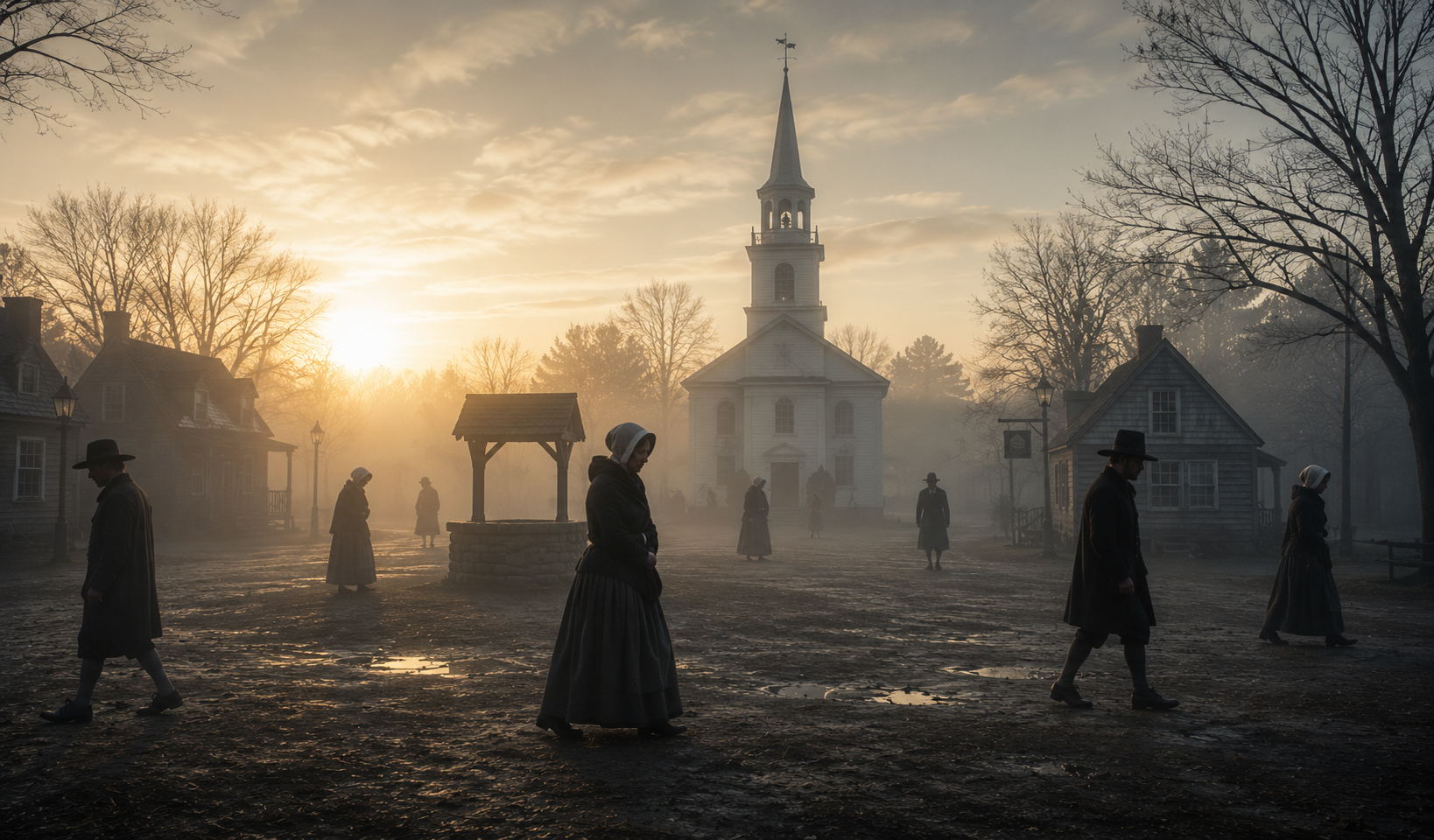
In the spring of 1692, a small community in the Massachusetts Bay Colony became the setting for one of the most infamous episodes in American history.
What began with the strange behaviour of several young girls soon escalated into a wave of witchcraft accusations that brought dozens of people before the courts and ended in numerous executions.
More than three centuries later, the Salem Witch Trials remain a powerful symbol of how fear, rumours, and fanaticism can completely transform a society.
"The Salem people believed that the virgin forest was the Devil's last preserve… To all intents and purposes the American forest was the last place on earth that was not paying homage to God."
Arthur Miller, The Crucible, 1953.
Salem in the Seventeenth Century
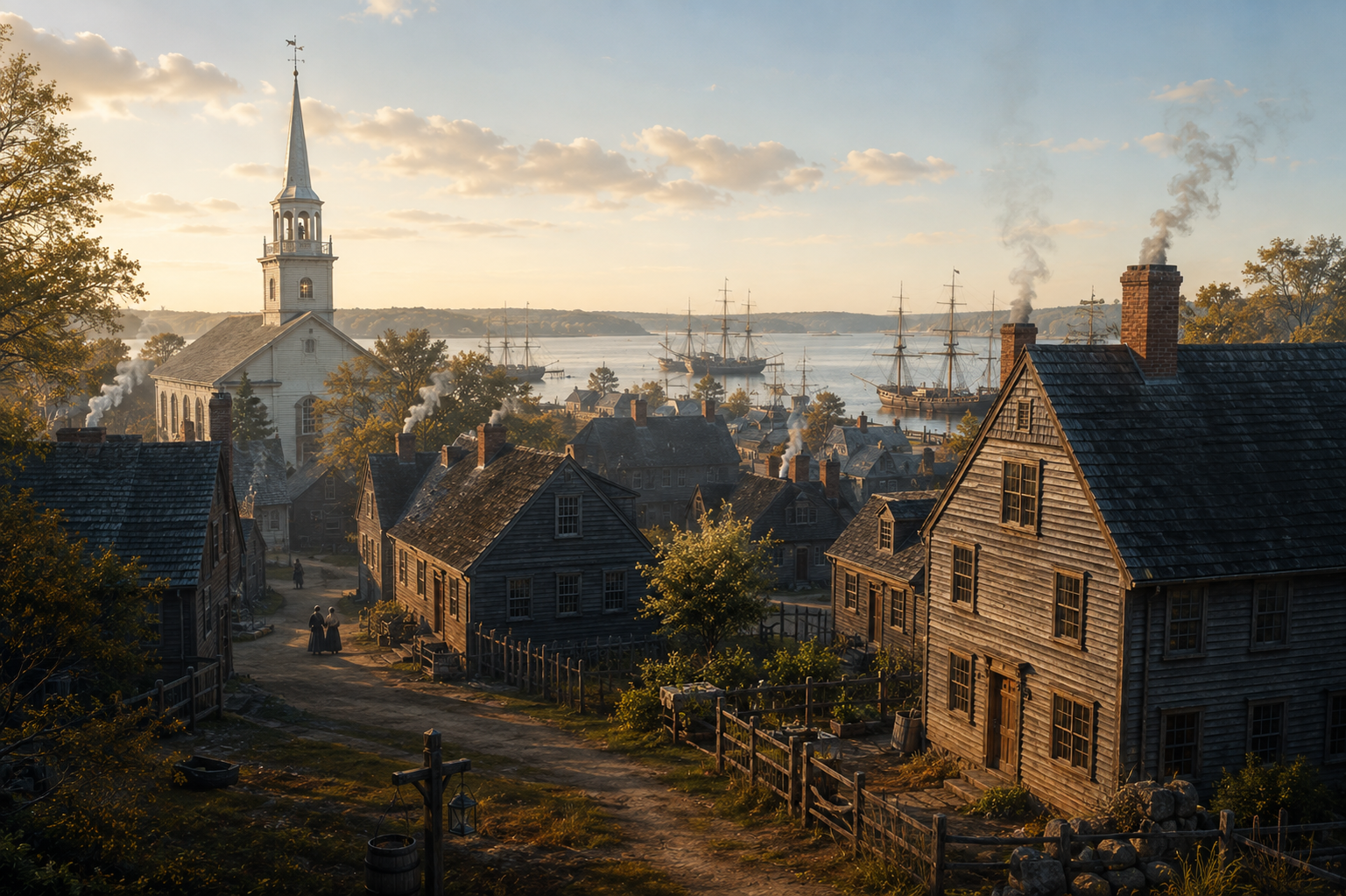
In 1692, Salem was not a single settlement but two closely connected communities with very different characters.
- Salem Town, a prosperous coastal trading centre.
- Salem Village, a small, deeply religious farming community, now known as Danvers.
Puritan society believed that the world was locked in a constant struggle between God and the Devil. Illness, failed harvests, conflicts with Indigenous peoples, and personal misfortunes could all be interpreted as signs of demonic influence.
It was within this atmosphere of uncertainty that everything began.
"It was an age in which piety could become a mask for vengeance, and silence did not mean innocence, but terror."
Stacy Schift, The Witches: Salem, 1692.
The Beginning of the Accusations
In January 1692, several girls in Salem Village—including Betty Parris and Abigail Williams—began suffering strange episodes.
They screamed. They writhed. They claimed to feel sharp pains. They said they saw invisible figures.
The local physicians could find no physical explanation, and some concluded that they might be under the influence of witchcraft.
Under growing pressure from the community, the girls began identifying those they believed responsible.
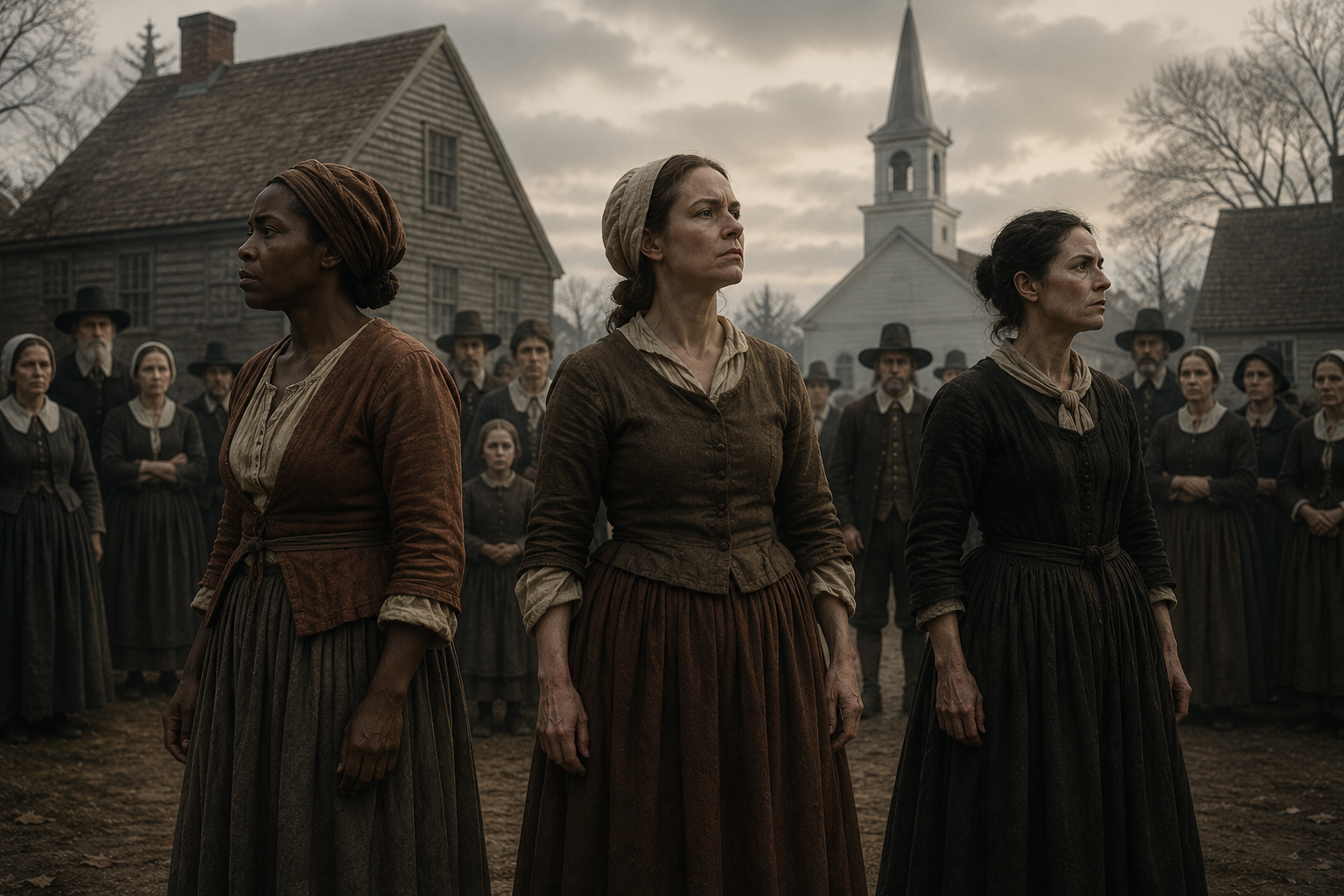
The first three people accused were:
- Tituba, an enslaved woman who worked in the household of Reverend Samuel Parris.
- Sarah Good, a poor woman who survived through charity.
- Sarah Osborne, a local resident involved in several disputes within the community.
These initial accusations triggered a chain reaction that quickly escaped the control of the authorities.
"We have not proceeded upon mere idle, malicious stories."
William Stoughton, 1692.
Tituba, Sarah Good, and Sarah Osborne: The First Accused
Tituba
Among all those accused, Tituba occupies a unique place. She worked as a domestic servant in the household of Reverend Samuel Parris.
Her exact origins remain uncertain. Some sources describe her as Indigenous, while others suggest she came from the Caribbean and may have been of African ancestry.
During her interrogations, she confessed to practising witchcraft and claimed to have seen the Devil and other witches.
Many historians believe this confession was extracted under enormous pressure.
Ironically, because she confessed, she was not executed. She remained imprisoned until someone paid her jail fees, after which she disappeared from the historical record.
Sarah Good
Sarah Good was an impoverished woman who relied on charity and had a troubled relationship with many of her neighbours.
She was convicted of witchcraft and hanged on 19 July 1692.
Sarah Osborne
Sarah Osborne was also viewed with suspicion due to ongoing personal and family disputes within the community.
She died in prison before her trial could take place.
The accusations against these three women marked the beginning of one of the greatest judicial crises in colonial American history.
"I am as innocent as the child unborn."
Rebecca Nurse, 1692.
Mass Hysteria
The accusations spread rapidly. Neighbours accused neighbours. Relatives accused relatives. Merely claiming to have seen another person's spirit attacking you was enough to launch an investigation.
One of the most controversial aspects of the trials was the use of spectral evidence..
Judges accepted testimony from individuals who claimed to have seen the spirit or spectre of an accused person harming them, even when no physical evidence existed.
Today, such testimony would have no legal value whatsoever. In Salem, however, it played a decisive role in numerous convictions.
Men Also Accused
Although women made up the majority of those accused, the Salem Witch Trials were not directed exclusively against them. Several men were also prosecuted for witchcraft.
Among the best known are:Among the best known are:
- Giles Corey
- George Burroughs
- John Proctor
- John Willard
- Samuel Wardwell
Many were executed or suffered severe consequences as a result of the accusations.
The Trials
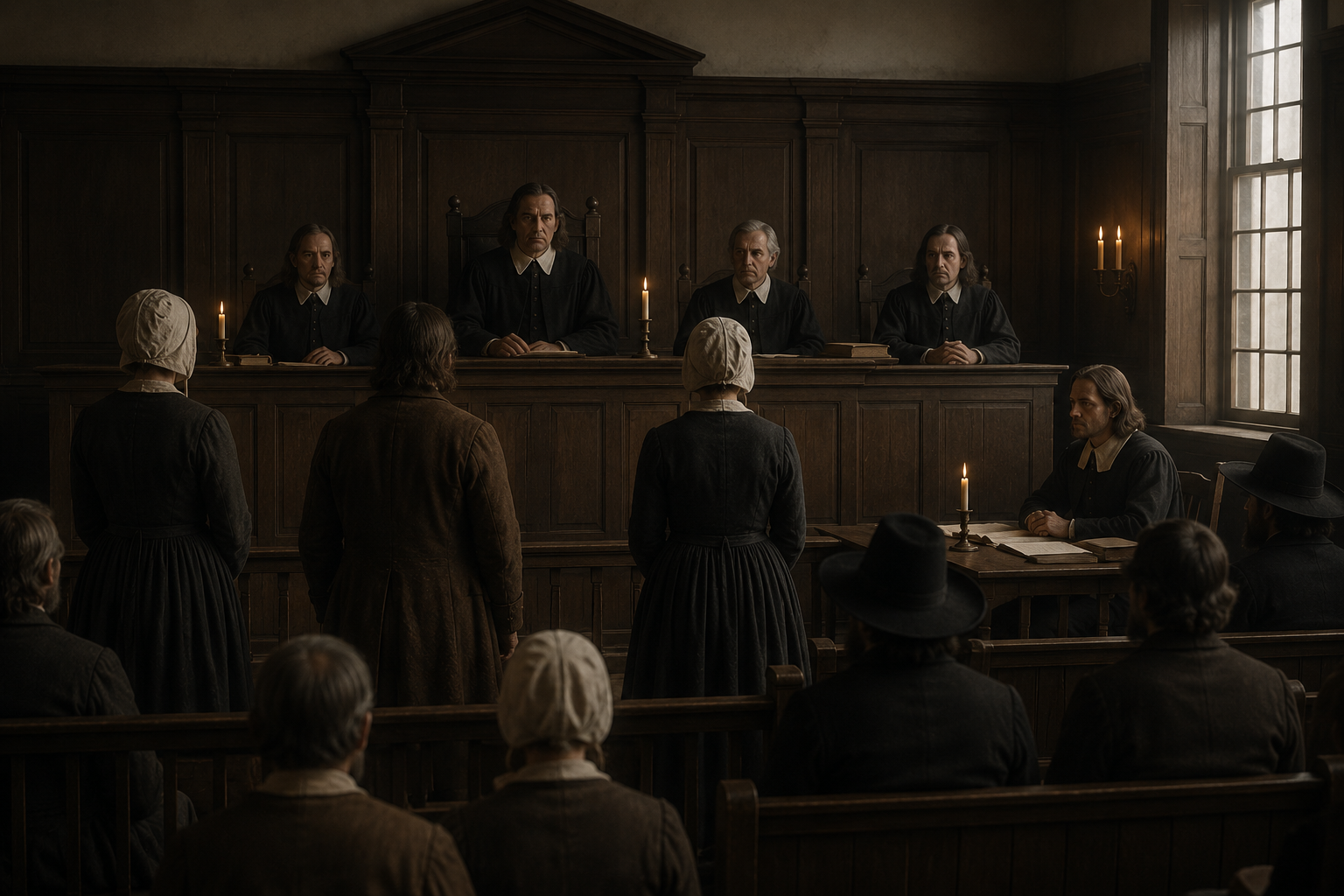
To deal with the growing number of cases, Governor William Phips established a special court known as the Court of Oyer and Terminer.
Between June and September 1692, convictions began.
The first execution took place on 10 June, when Bridget Bishop was hanged.
Over the following months, more accused individuals met the same fate.
In total:
- nineteen people were hanged
- Giles Corey was pressed to death after refusing to enter a plea
- at least five people died in prison before standing trial.
More than two hundred individuals were accused during the crisis
The End of the Trials
As the months passed, doubts about the validity of the accusations began to emerge.
Several religious leaders criticised the use of spectral evidence and questioned the court's procedures.
By the end of 1692, Governor William Phips dissolved the Court of Oyer and Terminer and prohibited the use of spectral evidence. Even so, several prisoners still awaited trial or execution.
A new court was soon established. Once spectral evidence was no longer accepted, most of the remaining defendants were acquitted and released.
For many survivors, however, acquittal did not restore the lives they had lost. They returned to ruined homes, confiscated property, and communities that took years to acknowledge the injustice.
Over time, various authorities publicly recognised that grave mistakes had been committed during the Salem Witch Trials.
When Salem—and Justice—Asked for Forgiveness
Over the years, many officials acknowledged that the trials had been a terrible mistake.
In 1697, Massachusetts proclaimed an official day of fasting and reflection. However, the process of rehabilitating the victims dragged on for centuries and did not officially conclude until 2001.
- 1697: Massachusetts proclaimed an official day of fasting and reflection.
- 1702: The colony declared the trials unlawful.
- 1711: Many convictions were overturned, and compensation was awarded to victims' families.
- 1957: Massachusetts officially exonerated several remaining victims.
- 2001: The final victims who had never been formally cleared were legally exonerated.
One of the most remarkable acts of repentance came from Samuel Sewall, one of the judges involved in the trials. In 1697, he publicly attended a church service where he requested that a written confession acknowledging his responsibility be read aloud.
He was one of the very few judges who publicly apologised and spent the rest of his life regarding the trials as a profound mistake.
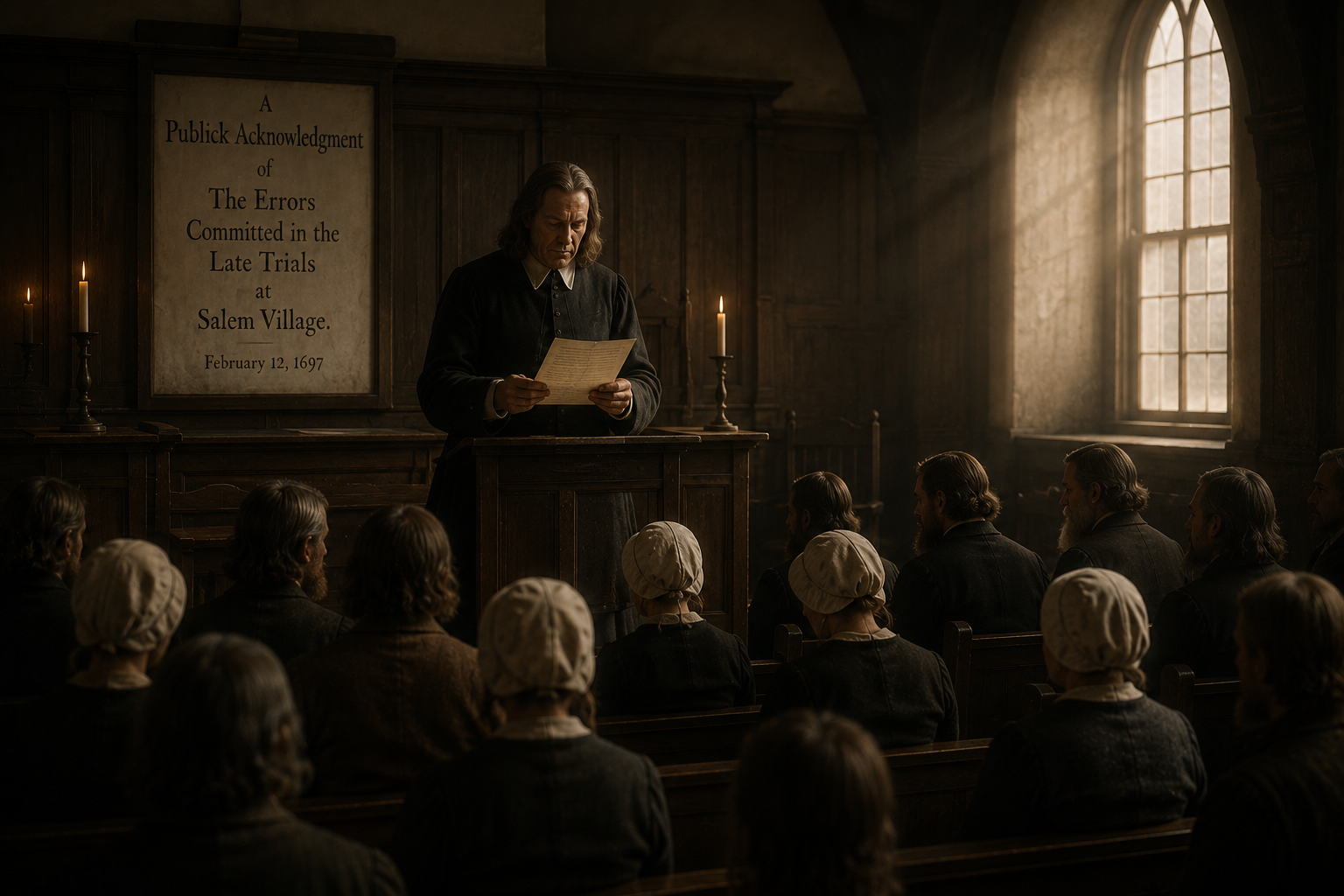
"Desires to take the blame and shame of it."
Samuel Sewall, , Public Declaration of Repentance, 1697.
Salem After the Trials
The aftermath of Salem marked an important turning point in attitudes toward justice.
Growing distrust developed toward:
- confessions obtained under pressure
- rumours
- supernatural evidence
- accusations unsupported by proof
Over time, Salem ceased to represent religious vigilance and instead became a symbol of mass hysteria, judicial error, and the dangers of fanaticism.
What Caused the Trials?
There is no single explanation.
Historians generally agree that several factors contributed:
- intense Puritan religious beliefs
- fear of the Devil
- political and social tensions
- family rivalries
- disputes over land
- the context of frontier wars
- psychological pressure and collective fear
Medical theories have also been proposed, including the possibility of (ergot) poisoning caused by contaminated rye. Today, however, this hypothesis is not generally accepted as a consensus explanation.
Salem's Legacy
The Salem Witch Trials have become one of history's best-known examples of collective hysteria and judicial failure. They have transcended their historical context to become a universal symbol of fear, intolerance, and accusations made without evidence.
Over time, they have inspired novels, films, documentaries, and plays.
Beyond the subject of witchcraft itself, Salem reminds us how fear, prejudice, and social pressure can lead an entire community to condemn innocent people.
The city has gradually become one of the places most closely associated with the history of witchcraft and attracts hundreds of thousands of visitors every year, particularly during Halloween.
More than three centuries later, its story remains a warning against replacing evidence with fear and rumour.
"Salem is the story of what happens when a set of unanswered questions meets an unquestioned set of answers."
Stacy Schift, The Witches: Salem, 1692.
The Witch City
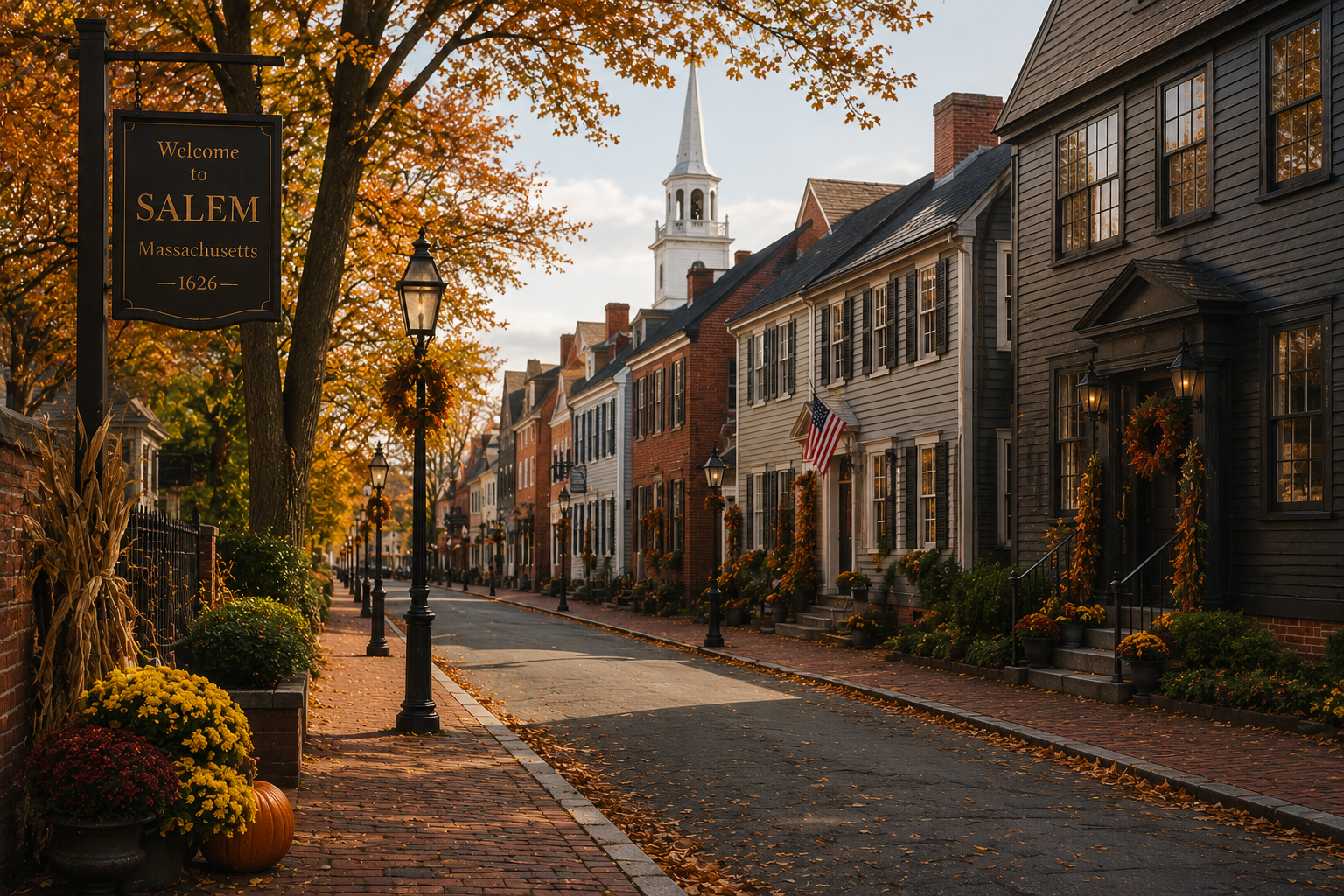
Although the events of 1692 remain one of the darkest episodes in colonial American history, Salem is officially known today as "The Witch City."Its past has inspired museums, memorials, guided tours, festivals, and countless references in literature, film, and television, making it one of New England's most visited destinations.
Curiosities
The First Recorded Witchcraft Case
Although Salem is the most famous case, it was not the first.
The earliest documented execution for witchcraft in the English colonies was that of Alse (Alice) Young, in 1647, Hartford (Connecticut).
Bewitched
In 1970 , several episodes of the popular television series Bewitched,which aired from 1964 to 1972—were filmed in Salem.
Decades later, in 2005,it was inaugurated in Lappin Park the , a statue dedicated to Samantha as a tribute to both the series and Salem's influence on popular culture.
Hocus Pocus
The well-known movie Disney's Hocus Pocus and its sequel, released in 1993 and 2022, were filmed at various locations in Salem.
Today, it is possible to visit many of those locations, including Salem Common, the Ropes Mansion and Pioneer Village, on a route very popular among fans of the saga.
Follow the Footprints
Today, Salem reminds visitors that behind its museums, guided tours, historical reenactments, and festivals were real people who were executed despite their innocence.
Every October, hundreds of thousands of visitors arrive to celebrate Halloween. Alongside its festive atmosphere, however, the city continues to honour the victims of 1692 through memorials, ceremonies, and educational events that preserve the memory of one of the darkest chapters in colonial American history.
Its Legacy Lives On...
Remembering the Victims
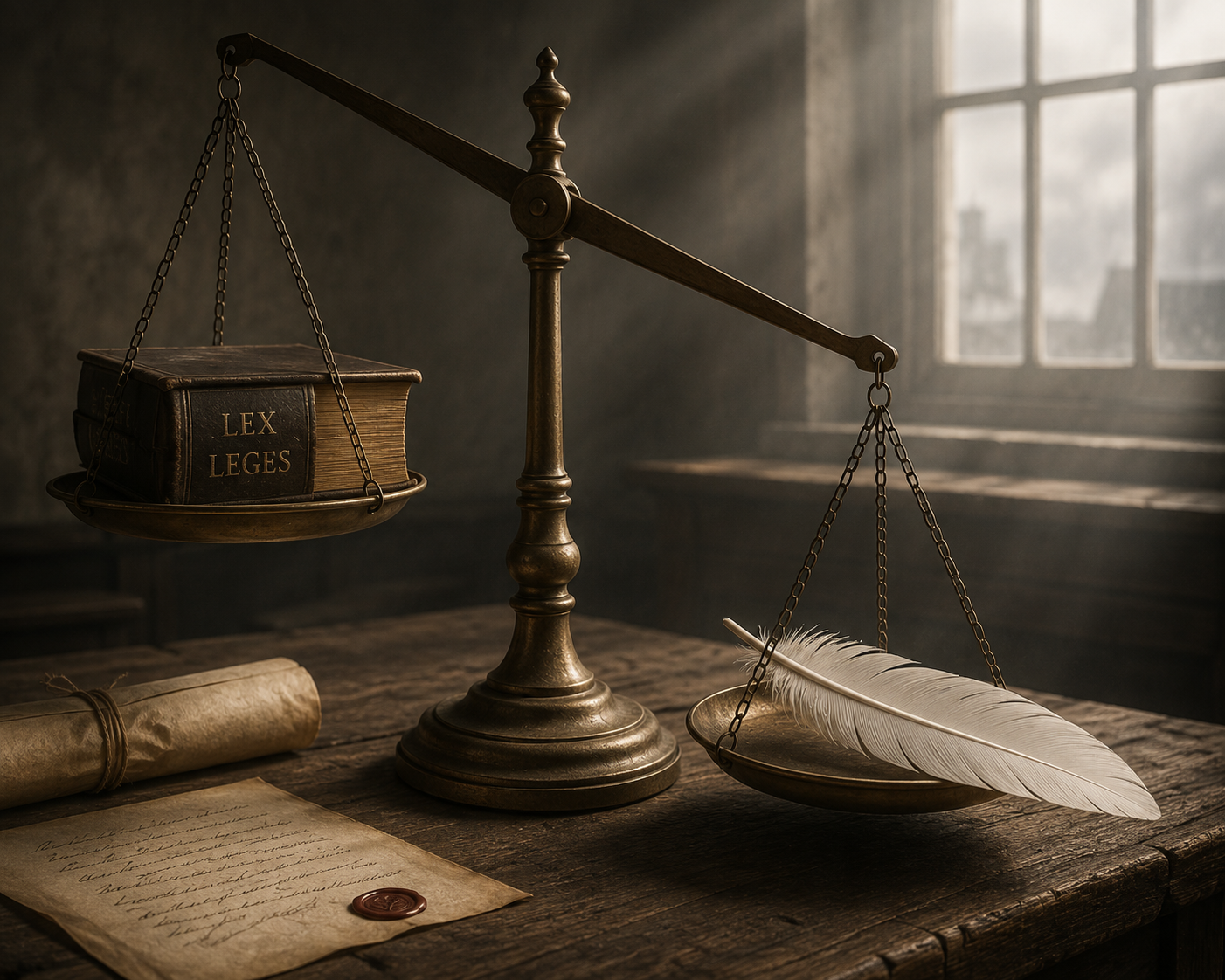
Every 22 September , Salem commemorates the victims of the trials during Salem Witch Trials Remembrance Day.
Ceremonies take place at both the Salem Witch Trials Memorial and Proctor’s Ledge Memorial, where the names of the twenty victims are read aloud, followed by a minute of silence.
The commemoration also typically includes:
- floral tributes
- educational activities
- historical lectures
The date holds particular significance because 22 September 1692 was the day on which eight peoplewere executed—the highest number of executions carried out on a single day during the trials.
Haunted Happenings
Throughout October, the entire city transforms for Salem's famous Haunted Happenings festival.
Parades, markets, ghost tours, lectures, concerts, costumes, and family activities make Salem one of the best-known Halloween destinations in the United States.
Visit It Today...
Notable sacred sites include:
Museums:
- Salem Witch Museum, dedicated to explaining the historical context of the 1692 trials and the evolution of witchcraft's image through history.
- Jonathan Corwin Museum House (The Witch House), the only surviving building with direct ties to the Salem Witch Trials.
Historic Sites:
- Salem Witch Trials Memorial
- Proctor’s Ledge Memorial
- Rebecca Nurse Homestead, in Danvers.
- Salem Village Parsonage, in Danvers.
- Pioneer VillagePioneer Village, a reconstruction of a 1630 English settlement that offers a glimpse into everyday life in colonial New England just decades before the trials.
"It were better that ten suspected witches should escape, than that one innocent person should be condemned."
Increase Mather, , Cases of Conscience Concerning Evil Spirits, 1693.