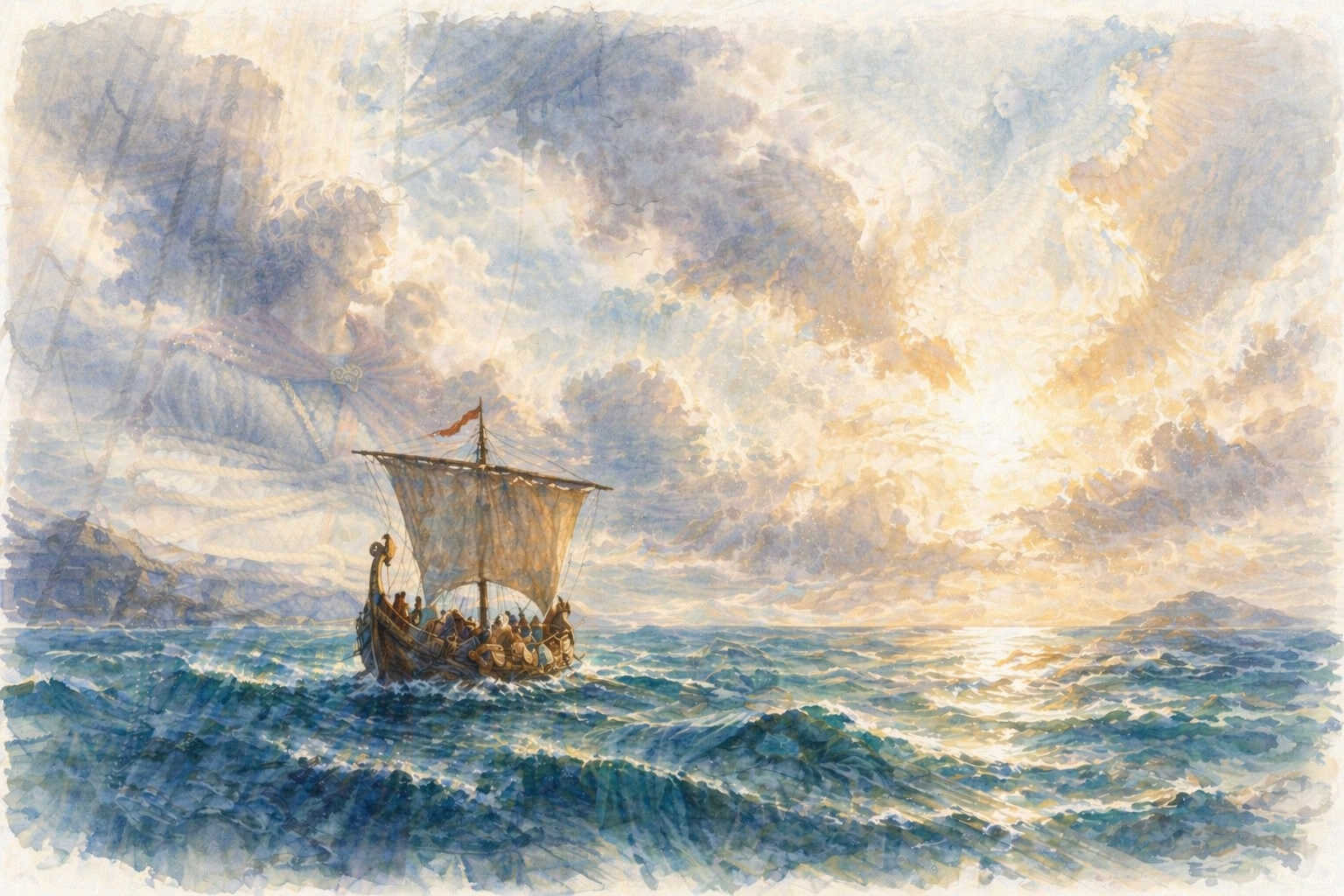
The Odyssey is one of the most influential stories of the ancient world. Attributed to Homer and composed around the 8th century BC, this work not only recounts a hero’s return home, but also establishes one of the most enduring archetypes of Western culture: the journey as transformation.
More than a tale of adventure, The Odyssey is a reflection on identity, memory, destiny, and the passage of time.
The Journey of Odysseus
After the fall of Troy, Odysseus — Ulysses in the Roman tradition — begins his journey back to Ithaca, his homeland. However, what should have been a brief voyage becomes a ten-year odyssey filled with obstacles.
Gods, mythical creatures, and natural forces stand in his way. Poseidon, in particular, becomes his greatest antagonist, punishing him for his cleverness and his pride.
Odysseus’ journey is not only physical: it is also an inner voyage, where the hero confronts loss, temptation, and forgetfulness.
The Trials of Odysseus and Their Meaning
Throughout his journey, Odysseus faces not only monsters and gods, but also different ways of losing himself. Each episode of The Odyssey can be read as a symbolic trial, an obstacle representing a dimension of human experience.
The Lotus-Eaters: Forgetfulness
On the island of the Lotus-Eaters, those who consume the lotus forget their home and purpose. This episode symbolizes:
- escapism
- the abandonment of duty
- the temptation to forget who you are
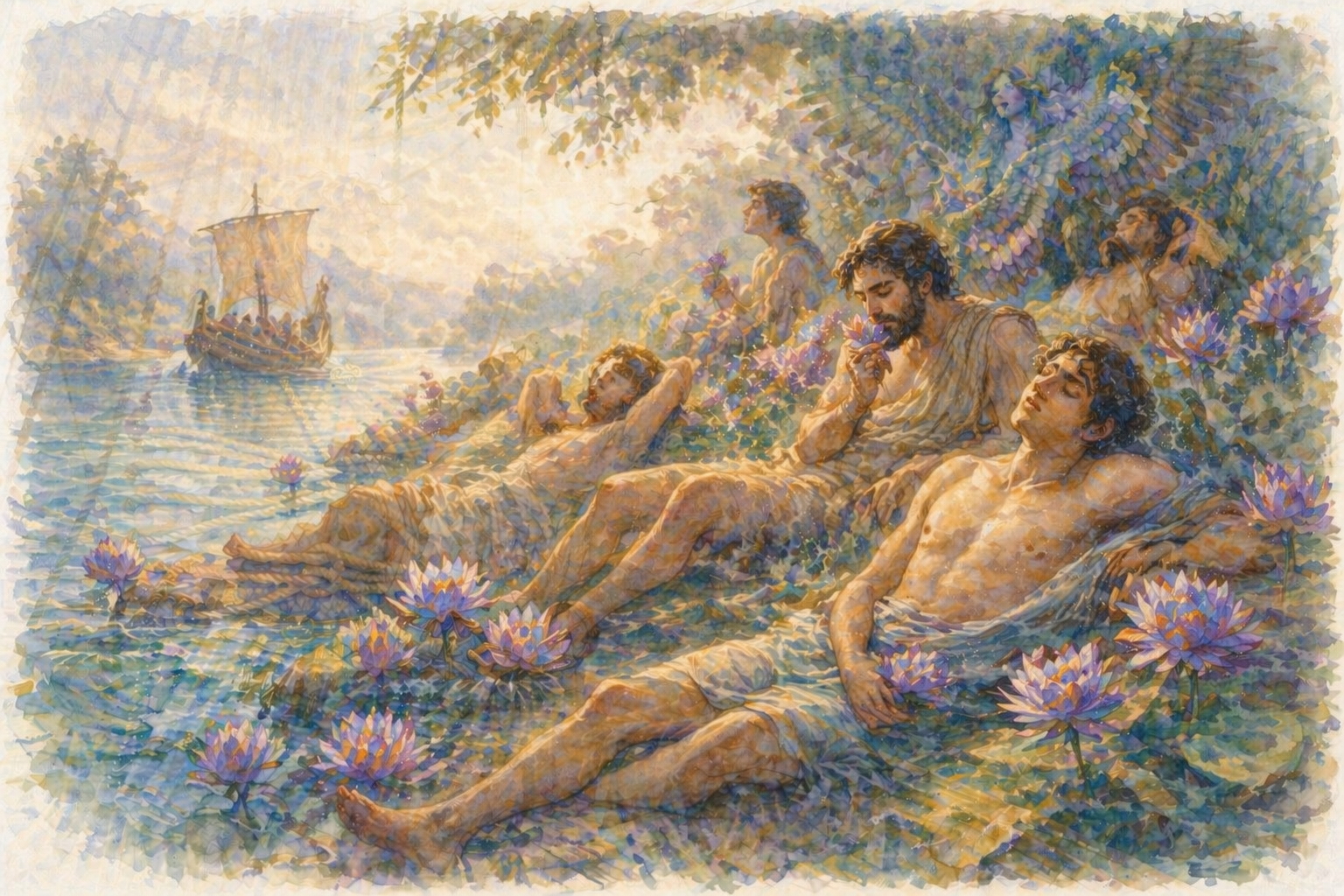
Odysseus does not fall into it, but he must rescue his men. It is the first warning of the journey: the greatest danger is not death, but forgetting the path.
Polyphemus: Strength Versus Intelligence
The Cyclops represents lawless brutality.
He symbolizes:
- primitive force
- the absence of civilization
- chaos without rules
Odysseus defeats him not with strength, but with cunning. Yet his pride in revealing his name unleashes Poseidon’s wrath.
Lesson: intelligence saves, but pride condemns.
Aeolus: Losing Control
Aeolus gives Odysseus the winds that could carry him home. This episode symbolizes:
- control over destiny
- the opportunity to return
But his men, driven by distrust, ruin everything.
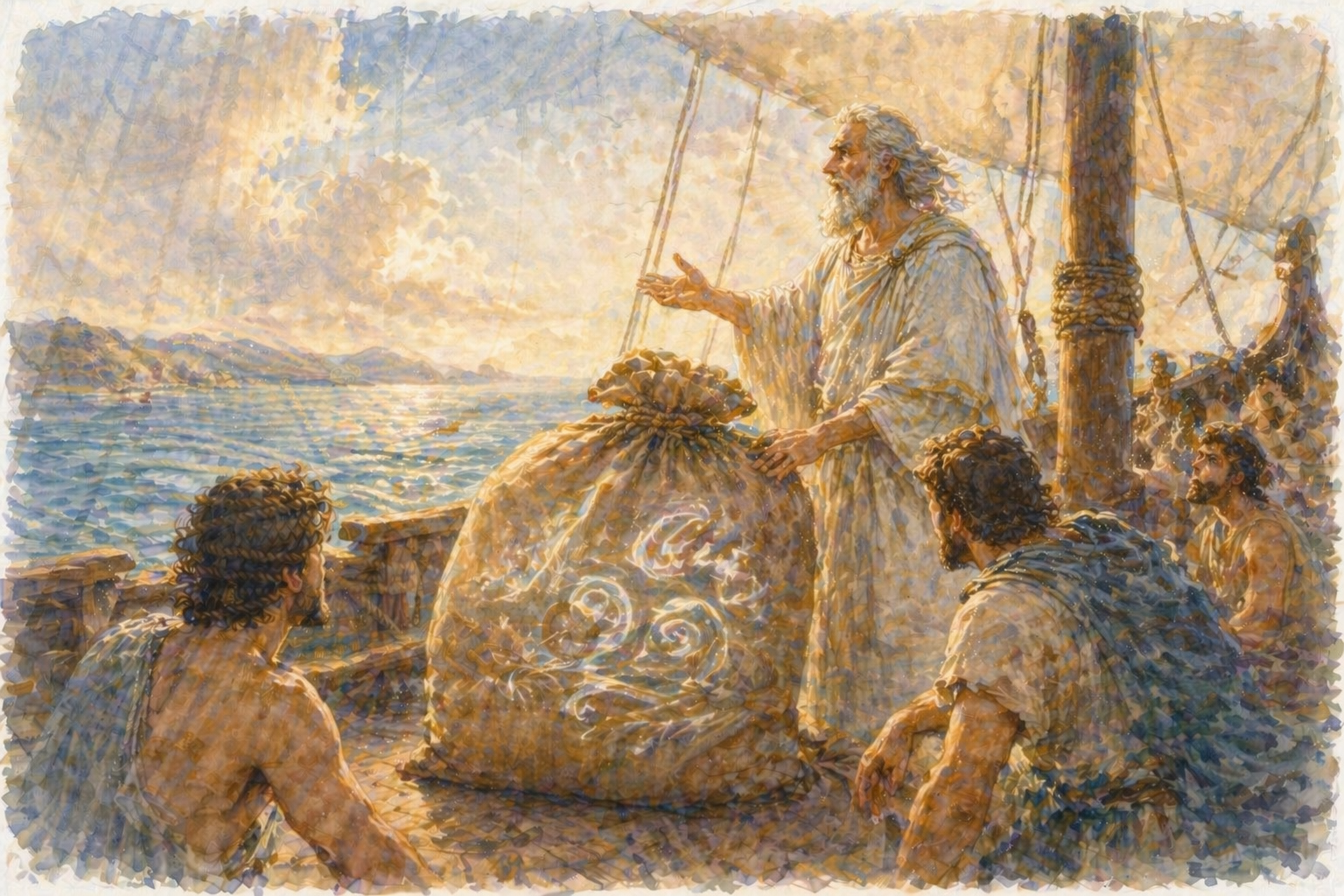
Lesson: it is not enough to gain control; one must also know how to preserve it.
The Laestrygonians: Inevitable Destruction
The Laestrygonians, giant cannibals, destroy almost all of his fleet. They symbolize:
- sudden loss
- the unpredictable
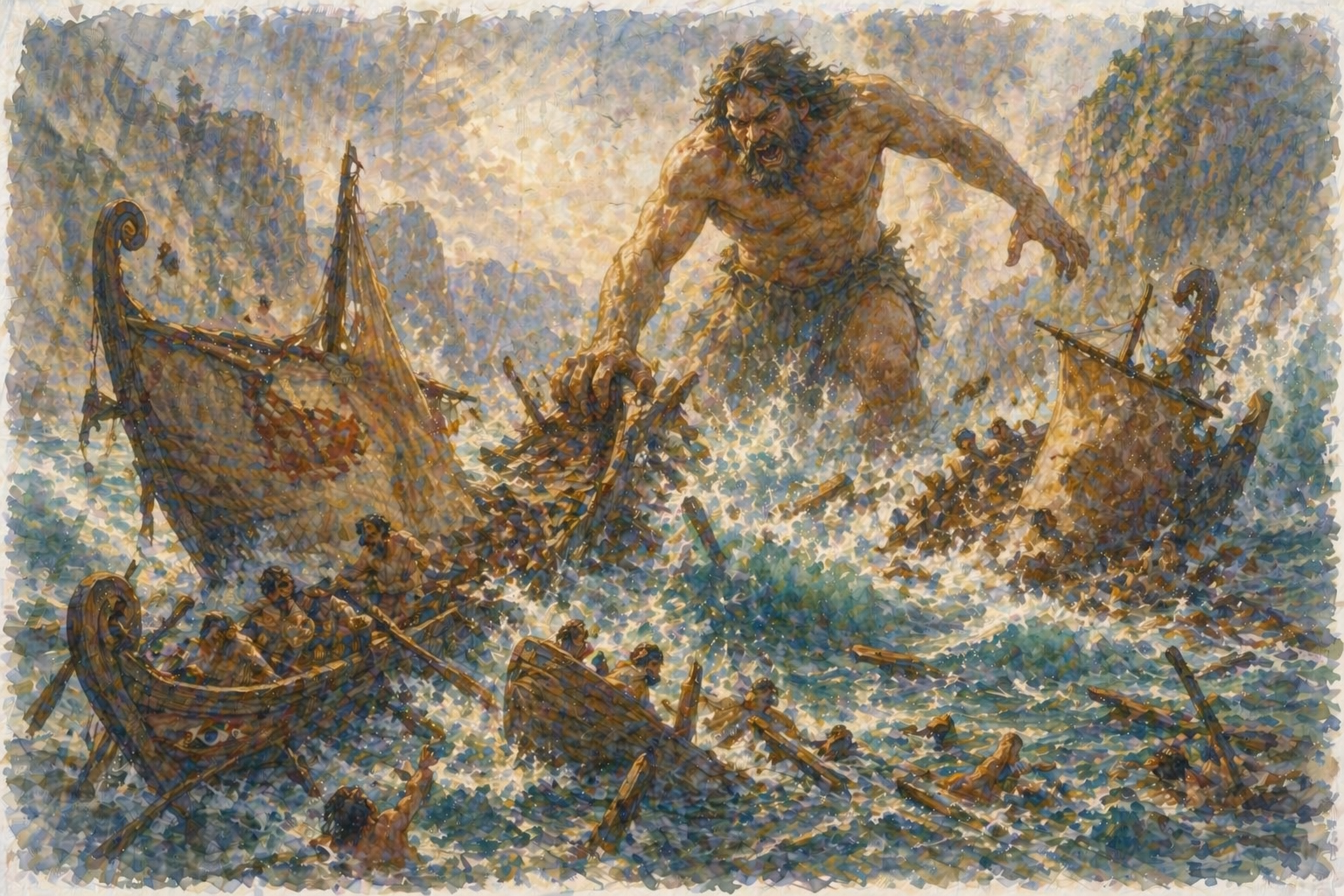
Not everything can be avoided. Some losses are part of the journey.
Circe: Temptation and Transformation
Circe turns men into animals. This episode symbolizes:
- the loss of humanity
- the temptation to surrender to instinct
Odysseus resists and learns to live with her for a time.
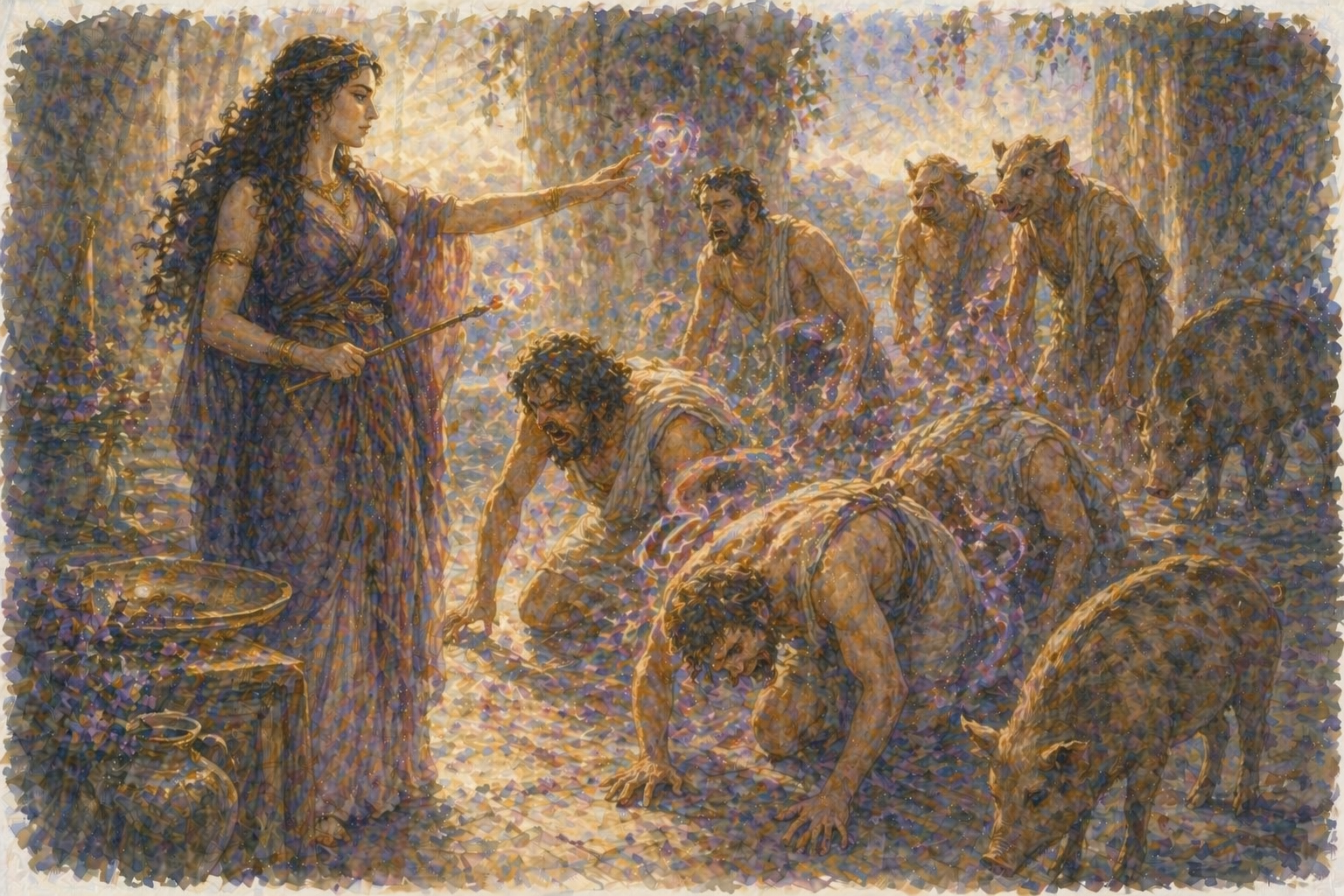
Lesson: not every trial is meant to be escaped; some require adaptation.
The Underworld: Facing Truth
Odysseus descends into Hades. This episode symbolizes:
- knowledge
- death
- unavoidable truth
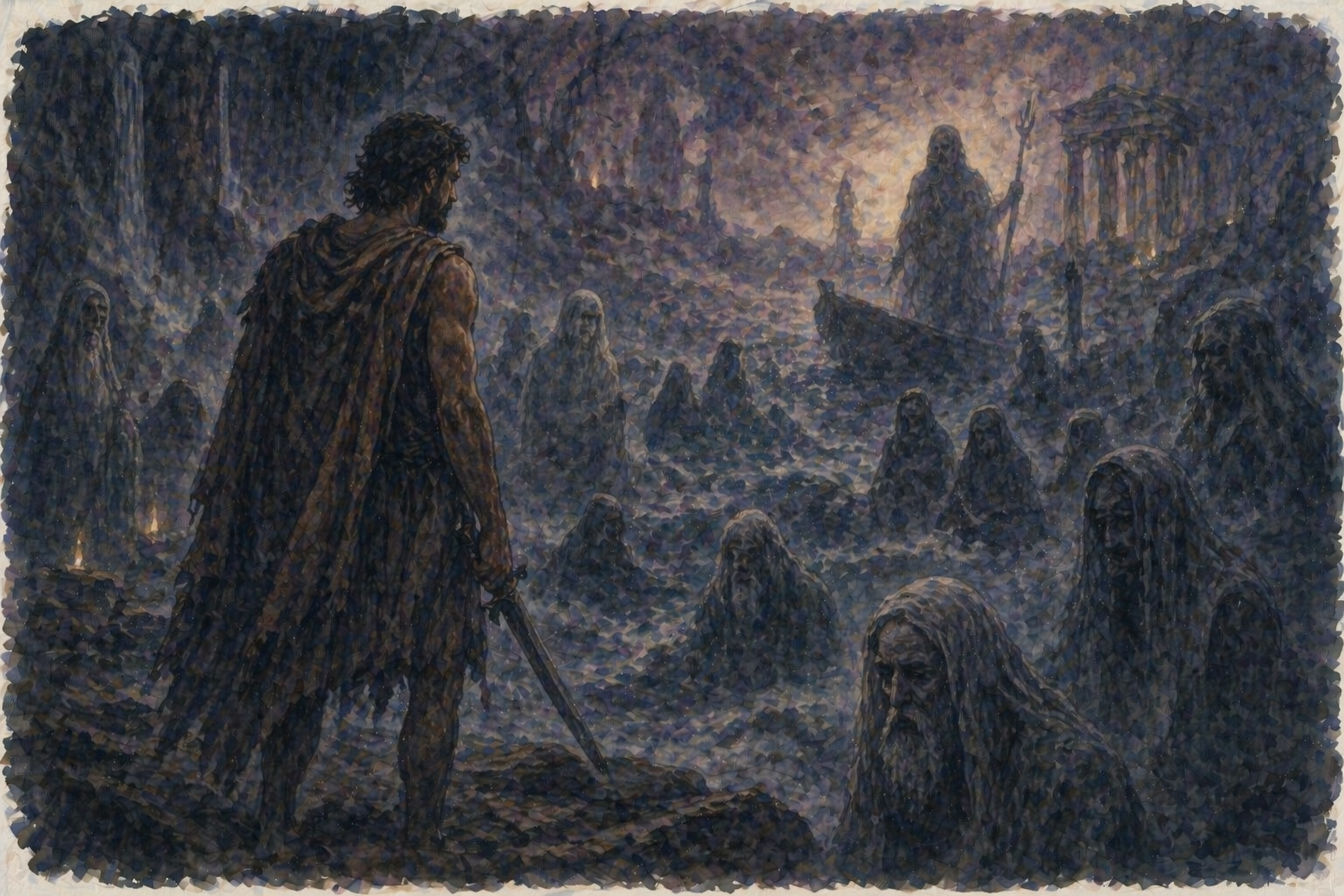
There he realizes that his journey can no longer be understood merely as a physical voyage.
The Sirens: The Danger of Knowledge
The Sirens promise wisdom. They symbolize:
- dangerous curiosity
- the desire to know everything
Odysseus wants to hear them, but without surrendering to them.
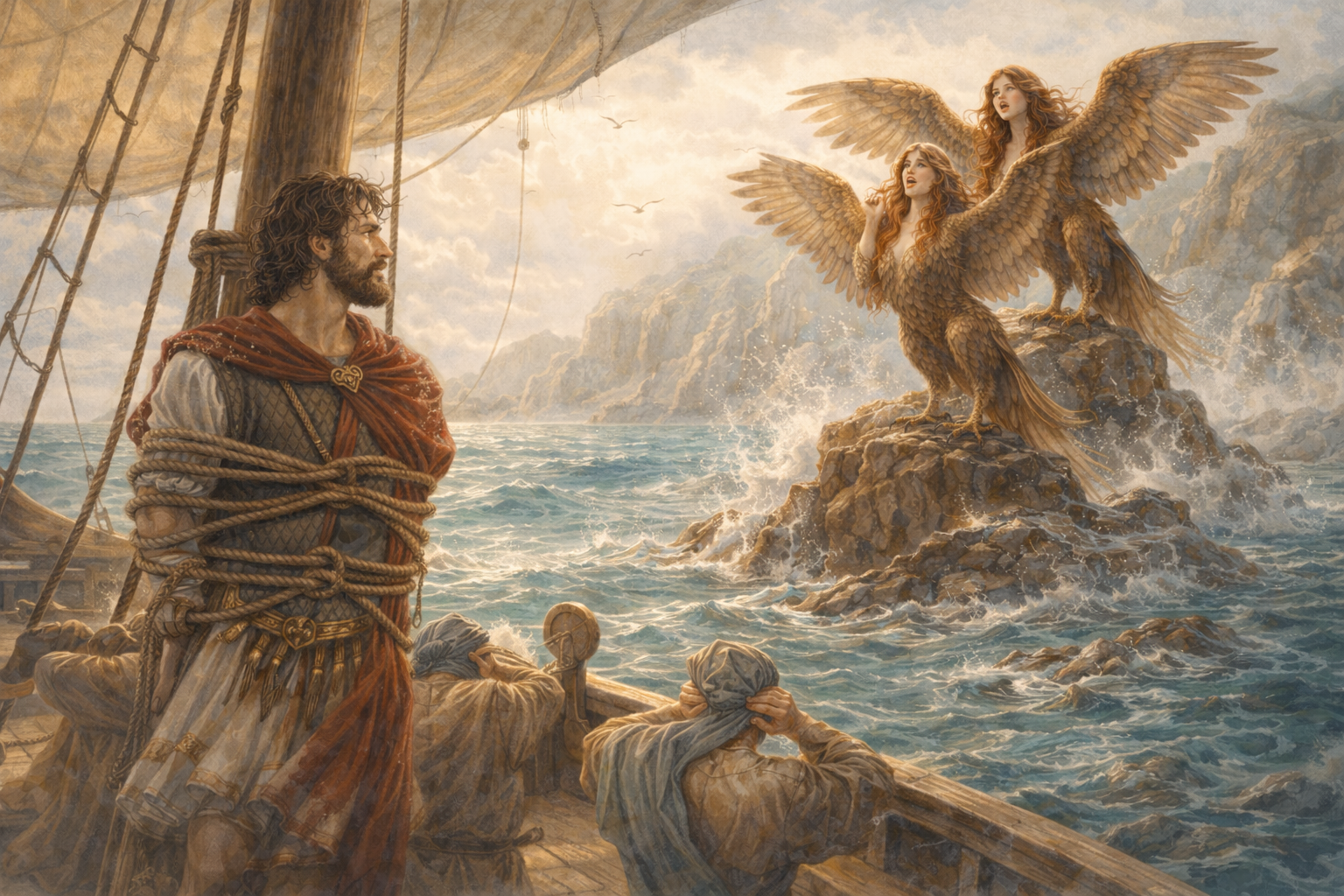
Lesson: not all knowledge should be followed.
Scylla and Charybdis: Choosing Between Two Evils
These two unavoidable dangers symbolize decisions with no perfect solution.
Odysseus must sacrifice some men to save the rest.
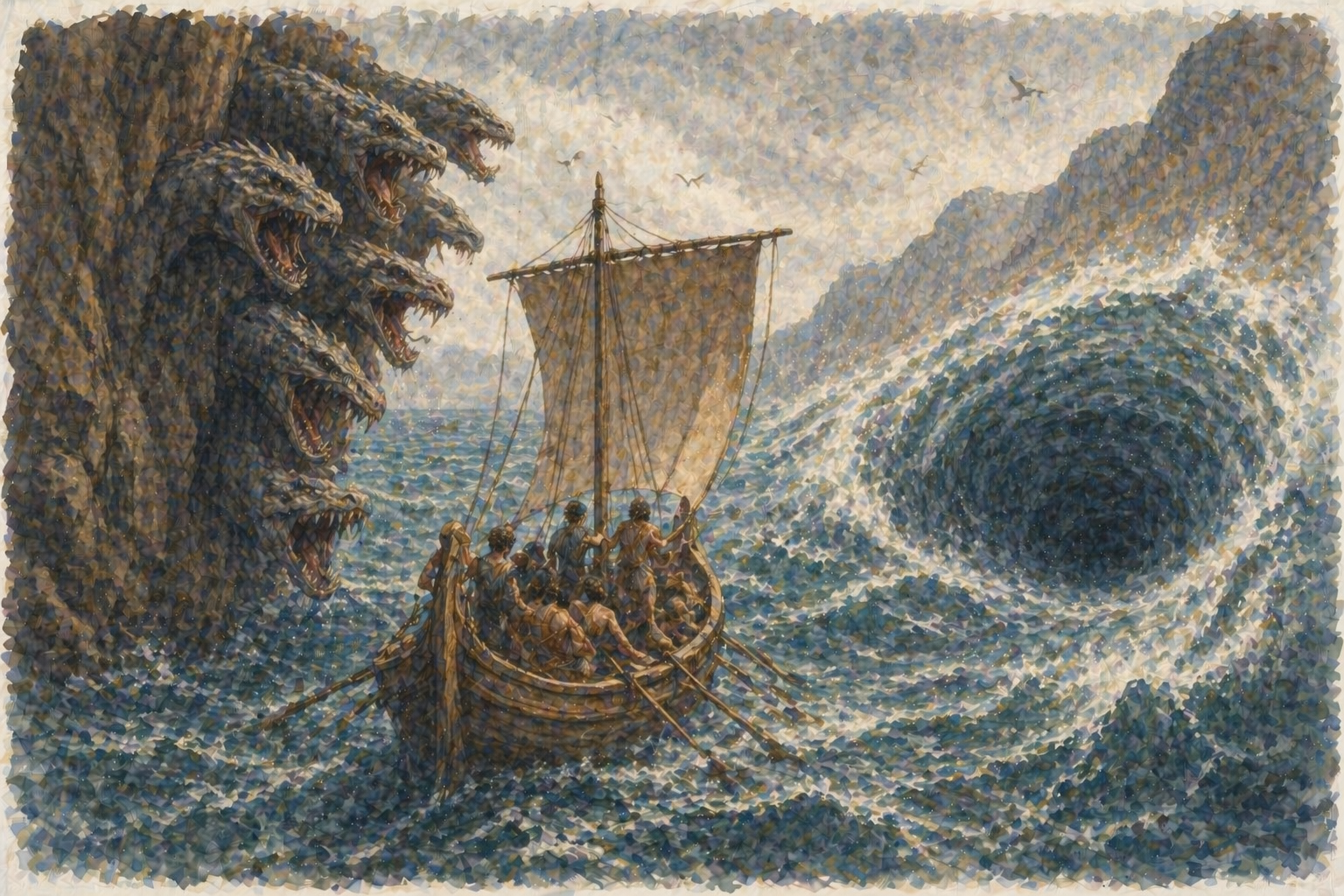
Lesson: sometimes, choosing also means losing.
The Cattle of Helios: Disobedience
His men slaughter the sacred cattle of Helios. This symbolizes:
- lack of discipline
- the breaking of sacred rules
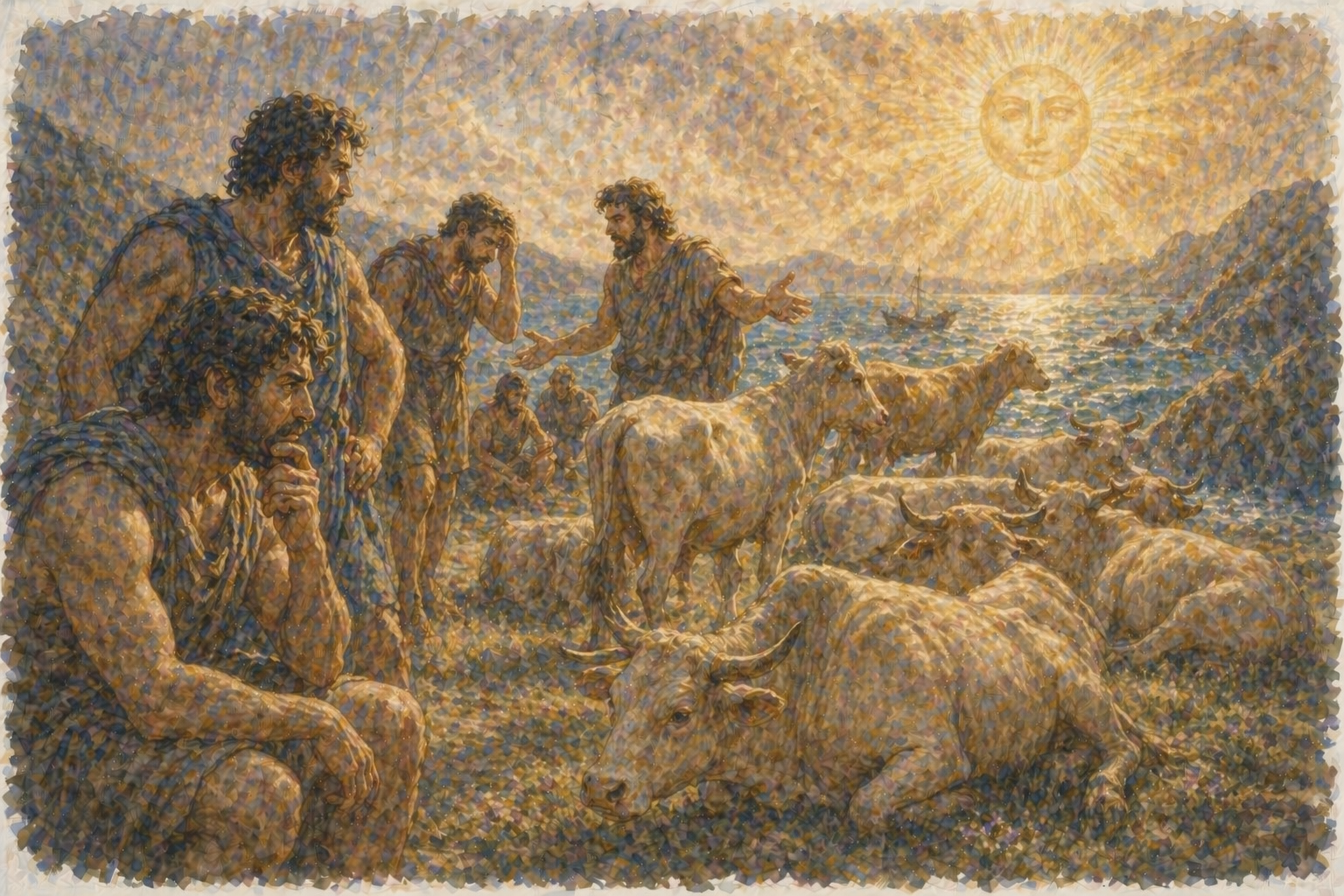
Consequence: the total destruction of the crew.
Calypso: The Temptation to Stay
A perfect island, outside time, offering a perfect life and even immortality. It symbolizes:
- abandoning the journey
- comfort
- immortality without identity
Odysseus refuses it.
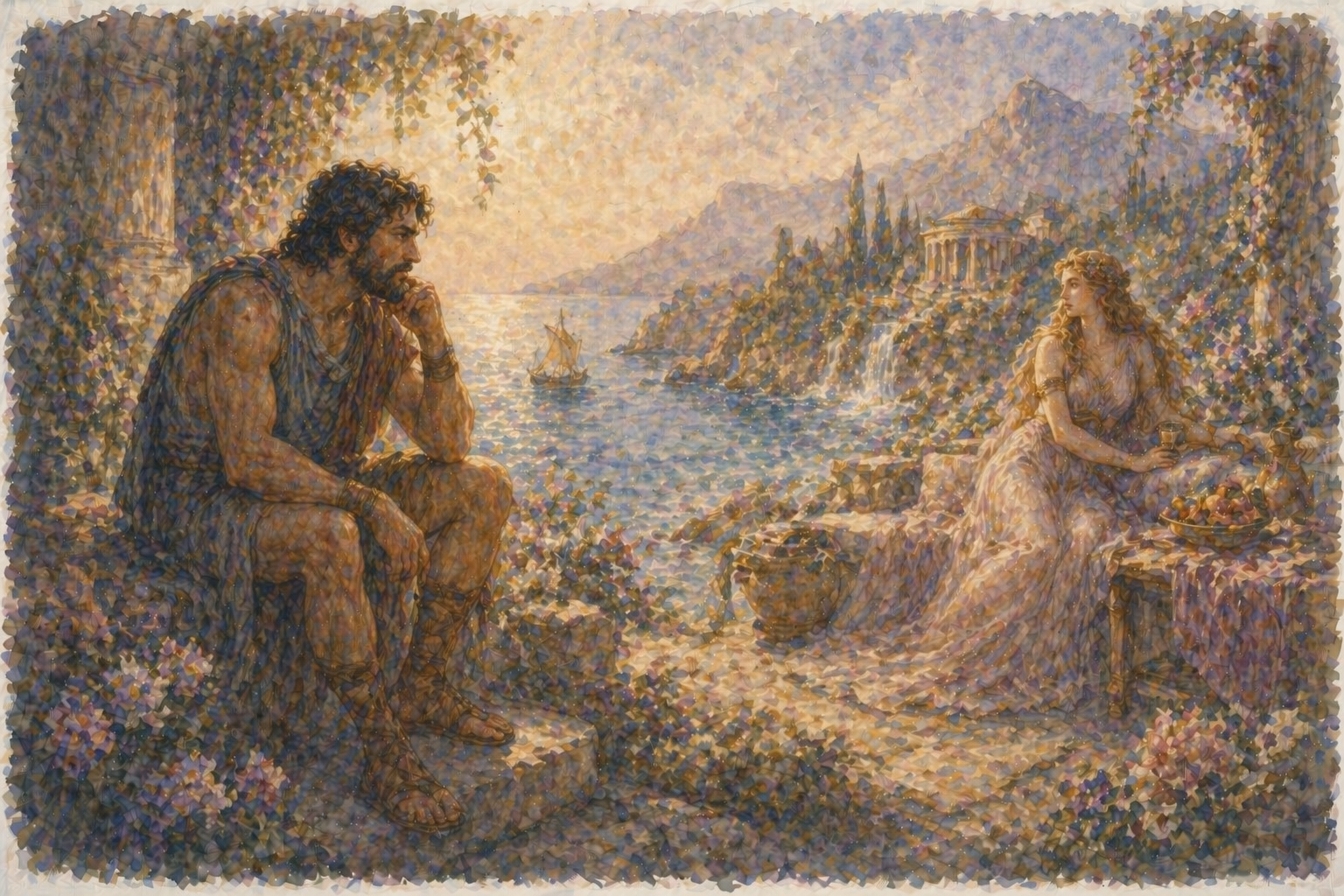
Final lesson: not everything perfect is what we truly seek.
Ithaca: Home as Destiny
While Odysseus struggles to return, his wife Penelope endures in Ithaca.
Surrounded by suitors seeking to take the king’s place, she uses intelligence to buy time: weaving and unweaving a funeral shroud to delay her decision.
Ithaca is not merely a place: it is the symbol of what we return to after we have changed.
The Return of Odysseus
When Odysseus finally reaches Ithaca, he does not arrive as a king, but disguised as a beggar by Athena. No one recognizes him.
The Trial of the Bow
Penelope proposes a challenge: string Odysseus’ bow.
None of the suitors can do it. Odysseus, still disguised, succeeds.
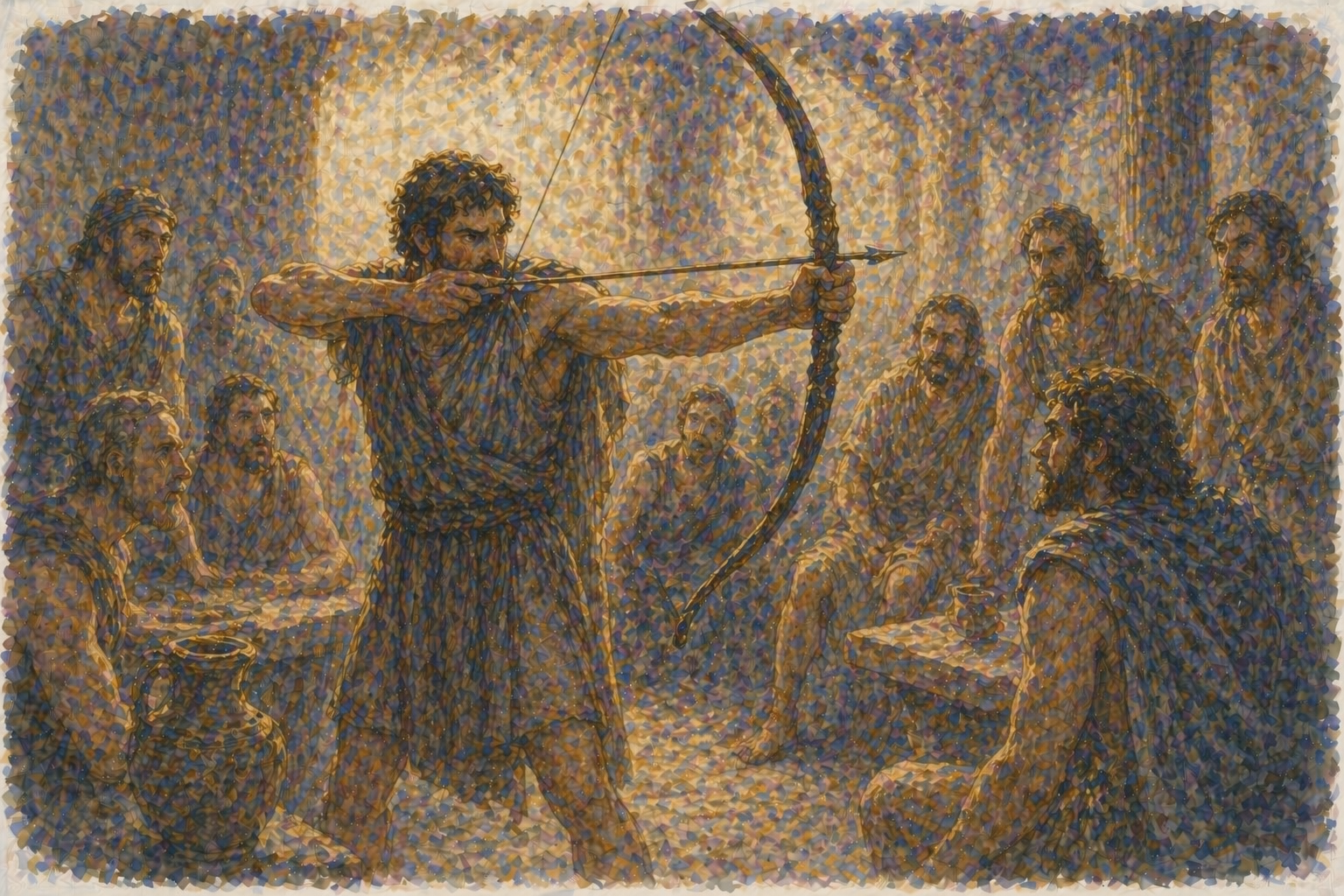
The Revenge
After revealing his identity, he kills the suitors and reclaims his home.
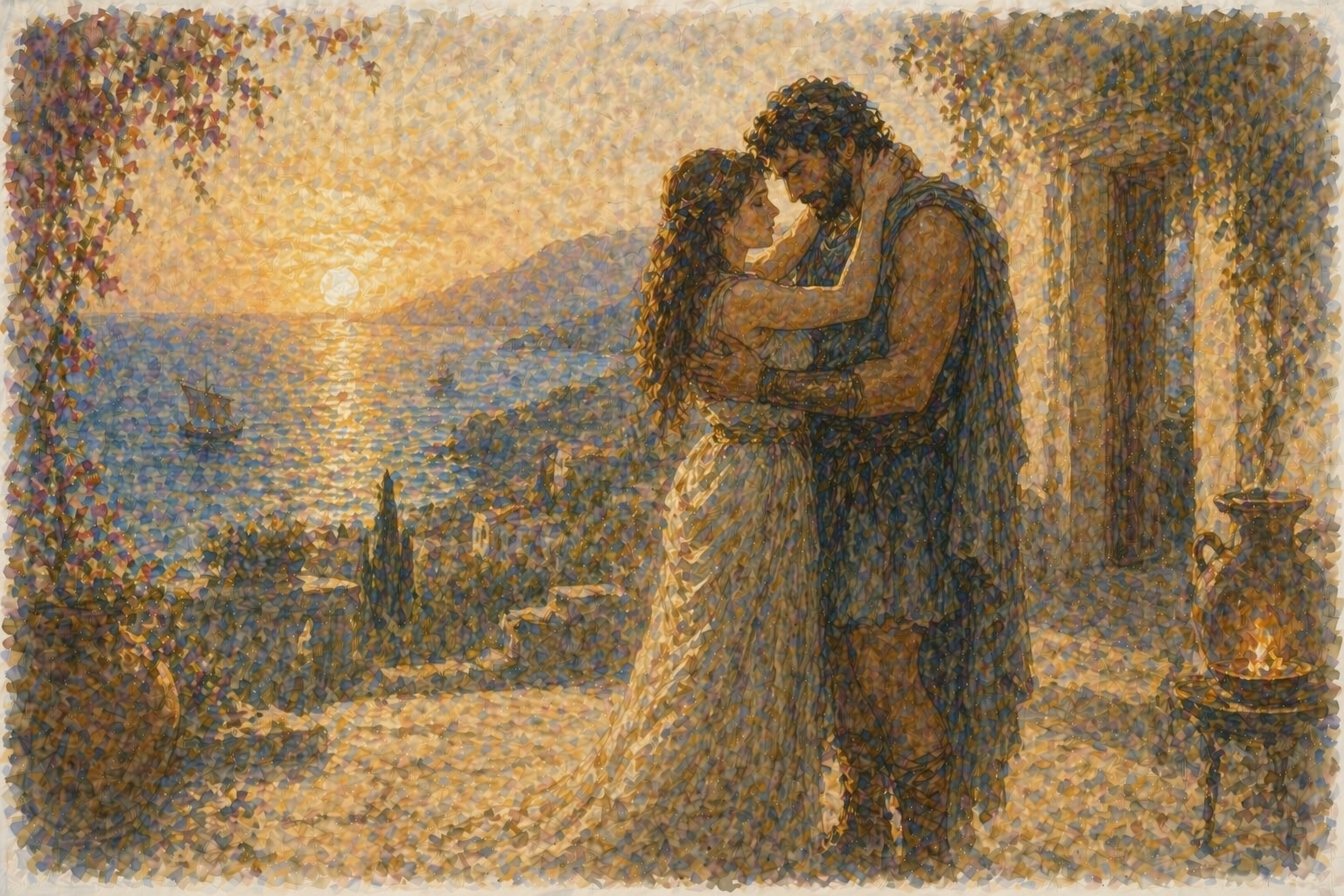
The Reunion
Odysseus is no longer the same man who departed for war. The journey has transformed him into someone patient and observant.
Odysseus returned to Ithaca… but the man who came back was no longer the same.
A Journey Beyond Myth
The Odyssey has transcended its era because it asks universal questions:
- What does it mean to return home?
- Are we still the same after the journey?
- Is destiny fixed, or something we build?
Odysseus is not the strongest hero, but the most human: clever, adaptable, and resilient.
The true journey does not consist in avoiding dangers… but in continuing forward despite them.
The Legacy of The Odyssey
Odysseus’ journey has inspired countless works throughout the centuries.
From literature to cinema, the structure of the “hero’s journey” finds one of its oldest models here.
But beyond its influence, the work remains alive for something deeper: the desire to return… and the impossibility of returning as the same person.
Curiosities
In Antiquity, The Odyssey was considered a fundamental work.
It was studied:
- from childhood
- by scholars
Homero no era solo un poeta: era una fuente de conocimiento y memoria colectiva. Los romanos adoptaron su legado: Odysseus → Ulysses.