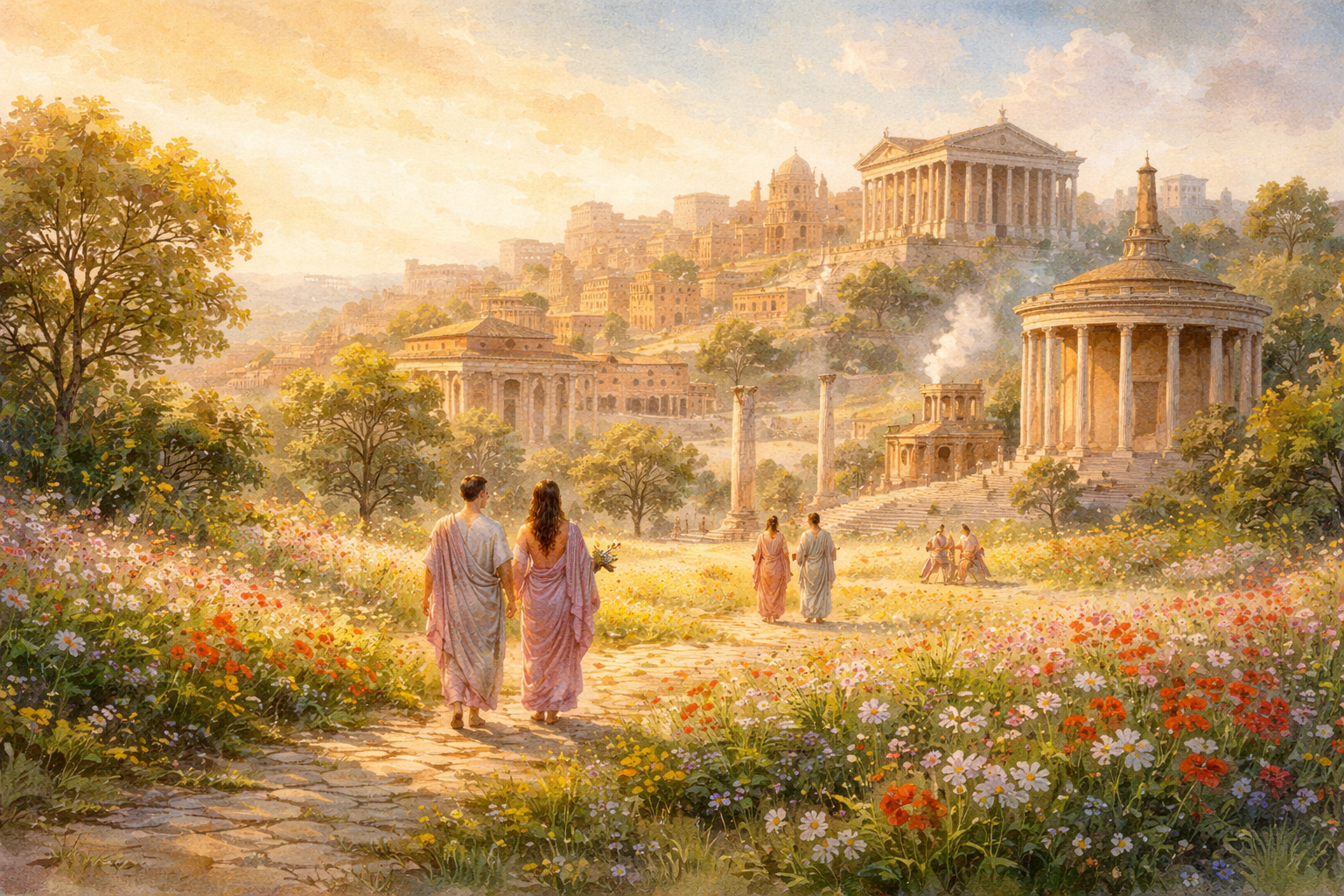
In Ancient Rome, May did not only mark the arrival of spring, but also a period of rituals, festivities, and connection with the spiritual world.
As nature reached its full splendor, fields blossomed and life seemed to expand, the Romans also turned their gaze toward the invisible — toward what could not be seen, yet remained present.
It was not a month of light celebration. It was a time of respect, transition, and connection with deeper forces.
The Origin of Its Name
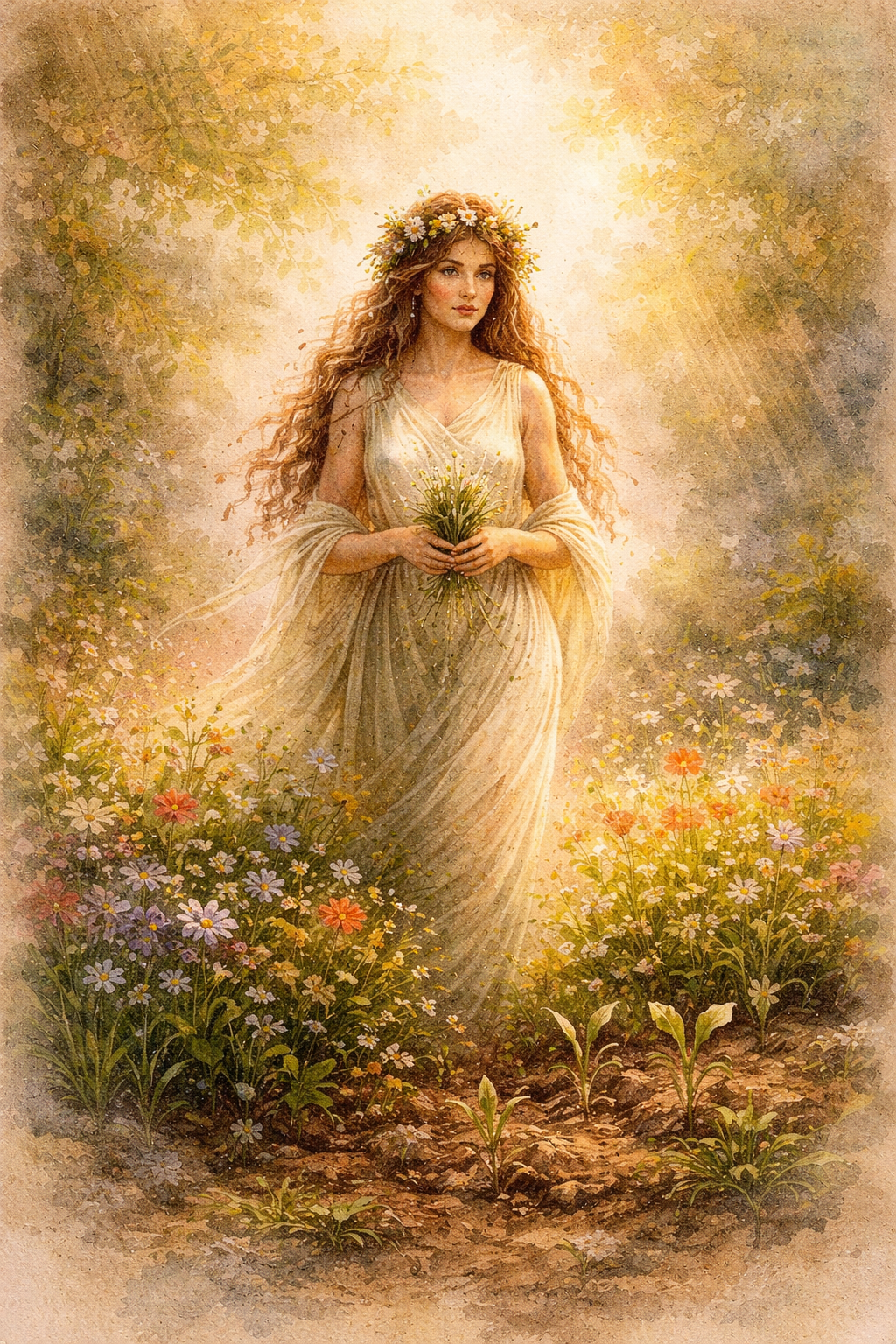
The month of May (Maius) was dedicated to Maia, an ancient Italic deity associated with:
- fertility
- growth
- the earth
Maia represented the vital force that emerges in spring: that which sprouts, grows, and begins to take form.
Over time, and under Greek influence, she became associated with Mercury, her son, the messenger of the gods, whose cult was celebrated on May 1st.
Thus, May came to embody a dual energy: life emerging… and movement between worlds.
She is often confused with the Greek Maia, one of the Pleiades and mother of Hermes, although her Roman origin is earlier and distinct.
Maia: From Archaic Goddess to Roman Divinity
Before becoming an empire, Rome was land, ritual, and ancestral tradition.
Maia belongs to that ancient world, prior to monumental Rome.
Her origins lie in the early Italic substratum, shared by peoples such as:
- the Latins
- the Sabines
- the Etruscans
- other Italic groups
In that context, Maia was linked to:
- the force of nature
- the energy of growth
- the vital warmth of spring
With the development of Rome, especially during the Monarchy and early Republic, her figure was integrated into the Roman religious system.
Later, under Greek cultural influence, a symbolic fusion occurred with the Hellenic Maia, reinforcing her connection with Mercury.
Festivities: A Month Between Light and Unease
Lemuria: When the Dead Returned
One of the most important — and lesser-known — aspects of May was the festival of Lemuria, celebrated on the 9th, 11th, and 13th.
During these nights, Romans believed that restless spirits of the dead (lemures) could return to the world of the living.
To protect the household, the pater familias performed a silent ritual:
- walking barefoot through the house
- throwing black beans behind him
- repeating formulas to ward off the spirits
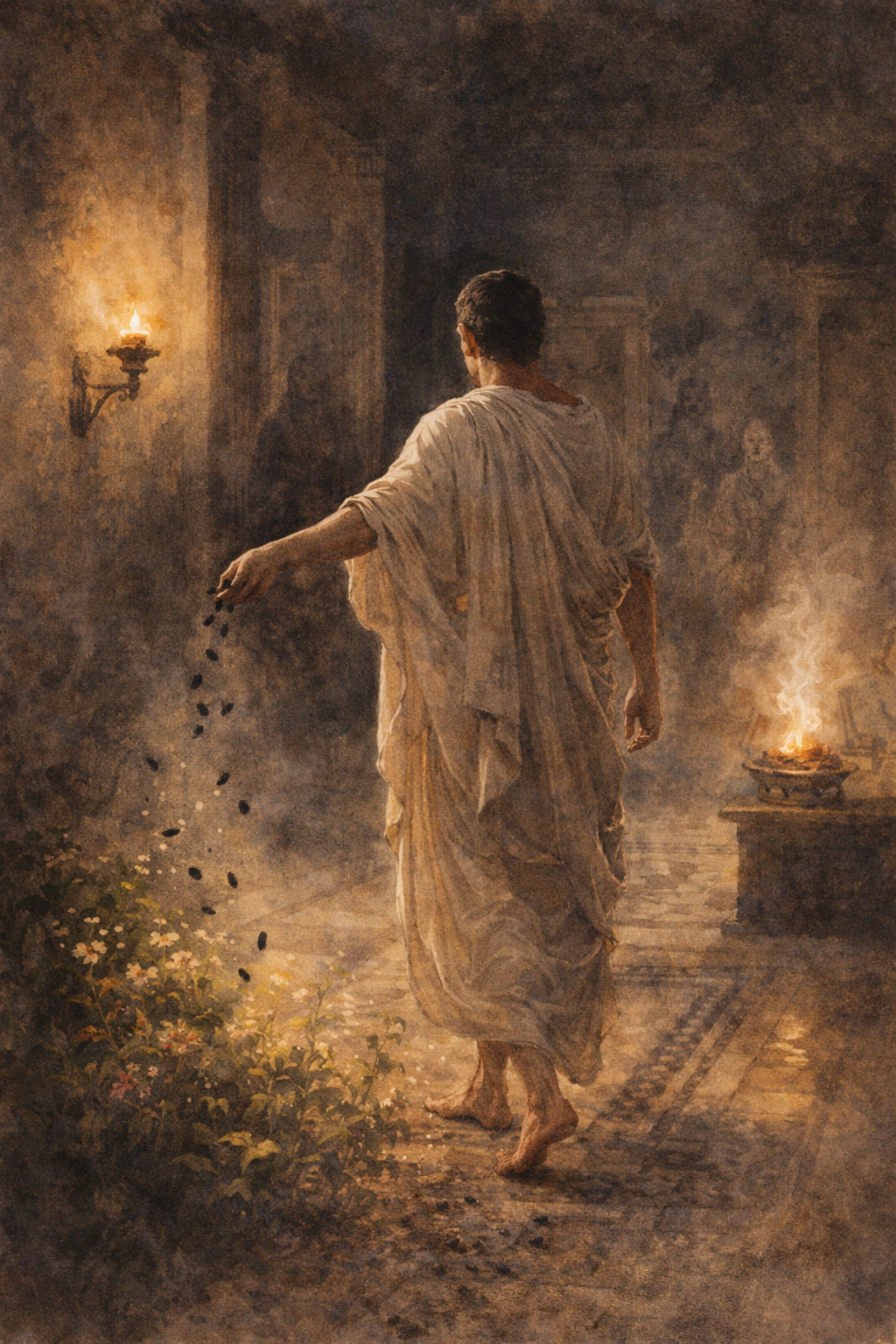
It was a clear acknowledgment that the living and the dead were not completely separate.
These practices reflect the importance of ancestors in Roman religion.
Agonalia: The Enigmatic Ritual
The Agonalia were archaic festivals whose exact meaning remains uncertain.
One of them was celebrated on May 21st and was associated with an ancient and ambiguous deity, possibly Vejovis.
Vejovis is a complex figure:
- linked to darkness
- associated with ambiguous forces
- sometimes interpreted as an “inverted” or primitive form of Jupiter
The Agonalia are, in many ways, an echo of a Rome we can barely understand today.
Ambarvalia: The Purification of the Land
At the end of May, the Ambarvalia was celebrated — an agricultural purification ritual.
It did not have a fixed date, as it depended on the agricultural cycle.
Its name comes from:
- ambi → around
- arvum → field
Literally: “to walk around the field.”
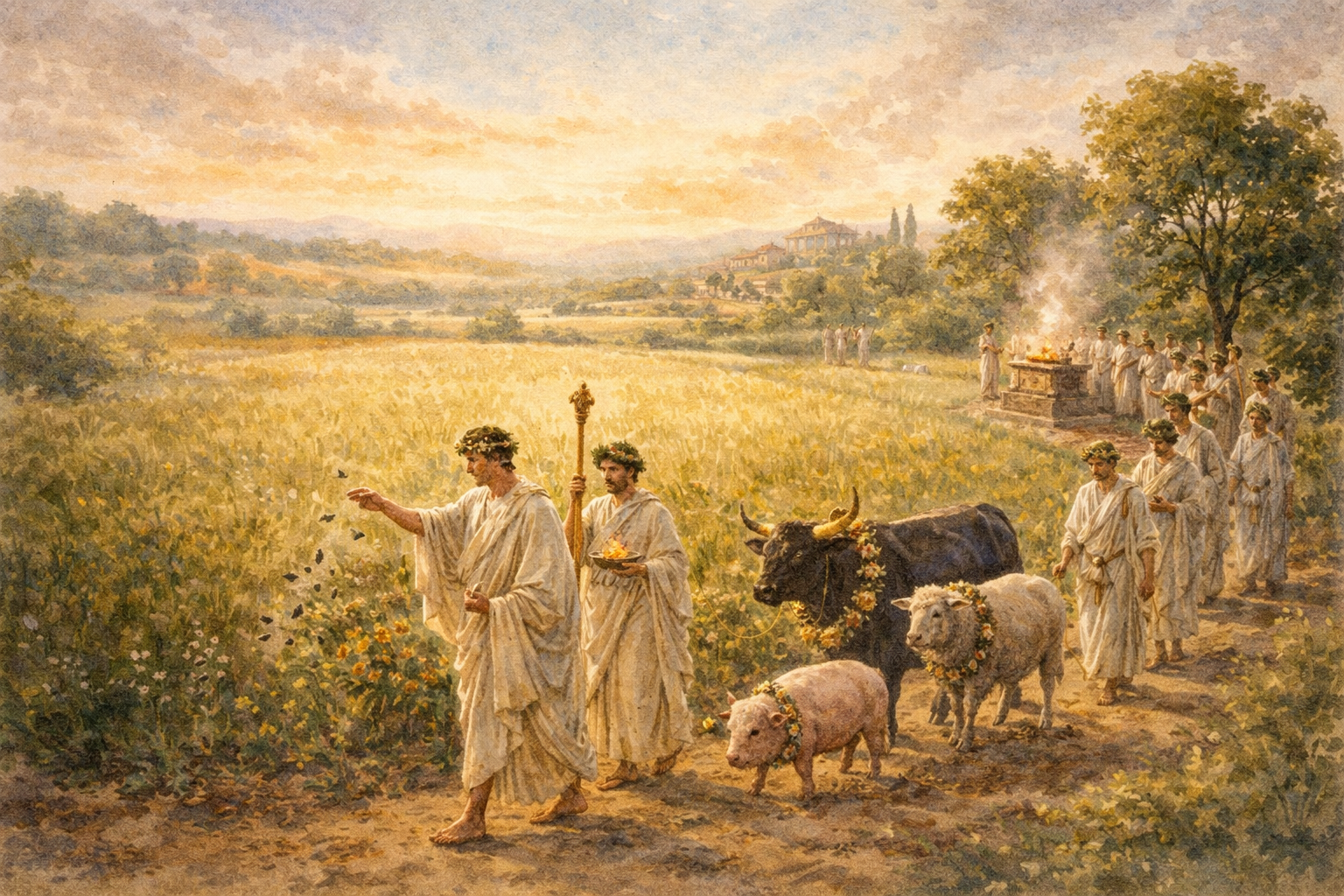
During the ceremony, a procession circled the crops, involving:
- farmers
- priests (fratres arvales)
- animals destined for sacrifice
The main ritual was the suovetaurilia, which included the sacrifice of:
- a pig
- a sheep
- a bull
Its purpose was to:
- purify the land
- protect the harvest
- ensure fertility
Floralia: The Burst of Spring
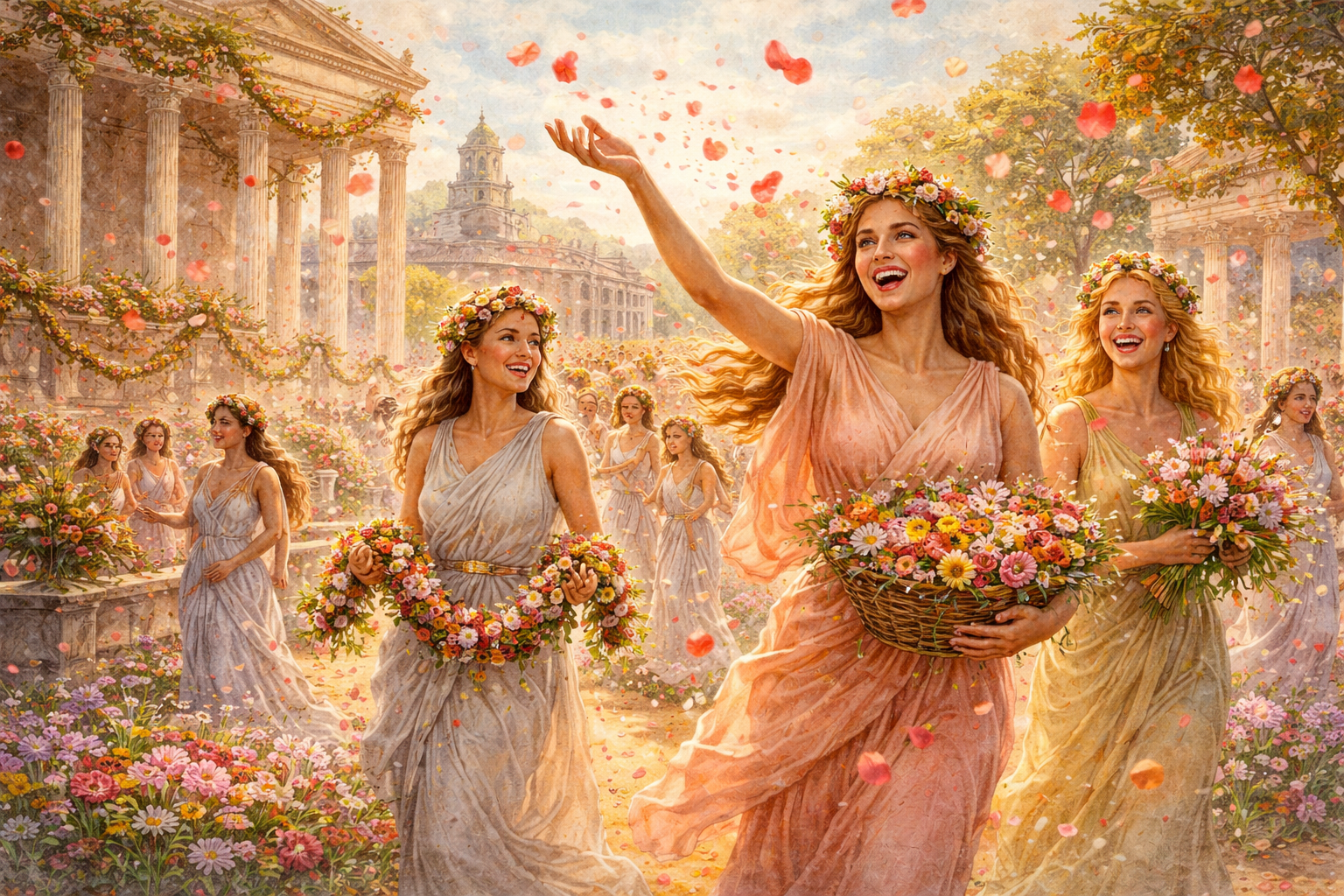
The Floralia, dedicated to Flora, goddess of flowers and vegetation, were celebrated between april 28th and May 3rd.
Although their main festivities ended at the beginning of the month, their symbolic presence extended throughout May:
- blooming flowers
- fertile fields
- vivid colors
Rome filled with visible life… while the invisible remained quietly present.
Rosalia: The Memory of the Dead
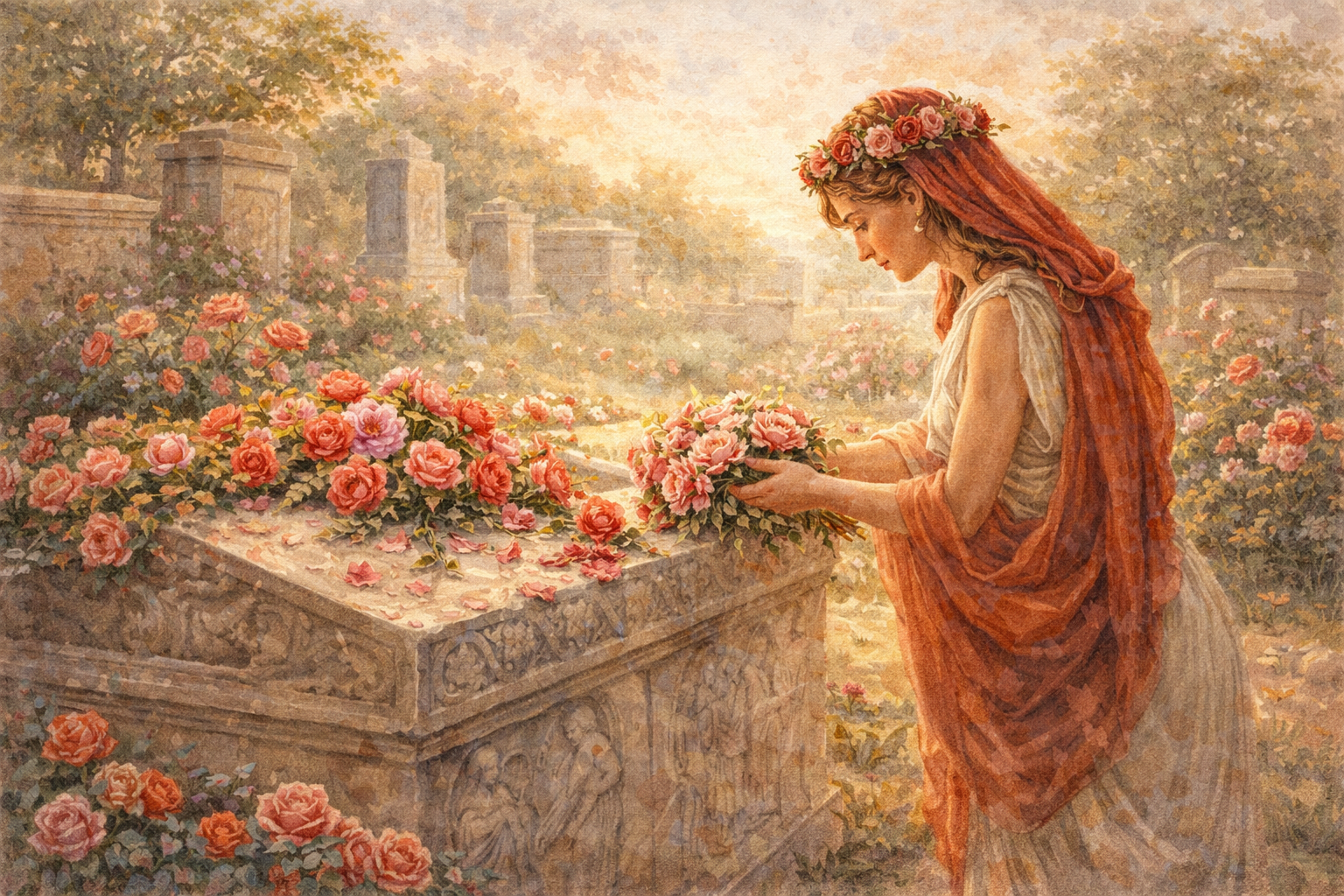
The Rosalia were festivals dedicated to roses and linked to the memory of the deceased.
They were celebrated between late spring and early summer.
During this days:
- tombs were decorated with roses
- the dead were honored
Once again, life and death intertwined.
Spring and War
The end of spring also marked the beginning of military campaigns.
There was no fixed date, as it depended on factors such as:
- the weather
- the condition of the roads
Historians such as Tacitus mention campaigns beginning during this period.
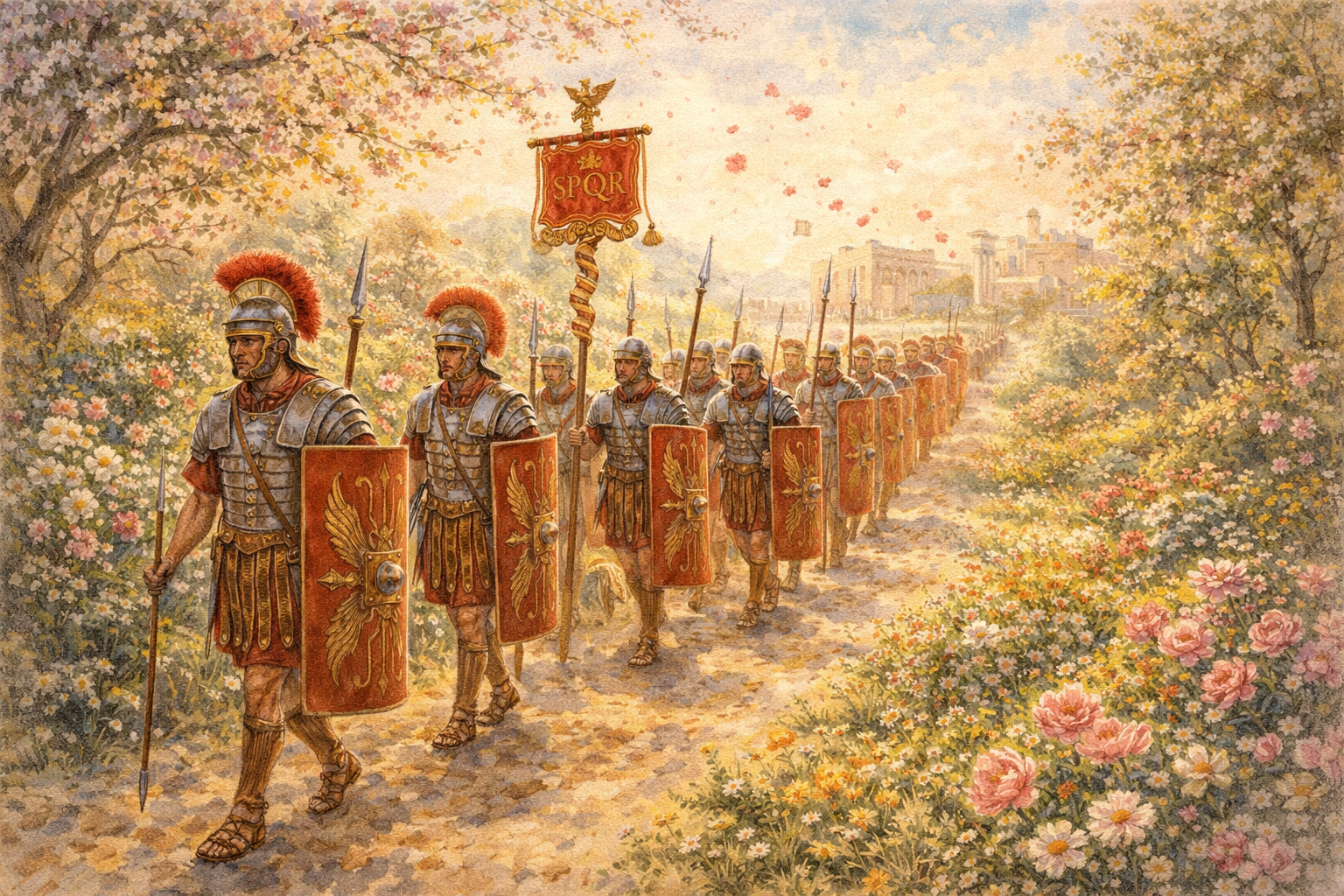
May, therefore, was not only a month of life… but also of conflict.
The Roman Balance
What is most fascinating about May in Rome is its constant duality:
- life and death
- visible and invisible
- celebration and respect
For the Romans, the world was not divided into separate compartments.
Everything coexisted.
A Time of Transition
In Ancient Rome, May was not just a spring month: it was a time when life and death met, where the visible and the invisible coexisted in a balance we can barely understand today.
A time when nature blossomed… without forgetting what remains beyond the visible.
Because, for the Romans — as for many ancient cultures — to live was also to remember.
Curiosities
An Unfavorable Month for Weddings
Curiously, May was not considered a good month for marriage.
Romans avoided weddings during this period due to the ritual weight of the month and the symbolic presence of spirits.
It was believed that beginning a new life at such an “open” moment between worlds was not appropriate.
There was even a popular proverb:
“Mense Maio malae nubunt”
“Women marry badly in May.”