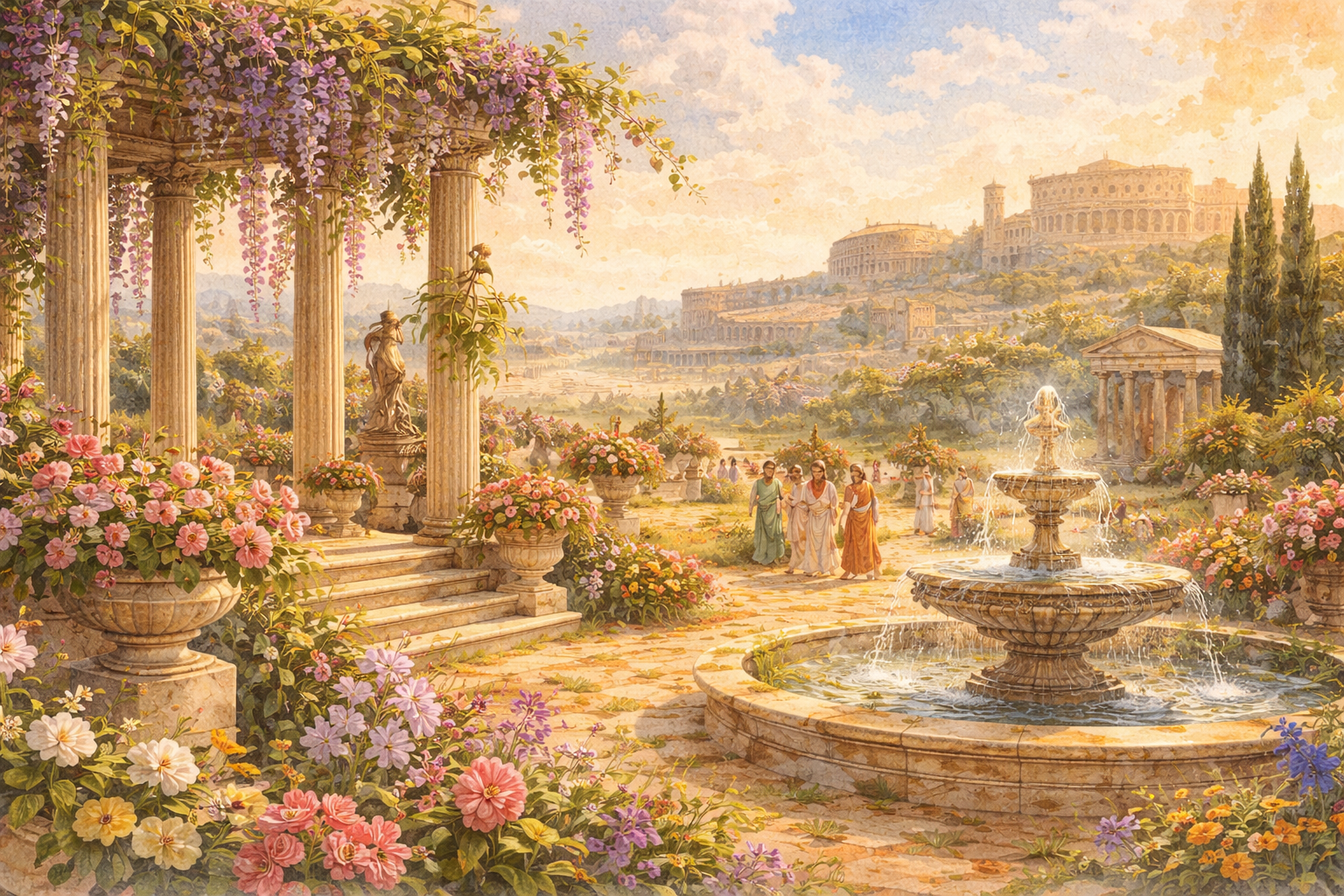
In the Roman calendar, April was not simply the continuation of March.
It was the month when life burst forth.
After the rituals of Mars and the awakening of action, April (Aprilis) Aprilis symbolized something even more essential to the Roman mindset:
- the opening of the earth
- blossoming
- fertility
- visible rebirth
Aprilis: The Month of Opening
The name April (Aprilis) is traditionally associated with the Latin verb aperire: “to open.”
For Rome, April represented the moment when nature left behind its dormancy and revealed its creative power.
The earth opened.
The fields sprouted.
Life became unmistakable.
Venus: The Force of Life
April (Aprilis) was deeply linked to Venus, goddess of love, fertility, and generation.
In Rome, deities did not possess a single rigid function but multiple symbolic facets. Venus is a perfect example of this complexity.
Among her epithets stands Venus Verticordia.
Her name means:
- vertere = to turn / to change
- cor, cordis = heart
Literally: “She Who Changes Hearts.”
She was not only the goddess of love. She was also:
- protector of female sexual morality
- corrector of disordered passions
- guardian of modesty
- restorer of social order
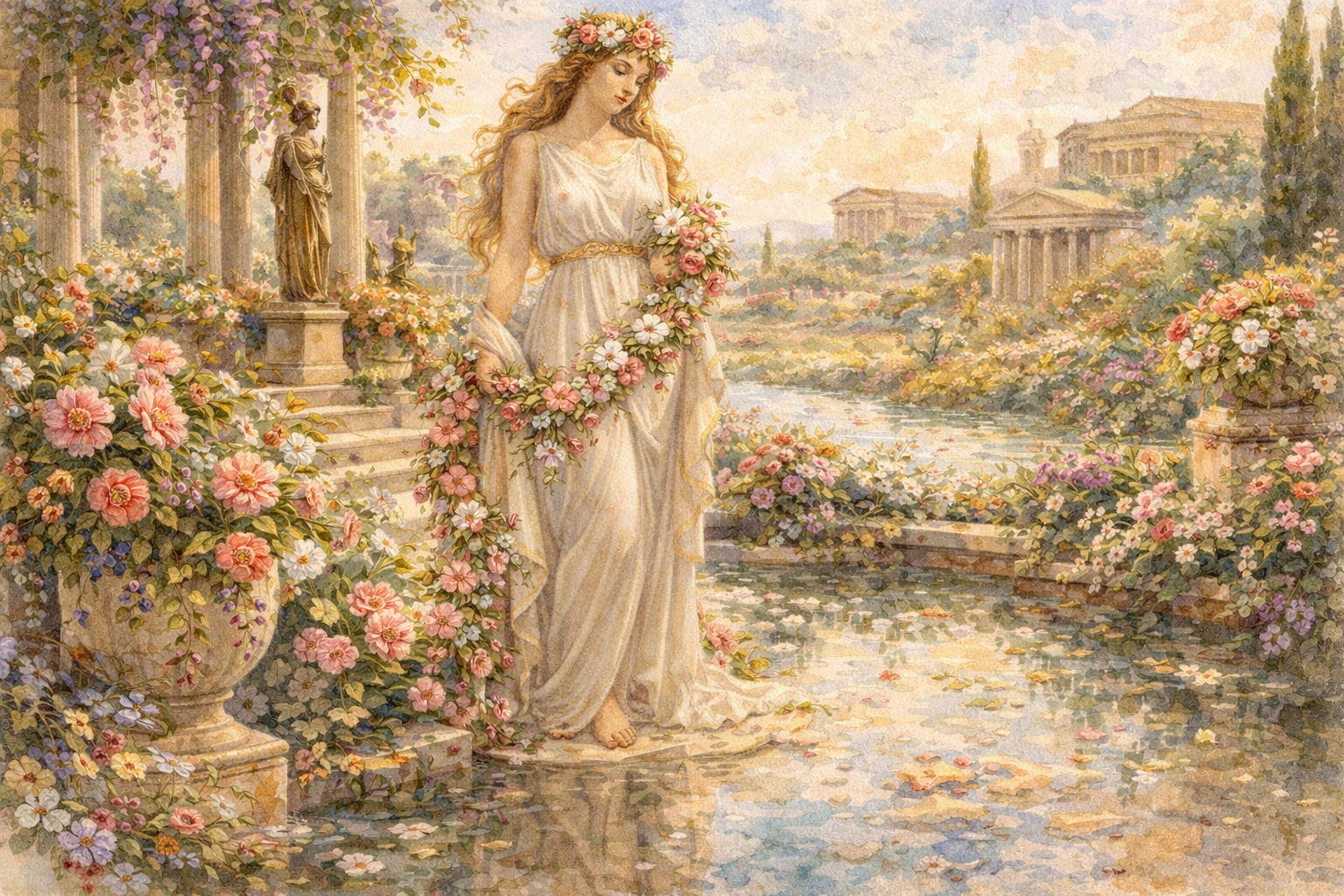
Festivals of Aprilis
Veneralia (April 1st)
Dedicated to Venus Verticordia.
A celebration associated not only with beauty but with moral order, invoking harmony between desire, balance, and renewal.
Megalesia (April 4-10)
Celebration dedicated to Cybele (Magna Mater), the "Great Mother", a deity originating in Anatolia who was introduced to Rome during the Second Punic War in the year 204 BC
The Romans believed that the arrival of this goddess would help protect the city against Carthage. Her cult was officially incorporated into Roman religion, and every spring the Megalesiafestivities that included:
- public games
- theatrical performances
- religious processions
- ritual banquets
The presence of Cybele within the Roman calendar reflects how Rome integrated foreign deities into its own religious system, especially those associated with the fertility of the land and the renewal of life.
Cerialia (April 12-19)
The Ceralia These were festivities dedicated to Ceres, Roman goddess of agriculture, grain and the fertility of the land.
Ceres was one of the most important deities for Roman society, since her protection was directly linked to the food production and agricultural prosperity
During these celebrations, the Romans held:
- public games
- processions
- grain offerings
- agricultural rituals
The Cerialia symbolically marked the moment in the agricultural cycle when crops began to develop, thus representing a request for abundance for future harvests..
In the Roman world, Ceres was closely linked to Proserpina (Persephone in the Greek tradition)whose story explained the annual cycle of the earth's fertility and the seasons.
Parilia (April 21)
Pastoral celebration dedicated to Pales, protective deity of shepherds, flocks and rural areas.
It was a very ancient festival linked to purification rituals for livestock and farmyards. During the celebration, bonfires were lit and symbolic cleansing rites were performed to protect the animals and ensure the prosperity of the countryside.
Over time, this pastoral festival became associated with the founding myth of Rome, since Roman tradition placed the founding of the city on April 21, 753 BC.
Therefore, the Parilia festival also ended up becoming the Natalis Urbis Romae, the symbolic birthday of the city.
Floralia (April 28th – May 3rd)
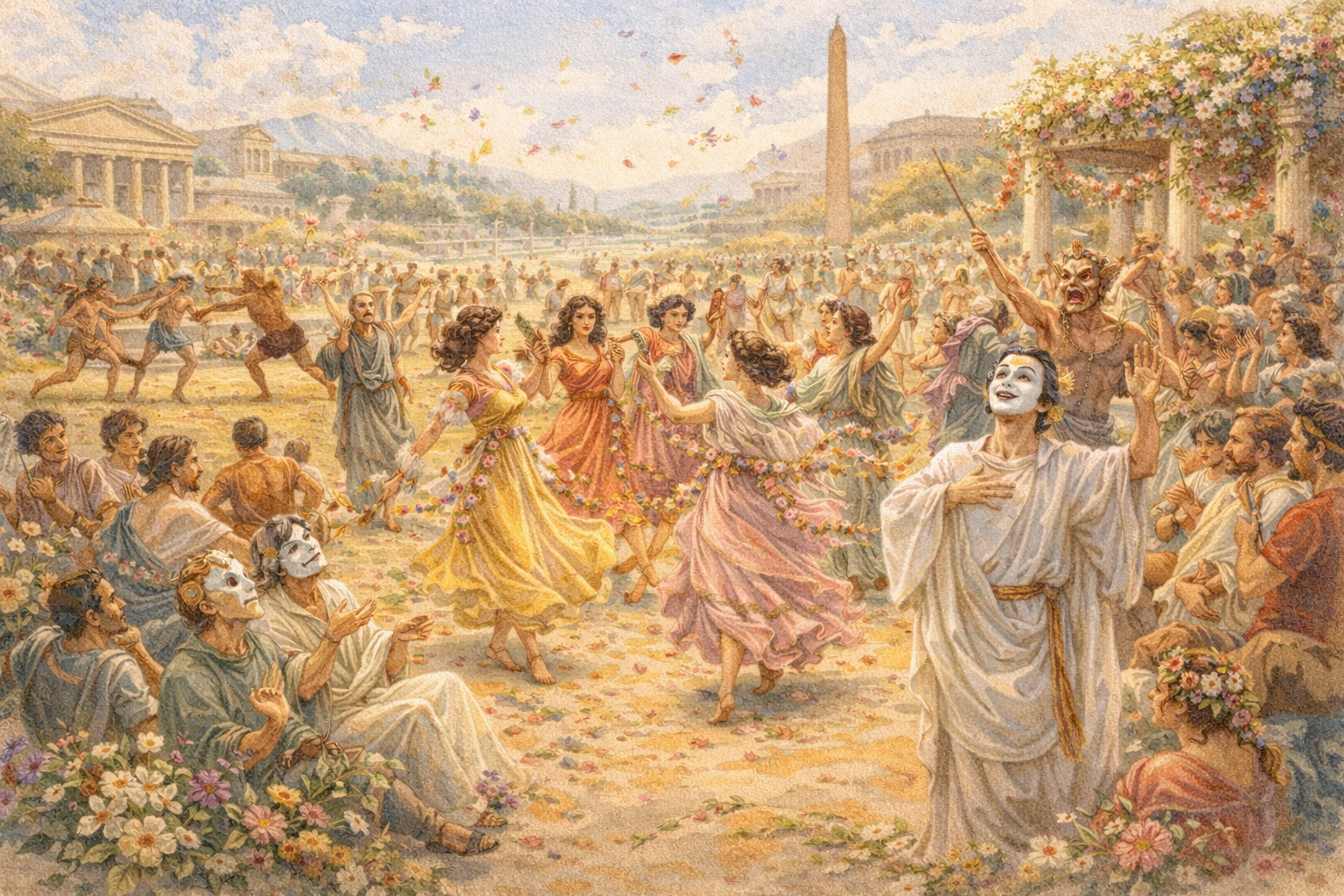
At the end of April began the Floralia, festivals dedicated to Flora, goddess of flowers, vegetation, and natural exuberance.
These celebrations were particularly striking and were characterized by:
- public games
- theatrical performances
- mimes
- dances
- satire
- vivid colors
- a festive atmosphere
- a strong symbolic emphasis on fertility
One of the most well-known aspects of these festivals was their transgressive nature.
During the Floralia:
- explicit sexual language was permitted
- erotic humor prevailed
- public mockery was accepted
- a symbolic inversion of social order took place
Actresses and performers played a central role, and in certain contexts could appear nude or semi-nude.
Flora embodied nature in its most expressive phase: abundance, sensuality, growth, and vital excess.
Flora: From Archaic Goddess to Roman Deity
Before becoming an imperial power, Rome was a primitive Italic civilization shaped by the interaction of various peoples: Latins, Sabines, and Etruscans.
Within this archaic religious substratum emerges Flora, linked to ancient Italic traditions.
Her symbolic sphere included:
- natural cycles
- vegetation
- agricultural renewal
With the consolidation of the Roman state, Rome did not eliminate these beliefs but integrated and institutionalized them.
Thus, Flora evolved from an archaic divinity into a stable presence within the Roman religious system.
April and the Roman Cycle
If March activated Rome, April filled it with life.
Rome structured the year according to the logic of the natural world.
Although Rome ritualized this under its own religious system, April (Aprilis) participates in the same archetype found across many ancient cultures:
- opening
- fertility
- regeneration
- explosion of life
From Mesopotamia to Greece, through Egypt and even Germanic traditions, spring was interpreted as a sacred moment of renewal.
A Universal Archetype
April was not merely spring.
It was the visible confirmation that life had returned.
After the purification of March, Rome celebrated in April (Aprilis) something profoundly human and universal: the pleasure of watching the world bloom.