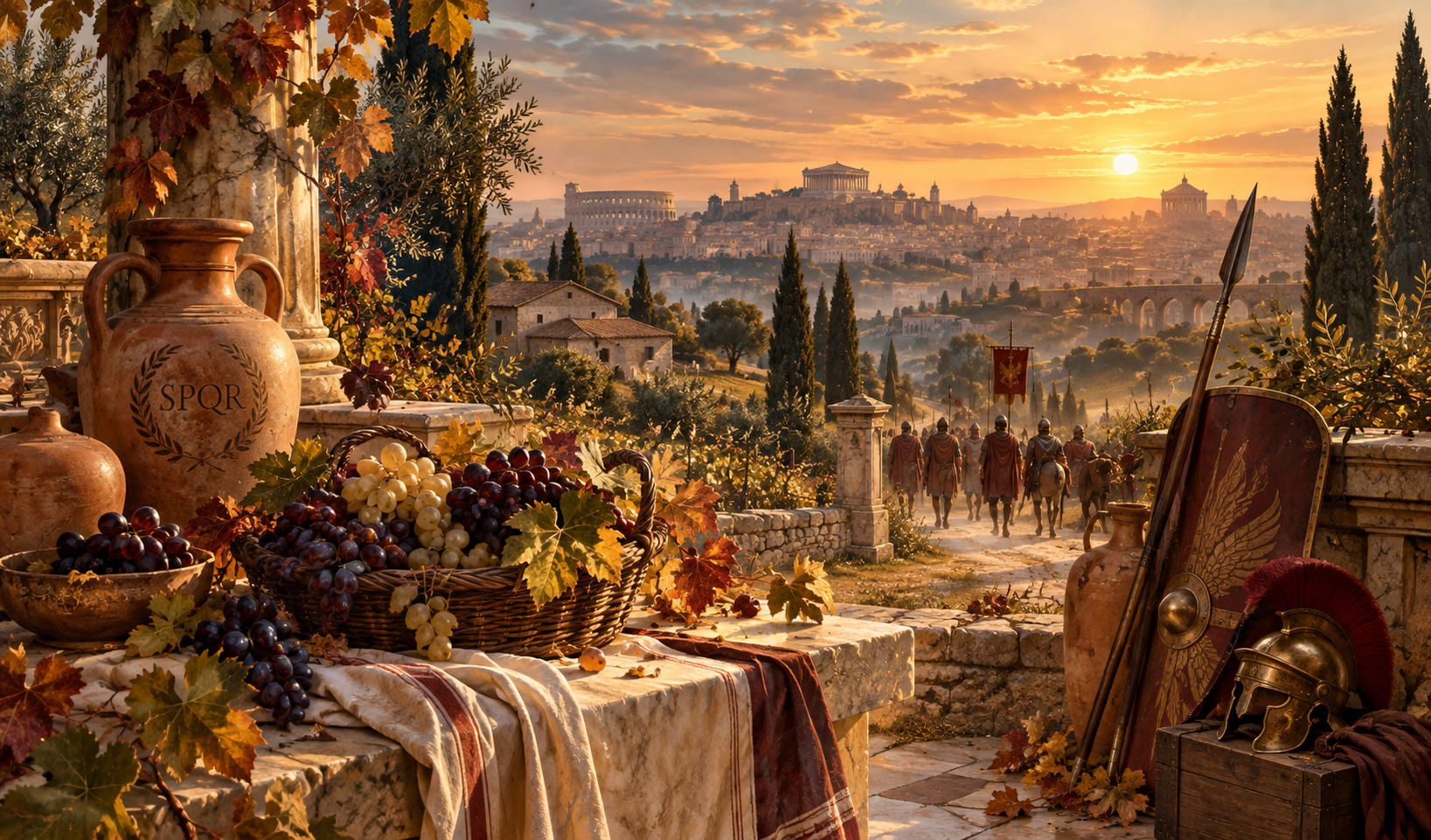
Today, October announces the arrival of autumn, but for the Romans it was also a moment of transition. The fields had begun to yield their fruits, the grapes were being transformed into wine, and the rhythm of agricultural life was changing. But October had another dimension as well. Traditionally, it was the time when the season of military campaigns came to an end.
For this reason, two worlds that at first seem very different coexisted during this month: agriculture and war. Wine, springs, horses, Mars, and weapons all formed part of the same religious calendar.
And behind many of these rituals was the same idea: bringing one stage to a close and preparing for what would come next.
October, the Month of Transition
The very name of the month preserves a trace of Rome's most ancient past.
October comes from octo, “eight,” because in the ancient Roman calendar, when the year began in March, October occupied the eighth position.
Although January and February were later moved to the beginning of the year, the name remained.
October was not just another month in the religious calendar, either. Rome was filled with rituals connected with agriculture, water, the protection of the city, and the army. Some of them preserved extremely ancient traditions whose meanings had already become difficult to explain, even to the Romans themselves.
The Grape Harvest and New Wine
One of the most characteristic images of the Roman autumn was the transformation of grapes into wine.
After the grape harvest came another stage: the grapes were pressed and the must began its process of transformation. And, like so many other activities connected with agriculture, wine also had a religious dimension.
October's calendar included festivals in which new wine, libations, and divine protection were closely intertwined.
The Deities of October
October brought together religious cults connected with different aspects of Roman life:
- Fides, associated with trust, loyalty, and water.
- Fons, connected with springs and water.
- Mars, closely linked to the military sphere.
- Jupiter, who also appeared in some festivals associated with wine.
Alongside them, we find rituals dedicated to agriculture, health, water, horses, and the army.
October Festivals
Fides: Beginning the Month with Trust October 1
The October 1 was dedicated to Fides, la personificación romana de la buena fe, la confianza, la lealtad y el cumplimiento de la palabra dada. Su templo, el aedes Fidei, stood on the Capitoline, near the temple of Jupiter.
Her cult was connected with one's word, pacts, and commitments, and ancient sources describe a particularly striking ritual.
According to the tradition transmitted by Livy, the three major flamines — the priests of Jupiter, Mars, and Quirinus — went to the sanctuary in a covered cart drawn by two horses.
During the sacrifice, they kept their right hand wrapped as far as the fingers, symbolizing that fides had to be protected.
It was not a random gesture. For the Romans, the right hand had profound symbolic importance: it was the hand with which agreements, pacts, and promises were sealed. Covering it during the ritual expressed the idea that fides had to remain pure, protected, and inviolable.
Meditrinalia (October 11)
The October 11 , the Meditrinalia, an ancient festival associated with new wine, were celebrated.
The ancient sources preserve few details about this celebration, but it was connected with the moment when people began tasting the new wine and making libations with both new and old wine.
The origin of the name was already debated in Antiquity. According to Varro, Meditrinalia was connected with medeor, “to heal,” because the new and old wines were offered and tasted with a purpose associated with health.
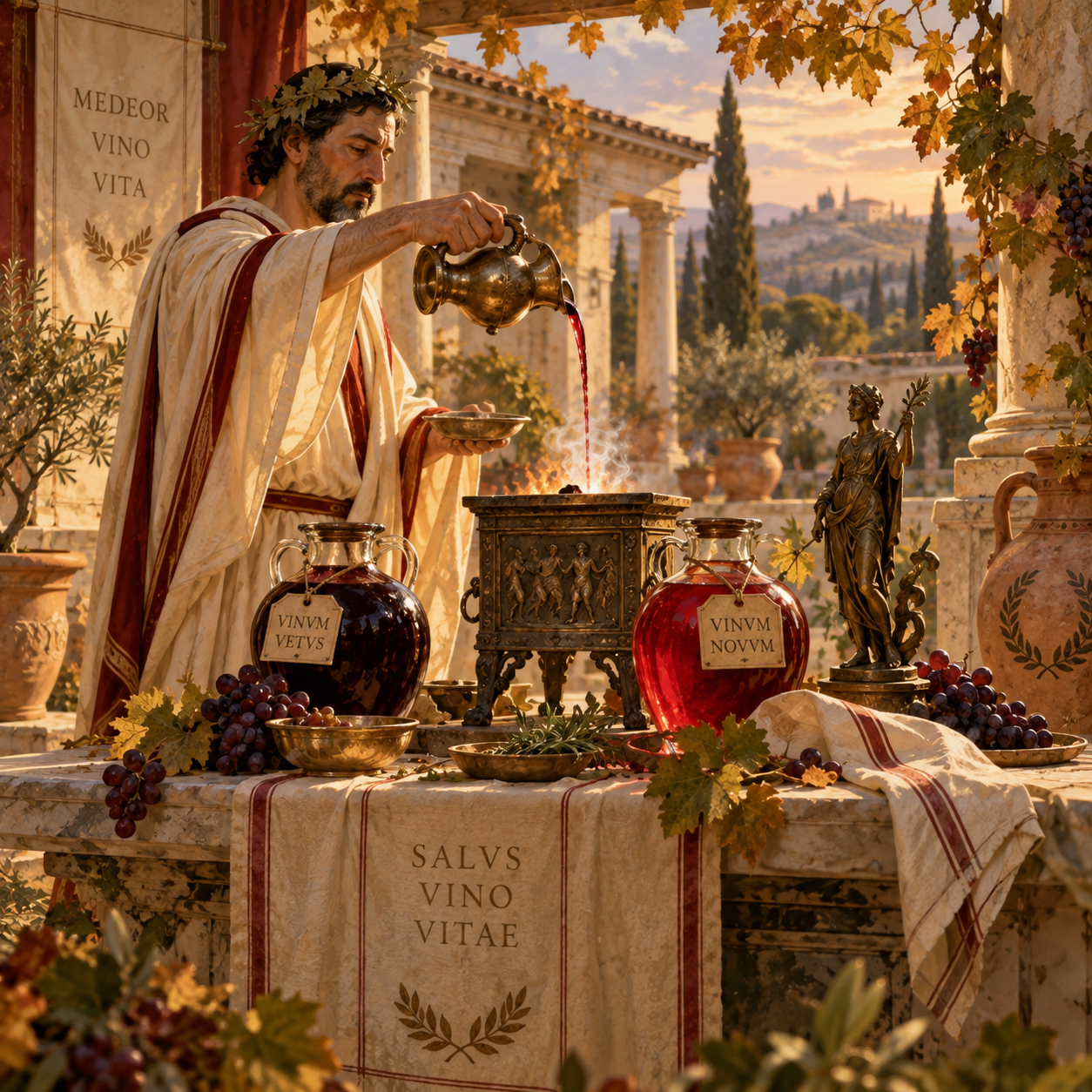
Varro preserved an ancient ritual formula connected with the celebration:
“Novum vetus vinum bibo, novo veteri morbo medeor”.
“I drink new and old wine; I cure myself of new and old diseases.”
Varro, De lingua Latina, VI, 21
We do not know for certain whether there was actually a goddess named Meditrina behind the festival. Varro's explanation derives the name from the idea of healing, while Festus later transmitted a tradition involving a deity of that name.
The new wine, freshly produced from the grape harvest, was offered to the gods and tasted alongside the previous year's wine, turning an agricultural product into part of a ritual connected with health and well-being.
It was a very Roman way of bringing together the produce of the earth, religion, and everyday life.
Fontinalia: Honoring the Water (October 13)
Two days later, on October 13, came another festival connected with an element fundamental to life: water.
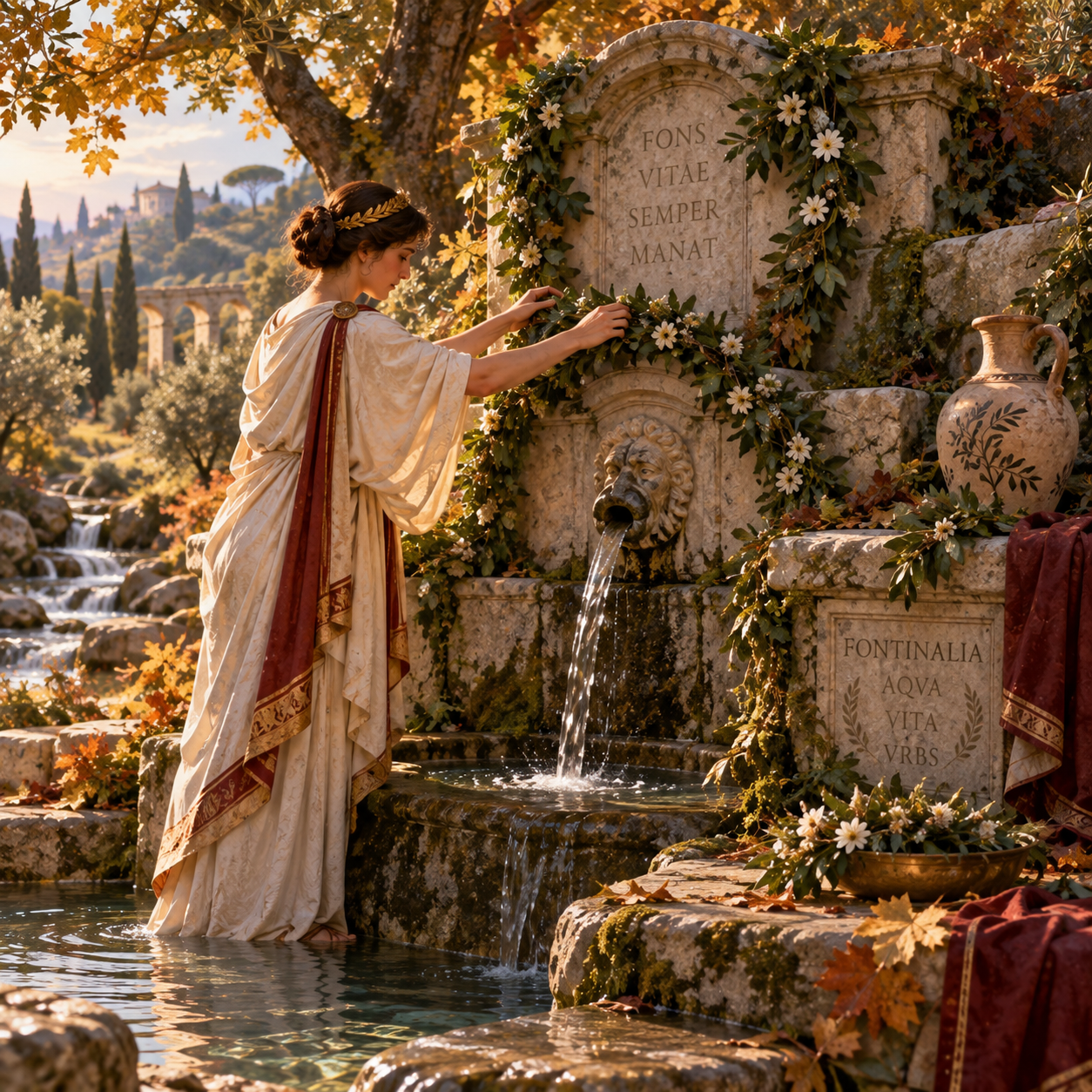
The Fontinalia were dedicated to Fons, a deity associated with springs and fountains. Springs were enormously important to a society that depended directly on water for survival and agriculture. For this reason, these places were not simply useful features of the landscape; they could also possess a sacred dimension.
The specific details of the Fontinalia are far less well known than those of other Roman festivals, but the ancient sources preserve some information. According to Varro, during the celebration, fountains and wells were decorated with garlands.
The springs that were essential to everyday life thus became especially marked spaces within Rome's religious landscape.
The October Horse (October 15)
The October 15, the Ides of October, came one of the oldest and most striking rituals in the Roman calendar: the October Equus, the October Horse.
The horse was associated with the army, equestrian activity, and the Campus Martius. And October marked precisely the traditional end of the military campaign season.
On that day, a two-horse chariot race, the bigae, was held in the Campus Martius.
The horse positioned on the right side of the winning chariot was selected for sacrifice in honor of Mars. The animal was sacrificed by the Flamen Martialis, the priest of Mars, with a spear.
But the ritual did not end with the sacrifice. The horse's head and tail acquired particular importance in the ceremonies that followed.
The tail was swiftly carried to the Regia, one of the oldest religious centers in Rome, where it was used in a ritual connected with the sacred fire. Meanwhile, the head became the object of a peculiar dispute.
Two sectors of Rome — the inhabitants of the Via Sacra and those of the Subura— competed to claim it. If the people of the Via Sacra won, the head was fixed to the wall of the Regia. If the people of the Subura won, it was carried to the so-called Mamilius Tower.
Ancient sources offered different explanations for the origin of this ritual. One of them even connected it with the Roman tradition of Trojan origins.
Armilustrium (October 19)
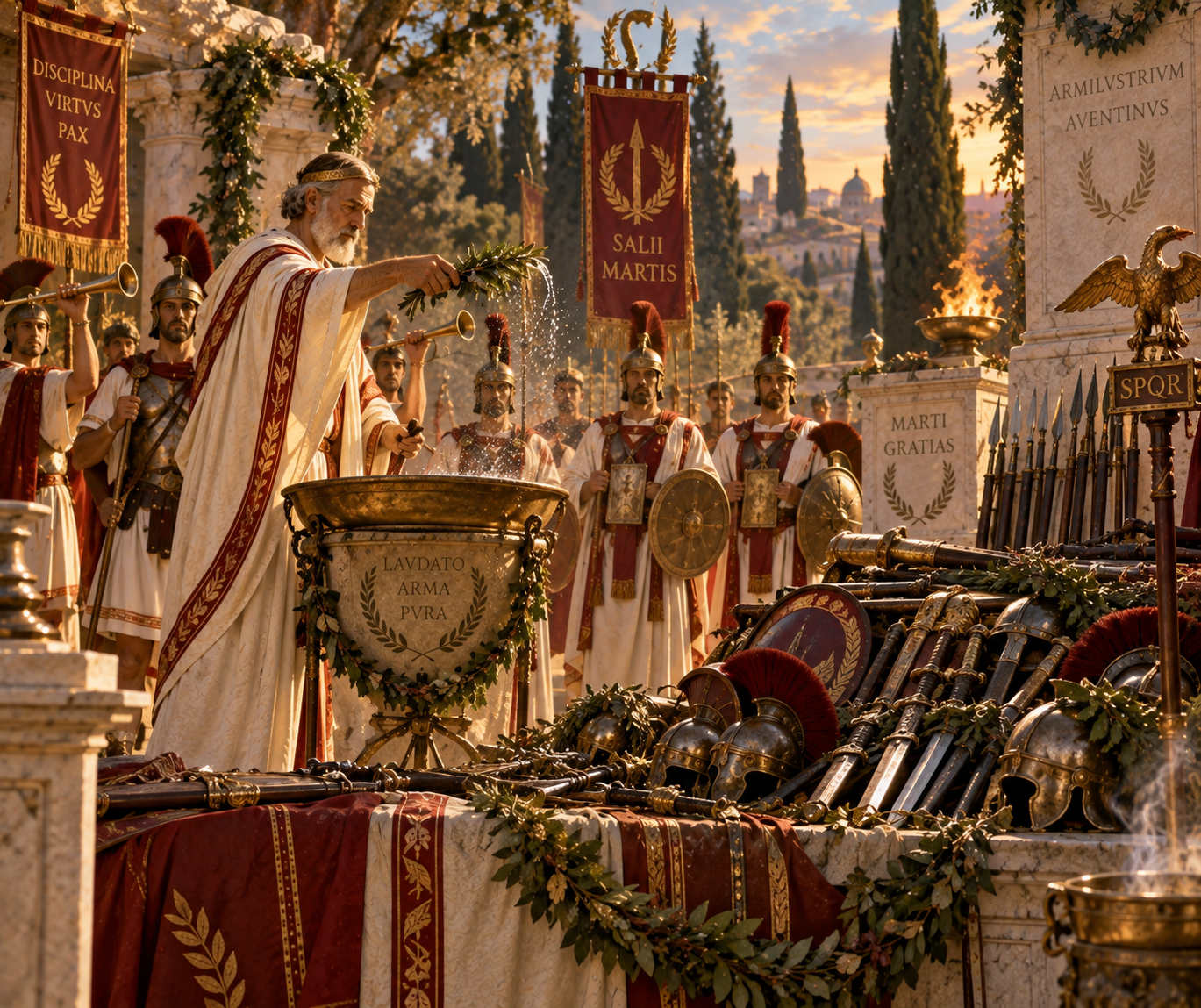
Four days later came the Armilustrium, a ceremony dedicated to the purification of weapons. The name itself derives from arma and lustratio, referring to ritual purification.
The ceremony was held on the AventineAventine, in a place known as the Armilustrium, located in the northwestern area of the hill, near the Circus Maximus.
Weapons associated with the army were gathered for the ritual, and sacrifices and religious ceremonies were performed.
Ancient sources associate the celebration with:
- weapons and armor;
- trumpets;
- sacrifices;
- music;
- and rituals connected with the cult of Mars.
The ceremony has also traditionally been associated with the Salii, the dancing priests of Mars.
The trumpets and weapons gave the ceremony a spectacular character, but its purpose was essentially religious: to purify the weapons and mark the end of the military cycle.
Indeed, its connection with the ceremonies of March March is particularly significant. In March, the sacred weapons of Mars were taken out of the sacrarium to symbolically mark the beginning of the war season; in October, when that stage came to an end, they were put away again.
After months of campaigning, the weapons symbolically returned to the sacred space.
The campaign was over. Rome was preparing for winter.
Ludi Victoriae Sullanae (October 26 – November 1)
But October still had one festival of a very different character in store. The Ludi Victoriae Sullanae, the Games of Sulla's Victory, were held from October 26 to November 1.
They were established in 81 BCto commemorate the victory of Lucius Cornelius Sulla in the civil war, following the Battle of the Colline Gate in 82 BC.
The games began the year after the victory and became part of the annual calendar.
They were organized by the praetors, and the celebrations culminated on November 1 with circus spectacles.
Earth, Wine, and Springs
In Rome, October was not simply an autumn month; it was a month of transition.
The farmers had completed an important part of their work. The wine was beginning its transformation. The springs continued to provide water. Horses took part in ancient rituals dedicated to Mars. Soldiers returned from their campaigns. And finally, the weapons were purified.
The grape harvest could extend from late summer into autumn, while the religious calendar accompanied the different stages of the agricultural cycle.
The wine began its transformation. The springs received their garlands. And at the same time, rituals connected with Mars marked the end of the military season.
Agriculture and war, earth and army, wine and weapons.
Everything seemed to form part of the same movement: bringing one stage to an end before entering the next.
When Mars Returned Home
Mars did not belong exclusively to March. He also had an important presence in October. If March was associated with the beginning of the military season, October traditionally represented its end.
Spring and summer offered more favorable conditions for major campaigns, while with the arrival of autumn, military operations tended to decrease.
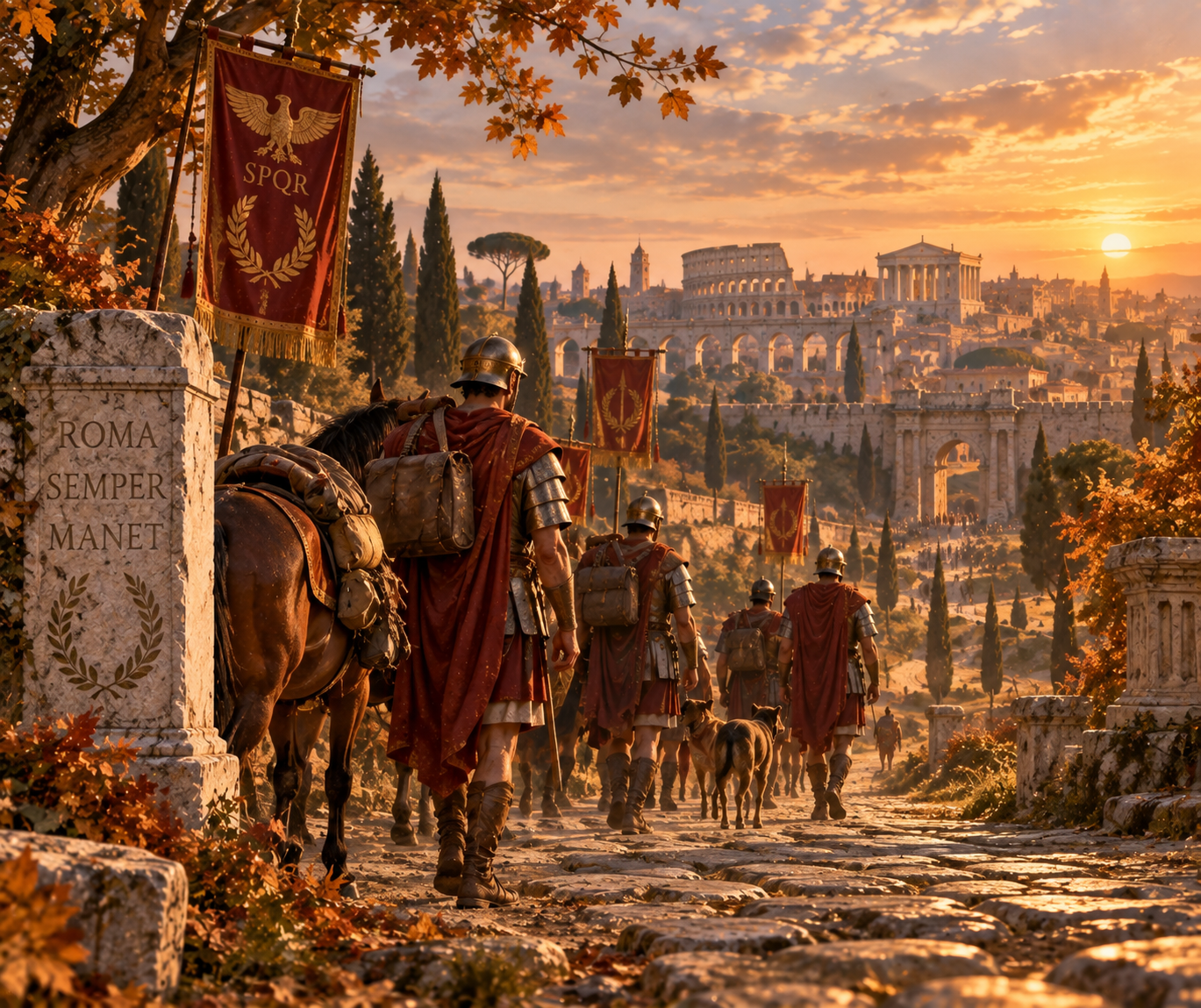
The armies returned, the campaigns ended, and the weapons had to be purified. The religious calendar thus transformed the change of seasons into a process that was also military and ritual.
October and the Rhythm of Roman Life
For much of the Roman population, the calendar was not simply a way of counting the days. It was a guide for organizing life.
Agricultural tasks, military campaigns, religious ceremonies, and festivals were deeply interconnected.
. The Roman Fasti recorded days, festivals, and religious ceremonies, showing just how much the calendar was also a religious and social structure.
Rome did not live separately from the seasons. It lived according to their rhythm.
Curiosities
Fides: A Goddess Who Disappeared, a Word That Survived
Fides for the Romans, was the personification of trust, loyalty, and the keeping of one's word. Her cult disappeared over the centuries, but the Latin term fides survived and left a profound mark on our vocabulary.
Words associated with faith, fidelity, and trust all ultimately derive from this same root. In Latin, fides could mean precisely trust, faith, security, or fidelity.
The goddess no longer receives sacrifices on the Capitoline, but her name continues to appear, transformed into other words, more than two thousand years later.
The Calendar
October in our present-day calendar is the heir to the long evolution of the Roman calendar.
The Julian calendar, established by Julius Caesar, profoundly reformed the Roman calendar and later served as the basis for the Western calendar.
Many centuries later, the Gregorian reform of 1582 adjusted the system once again in order to correct the accumulated discrepancy.
And it was precisely in October that one of the most famous jumps in calendar dates took place: in the countries that adopted the reform at that time, October 4, 1582, was followed by October 15.
The Month That Closed a Cycle
October began with Fides and ended with the purification of weapons. Between these two extremes came the harvest, wine, water, horses, and Mars.
October left behind the heat of summer. The earth had yielded its fruits. The grape harvest had begun a new transformation. The weapons were purified. And Mars, after accompanying Rome throughout the campaigning season, was symbolically placed on hold until the next cycle.
More than two thousand years later, October still preserves something of that feeling of transition.
The grape harvest. The first shorter days. The earth beginning to rest. The end of summer's work. And that strange feeling that the year is slowly beginning to draw in upon itself.
The Romans expressed it through their gods, their rituals, and their calendar. Perhaps we simply feel it when autumn arrives. Some festivals disappeared, some gods ceased to be worshipped, and many rituals were lost.
But October survived.
Follow the Footprints
Visit It Today...
Regia
The Regia The Regia stood in the Roman Forum, beside the Via Sacra and near the complex of Vesta.
Ancient tradition associated it with King Numa Pompilius and regarded it as his former residence.
During the Republic, the Regia became the official headquarters of the Pontifex Maximus, Rome's highest-ranking priest. It also housed important archives and sanctuaries associated with Mars and Ops.
Today, only the archaeological remains of the ancient structure survive.
Campus Martius
The Campus Martius , or Field of Mars, occupied an extensive area north of the monumental center of ancient Rome and had been dedicated to Mars from an early period.
In Antiquity, it was used, among other things, for military exercises, and over time it became filled with temples, theaters, porticoes, stadia, and other monumental buildings.
Today, it corresponds to a large area of Rome's historic center, where some of the city's best-known monuments can still be found.
Among them:
- The Pantheon of Agrippa, one of the best-preserved ancient buildings in Rome.
- Piazza Navona, built over the ruins of the ancient Stadium of Domitian.
- The Mausoleum of Augustus and Ara Pacis, both connected with the figure of Augustus and the propaganda of imperial peace.
- Largo di Torre Argentina, an archaeological complex containing Republican-era temples.
- The Temple of Hadrian, whose monumental remains survive in today's Piazza di Pietra.
Capitoline Hill
The Capitoline Hill is one of Rome's traditional seven hills and one of the great religious and political centers of the ancient city. At its summit stood the Temple of Jupiter Optimus Maximus, dedicated to Jupiter together with Juno and Minerva, the Capitoline Triad.
Today, the hill preserves important archaeological remains and forms part of the Capitoline Museums, surrounding the present-day Piazza del Campidoglio.
The Aventine Hill
The Aventine The Aventine is one of Rome's historic seven hills and lies beside the Circus Maximus and the Tiber River. Today, it is one of the city's quietest and most panoramic corners.
Among its best-known sights are:
- The Orange Garden (Parco Savello), offering views over Rome and the Tiber.
- The Knights of Malta keyhole, through which the dome of St. Peter's Basilica can be seen perfectly framed.
- The Basilica of Santa Sabina, an extraordinary fifth-century Early Christian basilica that preserves much of its historic structure.
The Via Sacra
The Vía Sacra was one of the principal roads of the Roman Forum and ran through the heart of the city. Processions and religious and triumphal ceremonies passed along it, connecting some of the Forum's most important spaces.
Today, it can be walked within the archaeological area of the Roman Forum and Palatine Hill.
The Subura
The Suburra was one of the most densely populated and popular districts of ancient Rome. It extended through the area between the Quirinal, Viminal, and Esquiline Hills, very close to the Forum and the city's major communication routes. Its name has survived to the present day.
The area is now part of Rione Monti, and Piazza della Suburrastill exists, preserving the ancient name of the neighborhood.