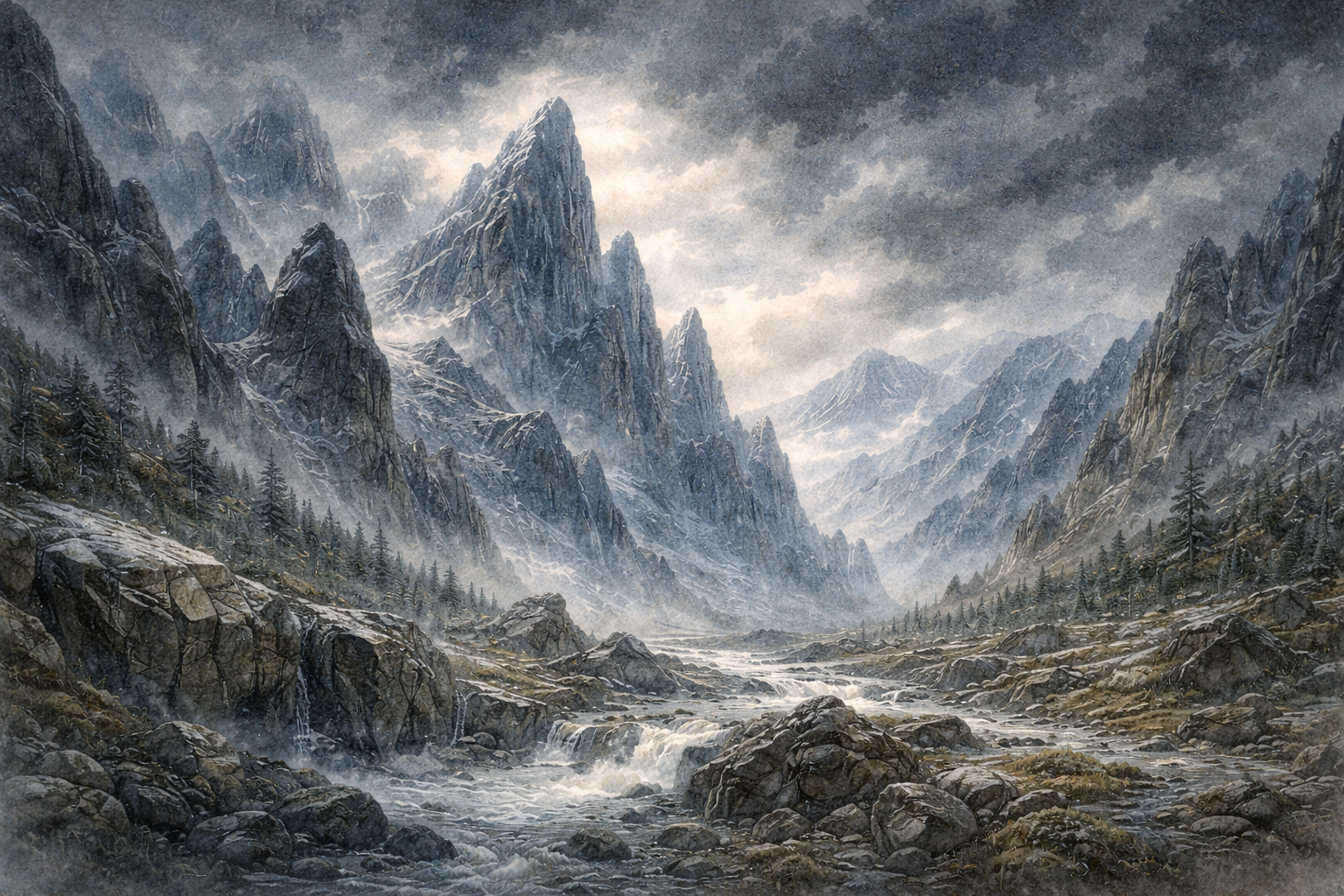
Jötunheim es la vasta y temible tierra de los gigantes, enemigos ancestrales de los dioses Æsir. No es un reino de orden ni belleza armoniosa como Asgard, but an untamed, primitive, and fierce world where nature rules with absolute harshness.
It is the territory of chaos, brute strength, ancient knowledge, and primordial powers that predate even the gods themselves.
Nature and Atmosphere
Jötunheim is described in the Eddas as a rugged, mountainous expanse: a land of impossible cliffs, deep shadowed valleys, black twisted forests, and frozen plains battered by cruel winds.
The sky is often portrayed as grey and storm-laden, heavy with omens. There is no harmony or softness here—everything in Jötunheim evokes antiquity, brutal strength, and primordial endurance.
The seasons are extreme, and the environment appears permanently hostile to any fragile form of life.
Jötunheim: Ruling Clans
There is no single king or clear political structure in Jötunheim. Instead, it is composed of multiple giant clans, each ruled by its own powerful leaders.
Among the most important are:
- Prymr. Rey de los gigantes de hielo, protagonista del mito en el que le roba el martillo a Thor.
- Utgard-Loki – Lord of Utgard, powerful and intelligent, master of illusions and impossible trials.
- Angrboda. Dark giantess, mother of Fenrir, Jörmungandr, and Hel alongside Loki.
- Aegir (sometimes associated with the jötnar) – Sea giant and host of divine feasts.
Each rules their territory with absolute sovereignty, unbound by the laws of Asgard.
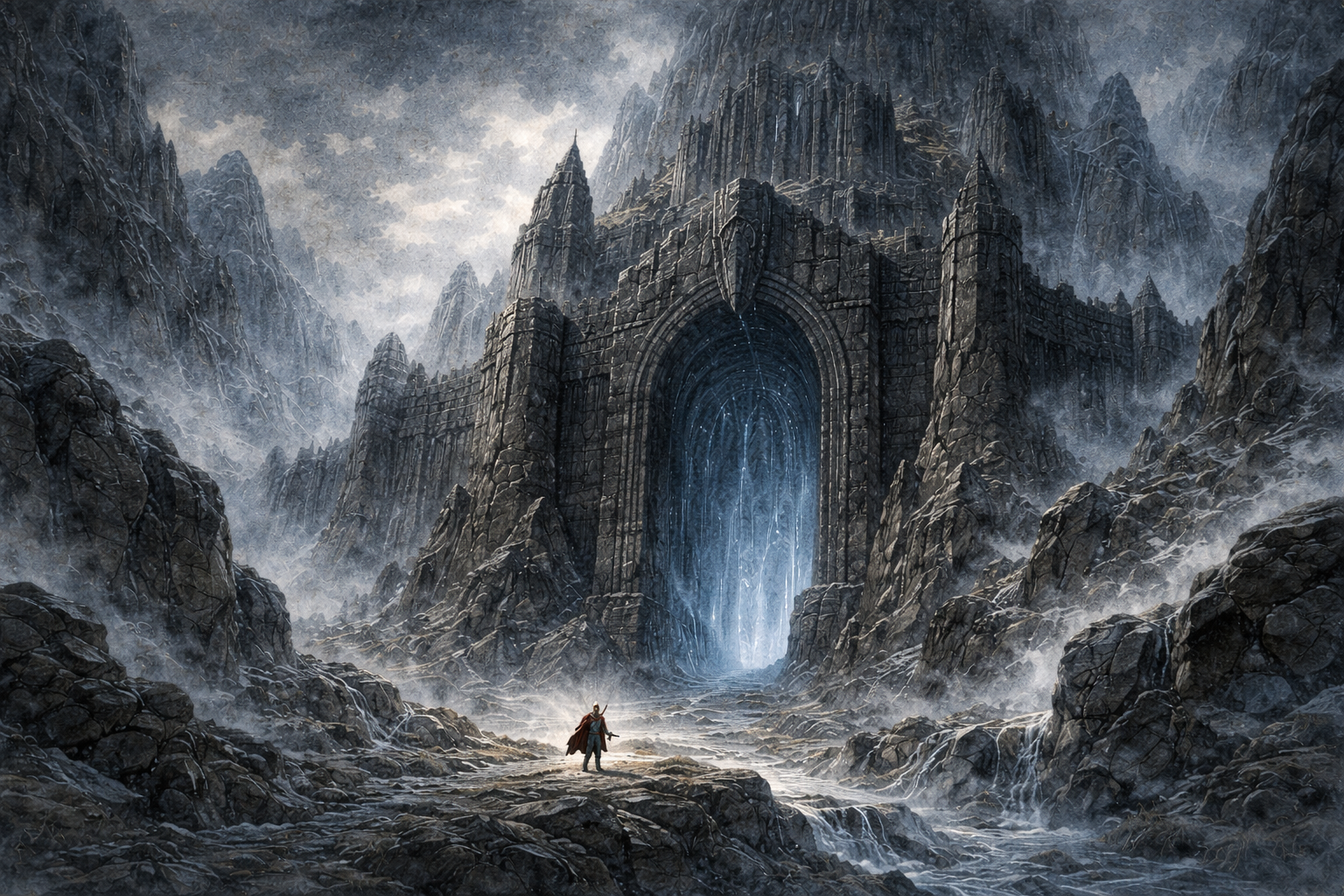
Utgard. The Fortress of the Giants
The best-known settlement of Jötunheim. It is not a city in the human sense, but a colossal cyclopean fortress: gigantic walls, unclimbable gates, towers of black stone, and halls carved directly into the rock. Here Thor and Loki were subjected to illusory trials that revealed the immense power of the jötnar.
Utgard represents cunning, magic, and the ancient knowledge of chaos.
Notable Places and Structures
Unlike Asgard, Jötunheim is not filled with refined palaces. Its structures consist of monumental caves, mountain-carved halls, rocky fortresses, stone-and-ice shelters—rudimentary yet colossal constructions.
Everything exists on an exaggerated scale, reflecting the size and power of its inhabitants.
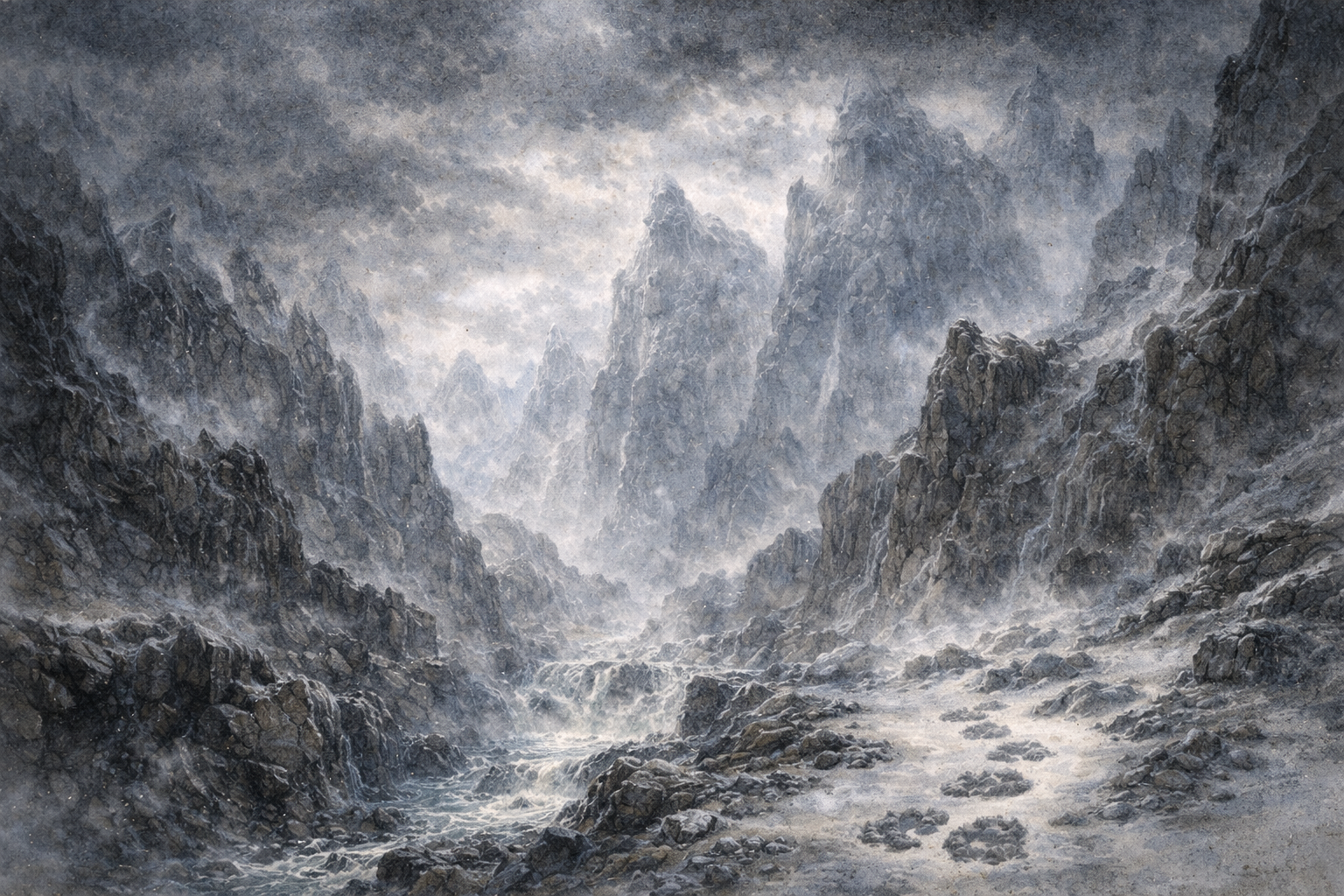
Landscapes and Natural Elements
Jötunheim abounds in:
- endless glaciers
- deep gorges
- raging rivers
- frozen waterfalls
- mist-crowned mountains
- wild tundras
- dark bottomless lakes
The wind howls constantly, and the silence feels heavy and ancient.
The Jötnar
Jötunheim is home to:
- Jötnar — giants of ice, rock, storm, and darkness
- primordial creatures and ancient monsters
- wild spirits
- beasts linked to ice and destruction
Many jötnar possess ancient wisdom, deep magic, and knowledge of forgotten secrets, rivaling even Odin in certain domains. Not all are brute beings—some stand out for their intelligence, foresight, and prophetic powers.
Relationship with Asgard
La relación entre Jötunheim y los Æsir es de eterna tensión. Conflictos constantes, batallas míticas, alianzas puntuales, amores prohibidos.
Despite their hostility, many gods descend from giants—including Odin himself.
Loki, as a key figure, embodies this connection between both worlds.