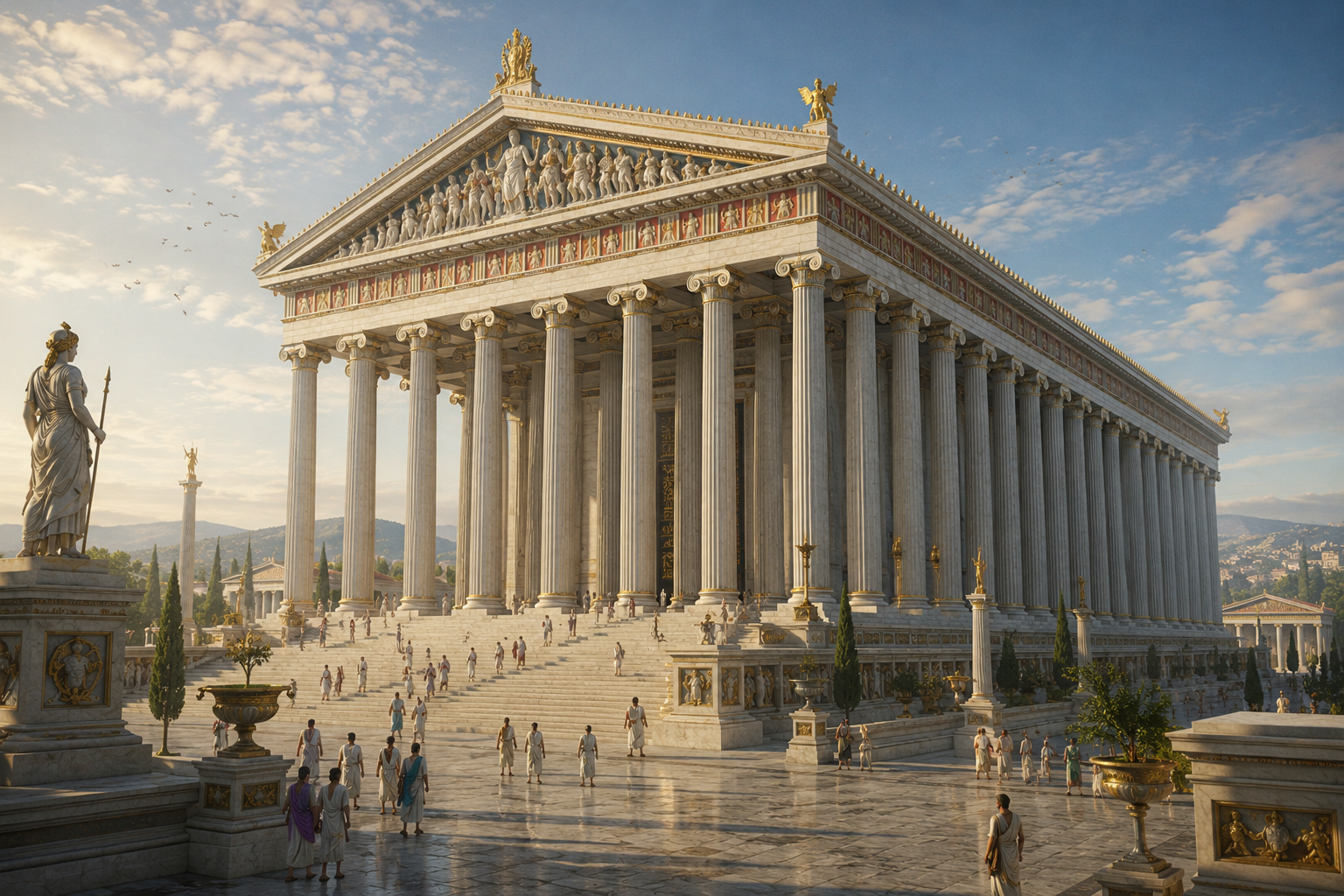
On the night of July 21, 356 BC, while much of the world slept, flames began to consume one of the most admired monuments of the ancient world.
It was not an accident. It was not the result of war.
It was a deliberate act.
The Temple of Artemis at Ephesus, one of the Seven Wonders of the Ancient World, burned under flames set by a man who sought neither wealth nor power... but something far more unsettling: to be remembered.
A Wonder Born on Sacred Ground
Long before the temple was built, the site was already considered sacred. It had been dedicated to an ancient fertility goddess worshipped by the cultures of Anatolia long before the arrival of the Greeks.
When the Greeks settled in the region, they did not erase this cult. They transformed it.
The ancient deity gradually became identified with Artemis, goddess of the hunt, nature and fertility, although not in her familiar image as the huntress. The Artemis of Ephesus was different: rigid, symbolic and deeply associated with abundance and life, represented through distinctive forms linked to fertility.
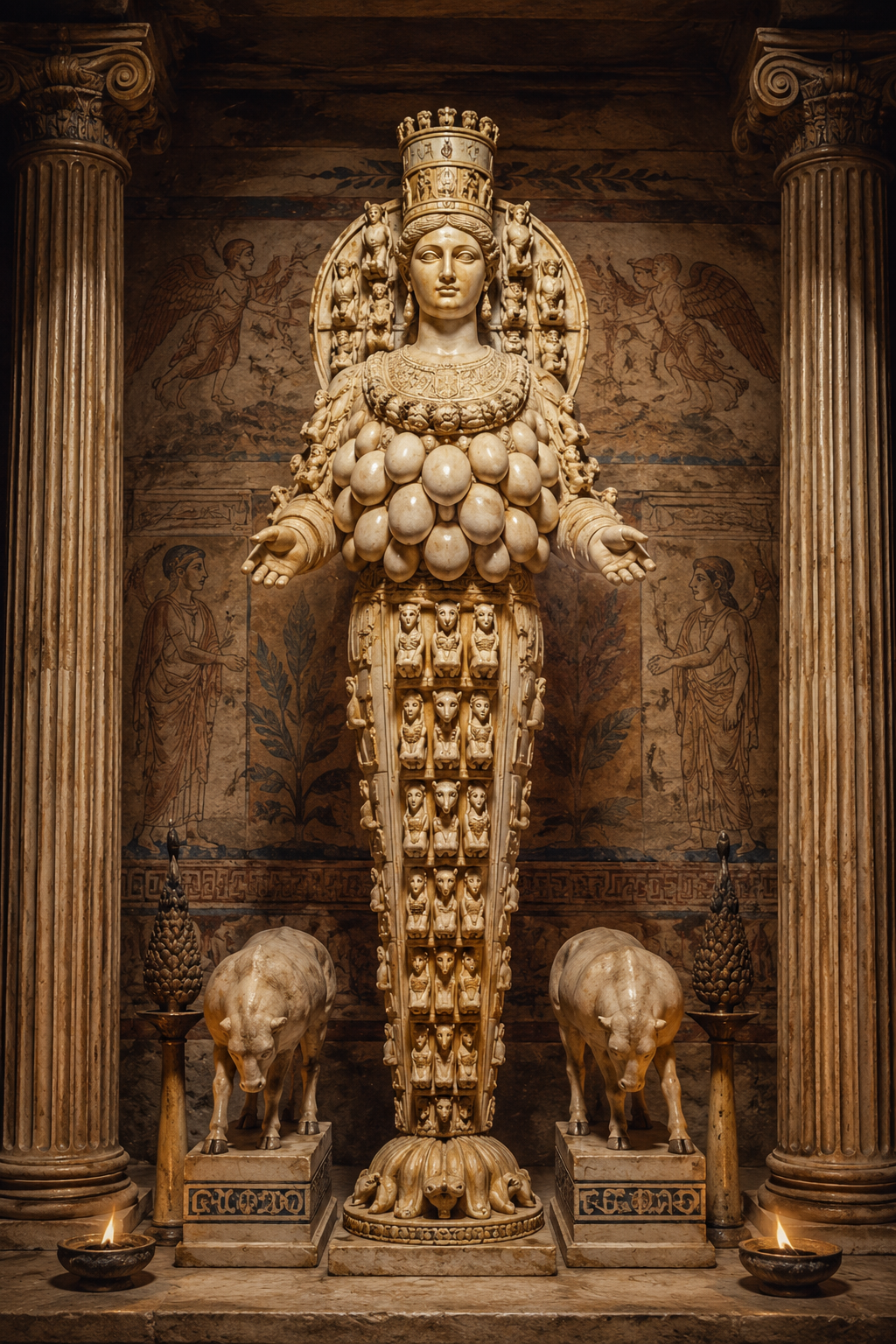
The Temple
The great temple, located in the city of Ephesus (modern-day Türkiye), was built during the 6th century BC under the patronage of King Croesus of Lydia and designed by the architects Chersiphron and his son Metagenes.
Its dimensions were extraordinary:
- More than 100 metres in length
- 127 marble columns
- Unprecedented sculptural richness
It was not merely a temple. It was a religious, economic and cultural centre. Travellers from across the ancient world came to admire it.
Its construction lasted for more than a century.
The Seven Wonders of the Ancient World
The Temple of Artemis did not stand alone.
It was part of a collection of extraordinary monuments regarded by ancient travellers as essential sights.
This was never an official list but rather the result of the admiration expressed by writers such as Antipater of Sidon and Philo of Byzantium, who described in their works the places they believed every person should see at least once in a lifetime.
Among them were:
- The Great Pyramid of Giza
- The Hanging Gardens of Babylon
- The Statue of Zeus at Olympia
- The Temple of Artemis at Ephesus
- The Mausoleum at Halicarnassus
- The Colossus of Rhodes
- The Lighthouse of Alexandria
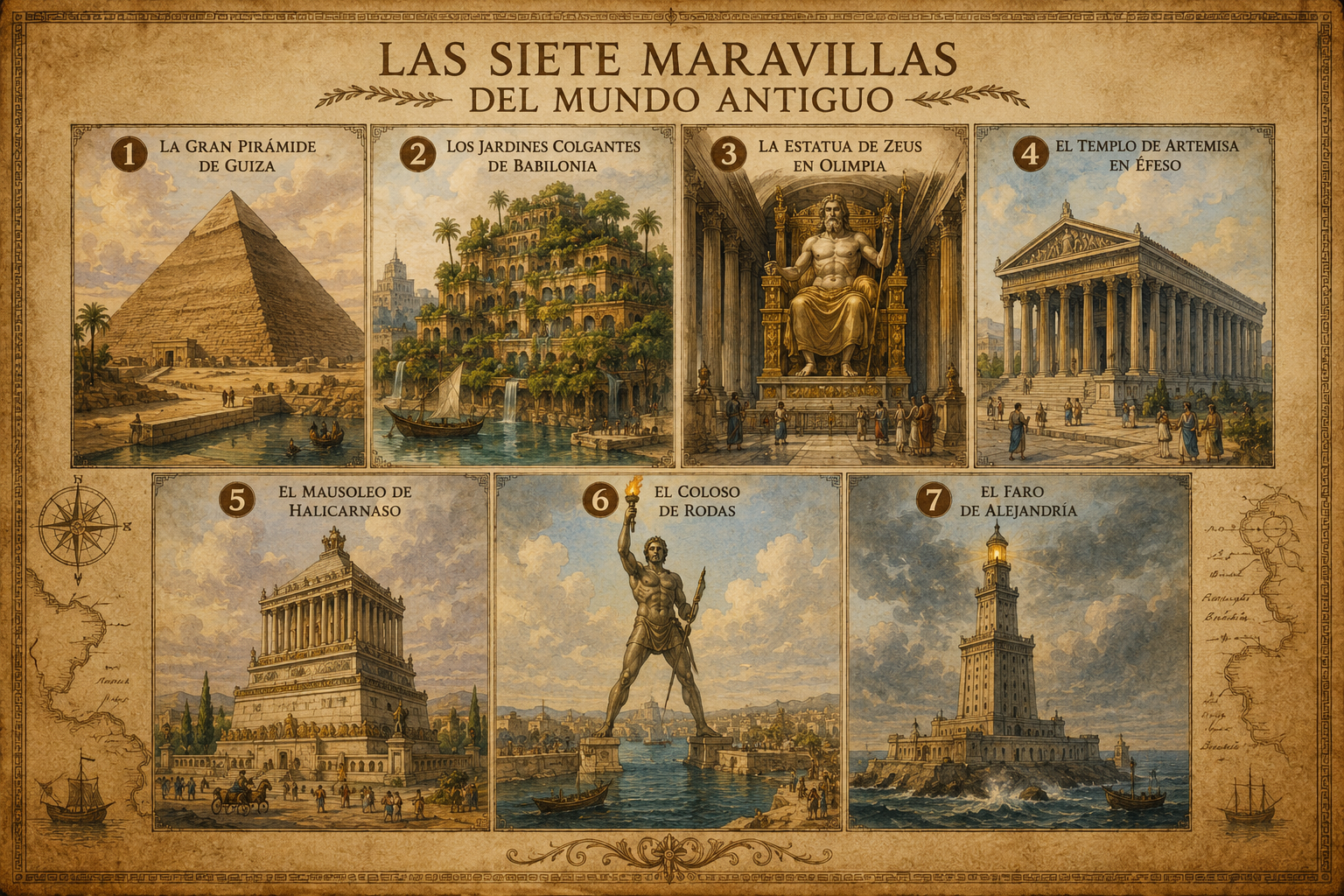
These monuments represented the limits of engineering, art and human ambition in the ancient world.
A Sanctuary... and a Bank
The Temple of Artemis was not only a place of worship; it also served as a secure place to store wealth.
In antiquity, temples were regarded as inviolable spaces. To rob them was not merely a crime but an act of sacrilege.
For that reason:
- merchants
- citizens
- and even public authorities
deposited there:
- gold
- valuable objects
- money
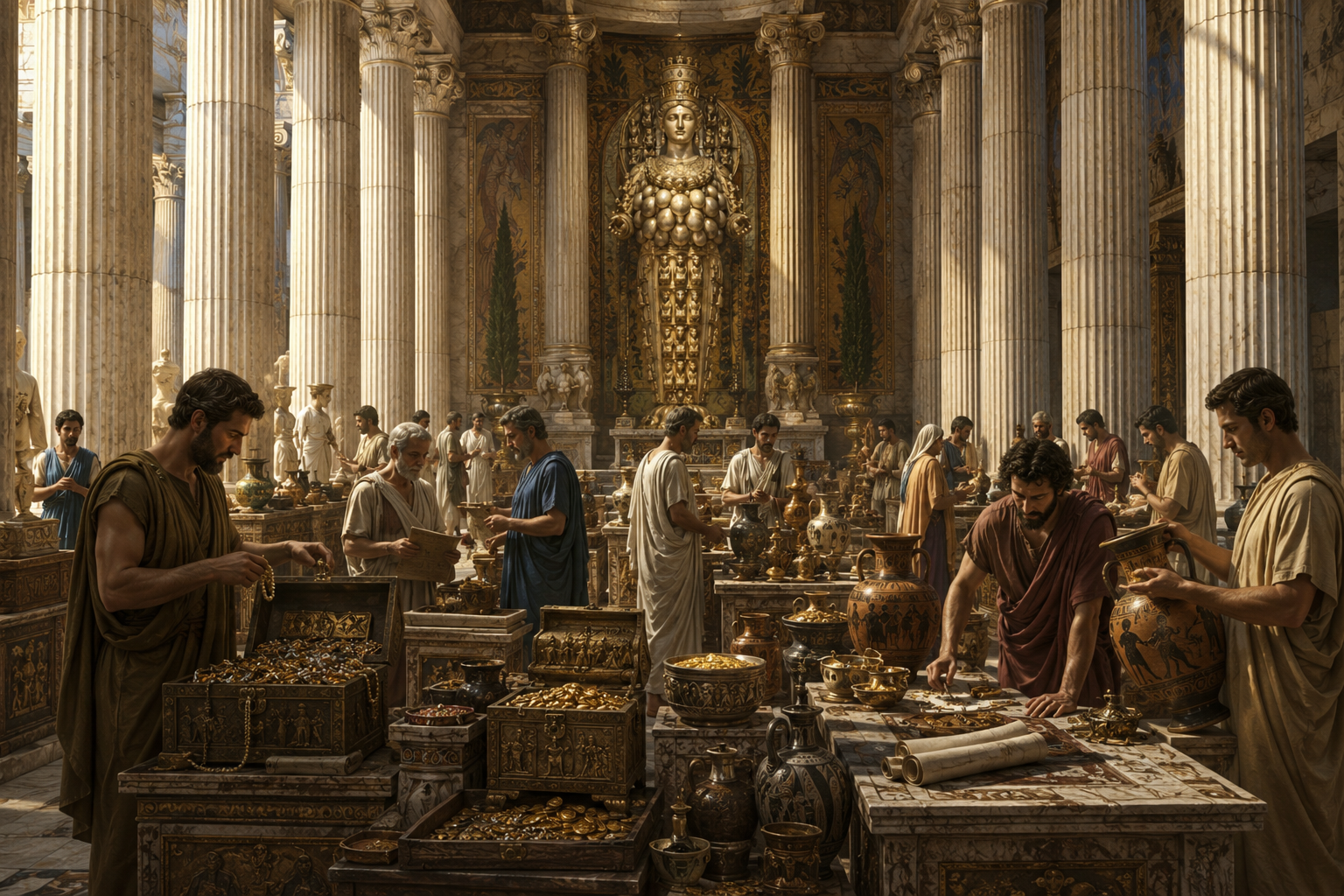
The temple functioned as a kind of sacred bank, where security was guaranteed not by laws... but by fear of the divine.
The Night of the Fire
In 356 BC, the temple burned.
The man responsible was Herostratus. He openly declared that his only goal was to achieve fame. He set fire to the temple convinced that destroying one of the world's greatest wonders would make him impossible to forget.
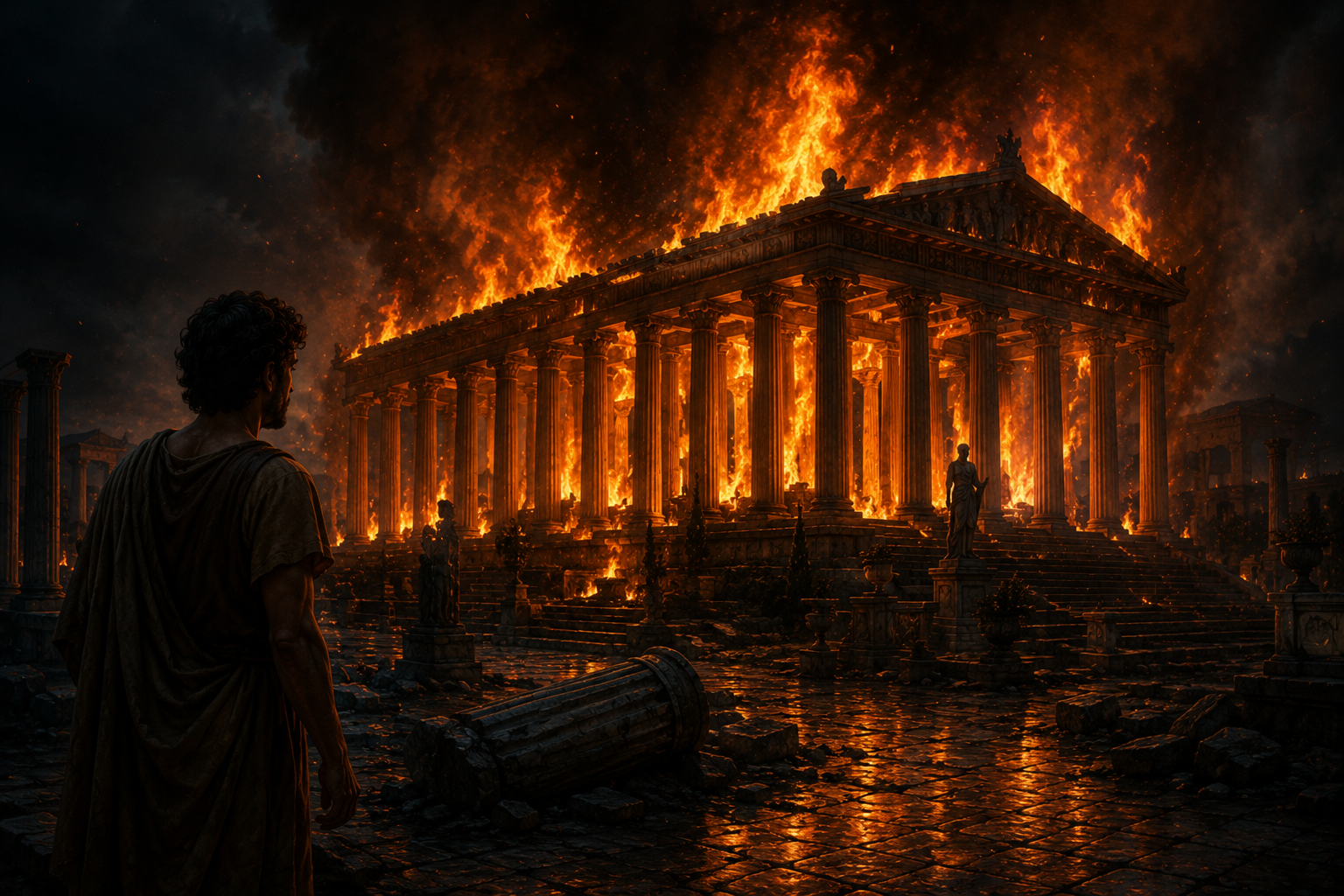
The flames spread rapidly, consuming the wooden roof and weakening the structure until parts of it collapsed.
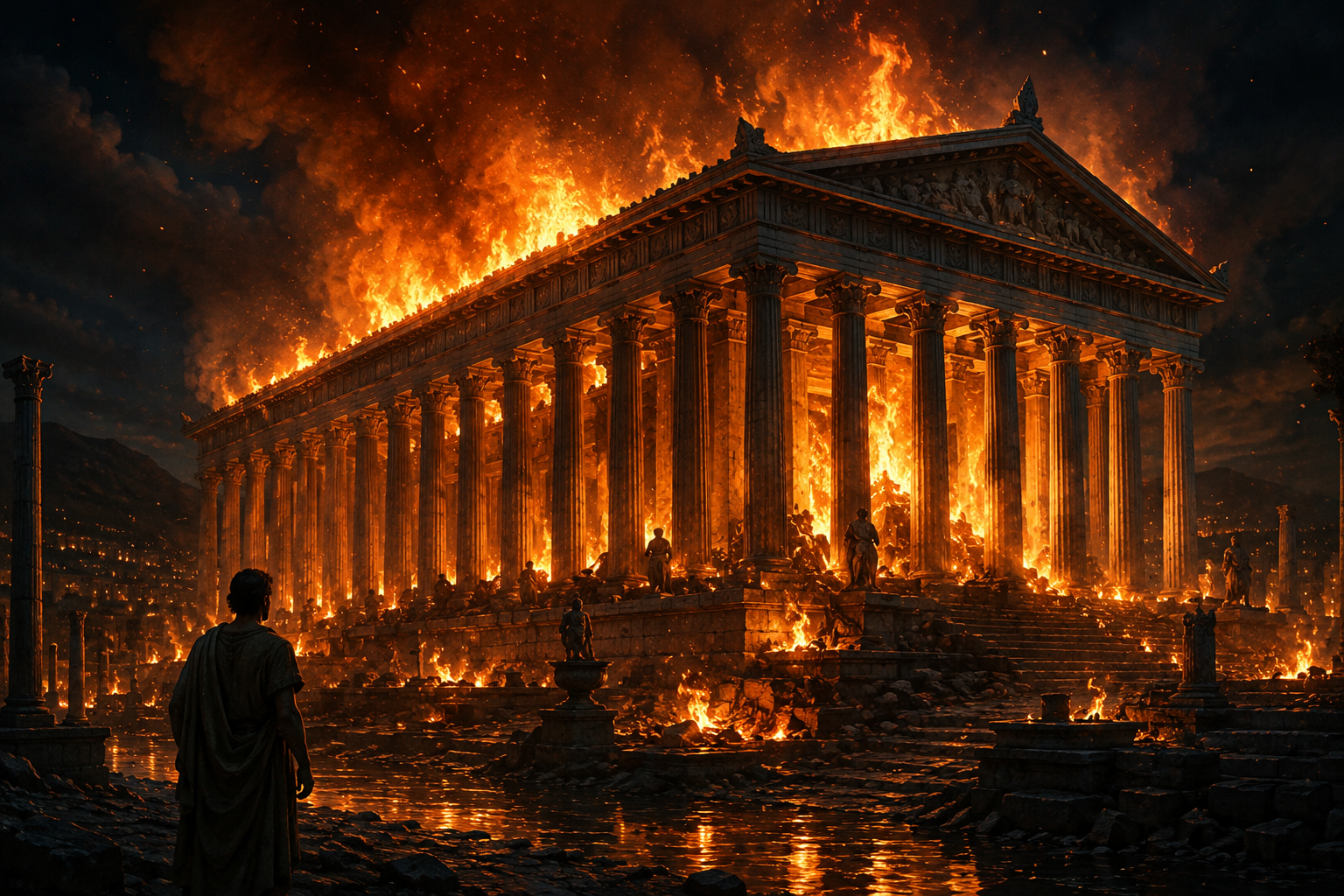
The wonder was burning... and with it, centuries of history.
Herostratus: The Price of Fame
The authorities of Ephesus acted quickly. Herostratus was captured, interrogated and executed.
In a desperate attempt to deny him what he wanted most, they made a radical decision: his name was forbidden from being mentioned.
They attempted to erase him from history, condemning him to complete oblivion. The plan failed. Historians such as Theopompus recorded the event... and with it, his name survived.
His actions eventually gave rise to a concept that still exists today: Herostratic fame—the pursuit of notoriety at any cost.
Herostratus' name survived... and so did his purpose.
Why Was It a Wonder?
It was not simply its size. It was the combination of elements that made it unique:
- Monumental architecture
- Massive use of marble
- Exceptional artistic decoration
- A sacred site with millennia of history
- An important religious and economic centre
It was not just another temple.
It was a synthesis of power, faith and wealth.
Travellers and Memory
Writers such as Antipater of Sidon and Philo of Byzantium helped immortalise the temple.
They did not do so with maps or photographs. They did it with words.
By describing what they saw, comparing it with other monuments and recording their astonishment. Thanks to them, the temple existed not only in stone... but also in collective memory.
Reconstruction and Its Final Fate
After its destruction, the people of Ephesus chose to rebuild the temple.
And they rebuilt it on an even grander scale.
For centuries it once again stood among the wonders of the world... until later invasions and the passage of time ultimately destroyed it forever.
Today, only solitary columns remain at Ephesus... scattered fragments... and the echo of a story that refuses to disappear. Fragments of what was once one of the greatest wonders of the ancient world.
Curiosities
A Historical Coincidence
According to tradition, Alexander the Great was born on the very night the temple burned.
Some ancient sources claimed that Artemis could not protect her temple because she was away assisting at Alexander's birth.
A coincidence that transformed the fire into something more than a historical event and further fuelled the legend surrounding Alexander.
Pride in Ephesus
Decades after the fire, Alexander the Great offered to finance the reconstruction of the temple on the condition that his name would be associated with it.
The reply was memorable: «"It is not fitting for one god to build a temple for another."»
A Wonder of the Ancient World
The Temple of Artemis was not merely an extraordinary architectural achievement.
It also became the setting for one of history's most unsettling decisions: to destroy something meant to endure in an attempt to achieve immortality through fame.
And, in a way...Herostratus succeeded.
Follow the Footprints
Visit it today...
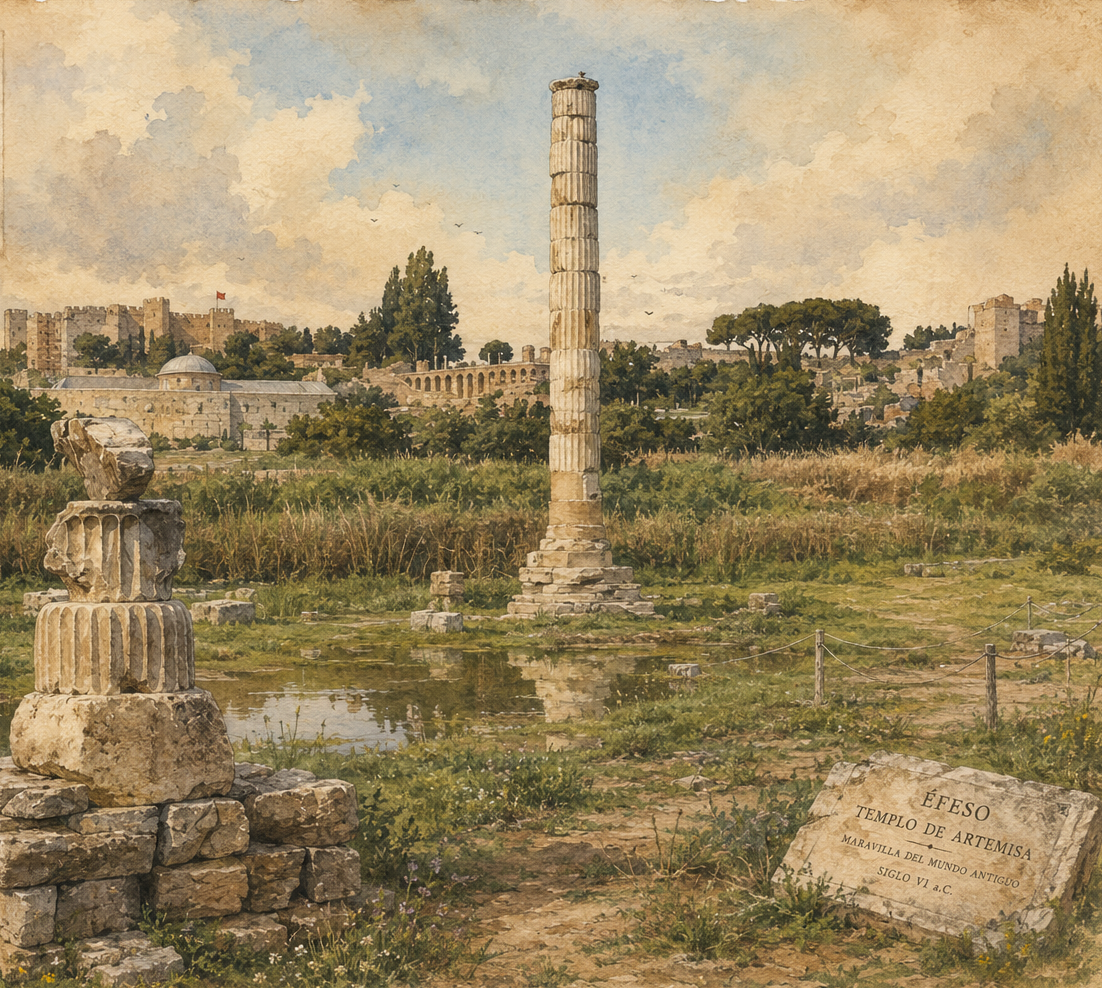
Today, the site where the Temple of Artemis once stood can still be visited in present-day Selçuk, Türkiye, although only a few scattered remains and a reconstructed column survive to recall the scale of the ancient wonder.