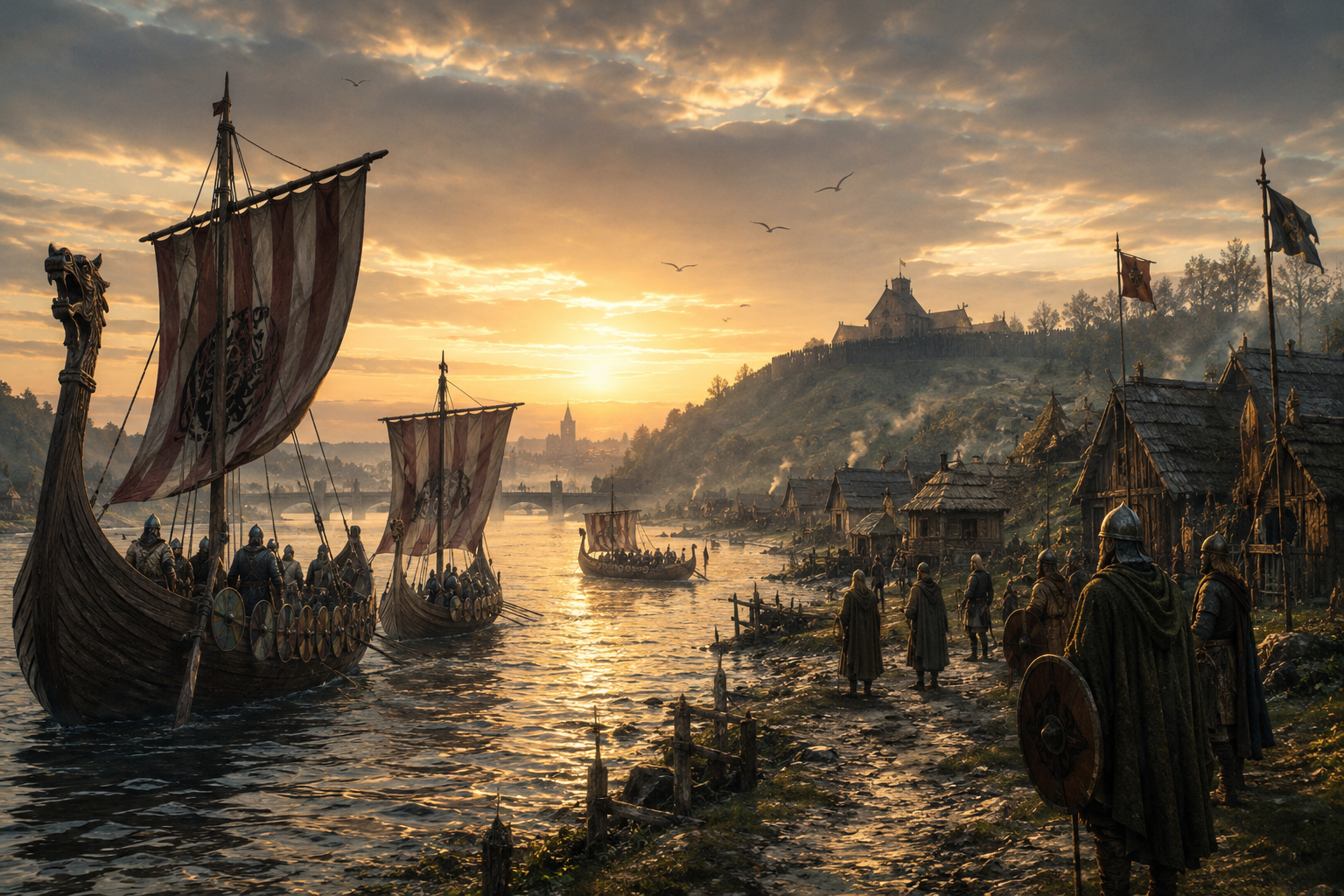
Hubo un momento en la historia en el que los vikingos dejaron de llegar…y empezaron a quedarse. Así surgió Normandía.
On the shores of the Frankish kingdom, amid raids, negotiations, and political strategy, something entirely new emerged: a people who were no longer simply from the North... but who had not ceased to be so either. That is how Normandy was born.
From Raiders to Negotiators
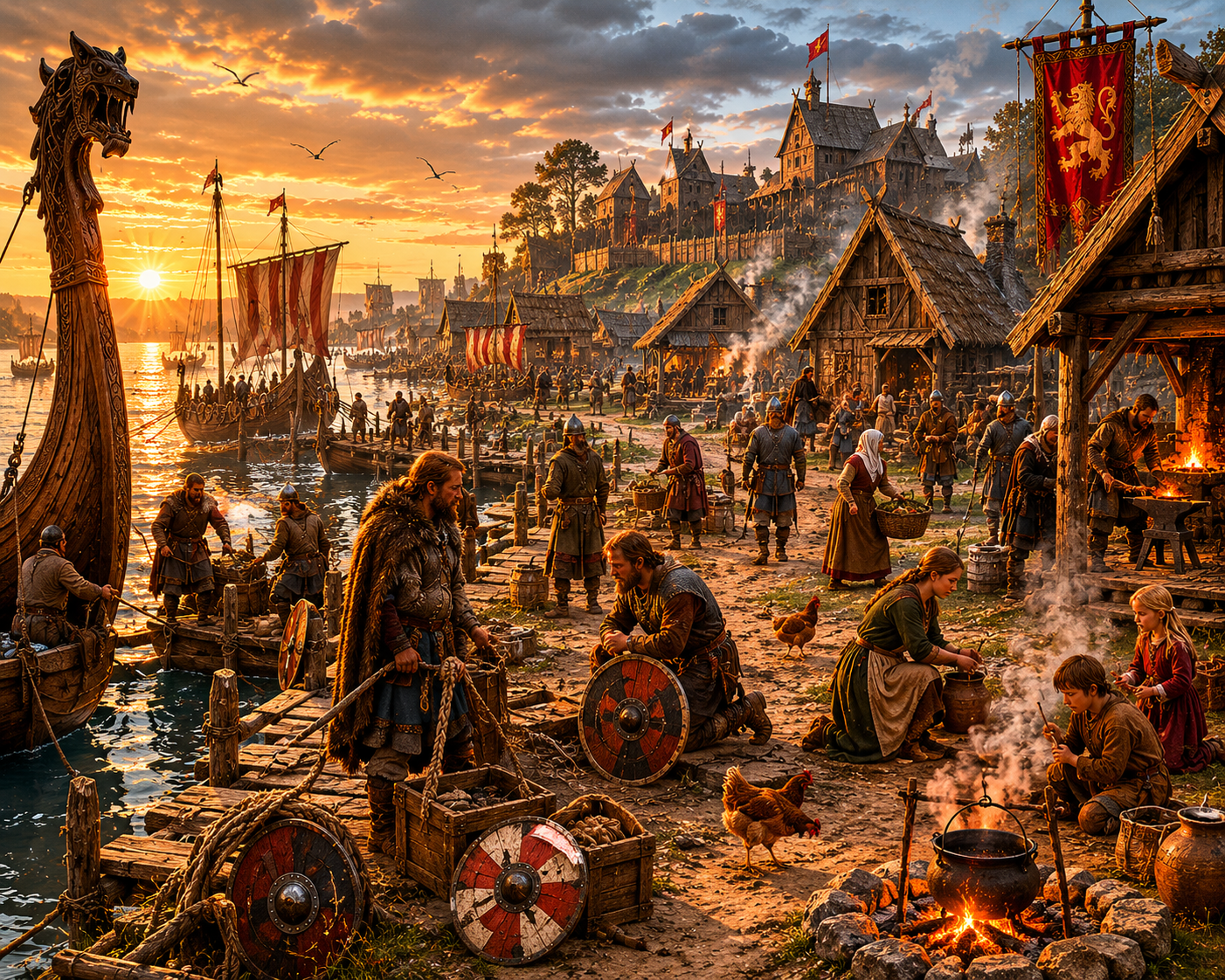
During the 9th century, the territories of the West Frankish Kingdom suffered repeated Viking incursions.
Its rivers—especially the Seine—had become open routes leading deep into the heart of the kingdom.
Paris was besieged. Lands were plundered. Frankish power weakened.
But the Vikings were not only warriors; they were also skilled strategists.
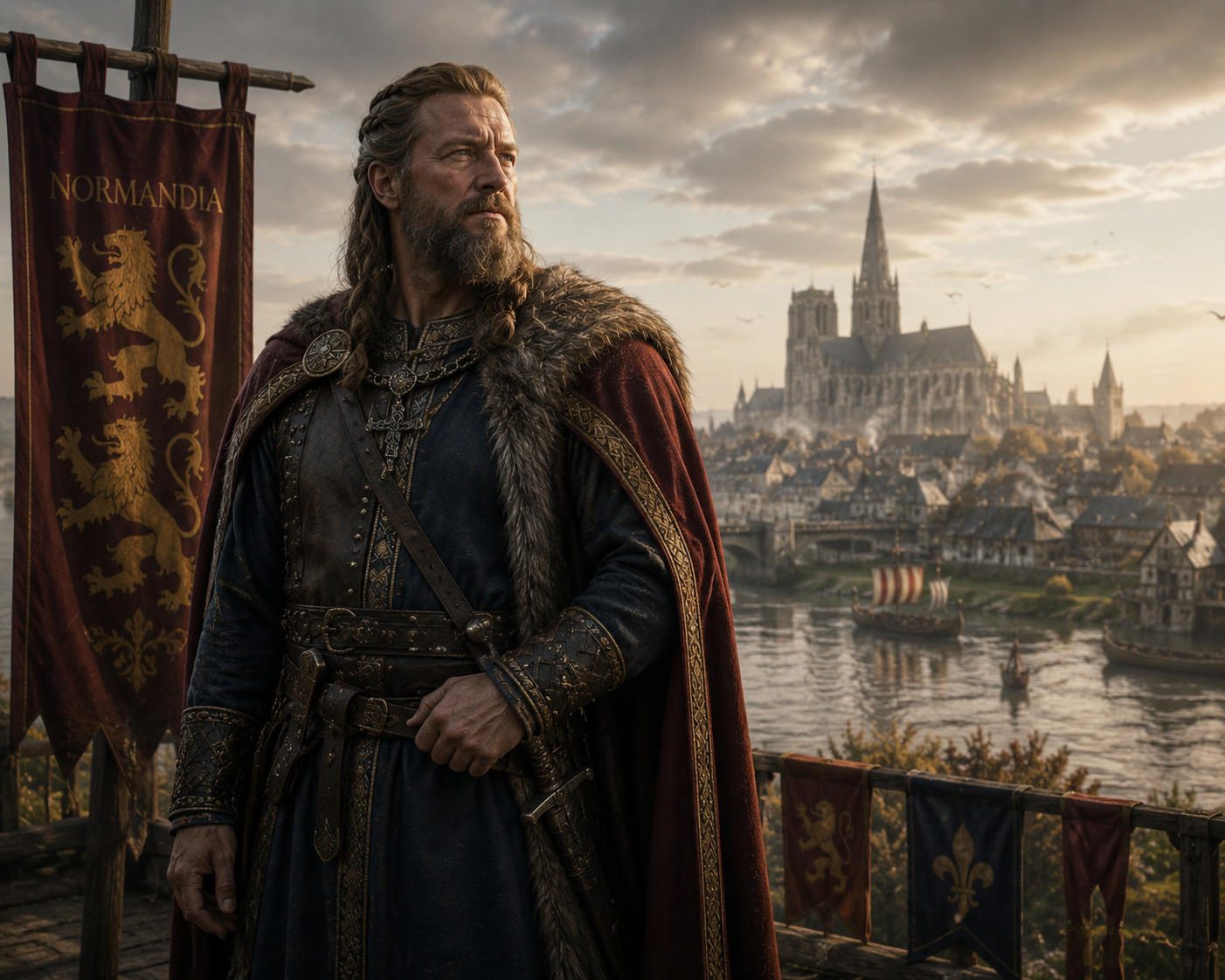
And within that context, a key figure emerged: Rollo (Hrólfr / Göngu-Hrólfr), baptized as Hrolf Ganger.
A Viking leader whose story lies somewhere between history and legend.
The Treaty of 911: The Birth of Normandy
In 911, King Charles III of France—better known as Charles the Simple—made a decision that would change the course of European history.
Instead of continuing to fight... he negotiated.
The agreement, known as the Treaty of Saint-Clair-sur-Epte, established something extraordinary:
Rollo would receive lands in the region of Neustria:
- He would defend the territory against future Viking attacks.
- He would convert to Christianity.
- He would swear loyalty to the Frankish king.
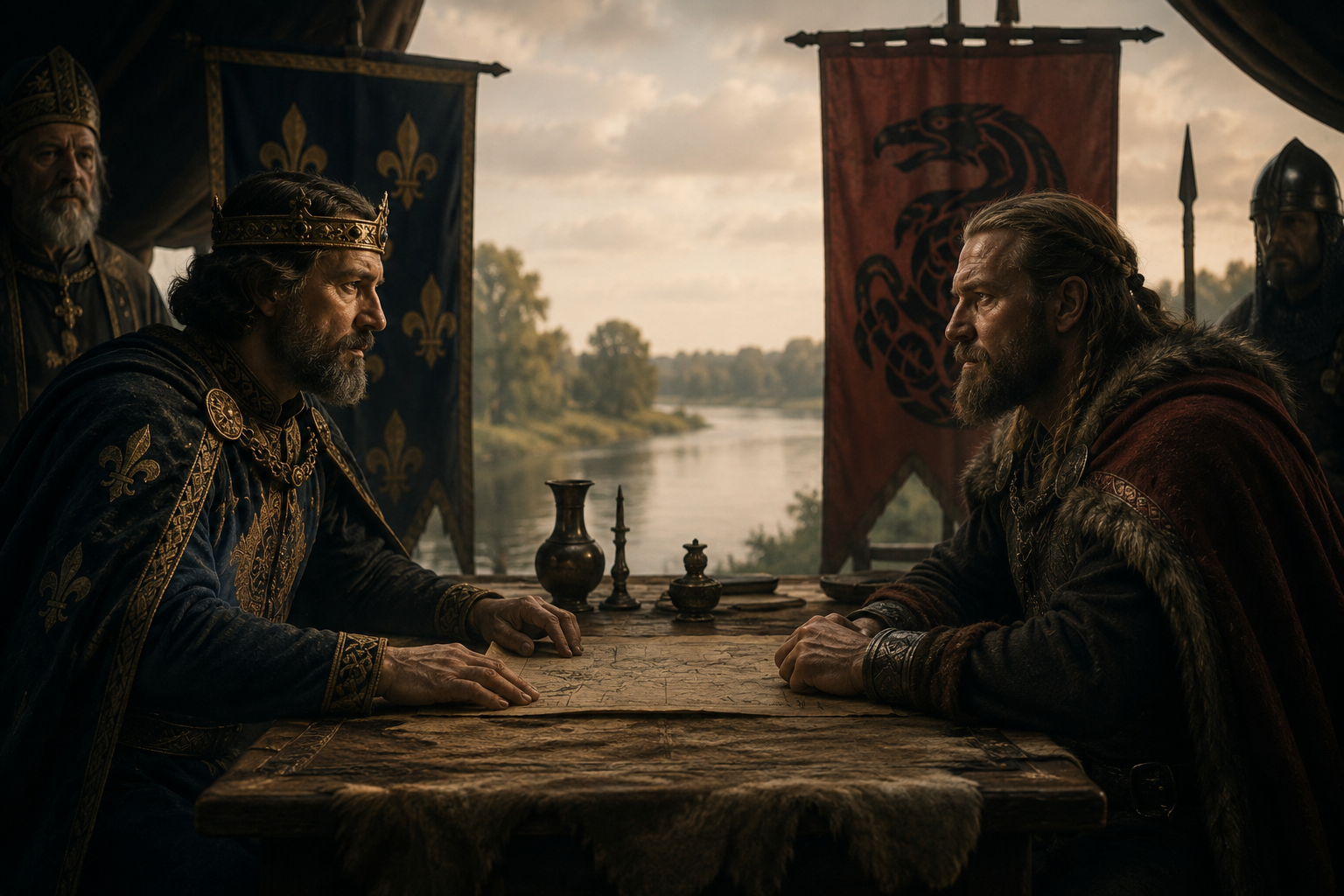
The granted lands gradually became known as Normandy—the "land of the Northmen" (Northmen / Normanni).
El término aparece documentado ya entre los siglos IX y X y terminaría consolidándose para designar la nueva región.
Rollo: The Viking Who Became a Lord
Rollo was probably of Scandinavian origin, with many historical sources identifying him as Danish, while the Norse sagas associate him with Norway.
Following the treaty of 911, he embraced Christianity and became integrated into the Frankish political structure.
According to some medieval traditions, the agreement may also have included a marriage to Gisela, daughter of the king, although her historical existence remains uncertain.
His power base lay in the lower Seine Valley, centred on Rouen.
As Lord of Normandy, he:
- consolidated control over the Seine, a vital economic and military route
- granted lands to his followers, creating the foundations of a warrior aristocracy
- fortified strategic locations and secured river routes
- maintained relative peace with the Franks by honouring the treaty
Under his leadership, the Vikings settled in Normandy ceased to be invaders... and became a new ruling elite.
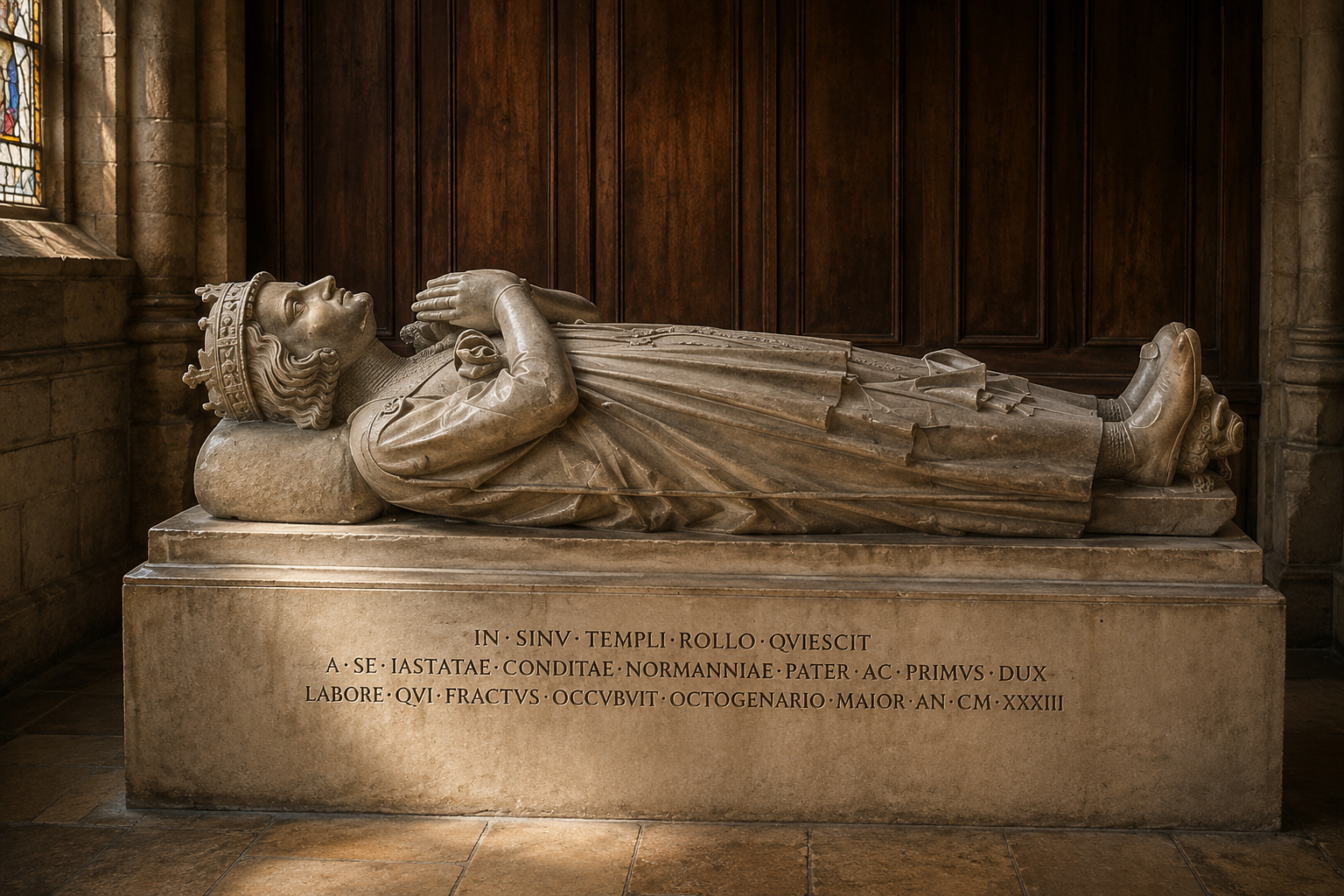
After his death, sometime between 928 and 933 AD, tradition holds that Rollo was buried in Rouen Cathedral.
Over time, his tomb was relocated and rebuilt.
And his memory was reinterpreted, presenting him as a Christian Norman prince.
The Normans: A New Identity
As generations passed, the descendants of these Vikings gradually changed.
They adopted:
- the local Romance language
- Frankish customs
- the feudal system
Yet they preserved something fundamental: their remarkable capacity for expansion.
They were no longer exactly Vikings.
They had become something new: the Normans.
1066: The Conquest of England. In the 11th century
One of Rollo's descendants would once again change history.
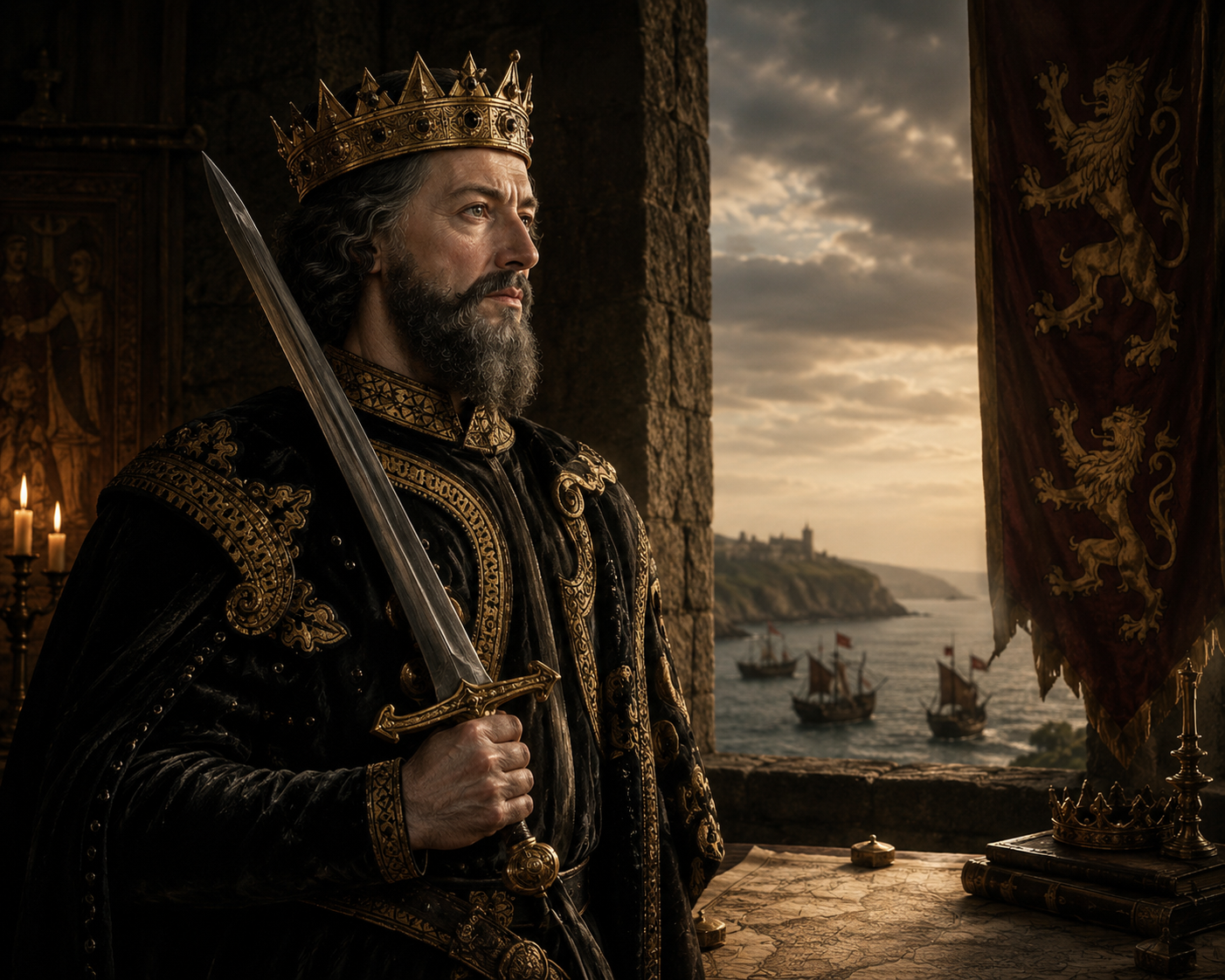
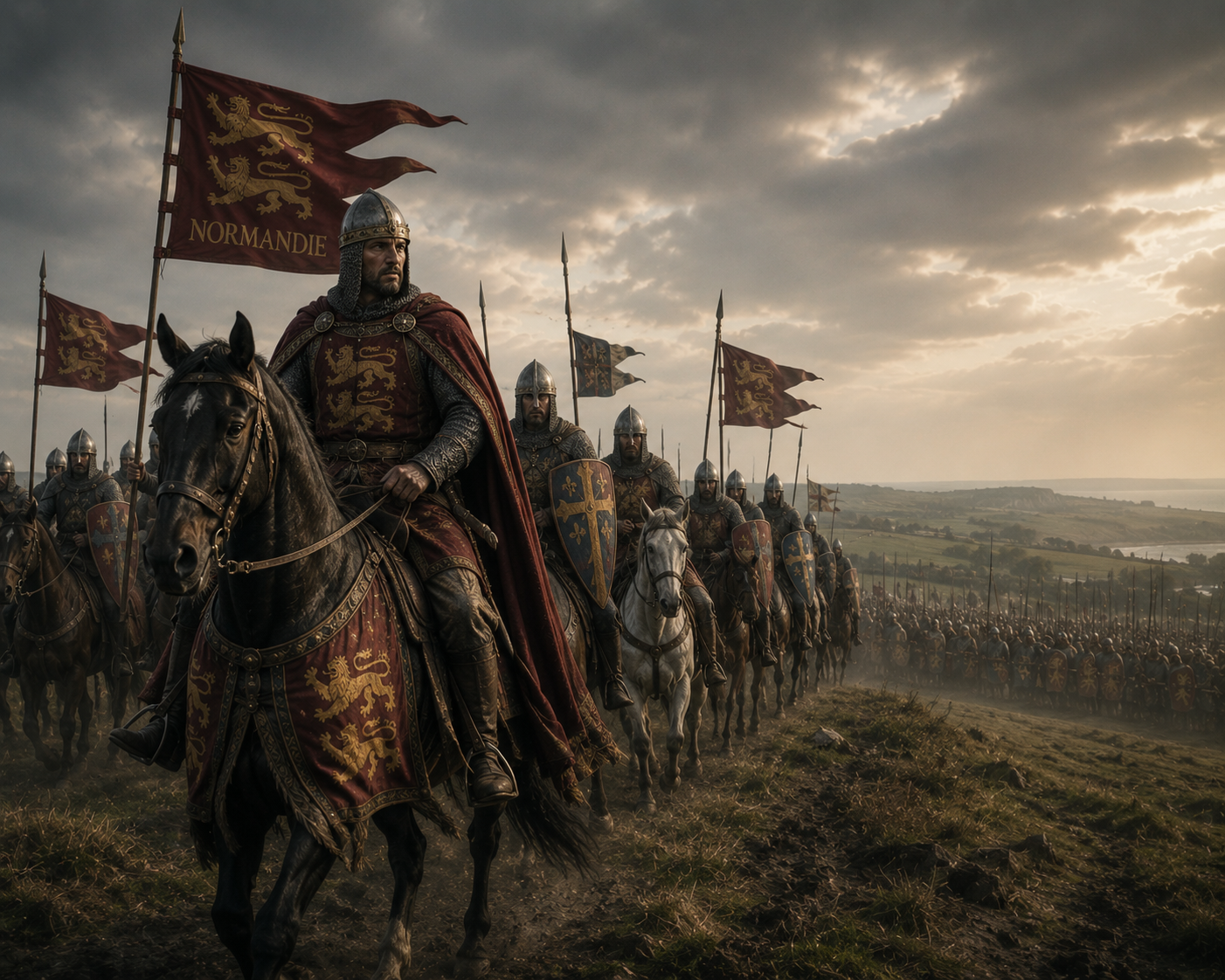
William the Conqueror, Duke of Normandy, claimed the throne of England.
In 1066, following the Battle of Hastings, he defeated the last Anglo-Saxon king, Harold Godwinson (Harold II). William I became King of England, inaugurating the Norman period, which lasted until 1154.
But this was not merely a conquest. It was a complete transformation:
- a new ruling elite
- the introduction of the Norman feudal system
- profound changes in language and culture
The English language as we know it today still bears the imprint of that moment.
The Domesday Book: Measuring a Conquered Kingdom
After conquering England in 1066, William I secured his authority not only through military force but through knowledge.
In 1085, he ordered the creation of an unprecedented survey: the Domesday Book. Its purpose was simple: to know exactly what every part of the kingdom possessed. The result became one of the most comprehensive administrative surveys of the Middle Ages.
It recorded:
- lands
- landowners
- livestock
- mills
- resources
- economic value
Each location answered a precise series of questions:
- who owned it before the conquest
- who owned it now
- what it had been worth then
- what it was worth at the present time
The survey was divided into two parts:
- the Great Domesday, a condensed survey covering most of the kingdom
- the Little Domesday, a much more detailed record focusing on regions such as Norfolk, Suffolk, and Essex
Despite its remarkable scope, some important cities, including London and Winchester, were not included.
Even so, its level of detail remains extraordinary for its time.
The Domesday Book was far more than a register. It enabled the king to understand, organise, and tax every corner of his kingdom.
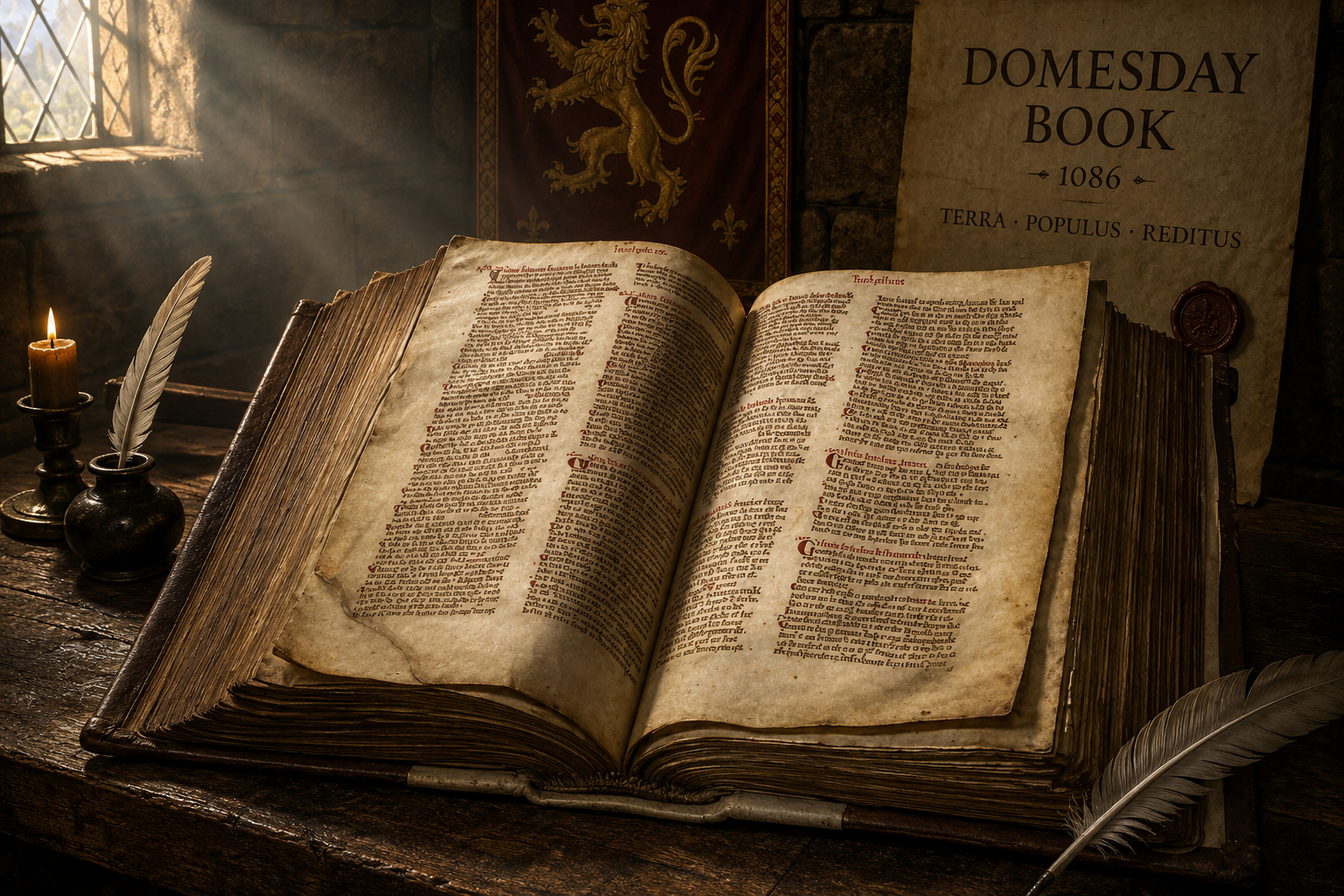
Today it survives almost in its entirety in The National Archives (United Kingdom) and remains one of the most complete medieval administrative records preserved in Europe.
The Normans in the Mediterranean: The Conquest of Sicily
During the 11th century, Norman adventurers reached the Mediterranean and began a new expansion.
Figures such as:
- Robert Guiscard
- Roger I of Hauteville
led the conquest of southern Italy and Sicily.
There they created one of the most remarkable kingdoms of the Middle Ages:
- Duchy of Apulia and Calabria
- County of Sicily
Unified under Roger II in 1130 as the Kingdom of Sicily
The new kingdom became renowned for:
- its blend of Latin, Greek, and Arab cultures
- its unique architecture, especially in Palermo
- its advanced political system
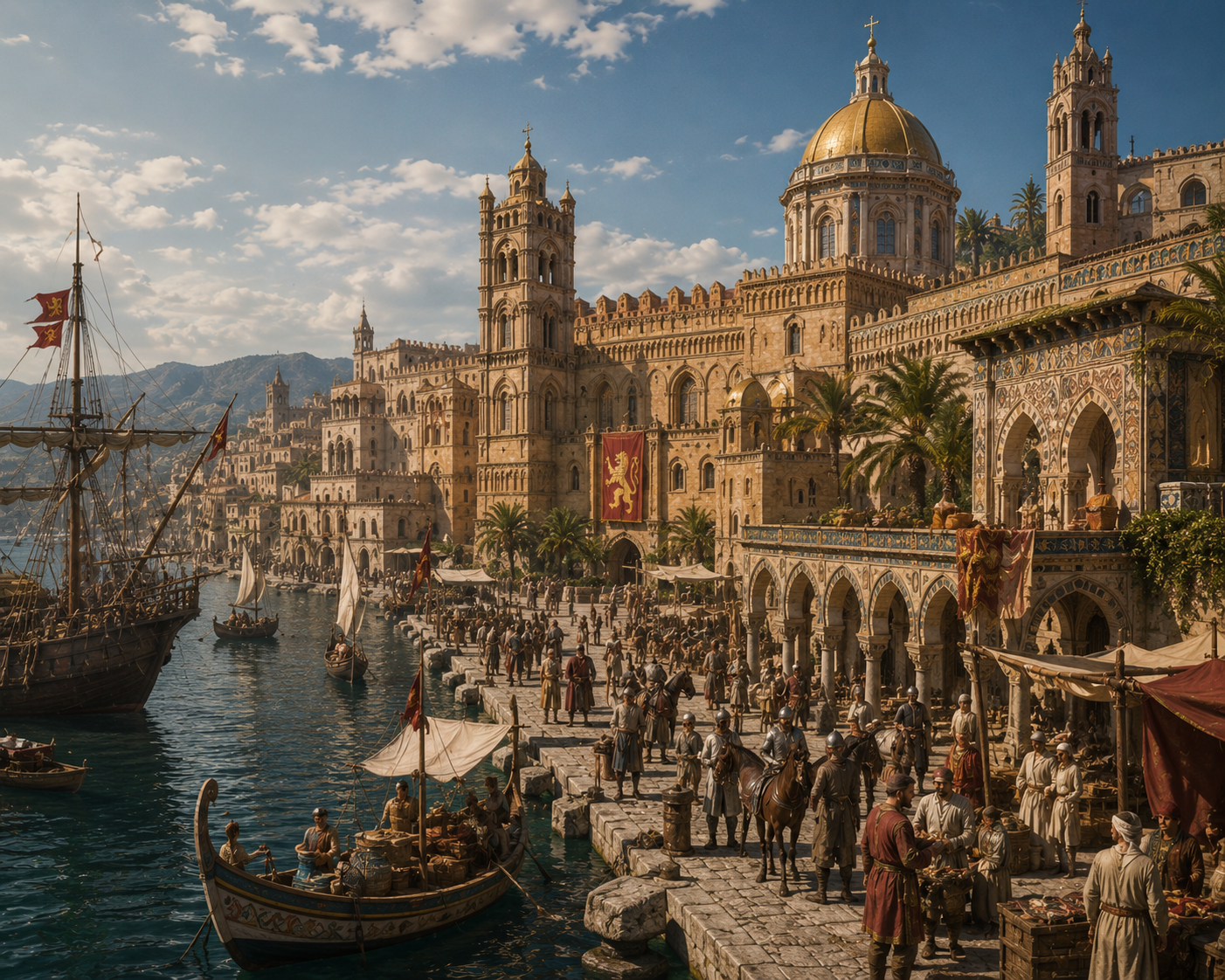
The Normans demonstrated an extraordinary ability to adapt to different societies... and transform that adaptability into power.
A Legacy That Redefined Europe
Normandy was not merely a territory. It became a turning point.
From there, the descendants of the Vikings:
- conquered England
- founded kingdoms across the Mediterranean
- integrated into the wider European political structure
- redefined medieval power
What began as raids... ended in dominion.
The Change That Transformed Everything
The Vikings did not disappear. They evolved.
They adapted to new lands, new religions, and new political systems... without losing their original drive.
Normandy represents that precise moment when the North ceased to be a frontier...and became a centre.
Curiosities
Before the Norman Conquest (1066), England spoke Anglo-Saxon (Old English).
After William's victory:
- the ruling elite spoke Norman French
- the Church used Latin
- the common people continued speaking Old English
From this remarkable blend emerged Middle English, the foundation of modern English.
From Invaders to Architects of Europe
The Vikings did not merely cross Europe. They reshaped it.
And in Normandy, they ceased to be visitors to history...and became its architects.
Because sometimes the greatest conquests are achieved not with swords...but with decisions.
Follow the Footprints
Visit Today...Normandy
Today it is possible to visit historical parks where the Viking and Norman past come together. Among them are:
- Cité Immersive Viking(Rouen, France), opened in 2024 on the banks of the Seine, offering an immersive experience into Viking history and the creation of the Duchy of Normandy.
- Parc Historique Ornavik(Hérouville-Saint-Clair, near Caen, France), inaugurated in 2011, recreates the transition from the Viking world to Norman society through experimental archaeology, featuring reconstructed dwellings, techniques, and ways of life inspired by historical sources and archaeological discoveries.
Visit Today…Sicily
Although the Normans are often associated with France and England, their legacy remains vividly present in Sicily.
In Palermo, visitors can still admire the Palace of the Normans, one of the oldest royal residences in Europe, alongside the magnificent Palatine Chapel, famous for combining dazzling Byzantine mosaics with Islamic and Norman artistic influences.
In 2015, UNESCO recognised a group of civil and religious monuments for their outstanding historical and architectural value, including:
- Palace of the Normans
- Zisa Palace
- Monreale Cathedral
- Palermo Cathedral
- Palatine Chapel
- San Giovanni degli Eremiti
His legacy continues in…
- Fête des Normands (Normandy)Created in 2013 and celebrated around the Feast of Saint Michael (29 September), the patron saint of the Normans, this regional festival takes place across various towns in Normandy. Inspired by the legacy of Rollo, it celebrates Norman historical identity through markets, local gastronomy, concerts, historical reenactments, and traditional Norman dances.
- Palio dei Normanni (Sicily) Held every year from 12 to 14 August in Piazza Armerina, this spectacular medieval historical reenactment commemorates the arrival of Roger I in Sicily and the Norman period on the island. With more than 600 participants, the city is transformed into a living window onto the 11th century, featuring parades, knights, and equestrian tournaments.