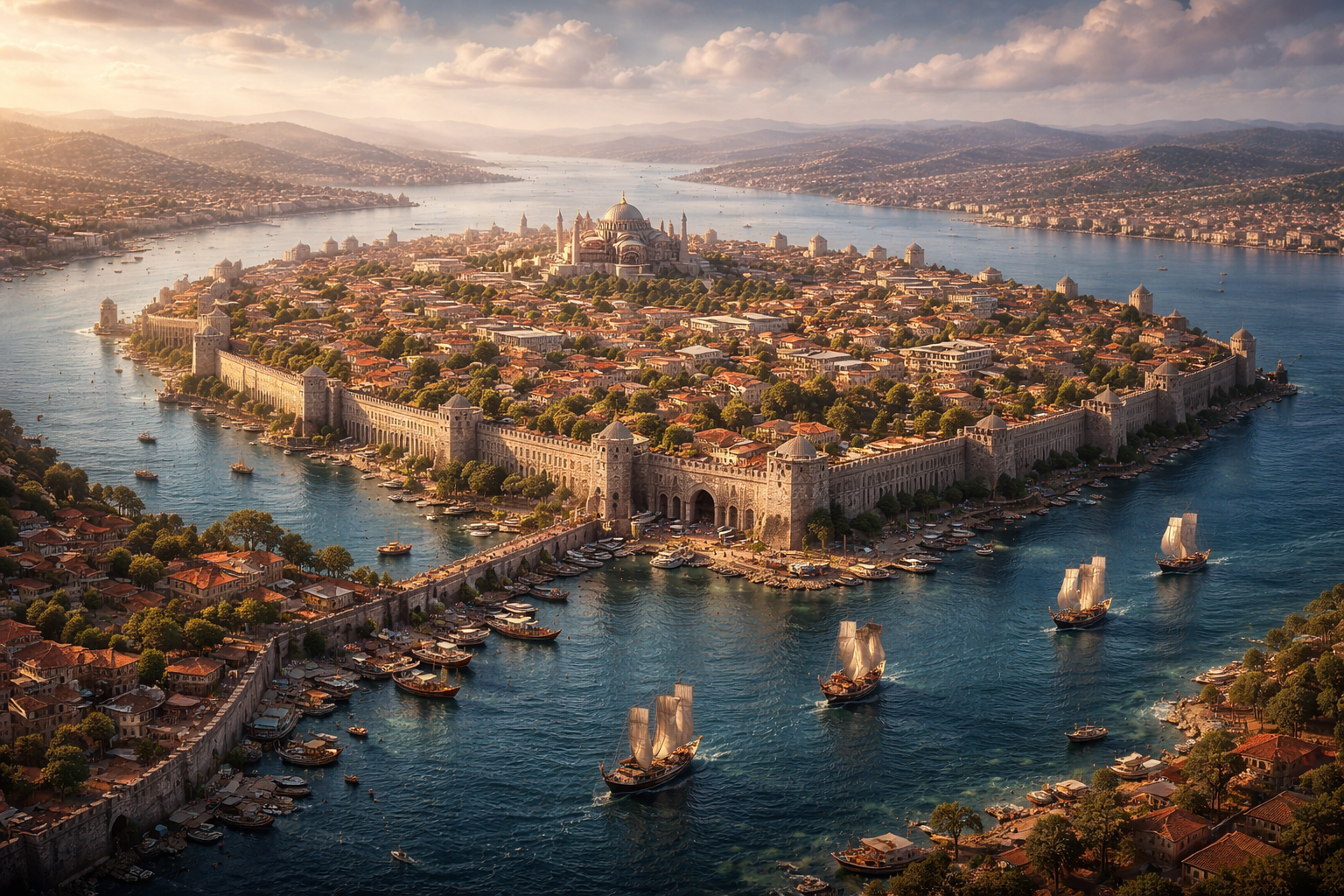
The foundation of Constantinople in 330 AD marked one of the most important turning points in the history of the Roman Empire. From that moment on, the center of power began to shift, initiating a new phase that would transform the ancient world.
Before becoming Constantinople, the city was known as Byzantium, an ancient Greek colony whose name derives from Byzas, its legendary founder.
In 330 AD, Emperor Constantine I made a decision that would change the course of history.
For centuries, Rome had been the center of imperial power. But it was no longer enough. The Roman Empire had expanded to such an extent that ruling it from a single city became increasingly difficult. Its borders were vast, threats constant, and political balance ever more unstable.
A new center was needed.
Byzantium and Its Greek Origins
Byzantium was a Greek colony founded in 657 BC by Byzas, a semi-legendary figure.
According to tradition, the city was established by settlers from Megara, a polis near Athens.
Byzas, the leader (oikistes) of the colonists, consulted the most important religious center of the Greek world before departing: the Oracle of Delphi, dedicated to the god Apollo.
The priestess (Pythia) gave him an enigmatic answer:
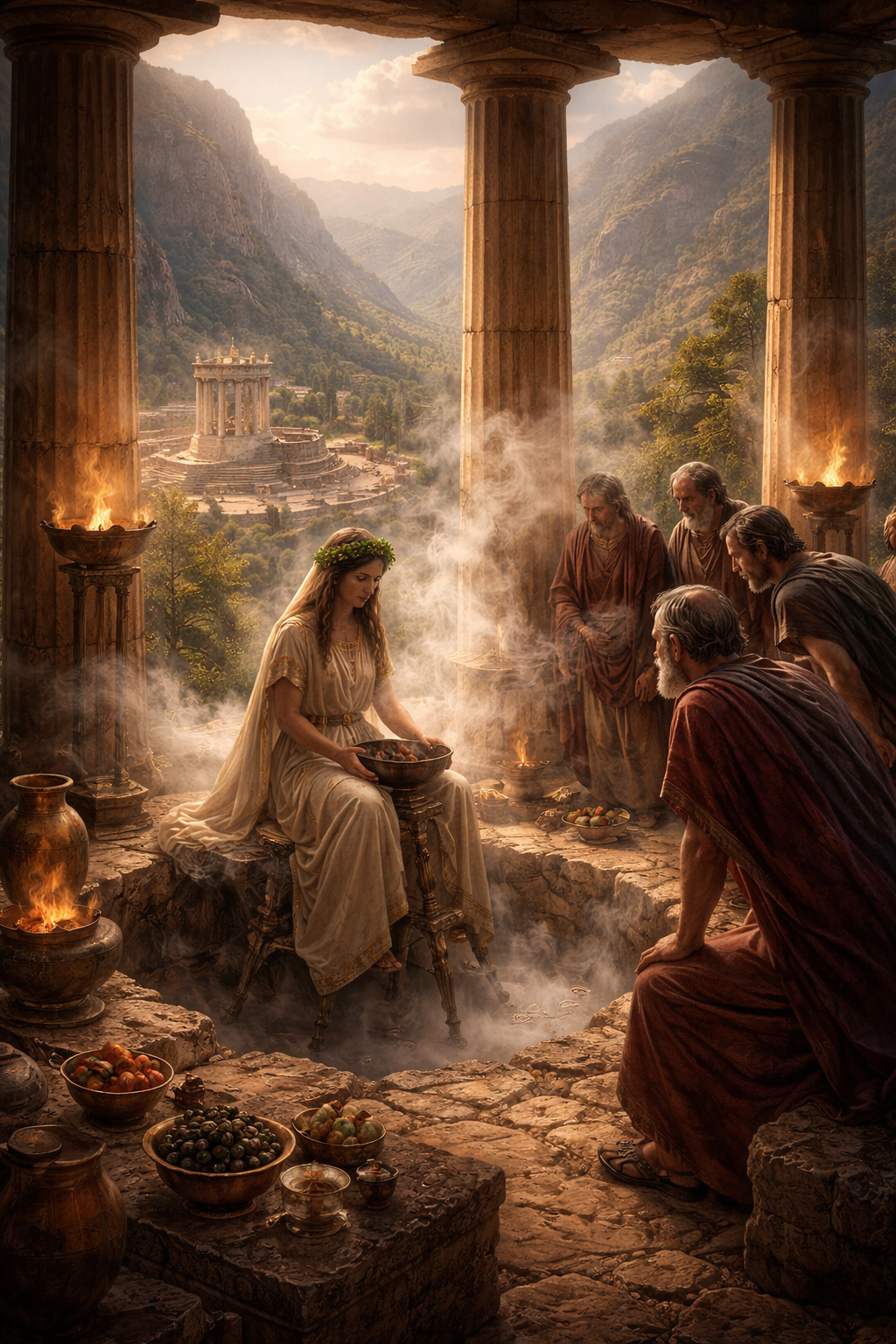
“You will found your city opposite the land of the blind.”
When Byzas and his people arrived at the Bosporus, they found the city of Chalcedon (founded in 685 BC) on the Asian shore.
To them, its inhabitants were “blind” for not having chosen the better location.
Byzas then founded his city on the European side, where it strategically offered:
- access to the Black Sea
- control of trade routes
- passage between Europe and Asia
The name “Byzantium” (Byzantion in Greek) comes from Byzas (Βύζας), meaning “the city of Byzas.”.
In 143 BC, Rome conquered Greece, and Byzantium became part of the Roman world.
An Empire in Need of Transformation
By the late 3rd century, the Roman Empire had grown too large to be effectively governed from a single center.
To address this, the Tetrarchywas established, a system of shared rule:
- two senior emperors (Augusti)
- two junior emperors (Caesares)
However, this system led to constant tensions and power struggles.
The Roman Civil War
One of these conflicts pitted two key figures against each other:
Constantine, emperor of the West, and Licinius, emperor of the East.
In 324 AD, they clashed at the Battle of Chrysopolis..
Constantine emerged victorious, becoming the sole ruler of the Roman Empire.
Byzantium: The Chosen City
After his victory, Constantine made a strategic decision: to establish a new capital in Byzantium.
Its location was exceptional:
- it controlled trade routes between East and West
- it dominated the passage between the Black Sea and the Mediterranean
- it offered natural defenses that were nearly impregnable
But this was not only a military choice. It was the perfect place to begin a new phase of the Empire.
The project began in 324 AD and was completed in 330 AD.
The Birth of a New Capital
On May 11, 330 AD, the city was officially inaugurated as the new capital of the Roman Empire.
It was named Constantinople— “the city of Constantine.”
Although Rome still existed, the center of power was shifting. A profound transformation had begun.
Constantinople was conceived as a new Rome:
- with forums and monuments
- with its own senate
- with a complete imperial structure
But also with a distinct identity.
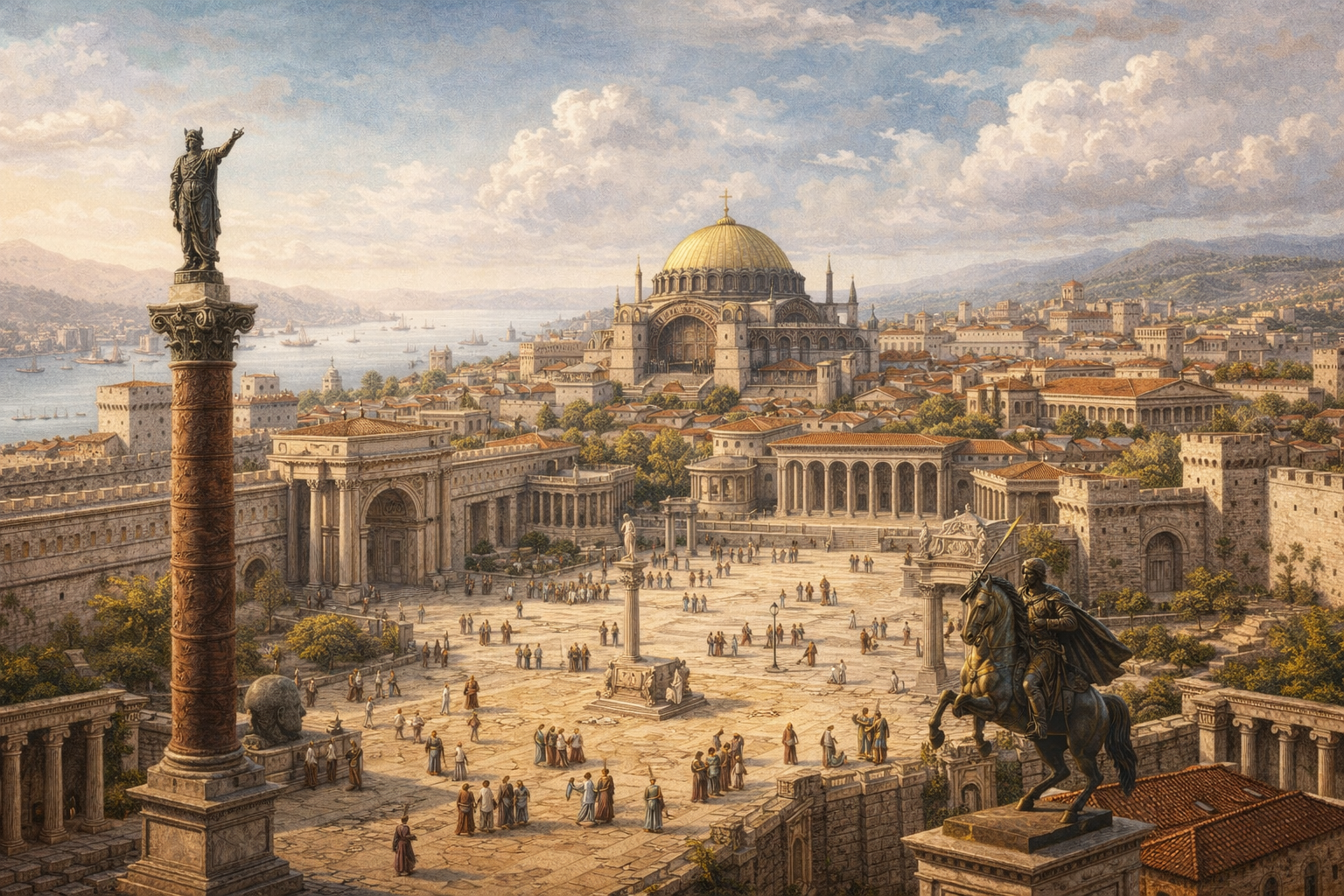
Constantine and a New Vision of the Empire
Constantine I, known as Constantine the Great, ruled as sole emperor from 306 to 337 AD.
His reign marked a turning point.
He not only reorganized political power but also introduced changes that would reshape Europe.
With the Edict of Milan (313 AD), Christianity ceased to be persecuted and began to integrate into the Empire.
Constantinople gradually became the center of this new reality — a place where imperial power and the new faith coexisted, where the Roman past and the Christian future intertwined.
A City Between Two Worlds
Constantinople was not just a capital.
It was a bridge — between East and West, between the ancient and the new, between Rome and what would come next.
Its geographical position made it a center of exchange:
- commercial
- cultural
- political
From its foundation in 330 AD until its fall in 1453, it would remain one of the most important cities in the world.
The heart of what we now call the Byzantine Empire.
The Byzantine Empire
Although we call it the Byzantine Empire today, its inhabitants never used that term. They considered themselves Romans.
The term “Byzantine Empire” was introduced in the 16th century by historians to distinguish this later phase of the Roman Empire.
The Fall of Constantinople
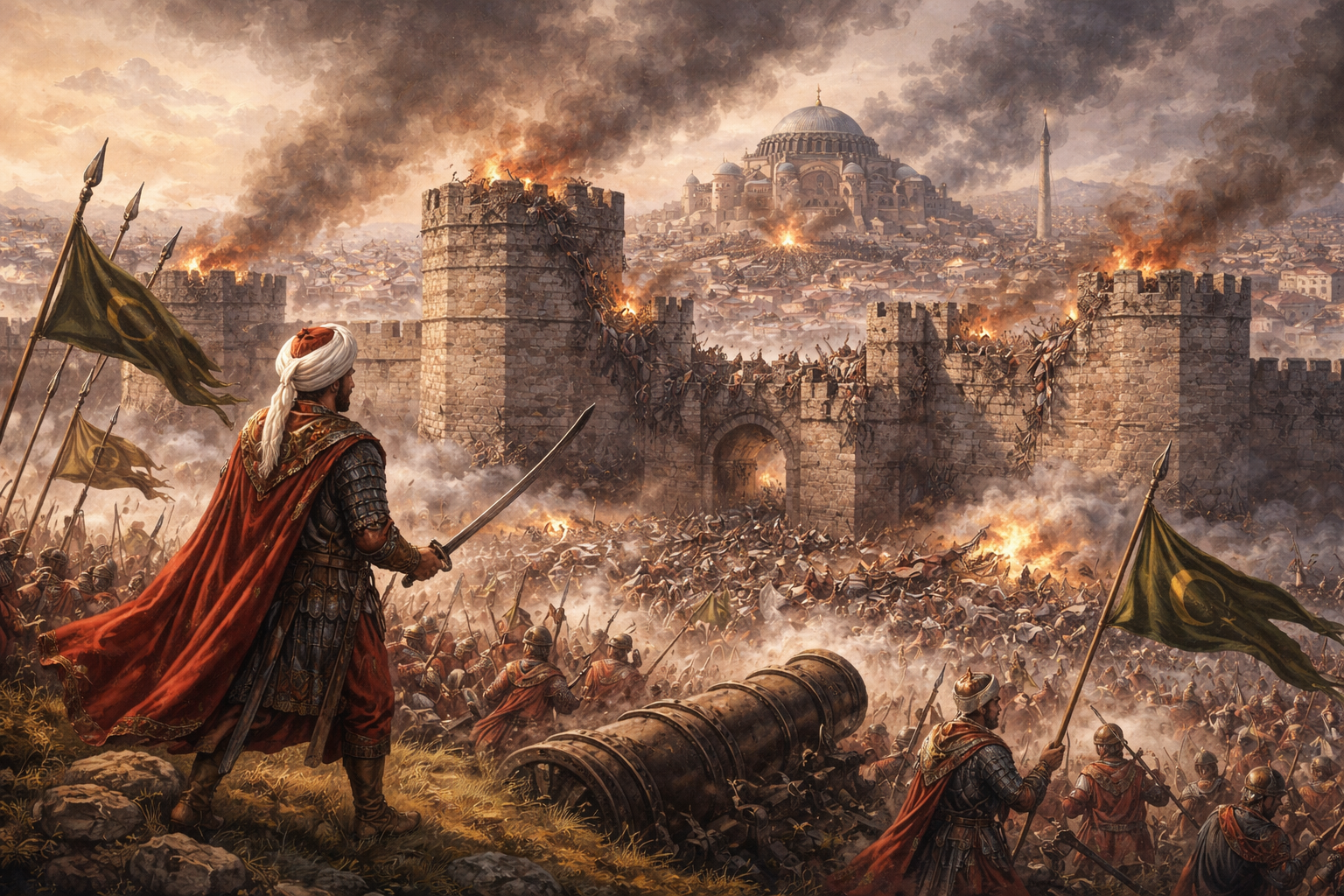
In 1453, the Ottoman sultan Mehmed II brought an end to the Eastern Roman Empire.
After a historic siege, his army managed to breach the Theodosian Walls.
Constantinople fell.
The city continued to exist, but under Ottoman rule.
It was not until 1930 that it officially adopted the name Istanbul..
The Legacy of Constantinople
The foundation of Constantinople did not mark the end of Rome.
It marked its transformation.
The Roman Empire continued to exist in the East for more than a thousand years.
The city withstood invasions, wars, and crises.
For centuries, it was one of the most important centers in the world.
Curiosities
The Pandidakterion: An Ancient University
In the 5th century, Emperor Theodosius II founded the Pandidakterion, one of the most important educational institutions of its time.
Its purpose was:
- to train officials
- to preserve classical culture
- to educate elites
Subjects studied included:
- rhetoric
- philosophy
- law
- grammar
- medicine
The Pandidakterion no longer exists today.
Over time, its structures disappeared, and it is believed to have been lost after the fall of Constantinople in 1453, during Ottoman rule.
A Nearly Impregnable City
The Theodosian Walls, built in the 5th century, protected the city with an extraordinary defensive system:
- triple line of walls
- moats
- towers
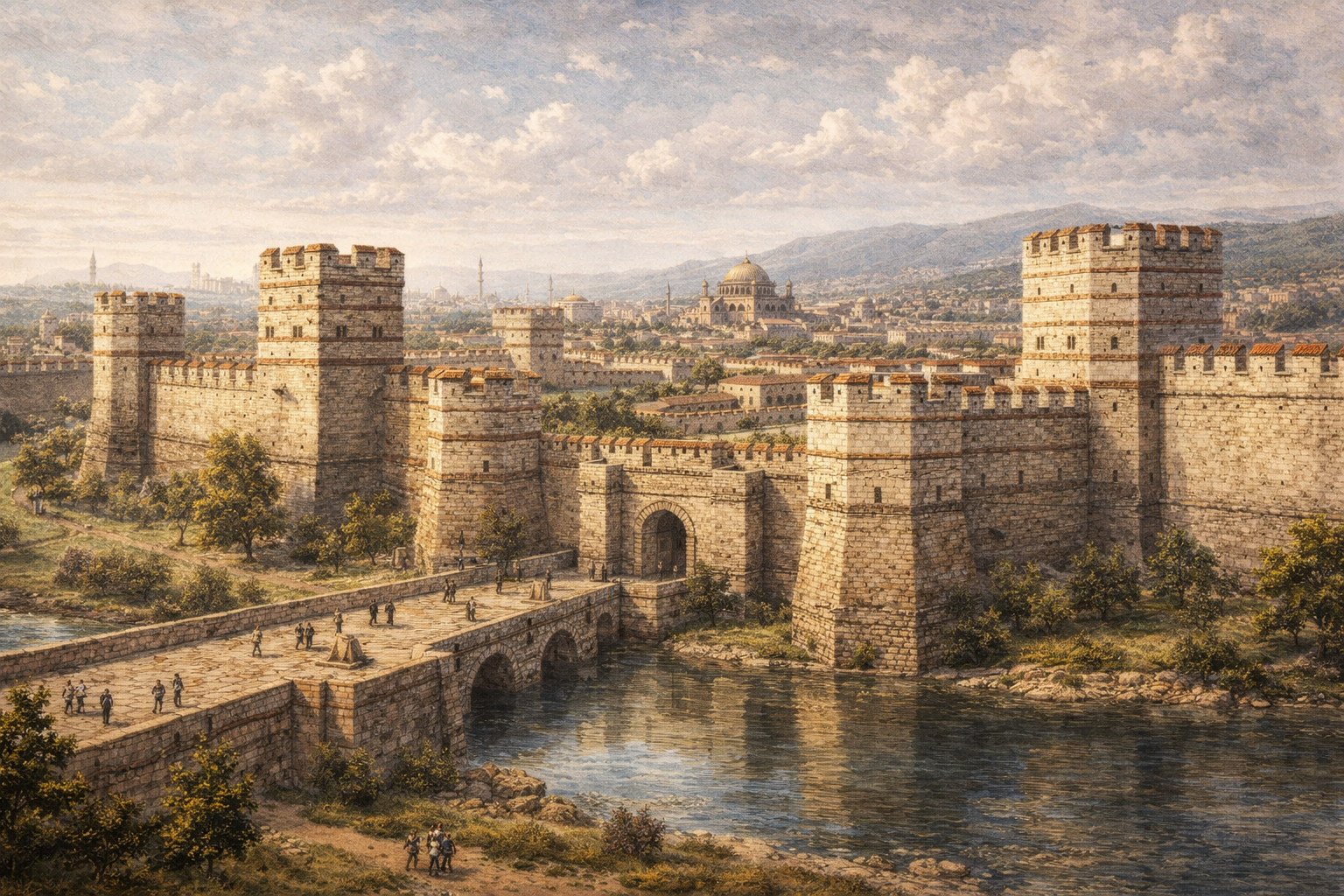
They endured for over a thousand years.
They were only breached in 1453, when the Ottomans used heavy artillery.