To understand the origin of leprechauns, it is necessary to go beyond the modern festive image.
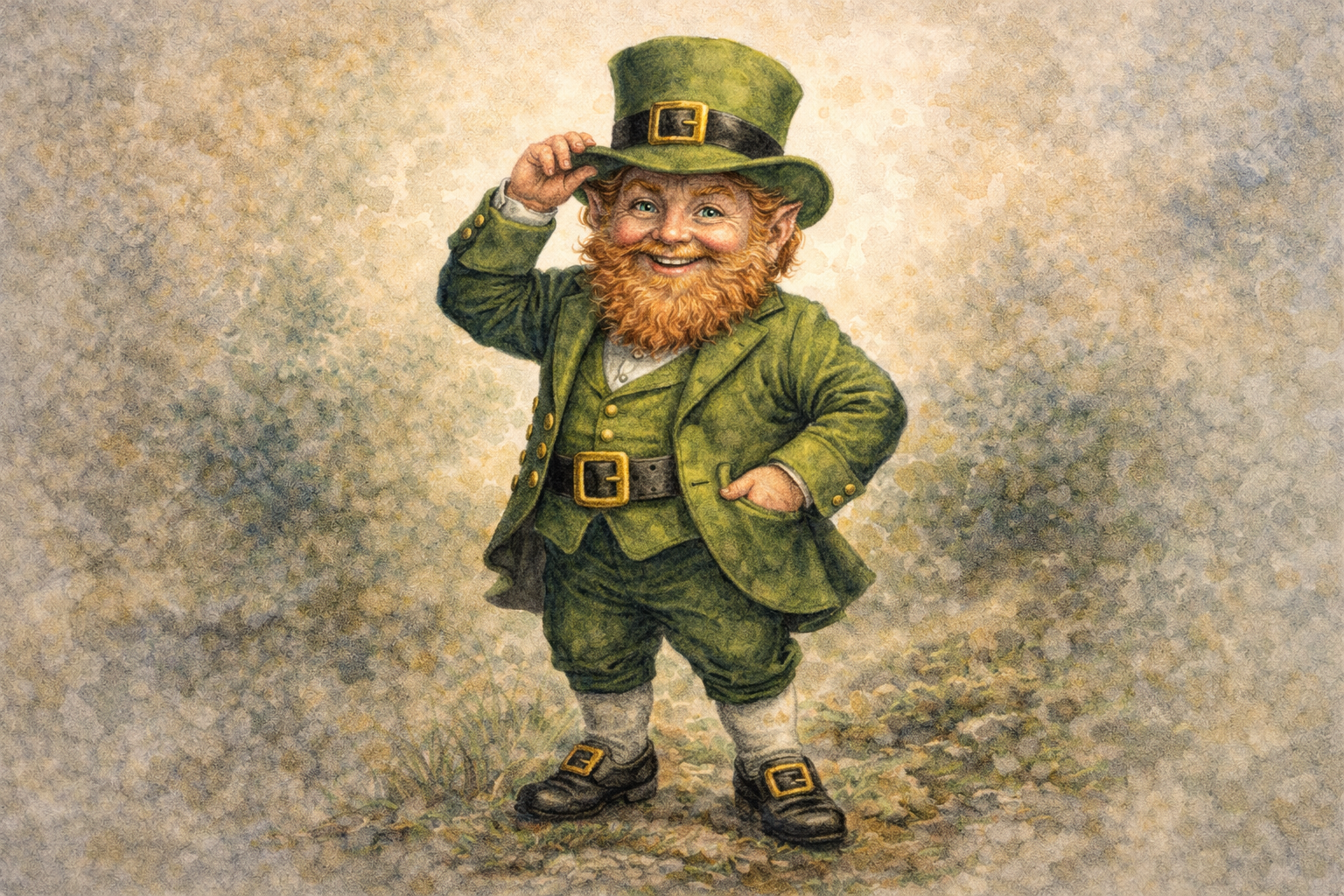
When one thinks of Ireland, sooner or later its figure appears: small, solitary, dressed in green, wearing a hat, with a reddish beard and a cunning smile.
Today, leprechauns are portrayed as cheerful beings, associated with luck and Saint Patrick’s Day. But the true origin of leprechauns — the Irish fairies and their hidden gold at the end of the rainbow — is far older, darker, and more complex.
They were born from Celtic folklore, in a world where the landscape was filled with presences to be respected… or feared.
What Is a Leprechaun?
The leprechaun is a creature of Irish folklore, belonging to the fairy world, occupying a very particular place within that universe.
- They do not live in communities
- They do not protect forests or rivers
- They do not grant favors out of kindness
The leprechaun is solitary, cunning, and deeply individualistic.
Traditionally, they are described as:
- Small in size
- Aged in appearance
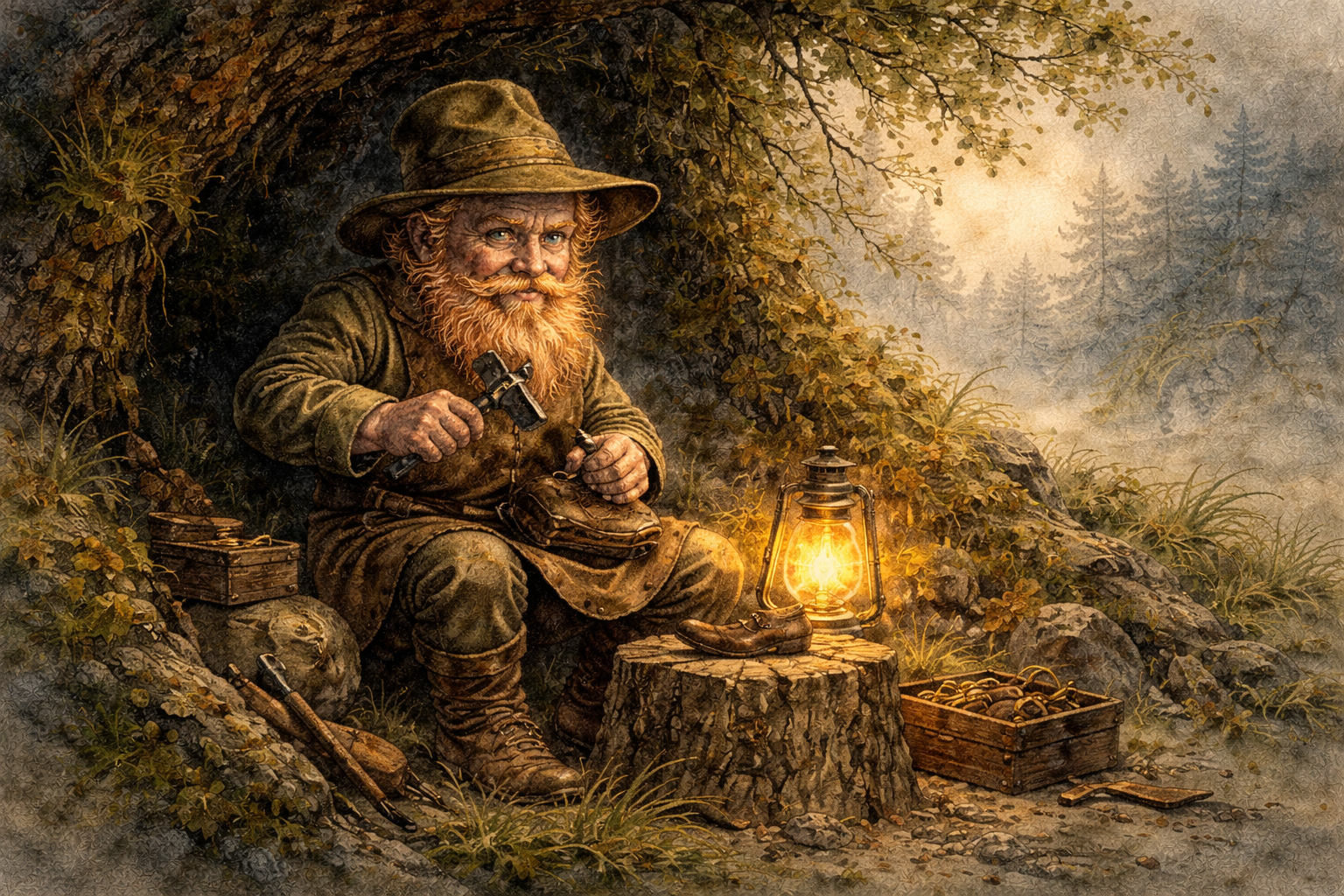
- A shoemaker by profession
- Guardian of a hidden treasure
And above all, as a being who never tells the whole truth..
Leprechauns and the Fairy World
Leprechauns belong to Celtic mythologyand form part of the Aos Sí themselves, the “invisible people” of the hills: supernatural beings descended from ancient deities and spirits of the land.
They are liminal creatures, inhabitants of the threshold between worlds. Therefore:
- They may help or harm
- They may reward or punish
- They must never be underestimated
In traditional folklore, treating a leprechaun with arrogance or mockery was an invitation to disaster.
Shoemakers of the Otherworld
In Celtic folklore, artisan crafts carried a strong magical dimension. Creating something by hand — especially with leather, metal, or wood — implied knowledge, patience, and symbolic power.
According to tradition, the sound of the shoemaker’s hammer or awl is one of the ways to locate a leprechaun. If you hear a rhythmic tap… tap… tap… in the middle of the countryside, you may not be alone.
But finding one does not mean defeating one.
The Origin of the Name
The word leprechaun first appears in medieval Irish texts, though its etymology remains uncertain.
The most accepted theories link it to Old Irish terms such as:
- lúchorpán (“small-bodied”)
- leith bhrogan (“the shoemaker”)
Both ideas survive within the myth: the leprechaun as a tiny being and as a shoemaker, eternally working on a single shoe, never completing the pair.
From Paganism to Written Folklore
For centuries, leprechauns existed within Ireland’s oral tradition: stories, songs, and rural legends passed down through generations.
With the arrival of Christianity (5th–7th centuries), Irish monks did not erase Celtic beliefs but reinterpreted them.
The earliest written records preserving these legends date from the 8th and 9th centuries, largely originating from monastic manuscripts.
Among the most important:
- Lebor na hUidre Book of the Dun Cow)
- Book of Leinster
- Book of Ballymote
It was during this process that these beings transitioned from strictly pagan mythology into written Irish folklore.
Early Narratives and the Shaping of the Myth
The term leprechaun becomes clearer in the later Middle Ages (12th–13th centuries), when their defining traits begin to solidify.
One of the oldest related tales is Echtra Fergus mac Léti (approx. 8th–9th centuries), featuring a small creature who:
- Sleeps near water
- Attempts to drag away a king
- Belongs to the fairy world
Much later, during the 18th and 19th centuries, Irish antiquarians and Romantic writers fixed the “modern” image of the leprechaun.
One key figure was Thomas Crofton Croker, whose Fairy Legends and Traditions of the South of Ireland 1825) popularized the character and standardized many of its features.
From Folklore to Popular Symbol
With the Great Famine (1845–1849), millions of Irish emigrated to the United States. Songs, stories, and cultural symbols traveled with them.
In America, the leprechaun gradually became associated with Saint Patrick’s Day, merging with the color green and the shamrock as a recognizable symbol of Irish identity.
Over time, the leprechaun lost much of its original ambiguity and transformed into:
- A friendly figure
- A festive icon
- A caricature linked to luck
It was there that the leprechaun:
- Became definitively green.
- Became associated with the shamrock
- Entered parades and celebrations
Though originally no direct connection existed
Green, Luck, and Simplification
In ancient tradition, leprechauns did not necessarily wear green.
They were often described wearing:
- Red garments
- Worn jackets
- Leather aprons
- Simple hats or caps
The associations with green, luck, and the shamrock are largely modern constructions.
Gold and Deception
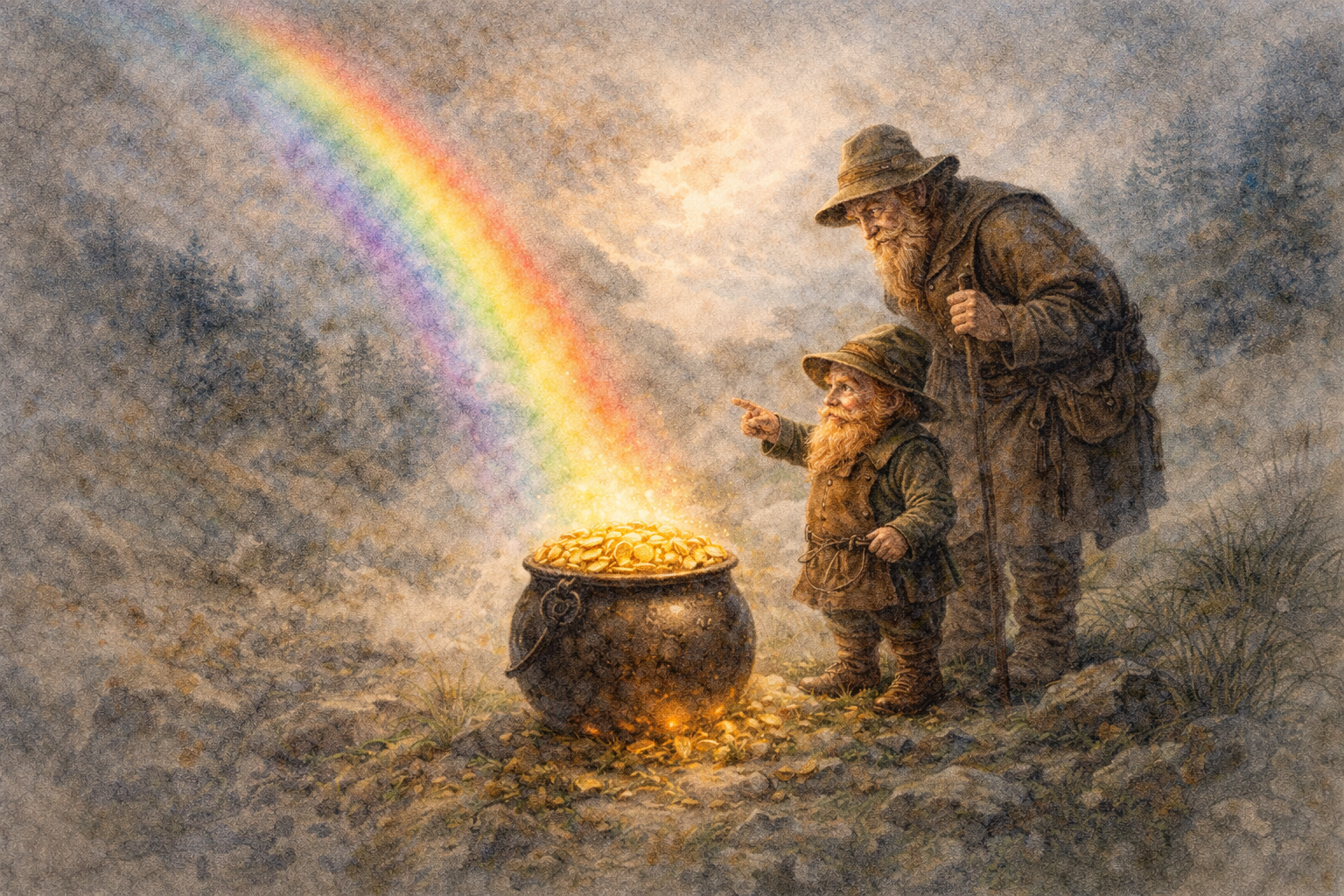
The most famous legend claims that each leprechaun guards a pot of gold hidden at the end of the rainbow.
According to the tales, if a human captures one, the leprechaun must grant a wish or reveal the location of its treasure.
But a single glance away is enough for it to vanish… or for the treasure itself to transform into leaves, dust, or ash.
The Leprechaun and the Vanishing Gold
(Traditional Irish Folklore Version)
In older tales, the encounter begins not with a hunt, but by chance.
A farmer, traveler, or ambitious youth walks across the countryside, works near a hedge, or crosses a hill. Then they hear it: Tap… tap… tap…
The shoemaker’s hammer. They approach carefully and see it: a small, solitary being absorbed in its work. The human seizes the leprechaun.It smiles and speaks calmly:
“Release me, and I will give you gold.”
But the human demands more. They wish to possess the entire treasure. The leprechaun agrees, imposing only one condition:
“Do not take your eyes off me. Not even for an instant.”
It leads them to the end of the rainbow, where a cauldron overflowing with shining gold coins appears.
A leaf drifts by. A bird crosses the sky. Sunlight dazzles. The human blinks.
Only a second. When they look again, the leprechaun has vanished.
The cauldron remains… but upon touching the gold, the coins turn into dry leaves and ash.
Moral
The leprechaun keeps its word but never allows the treasure to be possessed. The gold exists only as long as the illusion endures.
This tale speaks not of wealth, but of limits.
In Celtic folklore, the magical may reveal itself — but never be owned.
The sacred cannot be stolen.
Beyond the Costume
The leprechaun was not originally a national symbol nor a figure linked to Saint Patrick. That union was born within the Irish diaspora in America, where simple and visually recognizable symbols were sought.
Later, Ireland itself embraced the leprechaun within modern celebrations.
From folkloric spirit, it became a literary character, and eventually, a global icon.
Beneath the green hat, an ancient shadow still lingers:
- A spirit bound to the land
- A guardian of the unseen
- A figure teaching, through deception, the danger of trusting appearances
Behind the festive disguise, the leprechaun remains an echo of the ancient Celtic world.