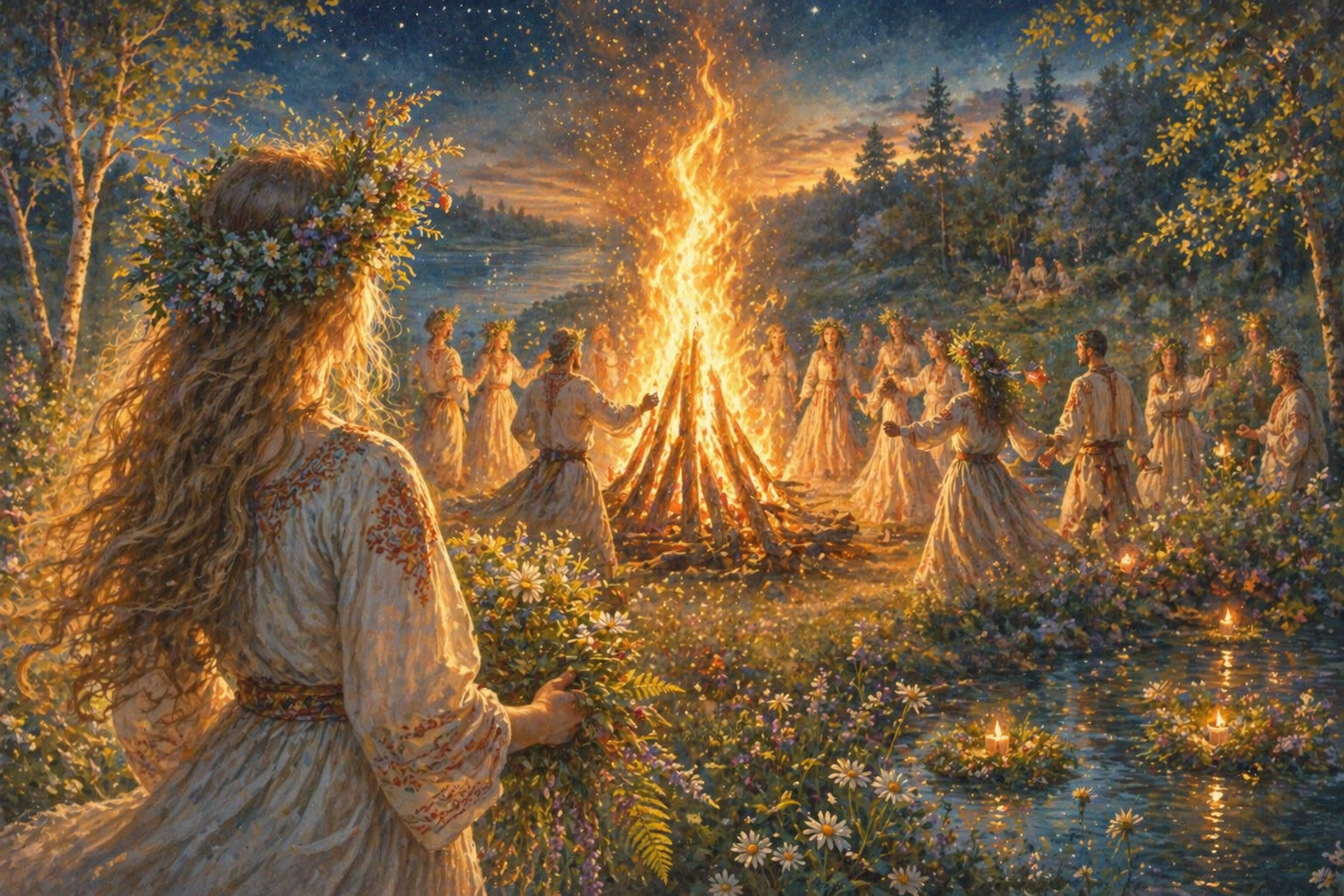
Ivan Kupala is an ancient Slavic festival linked to the summer solstice, celebrated on June 24 and associated with rituals of fire, water, and nature.
On the night of June 24, when summer reaches its peak and the sun seems to pause at the highest point in the sky, Eastern Europe celebrates one of its oldest and most enigmatic festivities: Ivan Kupala.
A night where fire purifies, water reveals… and nature, they say, awakens.
Origins of Ivan Kupala: Between Paganism and Christianity
Ivan Kupala has its roots in ancient Slavic summer solstice celebrations, long before the arrival of Christianity.
Originally, this night was linked to the sun, fertility, and the cycles of nature.
With the Christianization of Slavic lands between the 9th and 12th centuries, the festival was reinterpreted within the Christian calendar and became associated with St. John the Baptist (Ivan, in Slavic languages).
Its name reflects this fusion:
- Ivan → John (St. John the Baptist)
- Kupala → likely derived from the Slavic verb kupat (to bathe), or from a ritual figure associated with summer
Although it adopted a new form, its essence remains.
Beneath the Christian layer… the pagan soul still lives on.
Some interpretations suggest a possible connection with Dazhbog, the Slavic god of the sun and abundance, although no direct link has been confirmed.
Fire Rituals in Ivan Kupala
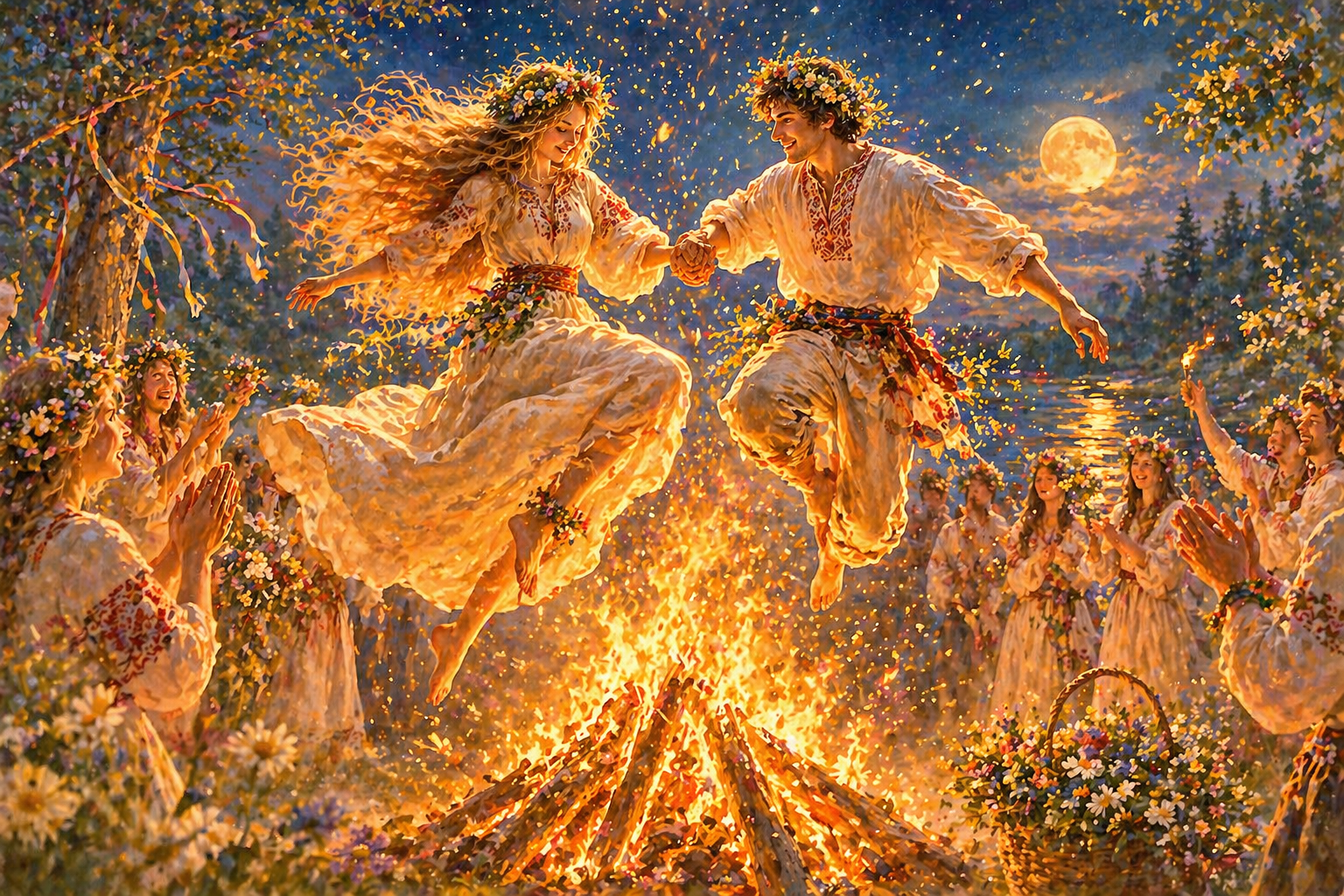
One of the most well-known rituals is jumping over bonfires.
On this night, fire is considered purifying:
- it cleanses the body and spirit
- protects against illness
- and strengthens bonds
According to tradition, if two people jump together without letting go… their union will endure.
Water and Love Rituals
If fire purifies… water reveals.
Young women weave flower wreaths and set them afloat on rivers or lakes, often accompanied by a candle.
The fate of the wreath is interpreted as an omen:
- if it floats gently → love is near
- if it sinks → change or difficulty
- if someone retrieves it → a potential suitor
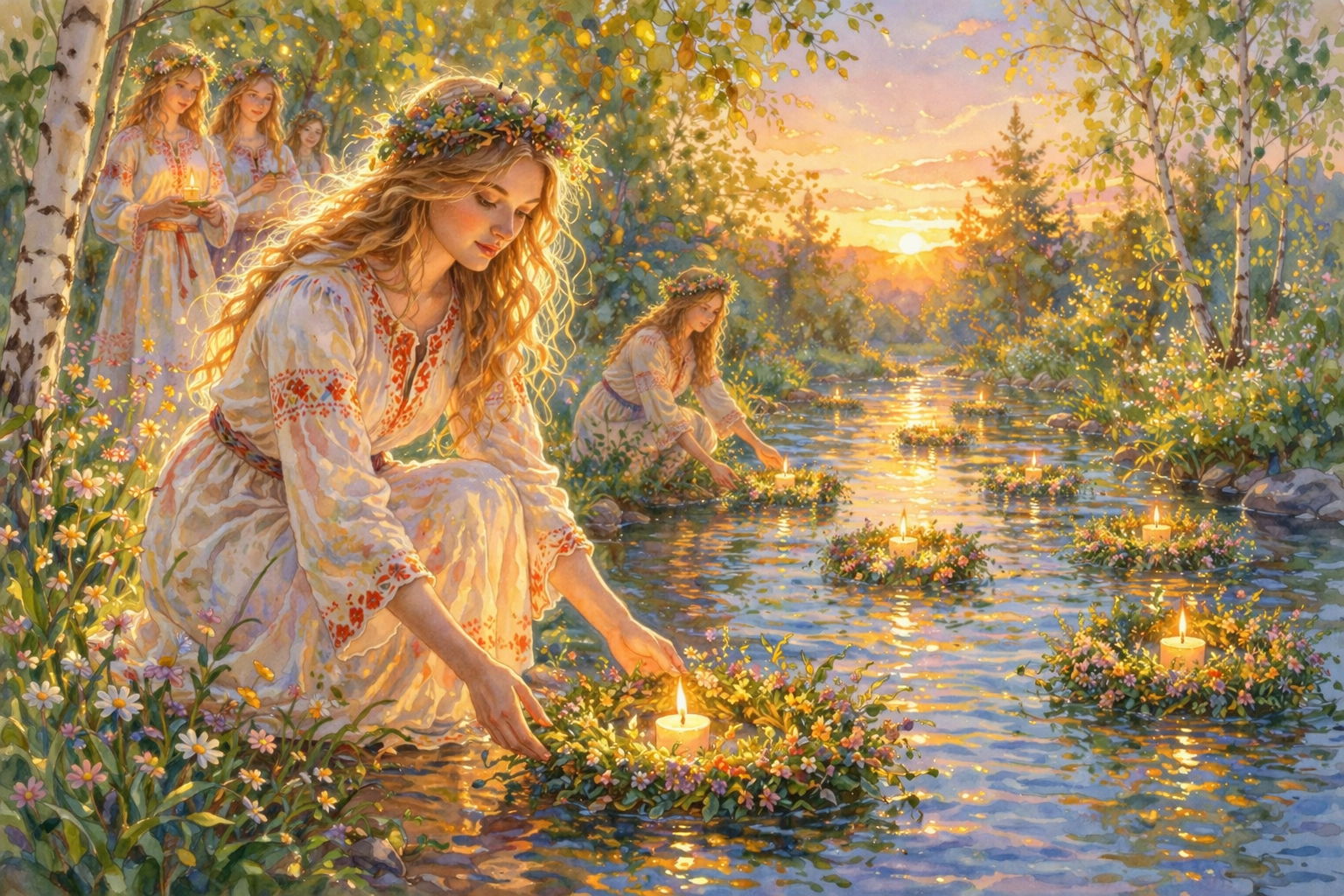
A delicate, almost silent ritual… where the water seems to whisper the future.
Beliefs and Spirits on Kupala Night
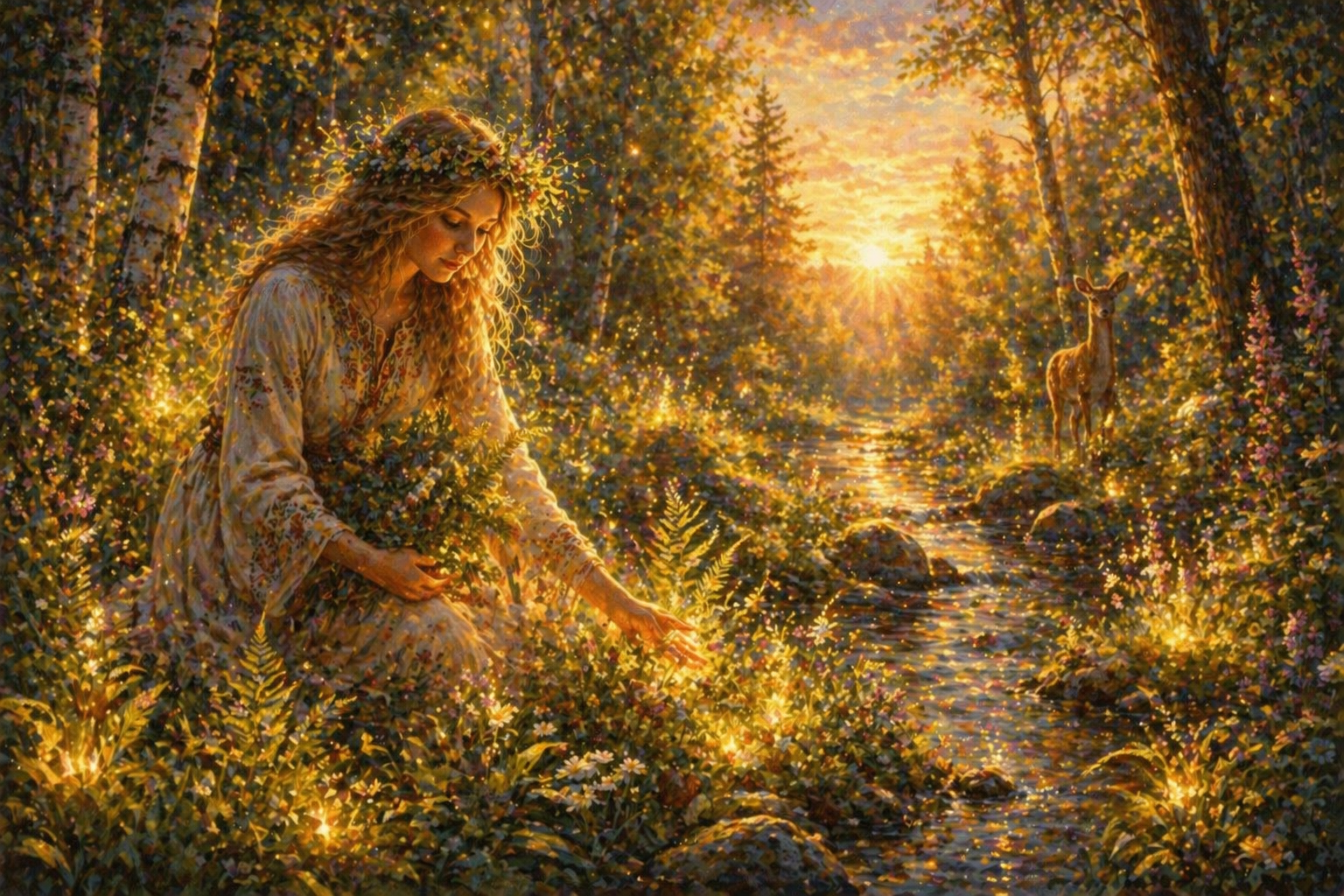
According to tradition, this is the night when nature reaches its full power.
It is said that:
- plants acquire special healing properties
- forest spirits become present
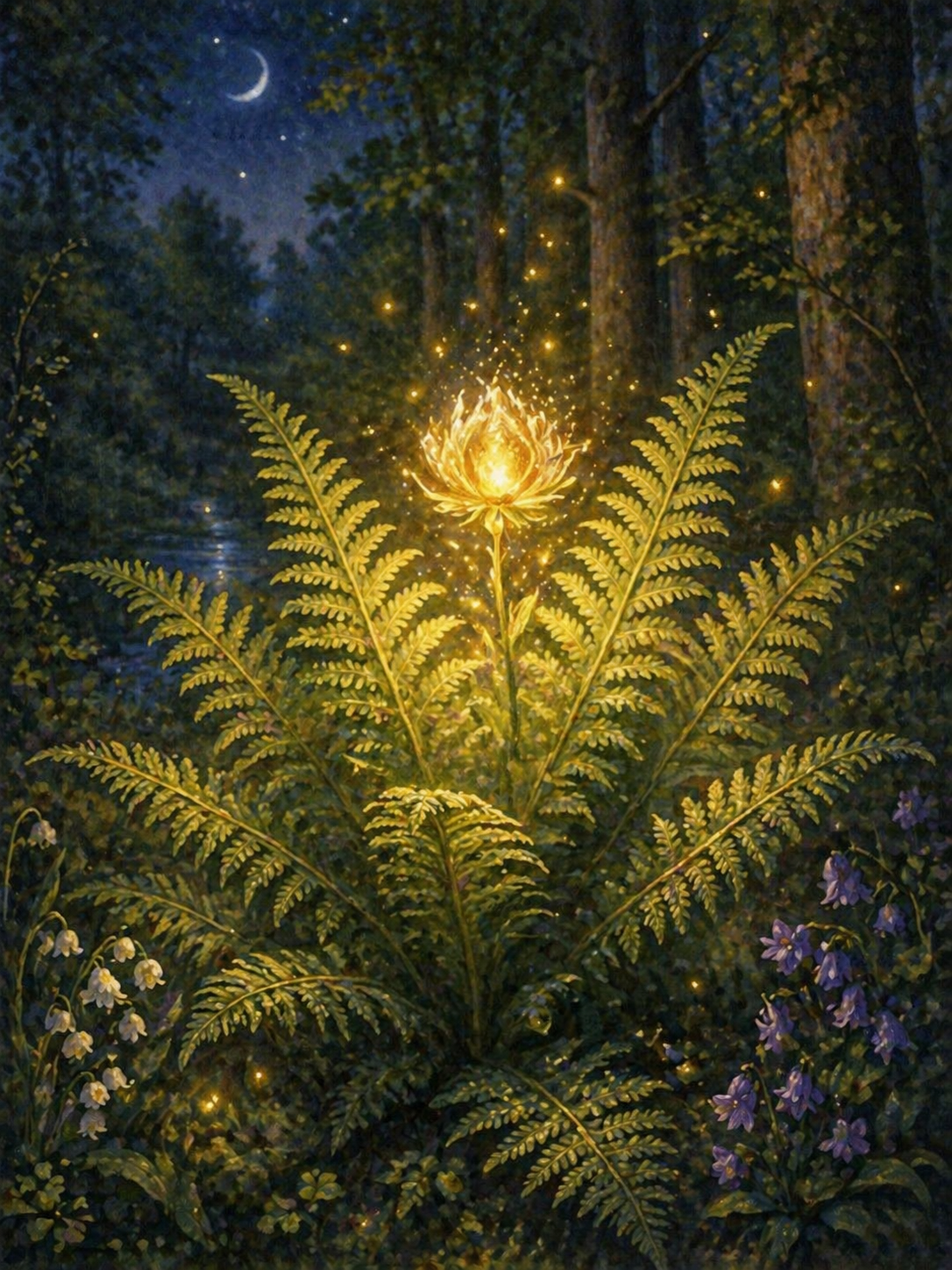
- and the legendary fern flower blooms
An impossible flower, as ferns do not bloom.
But whoever finds it — they say — will gain wealth, wisdom… or even the ability to understand the language of nature.
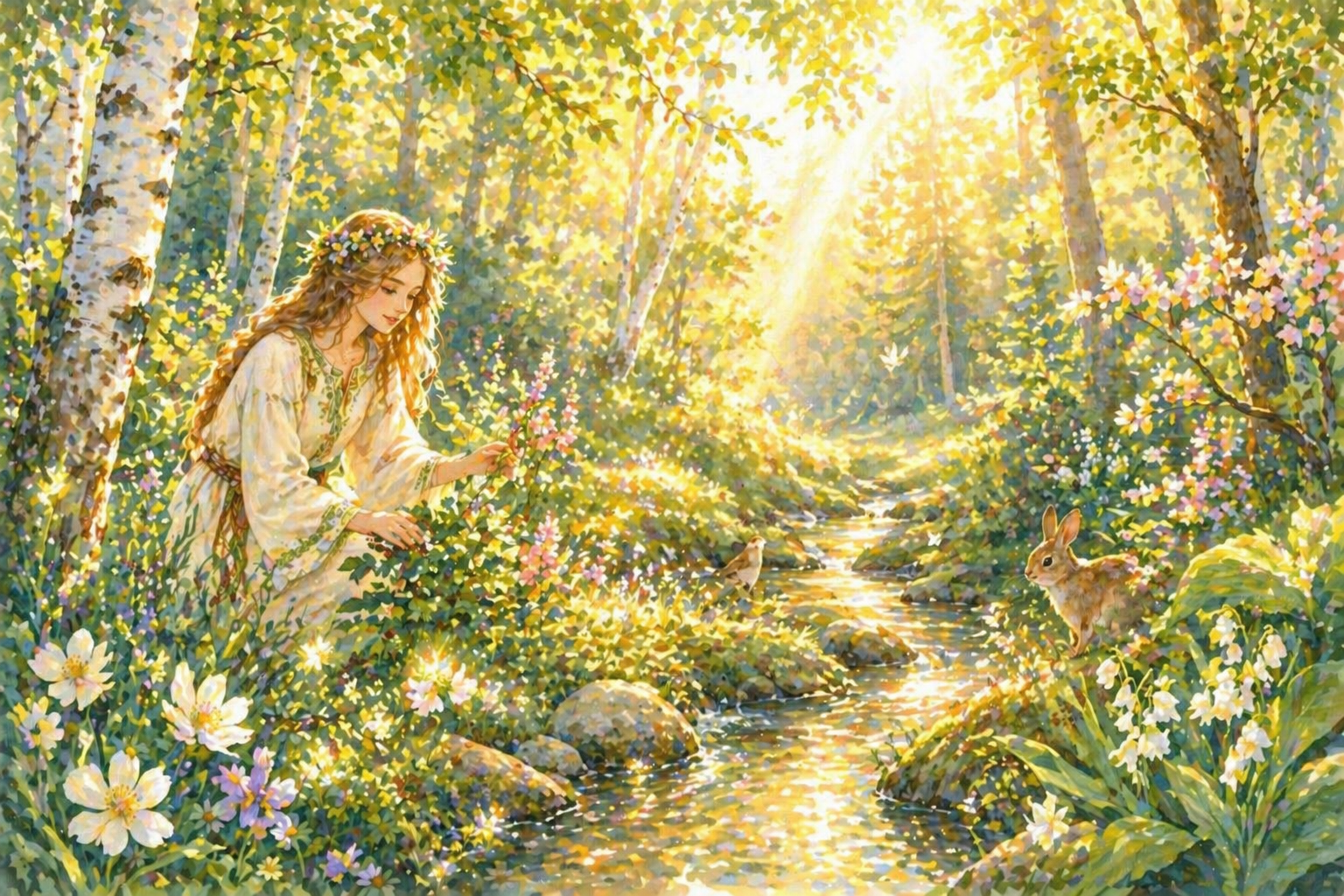
On this liminal night, the visible and invisible worlds draw closer.
Among the most mentioned beings:
- Leshy → forest spirit, shifting and protective… or dangerous
- Rusalki → female water spirits linked to rivers and lakes
- nature spirits
- wandering souls
- unseen forces
A Liminal Night
Ivan Kupala is not just a celebration. It is a threshold.
A moment suspended between seasons, between light and darkness, between the visible and the invisible.
As in many ancient traditions, the solstice is not only an astronomical event… but a point of transformation.
Ivan Kupala in Other Cultures (St. John’s Eve, Midsummer)
Although Ivan Kupala belongs to the Slavic world, its essence is echoed in different European traditions:
- the St. John’s Eve in Spain
- the Midsummer in Nordic countries
- ancient Celtic celebrations linked to fertility
Even festivals like Walpurgis Night (in spring) mark the beginning of this natural cycle that culminates at the solstice.
Different names. Different forms. But the same idea: celebrating light, nature, and mystery.
A Night of Fire and Water
On Ivan Kupala night, fire burns, water flows… and nature seems to breathe differently.
Perhaps we will never find the fern flower.
But there are nights when simply looking around is enough… to feel that something ancient, almost forgotten, is still alive.
Thus, under a Christian name, the ancient celebration of fire and water endured… adapted, but never forgotten.
Follow the Footprints
His legacy continues in…
Although traditionally associated with June 24, in many Slavic countries it is celebrated on July 6 or 7 due to the difference between the Julian and Gregorian calendars.
Today, Ivan Kupala is still celebrated in countries such as:
- Ukraine
- Poland
- Belarus
- Russia
Keeping alive a tradition that connects past and present.