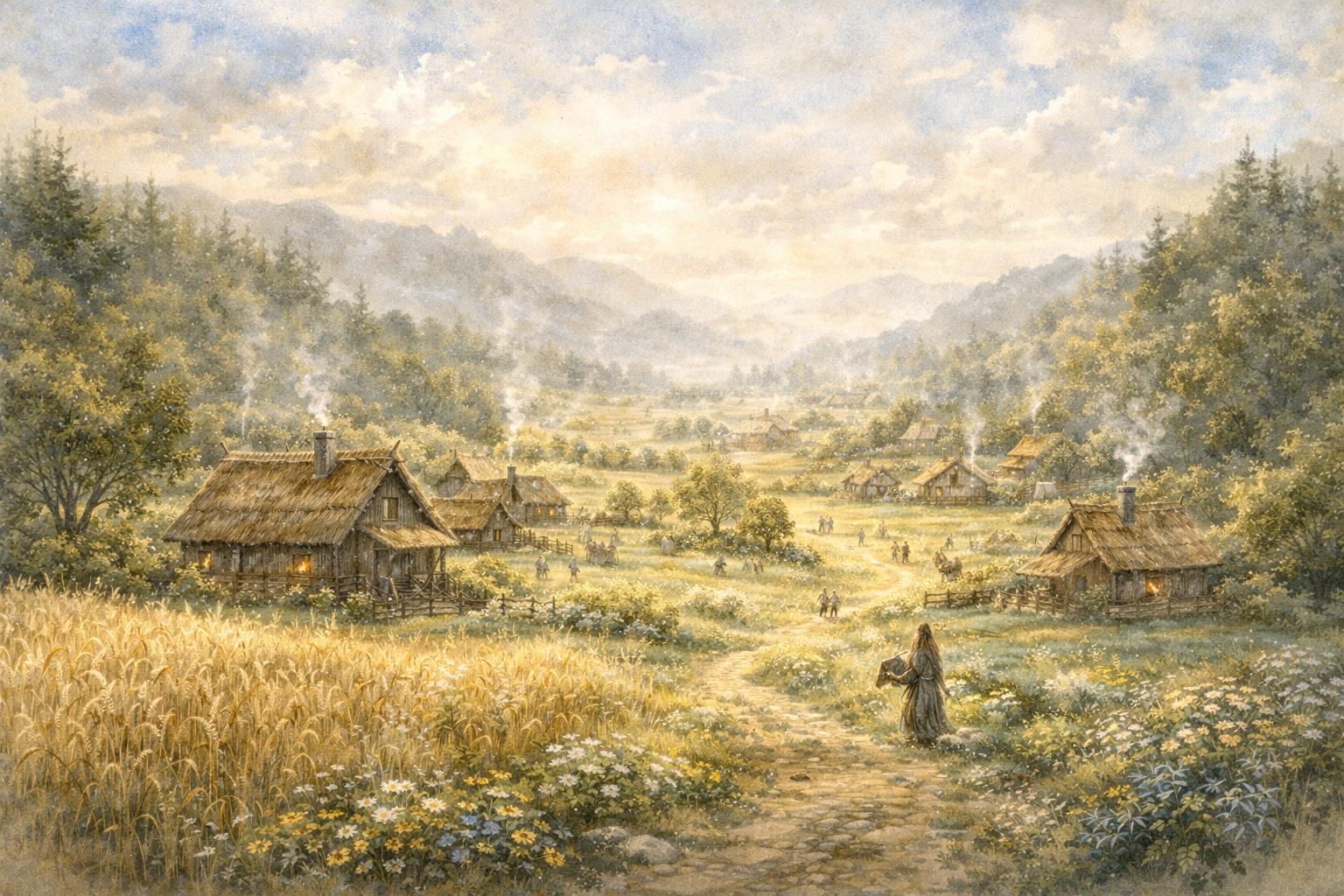
Midgard is the world of human beings, located at the center of the Norse cosmos. Unlike the other realms, Midgard is neither divine nor primordial, but a created, bounded, and vulnerable space.
Its name means “middle enclosure” or “middle earth,” and it reflects not only its position in cosmology but also its condition: Midgard exists between higher forces—gods, giants, and primordial beings—and lives constantly under the tension of fate.
The Nature and Condition of Midgard
Midgard is a world that is:
- Physical and tangible, subject to the laws of nature
- Changing and perishable, marked by the passage of time
- Exposed to pain and death, without promise of permanence
- Protected, yet never truly safe, surrounded by danger
Its ultimate horizon is the ocean that encircles it, where Jörmungandr, the World Serpent, dwells. His body coils around Midgard like a living boundary—at once limit, threat, and reminder that chaos is always near.
Creation and Boundaries
Midgard was created by the gods from the body of the primordial giant Ymir::
- His flesh became the land
- His blood, the seas
- His bones, the mountains
- His skull, the sky
To protect the new human world, the gods built a wall using Ymir’s eyebrows, separating Midgard from the wild outer lands inhabited by giants.
In Norse thought, human civilization is neither natural nor eternal: it is a divine construction, barely sustained against chaos.
Relationship with other worlds
Midgard is connected to Asgard by Bifröst, the rainbow bridge, though access is almost exclusively reserved for the gods.
It is the most exposed realm:
- To divine schemes
- To the constant threat of giants
- To the breaking of balance during Ragnarök
For this reason, Midgard becomes the main stage of human experience: the place where life unfolds beneath the shadow of the inevitable.
Inhabitants
Midgard is inhabited by:
- Human beings
- Animals and mortal creatures
- Spirits linked to nature and territory
At the center of the cosmos, humans occupy a fragile yet essential position. In Midgard, unlike in divine realms, fate is not observed from afar— it is endured, chosen, and lived.
Midgard and the Heroes – Where Legend Becomes Flesh
Although the gods are central, Midgard is also the realm of mortal heroes. Here arise the sagas of warriors, kings, and bloodlines whose stories even influence the fate of the gods.
In this world, glory does not guarantee salvation, and human life becomes an act of resistance: living with honor while knowing the end will come.
The Gods in Midgard
Although Midgard is the human world, the gods intervene in it frequently. Their presence is a blend of protection, trial, and destiny.
Thor – Protector of Midgard
Thor is humanity’s great defender. His battles against giants are not merely personal conflicts—they represent the struggle of order against destruction.
His journeys to Midgard are often tied to:
- Protecting villages and people from giant attacks
- Defending the world’s boundaries
- Preserving balance against chaos
Among his most famous adventures connected to Midgard is his confrontation with Jörmungandr, his cosmic enemy.
Odin – The God Who Walks Among Humans
Odin maintains a special relationship with Midgard:
- He sends his ravens Huggin and Munnin daily to fly over the human world and bring back news.
- From his throne, he observes the flow of destiny and the fragility of mortals.
At times, Odin wanders Midgard in human disguise: an old man with cloak and grey hat, staff, white beard, and one eye hidden beneath a patch.
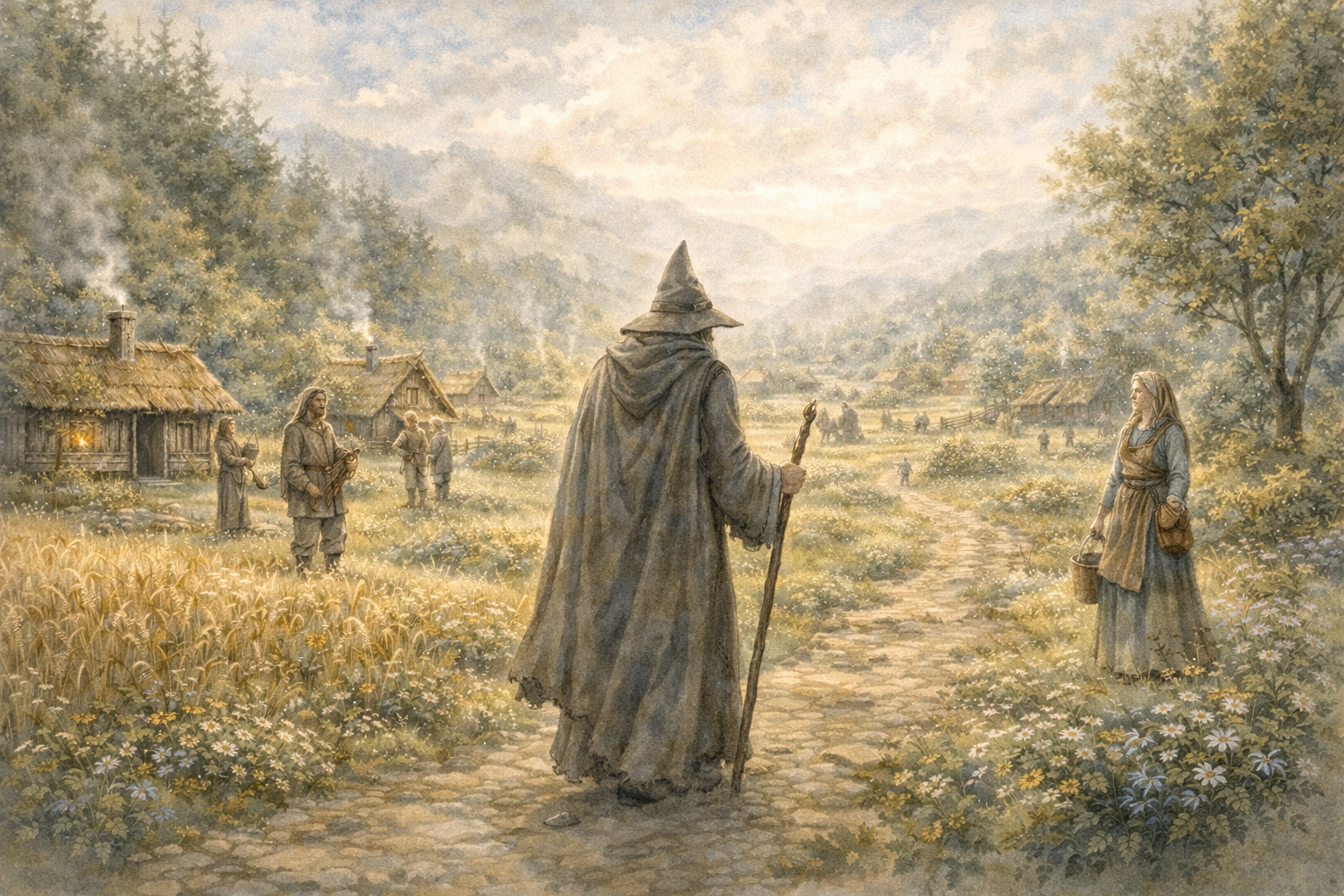
In poems and sagas, Odin may:
- Test human hospitality
- Grant favors or punishments
- Inspire poets and kings
- Plant events that push mortals toward their fate
Heimdall – The Link to Humanity
Heimdall is the guardian of Bifröst, but he also holds a direct connection to Midgard.
Tradition presents him as a being who once interacted with humanity, symbolically giving rise to three major social classes:
- Thrall (servants)
- Karl (free people)
- Jarl (nobility)
The Valkyries – Gatherers of the Fallen
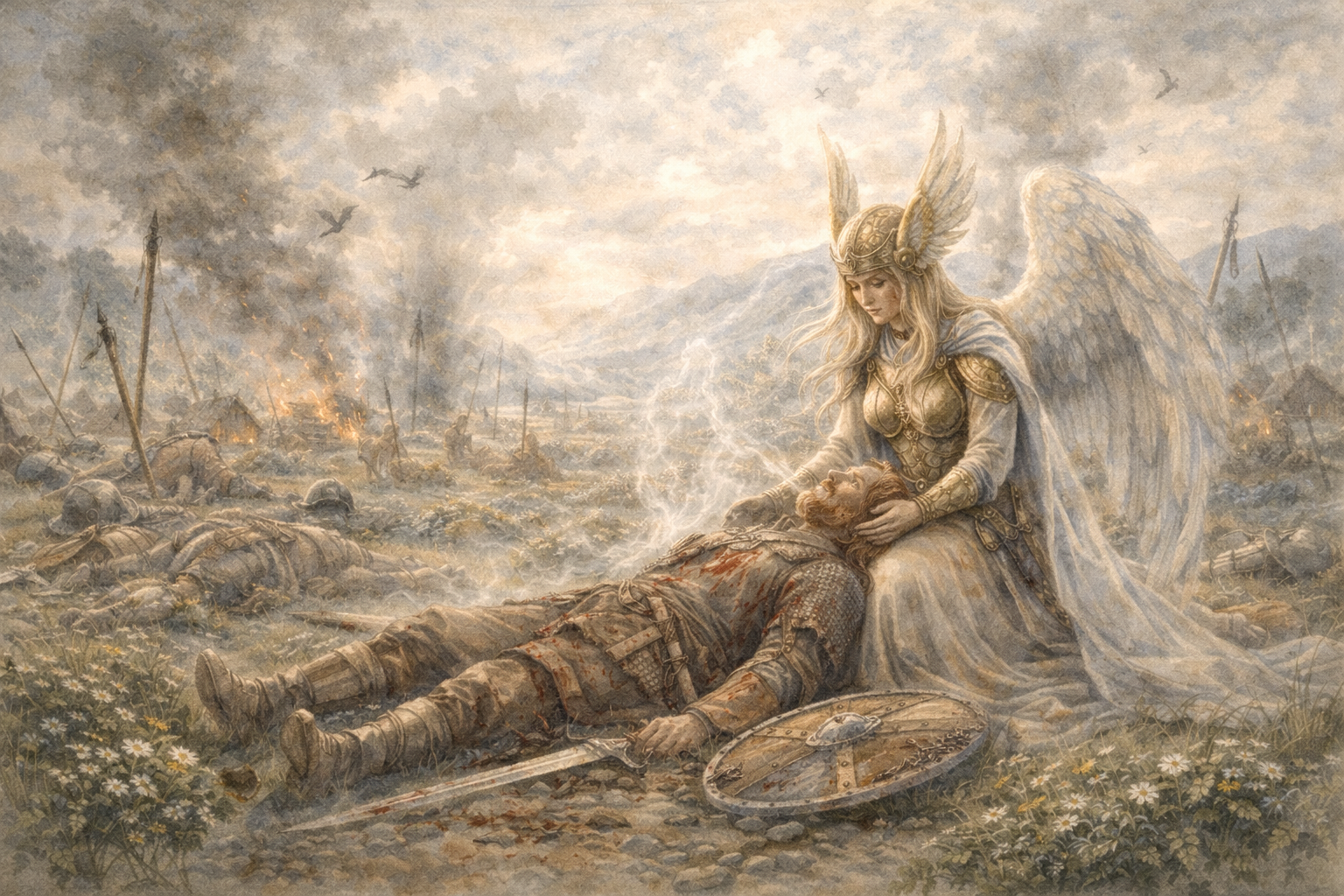
The Valkyries are sent by Odin to choose warriors slain in battle:
- Some are taken to Valhalla
- Others are received by Freyja in Fólkvangr
The Valkyries connect Midgard to Asgard through destiny. They do not merely collect the dead—they select those who will take part in the end of the world.
In Midgard, Valkyries are seen as omens. Though they gather fallen warriors, they are also beings capable of love, choice, and suffering—such as the Valkyrie Sigrún , who falls in love with the hero Helgi.
Loki and Deception. Chaos Entering Everyday Life
Loki is the god of deception, contradiction, and change. His relationship with Midgard is ambiguous: he may act as a temporary ally to the gods, yet also as a force preparing collapse.
Many troubles that ultimately affect the worlds are born from small fractures opened by Loki—poorly sealed promises, betrayed agreements, words spoken at precisely the wrong moment.
Where Loki passes, chaos seems inevitable.
Midgard and Ragnarök
During Ragnarök:
- Midgard will be devastated
- Jörmungandr will rise from the seas
- The world will be flooded and destroyed
After the catastrophe, Midgard will be reborn, and a new humanity will inhabit the earth.
Midgard is not only the home of humans—it is also the stage where gods intervene, confront chaos, and test the fragility of the world.
It is the only realm where destiny is not contemplated—it is lived.
Many of the most memorable stories begin or unfold here.
And every adventure becomes an echo of Ragnarök.