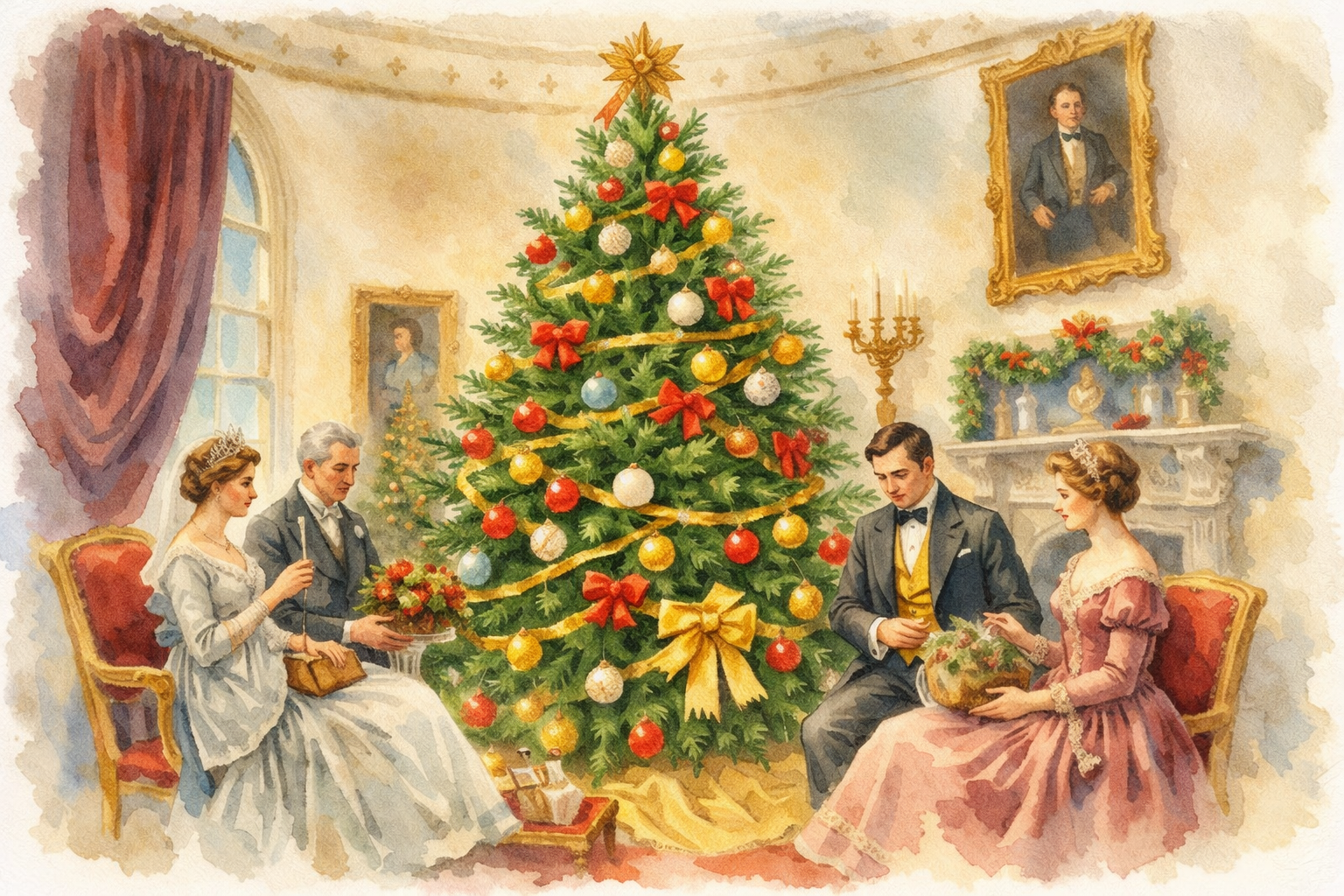
The Christmas tree is one of the most recognizable symbols of the holiday season. Its lights, colors, and decorations tranform any space into a magical corner. However, the orogin of this tradition is far older than Christian Christmas. It was born from pagan rituals connected to nature during the darkest months of the year.
Historia y origen del árbol de Navidad
The first people to decorate evergreen trees during winter were not Christians, but ancient northern European cultures: Celts, Germanic peoples, Scandinavians...
In the depths of the winter, when days were short and the land seemed asleep, there was something that did not die: evergreen trees such as fir, pine, and yew. For these cultures, these trees symbolized life in the midst of darkness, resilience, fertility, protection, and the continuity of the natural cycle. During the winter solstice -the longest night of the year- trees were decorated or green branches were brought into homes to attract good fortune and ward off spirits.
Christmas did not yet exist, but the idea was already present: life that endures and is reborn.
From Pagan Rite to Christian Tradition
As Christianity spread across Europe, many of these winter celebrations were transformed into Christian practices. The evergreen tree began to be interpreted as a symbol of eternal life, the light of Christ, and spiritual renewal.
The Legend of Saint Boniface (8th Century)
One of the best-known traditions tells that Saint Boniface, a missionary in Germanic lands, cut down a sacred pagan oak used in rituals. According to the legend, a small fir tree grew in its place, and he pointed to that tree as a Christian symbol because of its triangular shape,which evoked the Holy Trinity.
Although it is difficult to separate history from myth, this story reflects a real historical process: the adaptation of a pagan symbol to a new religious context.
15th Century: The Birth of the Cristmas Tree as We Know It
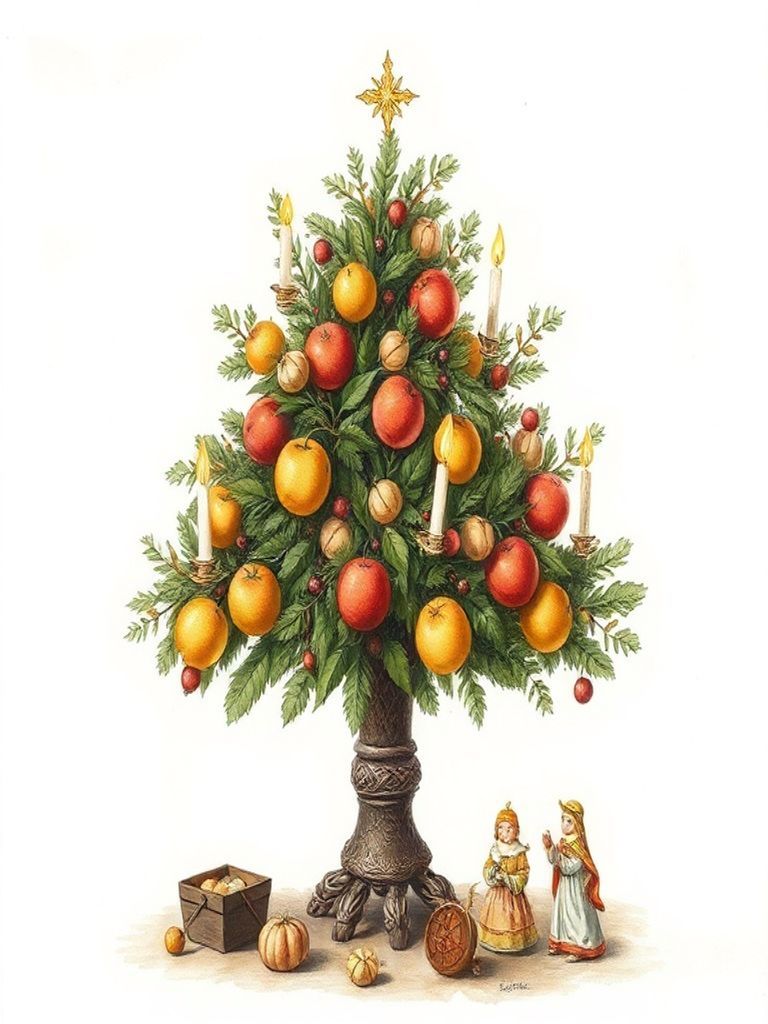
The first docummented records of the "Christmas tree" appaer in Germany in the 15th century, especially in regions such as Alsace. There, fir trees were decorated with apples (symbols of Paradise), nuts, sweets, paper figures, and candles (the forerunners of today's lights). These trees were both religious and festive: they represented spiritual hope as well as the communal joy of winter.
17th-19th Centuries: The Tradition Spreads Across Europe
In the following centuries, the Chritmas tree tradition spread from Germany to other European countries. However, its decisive boots came in the 19th century,
Queen Victoria and Prince Albert (1848)
The tree became immensely popular after the publication of an illustration showing the British royal family celebrating Christmas around a decorated tree. Albert, of German origin, brought this custom to England, and from there it spread to the United States and the rest of Western Europe.
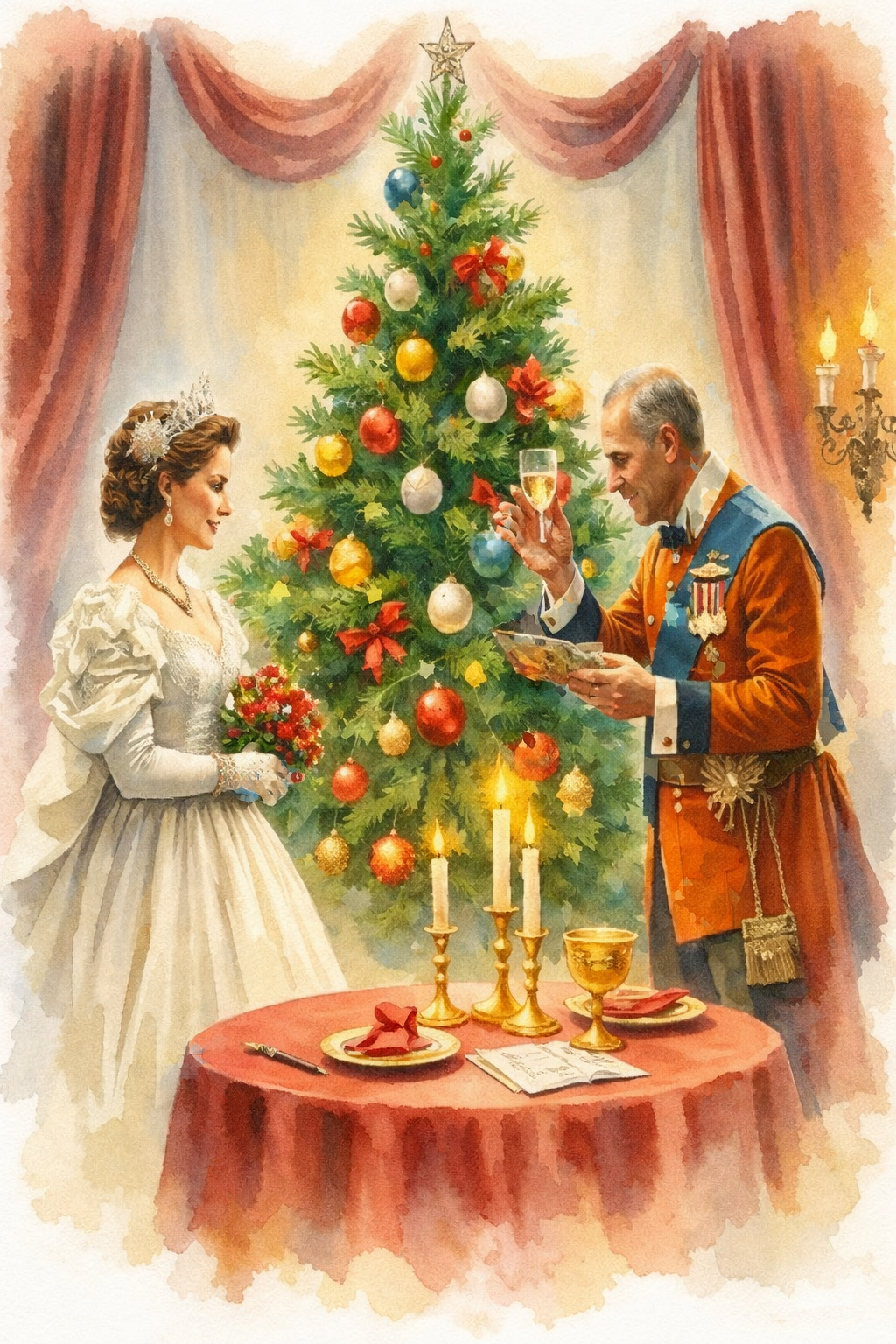
From that moment on, the tree became the heart of family Christmas celebrations.
A Universal Symbol Beyond Cultures
Today, the Christmas tree has evolved and become global, but it retains its original essence: light against the darkness of winter, hope in difficult times, renewal of the natural cycle, family unity and celebration.
Its elements preserve ancient meanings:
- Lights - the triumph of brightness over darkness.
- Ornaments and baubles - wishes, protection, and prosperity.
- The star at the top - a Christian reinterpretation of the Star of Bethlehem.
- Evergreen branches - life that never dies.
A lo largo de los siglos, el árbol de Navidad ha evolucionado sin perder su significado original, convirtiéndose en un puente entre antiguas creencias, tradición cultural y celebración moderna. Más allá de religiones, el árbol navideño se ha convertido en un símbolo universal de calidez, hogar y celebración.