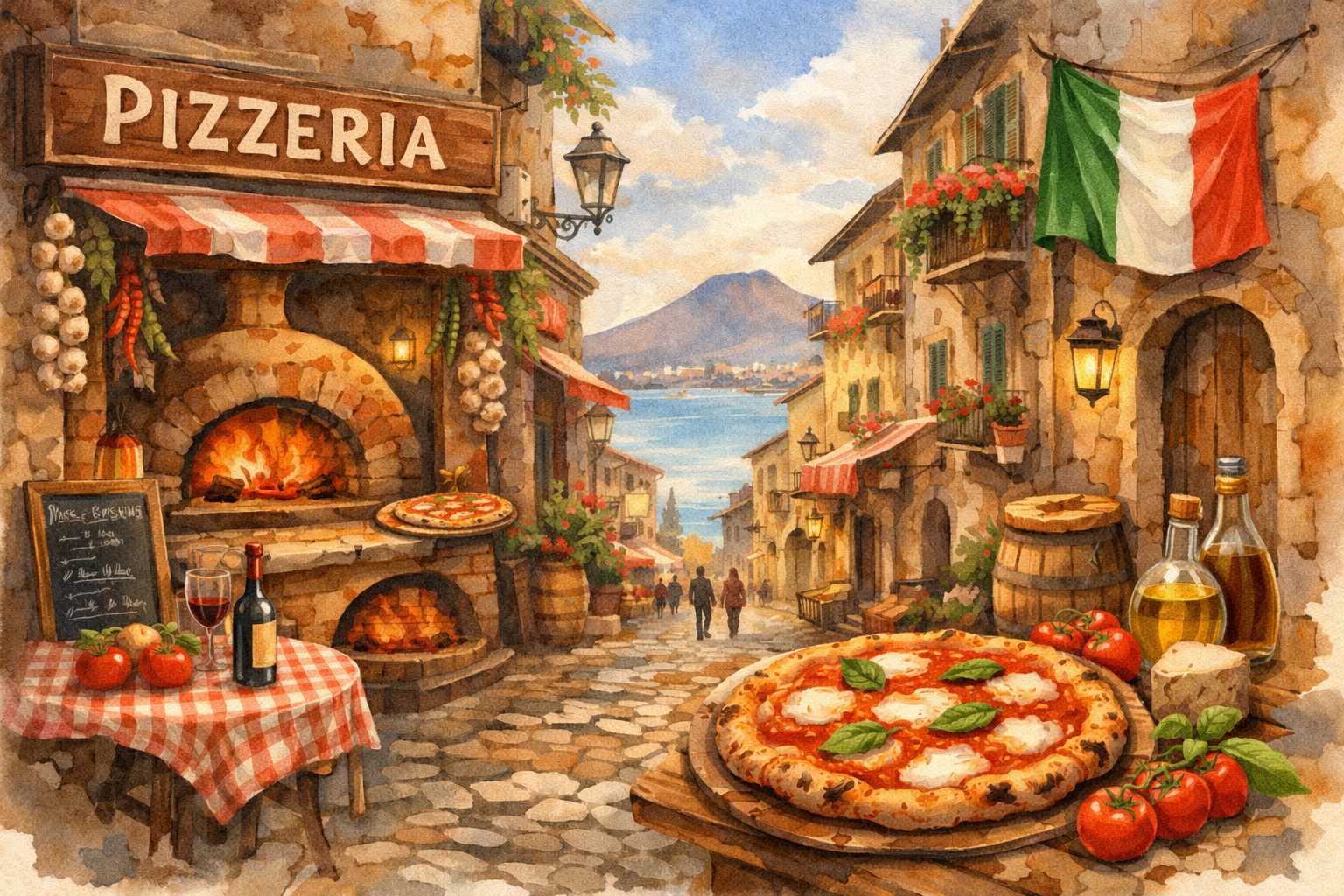
There are foods that nourish us. And there are foods that become culture.
Pizza belongs to the second group.
Today, it is a symbol of Italy—of celebrations, gatherings, late-night cravings… and of that universal certainty that even if the world is on fire, a pizza can still fix life for a few minutes.
What’s fascinating is that pizza wasn’t born as a refined dish, or something “gourmet,” or an aristocratic tradition. It was born humble. A simple answer to an ancient human need: bread + heat..
And from there, it conquered the planet.
Before Pizza: Mediterranean Flatbreads
Long before the word “pizza” existed as we understand it today, people across the Mediterranean were already eating flatbreads topped with ingredients.
Ancient civilizations such as the Greeks, Egyptians, and Romans made seasoned flatbreads, savory cakes, or baked dough topped with oil, herbs, and sometimes cheese.
It was a practical, simple, and nutritious way to eat.
Tomato: The Revolution That Changed Europe (and Pizza)
There is one ingredient without which we can hardly imagine pizza: tomato..
But tomatoes are not European. They arrived from the Americas after the voyages of the 16th century. For a time, they were considered strange—even dangerous. However, in Italy, tomatoes gradually became popular between the 17th and 18th centuries, eventually becoming a key part of Italian cuisine.
And the inevitable happened: flatbread + tomato + fire became a perfect combination.
That is when pizza truly began to take shape.
Naples: Pizza as Food for the People
If there is one city that can claim the birth of modern pizza, it is Naples. The Neapolitan pizza (flat dough topped with ingredients) emerged in Naples as cheap street food.
For centuries, Naples was densely populated and vibrant—a place where working families needed food that was:
- fast
- affordable
- hot
- filling
Pizza was the people’s food.
The Word “Pizza” Before Pizza
The earliest known written reference dates back to the year 997, in a Latin document from Gaeta (southern Italy) in the year 997. The word appears as “pizza” (or a very similar form) as part of a payment or rent.
In Naples:
- during the 17th and 18th centuries, there are references where the name “pizza” is used for these baked flatbreads para estos panes planos horneados.
- 1738 one of the first major mentions of the word “pizza” appears
- 1830 , the book Usi e costumi di Napoli e contorni descritti e dipinti (“Customs and Traditions of Naples and Surroundings, Described and Painted”) is published, describing Neapolitan pizza as typical food of the people.
The Oldest Pizza: Neapolitan “Marinara”
Original Neapolitan pizza was made from a dough of flour, water, salt, and yeast, stretched by hand. It was thin in the center, with puffy edges—soft and elastic—with the typical “black spots” from the wood-fired oven. It was baked in extremely hot wood ovens, meaning it cooked in just 60–90 seconds..
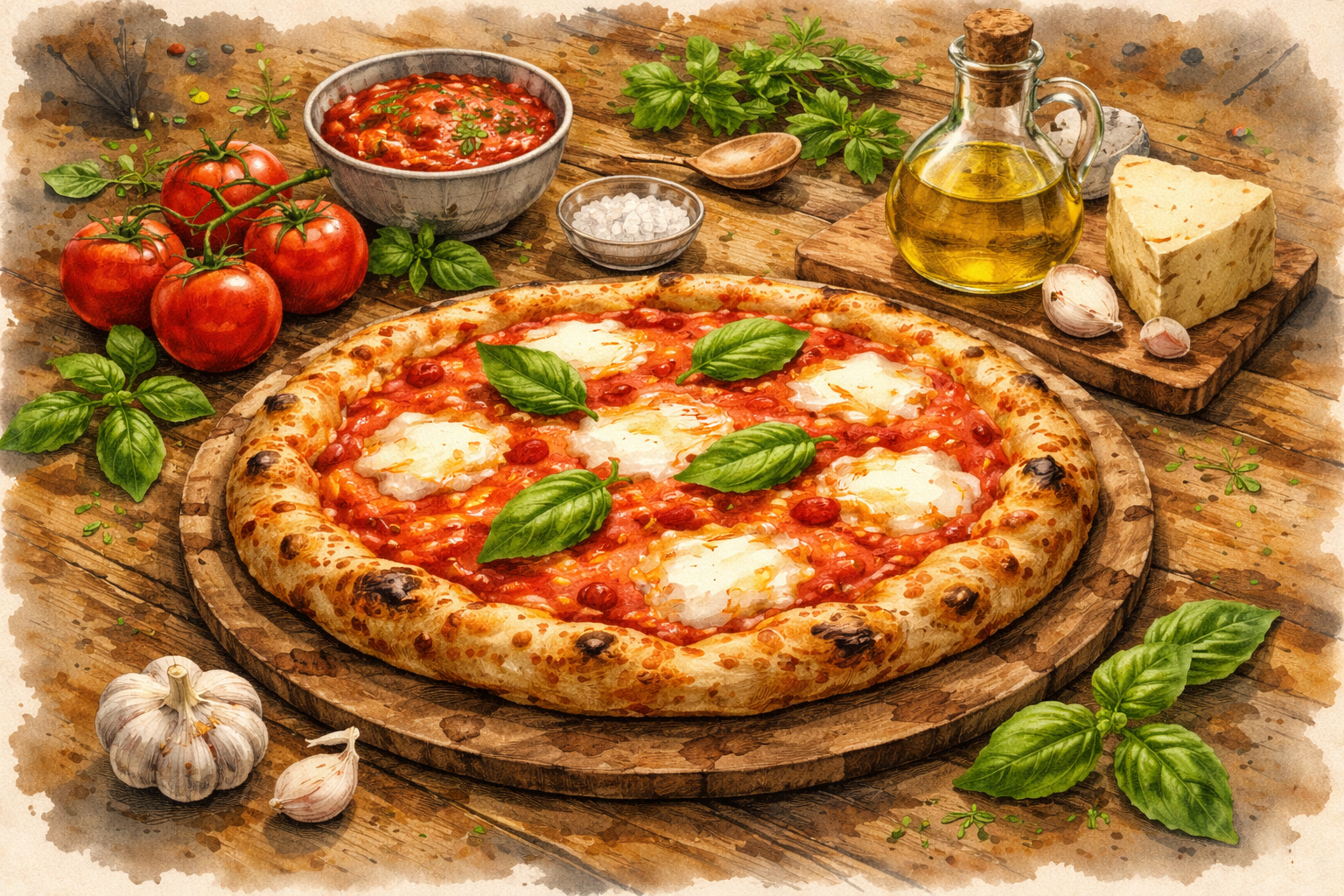
The most classic and street-style version was called Marinara. In its traditional form, Marinara pizza included:
- tomato
- garlic
- oregano
- olive oil
1889: The Royal Pizza
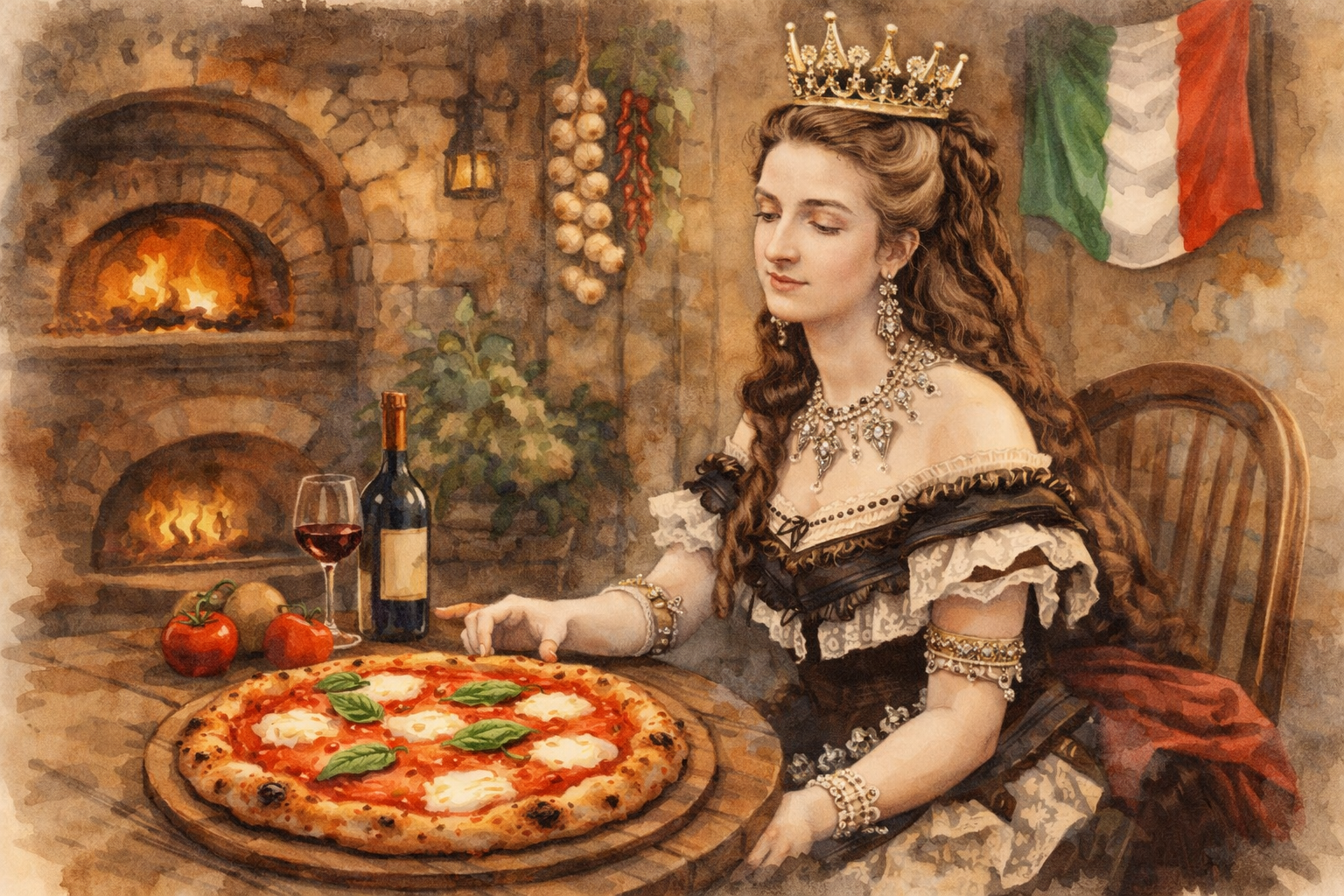
According to tradition, in 18891889, during a royal visit to Naples, the pizzaiolo Raffaele Esposito made a pizza for Queen Margherita of Savoy ((Margherita di Savoia).).
This pizza had three main ingredients:
- tomato (red)
- mozzarella (white)
- basil (green)
The colors of the Italian flag.
The story goes that the queen liked it so much that the pizza was named in her honor: Pizza Margherita..
Pizza stopped being just popular food—and became an emblem.
From Italy to the Planet: Pizza Conquered the World
Pizza crossed borders. Its global spread accelerated especially thanks to Italian emigration (19th–20th centuries).
In places like the United States, Italian communities brought their recipes, ovens, and traditions with them.
And there, pizza evolved:
- bigger versions appeared
- with heavier toppings
- new dough styles
- new formats and variations
Pizza adapted. Today there are pizzas such as:
- traditional Neapolitan styles
- Roman pizza (thinner and crispier)
- New York-style
- Chicago deep dish
- pineapple pizza
February 9: World Pizza Day
In 2017, UNESCO recognized the art of the Neapolitan pizzaiuolo as Intangible Cultural Heritage of Humanity.
The February 9, the world popularly celebrates World Pizza Day—a date adopted by international calendars and media, even though there is no single official decree establishing it.
And while it may look like a modern celebration, pizza is one of the most widespread and recognizable foods on Earth.