The celebration of the New Year is one of the most universal traditions in the world, yet its date and meaning vary greatly across cultures.
While much of the Western world welcomes the new year at midnight on January 1st, other civilizations mark the beginning of the year at very different times. The Chinese New Year follows a lunar calendar and is celebrated between January and February; Muharram marks the beginning of the Islamic year; and in Antiquity, many peoples began the year with the arrival of spring.
Despite this diversity, a large part of the world agrees that the year begins on January 1st. This custom, far from being arbitrary, has a fascinating origin rooted in ancient Rome, the influence of Egypt, and the resistance of a Hispano-Celtiberian people that ultimately changed how time itself was measured.
Rome’s earliest calendar: The Calendar of Romulus
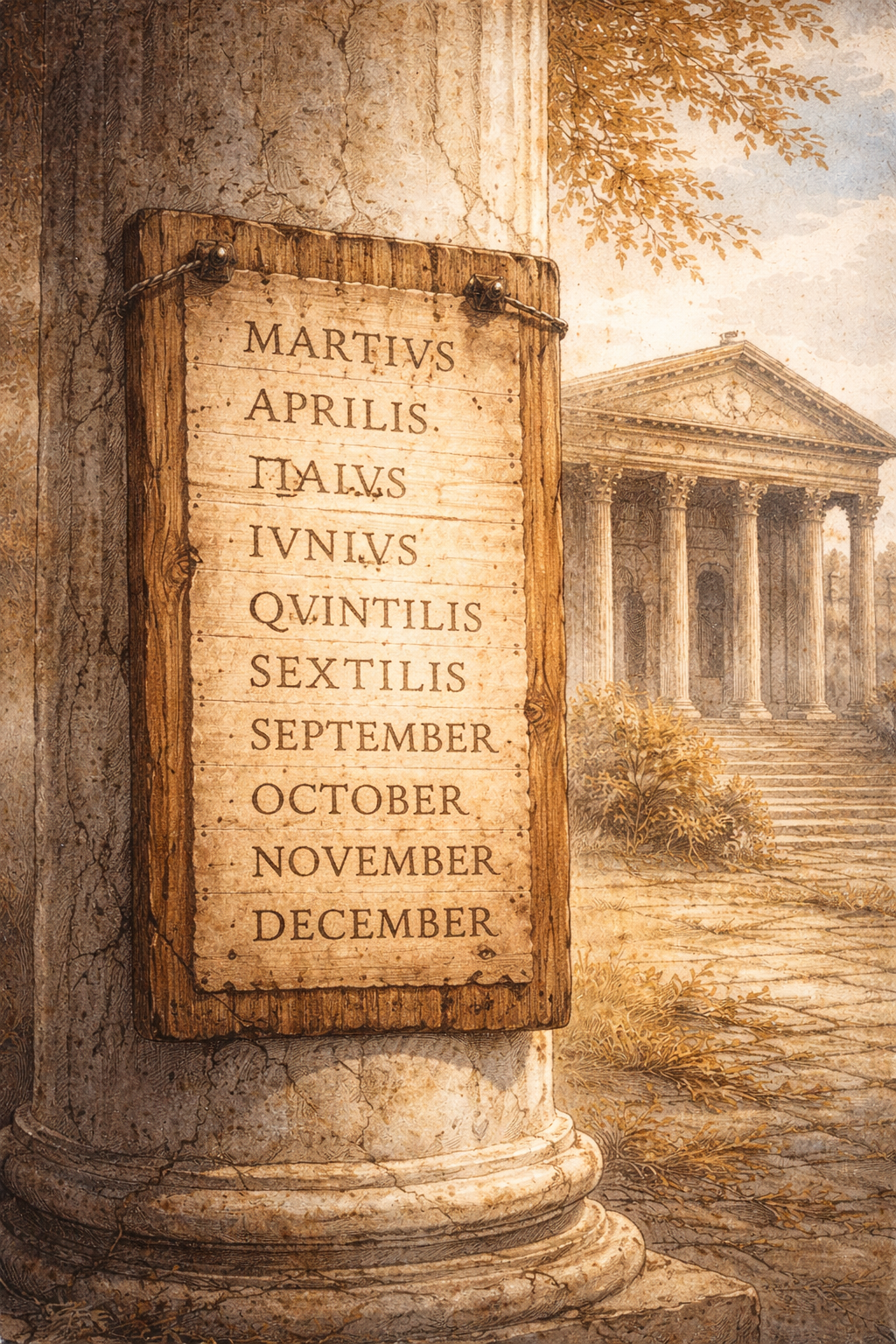
According to Roman tradition, the first calendar was attributed to Romulus, the legendary founder of Rome, in the 7th century BCE. This early calendar was based on lunar cycles, consisted of only ten months, and began in March. The ten original months were:
- Marius – Marte,dios de la guerra
- April (Aprilis) – Aphrodite, opening of spring
- Maius – Maia, goddess of growth
- Iunius – Juno, diosa del matrimonio
- Quintilis – quinto mes
- Sextilis – sexto mes
- September – séptimo
- October – octavo
- November – ninth
- December – tenth
This was not a civil or astronomical calendar, but a military and agriculturalone. Its main purpose was to organize warfare campaigns and farming activities, not to measure time accurately. The months had no fixed length, winter was largely excluded from the count, and seasonal drift was constant.
As a result, timekeeping was unstable and imprecise. There was no clear astronomical start of the year, and the calendar could easily fall out of sync with the natural world.
January and February: The twelve-month year
In the 8th century BCE, Numa Pompilius, Romulus’ successor and second king of Rome, attempted to bring order to the system by adding two new months: Ianuarius y Februarius.
February took its name from the Februa, purification rituals held before the arrival of spring. January was dedicated to Janus, the god of doors, beginnings, and transitions, depicted with two faces—one looking to the past and the other to the future.
However, these months were placed at the end of the year, which still began in March. The result was a hybrid calendar that remained inaccurate and easy to manipulate by priests and magistrates.
Over the centuries, the Roman calendar continued to accumulate errors. The seasons no longer matched the months, and time was adjusted arbitrarily according to political interests.
The Hispano-Celtiberian tribe that changed the calendar forever
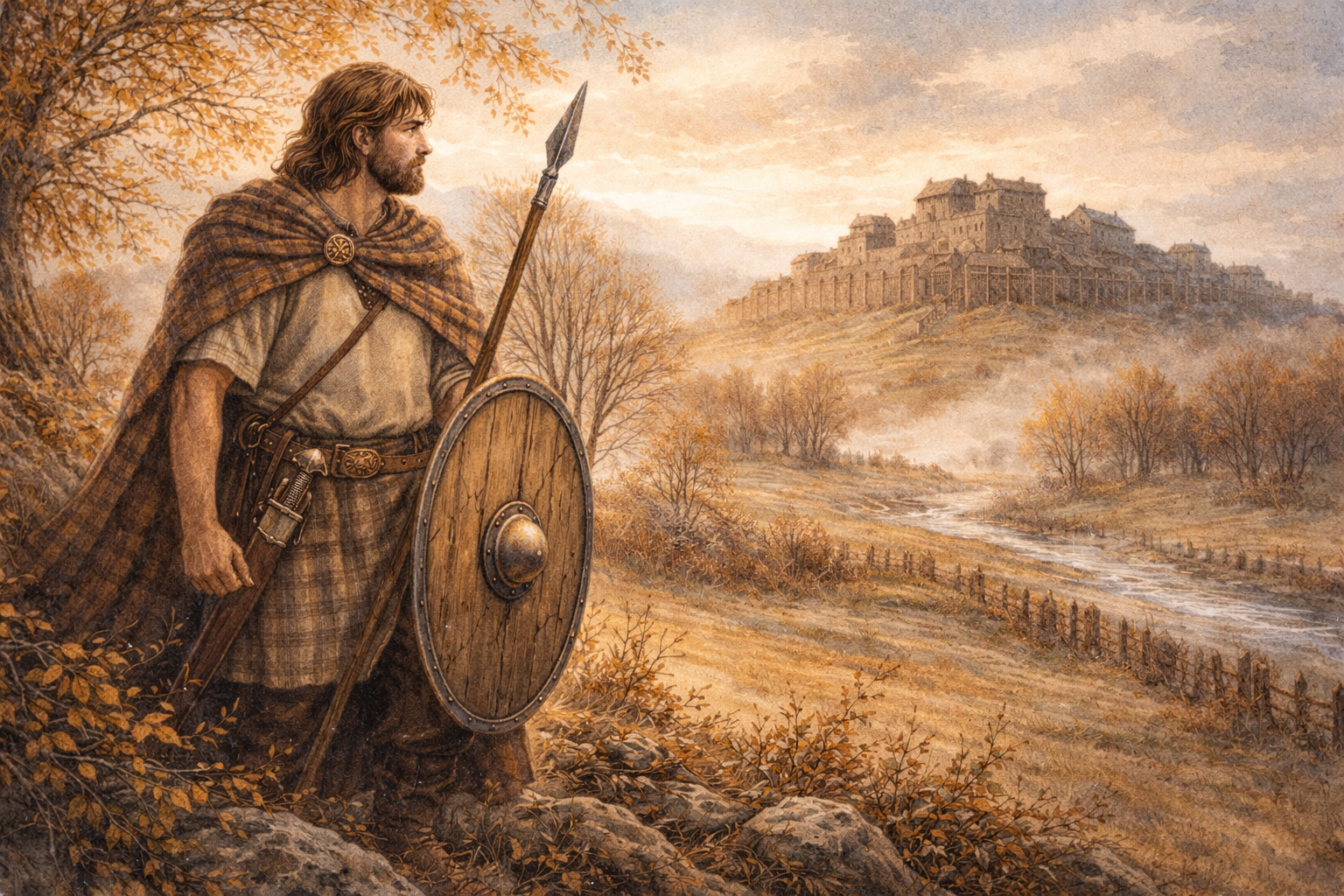
The decisive change came in 153 BCE, during a truce following the First Celtiberian War. The Belos, a Celtiberian tribe settled in the city of Segeda (in present-day Zaragoza, Spain), expanded their city walls.
Rome interpreted this act as a violation of the treaty and a declaration of war. In order to mobilize troops before winter, the Roman Senate decided: to move the appointment of the consuls from March to January.
This meant that the political year officially began in January, allowing military campaigns to be prepared in advance. The general Quintus Fulvius Nobilior marched into Hispania with an army of more than 30,000 men to suppress the rebellion.
Unintentionally, the resistance of the Belos caused Rome to officially establish January as the beginning of the year.From that moment on, January 1 was fixed as the start of the year throughout much of the Western world.
The Egyptian calendar: The model that inspired Rome
Long before Julius Caesar reformed the Roman calendar, Egypt had already developed one of the most stable and advanced systems of timekeeping in the ancient world.
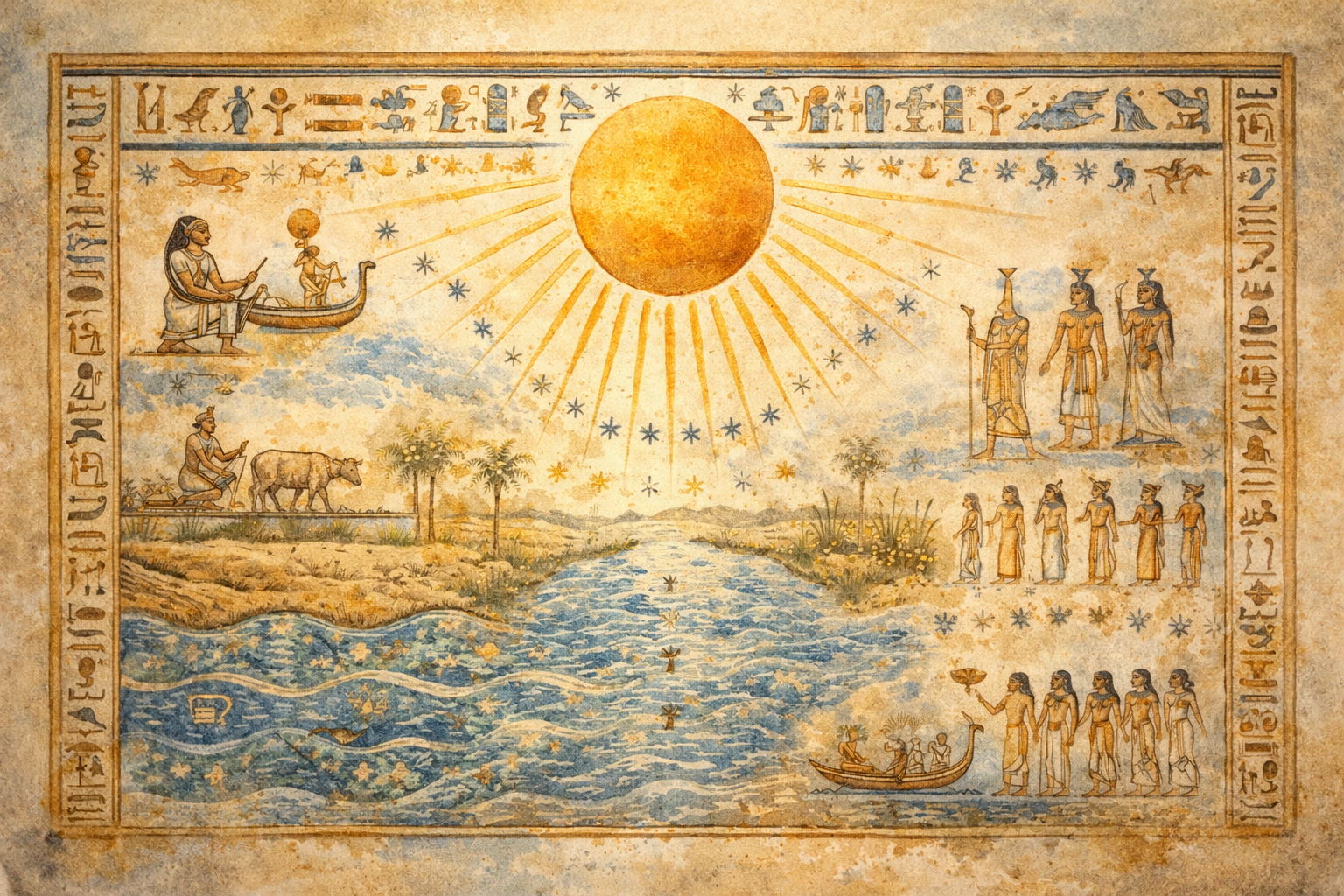
The Egyptians used a solar calendar of 365 days, remarkably regular for its time. The year was divided into 12 months of 30 days, with five additional days added at the end of the year, known as the epagomenal days, dedicados al nacimiento de grandes dioses como Osiris, Isis y Horus. Este sistema era simple, matemático y predecible, pero tenía una limitación importante: the leap year. The true solar year lasts approximately 365.25 days, so the Egyptian calendar accumulated a small drift over time. The Egyptians were aware of this phenomenon but accepted it as part of the natural cosmic order and did not attempt to correct it.
Julius Caesar and the Julian calendar
When Julius Caesar arrived in Egypt in the 1st century BCE, he encountered a solar calendar that was precise and stable. Upon returning to Rome as dictator, he realized that the Roman calendar had become completely misaligned with the seasons due to centuries of mismanagement and political manipulation.
In 46 BCE, reformed the calendar, drawing inspiration from the Egyptian model and advised by astronomers such as Sosigenes of Alexandria. This reform gave birth to the Julian calendar..
Rome adopted the Egyptian structure of a 365-day solar year but introduced a crucial innovation: the leap year, adding an extra day every four years to correct the solar drift. The year officially began on January 1, inheriting the decision made two centuries earlier for military reasons. Later, two months were renamed:
- Quintilis – Julius (julio), en honor de Julio César
- Sextilis – Augustus (August), in honor of Emperor Augustus
The Julian calendar spread throughout the Roman Empire and remained in use for over 1,600 years.
From the Julian calendar to the Gregorian calendar
Despite its accuracy, the Julian calendar accumulated a small error: it calculated the solar year as slightly longer than it actually is. Over the centuries, this discrepancy caused the seasons to drift by about ten days.
In 1582, Pope Gregory XIII corrected this errorby promulgating the Gregorian calendar. To adjust the discrepancy, ten days were removed from the calendar and the rule for leap years was modifield: years divisible by 100 would no longer be leap years, unless they were also divisible by 400.
This adjustment allowed for a much more precise synchronization with the solar cycle. Despite the reform, January 1st was maintained as the beginning of the year, definitively consolidating this date at a global level.
A beginning of the year with deep roots
Although we often attribute the origin of our calendar to Rome, its foundations are Egyptian. The modern calendar is the result of a long historical evolution: Egypt provided the structure, Rome the technical correction, and the Church the final adjustment.
Without realizing it, the Belos not only callenged Rome, but also left an indelible mark on the way we celebrate the passage of time, forever changing the history of the calendar.
A shared legacy that continues to shape the way we measure time.