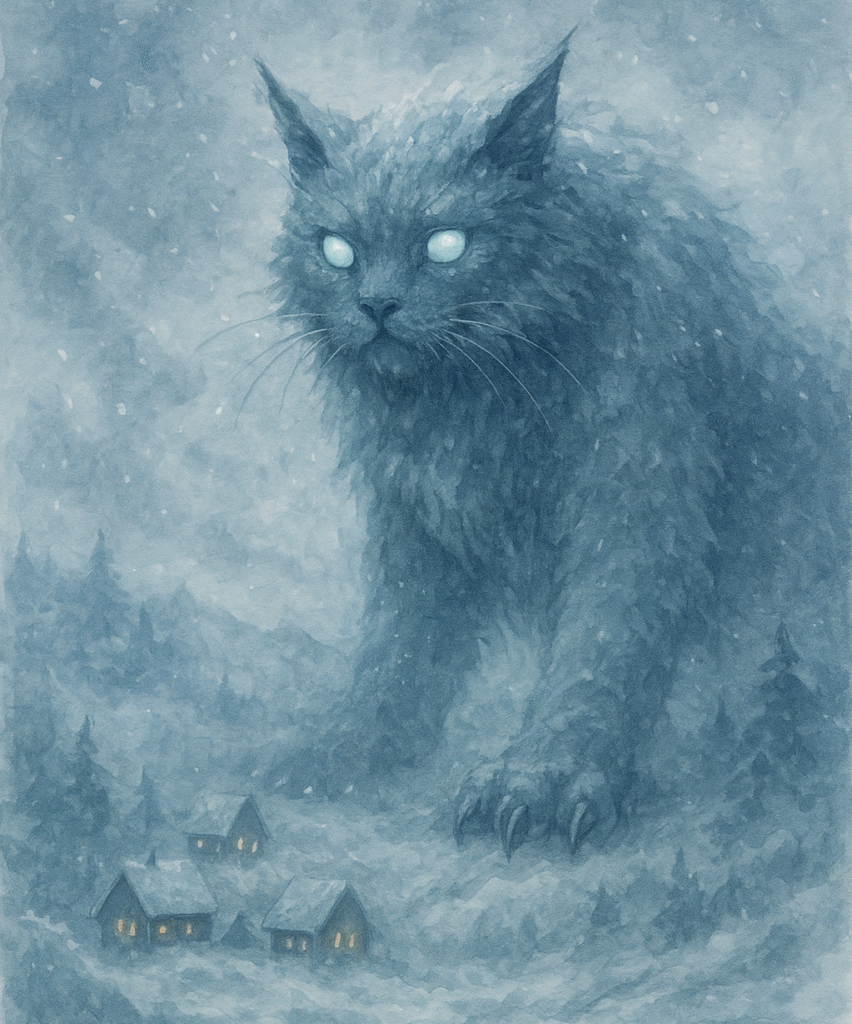
The Feline Terror of Christmas
Among snow-covered mountains, isolated villages, and endless winter nights, Icelandic tradition preserves one of the most unsettling Christmas creatures in all of Europe: Jólakötturinn, the feared Yule Cat. It is no ordinary cat, nor a playful spirit. It is a gigantic feline, as dark as the Arctic night, with glowing eyes that pierce the darkness.
Its mission during the Christmas season is simple, cruel… and surprisingly practical: to devour anyone who has not received new clothes for Christmas.
Origin and Meaning of the Myth
The myth of the Yule Cat became widely known from the 19th century onward through poems, songs, and collections of Icelandic folklore, although its origins likely lie in much older oral traditions linked to winter. Like many northern Christmas legends, it emerged from a mix of social control, agricultural life, and ancient folklore.
For centuries, Icelandic families depended on wool to survive the harsh winters. Before Christmas arrived, everyone was expected to have finished spinning, weaving, and sewing new garments. As a way to motivate people—and to ensure no one faced the cold unprotected—the threat of the Yule Cat was born. The message was clear: “Those who have not worked hard enough, or who have not received new clothing as a sign of contribution, will be visited by the Cat. And they may not live to tell the tale.”
According to traditional belief, the Cat prowls on Christmas Eve night, searching for those who have not received—or are not wearing—at least one new garment. Such people are deemed lazy or unworthy.
Connection to Grýla and the Yule Lads
In modern Icelandic tradition, Jólakötturinn is part of a folkloric “family” alongside: Grýla, the ogress who devours disobedient children. Leppalúði, her lazy husband. The Jólasveinar (Yule Lads), their thirteen mischievous sons who visit Iceland each December.
Although in the oldest sources the Cat was not originally part of Grýla’s family, modern folklore and popular culture have incorporated it into this wintery household. In some versions, Grýla sends the Cat out to hunt humans while she attends to other Christmas horrors.
Characteristics of the Yule Cat
Enormous size: said to be so large that its footsteps make the snow tremble. Thick, black, icy fur, Huge glowing eyes that shine in the darkness, In many modern tellings, it moves without leaving footprints.
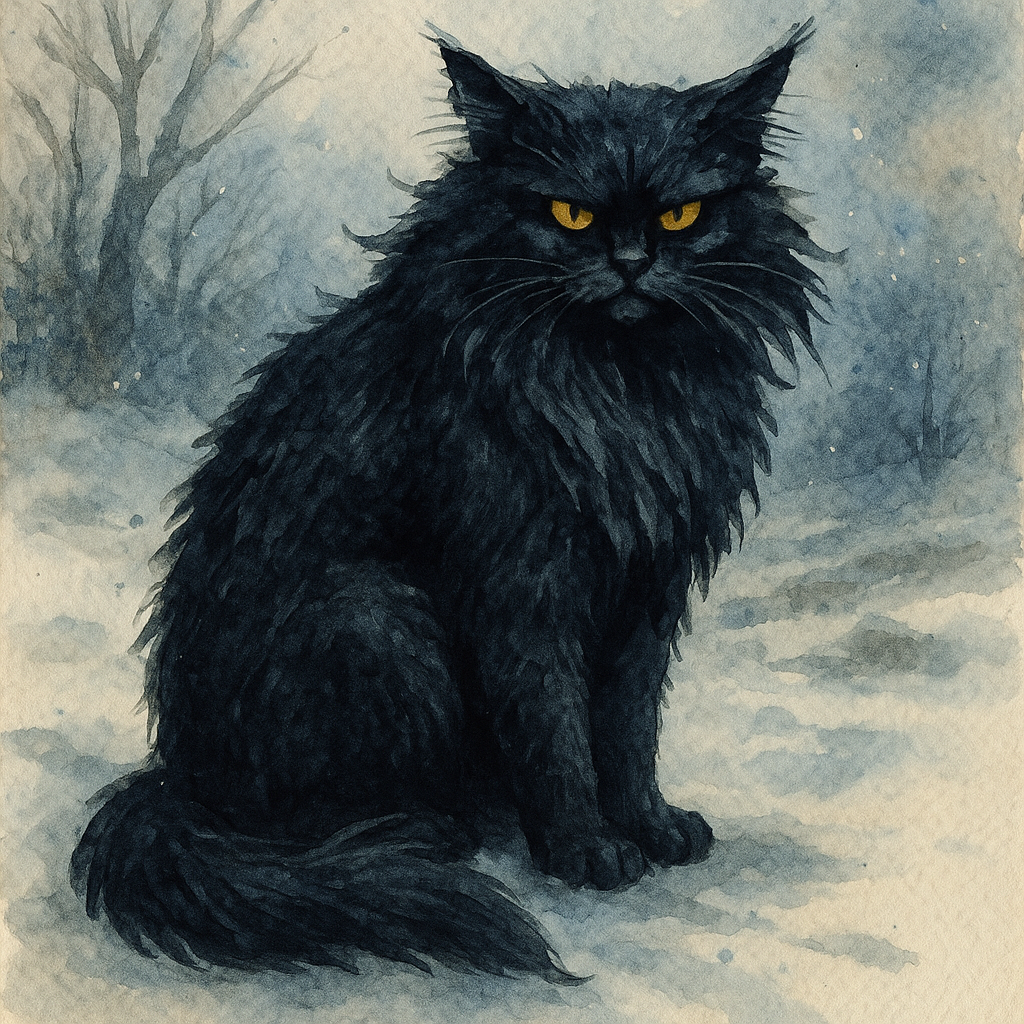
It is drawn to one thing only: knowing whether you are wearing new clothes for Christmas. In the oldest versions of the myth, failure to do so could result in being eaten. Over time—especially through 20th-century children’s stories—the tale softened. The Cat may no longer devour you, but it will:
• Watch you through windows with its glowing eyes • Lurk nearby • Bring misfortune or bad luck for the coming year.
The Social Function Behind the Fear
Although today it is often told as a spooky children’s story, the Yule Cat originally served a very practical purpose. It encouraged people to work diligently during autumn, especially those involved in wool production. It pushed families to gift clothing, ensuring no one would face winter unprotected.
It reflected the very real fear of brutal winters, where even small failures could be fatal.
Evolution and Legacy
Jólakötturinn remains present in modern Icelandic culture, but in a much gentler form. It appears in local Christmas songs, decorations, illustrations, plush toys, and even themed parades. It is also used as a symbol in winter clothing donation campaigns.
The tradition helped establish a lasting custom in Iceland: giving at least one new garment to every family member at Christmas—not as a luxury, but as protection from the Yule Cat.