The Icelandic "Grandma Noël" who devoured naughty children
In the remote winters of Iceland, when darkness reingns and storms last the mountains, a shadow descends from the frozen peaks. Her name is Grýla, the giantess of Icelandic Christmas, feared for generations by children who grew up listening to stories of how she came down from her lair to devour the disobedient. Before Santa Claus existed, or the benevolent spirit of modern Yule, the Christmas figure in Iceland was shrouded in drakness and warnings.
Origins and firts mentions
Grýla is one of the oldest beings in Icelandic folklore. Her name appears in medieval manuscripts such as the Sturlunga Saga and the Book of Settlements (Landnámabók), where she is described as a female troll or a giantess of winter.
In these early accounts, she was not associated with Christmas:she was simply a monstrous creature who lived in the mountains and descended during winter to terrorize humans.
It was not until the 17th century that Grýla became a Christmas figure, linked to the Yule period, the winter solstice, and Icelandic festive traditions. It was then that she began to be described as a giantess who emerged during the holidays to capture children who had misbehaved.
The legend
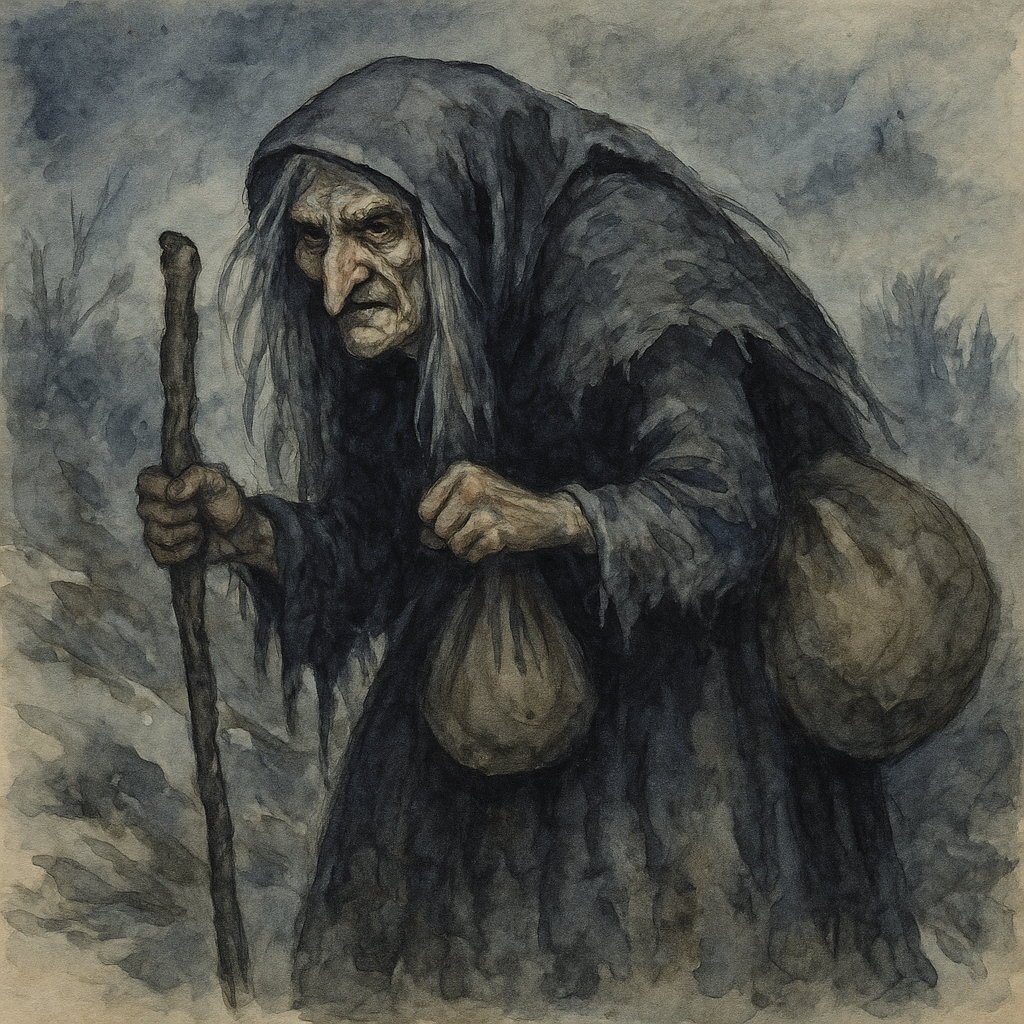
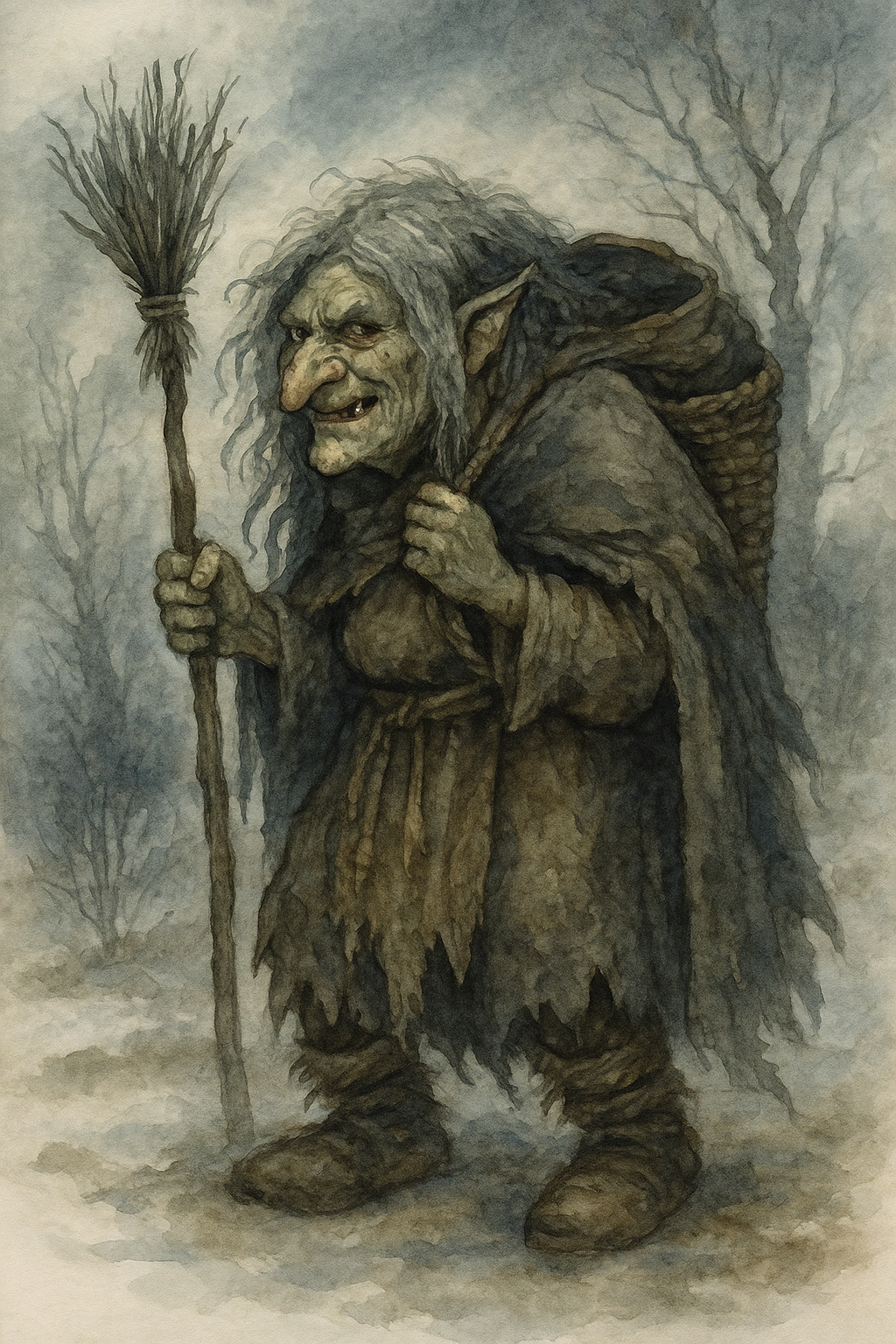
Grýla is described as an enormous and fearsome creature. She is a troll, born of ice and rock, with a grotesque appearance: hooves, pointed ears, a look-like nose, and a face covered in warts. Her tangled hair and fur cloak allow her to blend into the winter landscape. In the modern folklore, it is said that she lives in a deep cave in the lava formations of Dimmurborgir, although in medieval tales her home was not precisely located. She lives alongside her lazy husband Leppalúðii, her children - the Jólasveinarnir or “Yule Lads” -and her terrible cat, the Jólakötturinn.
It is said that she had three husbands, whom she devoured once she grew tired of them.
During the days leading up to Christmas, Grýla listens from her lair to the rumors of the villages. When she hears of children who have behaved badly, she descends with her enormous sack, captures them, and takes them back to her cave, where she cooks them in a giant cauldron to feed herself throughout the winter. In her pot boils a stew as dark as the polar night.
The Yule Lads come down one by one during the thirteen nights before Christmas, each with a distinct and mischievous personality. They steal food, slam doors, peer through windows, or harass villagers. Today, they leave small gifts in the shoes of well-behaved children; in te past, they punished them.
The Yule Cat, for its part, devours those who have not received new clothes for Christmas.
Symbolism
Grýla represents the darkest side of winter and the untamed nature of the north: the lurking cold, the threatening storm, and the hunger of the harshest months. But she also functions as a moral warning. Her story taught children to say close to home, to obey, and to avoid dangers during the long months of darkness.
Curiosities
In 1746, Icelandic authorities explicitly banned the used of Grýl's stories to frightten children, as they were considered to cause excessive fear. Over time, Icelandic folklore softened some aspects: the Yule Lads ceased to be terrifying trolls and transformed into figures more similar to Santa Claus, bringing gifts instead of punishment.
Grýla, however, never lost her essence. Although today she is often portrayed with a more humorous tone, she remains the dark symbol of Yule.
Follow the Footprints
En Islandia existen estatuas y decoraciones inspiradas en ella, especialmente en Dimmuborgir, donde se organizan rutas turísticas dedicadas a su historia. También aparece en festivales, desfiles, tarjetas y decoraciones navideñas. La cultura popular la ha rescatado en series como “Las escalofriantes aventuras de Sabrina”, películas infantiles y en documentales sobre Norse mythology.
Although she is not literally the "grandmother" of modern European witches, Grýla belongs to the same dark aechetypal lineage: the monstrous woman who watches, punishes, and survives the cold.
From feared monster to cultural icon, Grýla remains one of the most fascinating Christmas figures of northem Europe.