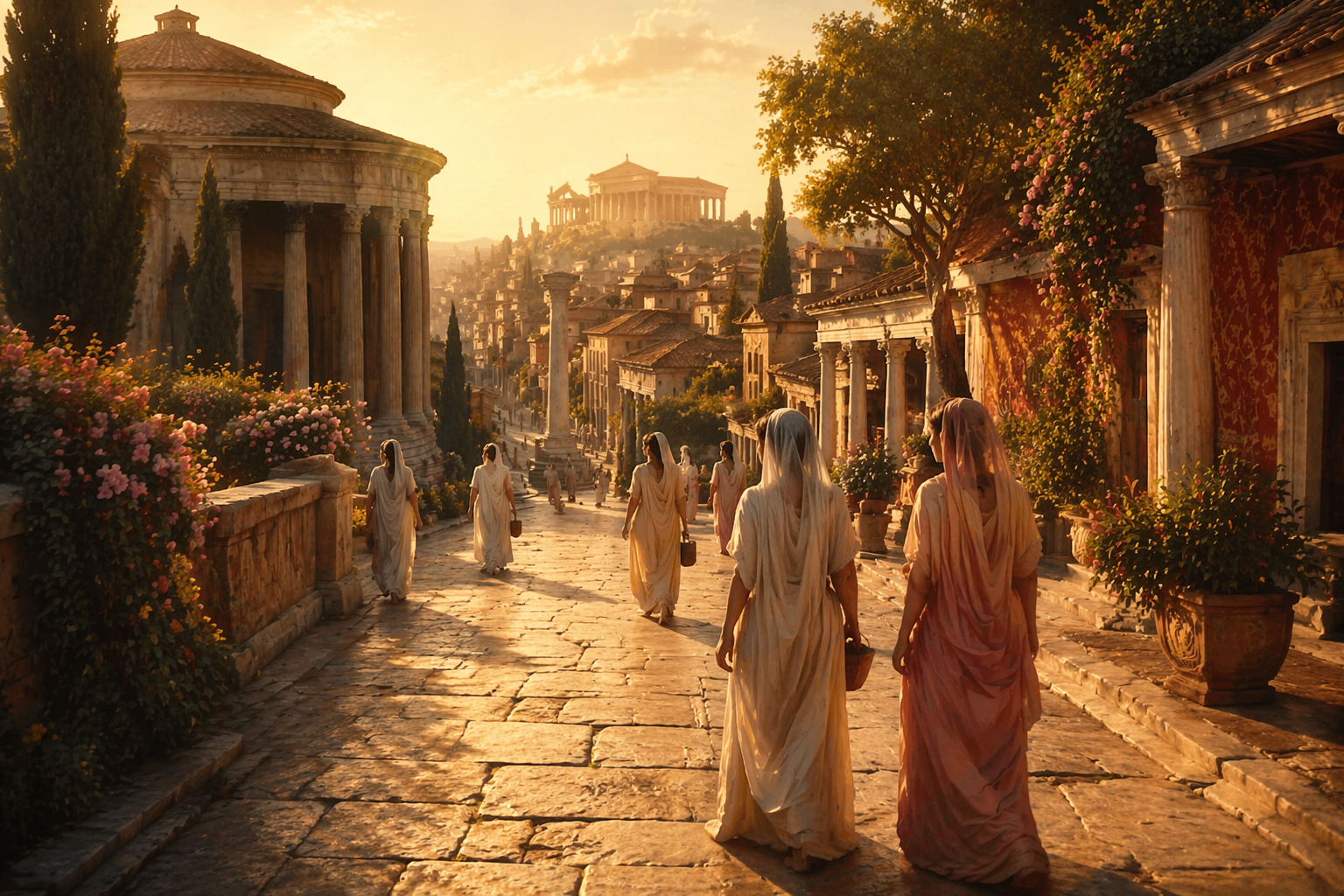
June, in Ancient Rome (Iunius), was a month deeply connected to protection, the home, and unions.
Its name is generally associated with Juno, one of the most important goddesses of the Roman pantheon.
Wife of Jupiter and queen of the gods, Juno was the protector of marriage, women, and family.
It is no coincidence that, even today, June is still considered an ideal month for weddings.
Juno: Goddess of Marriage and Protection
Juno was not only Jupiter’s wife. She was a complex figure with multiple aspects:
- Juno Regina → queen of the gods
- Juno Lucina → protector of childbirth
- Juno Moneta → associated with memory and warning
For Roman women, Juno was a constant presence:
- in marriage
- in motherhood
- in domestic life
Her influence made June an especially favorable month to begin a new life as a couple.
Festivities in June
Vestalia (June 7–15): The Sacred Fire of Rome
One of the most important moments of the month was the Vestalia, dedicated to Vesta, goddess of the home.
During these days, unusual rituals took place in Rome:
- the most sacred areas of Vesta’s temple were opened
- women could enter barefoot as a sign of respect
- rituals were performed to protect the home and family
During the Vestalia, Vesta’s sacred fire —which must never be extinguished— symbolized the continuity of Rome. Guarded by the Vestal Virgins, it was not just a ritual element, but the very heart of the city.
Ludi Piscatorii (June 7)
A popular festival connected to fishermen of the Tiber.
During this celebration:
- fish were offered to the gods
It reflected the importance of basic resources and everyday survival.
Matralia (June 11)
Dedicated to Mater Matuta, goddess of dawn and motherhood.
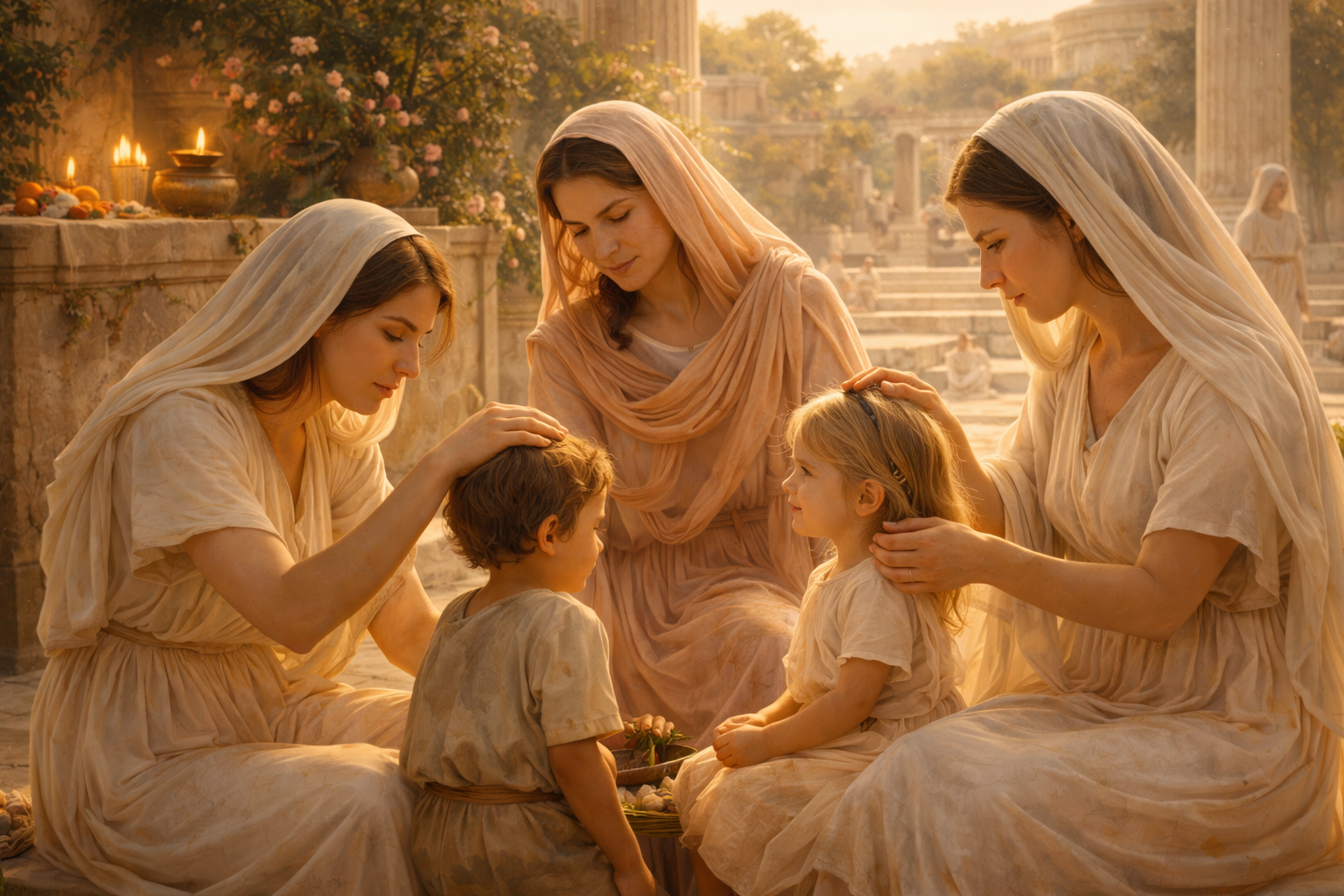
Only free-born women participated, and notably, they prayed for the children of others rather than their own.
It was a deeply symbolic ritual centered on community and shared care.
Fors Fortuna (June 24)
Not all celebrations sought order and stability.
On the banks of the Tiber, Romans honored Fortuna, the goddess of chance.
It was a popular festival in which:
- people sailed along the river in boats
- the unpredictable nature of fate was celebrated

Fors means chance, shifting luck, uncertain destiny.
The Romans recognized multiple forms of Fortuna:
- Fortuna Primigenia → destiny from birth
- Fortuna Redux → safe return
- Fortuna Virilis → luck in love
- Fors Fortuna → pure and unpredictable chance
The Fire of Rome: The Vestals
Vesta’s fire was considered the symbol of Rome.
Located in her temple, it was guarded by the Vestal Virgins, whose duty was to keep it constantly burning.
They were chosen as children and served for many years.
The fire represented the continuity of the city.
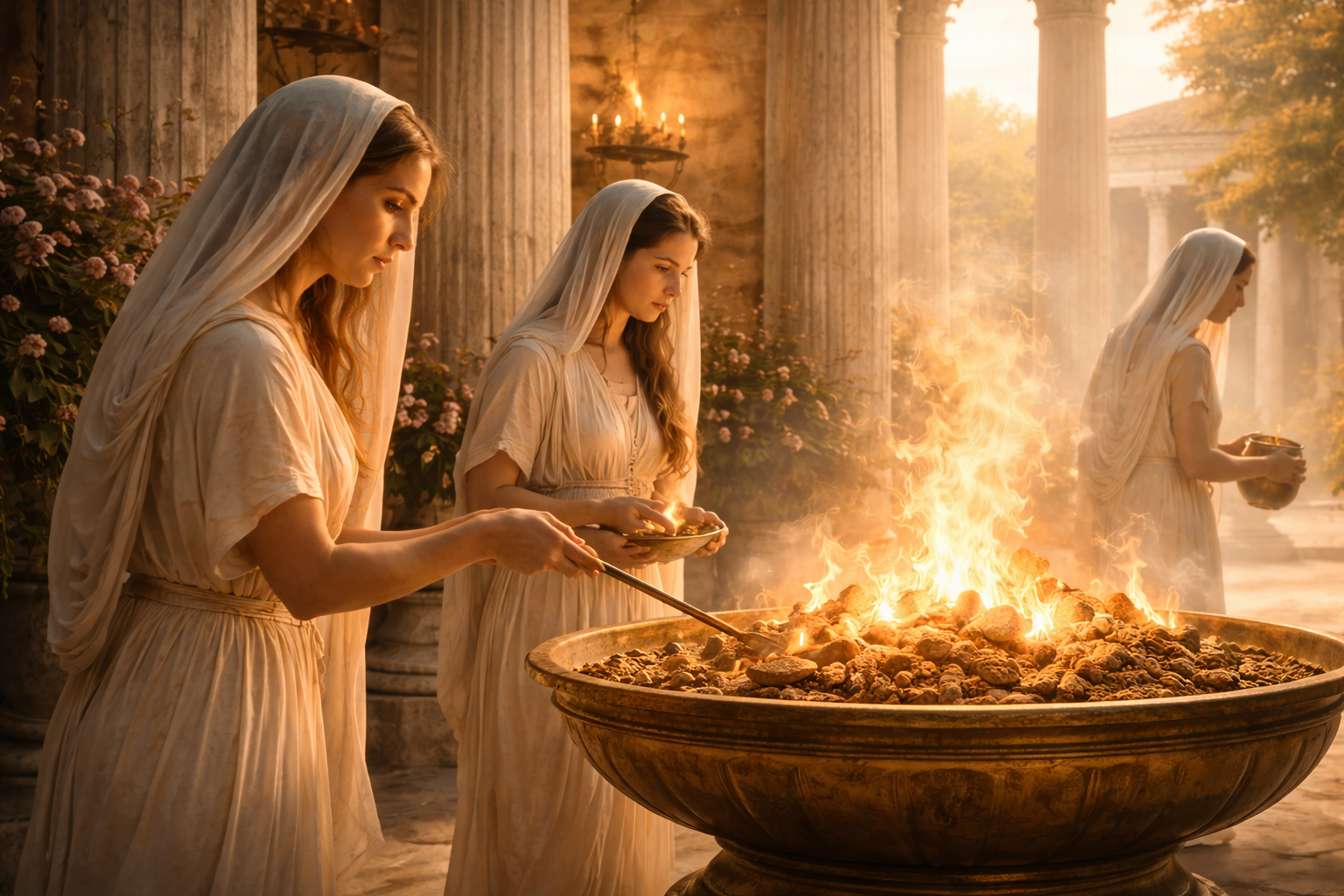
If it went out, it was seen as a terrible omen, and the responsible vestal could face severe punishment.
June: The Favorable Month for Weddings
In Roman tradition, marrying in May was considered unlucky.
June, on the other hand, was the ideal month.
Dedicated to Juno, marriages held during this period were believed to be blessed with:
- divine protection
- fertility
- stability within the home
Many weddings took place after the Vestalia.
Roman Weddings: Rituals and Symbols
Roman weddings were carefully structured ceremonies, where every gesture held deep meaning.

Preparation
The bride dedicated her childhood toys and belongings, symbolizing the transition into adult life.
She wore:
- a white tunic
- a belt tied with the knot of Hercules
- a veil (flammeum)
Her hairstyle imitated that of the Vestal Virgins.
The Wedding Day
Sacrifices and omens were performed in the bride’s home to ensure the gods approved the union.
Then followed the banquet, with music and food.
Many modern traditions, such as the veil or the joining of hands, originate from these rituals.
The Flammeum
The flammeum was an orange or reddish veil associated with fire, symbolizing protection and transition.

Over time:
- Christianity transformed it into a white veil
- it remained as a symbol of purity and modesty
Dextrarum Iunctio
The joining of the right hands was the central moment of the marriage.
It represented:
- agreement
- union
- commitment

This gesture was so important that it appears in Roman sculptures, coins, and reliefs.
A Month Focused on the Home
June was not defined by grand public celebrations, but by something more intimate:
- domestic life
- family
- personal bonds
It was a time of care, stability, and inner renewal.
A Month of Quiet Beginnings
Unlike March (war) or May (darker rituals), June represented something different:
- balanceht.
- a serene beginning
- a transition toward summer
It was a time to build, not to fig
Curiosities
The name “June” has remained virtually unchanged from Ancient Rome to the present day.
Roman “Holidays”
In late spring, the elites would leave the city due to:
- heat
- dirt
- noise
They moved to:
- countryside villas
- coastal villas
June, in Essence
June in Ancient Rome was not about empires… but about homes.
About invisible bonds.
About promises.
About quiet beginnings that, over time, sustain an entire life.