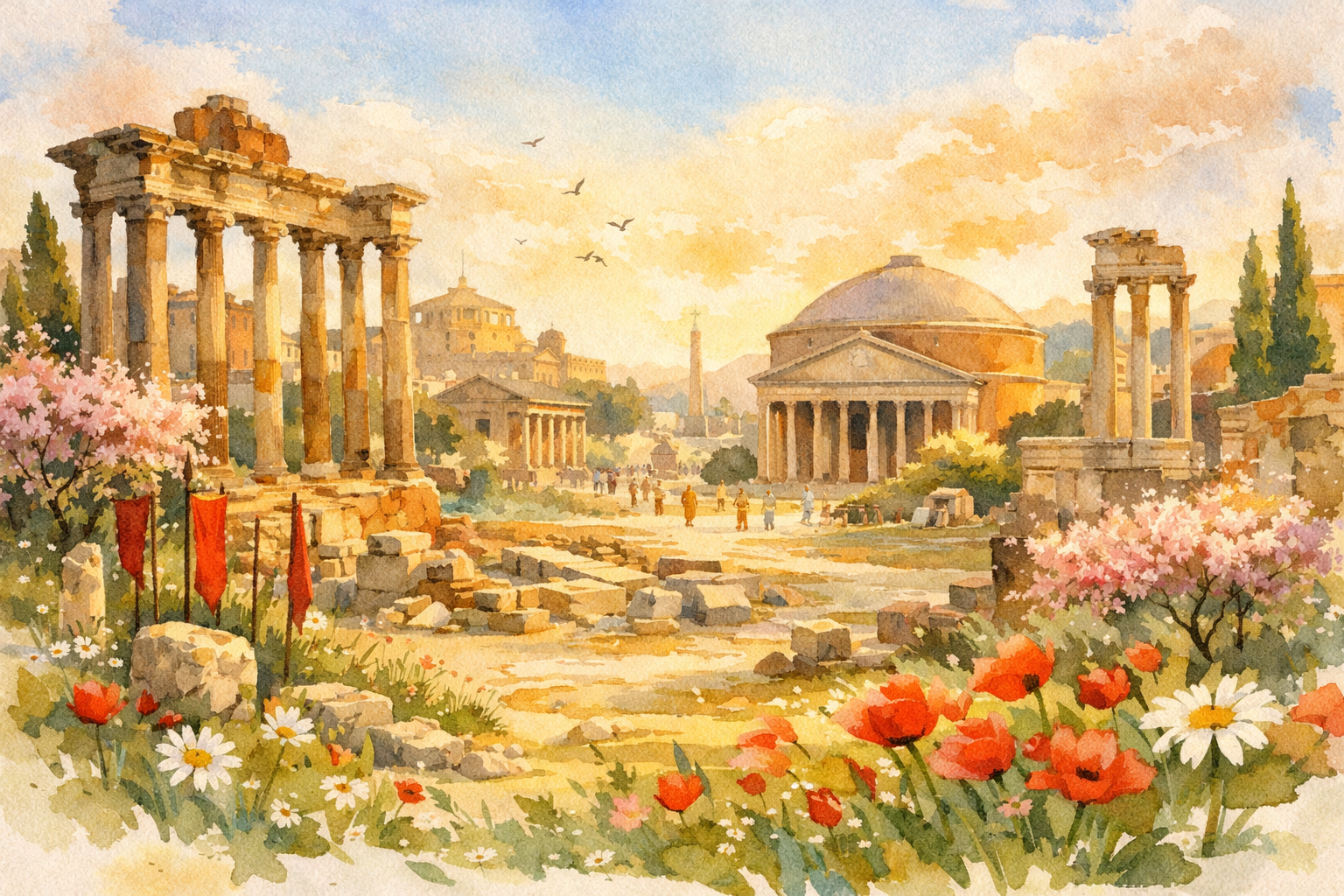
In Ancient Rome, March was not just another month.
It was the beginning of the year.
Before January took that place, the Roman calendar started with Martius, a month dedicated to the god Mars and filled with rituals, purifications, and ceremonies marking the start of a new cycle.
For the Romans, the year did not begin in winter, but when the earth awakened, the fields were prepared, and the city returned to motion.
March was the month of rebirth… but also of action.
Martius: The Month of Mars
The name March derives from Martius, in honor of Mars, one of the most ancient divinities of the Roman pantheon.
Although today he is remembered primarily as a god of war, in his earliest origins Mars was not solely a warrior deity. He was also associated with:
- the fertility of the land
- the protection of the fields
- the growth of crops
- the order and defense of the community
In early Roman thought, Mars was both an agricultural protector and a military guardian.
The True Beginning of the Roman Calendar
According to Roman tradition, the first calendar was attributed to Romulus, the mythical founder of Rome, around the 8th century BCE.
This primitive calendar consisted of ten months and began in March. The year therefore started with the awakening of nature.
Later, King Numa Pompilius, (traditionally dated 715–673 BCE) reformed the system and added:
- Ianuarius (January)
- Februarius (February)
Completing the annual cycle.
Yet for centuries, March retained its immense symbolic weight as the natural beginning of the year.
A Month of Rituals and Purification
March was filled with public ceremonies intended to close the previous cycle and prepare for the new one.
Among the most important festivals were:
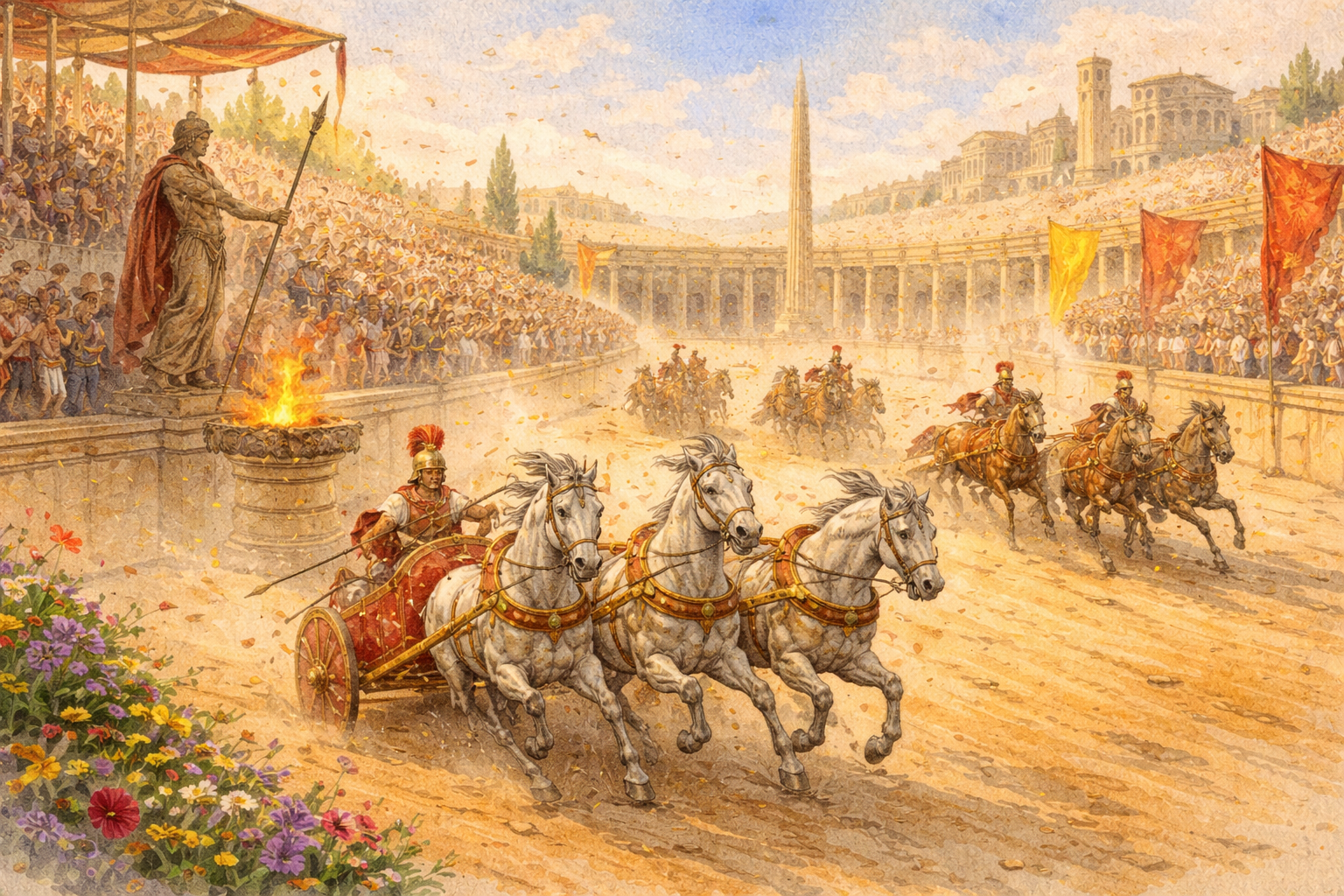
The Equirria
March 14 (and traditionally also February 27)
Horse races dedicated to Mars, associated with strength, speed, and military preparation.
They were not merely sporting competitions but ritual events linked to:
- vital energy
- military readiness
- the renewal of collective momentum
The Mamuralia
March 14 or 15
A deeply archaic ritual connected to the semi-mythical figure Mamurius Veturius.
It symbolized:
- the “old year”
- what was worn out
- the ending cycle
- the symbolic winter
According to tradition, an elderly man representing Mamurius, dressed in animal skins, was ritually struck with rods and symbolically expelled from the city.
It was a rite of transition.
Anna Perenna
March 15
A popular festival dedicated to Anna Perenna, a goddess associated with the annual cycle.
Her name means:
- Anna - year
- Perenna — perpetual, continuous
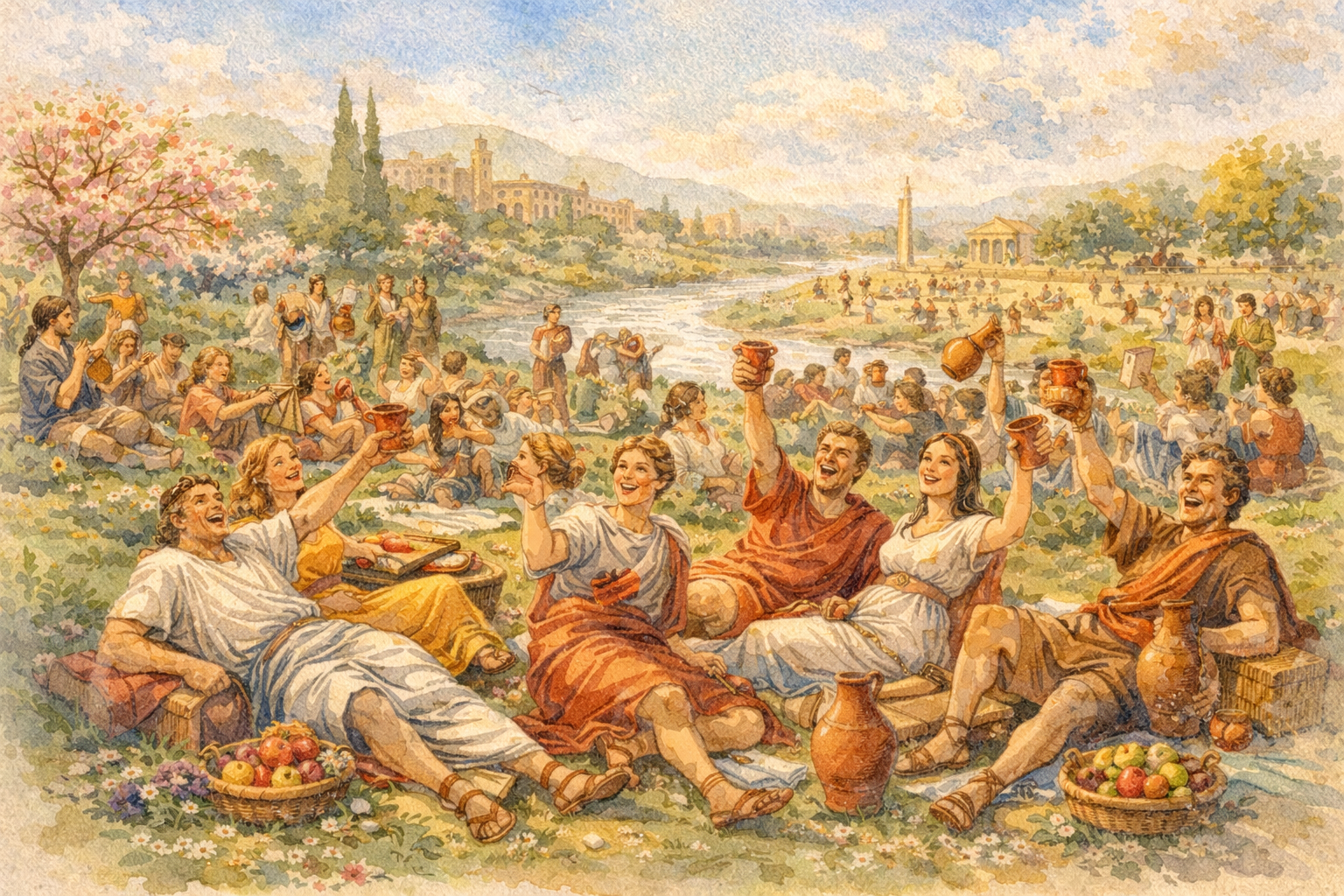
It was celebrated in the Campus Martius (Field of Mars) through:
- large communal picnics
- abundant drinking
- songs
- a festive atmosphere
It was customary to drink as many cups as the number of years one wished to live.
The Ceremonies of the Salii
. The Salii, warrior-priests of Mars, moved through the city during March:
- dancing
- striking sacred shields (ancilia)
- chanting ancient hymns
These rituals symbolically awakened the energy of the god after the stillness of winter.
The Tubilustrium
March 23
Ritual de purificación de las trompetas sagradas (tubae)A ritual purification of the sacred trumpets (tubae), used in both religious and military contexts.
March did not merely inaugurate spring — it set Rome into motion.
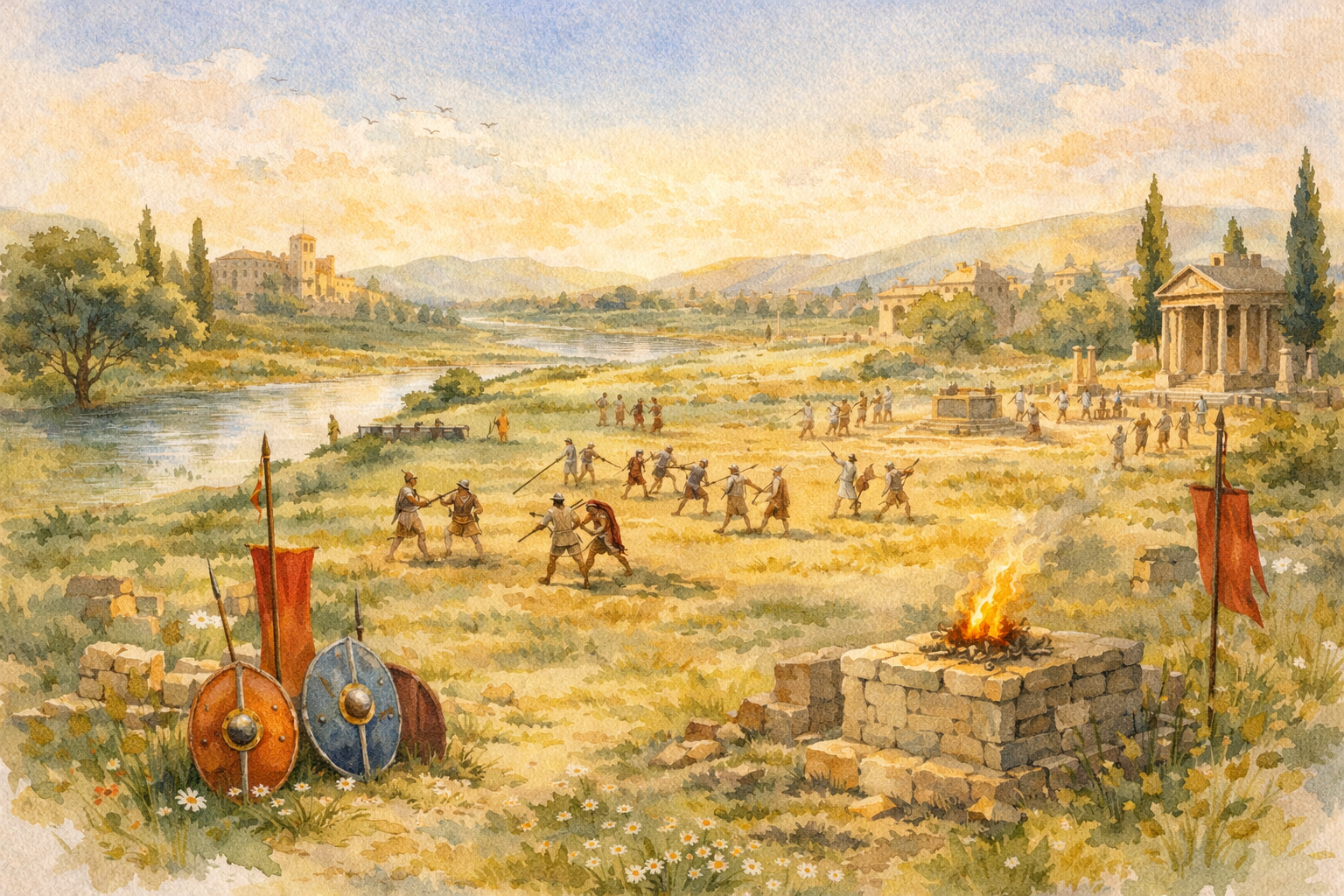
Campus Martius (Field of Mars)
The Campus Martius was a vast alluvial plain beside the Tiber River, located outside the pomerium, Rome’s sacred boundary.
During the Republic, it functioned as an open space dedicated to:
- military training
- assemblies and elections
- public rituals
- purification ceremonies
There stood the Ara Martis (Altar of Mars), an ancient sacred altar rather than a monumental temple.
From Ritual Plain to Monumental District
During the Imperial era, the Campus Martius was transformed into a monumental urban center.
Among the structures built there were:
- Theatre of Pompey — 55 BCE
- Baths of Agrippa — 25 BCE
- Pantheon of Agrippa — built between 27 and 25 BCE by the statesman and architect Marcus Vipsanius Agrippa, close ally of Emperor Augustus
The present-day Pantheon was later rebuilt by Hadrian between 118 and 125 CE.
When January Replaced March
The decisive shift occurred in 153 BCE
From that point onward, consuls began their term on January 1, officially moving the start of the year. It was a political and administrative adjustment.
It was a political and administrative adjustment.
Yet the symbolic weight of March never entirely disappeared.
Even today, months such as September, October, November, and December preserve numerical names that no longer align with their calendar positions.
Spring remains, almost instinctively, associated with beginnings.
War, Agriculture, and Balance
For the Romans, war and agriculture were not opposites. Both formed part of the same equilibrium:
- the land had to remain fertile
- the city had to be protected
- order had to be maintained
Mars embodied this duality between creation and defense, between life and conflict.
March and the Universal Archetype
Rome ritualized March within a pattern shared by many ancient cultures:
- the end of winter
- the return of light
- the renewal of the cycle
- the restart of time
While other peoples expressed this through agricultural myths or rebirth goddesses, Rome transformed it into calendar, ritual, and social structure.
Curiosities
The Campo de Martius did not disappear.
Many of the world’s most visited landmarks stand upon its former territory:
- Trevi Fountain
- Spanish Steps
- Campo Marzio district
Few visitors realize that one of the most photographed places on Earth — the Trevi Fountain — lies within the ancient Field of Mars.
Where cameras flash and coins fall into water today, rituals, military training, and ceremonies dedicated to Mars once took place.
Time changes.
The place remains.