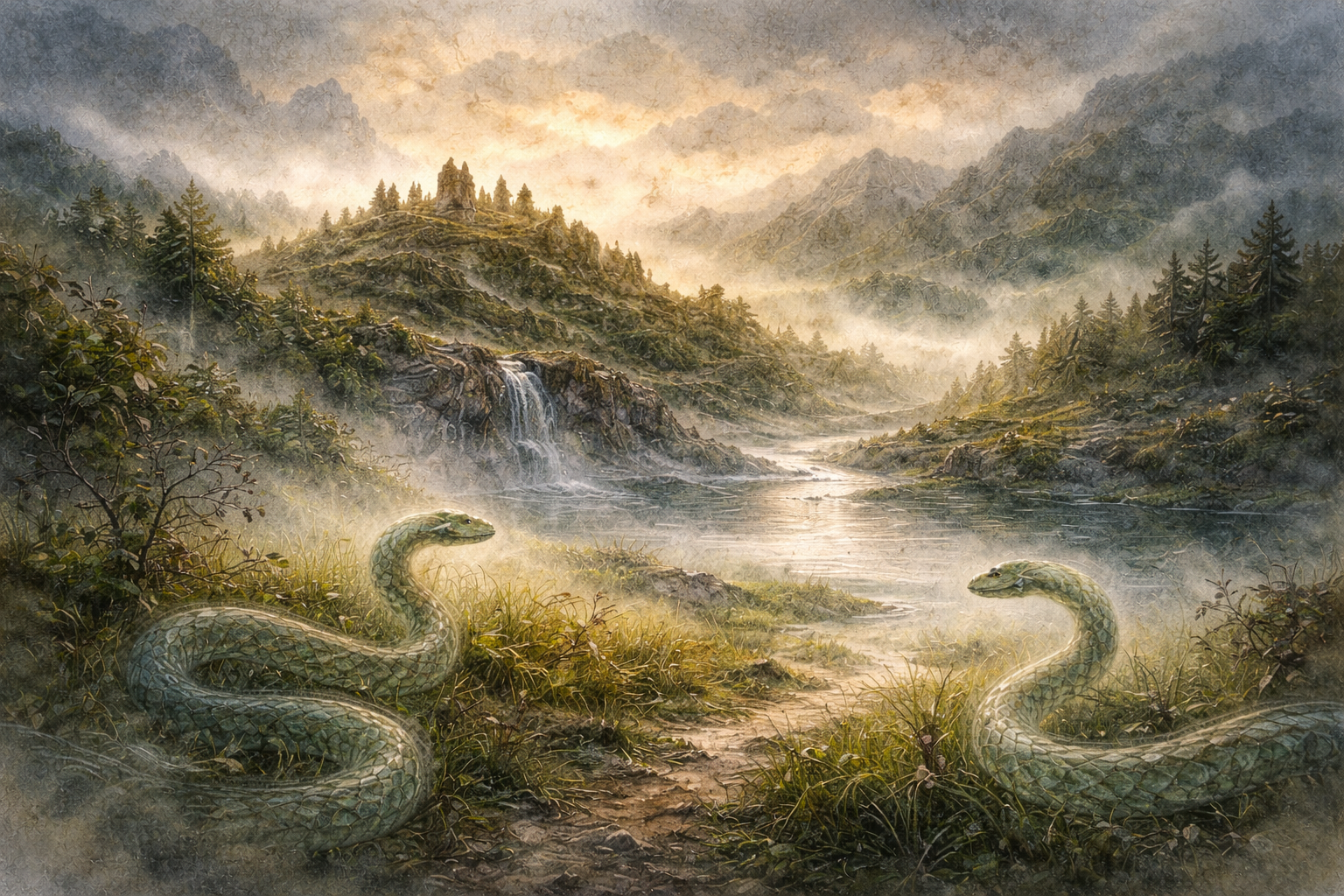
For centuries, the same story has been told: Saint Patrick drove the serpents out of Ireland.
But Ireland never had serpents. So… what did Saint Patrick truly “drive out”?
The legend
According to popular tradition, Patrick climbed a mountain and, after fasting and prayer, caused all the serpents to flee the land, casting them into the sea.
However, no contemporary account describes these events. The story appears centuries later, during the Middle Ages.
From a historical and biological perspective, Ireland never had native serpents. After the last Ice Age, the island became isolated from the continent before these reptiles could recolonize it. There are no archaeological or fossil records indicating their presence.
Serpents as Symbol
In ancient symbolic language, the serpent did not always represent an animal.
More often, it served as a metaphor for:
- pagan beliefs
- ancient cults
- ancestral wisdom
- pre-Christian spiritual traditions
When the legend claims that Saint Patrick expelled the serpents, what it likely describes is the Christianization of Ireland.
Not the physical removal of creatures, but the gradual displacement of one spiritual system by another.
The Celts
Before the arrival of Christianity, Ireland was inhabited by the Celts — a collection of Indo-European peoples who spread across much of Europe from approximately the 8th century BCE.
They did not form a unified empire, but independent tribes bound by a shared culture:
- a spirituality deeply connected to nature
- a clan-based social structure
- a powerful oral tradition
- a strong presence of druids (wise figures, judges, and priests)
- a symbolic worldview centered on cycles, triads, and renewal
Unlike the Romans, the Celts did not build large stone cities. They lived in rural settlements, earth-and-wood fortifications, and maintained a sacred relationship with certain elements of the landscape: hills, forests, rivers, and springs.
When Saint Patrick arrived in Ireland in the 5th century, the Celts were the dominant culture.
Their world was filled with ancient gods, territorial spirits, and seasonal festivals that shaped the rhythm of life.
For them, nature was not separate from human existence — it was part of the same sacred fabric.
Saint Patrick: From Slave to Missionary
Patrick was born in the late 4th century in Roman Britain.
At around sixteen years of age, he was captured by Irish raiders and taken to Ireland as a slave, where he spent approximately six years tending livestock.
During that time, he:
- learned Gaelic
- encountered local spiritual traditions
- deepened his Christian faith
He eventually escaped, likely returning to Britain or Gaul.
After his return, Patrick studied theology and was ordained as a priest. He would later become a bishop.
Around 432 CE, Patrick reported having a vision in which the Irish people “called” to him, prompting his voluntary return to Ireland as a missionary.
There, he became a key figure in the spread of Christianity, founding religious communities and training local clergy.
Places traditionally associated with his activity include:
- Armagh (his principal ecclesiastical center)
- Downpatrick (believed to be his burial site)
- the region of Tara (an ancient pagan royal center)
The communities he established were modest:
- small churches
- early monasteries
- centers of religious learning
Paganism and Christianity
The Christianization of Ireland was not a process of immediate destruction, but of gradual transformation.
Many Celtic symbols and sacred places did not disappear — they were reinterpreted.
This fusion of Celtic and Christian traditions gave rise to one of the most distinctive spiritual cultures in Europe.
Numerous ancient sacred sites became monasteries, including:
- Glendalough
- Clonmacnoise
This transformation unfolded primarily between the 5th and 7th centuries.
Ancient festivals were also adapted into the Christian calendar:
- Imbolc → Saint Brigid (February 1)
- Beltane → Christianized spring celebrations
- Lughnasadh → Reinterpreted agricultural festivals
- Samhain → All Saints / Halloween
Symbols That Survived
Many elements of the Celtic worldview endured in new forms:
- sacred wells → Christian holy springs
- solar crosses → Celtic cross
- ancient deities → Saints
- agricultural rituals → Religious blessings
The Celtic Cross and the Solar Cross
One of the most enduring symbols is the Celtic cross, which appears in Ireland between the 9th and 12th centuries.
It emerges from the fusion of the ancient pagan solar cross and the Christian cross — a synthesis clearly visible in the great medieval stone crosses (high crosses).
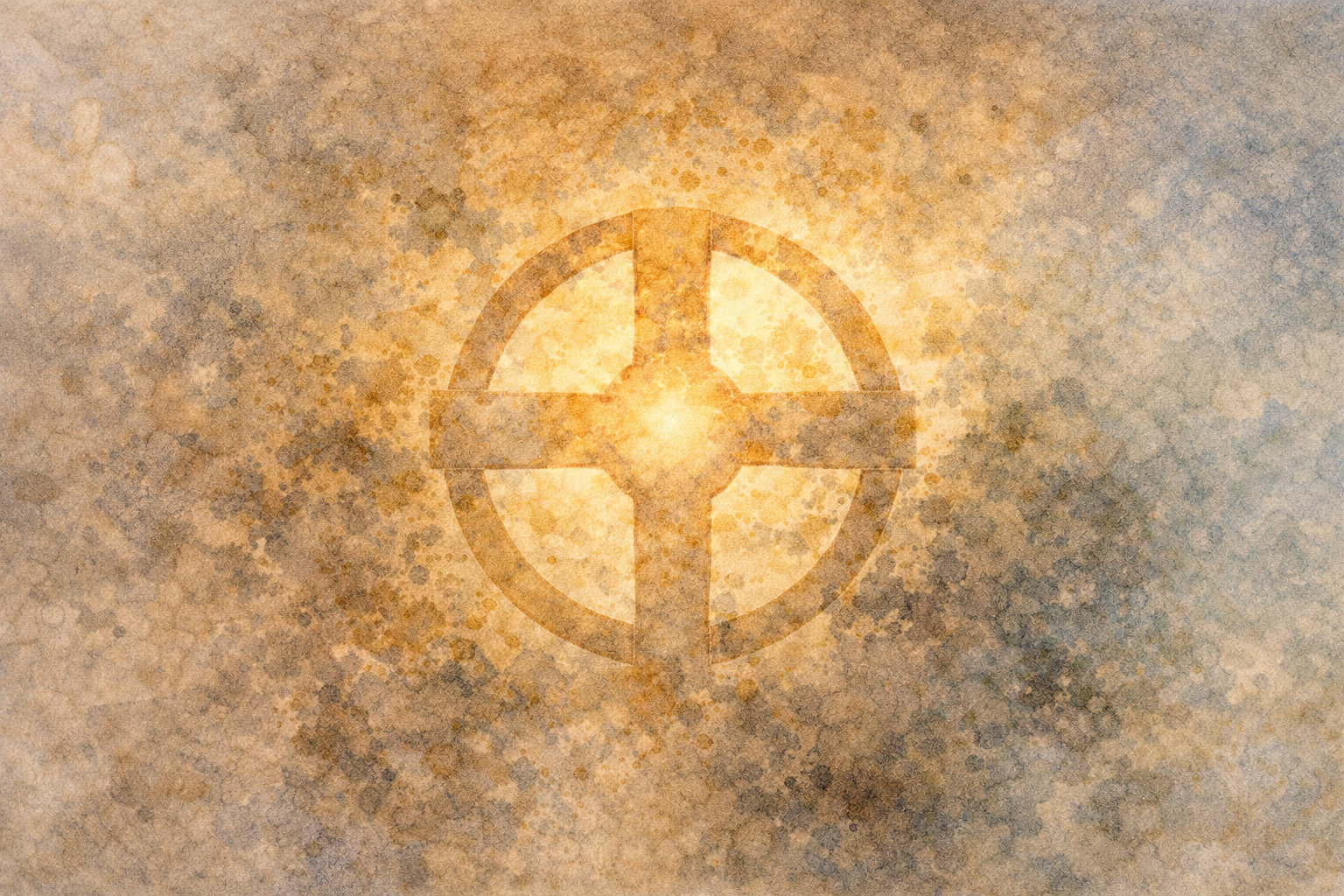
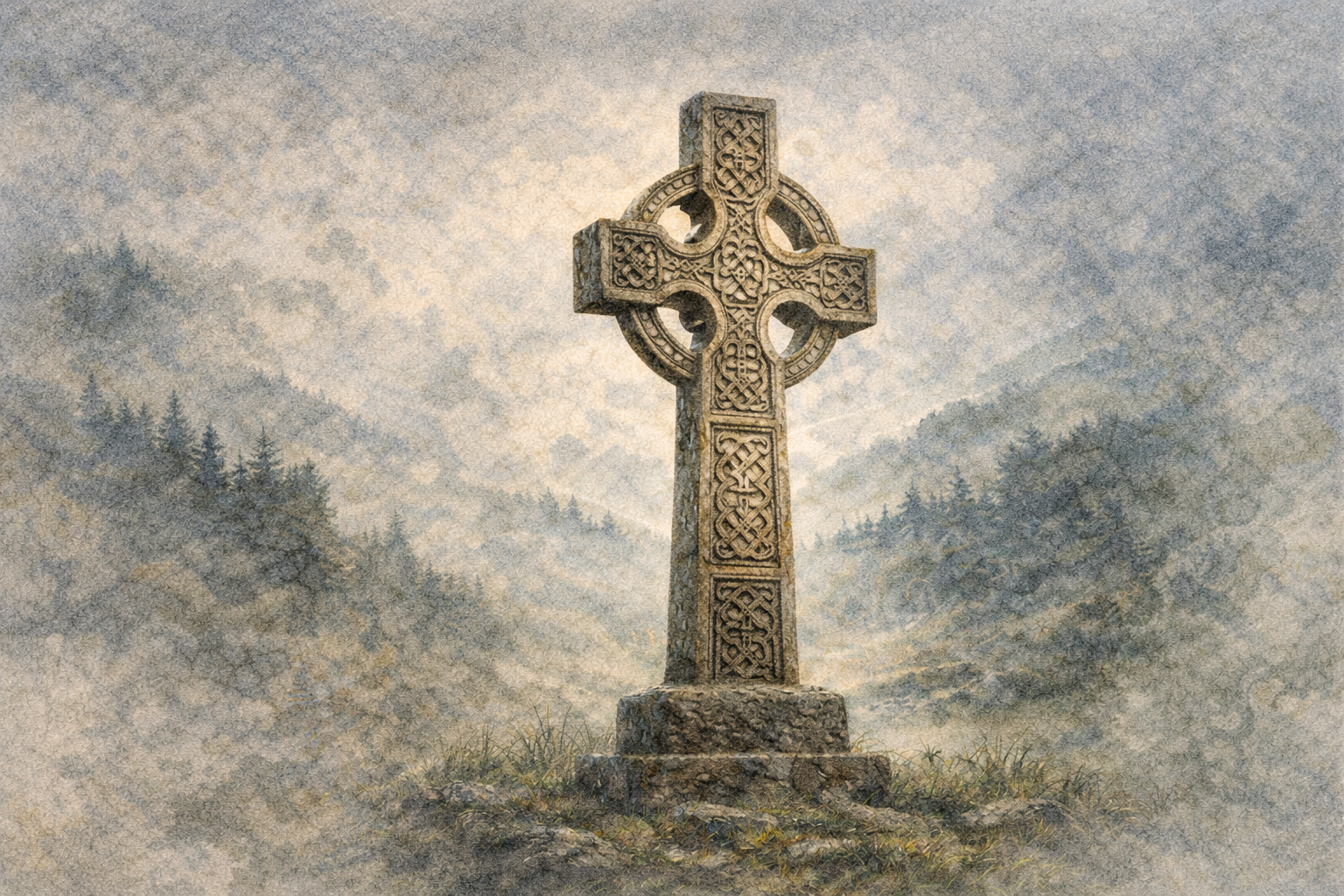
Although the Church used the Roman cross as its official symbol, this hybrid form became deeply integrated into Irish cultural identity.
The Shamrock and the Trinity
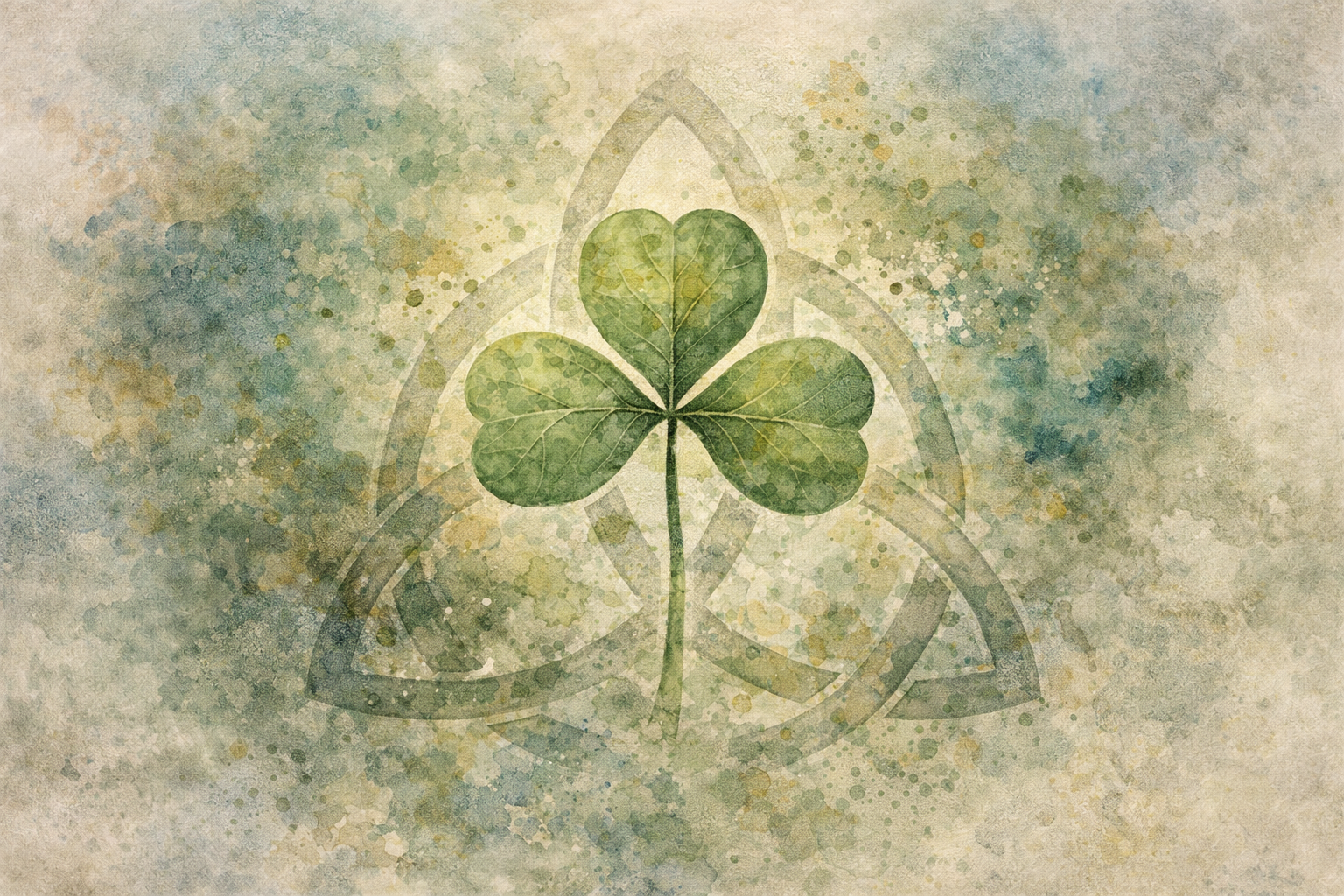
The shamrock already held symbolic meaning within Celtic tradition, associated with nature and sacred triads:
- life – death – rebirth
- land – sea – sky
Later tradition claims that Patrick used the plant to explain the Christian Trinity.
The shamrock would become a national symbol much later, between the 17th and 18th centuries, within the context of Irish nationalism.
Blue vs. Green
Historically, the color associated with Saint Patrick was blue.
The so-called "Saint Patrick’s Blue” appears in the 18th century, used in royal insignia and chivalric orders.
Green gained prominence later, linked to:
- the Irish landscape
- Celtic identity
- the independence movements
Over time, green displaced blue, becoming both a cultural and political emblem.
Beyond the Green Hats
Today, Saint Patrick’s Day commemorates a man who was once a slave before becoming a saint.
Today, it is celebrated with parades, music, and festive imagery.
Today, Ireland is green — in flags, clothing, and celebrations.
Yet behind the modern imagery lies a far deeper story:
- identity
- spirituality
- cultural transformation
Saint Patrick did not drive out animals — he symbolized the transition between two worlds.
Irish Christianity was born intertwined with the roots of the ancient Celtic universe.
And it is precisely this fusion that makes it so singular.