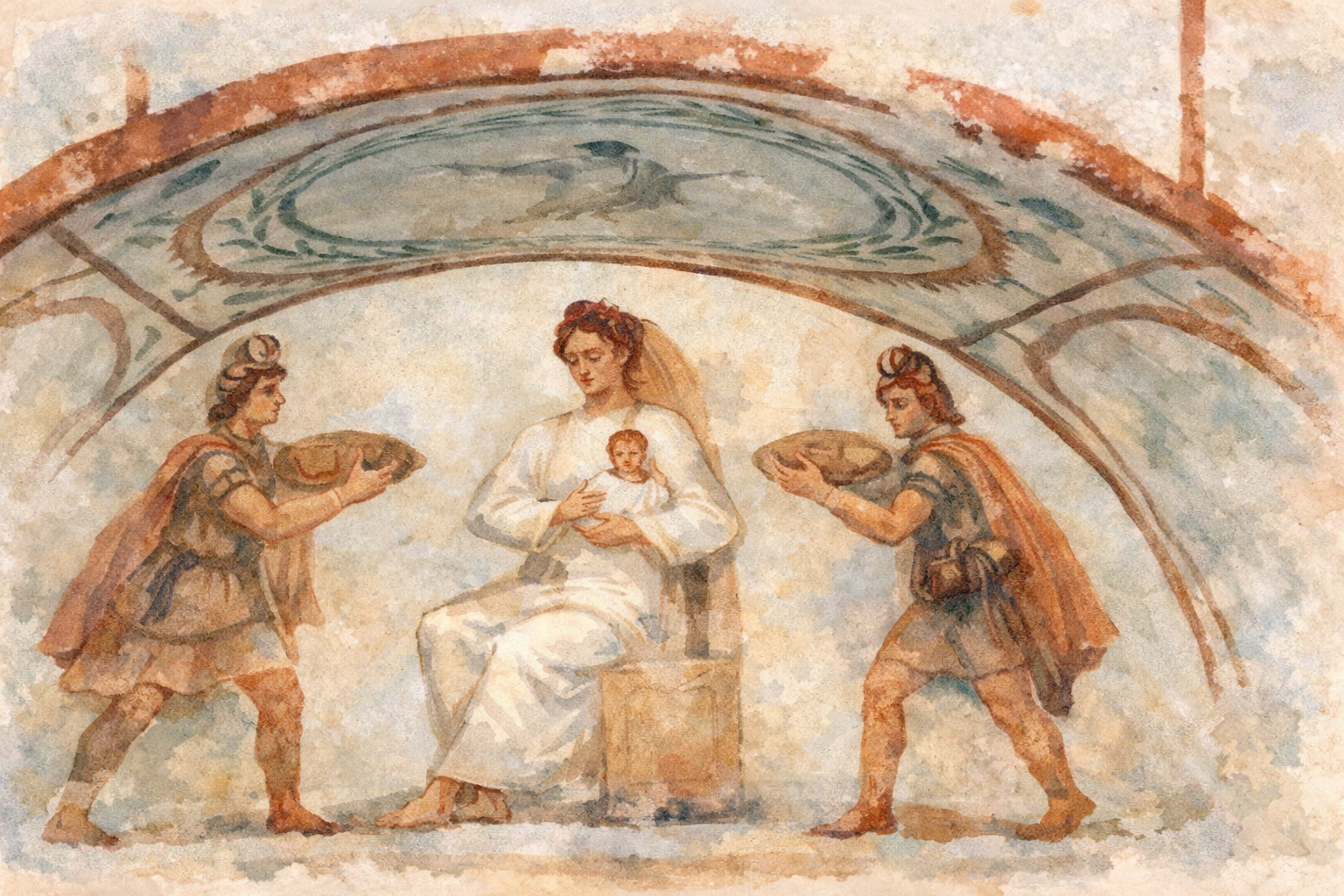
January 6 marks one of the most significant moments in the Christian calendar: Epiphany, also known as Three Kings’ Day. Although today it is mainly associated with gifts, parades, and family celebrations—especially in Spain—its origin is deeply religious and historical, long predating the modern traditions we know today.
While January 6 holds particular importance in countries such as Spain, Mexico, and some regions of Europe, in other places it carries less weight or is celebrated very differently. For some cultures, it represents the true end of Christmas; for others, it is a secondary or even unknown holiday. Yet its original meaning is far more universal than it might seem.
Pagan Festivals Converted to Christianity
In the Greco-Roman world, a series of winter celebrations took place between late December and the first days of January.
The word Epiphany comes from the Greek Epipháneia, meaning “manifestation” or “appearance of a god.” These epiphanies were celebrated when a deity revealed itself to humans (theophanies), when the cosmic order was renewed, or when rituals were performed in connection with the return of light after the winter solstice.
- In Greece, festivals were held in honor of Dionysus, god of rebirth, transformation, and the return of light. In various regions of the Hellenic world, his winter celebrations included divine epiphanies.
- In Egypt, the manifestation of Osiris was commemorated, along with the birth of gods such as Horus and the symbolic rebirth of light after the solstice.
- In Rome, festivals linked to solar power and the gradual return of light were celebrated.
During the first centuries of Christianity, this date was associated with celebrations of light, change of cycle, and renewal—at a time of year deeply charged with symbolism in Mediterranean cultures. The Church took advantage of these dates, already deeply rooted in popular belief, and gave them a new Christian meaning.
While December 25 was later established as the date of Jesus’ birth, January 6 was reserved for his public revelation—a symbolism that aligned perfectly with the gradual return of light after the darkest days of the year.
Epiphany: A Revelation to the World
In Christian tradition, Epiphany commemorates the manifestation of Jesus to the world, symbolically represented by the visit of the Magi from the East. It is not merely the birth of a child, but the recognition of his sacred nature beyond the Jewish people.
Between the 2nd and 3rd centuries AD, the celebration of Epiphany is documented by Clement of Alexandria (c. 200 AD), who mentions that some Christians celebrated both the birth of Christ and his divine manifestation. For early Christians, January 6 encompassed several events: the birth of Jesus, the visit of the Magi, his baptism in the Jordan River, and his first miracle at the wedding at Cana.
For this reason, January 6 is called Epiphany: the manifestation of the divine.
In the 4th century, the Eastern Church maintained January 6 as a major feast, while in the West the celebrations were separated:
- December 25: Birth of Christ
- January 6: Epiphany (Visit of the Magi)
At the Council of Zaragoza (380 AD), Epiphany already appears as a recognized feast, whereas Christmas on December 25 was not officially fixed until the 4th century, when the Church of Rome adopted that date.
From Magi of the East to Kings
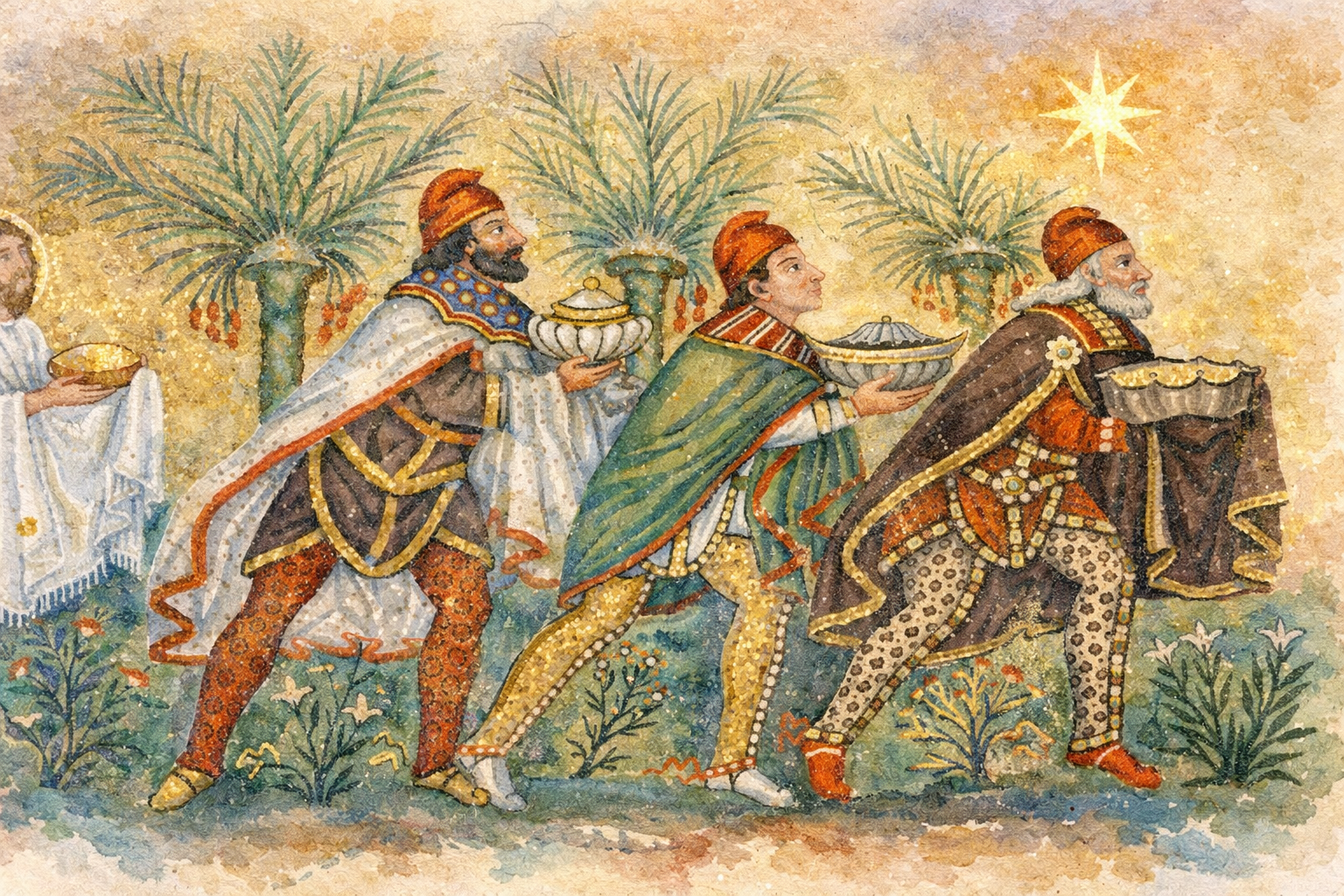
The Gospel of Matthew is the only one that mentions the Magi from the East, but it does not specify their names, their number, or that they were kings. The text simply refers to “wise men from the East,” a term that in antiquity designated scholars, astrologers, or priests associated with the study of the stars.
In different Eastern traditions, they were sometimes depicted as twelve magi; in others, two, four, or eight. They were not monarchs, nor did they always travel on camels or wear crowns.
The idea that they were three likely arose from the three gifts—gold, frankincense, and myrrh—while their depiction as kings became established during the Middle Ages. Their names do not appear in the original biblical texts but emerged centuries later in medieval European traditions.
Melchior, Gaspar, and Balthazar
Between the 3rd and 4th centuries, the number of Magi was symbolically fixed at three, not based on biblical texts. Their names appear for the first time in a 6th-century Latin manuscript, the Excerpta Latina Barbari, where they are given identities and symbolic roles:
- Melchior, portrayed as an elderly European
- Gaspar, middle-aged and associated with Asia
- Balthazar, young and dark-skinned, linked to Africa
This representation sought to symbolize the universality of the Christian message, encompassing the ages of humankind and the continents known at the time: Europe, Asia, and Africa.
The Meaning of the Gifts
The gifts offered by the Magi were not random objects, but symbols rich in meaning:
- Gold: a symbol of kingship
- Frankincense: a representation of divinity
- Myrrh: associated with death and sacrifice
In antiquity, it was common to exchange food, coins, oil, wine, or small symbolic objects. Offering frankincense or myrrh was considered a solemn, almost sacred gesture.
In countries such as Spain, Mexico, Argentina, France (with the Galette des Rois), or Germany, January 6 holds greater significance than December 25 and is traditionally the day when gifts are given.
The King Cake and the “Hidden King”
The King Cake has roots that predate Christianity. Its origin goes back to the Roman Saturnalia (1st century BC – 3rd century AD), celebrations dedicated to Saturn, god of time and abundance.
During these festivities, sweets were exchanged and a bean or small figurine was hidden inside a cake. Whoever found it was crowned “king for a day,” regardless of social status. Over time, this custom was Christianized and associated with January 6. The tradition evolved into the modern King Cake:
- The bean came to symbolize a penalty
- The figurine represents the king
- The crown recalls the ancient game of social inversion
From Religious Celebration to Popular Tradition
Over the centuries, Epiphany gradually took on an increasingly popular character, especially in Europe and Latin America. In Spain, it became the main day for children to receive gifts.
Parades, traditional sweets, and the anticipation of the night before are relatively recent elements, shaped by cultural evolution.
The End of the Christmas Cycle
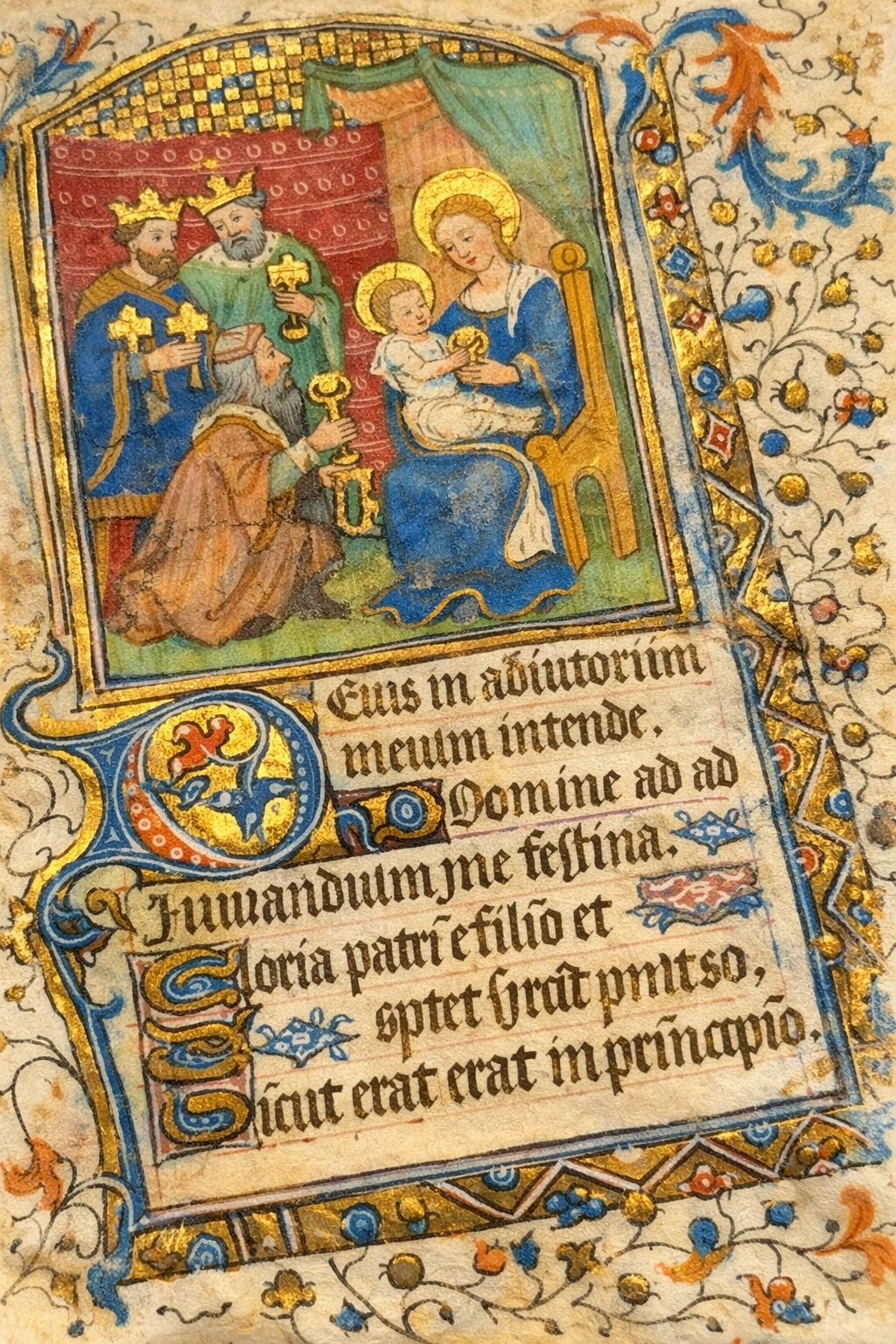
For many cultures, Three Kings’ Day marks the official end of Christmas.
An ancient tradition that, beyond gifts and changing customs, remains alive and continues to evolve.